Your STL has holes
W
H
D
Don't forget the rubber bands
You need two rubber bands 89 × 6 mm to hold the mold parts together.
Find them on Amazon →
Cut direction
You've designed your mold - now turn it into actual candles. This guide walks you through everything from filament choice to that first successful pour. Read it once, then come back for the troubleshooting section when something goes wrong.
PLA stays rigid under wax pour temps. Avoid PETG (warps).
Buy →Holds detail best. Soy is too soft for freestanding shapes.
Buy →CD-series fits paraffin and soy. Size chart in step 3.
Buy →Cooking spray works in a pinch; proper silicone release makes demolding 10× easier.
Buy →Standard office bands. Wrap into the grooves to clamp the halves shut. Stay elastic at pour temps.
Buy →Also handy if you've got them: a digital thermometer (so you don't guess the wax temp) and a metal pouring pitcher for the double-boiler. Not strictly required.
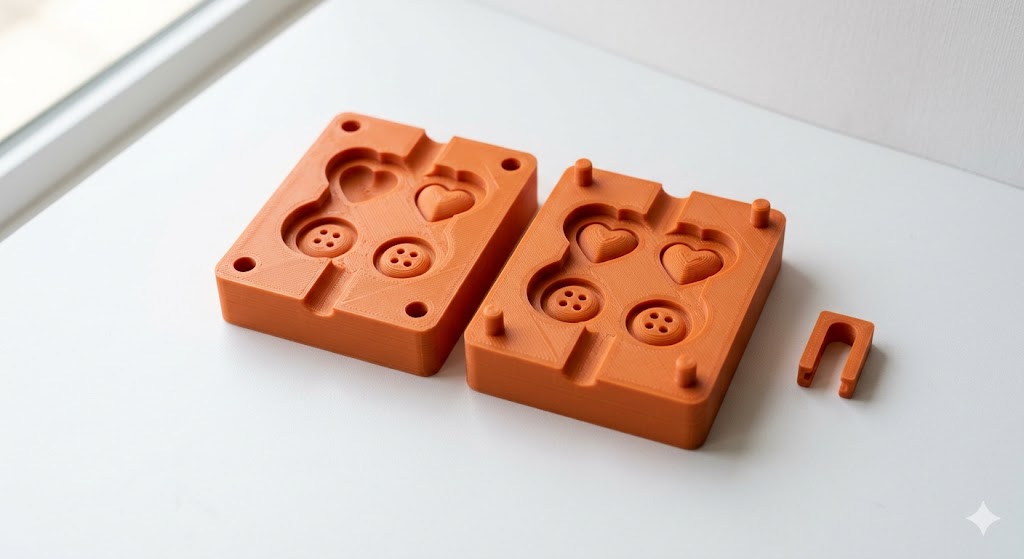
Slice with 0.2mm layers, 3 walls, 15–20% gyroid infill, PLA at 210°C. Print both halves flat-face-down on the same plate so they cool to matching dimensions. Dry-fit before pouring - the seam must close with no daylight through it. Gap? Reprint with 4 walls.
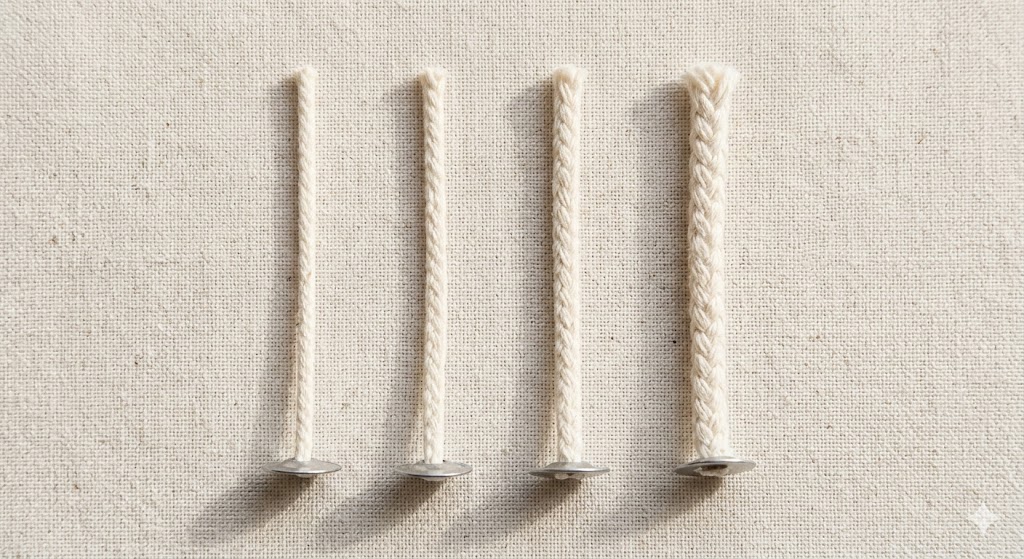
Match the wick to your candle's widest diameter. Too small → tunneling. Too big → smoking and fast burn.
| Candle diameter | Paraffin | Soy/beeswax |
|---|---|---|
| Up to 38mm | LX 10 / CD 6 | ECO 2 / CD 8 |
| 38–50mm | LX 14 / CD 8 | ECO 4 / CD 10 |
| 50–63mm | LX 18 / CD 10 | ECO 8 / CD 12 |
| 63–76mm | LX 22 / CD 14 | ECO 12 / CD 16 |
| 76mm+ | LX 24+ / CD 18+ | ECO 14+ / CD 18+ |
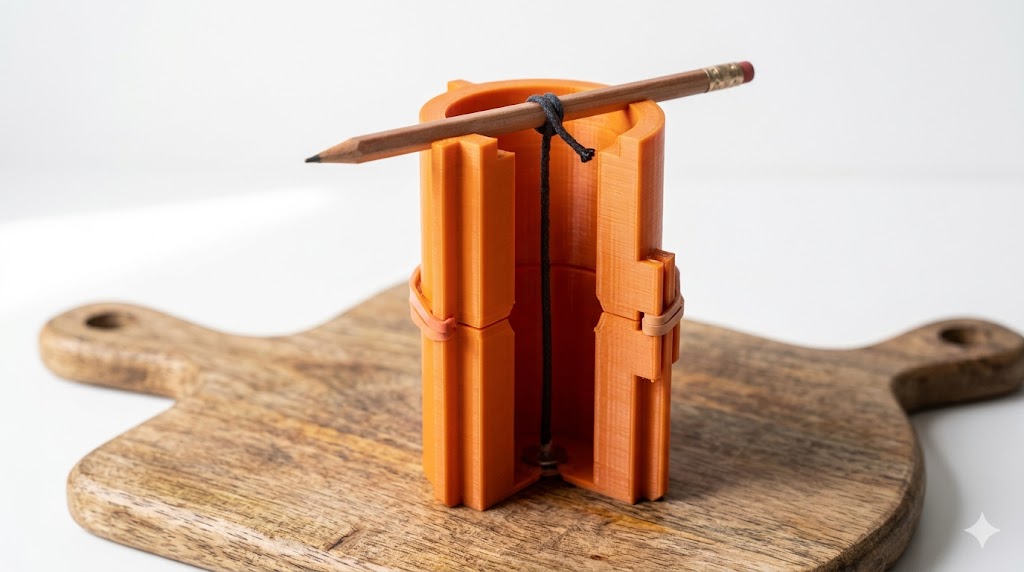
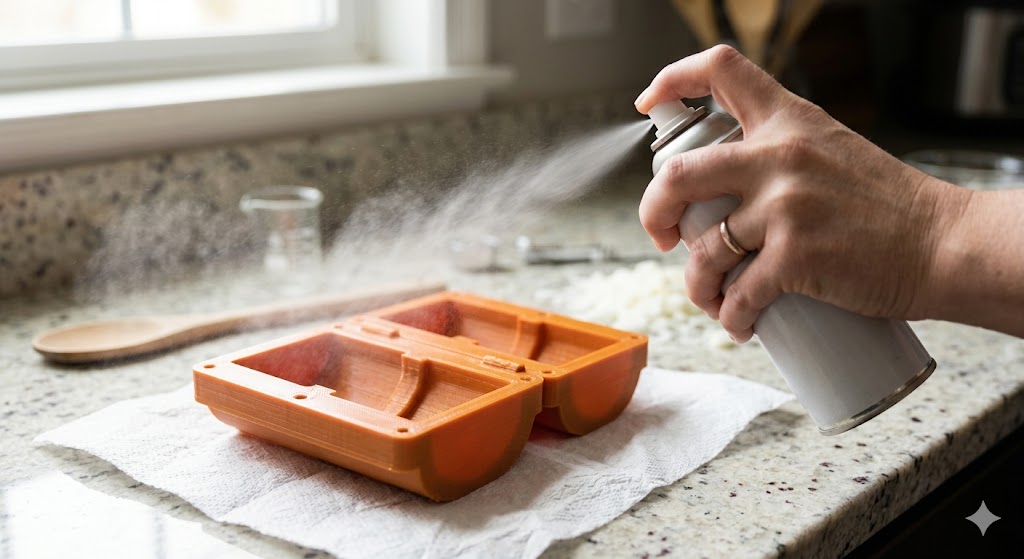
Cut the wick 5cm longer than the candle. Thread it through the pour hole, wrap the top around a pencil laid across the opening so it stays centered. Lightly mist the inside of each half with mold release - a thin film, not drenched.
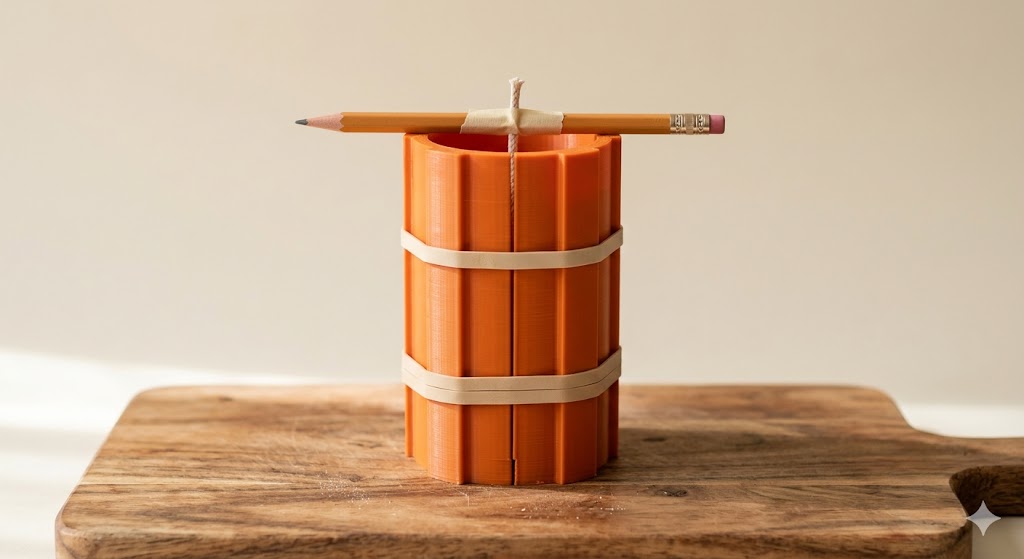
Press the halves together with the wick centered. Stretch one #64 rubber band into each of the two grooves. They should sit flush. Loose? Double-wrap.
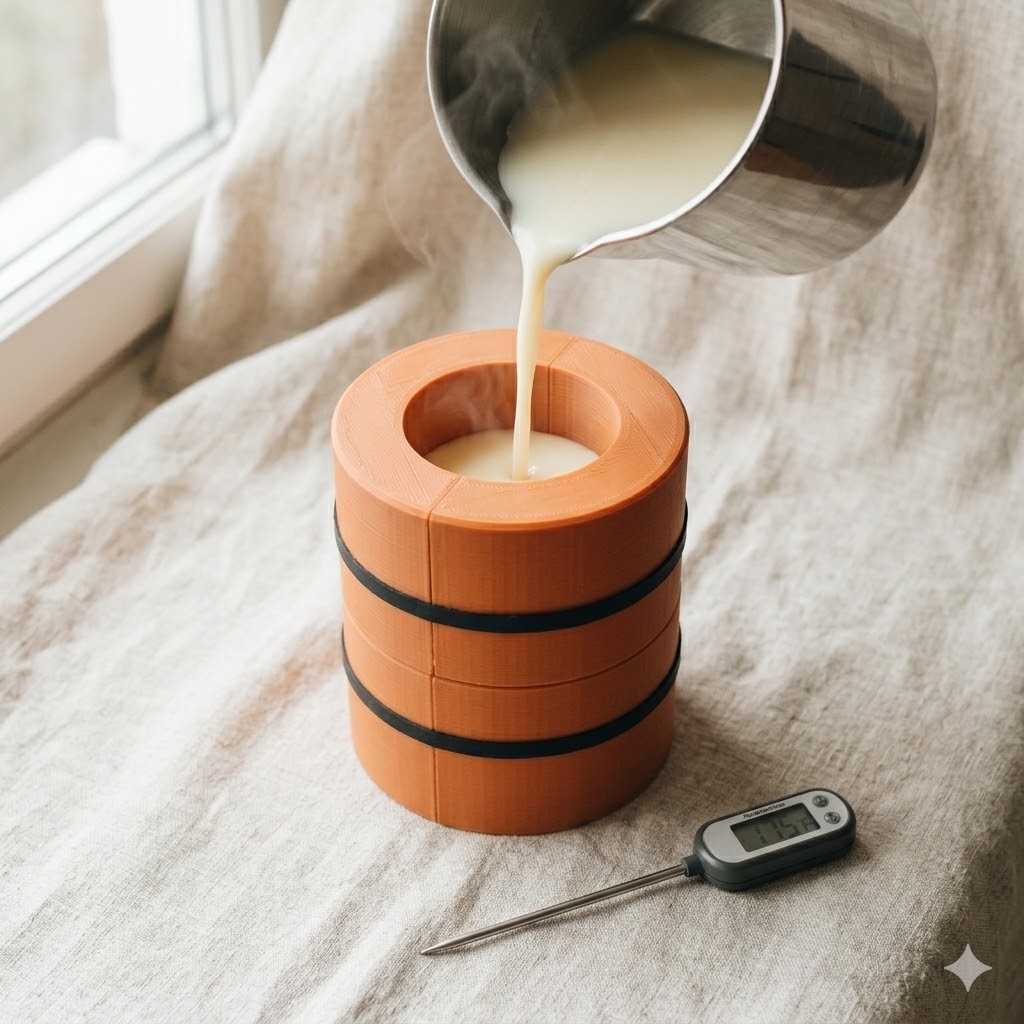
Double boiler (pitcher in simmering water - never direct heat). Add dye/fragrance after melting (6–10% fragrance by weight). Pour slowly into the top opening, leaving the air vent open.
| Wax | Pour temp |
|---|---|
| Paraffin pillar | 75–85°C |
| Soy | 57–63°C |
| Beeswax | 70–80°C |
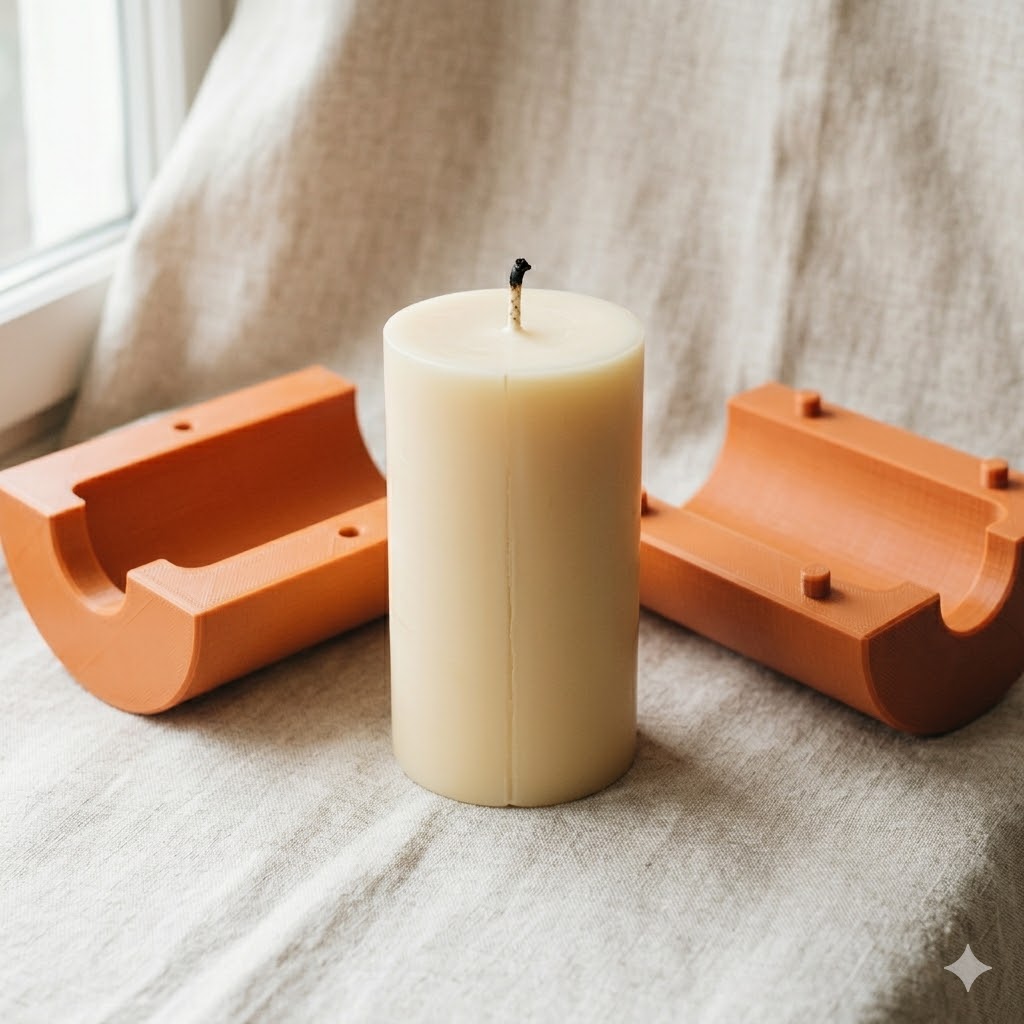
4–6 hours at room temperature. No fridge - rapid cooling cracks and frosts the surface. Roll the rubber bands off (don't lift) and pull the halves apart. Stuck? Warm tap water over the outside for 30s.
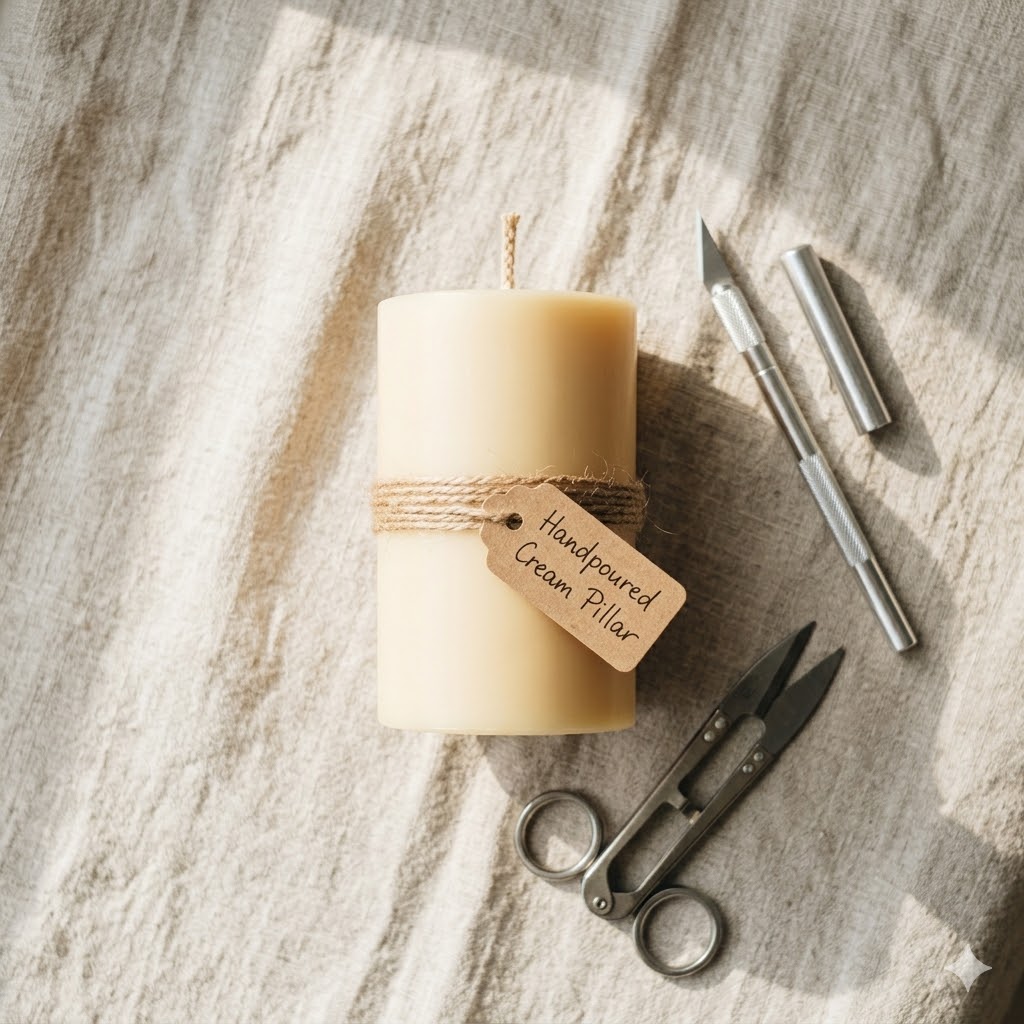
Scrape the seam line off with a knife or fingernail. Trim the wick to ~6mm. If you used fragrance, cure 1–2 weeks before burning so the scent binds.
Dry-fit and check for daylight at the seam. Double-wrap the rubber bands; if there's still a gap, reprint with 4 walls. For molds >100mm, switch to #84 bands.
Either you skipped mold release, demolded too early (under 4h), or the cavity has undercuts. Run warm water over the outside for 30s, then try again.
Print layer lines on the candle. Fixes in order: reprint at 0.12mm, sand the cavity (400/800 grit), or coat with XTC-3D for a glass finish.
Tape the top to a pencil across the opening; weight the bottom with a wick base. If it drifts, you're pouring too fast.
Pour slower at the right temperature. Make sure the vent isn't plugged. Gently tap the filled mold 2–3 times to release trapped bubbles.
Wax was too hot. PLA softens above 85°C - always check with a thermometer. For 100°C+ waxes, reprint in PETG or HTPLA.
Wick is too small. Size up one or two from the chart. Always burn ≥3 hours on first lighting so the full surface pools.
For jewelry, charms, and small detailed pieces. Two stages: pour silicone around your printed master to make a flexible mold, then pour resin into that silicone mold.
Resin sticks to PLA - pour it directly into a printed mold and it bonds permanently. Silicone is flexible, captures fine detail, and releases resin cleanly. That's why we need the intermediate step.
Two types of silicone - both work, different tradeoffs.
| Tin-cure | Platinum-cure | |
|---|---|---|
| Price | $15-25/lb | $30-60/lb |
| Detail capture | Good | Excellent |
| Mold life | 20-50 casts | 100+ casts |
| Shrinkage | Some (over time) | Almost none |
| Cure inhibition risk | Very low | High (sensitive) |
| Best for | Beginners, short runs | Production, fine detail |
Layer lines on the master transfer to silicone, then to every resin piece. Slice at 0.08–0.12mm, 3 walls, 15% infill, slow speed. Sand with 400→800 grit or coat with XTC-3D for a glass finish.
Dot the master to the bottom of the box with super glue (≥10mm space all sides - thinner tears, thicker wastes silicone). Measure volume by filling the empty space with rice into a measuring cup, +10%. Most silicones mix 1:1 by weight: pour Part A, zero scale, equal weight Part B, stir slowly 3–5 min. Pour into one corner in a pencil-lead-thin stream - don't splash on the master or you'll trap bubbles in the detail.
Tin-cure 6–24h, platinum 3–8h. Don't poke. Once cured, peel the silicone from the printed box (single-use), flex it to release the master, inspect for trapped bubbles or missing detail.
UV resin cures in 2–5 min under a lamp - ideal for thin pieces. Epoxy needs 24–72h but works for thick or large pieces (>1cm) and embeds.
| UV | Epoxy | |
|---|---|---|
| Cure | 2–5 min (lamp) | 24–72 h |
| Mixing | None | 1:1 by weight |
| Max layer | ~5mm | up to 25mm |
| Best for | Pendants, earrings | Coasters, embeds |
Color with mica or pigment if desired (start tiny). Pour slowly to the top of the cavity (resin domes a bit). Embed eye pins now. Pop surface bubbles with a quick pass of a BBQ lighter or by exhaling across the surface. UV: 2–5 min under the lamp (thick pieces cure in 5mm layers - light doesn't reach deep). Epoxy: cover loosely and wait.
Flex the silicone to release. Trim flash with nail clippers, file smooth with 600-grit. For gloss, dip-coat in fresh resin and re-cure. Thread a jump ring through the embedded eye pin (or drill a small hole with a pin vise) and attach earring hooks or chains.
Cure inhibition on platinum-cure. Switch to tin-cure, or clean the master with isopropyl alcohol and dry fully before re-pouring.
Wait 24h after silicone cures before casting. For undercuts, flex the silicone firmly - it won't tear.
Mixed or poured too fast, or the silicone mold itself has trapped bubbles. Mix and pour slowly, pop surface bubbles with a flame, or use a pressure pot for serious work.
UV: cure longer and flip to cure the back (silicone blocks UV from below). Epoxy: bad mix ratio or room too cold (needs 21°C+).
The mold inherits the master's layer lines. Reprint at 0.08mm or sand the master, or coat with XTC-3D before molding. Dip-coat existing pieces in fresh resin for a glossy fix.
Mold too thin (<10mm) or aggressive undercuts. Make the box larger next time. For severe undercuts, pour a two-part silicone mold (half at a time).
Switch to non-yellowing resin. Surface yellowing can be sanded and re-coated; throughout-yellow can't be reversed.
We'll trim the triangle count gently so the file slices faster - check that fine detail still looks right.
This mesh can't be reduced any further without hurting quality. Slicing speed won't improve by re-meshing it - just hit download.
Tap a part to download. Each opens an optimize step first.
-