In-depth guides on casting candles, soap, resin and plaster, making silicone molds, and which filament to use. Search above, or jump to a section from the list on the left.
No guides match “”.
What are you casting?
 Resin
Resin Silicone
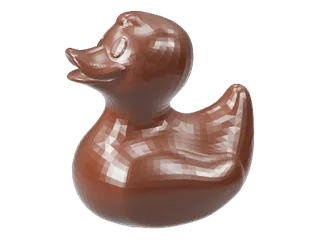 Chocolate
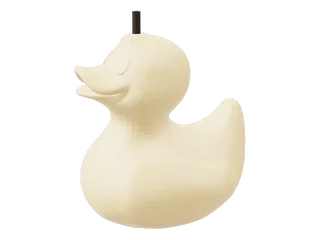 Wax
Wax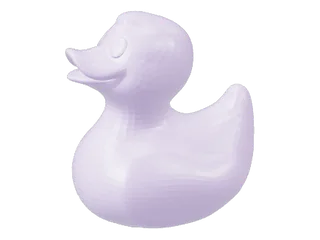 Soap
Soap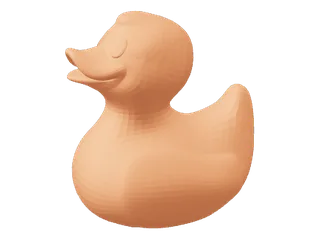 Clay
Clay Plaster
 Concrete
New here? Start with this
STL to mold: turn any 3D model into a printable mold
The whole pipeline on one page: upload a model, get a two-part mold with keys and a pour hole, print it, cast it. Five minutes to read.
Read the guide →Most popular
10 guidesWhat most makers read first, by visits over the last 60 days.
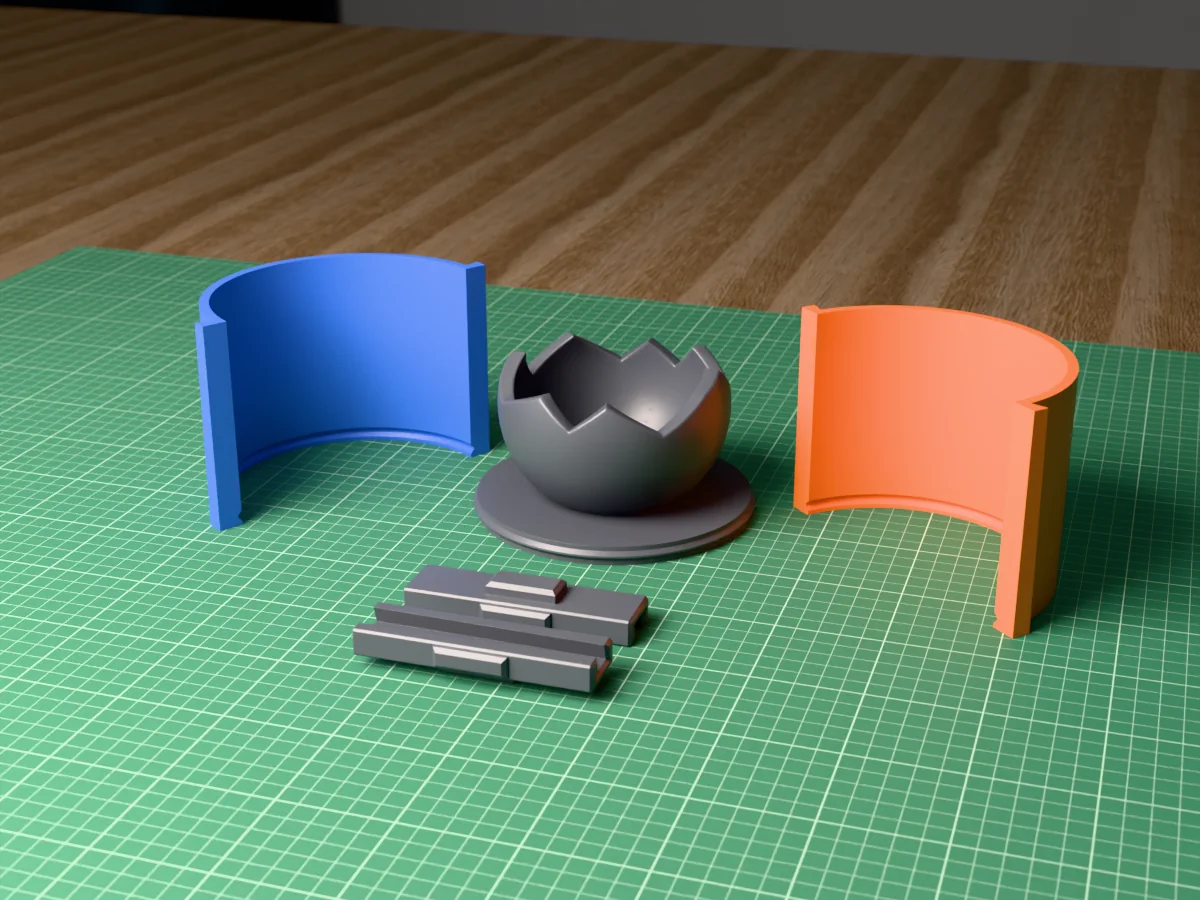
Moldboxer alternative: a free mold box generator in your browser
Which Meshcast tool replaces which feature, the silicone-saving hugging shell, and an honest list of where desktop software still wins.
STL to mold: turn any 3D model into a printable mold
The whole pipeline on one page: upload an STL, generate a two-part mold with parting line and alignment keys, print it, cast it. Plus which of the mold tools fits your project.
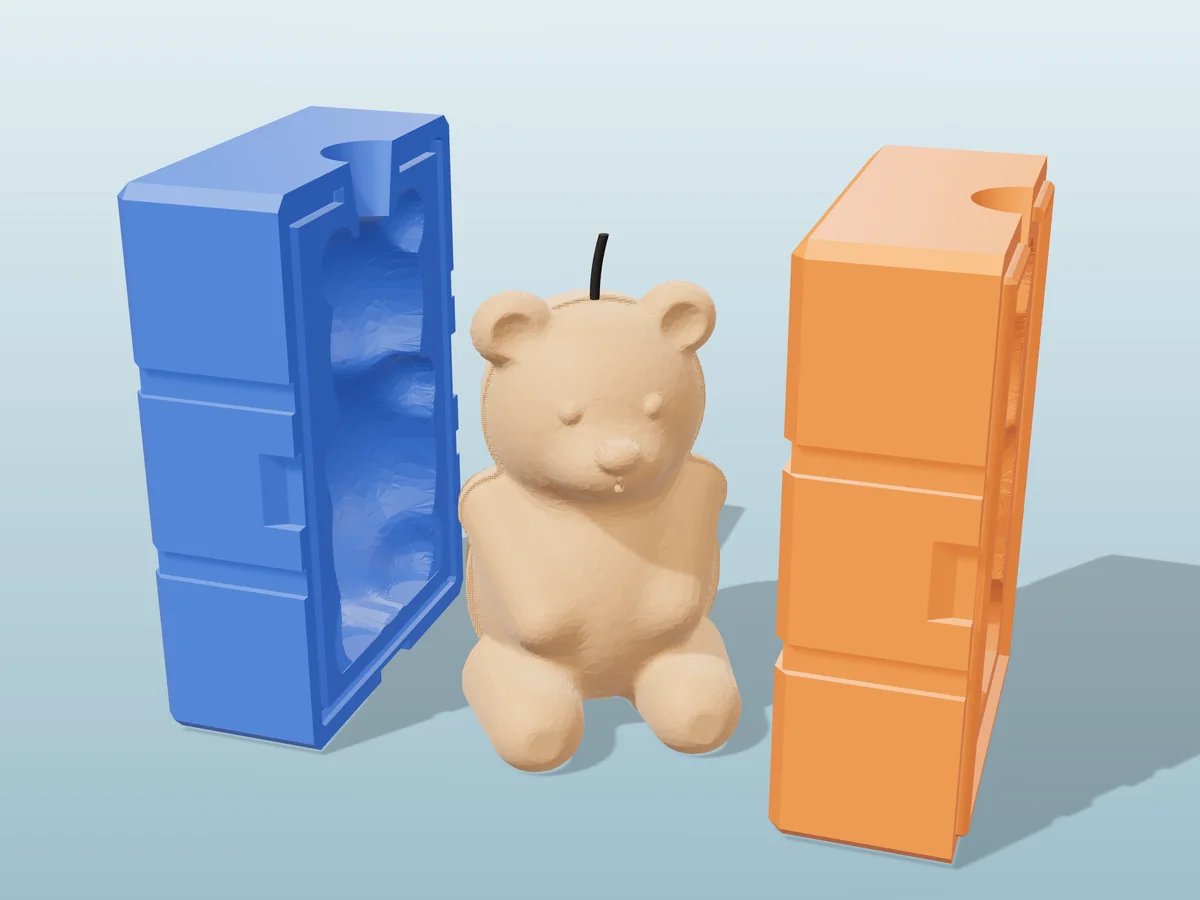
How to make a candle mold
Design and 3D print a reusable two-part candle mold, then pour wax and release a clean candle.
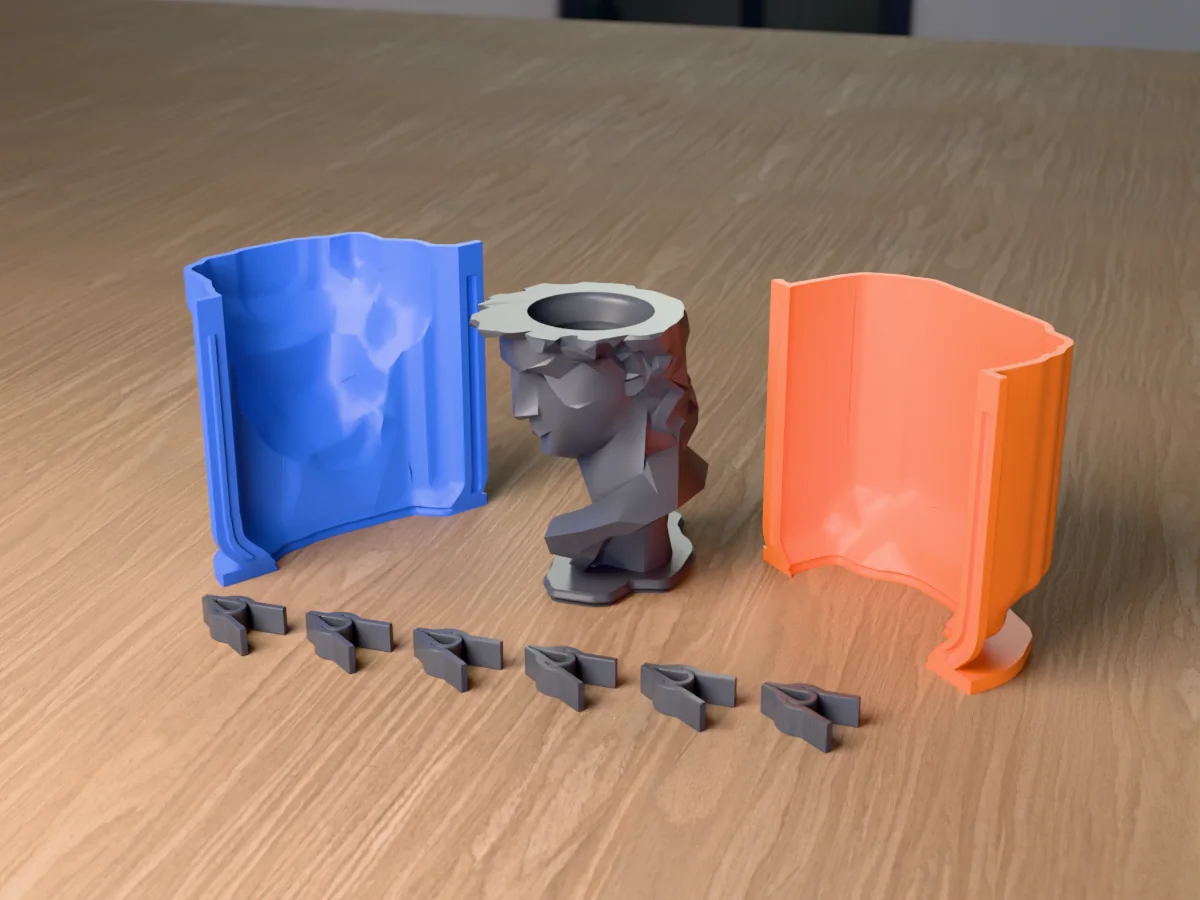
Reduce STL file size without losing detail
Scans and sculpts produce bloated meshes. How far you can decimate before it shows, and how to repair broken files.
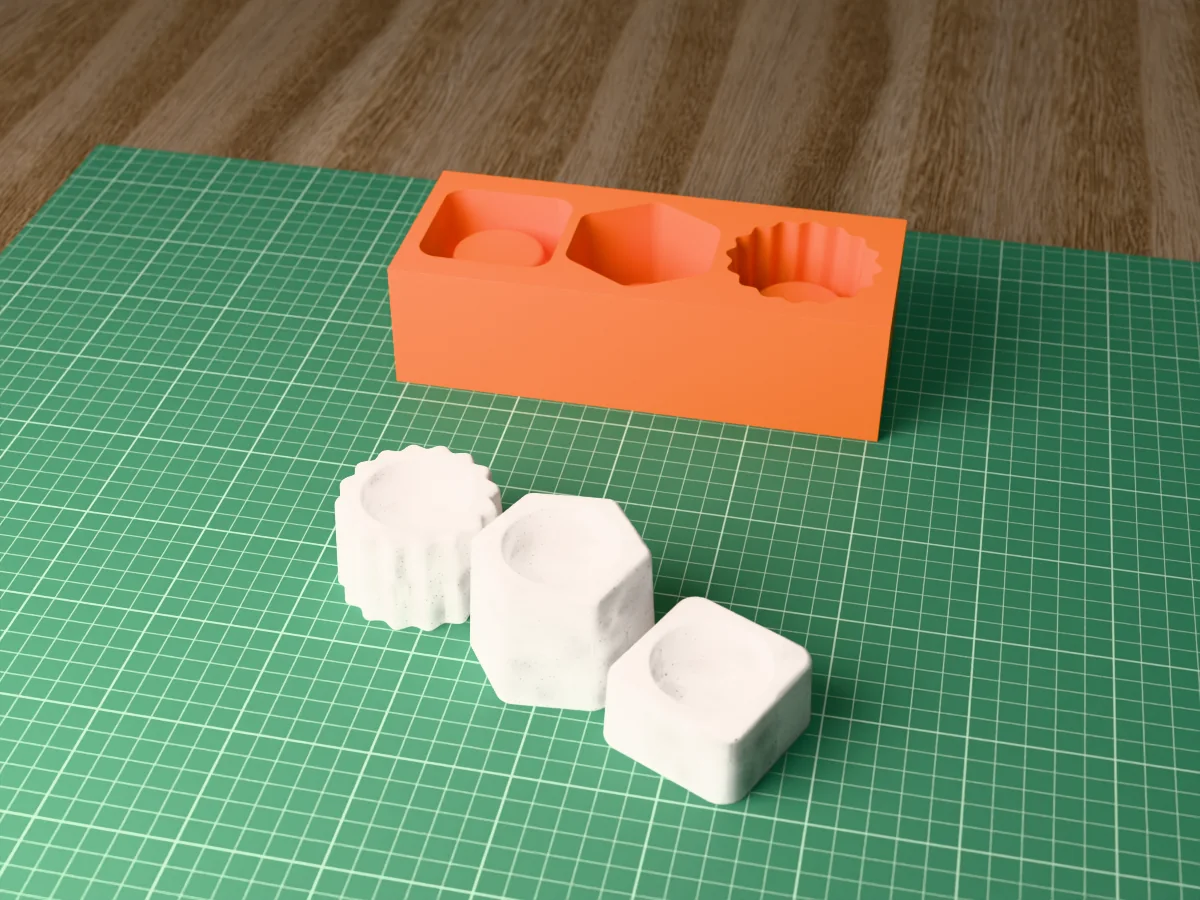
How to make a cast of any object
From "I have a thing" to "I have a copy of the thing" in five steps, and why plaster is the material to start with.
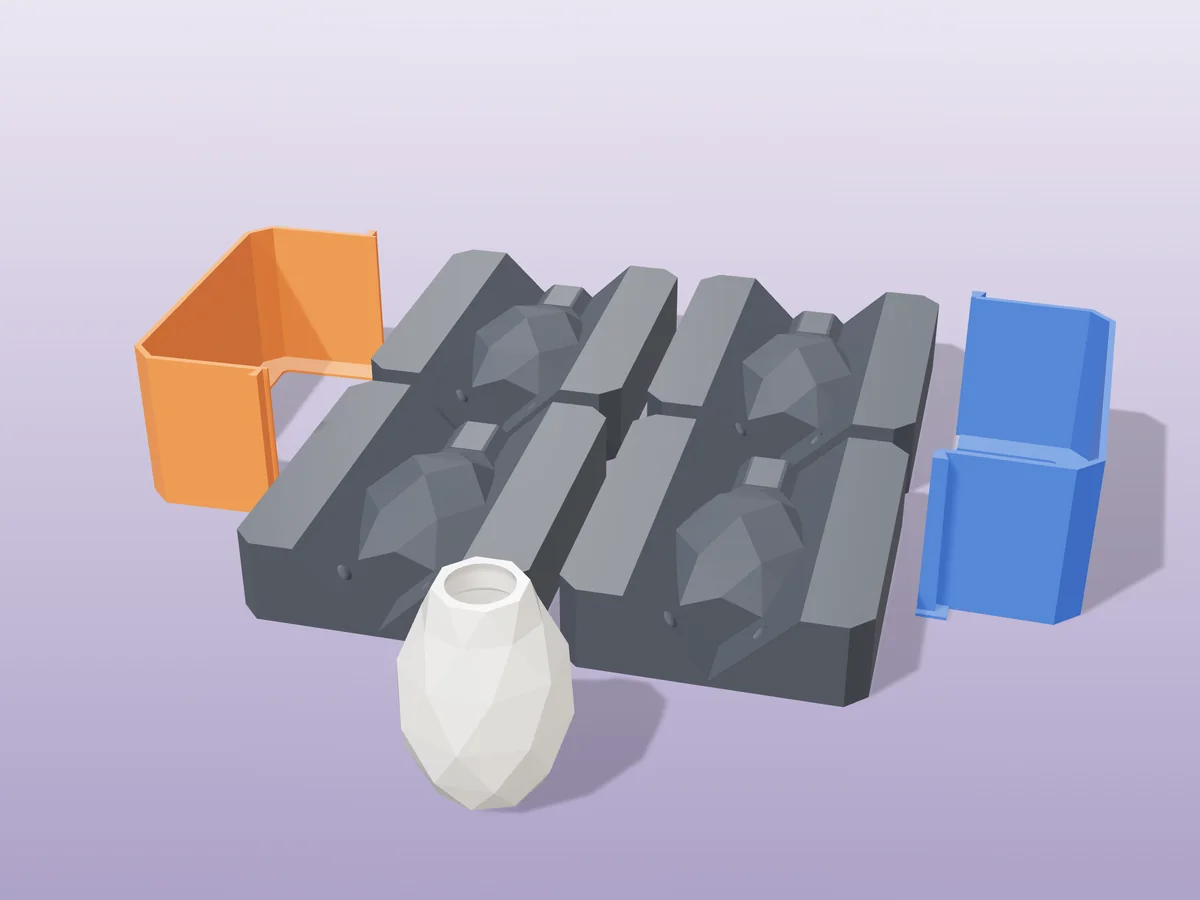
How to cast plaster, jesmonite & concrete
The most forgiving material to start with. Covers mix ratios, the right release agent for each binder, how to seal two-part mold halves without leaks, and what makes jesmonite different from standard plaster.
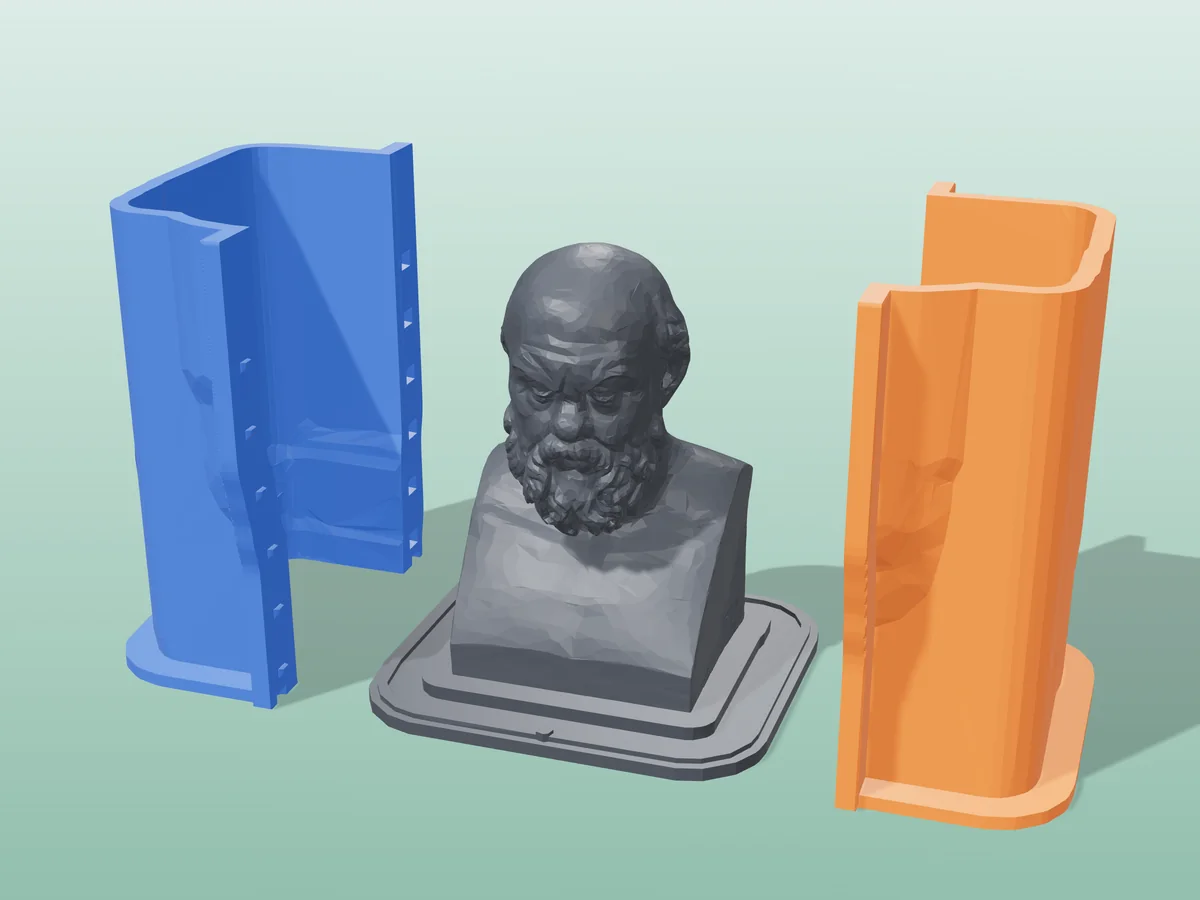
Free mold making software: what actually works
The four categories people confuse for each other, which one fits your job, the free Blender boolean method written out, and where AI genuinely helps.
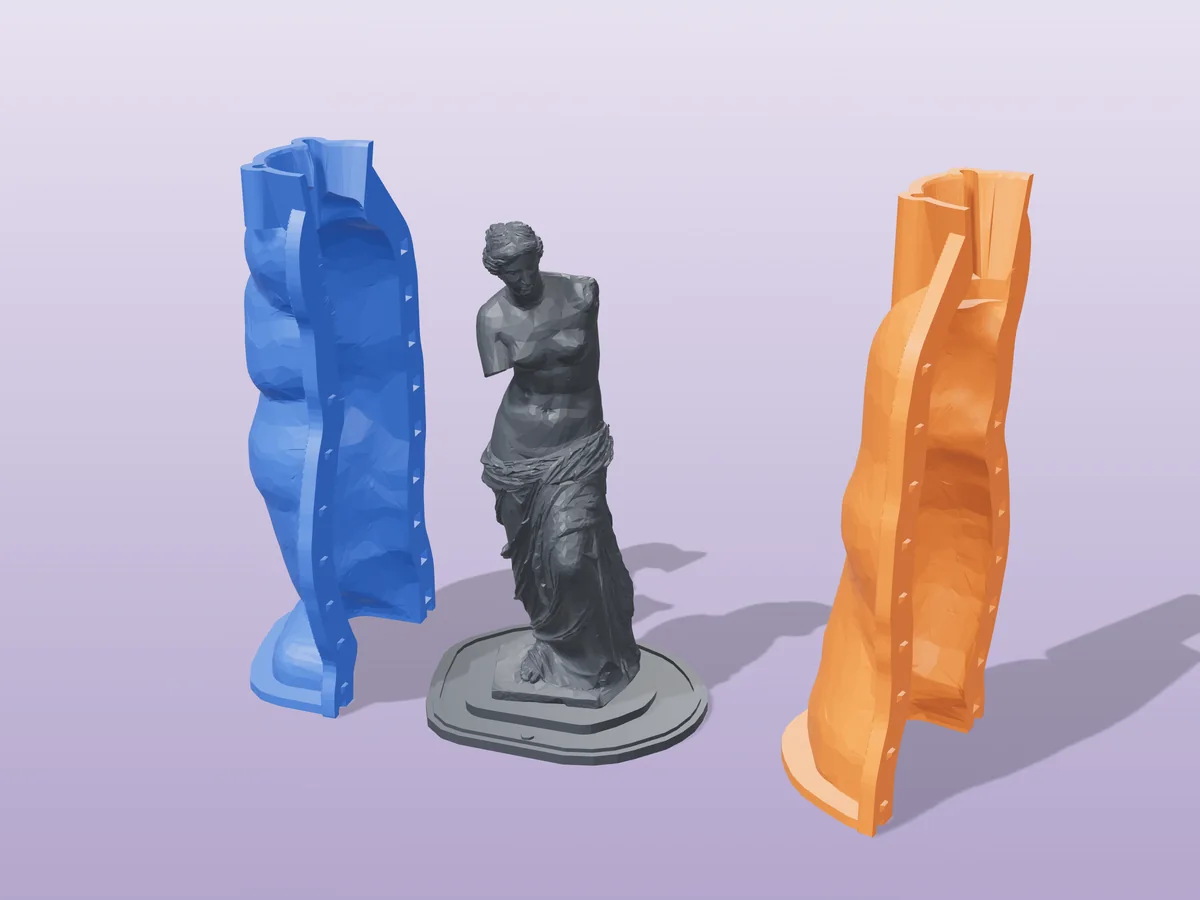
How to make a silicone mold from a 3D print
Print a rigid housing, mix and pour silicone, degas and demold - plus pour gaps, shore hardness and a troubleshooting list.
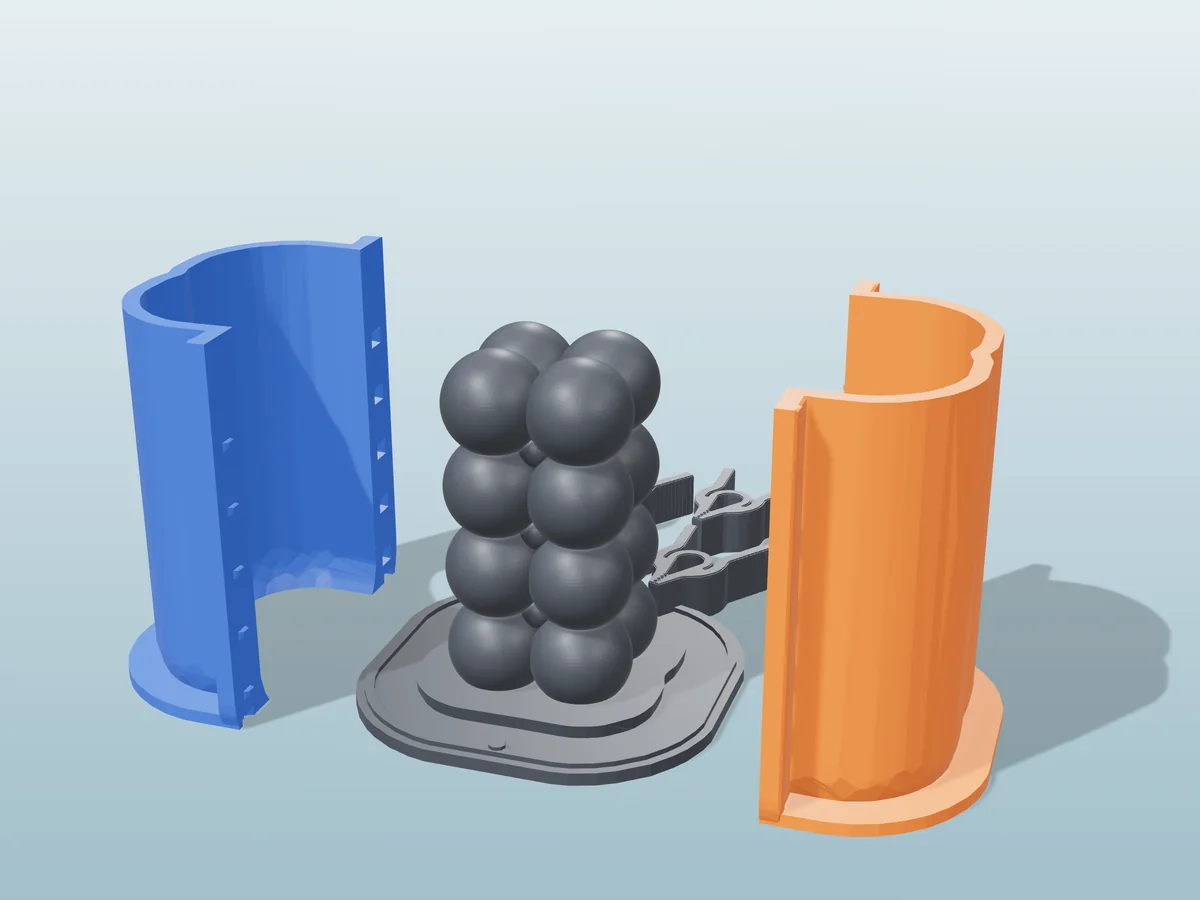
Best print settings for 3D-printed molds
Layer height, wall count for watertightness, infill, temperature, speed and orientation - tuned per casting material so your molds don't leak.
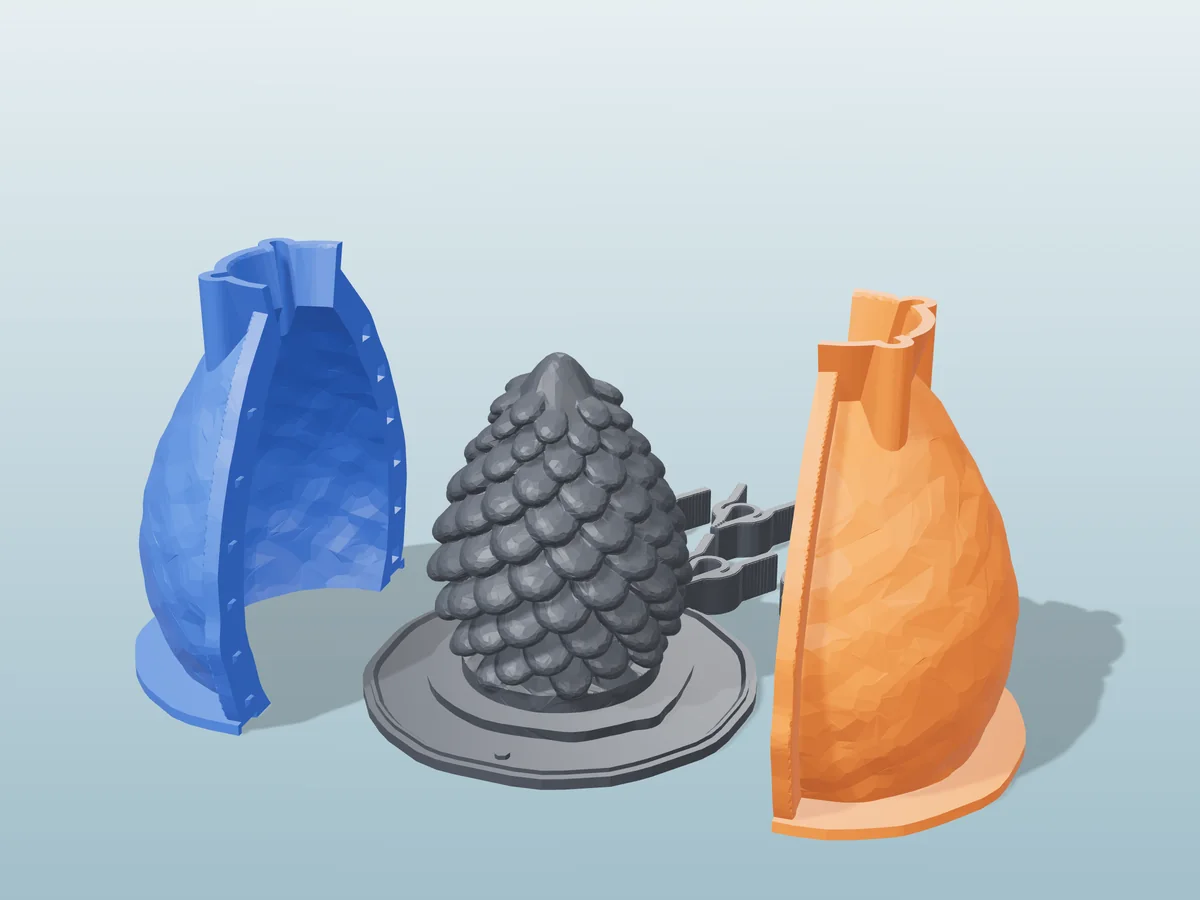
Adaptive silicone molds: use less silicone
Print a shell that hugs your model instead of a big box, then pour a silicone mold using a fraction of the material.
New to 3D printing & casting
10 guidesStart here if this is your first mold: the whole path from a model to a cast, and the mistakes to skip.
STL to mold: turn any 3D model into a printable mold
The whole pipeline on one page: upload an STL, generate a two-part mold with parting line and alignment keys, print it, cast it. Plus which of the mold tools fits your project.
How to make a cast of any object
From "I have a thing" to "I have a copy of the thing" in five steps, and why plaster is the material to start with.
Best print settings for 3D-printed molds
Layer height, wall count for watertightness, infill, temperature, speed and orientation - tuned per casting material so your molds don't leak.
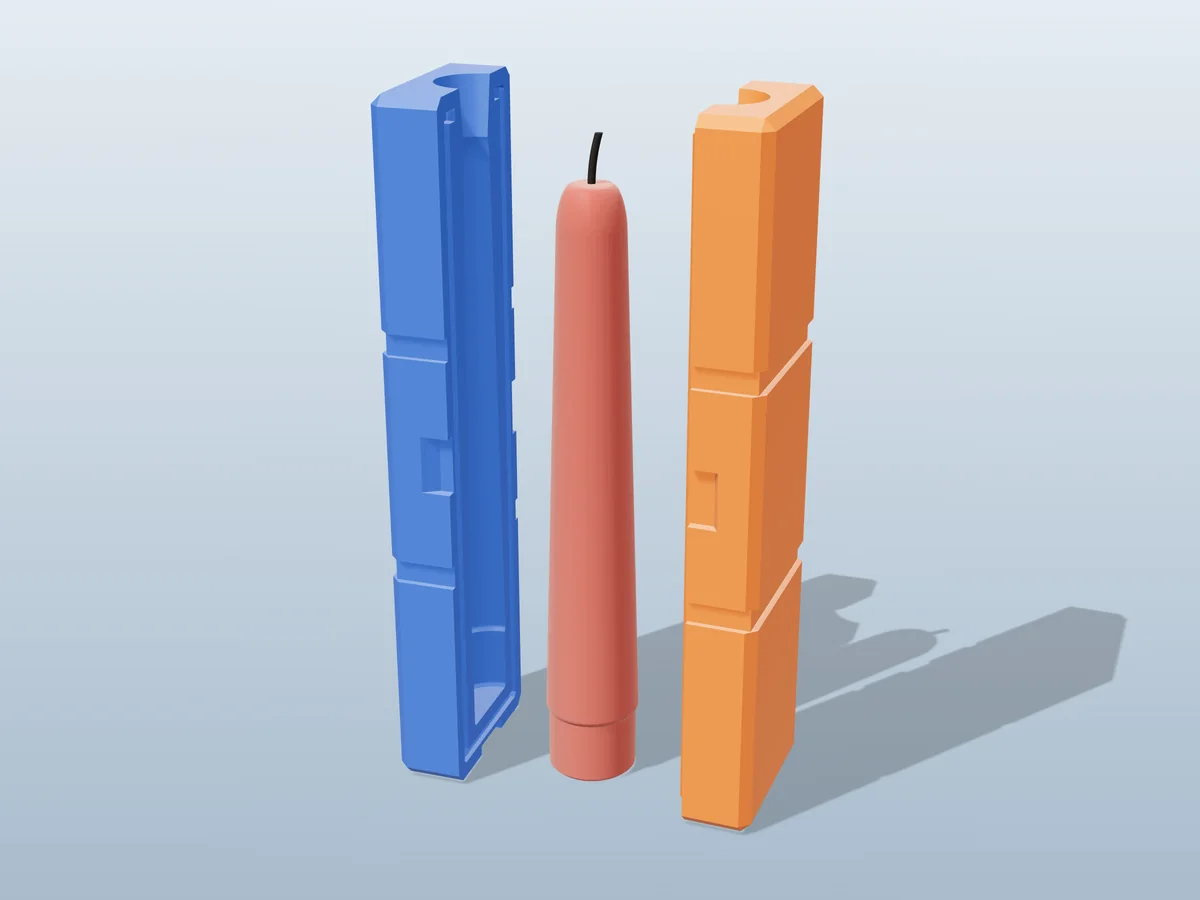
PLA vs PETG vs PP vs TPU: which filament should you use?
The practical answer: when PLA is fine, when to switch to PETG, what PP actually gives you that other plastics don't, and why TPU molds are underrated. Includes a comparison table by casting material.
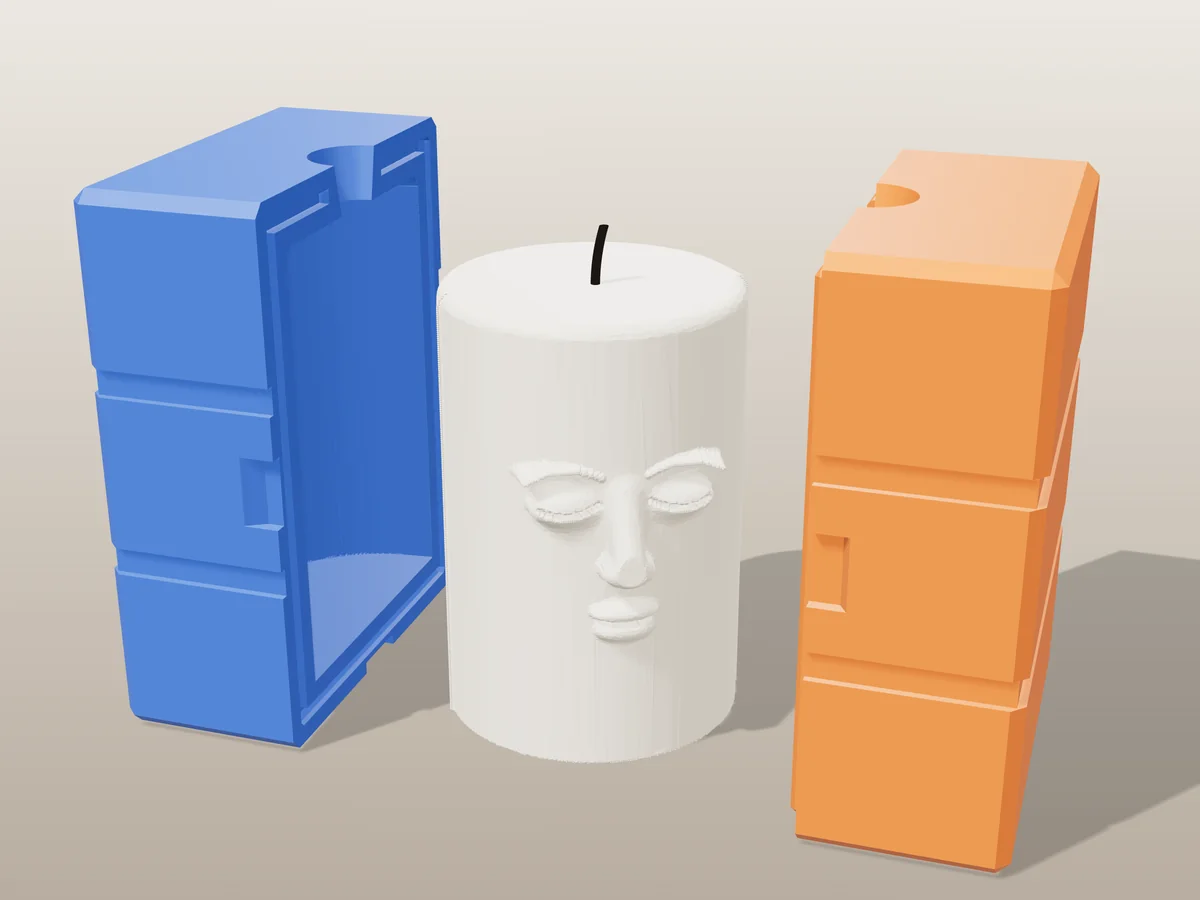
Why was my model rejected?
Every error a mold generator can show, in plain English: not watertight, could not process, repair budget, too large, too small, empty half - and the fix for each one.
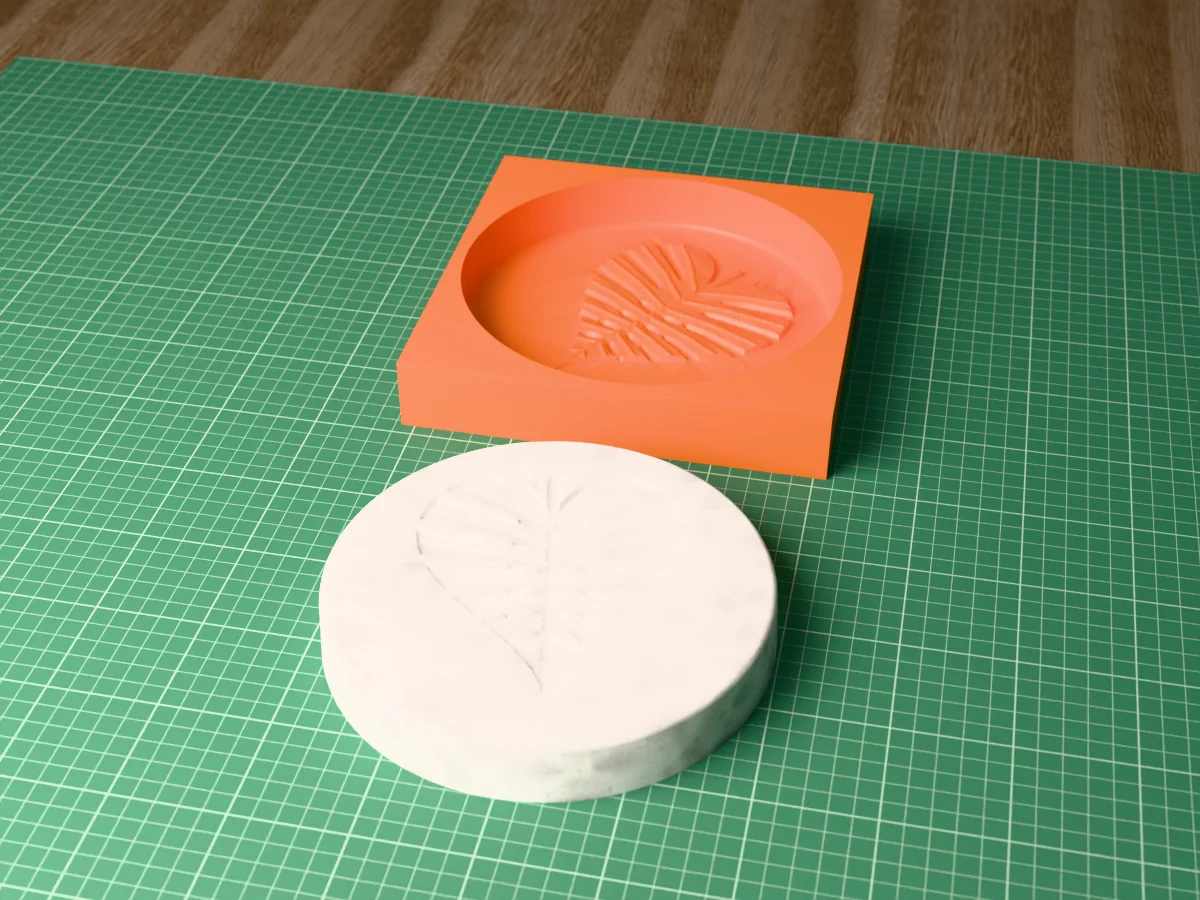
Mold release agents: the complete guide
Which release agent to use for resin, silicone, plaster, concrete, soap and wax in a printed mold - how to apply it, homemade options, and the mistakes that ruin a cast.
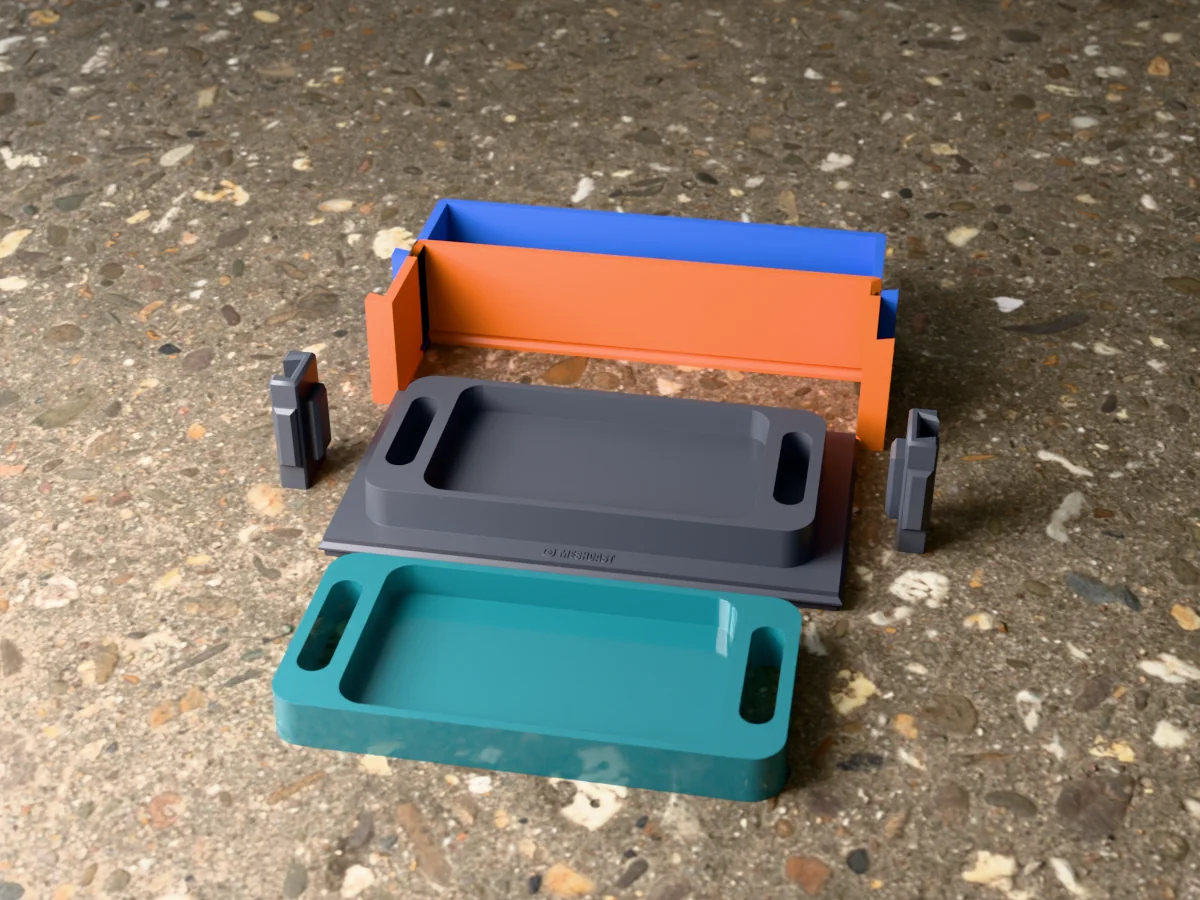
Silicone molds vs direct-print molds
When a $5 plaster pour into a PLA mold is the right call, and when to invest the extra hour casting a silicone intermediate. Covers durability, detail, cost, and heat resistance.
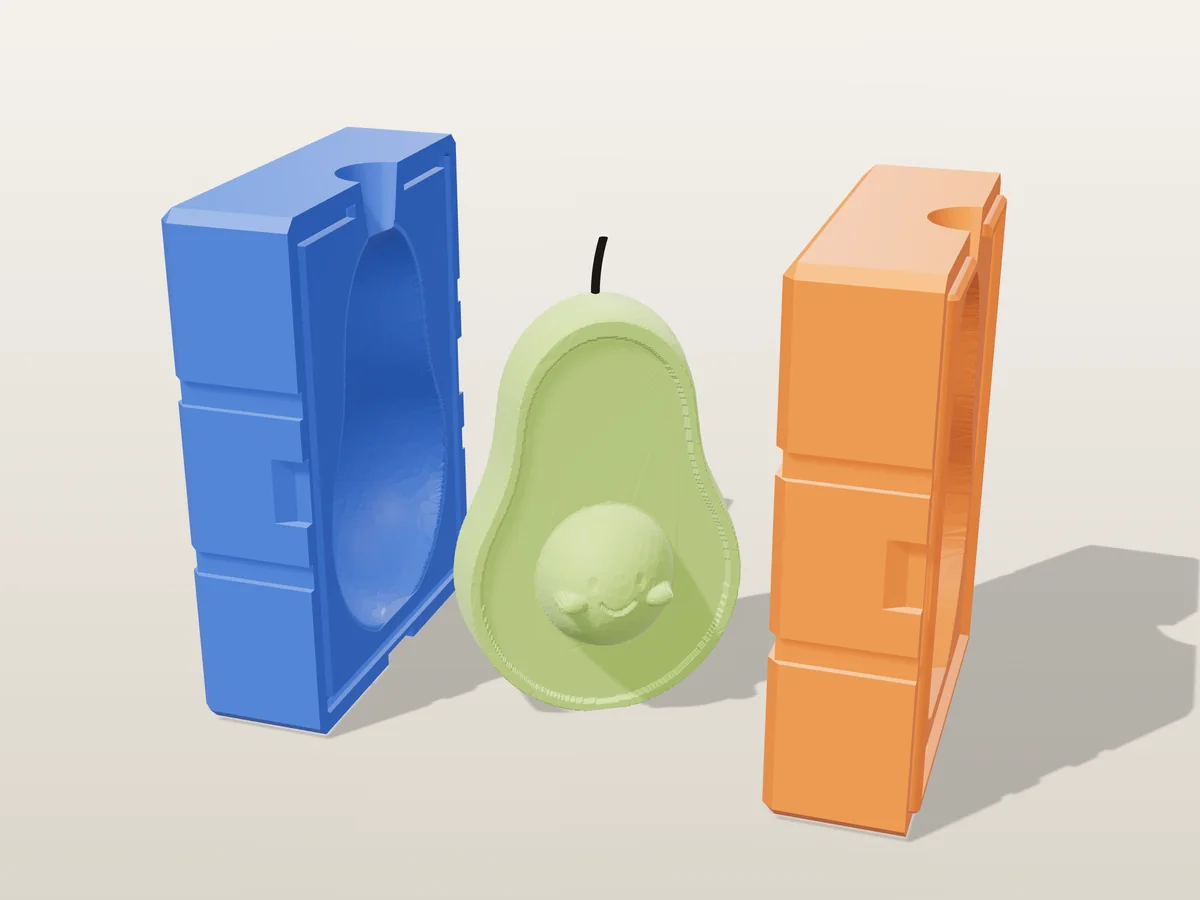
Draft angles & undercuts: molds that release
How much taper to design in, how to spot undercuts, where to put the parting line, and when to split the mold or go flexible.
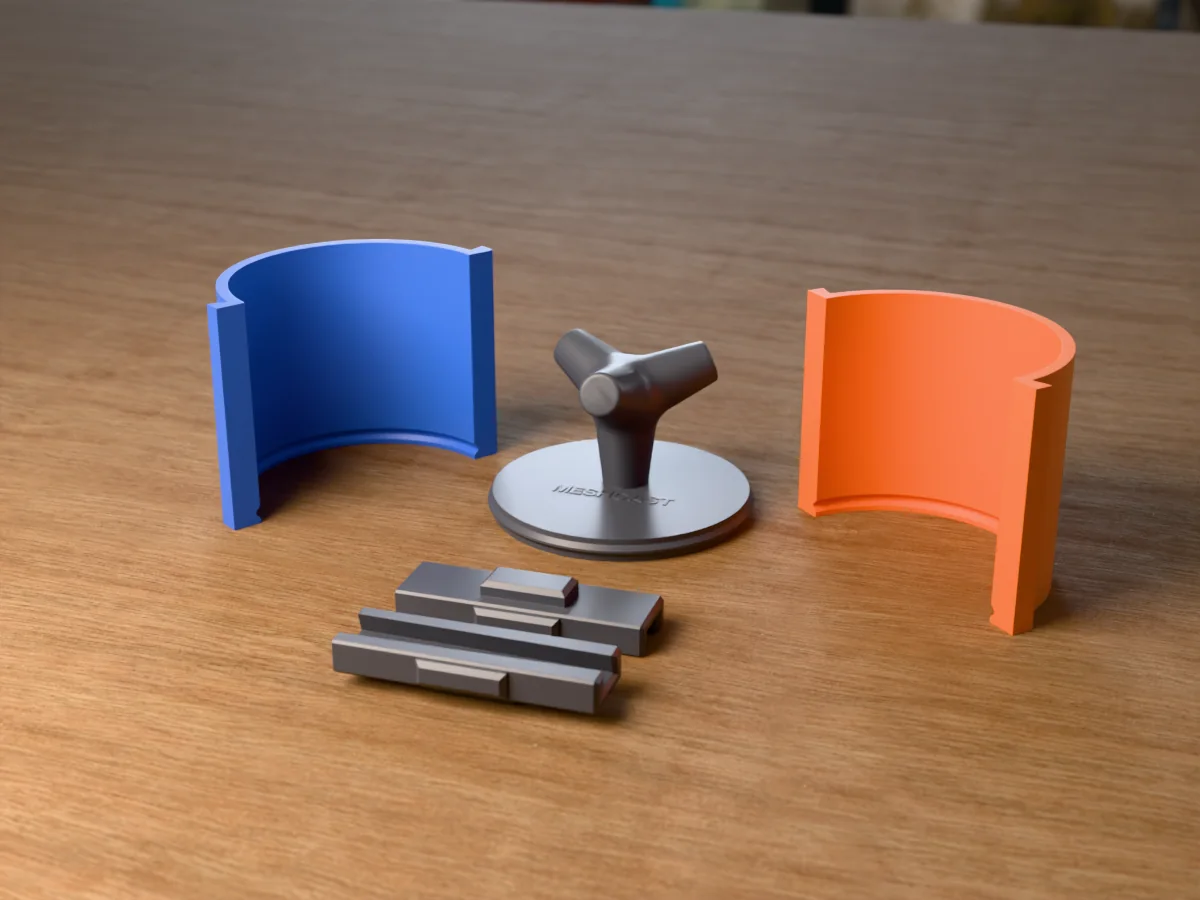
How to 3D print a mold for silicone casting
A rigid printed mold or a silicone mold in a printed shell: pour and vents, seams, undercuts, and the release that stops silicone bonding to silicone.
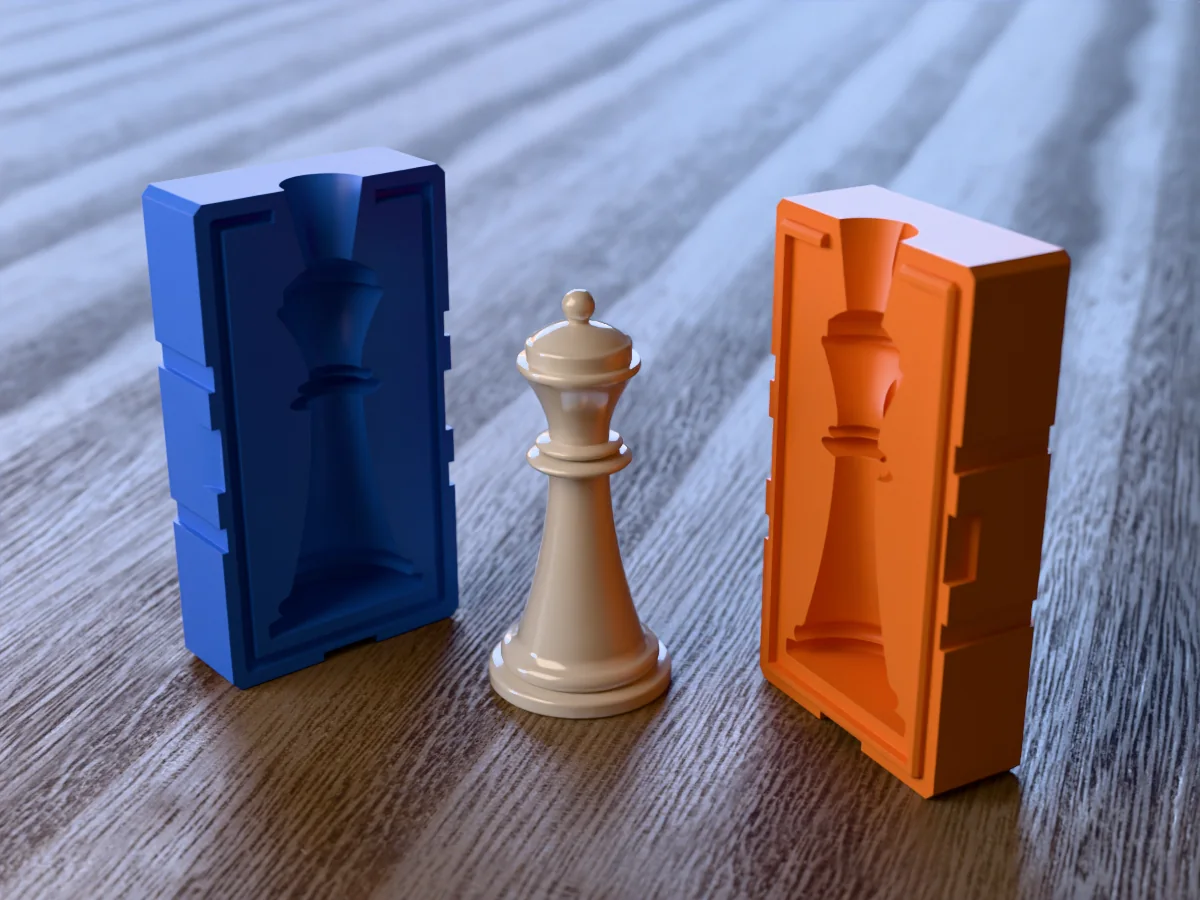
Casting troubleshooting: symptoms, causes & fixes
Bubbles, sticking, cracking, incomplete fill, rough surface, warping and seam leaks - the likely cause and the fix for each.
Start here
12 guidesMoldboxer alternative: a free mold box generator in your browser
Which Meshcast tool replaces which feature, the silicone-saving hugging shell, and an honest list of where desktop software still wins.
STL to mold: turn any 3D model into a printable mold
The whole pipeline on one page: upload an STL, generate a two-part mold with parting line and alignment keys, print it, cast it. Plus which of the mold tools fits your project.
How to make a cast of any object
From "I have a thing" to "I have a copy of the thing" in five steps, and why plaster is the material to start with.
Free mold making software: what actually works
The four categories people confuse for each other, which one fits your job, the free Blender boolean method written out, and where AI genuinely helps.
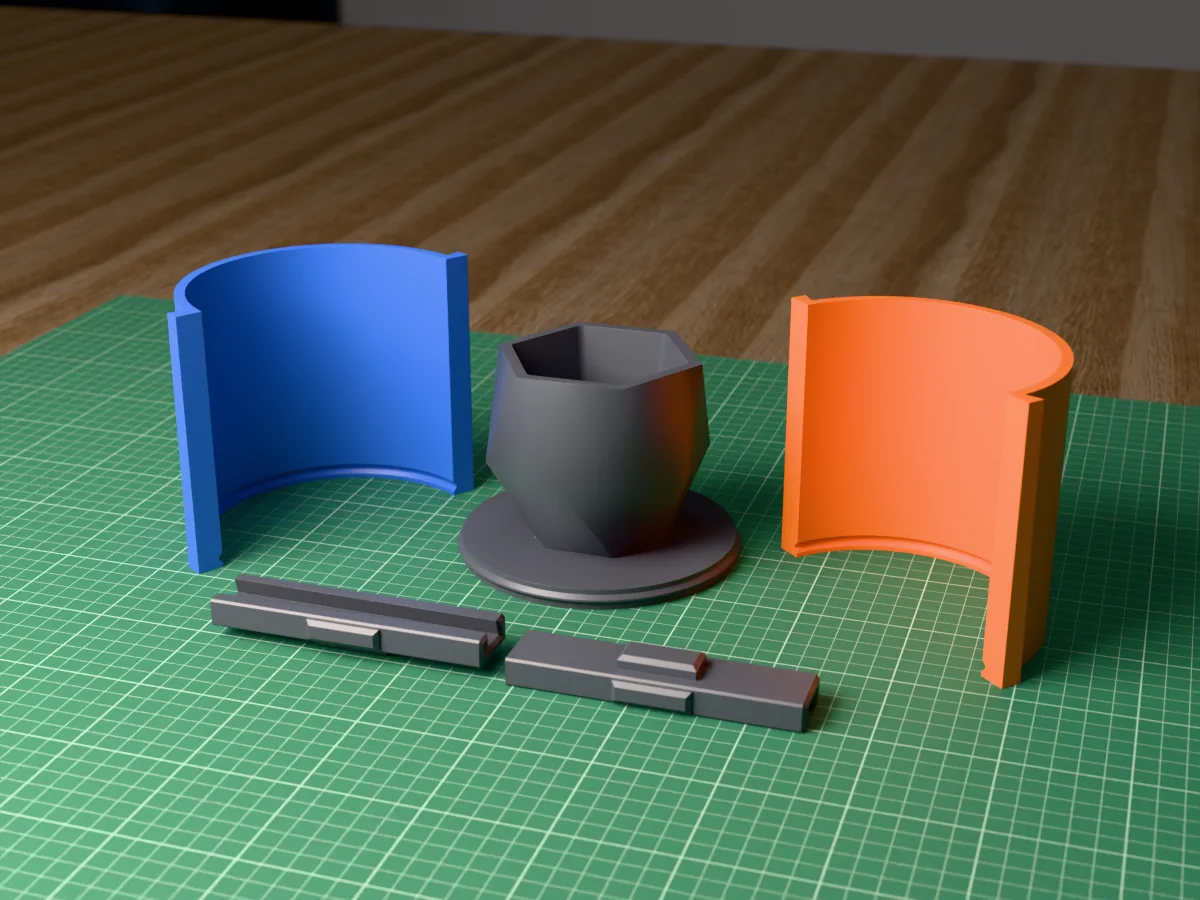
Mold box generator: a printable silicone mold box from any STL
What a mold box actually is, how much silicone to leave around the master, and when a hugging shell beats a box outright.
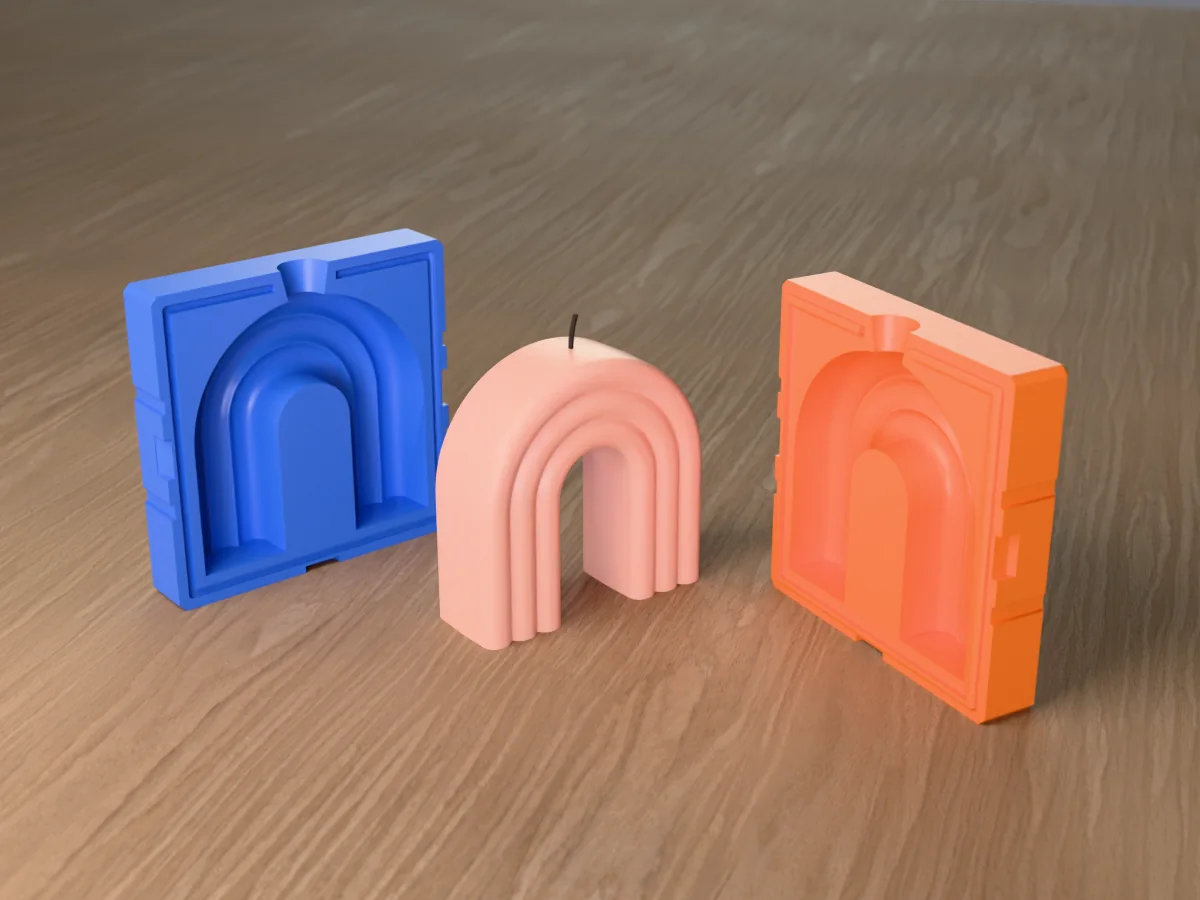
Can you 3D print candles?
You don't print the wax, you print the mold. What actually works, what doesn't, and the safe way to get a custom-shaped candle.
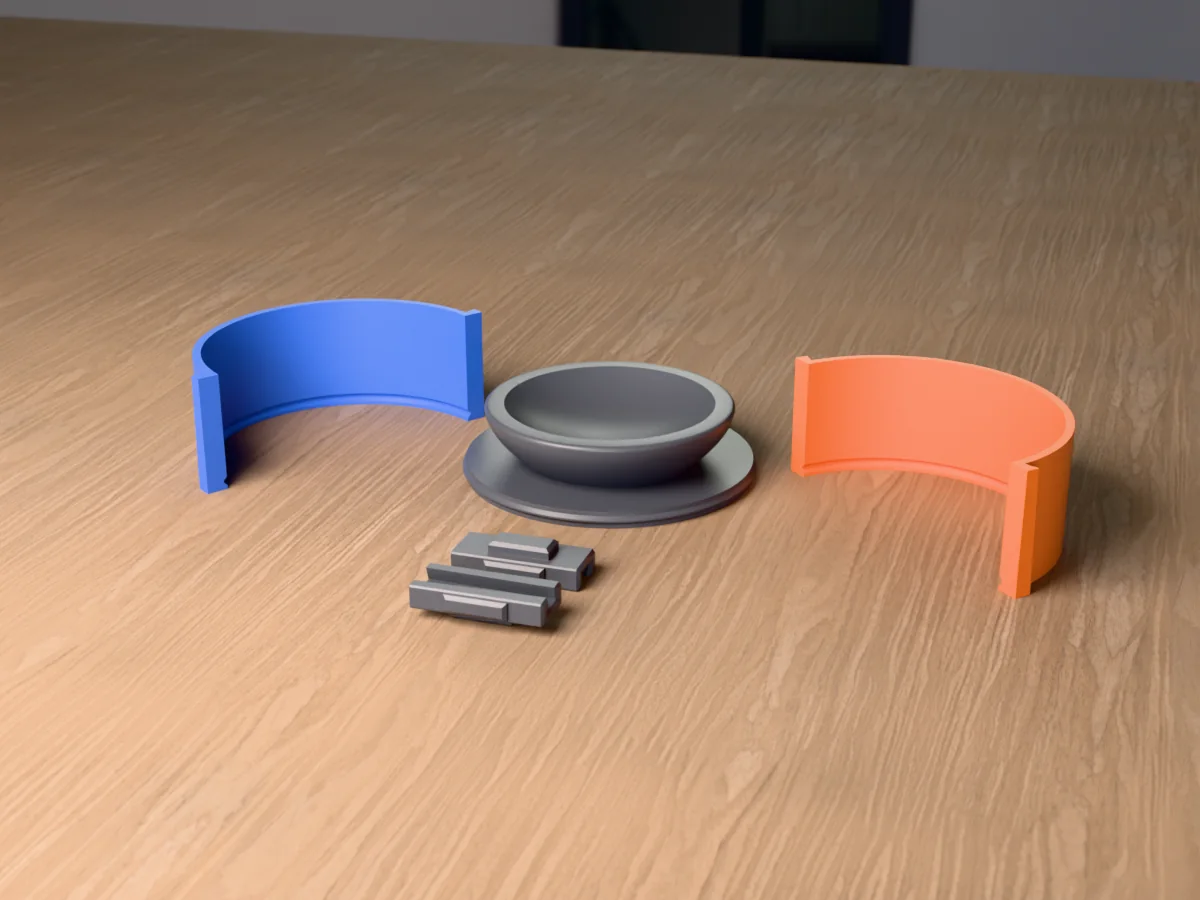
MoldStudio3D alternative: an honest comparison
The closest browser mold studio, compared feature by feature: free tiers, pricing, where it is stronger (ceramics, local processing) and where Meshcast is.
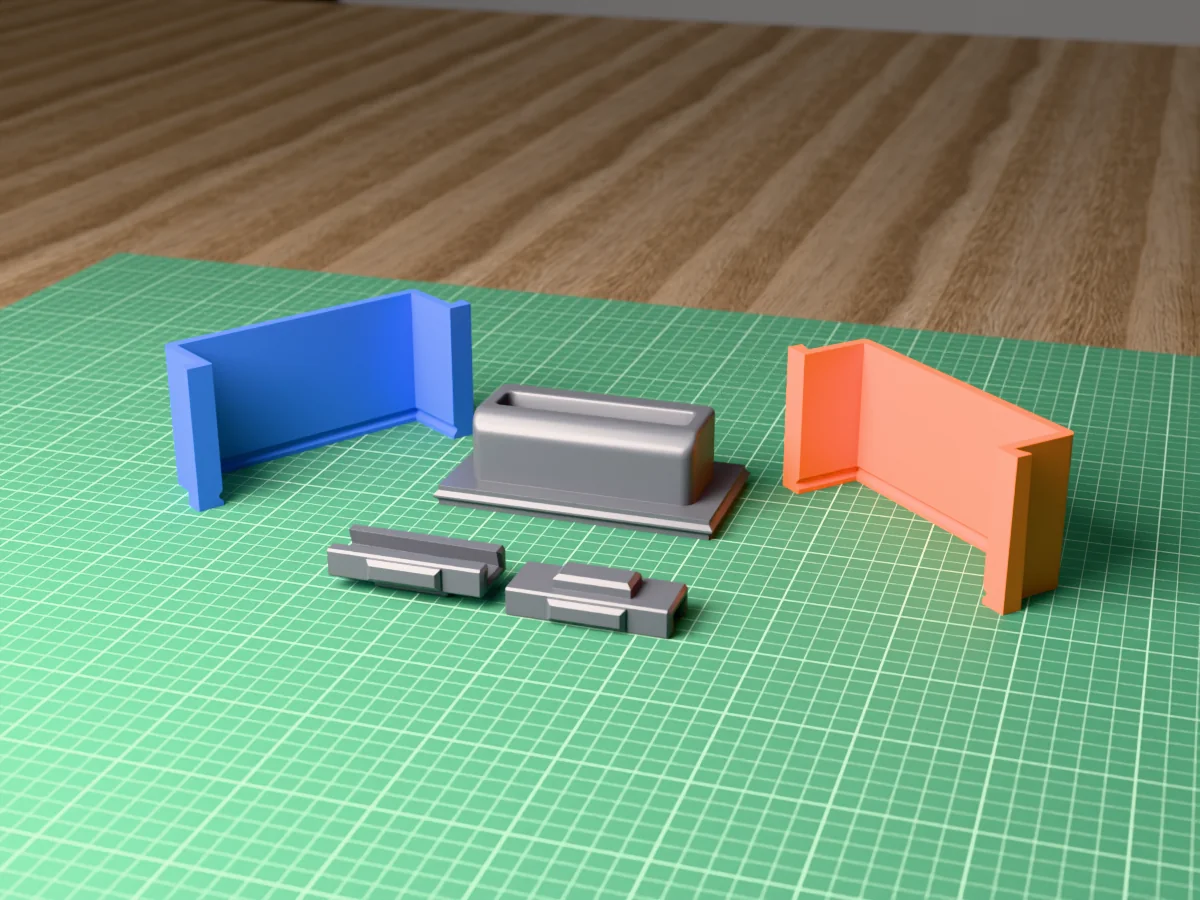
PrintPal alternative: its mold box generator vs Meshcast
PrintPal's free mold box tool against dedicated mold generators: pricing, where each one wins, and which to pick for your material.
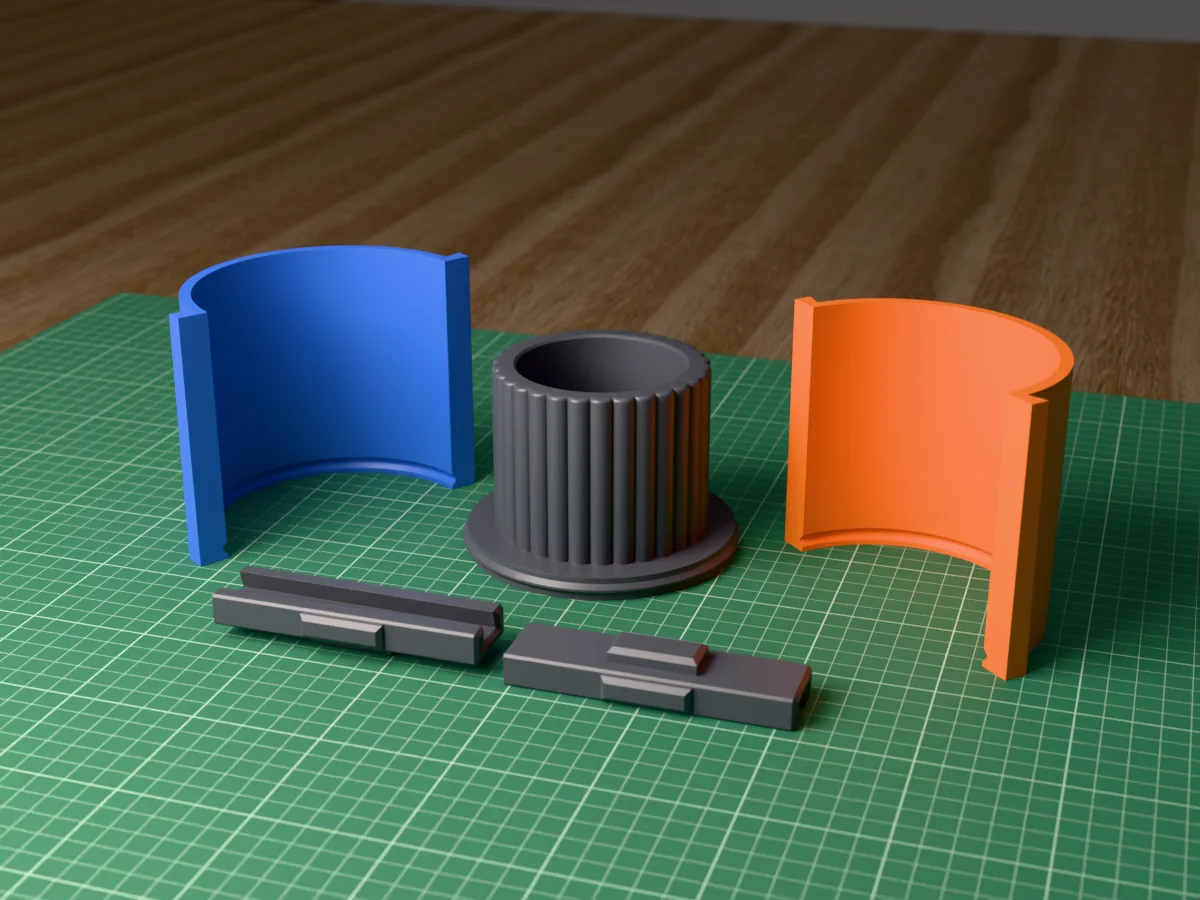
How to make a mold in Blender, step by step
The free Boolean method written out: mesh checks, splitting, keys, pour spout and export, plus fixes for every way the boolean fails.
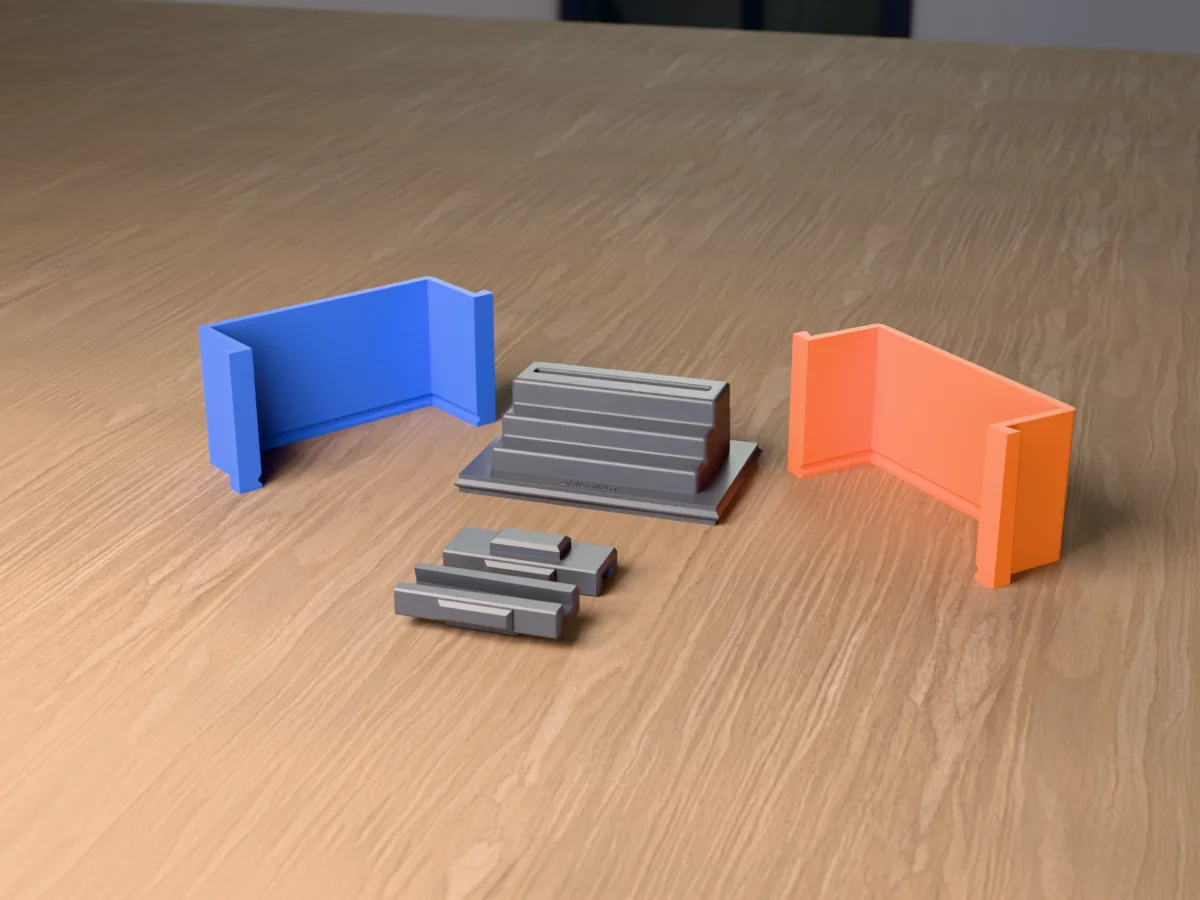
How to make a mold in Fusion 360, step by step
Combine Cut, Split Body, keys and a sprue, how to convert a downloaded STL, and what the free personal licence allows if you sell.
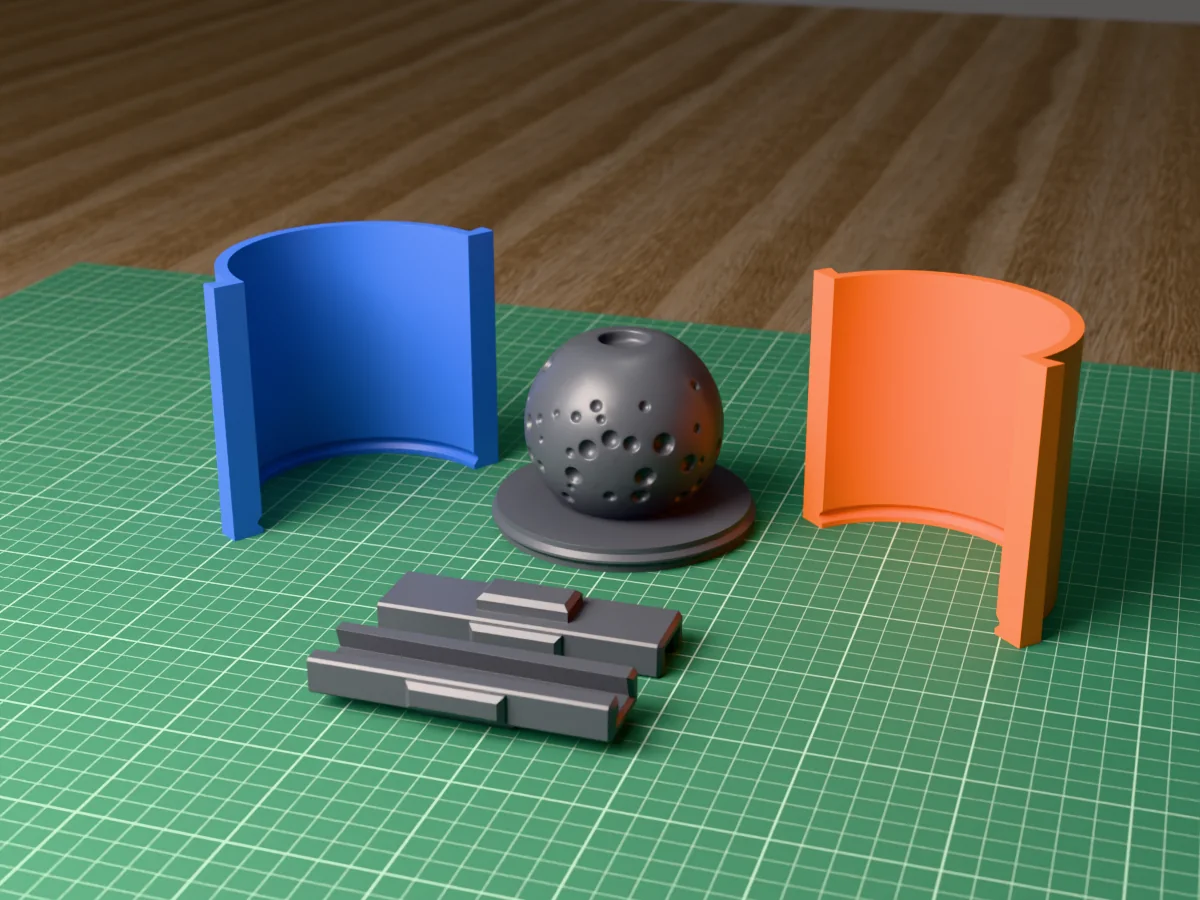
Meshmixer alternative for making molds
Meshmixer is no longer developed. A browser generator, Blender and Fusion compared for mold making, and which one fits you.
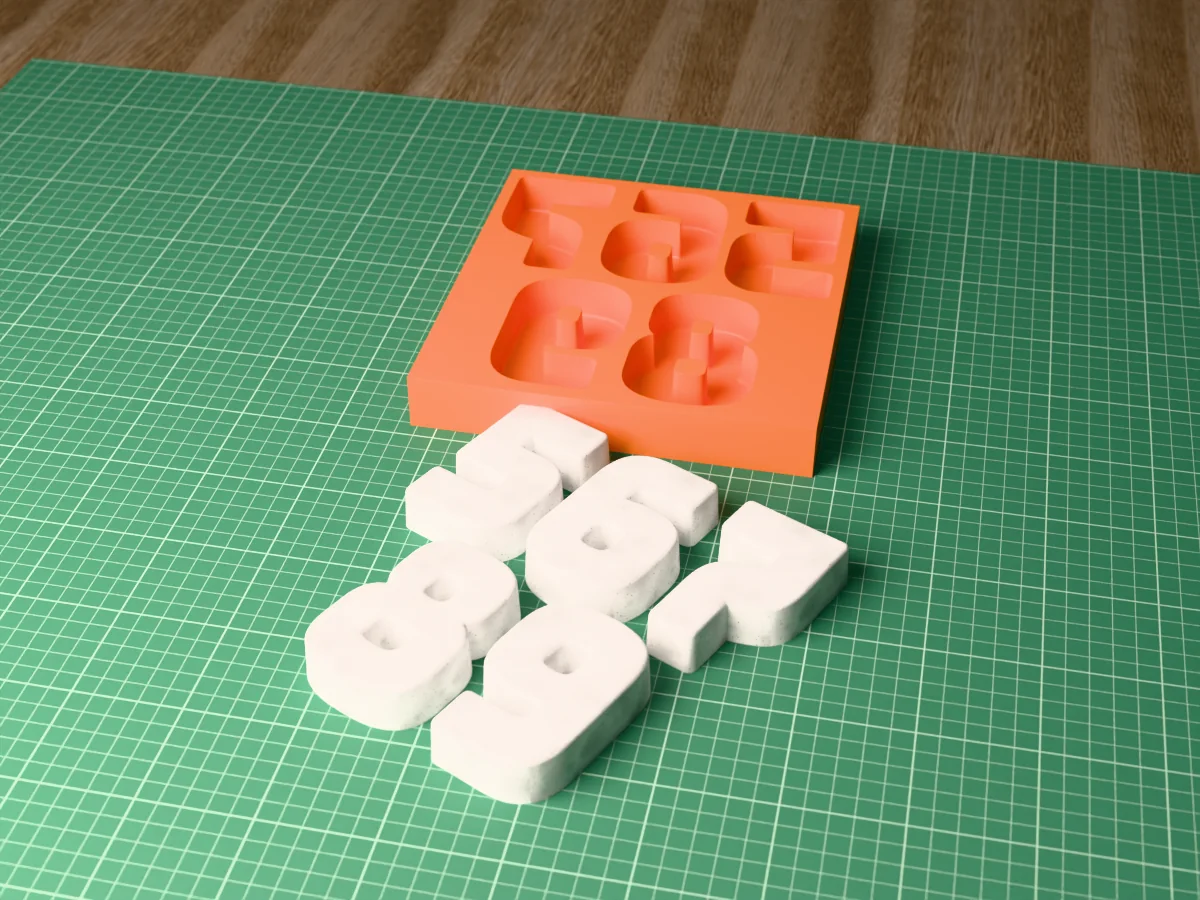
How much should you charge for what you cast?
Your true cost per piece, the 2 to 2.5x markup convention, real marketplace fee maths, and the commercial-rights rule most first-time sellers miss.
Cast a material
19 guidesHow to make a candle mold
Design and 3D print a reusable two-part candle mold, then pour wax and release a clean candle.
How to cast plaster, jesmonite & concrete
The most forgiving material to start with. Covers mix ratios, the right release agent for each binder, how to seal two-part mold halves without leaks, and what makes jesmonite different from standard plaster.
How to make a silicone mold from a 3D print
Print a rigid housing, mix and pour silicone, degas and demold - plus pour gaps, shore hardness and a troubleshooting list.
Adaptive silicone molds: use less silicone
Print a shell that hugs your model instead of a big box, then pour a silicone mold using a fraction of the material.
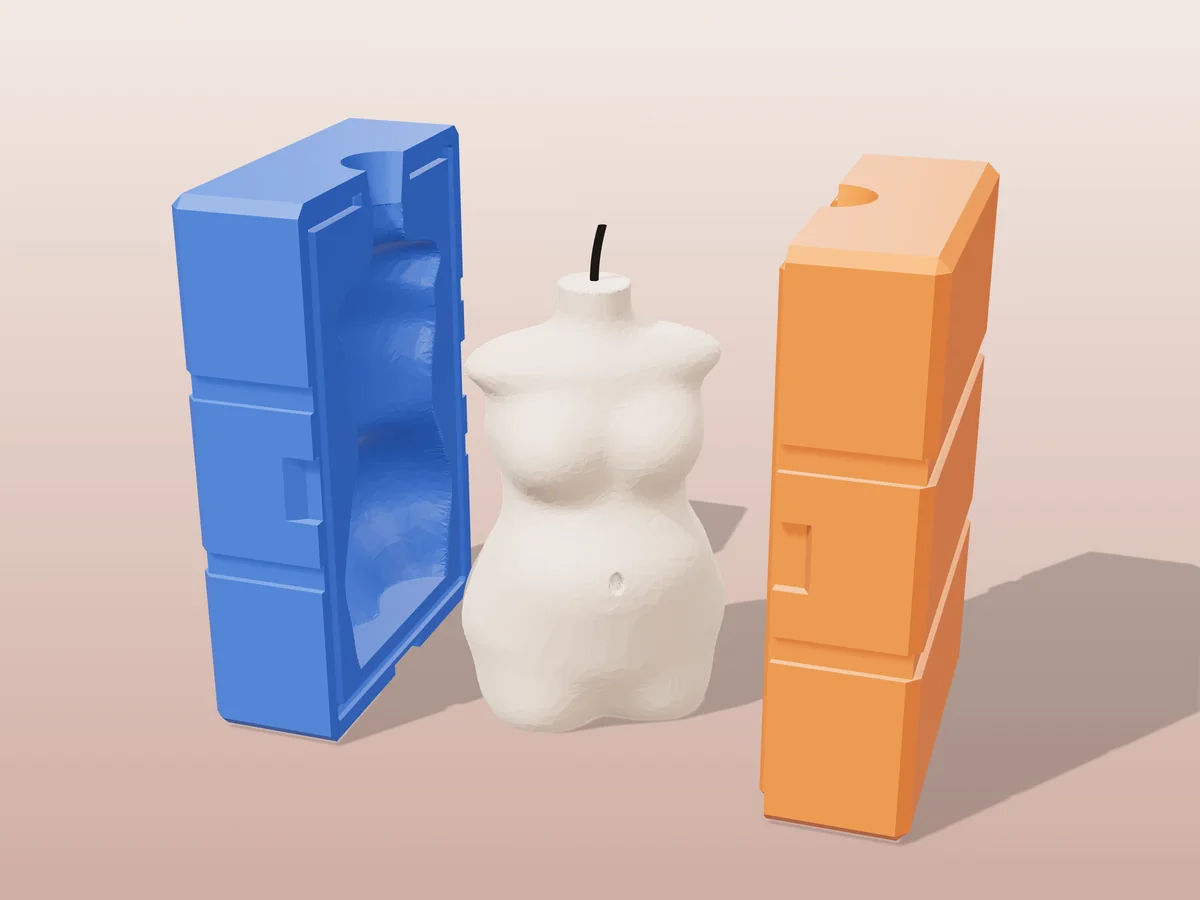
How to make a candle from a 3D-printed mold
Wick sizing, pour temperatures by wax type, how to demold without cracking, and a one-page troubleshooting chart.
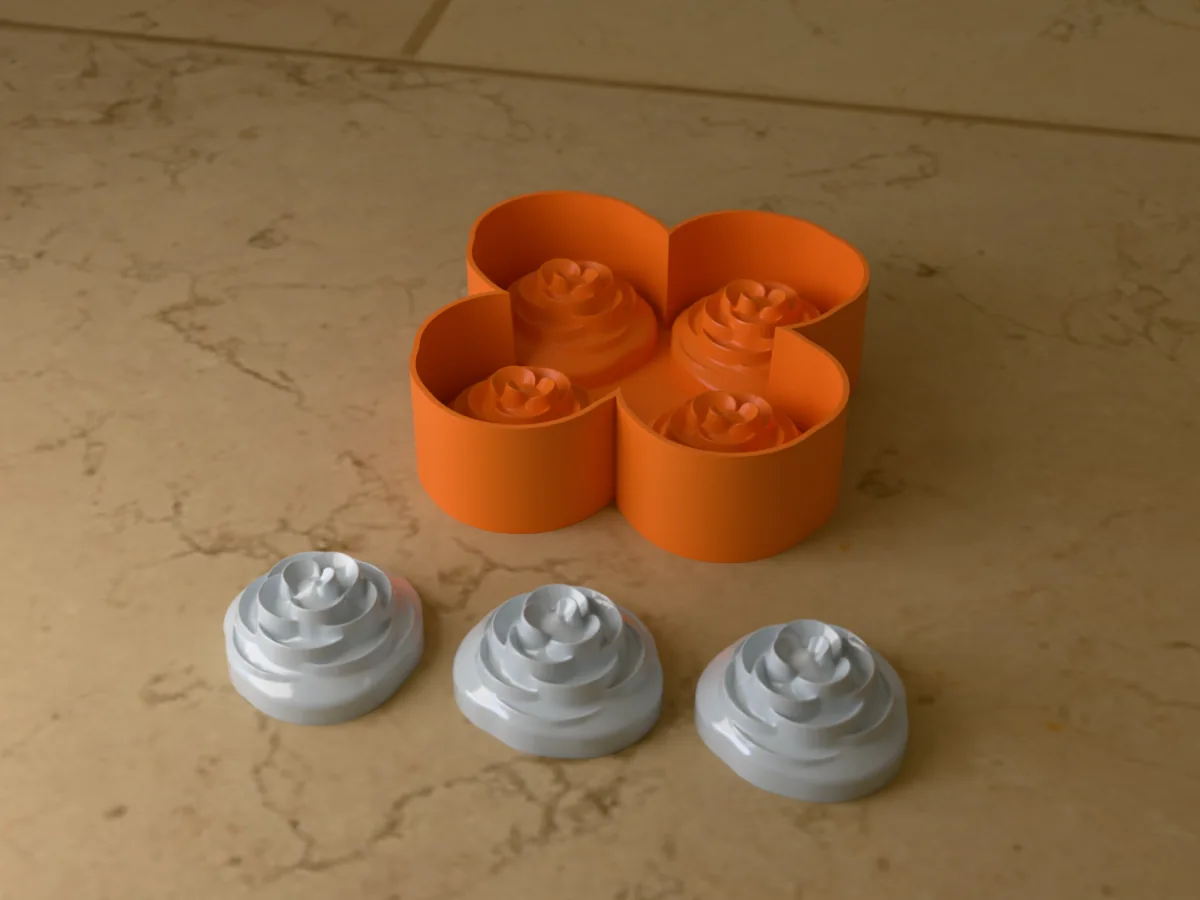
How to make silicone ice cube molds
Use a 3D-printed positive to cast food-safe silicone ice molds at home, including how to get perfectly clear ice.
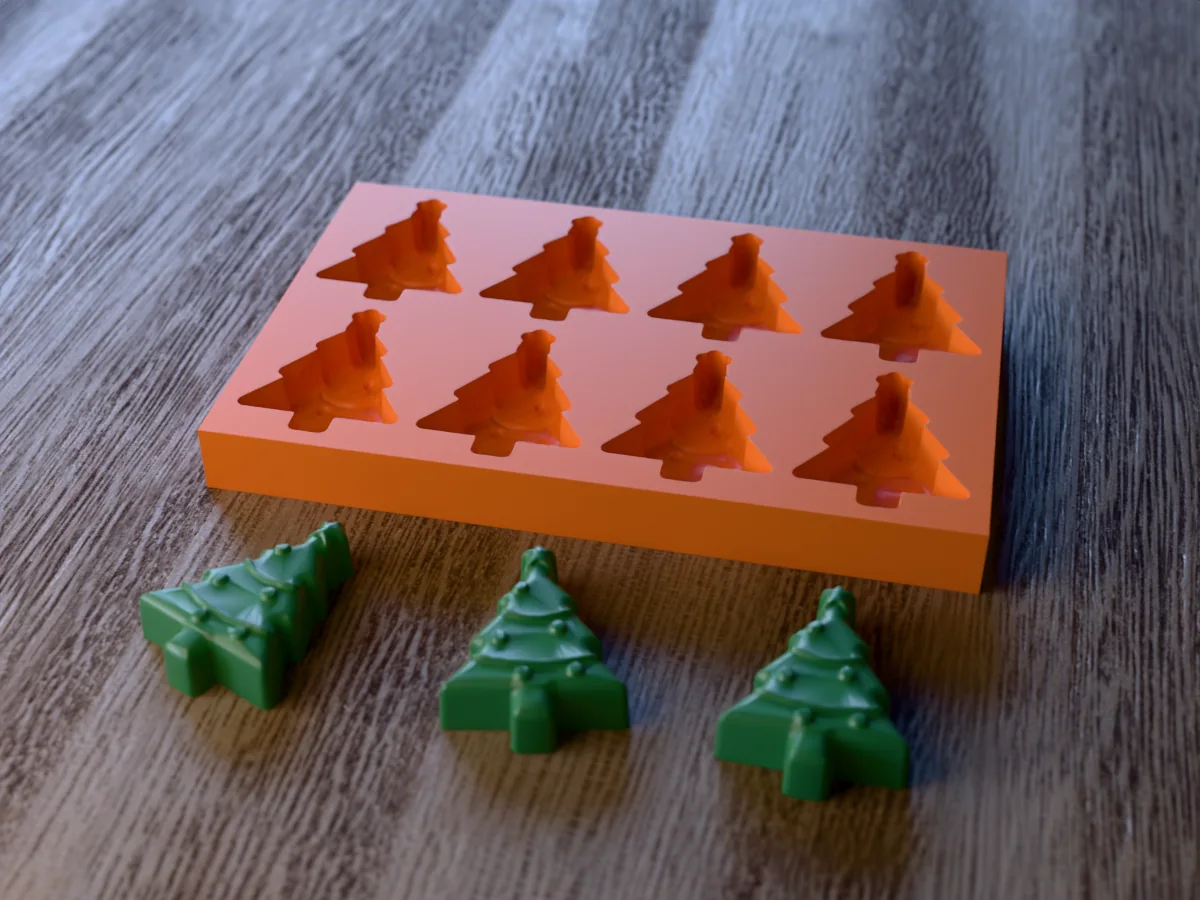
How to make a custom ice cube tray mold
A multi-cavity mold plus a flexible silicone caster - for ice, chocolate, gummies, wax melts and resin embeds, in any shape.
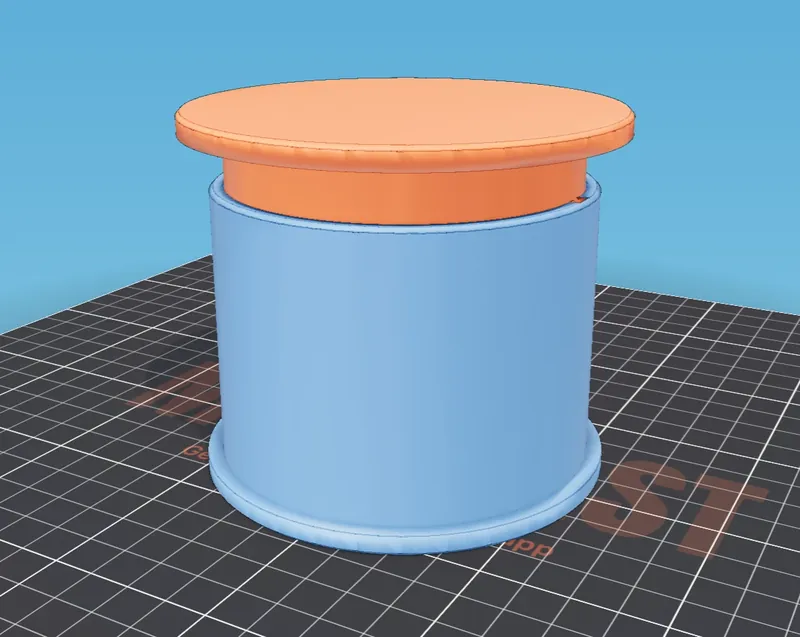
How to make a press mold
Design a reusable die + piston press mold, print it in PLA or PETG, pack the mix, clay, soap, bath bomb powder, and press out a clean shape every time.
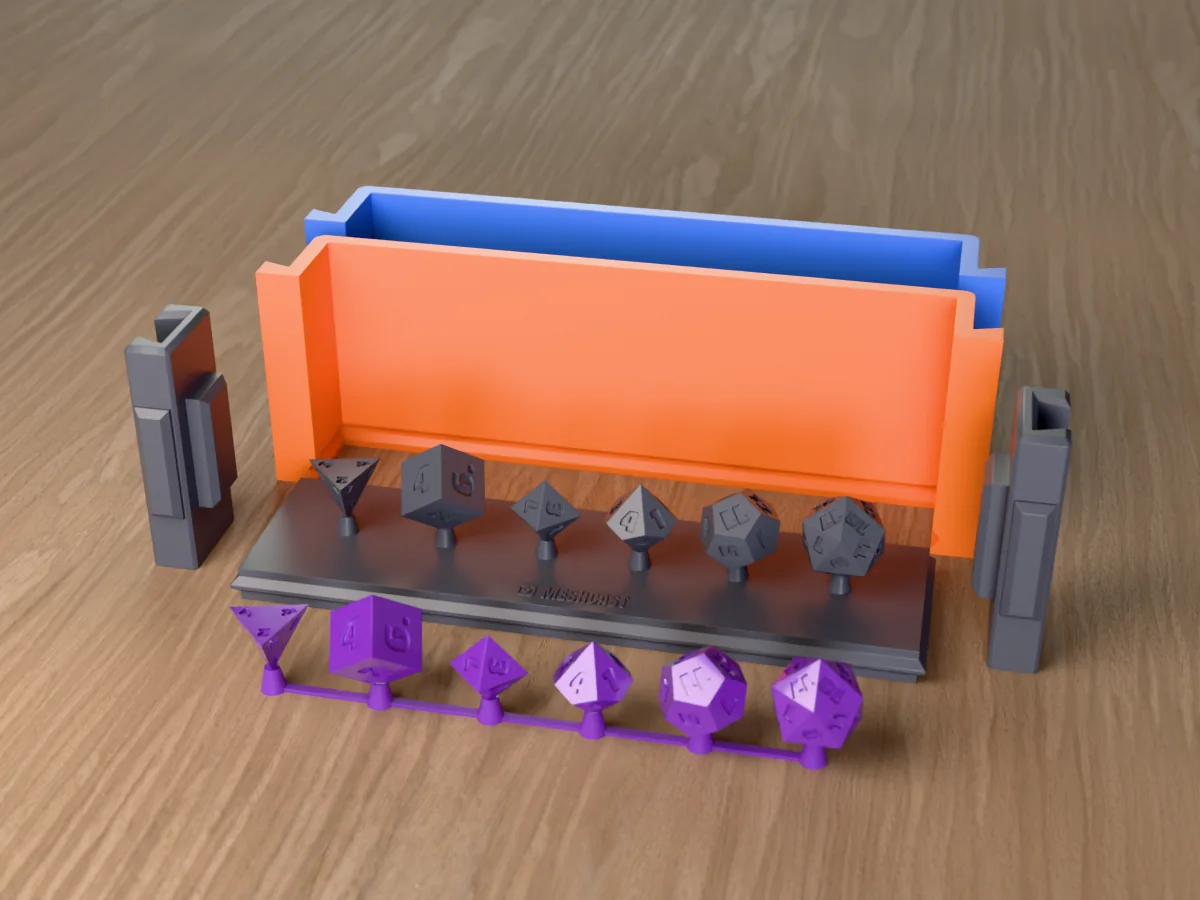
How to cast resin in a 3D-printed mold
Choosing between epoxy and polyurethane, managing exotherm so your mold doesn't warp, mixing ratios, and demolding without tearing.
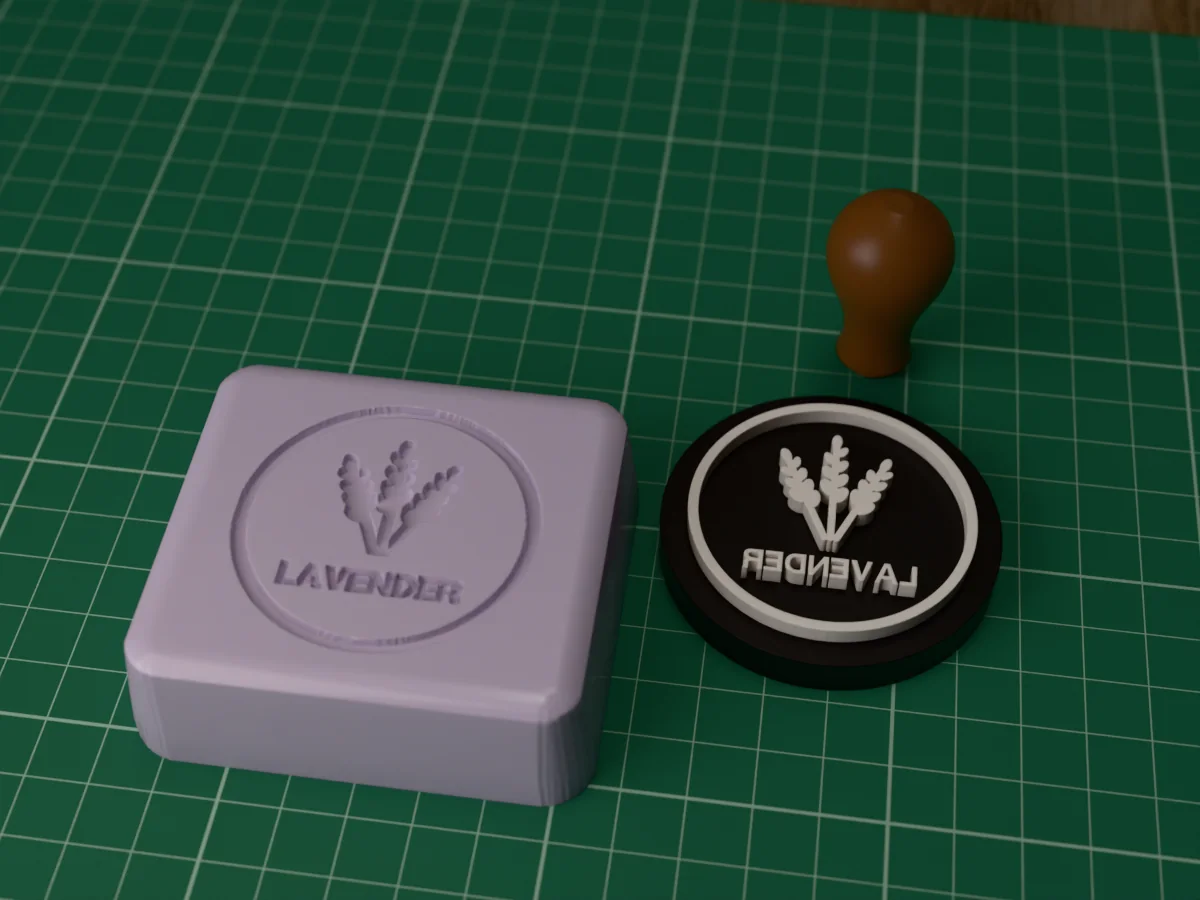
Cold-process soap in a printed mold
Lye safety, tracing to the right consistency, gel-phase management, and how to demold and cure a custom-shaped bar in 6 weeks.
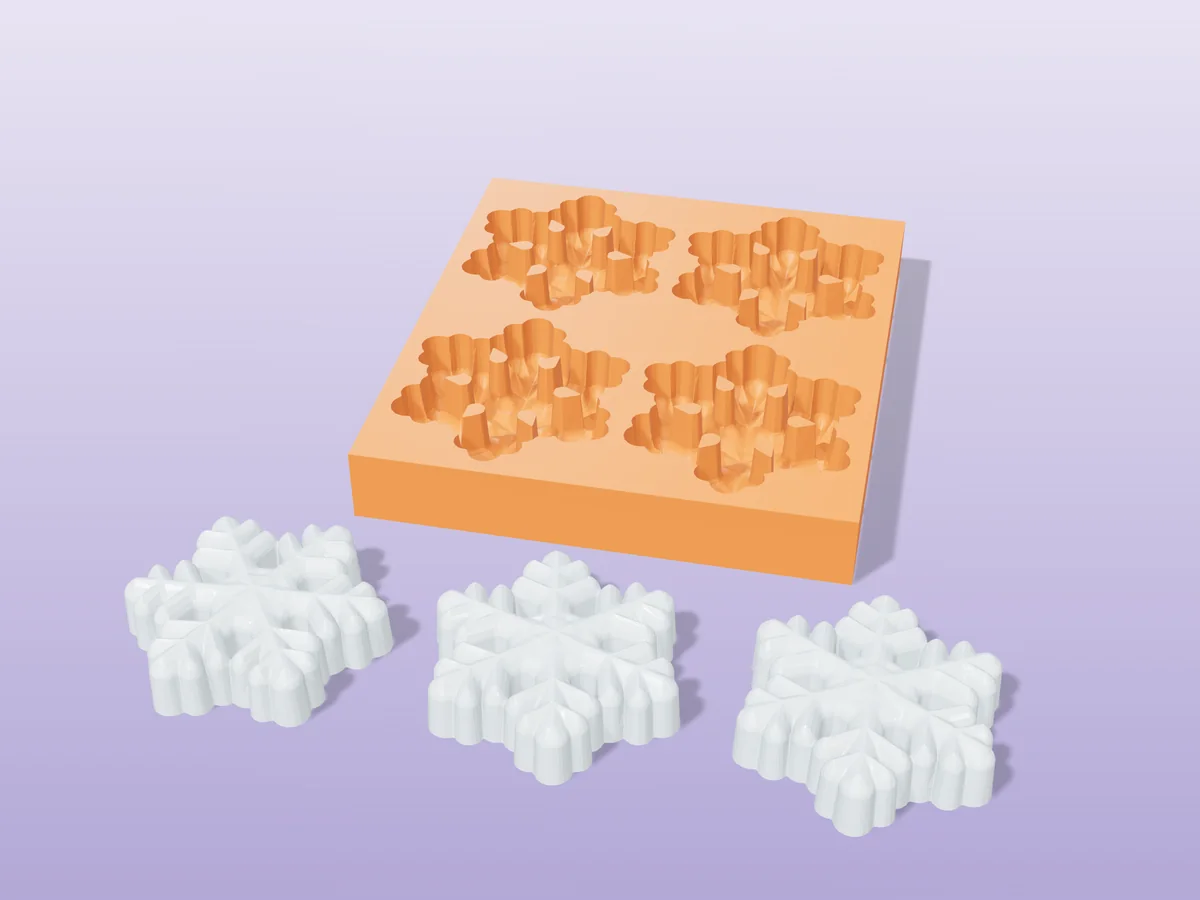
Custom soap molds: design & print your own
Generate a soap mold in any bar shape, print it, and release clean bars, melt-and-pour or cold-process.
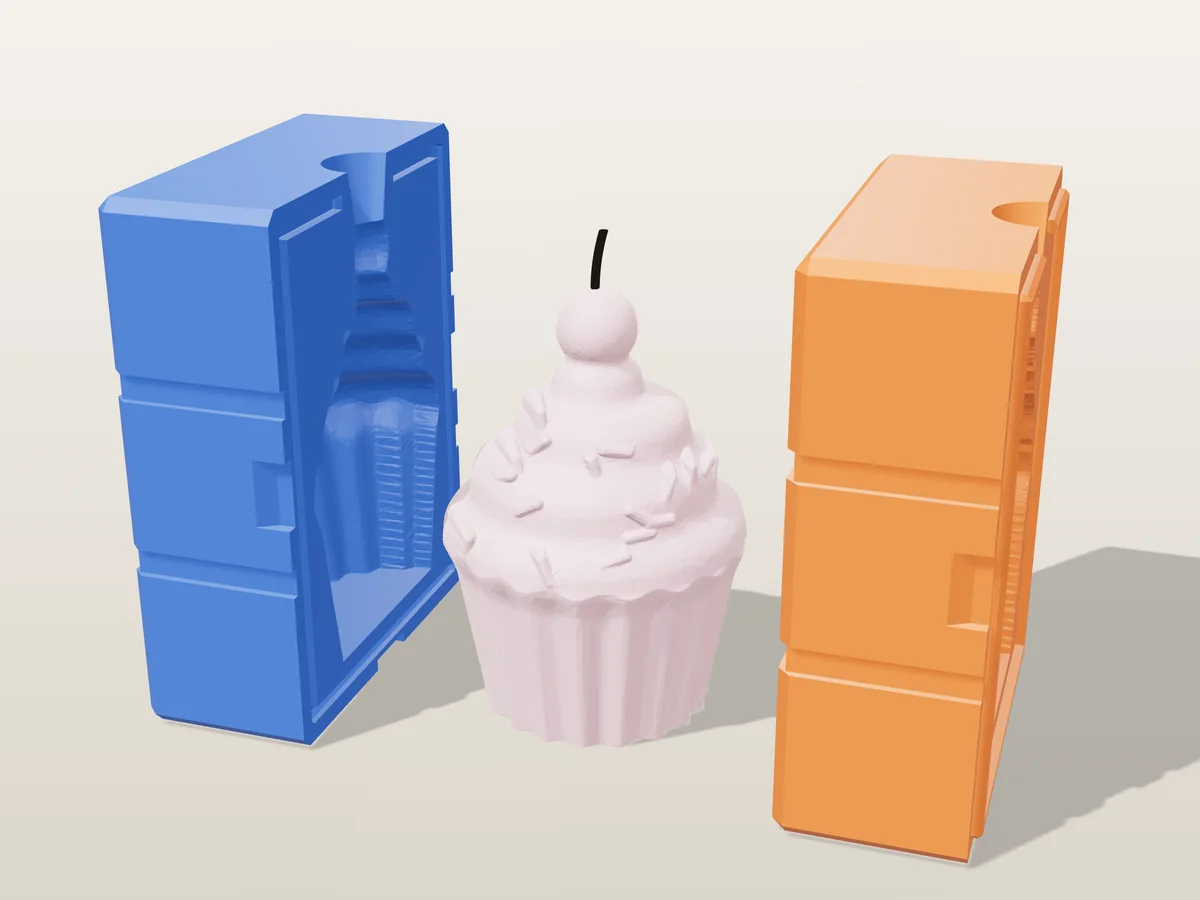
How to make a photo candle mold
Wrap a photo around a candle as a lithophane and cast it from a printed two-part mold. The picture glows when the candle is lit.
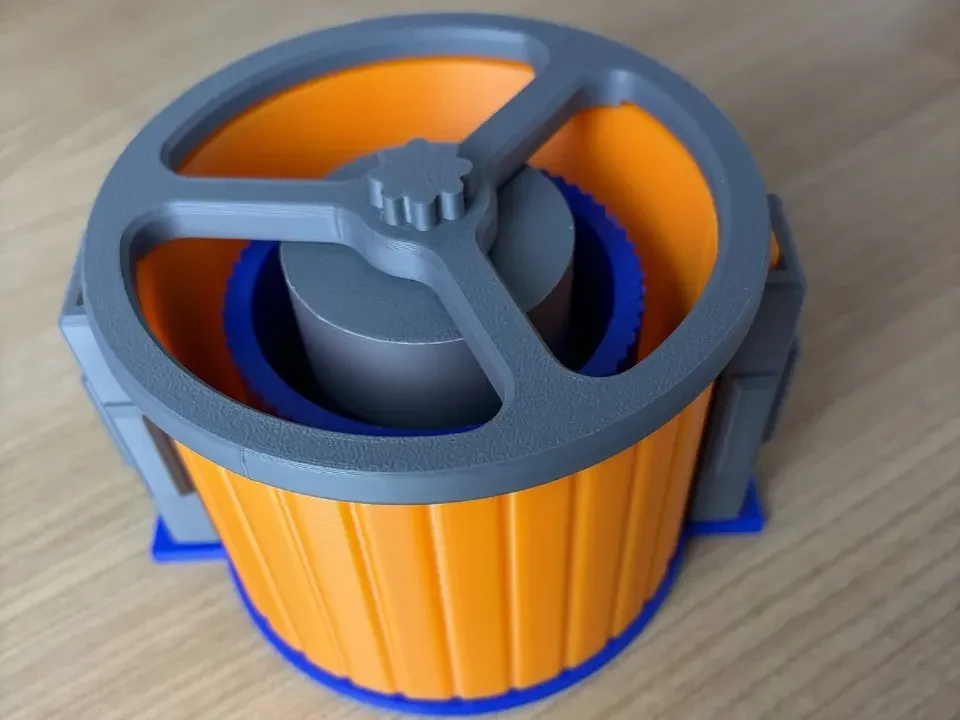
Vase & planter molds: casting a hollow pot
Print the formwork and the inner core, pour a silicone mold from it, then cast a hollow concrete or plaster pot - plus how to use less silicone.
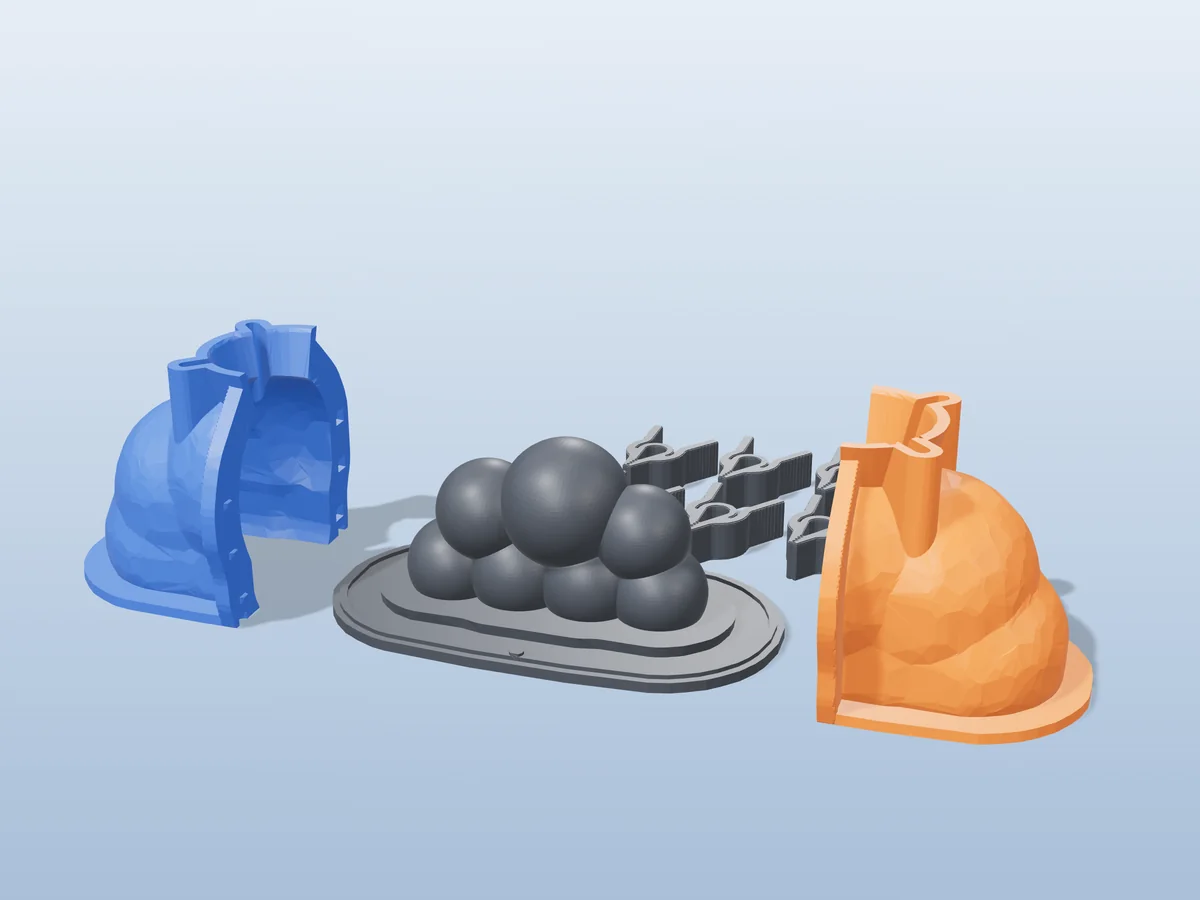
Body-safe silicone casting at home
Cast soft platinum silicone pieces from a 3D print: master, mold, degassing and finishing, plus the three safety rules for anything that touches skin.
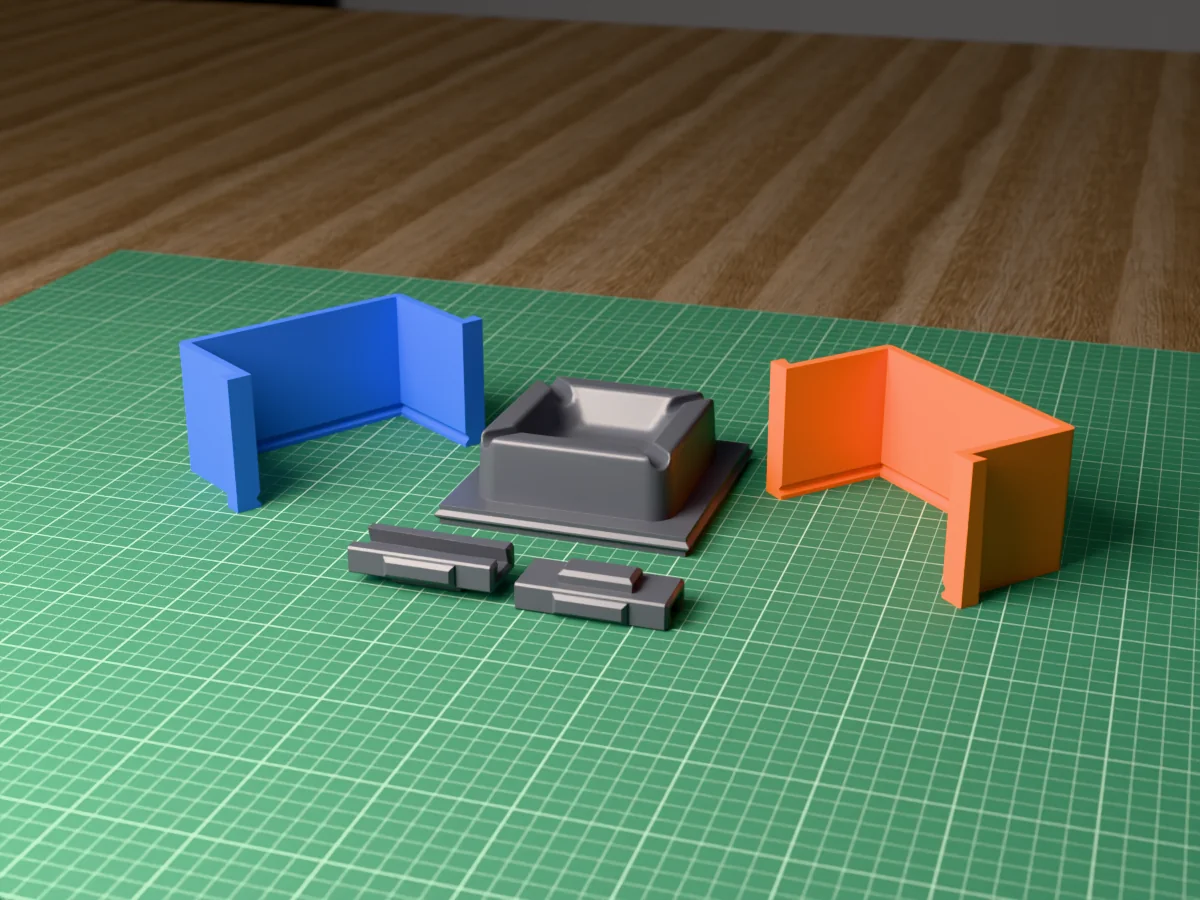
Platinum vs tin-cure silicone
Which silicone is skin-safe and why, how to read the datasheet, choosing a Shore hardness, safe pigments, and why a cast feels sticky.
How to 3D print a mold for silicone casting
A rigid printed mold or a silicone mold in a printed shell: pour and vents, seams, undercuts, and the release that stops silicone bonding to silicone.
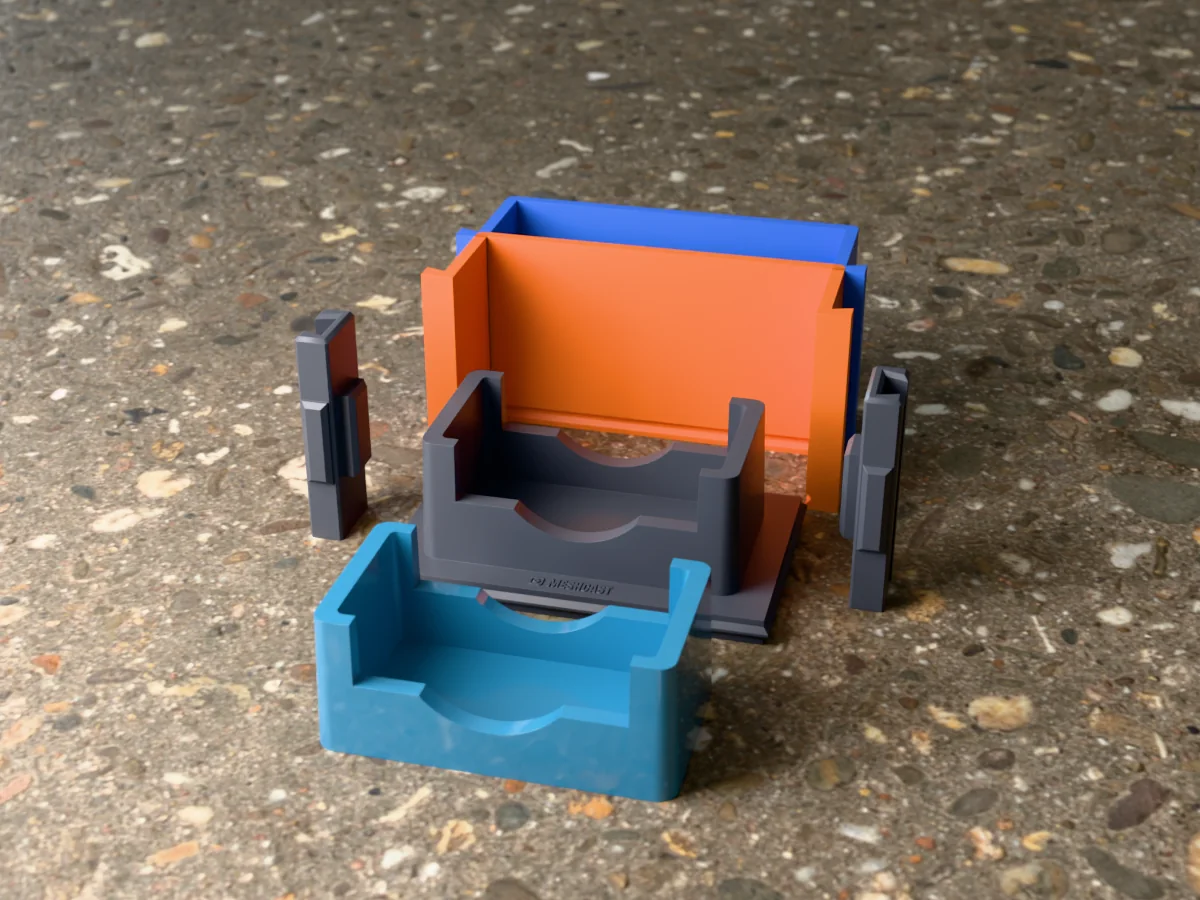
Can you 3D print silicone?
Why a home printer cannot print silicone, how TPU and silicone resin compare, and the print-a-mold route most makers use instead.
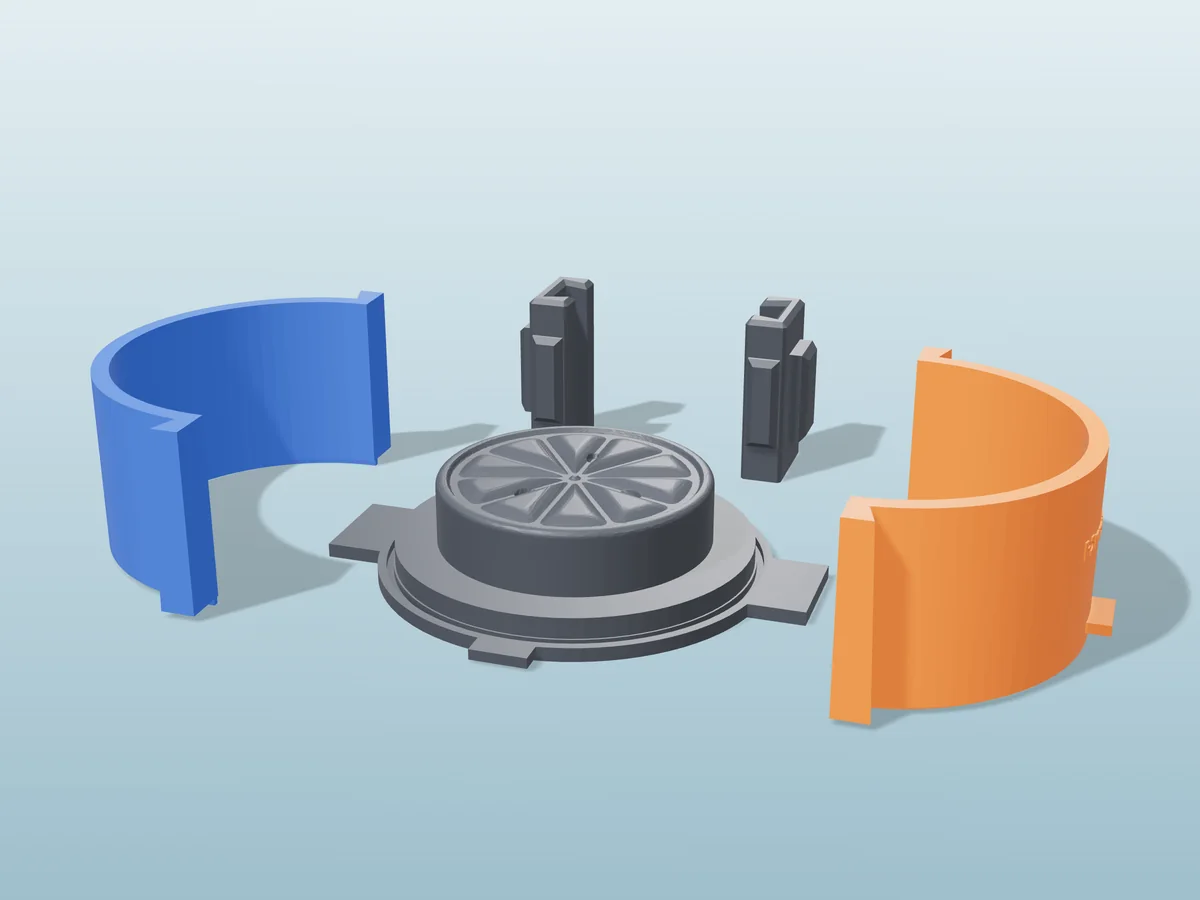
Ecoflex vs Dragon Skin
Five platinum grades side by side from the datasheets: hardness, pour thickness, tear strength and cure time, and which to pick.
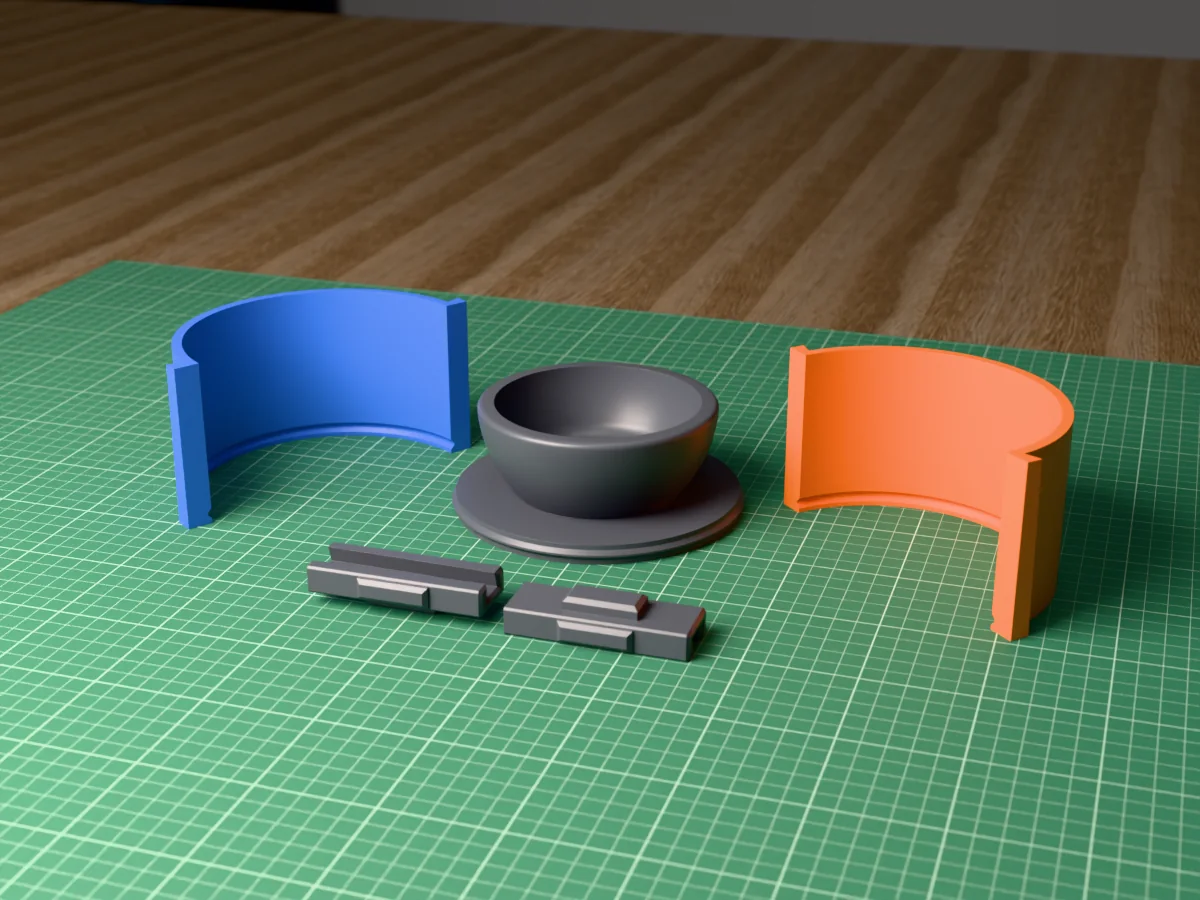
Dual-density silicone casting
A firm silicone core bonded inside a soft skin: which grades to pair, skin thickness, two methods, and making the layers bond.
Maker projects
24 guides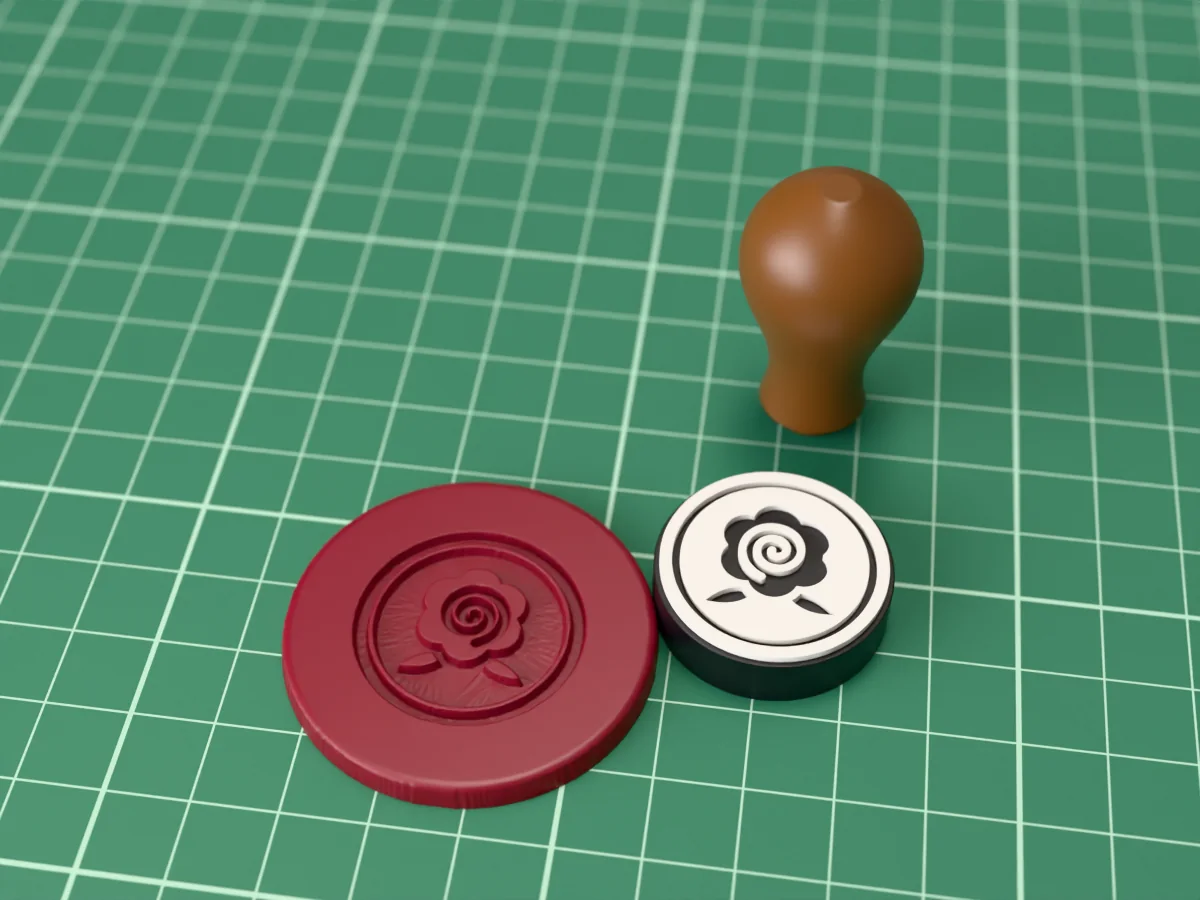
3D printed stamps that print crisp
Make a custom stamp with mirrored text handled for you, which material picks up ink, and which embosses clay and soap.
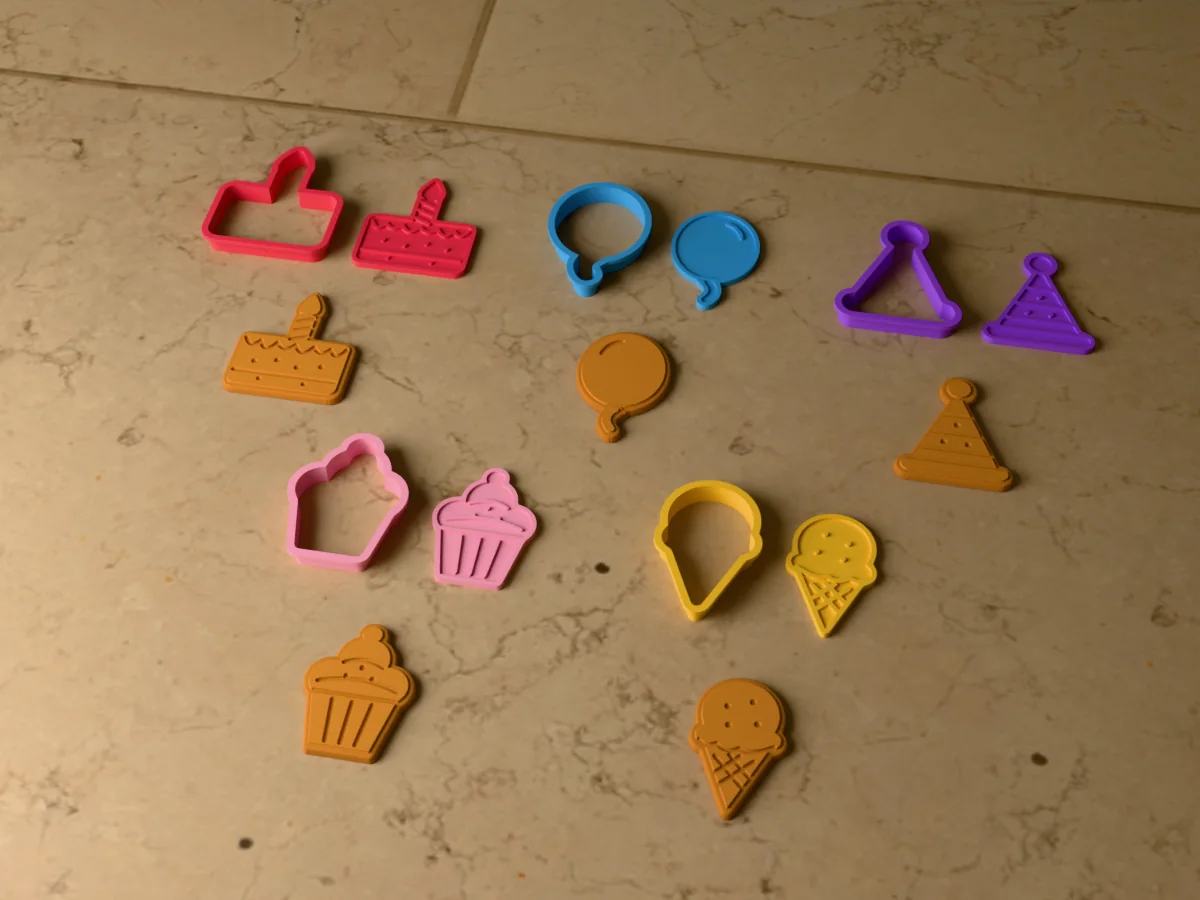
Custom cookie cutters: design & 3D print any shape
Turn any outline into a printable cookie cutter, sharp cutting edge, sturdy handle, and the honest answer on PLA food contact.
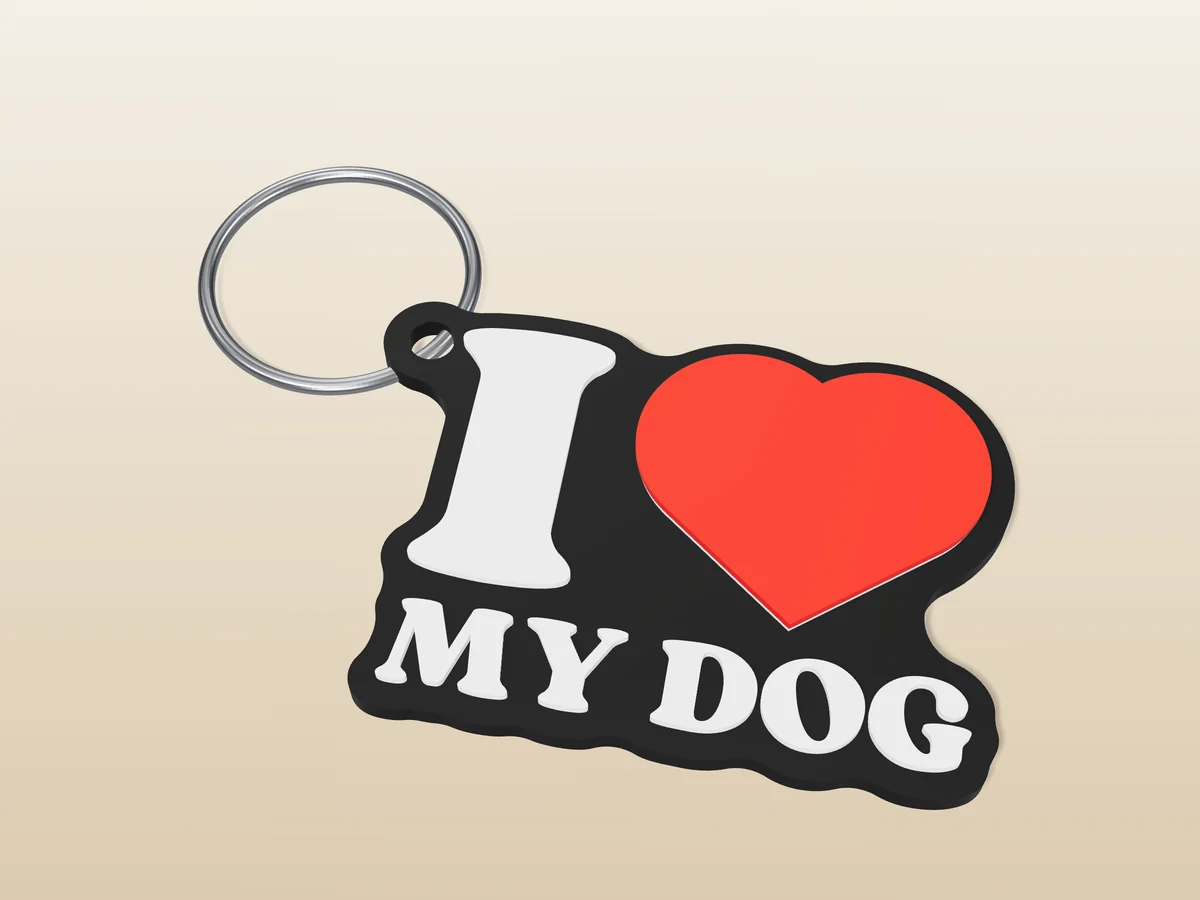
3D printed keychains: names, logos & mini models
Text keychains and shrunken-STL charms, plus the two-color filament-swap trick and how to keep the loop from snapping.
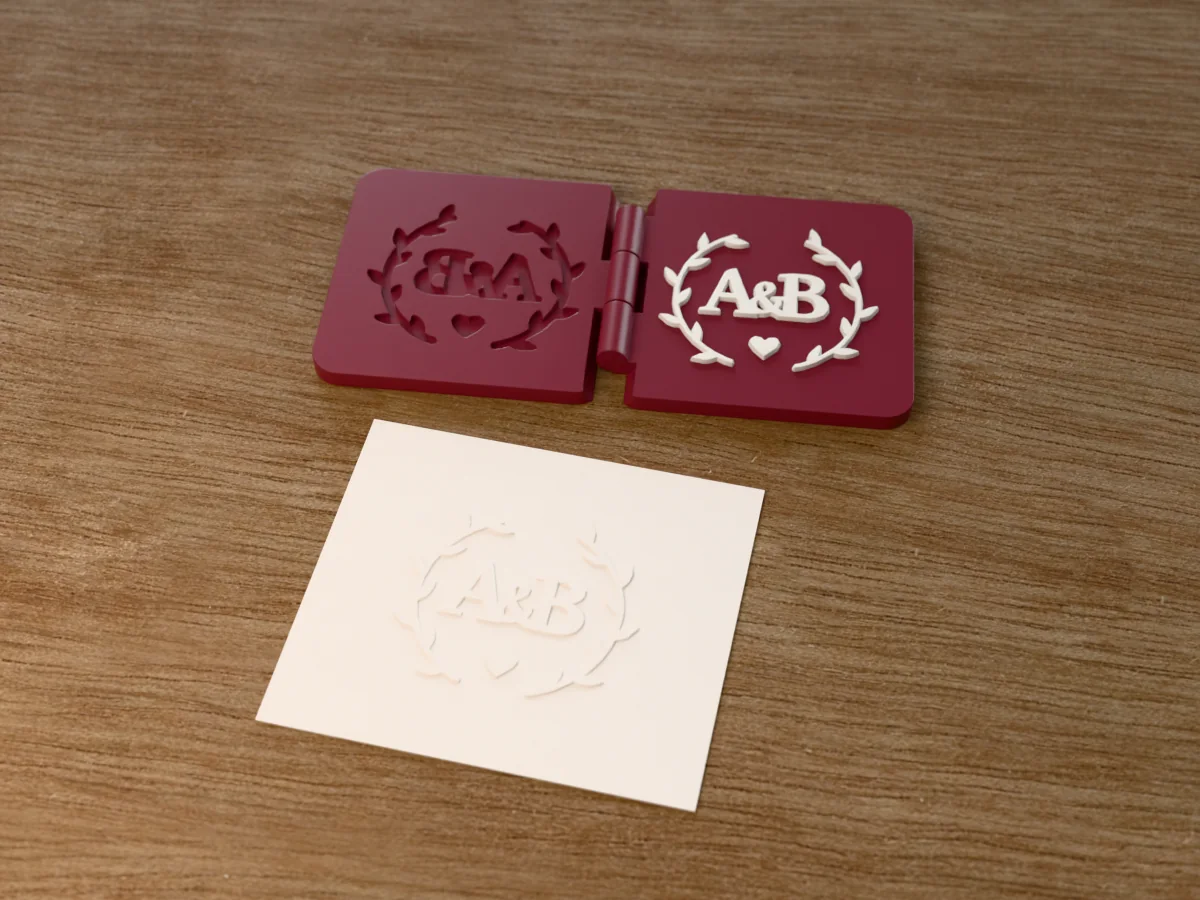
Paper embossers: press your design, no ink
Print a matched die pair that squeezes a raised impression into paper, for stationery, cards and book plates.
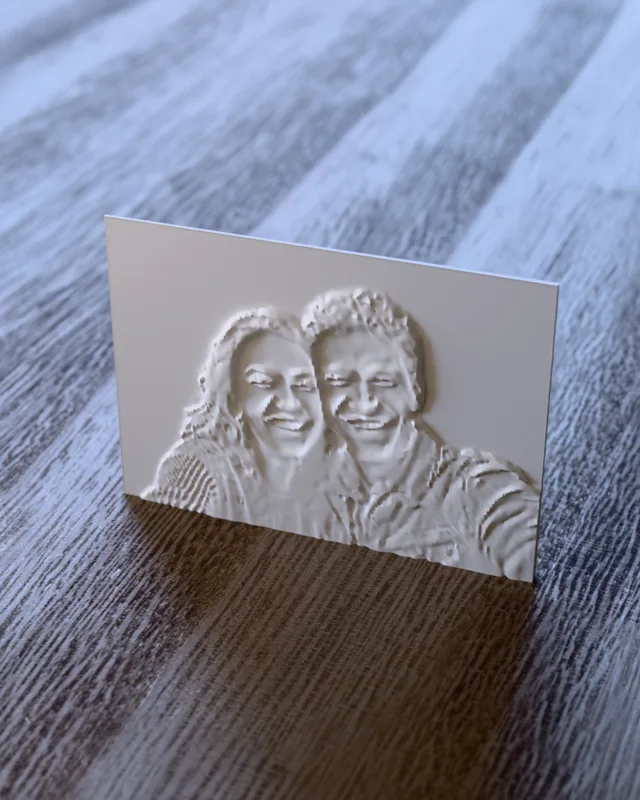
How to make a lithophane from a photo
Turn any photo into a backlit 3D print, the contrast, thickness and print settings that separate a crisp portrait from a striped smudge.
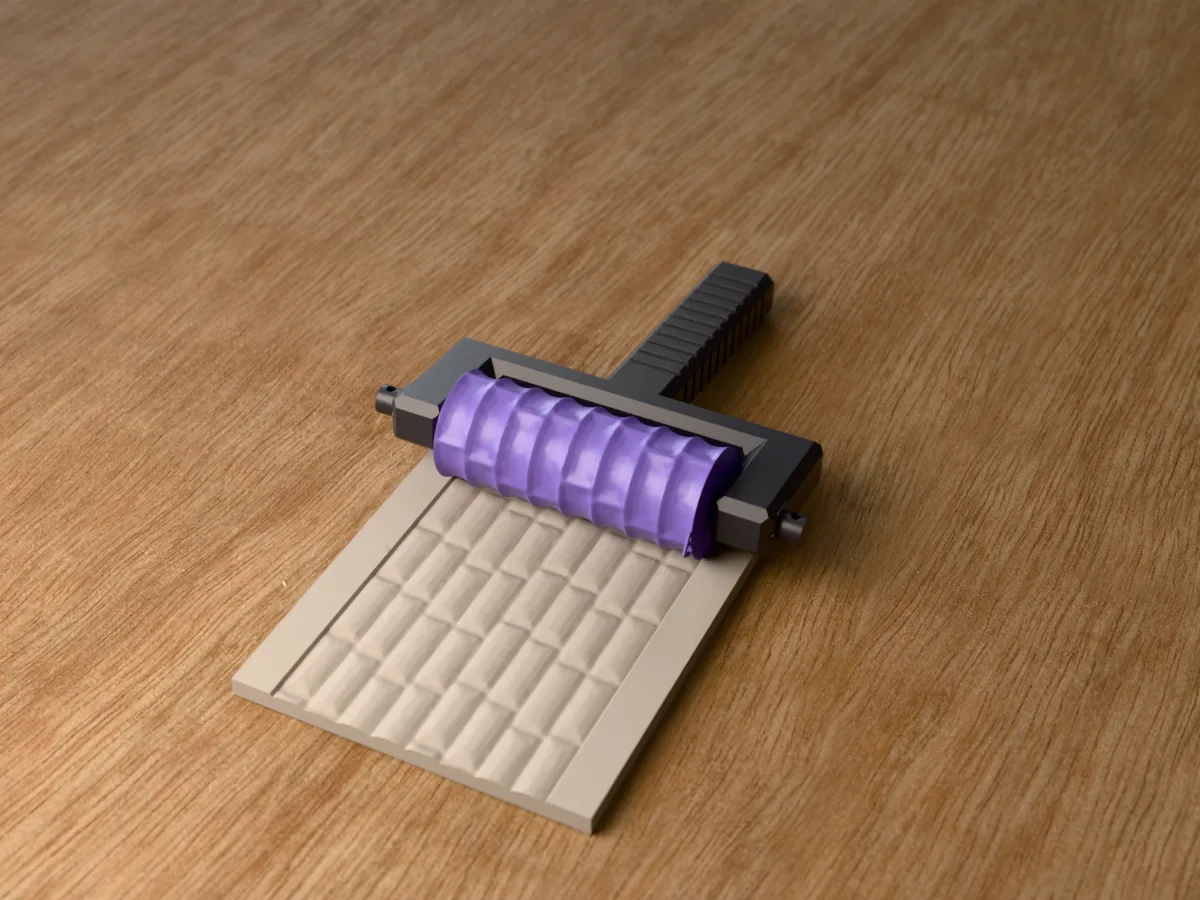
Texture rollers: press patterns into clay
Print a patterned roller and roll a repeating texture into clay slabs, with the layer height and release tricks that keep it crisp.
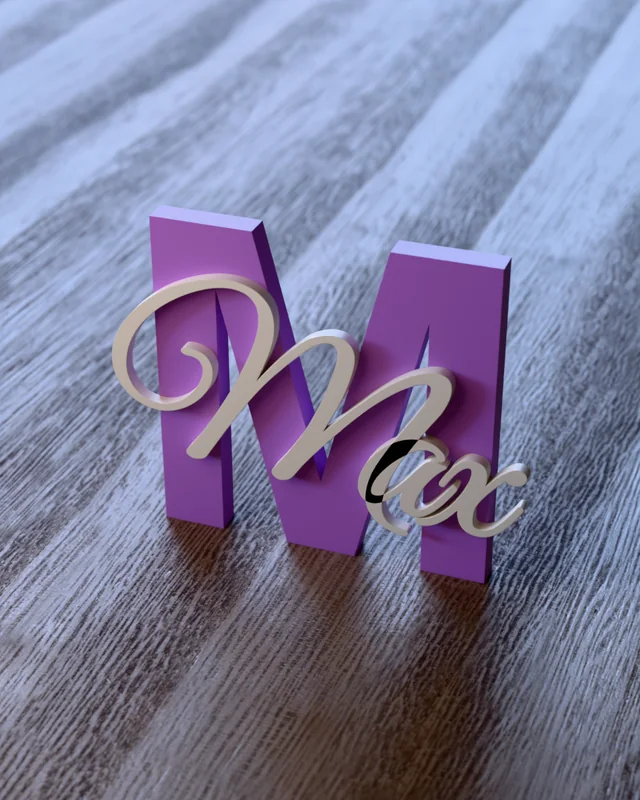
Name signs and door plates
Turn text into a printable sign, including two-colour lettering and how to mount it once it is printed.
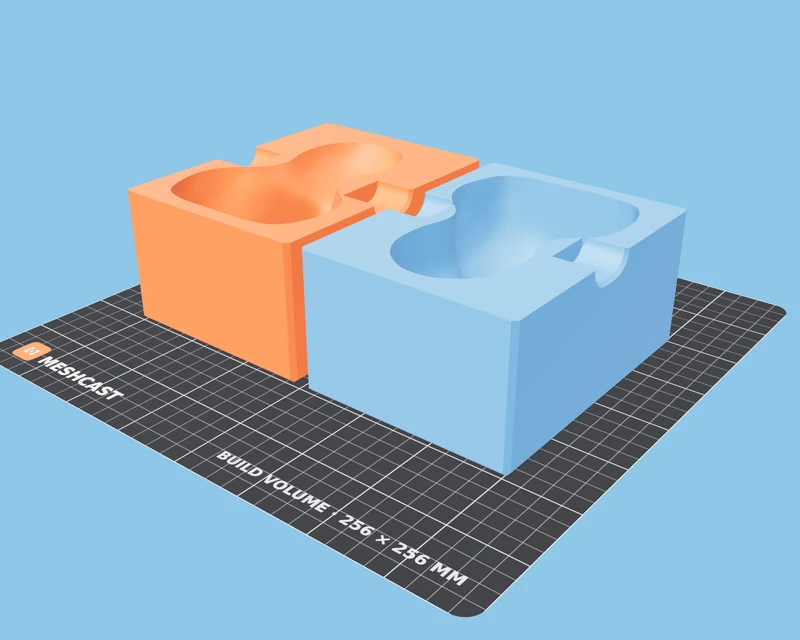
Packaging inserts that protect fragile prints
Print a case that cradles a fragile part in a soft impression so it survives the post, with hinged, two-part and tray options.
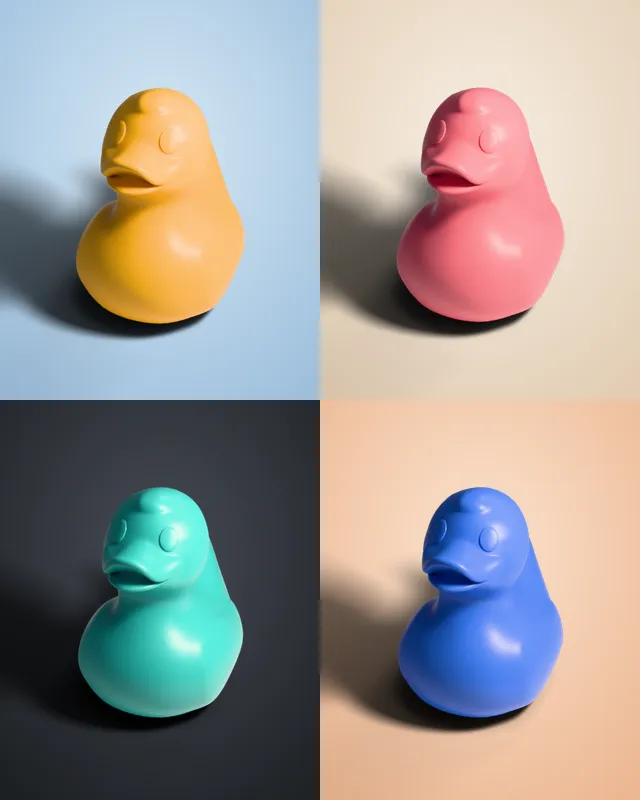
Turn a 3D model into a product photo
Light any STL, OBJ or 3MF like a studio shot: presets, a transparent or print-bed background, cast materials, free instant export or a Blender-quality render.
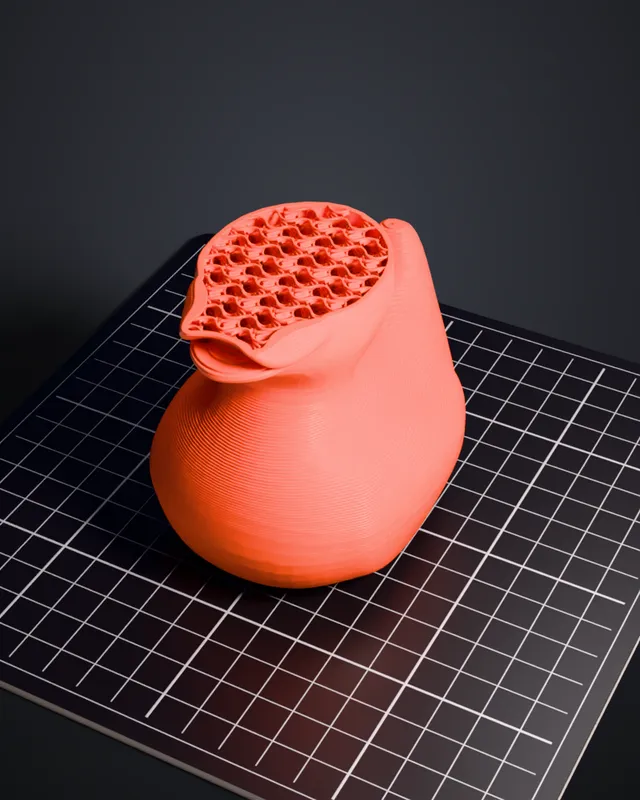
Make a 3D print timelapse without a printer
Turn any STL into a stepped, layer-by-layer printing timelapse video for Reels or TikTok, rendered in your browser: no printer, no camera rig, no Blender.
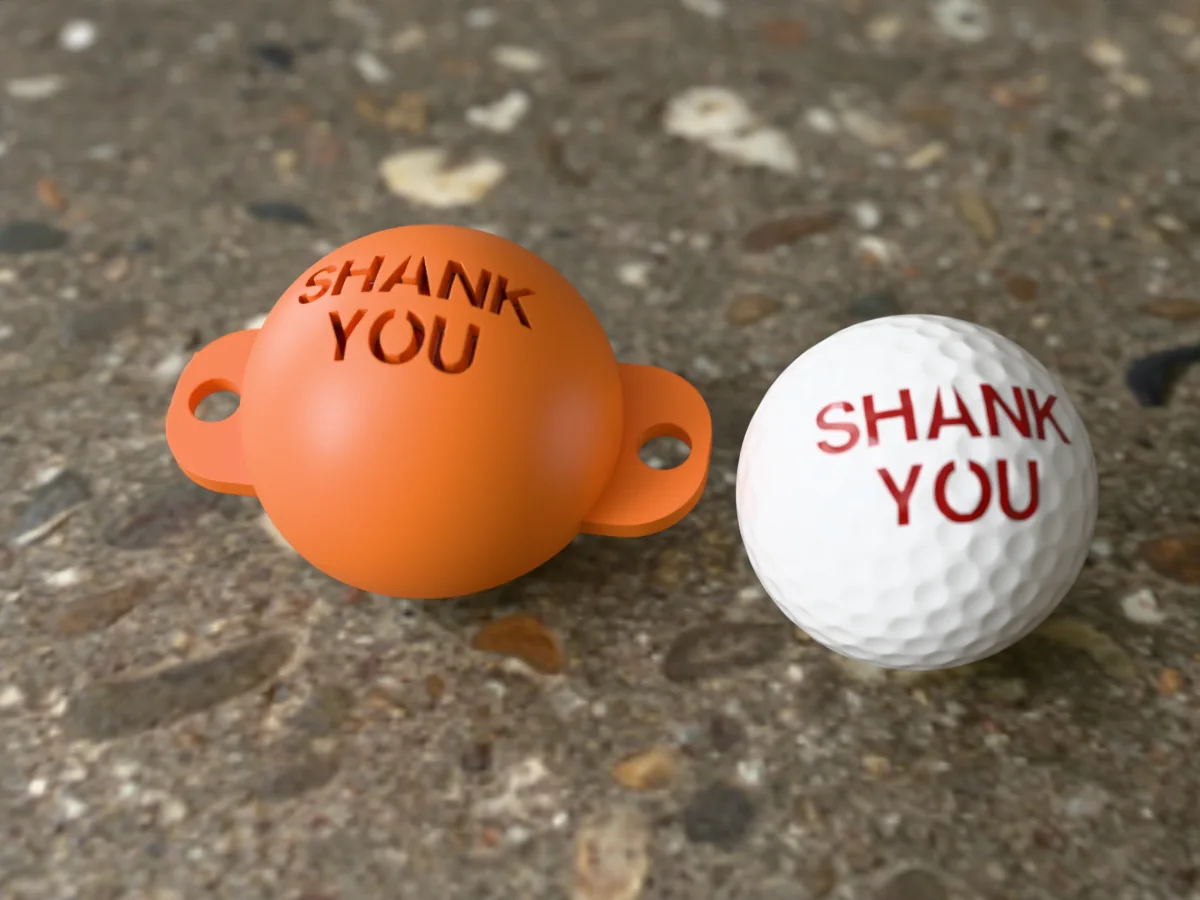
Golf ball stencils and alignment lines
Print a cap that clips onto a ball and mark your initials, a logo or an aiming line the same way every time.
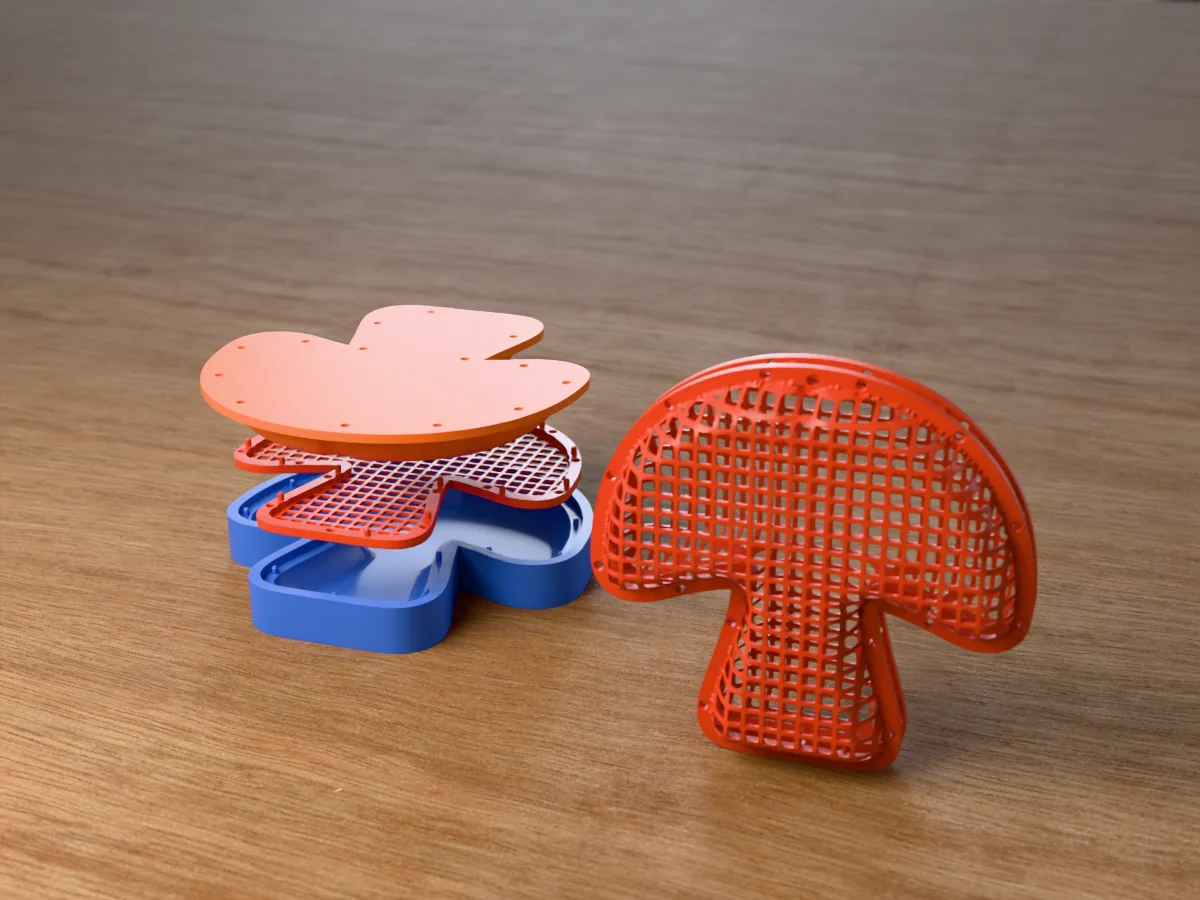
Mesh former: print flat, heat-form any shape
Print a flat mesh and its matching press form from any silhouette, then warm it with a heat gun (or a hair dryer) and press it into a curved basket, bowl or shell.
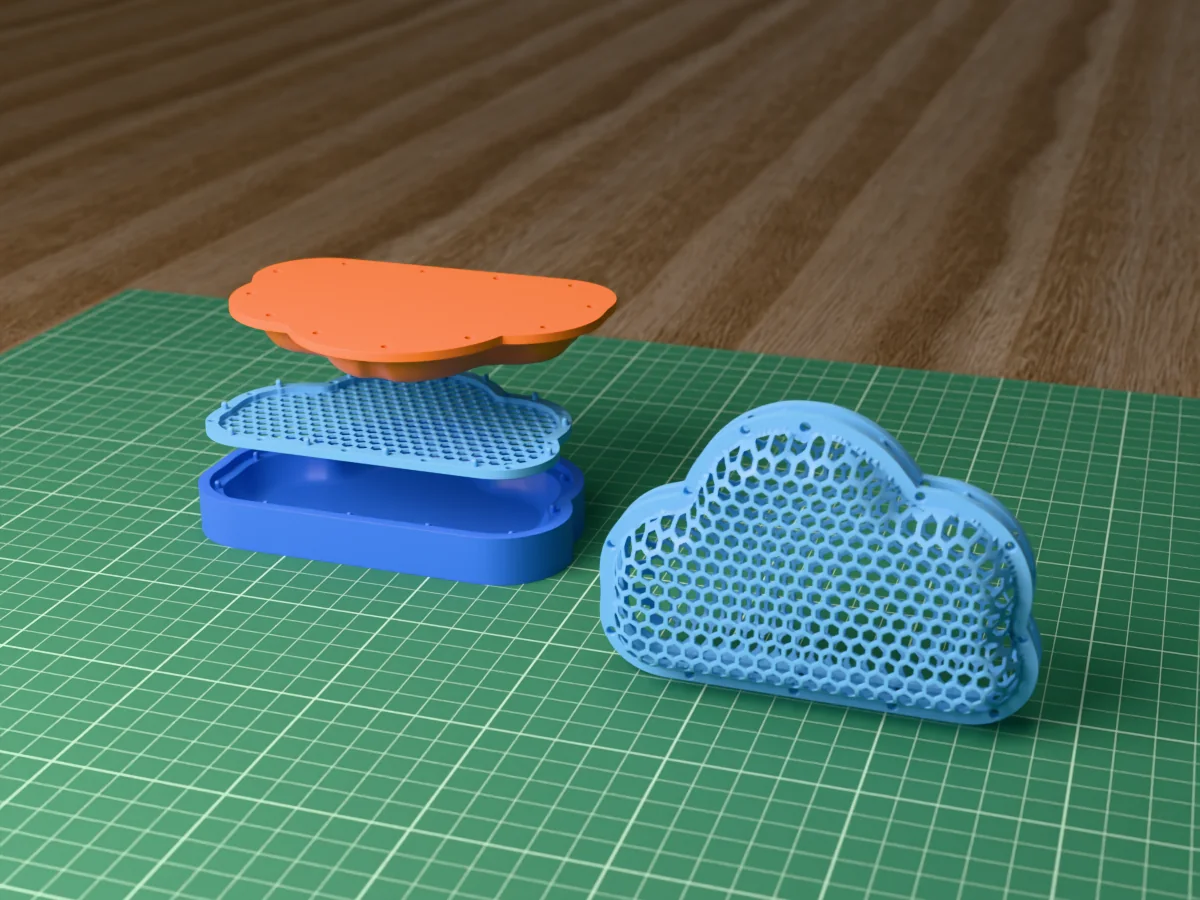
3D printed cosplay eye mesh: see out, stay hidden
Why a black mesh hides your eyes, the print settings that keep it see-through, and how to curve it to your mask with a hair dryer and glue it in.
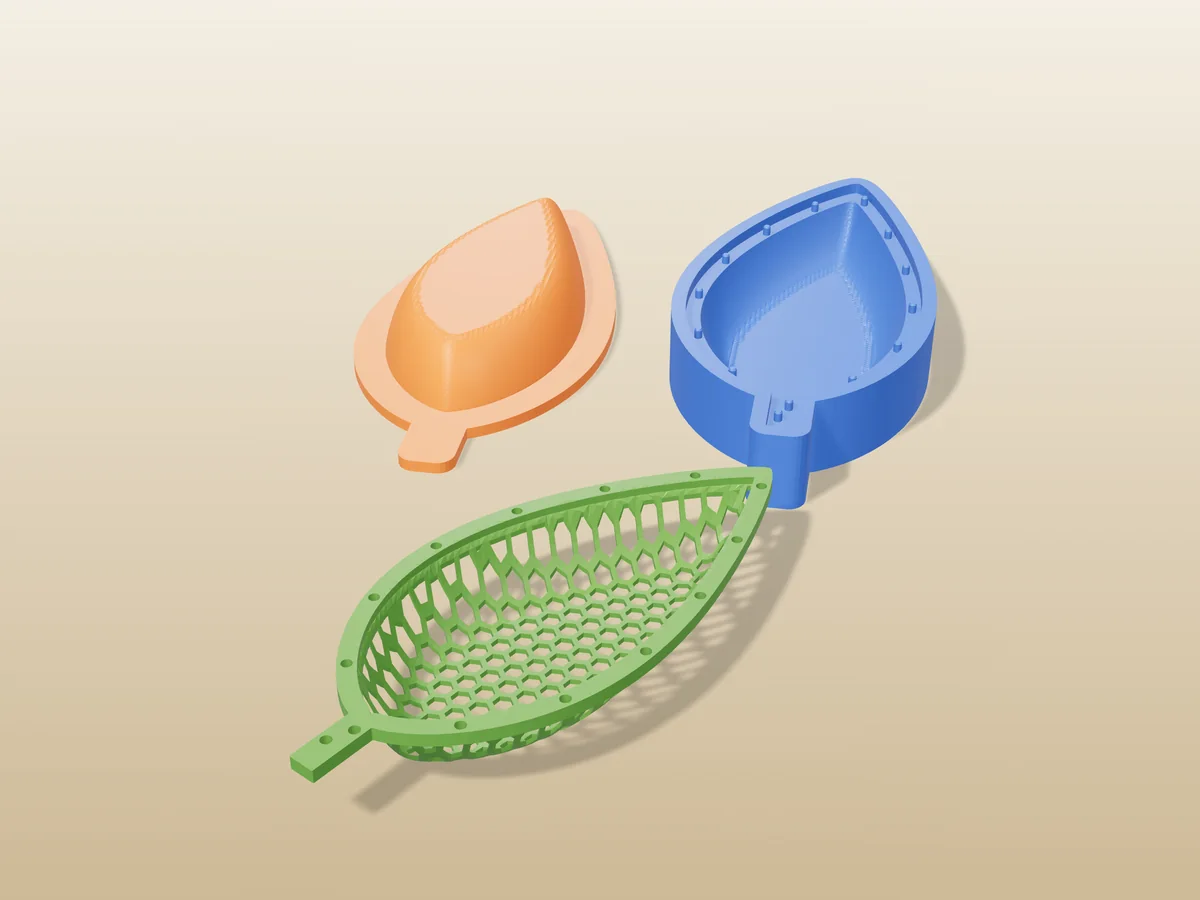
3D printed mesh bowls and baskets: print flat, press into shape
Print an open lattice key bowl, catch-all or shallow fruit bowl flat with no supports, then heat-press it into shape, and when vase mode is the better choice.
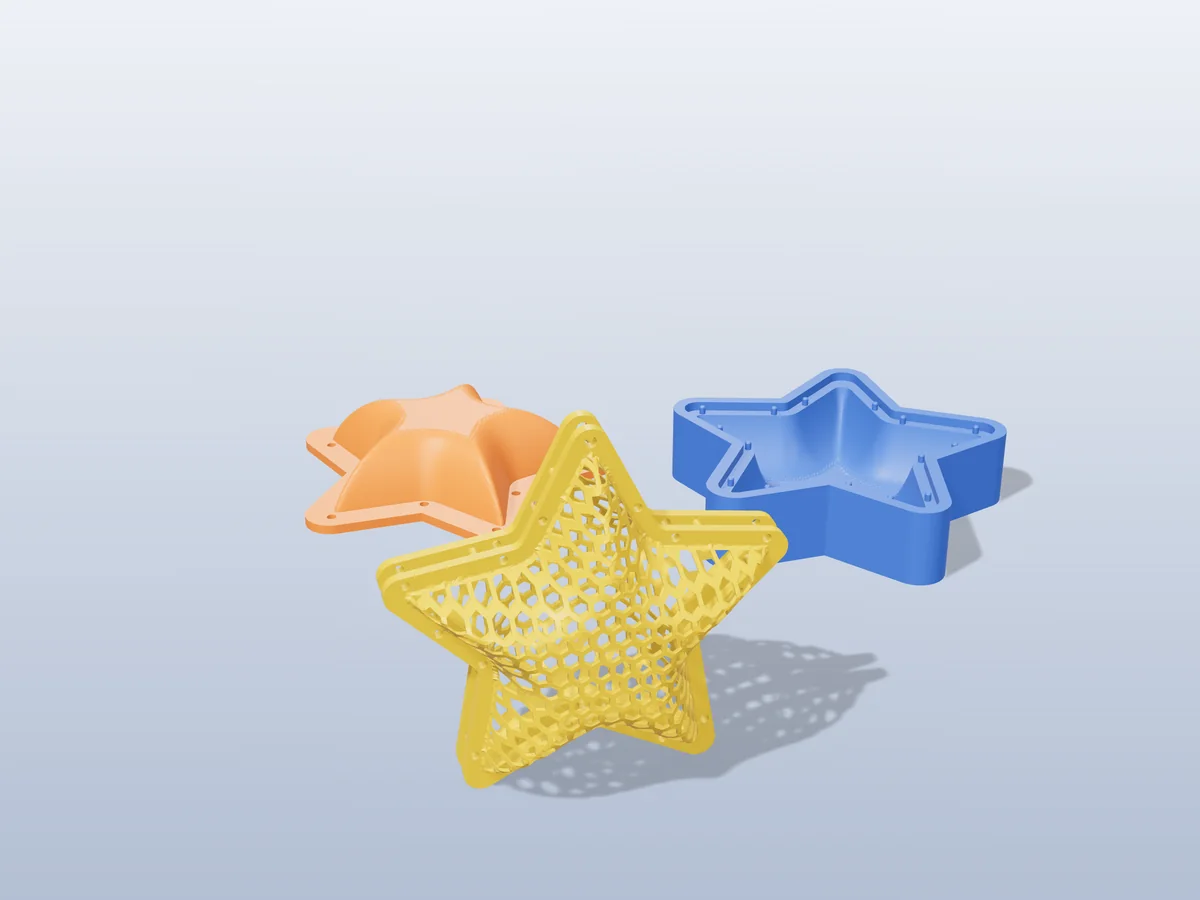
3D printed mesh Christmas ornaments: print flat, no supports
Print a lattice ornament flat, warm it and press it into a dome, then close two halves into a bauble, star or heart with no supports.
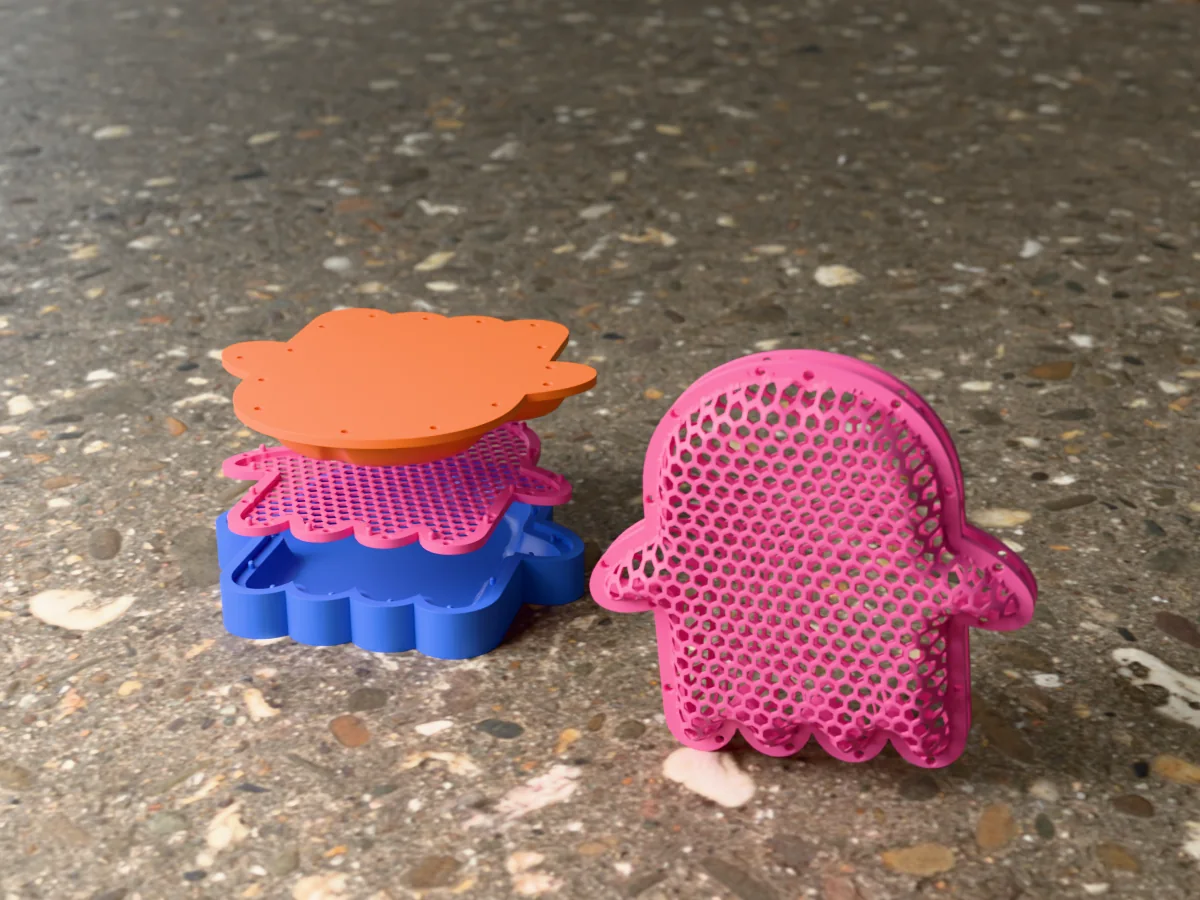
Heat-formed cosplay armor: print flat, curve to fit
Bracers bend from a flat plate, pauldrons and cops don't: which armor pieces you can print flat and curve with heat, and how to press a domed mesh panel.
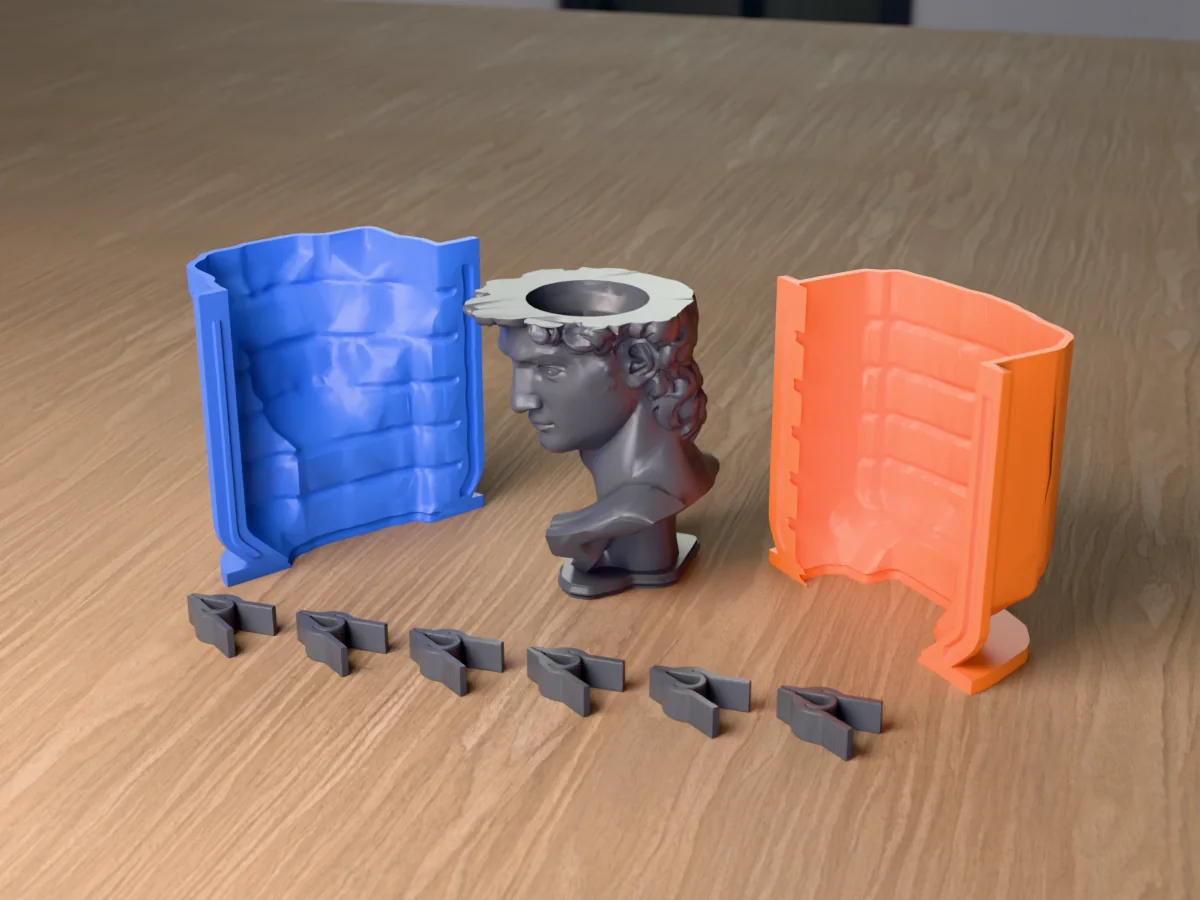
3D print a bust or bobblehead of yourself from a photo
The right photo, making the 3D head, mesh checks, a bust base or a bobblehead joint, print settings for faces, then colour it or cast it as a candle.
STLFLIX AI alternatives: photo to figure tools compared
STLAI, Bambu PrintU, PrintPal, Meshy and the Meshcast head generator side by side: price, templates, colour, files and molds of the head.
PrintPal face generator alternative
PrintPal's Face to 3D Figurine Generator against a tool that ends in a finished print: styles, files, price, templates and print checks.
MakerLab PrintU alternative
Bambu's PrintU and Make My Statue against a head generator that builds finished objects for any printer, and molds of the head.
Meshy figurine alternative
Meshy's Creative Lab figurine against a tool built for printing: real sizes, repair included, colour in the same 3MF, and molds.
Why an AI 3D model won't print
Holes, floating specks, thin hair, open mouths and no flat base: the eight usual faults of image-to-3D models and how to fix each.
Funko Pop style figure of yourself
A big-head vinyl-toy figure of anyone from one photo: the style, a mini figure body, colour, print settings and assembly.
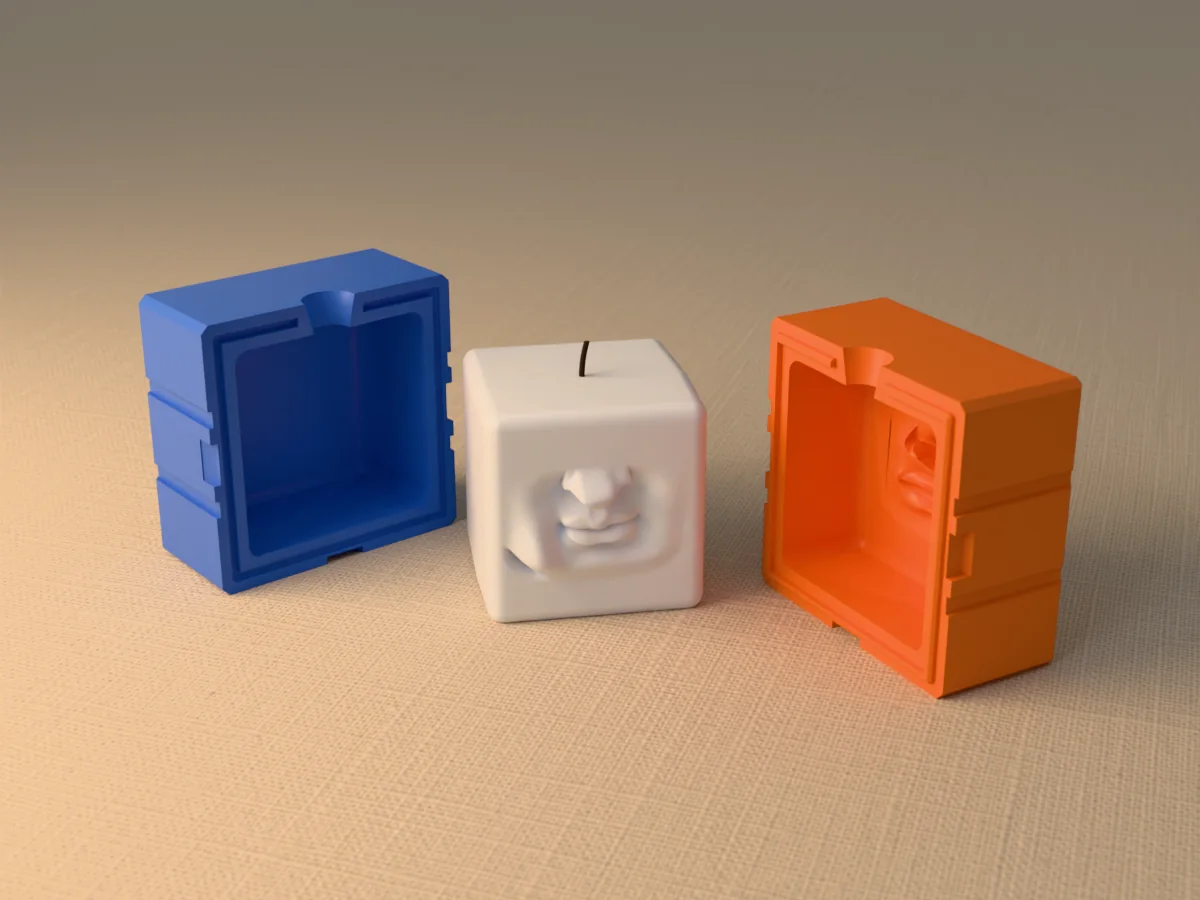
Candle or soap of your face
One photo to a silicone mold of a face, then as many candles or soaps as you like. Materials, temperatures and tips.
Print & design
10 guides
Multicolor 3D printing without an AMS
Layer swaps, or every color as its own part: what a single-nozzle printer can do, and how to split a painted 3MF into parts that fit.
How much filament does a color change waste?
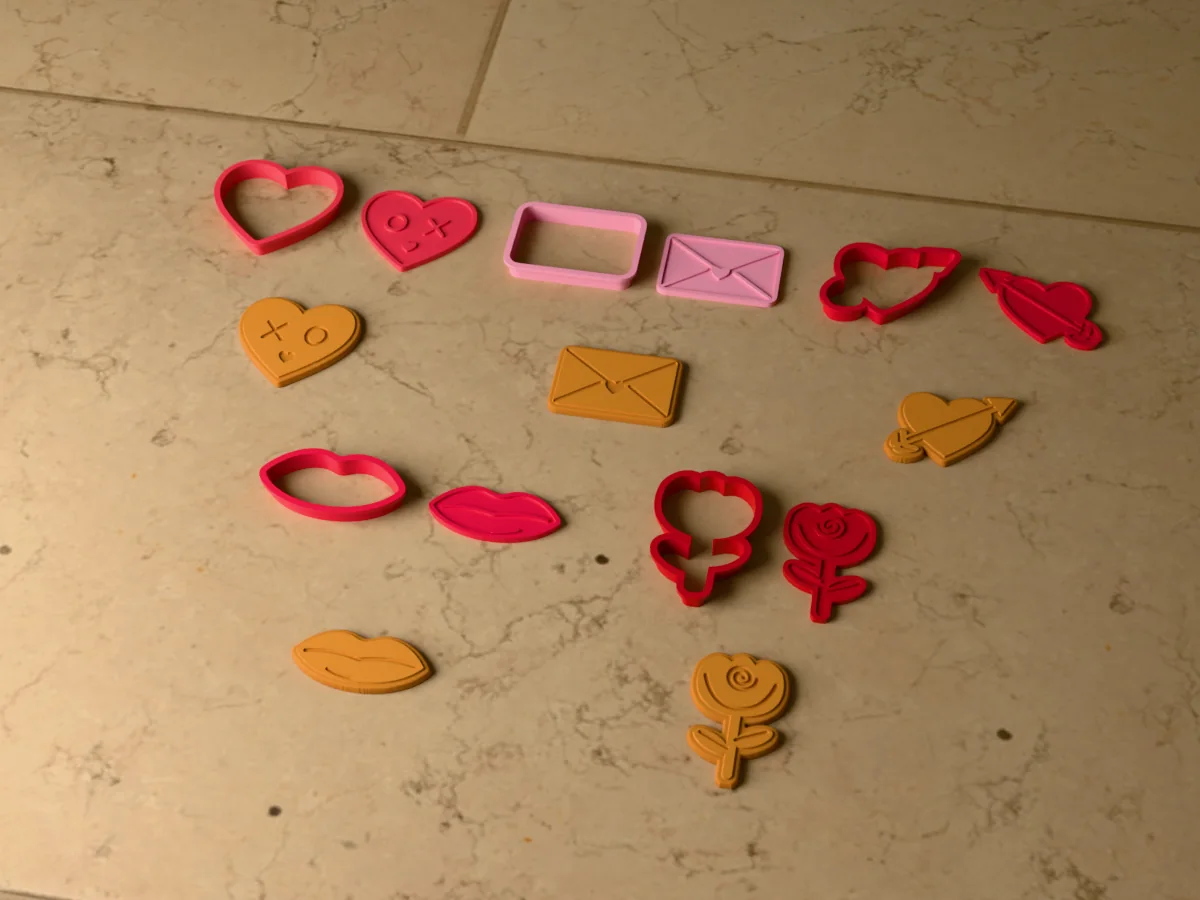
The same stripe costs 9 g painted around a vase and 174 g painted up it. Why purge follows layers, not area.
3D printed inlays that fit
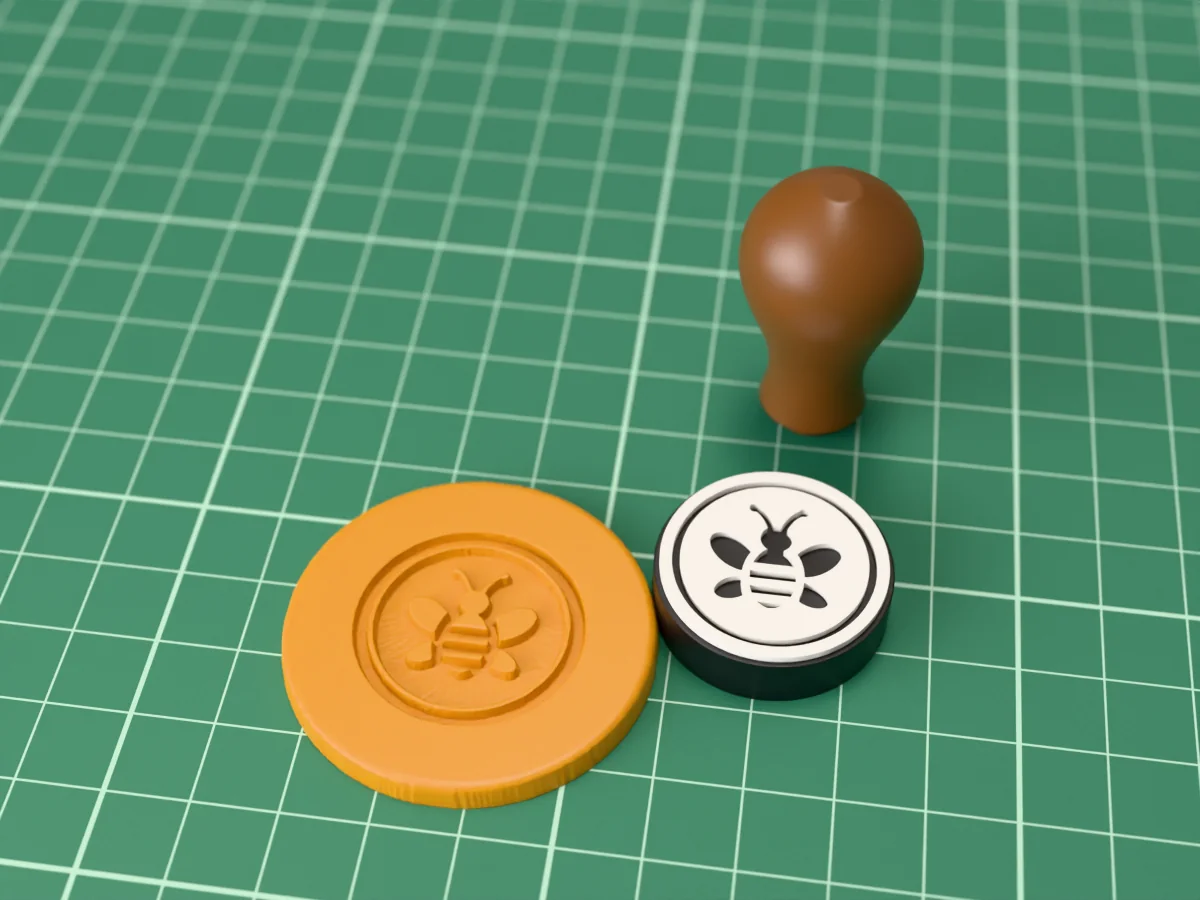
Straight walls, 0.2 mm per side, a 0.05 mm floor gap, and the floor below the deepest point on a curve.
BumpMesh textures in a mold: keep the detail
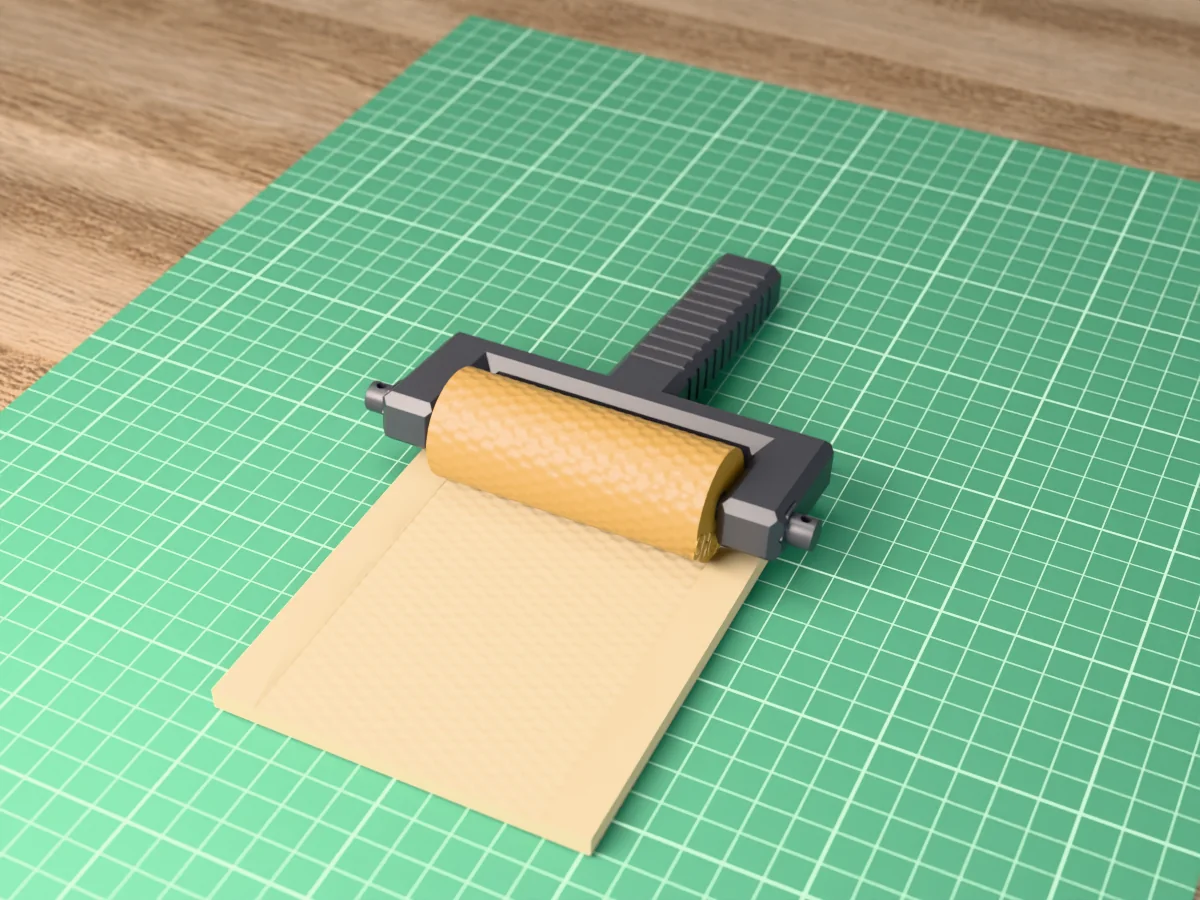
We measured what happens to a texture on its way into a mold: the upload setting that keeps it sharp, and why textured walls need silicone.
Reduce STL file size without losing detail
Scans and sculpts produce bloated meshes. How far you can decimate before it shows, and how to repair broken files.
Best print settings for 3D-printed molds
Layer height, wall count for watertightness, infill, temperature, speed and orientation - tuned per casting material so your molds don't leak.
PLA vs PETG vs PP vs TPU: which filament should you use?
The practical answer: when PLA is fine, when to switch to PETG, what PP actually gives you that other plastics don't, and why TPU molds are underrated. Includes a comparison table by casting material.
Silicone molds vs direct-print molds
When a $5 plaster pour into a PLA mold is the right call, and when to invest the extra hour casting a silicone intermediate. Covers durability, detail, cost, and heat resistance.
Draft angles & undercuts: molds that release
How much taper to design in, how to spot undercuts, where to put the parting line, and when to split the mold or go flexible.
Thermoforming 3D prints: print flat, shape with heat
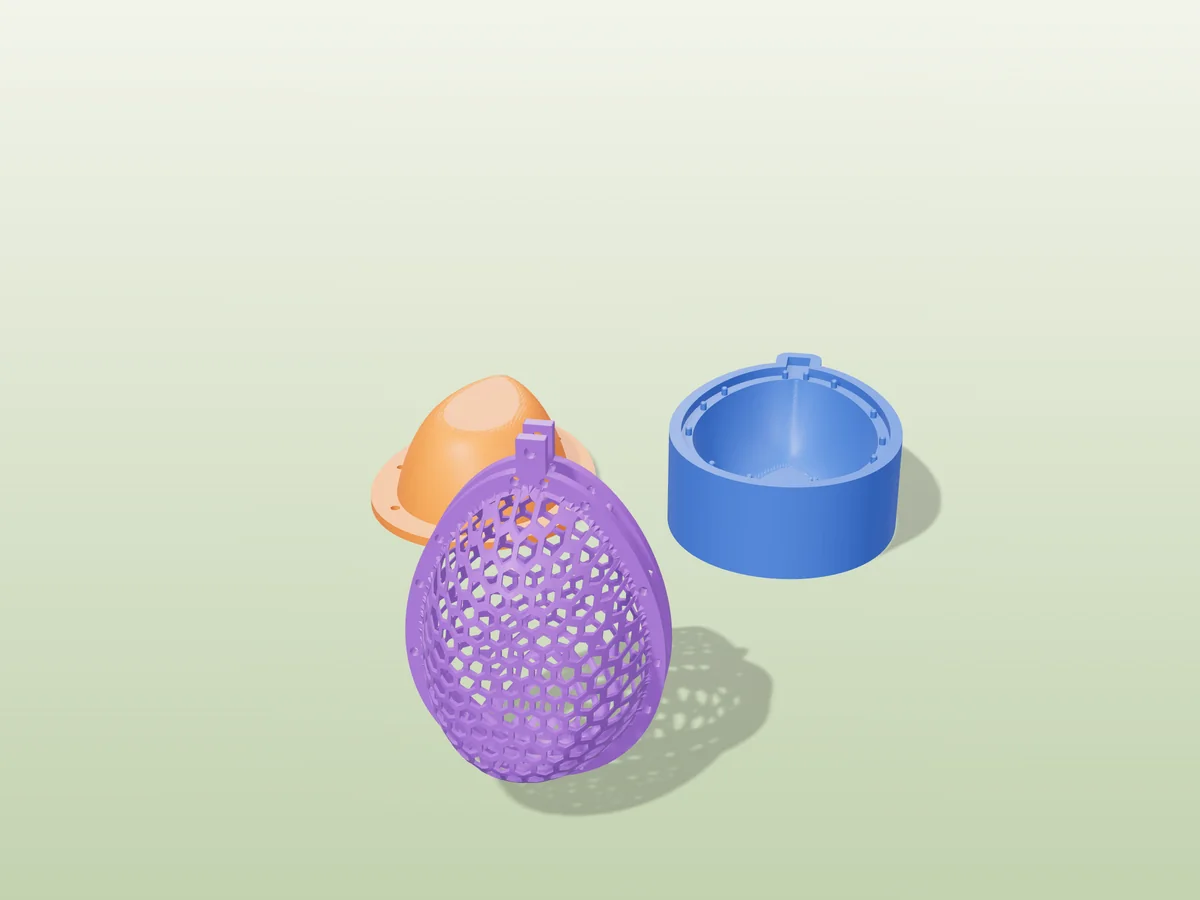
Which filament bends, heat gun vs hair dryer vs hot water, and how to design a flat print or mesh that presses into a curve instead of tearing.
Workflow
8 guidesWhy was my model rejected?
Every error a mold generator can show, in plain English: not watertight, could not process, repair budget, too large, too small, empty half - and the fix for each one.
Mold release agents: the complete guide
Which release agent to use for resin, silicone, plaster, concrete, soap and wax in a printed mold - how to apply it, homemade options, and the mistakes that ruin a cast.
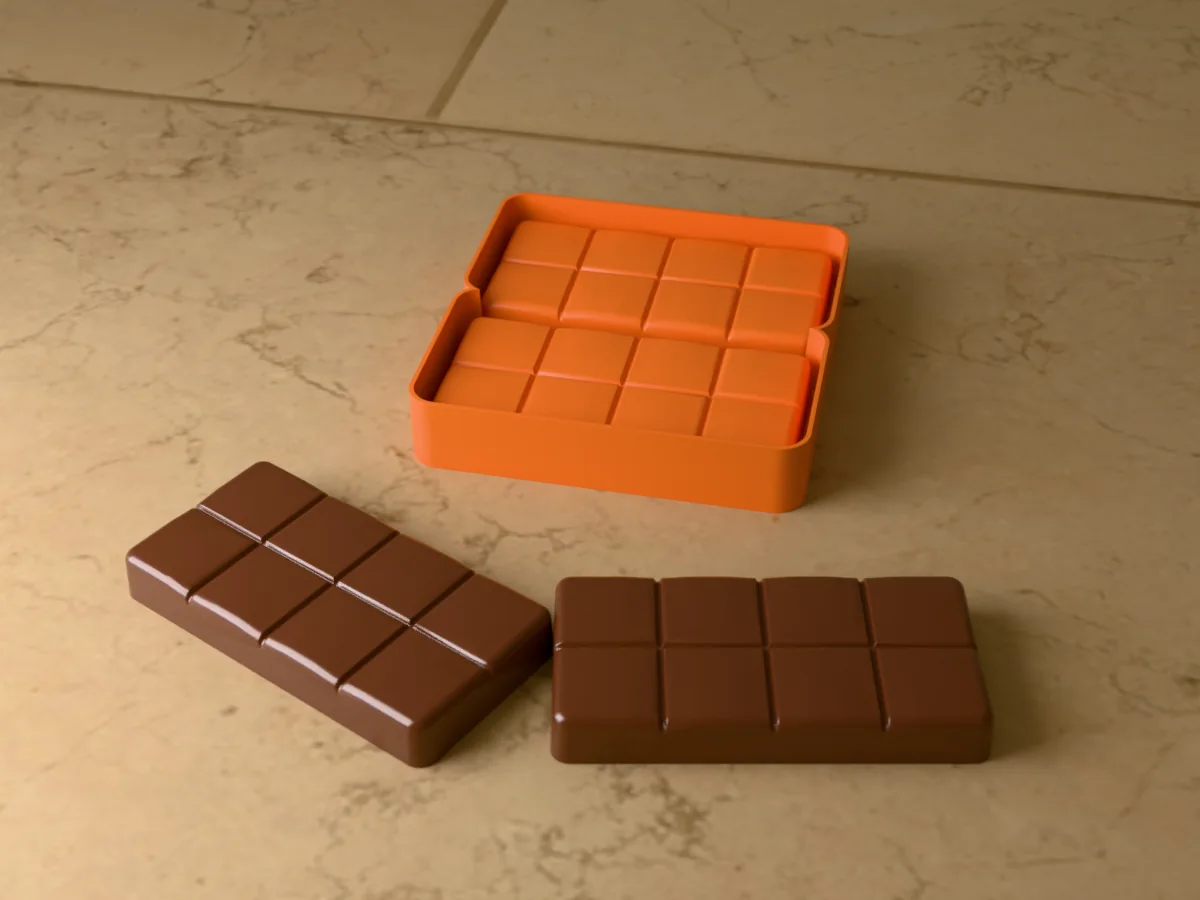
Are 3D-printed molds food-safe?
The honest answer, food-safe coatings and their limits, and the reliable path: print a master and cast food-grade silicone.
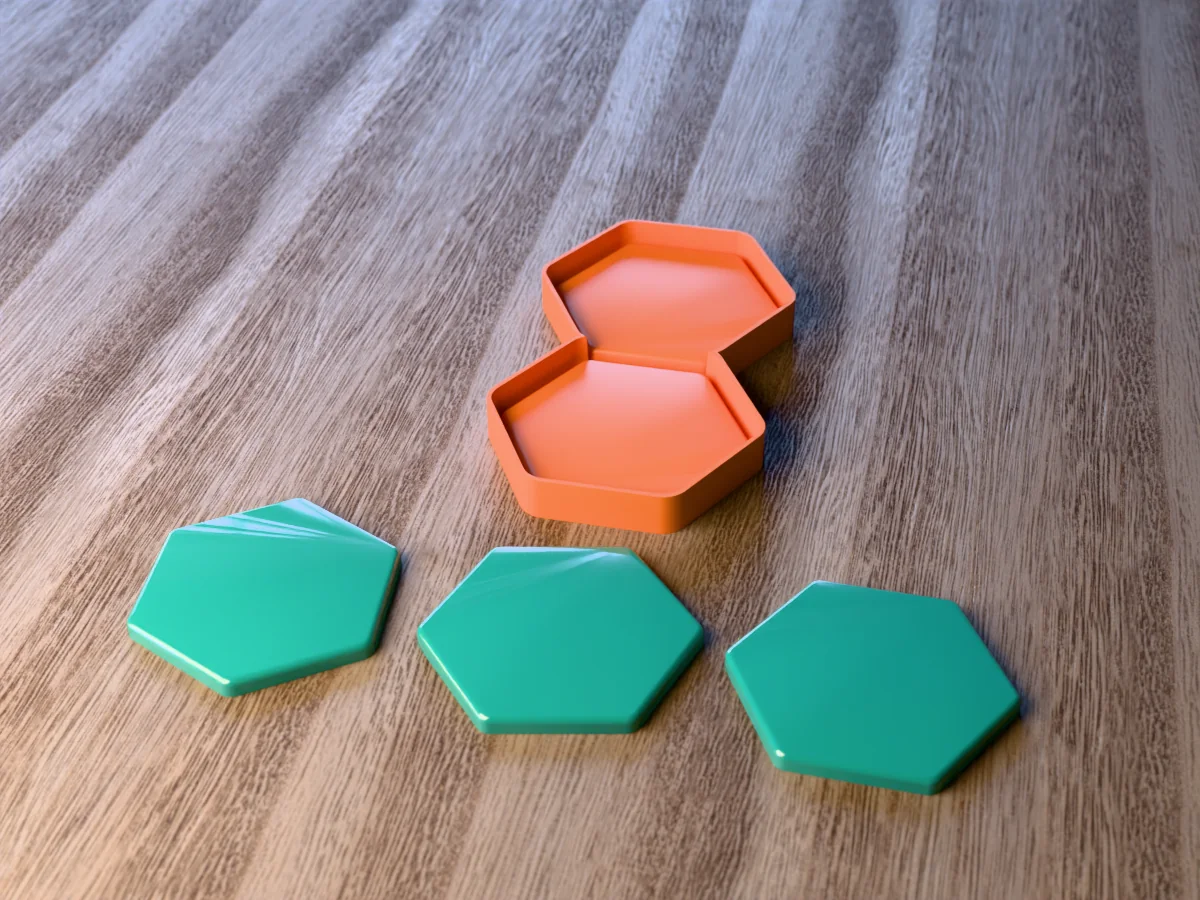
What to do with failed 3D prints
Press a bin of old PLA into coasters, tiles and trays. Why molten PLA cannot be poured, which mould survives the heat, and a calculator for how much shred a part needs.
Casting troubleshooting: symptoms, causes & fixes
Bubbles, sticking, cracking, incomplete fill, rough surface, warping and seam leaks - the likely cause and the fix for each.
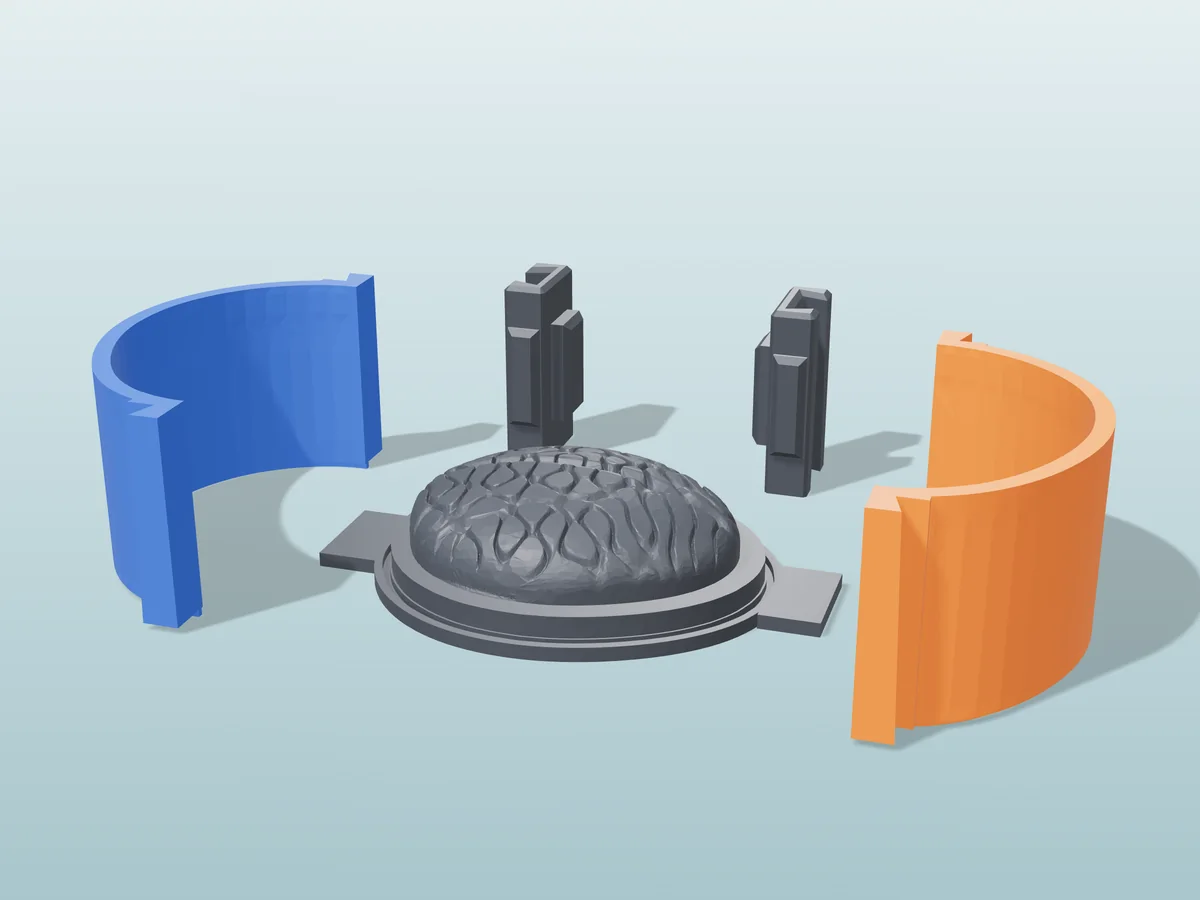
Silicone mold not curing: sticky, tacky or soft
Tell cure inhibition from a bad mix in one look. What poisons platinum silicone, why resin-printed masters are usually the cause, and the barrier coat that fixes it.
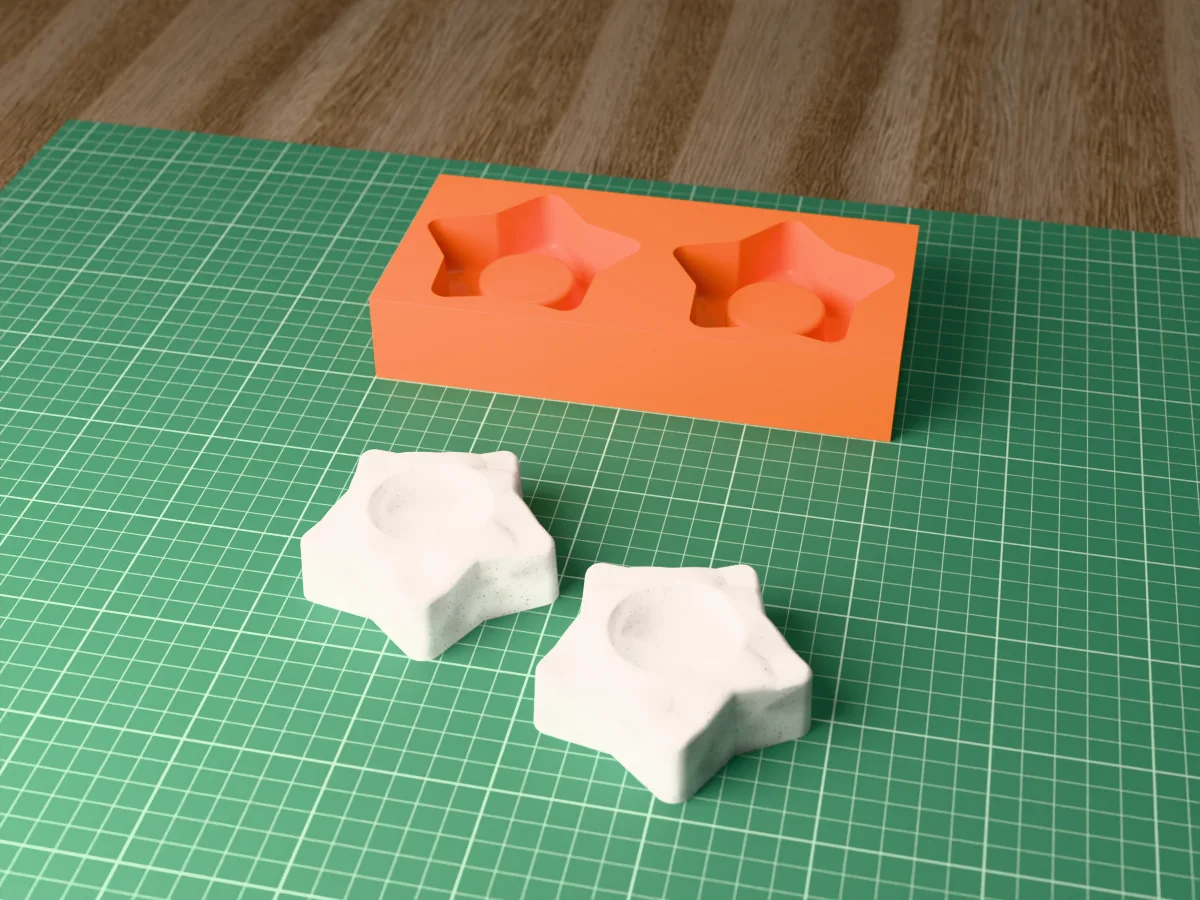
Plaster cracking, crumbling or not setting
Water-to-powder ratio by weight, demold time vs cure time, why thin sections crack first, and the two rules that flip for concrete.
Can't confirm your account, or find your download?
Why Yahoo and Outlook break one-time confirmation links before you click them, what to do when a paid plan still shows free limits, and where your browser put that STL.
Frequently asked questions
8 questionsWhat filament should I use for molds?
PLA is the default for low-temperature pours: soap, plaster, jesmonite, concrete, cold-curing resin. For hot candle wax (paraffin, soy at 70–80 °C) or warm-exothermic resin, switch to PETG. PP makes a naturally release-y mold but is hard to print. Avoid ABS for food-adjacent work. Full breakdown: filament comparison →
What filament is best for keychains, stamps and charms?
For keychains and nameplates: PETG for durability, PLA for crisp detail with light use. For stamps: TPU 95A for the stamp face (flexible, picks up ink well) and PLA/PETG for the handle. For shoe charms: TPU 95A for the best snap-in fit. Guitar picks: PETG or Nylon for the right flex, as PLA is too brittle.
Are 3D-printed PLA molds food-safe?
No. Layer lines trap bacteria and most filaments contain non-food-grade additives. For ice cubes, chocolate, or anything edible: print the mold in PLA, pour platinum-cure food-safe silicone into it, then cast your food in the silicone copy. See the silicone & ice-cube guide →
Can you cast resin directly into a PLA mold?
Yes, with caveats. Use a release agent (PVA spray or mold-release wax), keep wall thickness above 2 mm so exotherm doesn't deform the print, and design 3–5° of draft on every vertical wall. For repeat pours or complex geometry, cast silicone in the PLA first and use the silicone as the working mold. Full resin guide →
How do I stop my cast from sticking to the mold?
Three fixes in order. (1) Add draft: every vertical wall should taper 2–5° so the cast lifts cleanly. (2) Use the right release agent: mineral oil for soap, PVA or wax for resin, silicone spray for plaster and jesmonite. (3) Print stronger: at least 3 perimeters and 30% infill so the mold flexes slightly on demold without cracking.
What layer height gives the smoothest surface finish?
0.12 mm gives a near-glossy cast. 0.16 mm is the speed/finish sweet spot for most tools. 0.20 mm shows visible lines on the cast, fine for plaster or rustic concrete, not for resin jewellery. You can also sand the mold interior with 400 → 800 grit before pouring to eliminate layer lines entirely.
How do I print in two colors for nameplates and keychains?
The easiest method: slice the model and find the layer number where the raised text or inlay starts. Insert a filament change (M600 or pause at layer) at that height in your slicer. When the printer pauses, swap to your second color and resume. No multi-material upgrade needed. For keychains, the text inlay is typically 1–2 layers above the base plate.
Do I need a two-part mold or a one-piece mold?
One-piece (open-top) molds work for shapes with a flat top and no undercuts: candles, soap bars, ice cubes, tiles. Use a two-part mold when the cast has undercuts (figurines, knobs, anything with a "waist") or when both faces need to be smooth. Two-part molds need alignment keys and a clamping plan, and the Meshcast generator handles both automatically.
Ready to make something?
All generators are free and run entirely in your browser. Pick a tool and generate without signing in; downloading the files needs a free account.