Can you 3D print candles? Yes, here's how it works
This guide was drafted with AI assistance.
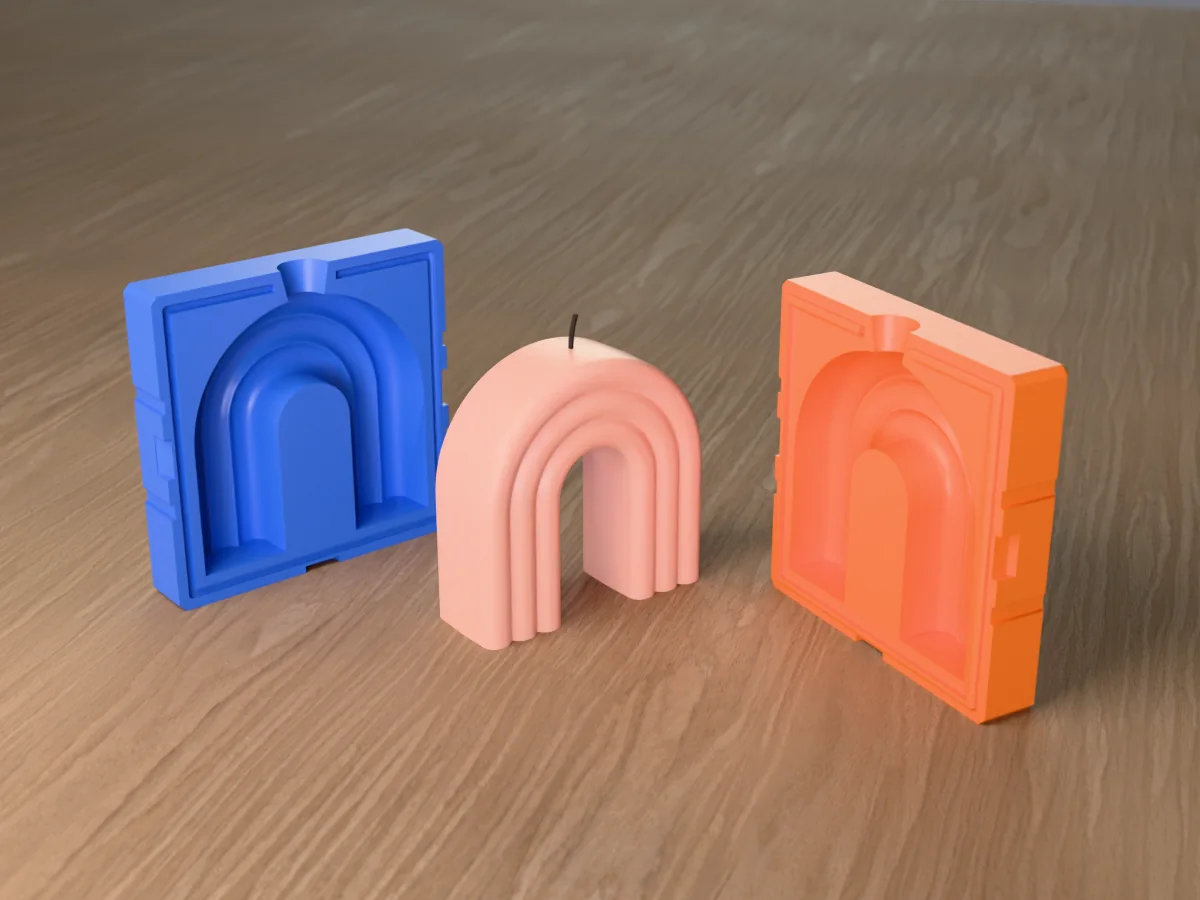
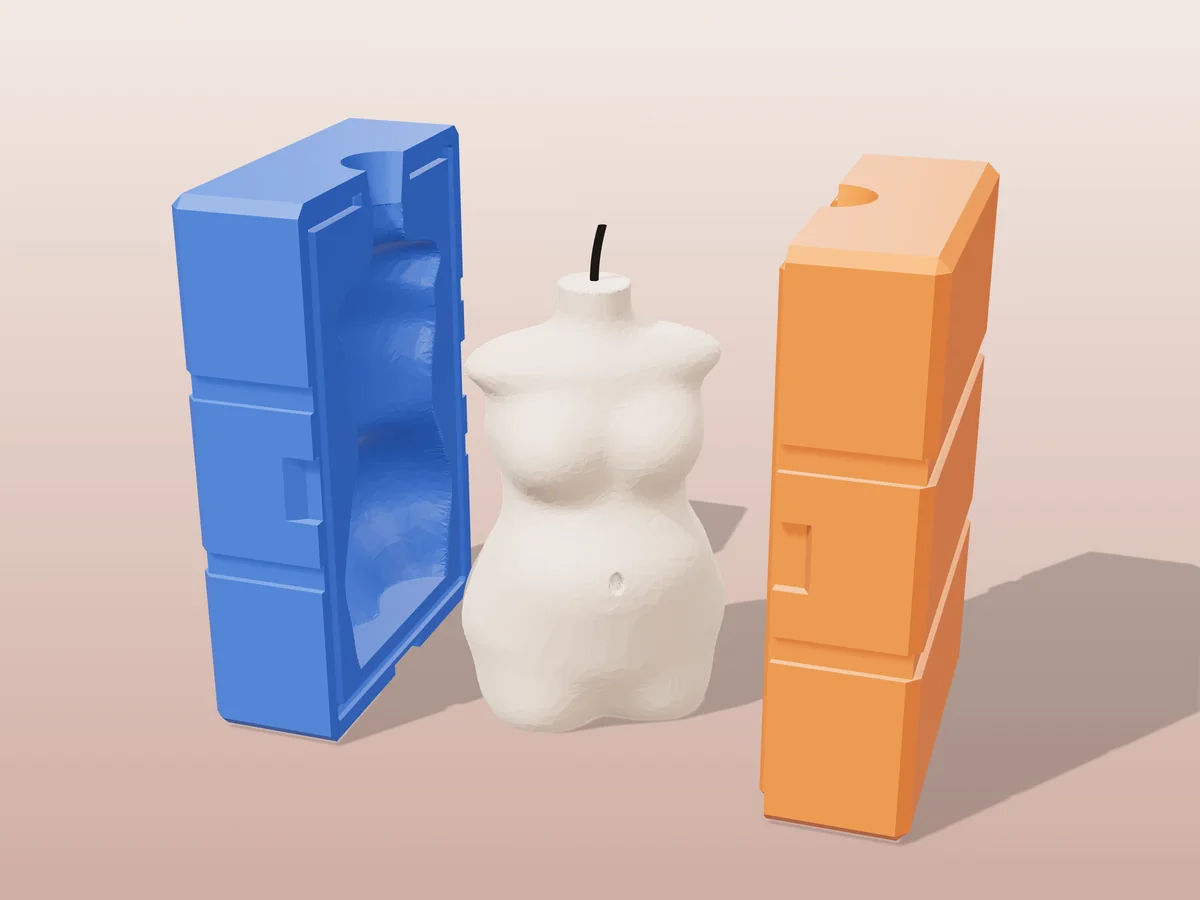
Not the wax itself, no consumer printer extrudes candle wax. What you 3D print is the mold: generate a two-part candle mold from any 3D model, print it in PLA, then pour real wax with a cotton wick. The result is a 100 % wax candle in literally any shape you can model, and the mold is reusable.
Why you can't print wax directly
"3D printed candle" sounds like you'd feed wax into a printer. Two reasons that doesn't work:
- FDM printers need thermoplastic filament. Candle wax melts around 50–70 °C, has almost no structural strength, and won't hold its shape layer-on-layer. Nobody sells burnable wax filament because the physics doesn't cooperate.
- SLA "wax" resins are for jewelers, not candles. Castable wax resins exist, but they're designed for lost-wax casting, the print gets burned out in a kiln at 700 °C+ to leave a cavity for molten metal. Cured resin is plastic; burning it in your living room releases toxic fumes.
So the honest answer to "can you 3D print candles" is: you 3D print the mold, and the printer's precision transfers to the wax. Every geometric, spiral or bust-shaped candle you've seen on Etsy was made exactly this way. Want a candle of a real face? 3D print a bust from a photo shows how to turn one photo into the master.
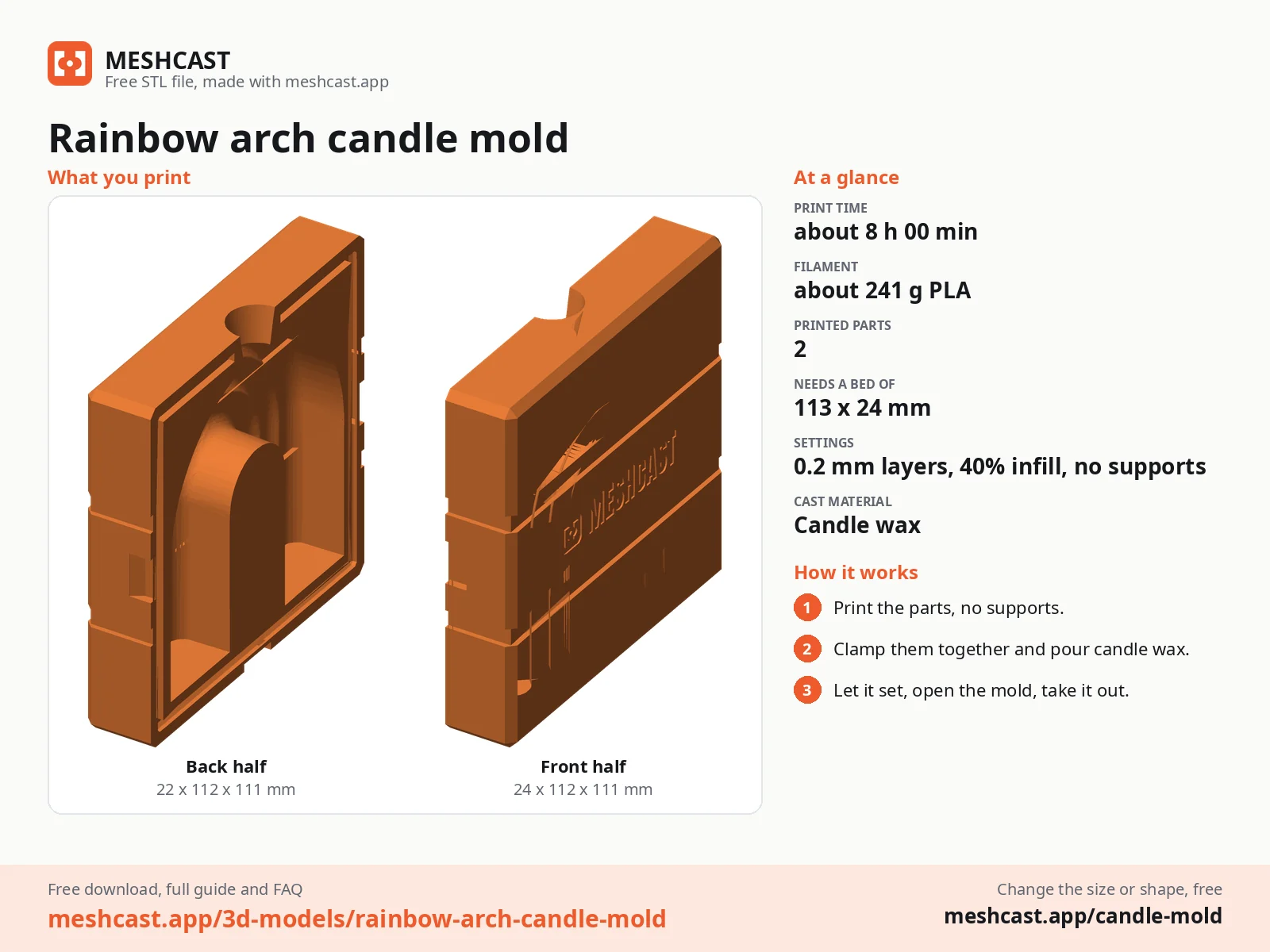
The workflow that works: print the mold, pour the wax
| Wax | Pour temp | Character | Mold notes |
|---|---|---|---|
| Soy | 57–63 °C | Creamy, natural, holds scent well | Kindest to a PLA mold, and the easiest to start with |
| Paraffin | 75–85 °C | Hard, glossy, sharp detail | Hot enough to want a 2 mm+ wall; PETG if you pour often |
| Beeswax | 70–80 °C | Golden, honey-scented, long burn | Sticky. Release agent is not optional here |
| Coconut blend | 55–65 °C | Very smooth surface, soft | Cool pour, so the mold has an easy time of it |
Generate a two-part candle mold
Drop any STL into the free candle mold generator. It builds a print-ready two-part box mold around your model, with a pour spout on top, a tongue-and-groove seal so molten wax can't leak out of the seam, and grooves for rubber-band clamping. No CAD, no card, runs in your browser.
Print it in PLA
0.2 mm layers, 3 walls, both halves flat-face-down. PLA is ideal here: it stays rigid at wax temperatures and its slight surface texture helps the halves seat. PETG only if you pour unusually hot waxes, see the filament comparison.
Wick, clamp, pour
Thread a cotton wick through the pour hole, clamp the halves with rubber bands, and pour: paraffin at 75–85 °C, soy at 57–63 °C, never above 90 °C. PLA starts to soften around 60 °C, so a hot pour is already past it; the mold survives on thick walls and brief contact, not on margin. Cool 4–6 hours at room temperature, then chill (fridge overnight or 15–20 min in the freezer) so the wax shrinks off the wall, then rest 30 min at room temperature before opening. Opening it frozen hard is what snaps candles in half. The full pour-day walkthrough (wick size chart included) is in how to make a candle from a 3D-printed mold.
Safety: the candle is wax, not plastic
This matters, so to be explicit:
- Never burn plastic. The printed mold is tooling, it comes off before the candle is ever lit. The finished candle is 100 % wax, dye, fragrance and a cotton wick, identical in composition to any store-bought candle.
- Watch your pour temperature. Use a thermometer, keep wax below 90 °C, and melt in a double boiler, never on direct heat.
- Check the demold. If a shard of PLA ever chips into the wax (rare, but possible with thin mold walls), remelt the wax and pour again rather than burning it.
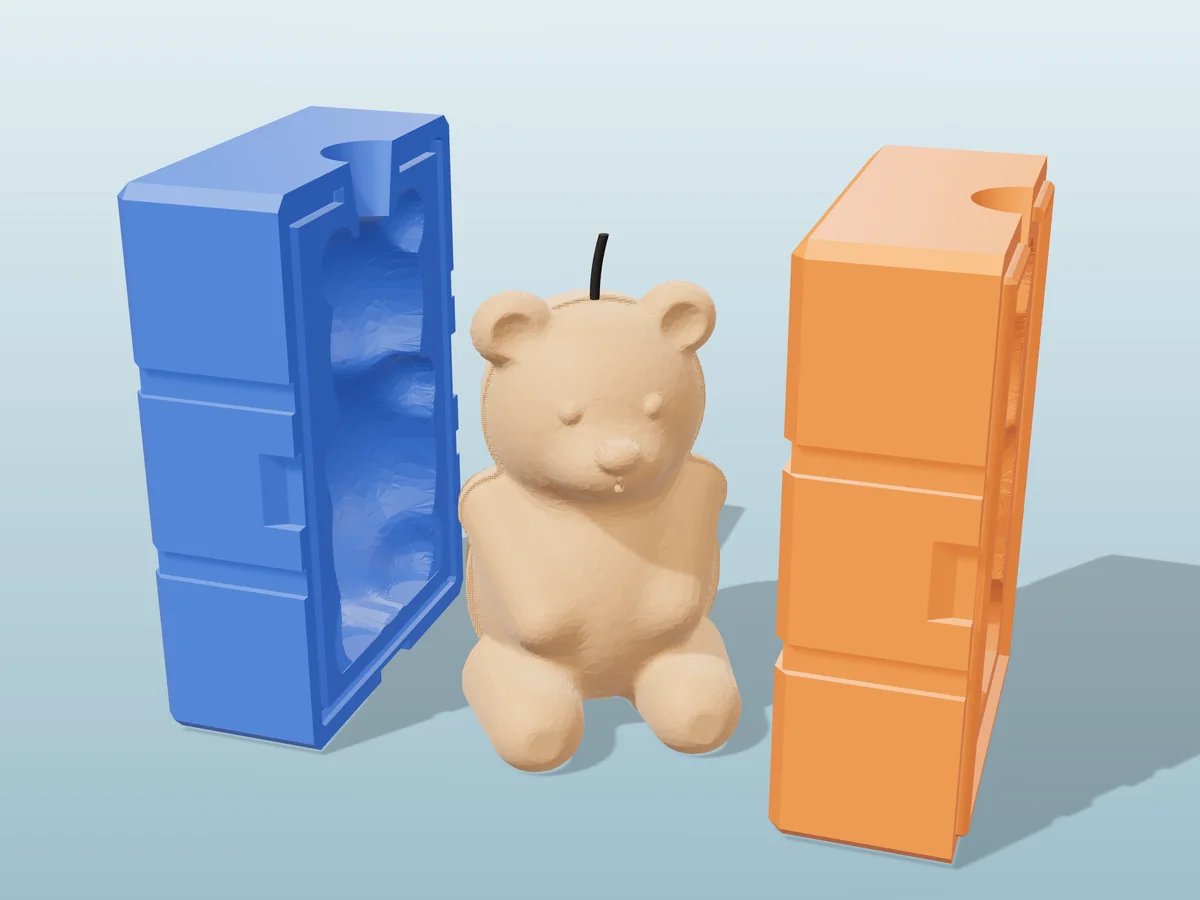
Free candle molds
All free designs →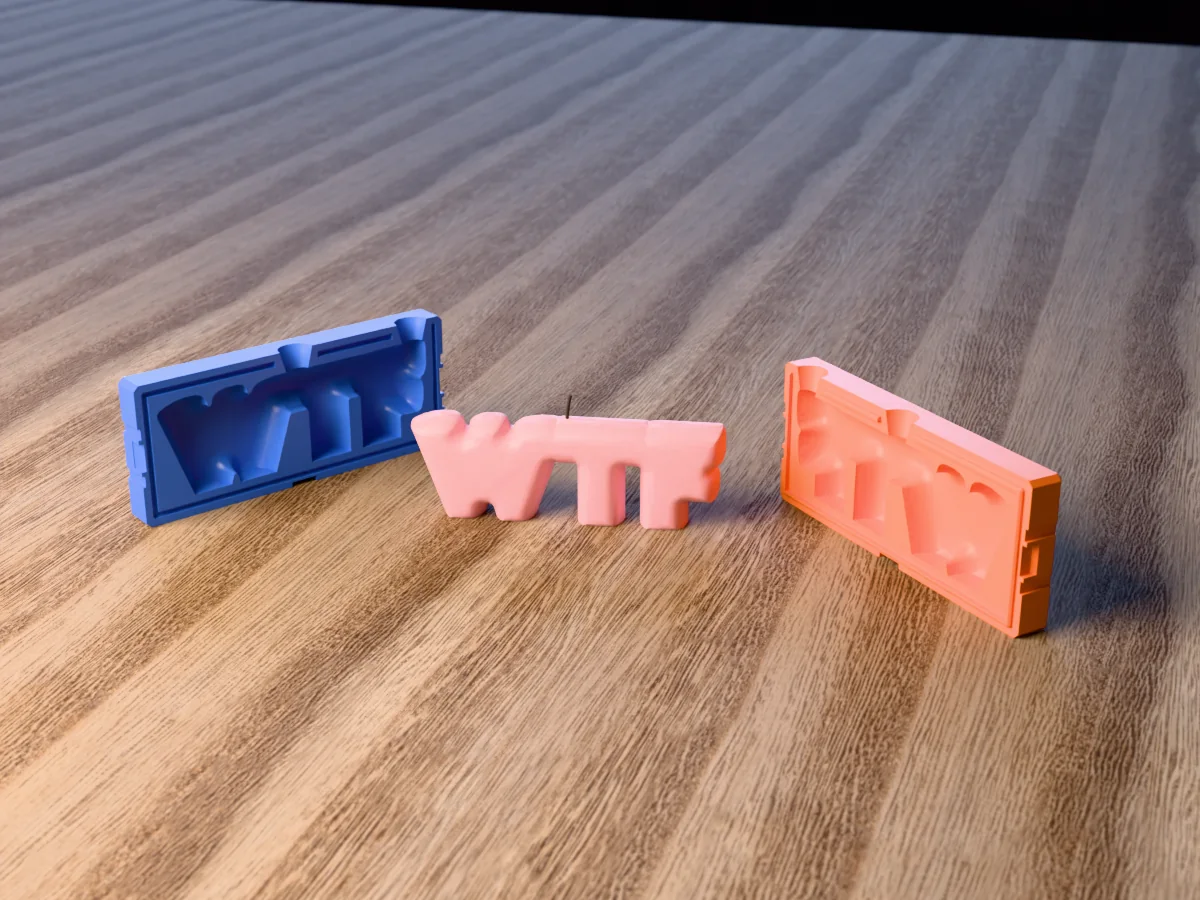
Printed candle questions
Can you 3D print a candle you can burn?
Not directly. No consumer printer extrudes candle wax.
The working method Print a two-part mold, then pour real wax with a cotton wick into it. You get a real candle, and the mold is reusable, which a printed candle would not be.
What about wax filament or castable wax resin?
Castable wax resins for SLA printers exist, but they are made for lost-wax jewellery casting: the print is burned out in a kiln to leave a cavity for molten metal.
They are not candle wax, they do not burn like candle wax, and they cost many times more. Different job entirely.
Is it safe to burn a candle made in a plastic mold?
Yes. The mold is a container, not an ingredient. You demold the candle before burning it, so the finished candle contains nothing but wax, dye, fragrance and a cotton wick.
Never Burn a candle while it is still in the printed mold. That is the one case where the plastic gets hot enough to matter.
Which filament for a candle mold?
PLA for most pours, with 4 walls.
The reason, stated correctly PLA softens from around 60 °C and paraffin pours at 70–80 °C, so the wax is already hotter than the plastic likes. It survives on wall thickness and brief contact, not on margin.
Pour hot regularly? Print in PETG. And pour just above your wax’s melting point either way: it releases better and the mold lasts longer.
Made by meshcast.app. Got stuck? Email a photo and I'll help you debug.