How to make a candle from a 3D-printed mold
This guide was drafted with AI assistance.
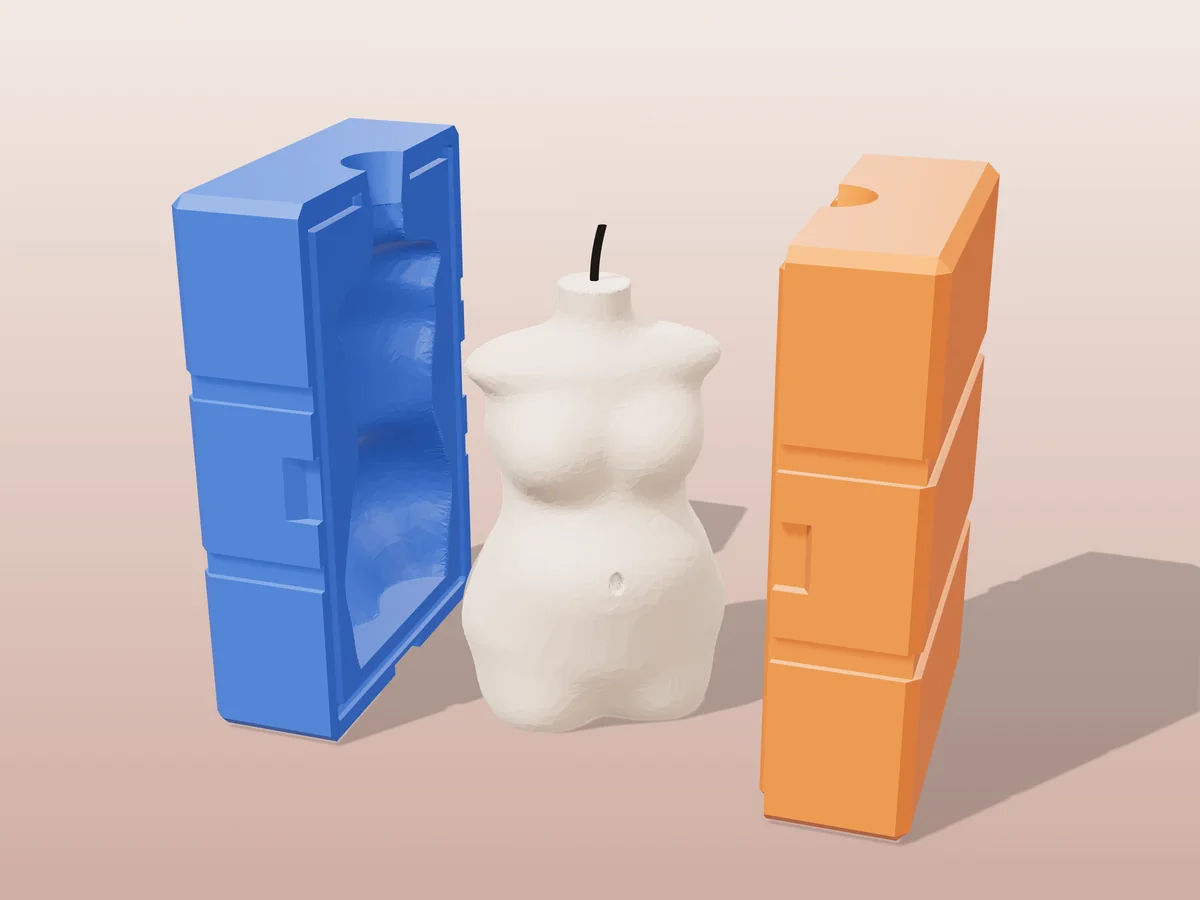
Print the two mold halves in PLA (3 walls), thread a wick, clamp with rubber bands, pour wax at the right temperature (paraffin 75–85 °C, soy 57–63 °C, never above 90 °C), cool 4–6 hours, demold. Total cost to start: about $59 plus the printer.
What you'll need
- PLA filament*, stays rigid at wax temps; skip PETG here (warps less predictably)~$20
- Paraffin pillar wax*, holds detail best; soy is too soft for freestanding shapes~$12
- Cotton wick variety pack* (CD series fits paraffin and soy)~$10
- Mold release spray*, cooking spray works in a pinch~$12
- Two #64 rubber bands* to clamp the halves~$5
Also handy: a digital thermometer (don't guess wax temperature) and a metal pouring pitcher for the double boiler.
* Advertising: links marked with * are affiliate links. If you buy through one we earn a commission, at no extra cost to you. As an Amazon Associate we earn from qualifying purchases.
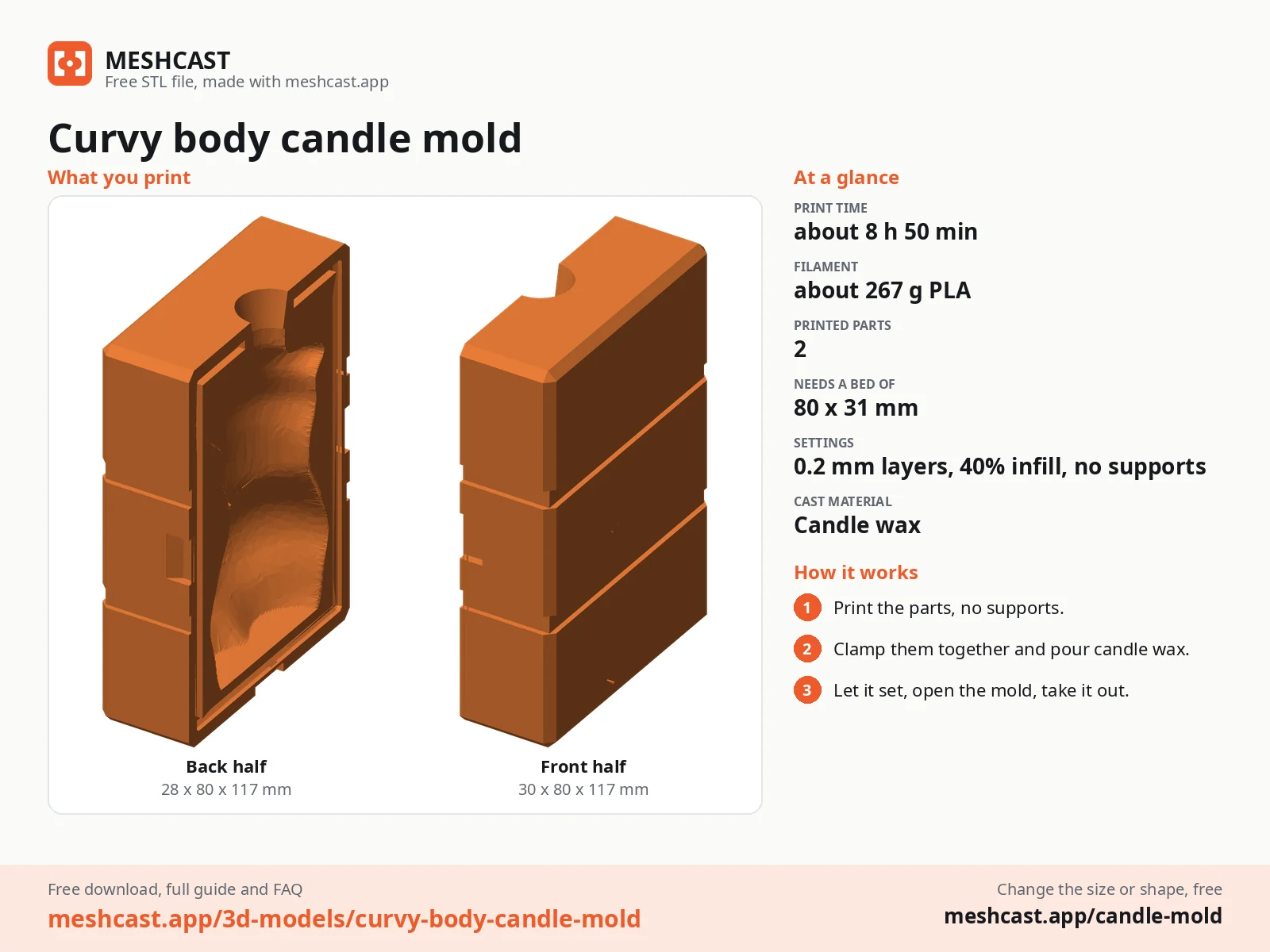
Print the mold
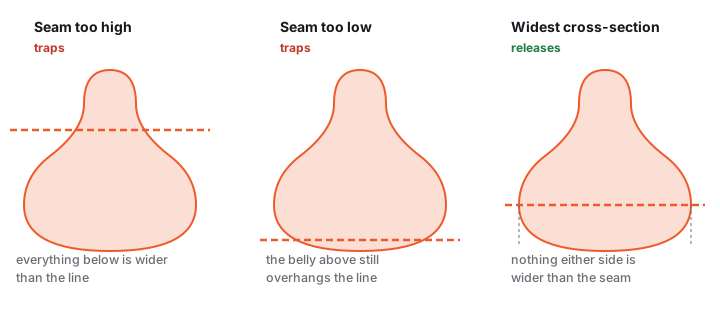
Print and dry-fit
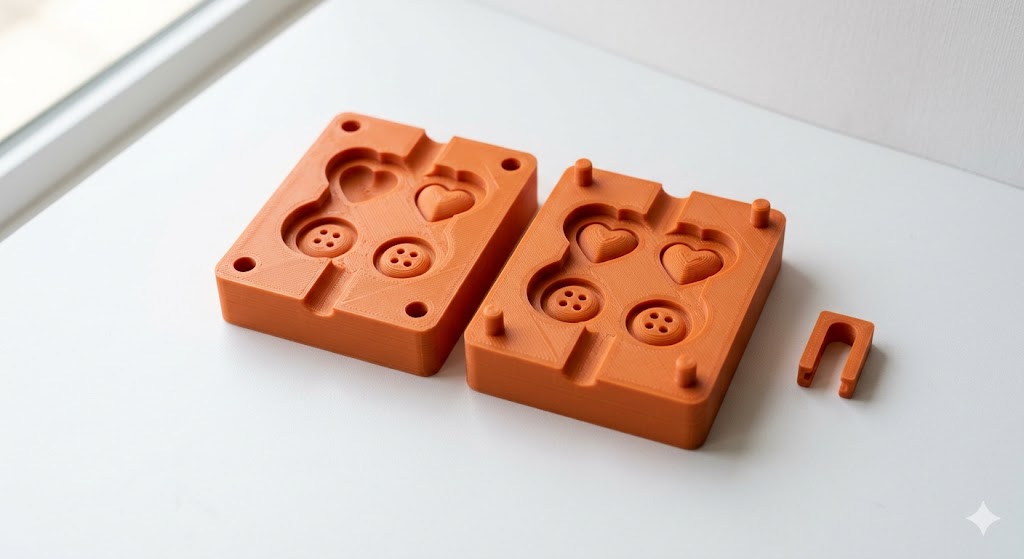
0.2 mm layers, 3 walls, 15–20 % gyroid infill, PLA at 210 °C. Print both halves flat-face-down on the same plate so they cool to matching dimensions. Dry-fit before pouring, the seam must close with no daylight through it. Gap? Reprint with 4 walls.
Pick the wick size
Match the wick to the candle's widest diameter. Too small → tunneling. Too big → smoke and a fast burn.
| Candle diameter | Paraffin | Soy / beeswax |
|---|---|---|
| Up to 38 mm | LX 10 / CD 6 | ECO 2 / CD 8 |
| 38–50 mm | LX 14 / CD 8 | ECO 4 / CD 10 |
| 50–63 mm | LX 18 / CD 10 | ECO 8 / CD 12 |
| 63–76 mm | LX 22 / CD 14 | ECO 12 / CD 16 |
| 76 mm+ | LX 24+ / CD 18+ | ECO 14+ / CD 18+ |
Pour day
Pour holes
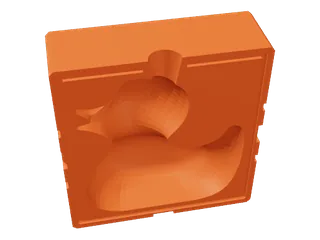 1 holeOver the highest point of the model.
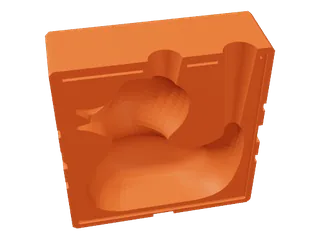 2 holesThe second lets air out while you pour.
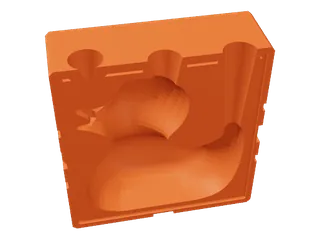 3 holesFor several high points.
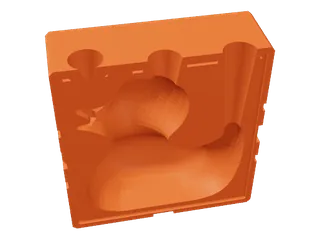 4 holesFor a wide model with many high points.
Thread the wick & spray release
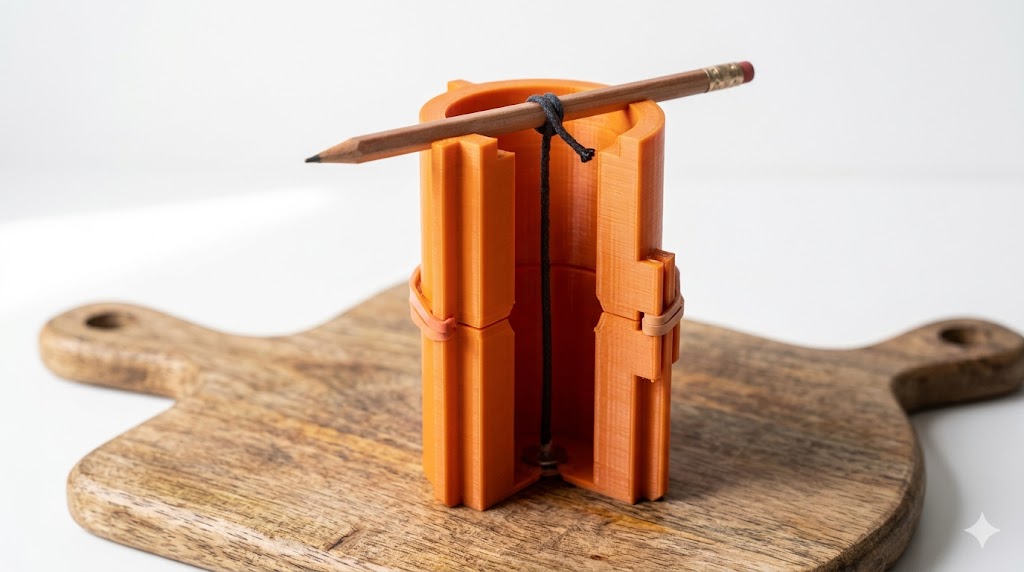
Cut the wick 5 cm longer than the candle. Thread it through the pour hole and wrap the top around a pencil laid across the opening so it stays centered. Lightly mist the inside of each half with mold release, a thin film, not drenched.
Clamp with rubber bands
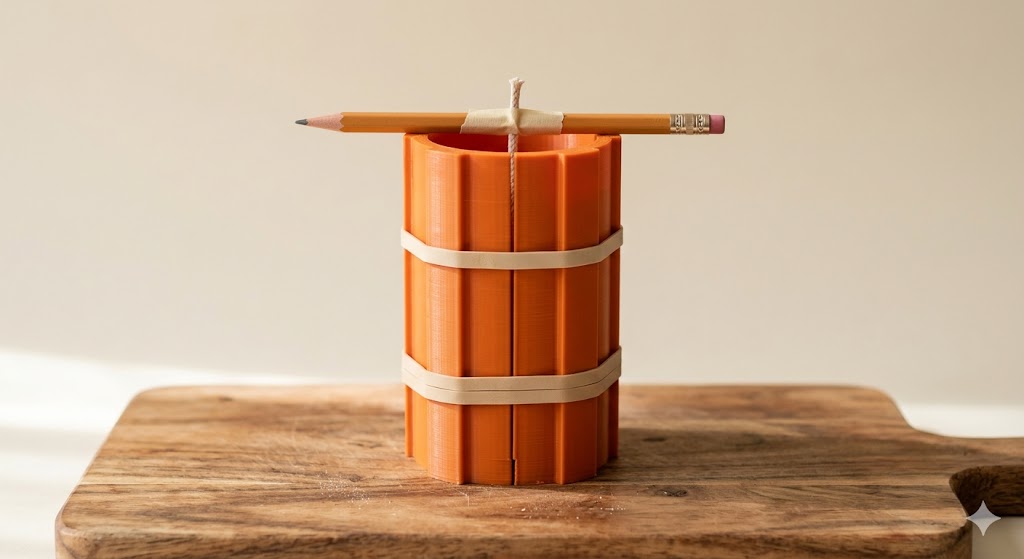
Press the halves together with the wick centered and stretch one #64 band into each groove. They should sit flush; if loose, double-wrap.
Melt & pour
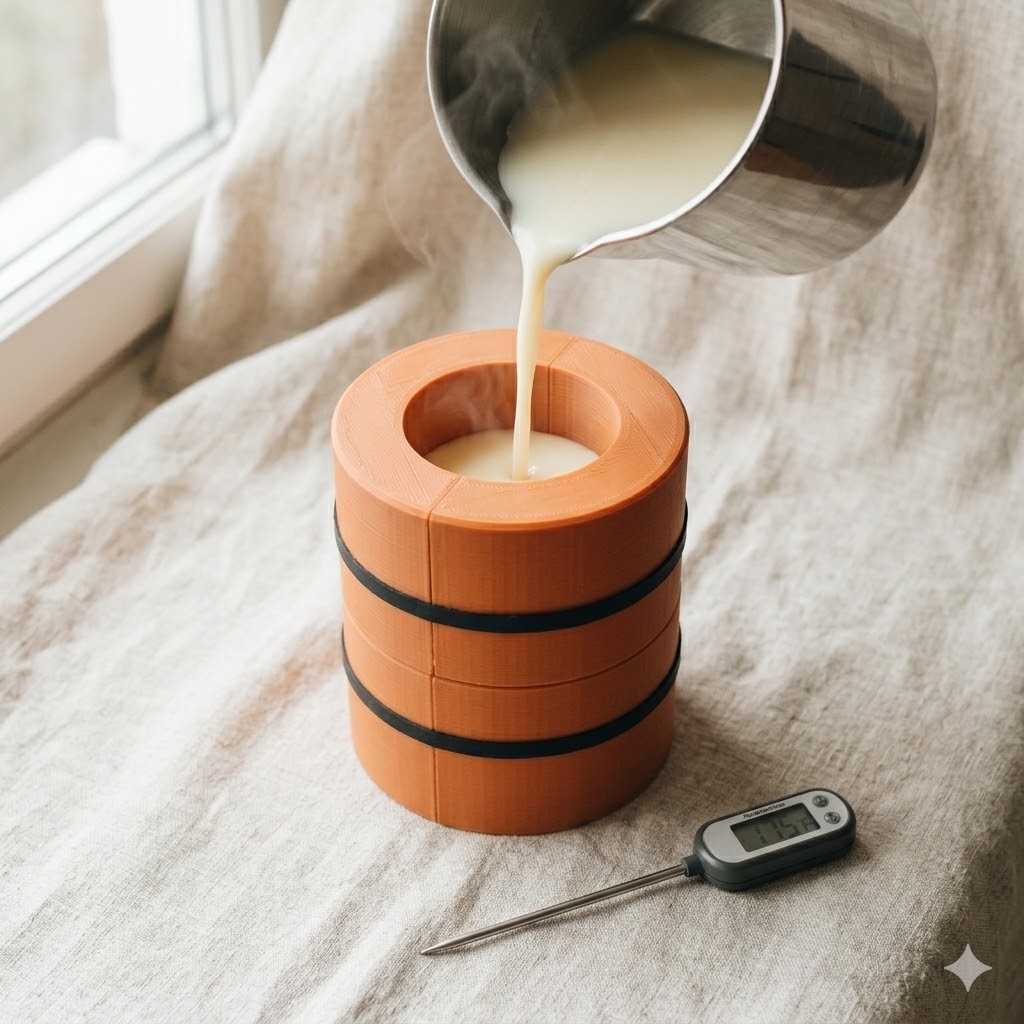
Melt in a double boiler, never direct heat. Add dye and fragrance after melting (6–10 % fragrance by weight), then pour slowly into the top opening.
| Wax | Pour temp |
|---|---|
| Paraffin pillar | 75–85 °C |
| Soy | 57–63 °C |
| Beeswax | 70–80 °C |
Demold & finish
Cool & demold
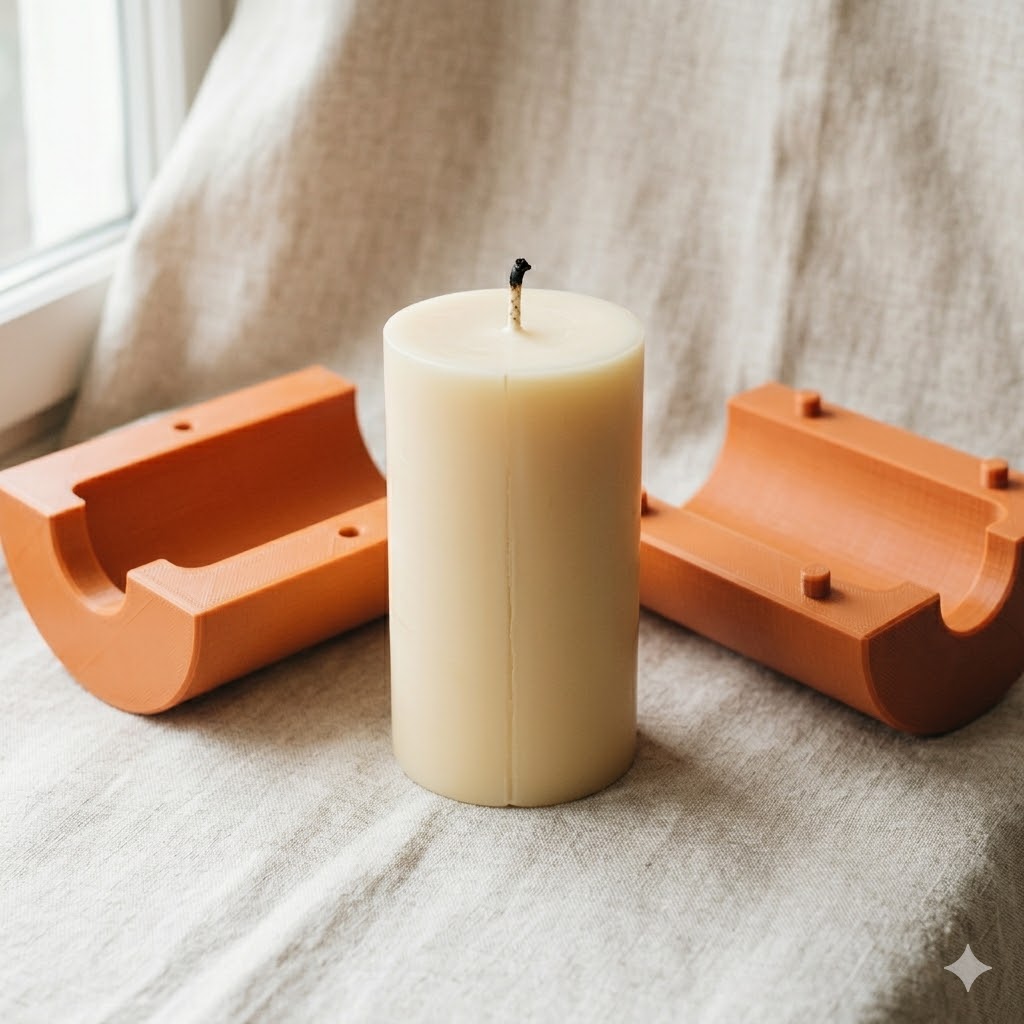
Set it warm, then chill it, then rest it. 4–6 hours at room temperature first (overnight for anything larger than a tealight), then fridge overnight or 15–20 minutes in the freezer, then 30 minutes back at room temperature before you open it.
Why the order matters more than the temperature
Both halves of the usual advice are half right. Chilling molten wax cracks and frosts the surface, which is why the warm set comes first. But the shrinkage that pulls a candle off the mold wall only happens when it gets cold, so skipping the chill is what leaves candles stuck.
The failure to avoid is opening the mold while the wax is frozen hard. Frozen wax is brittle and snaps down the middle the moment you pry. That is what the 30-minute rest prevents. After a short freezer chill you can open straight away.
Roll the rubber bands off rather than lifting them, and lever at the pry pocket, not the band grooves. Stuck? Warm tap water over the outside for 30 seconds, or 20 more minutes in the freezer.
Clean & cure
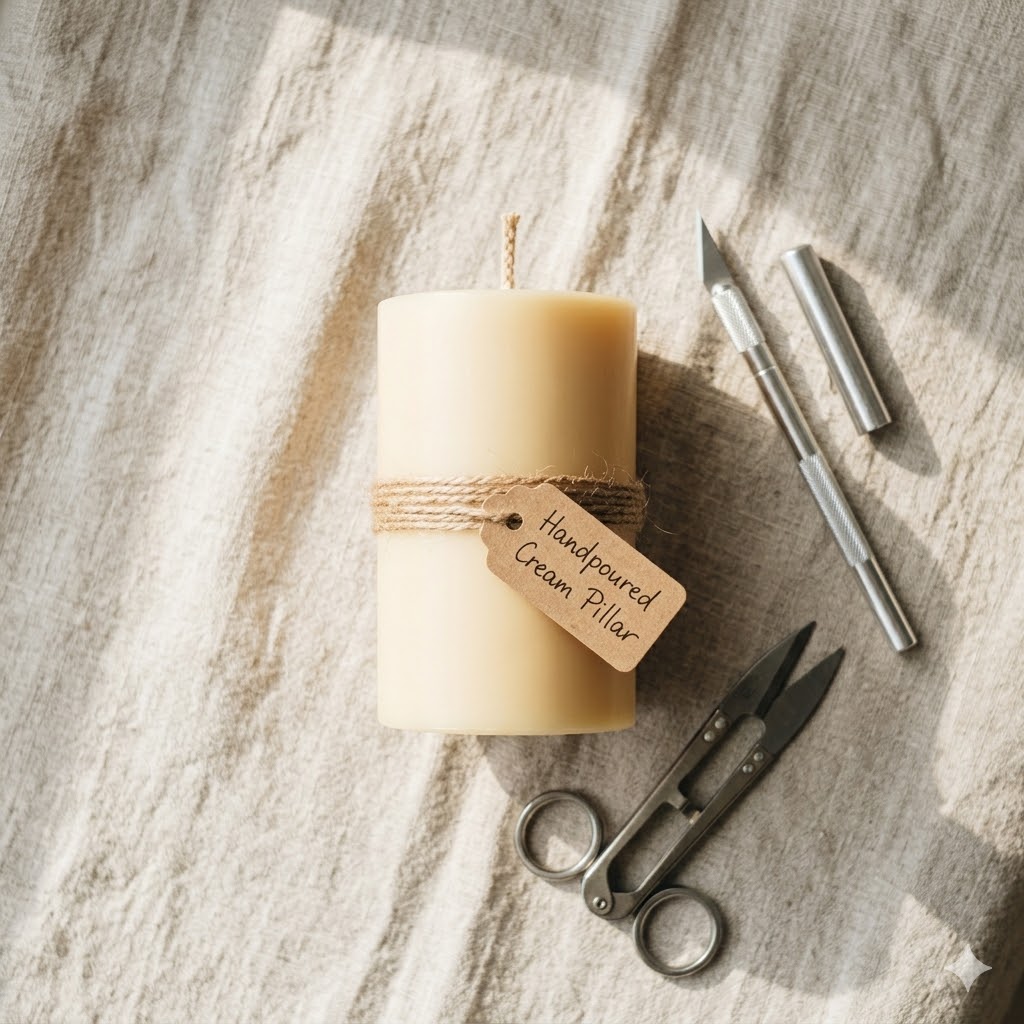
Scrape the seam line off with a fingernail or knife and trim the wick to ~6 mm. If you used fragrance, cure 1–2 weeks before burning so the scent binds.
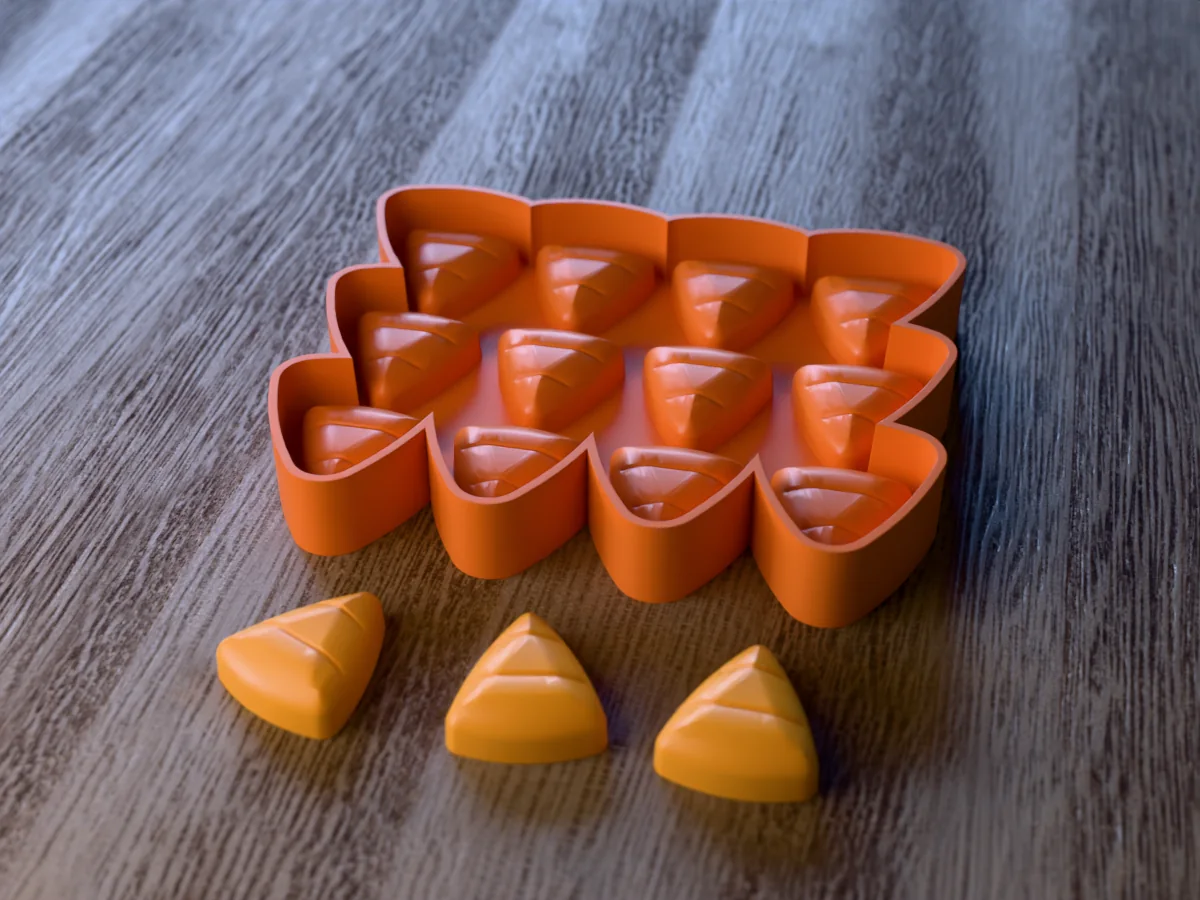
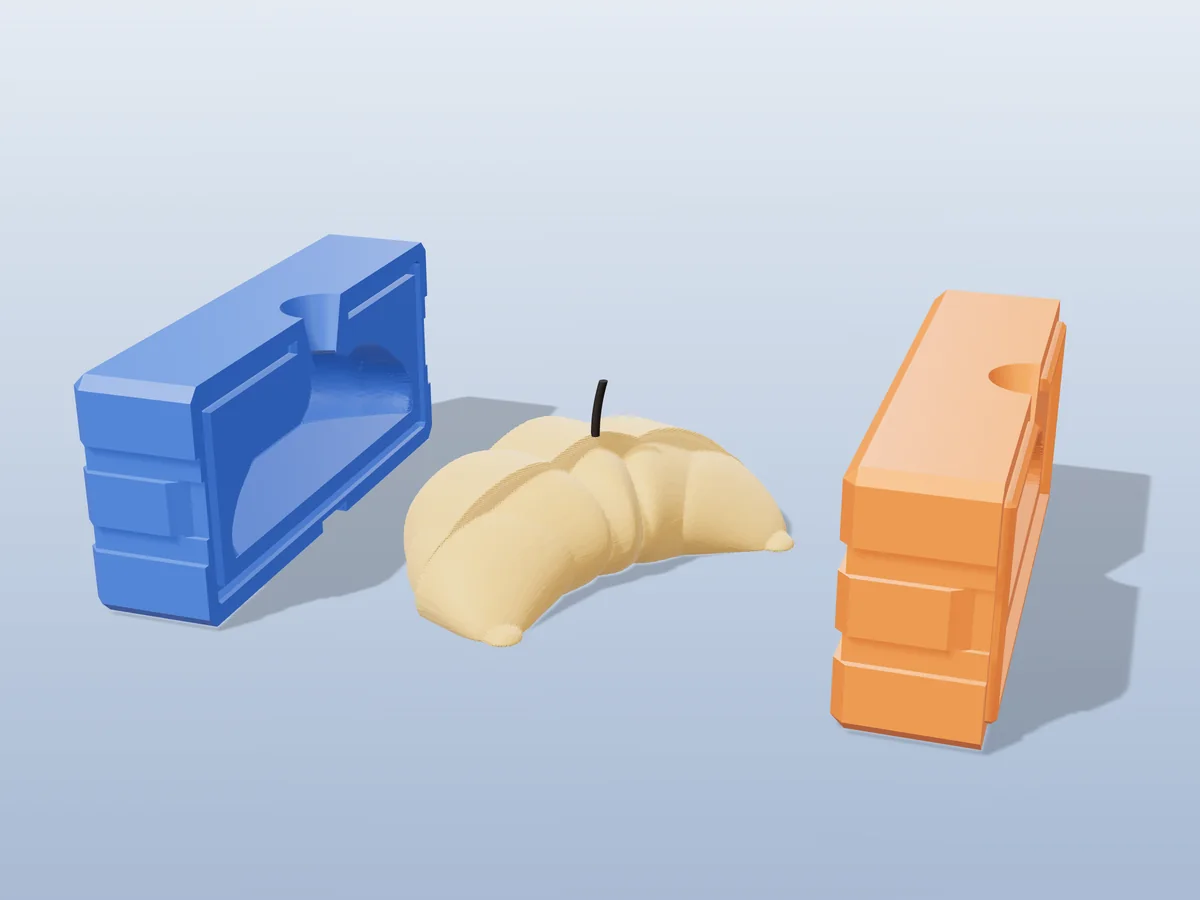
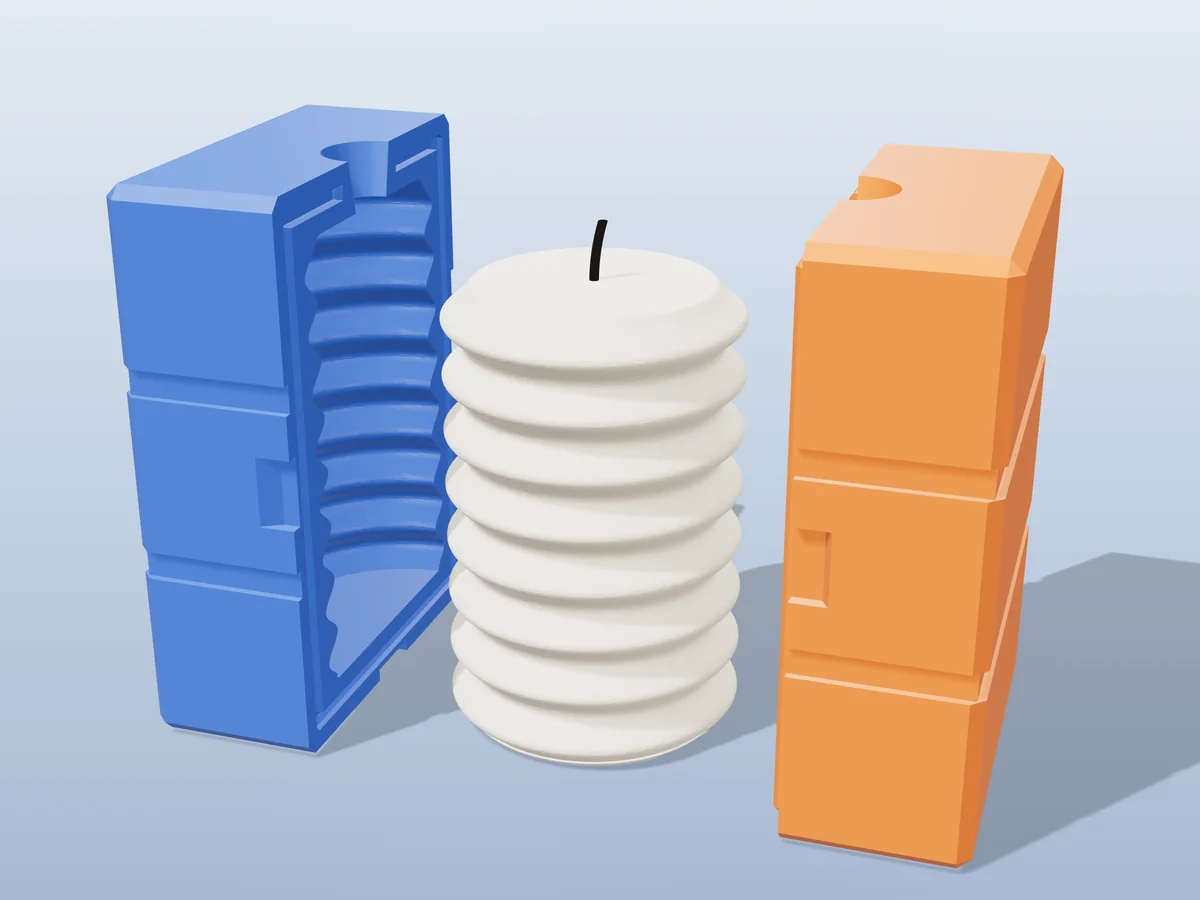
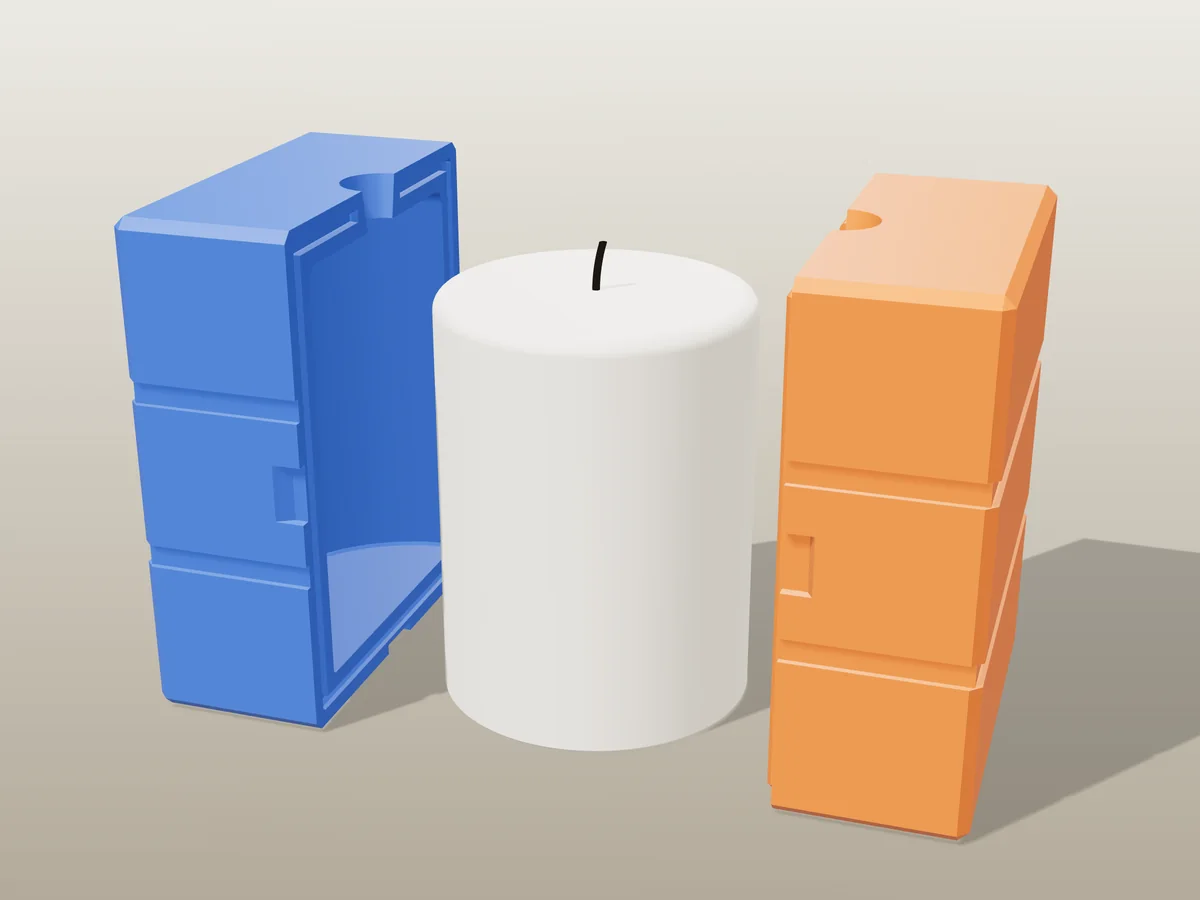
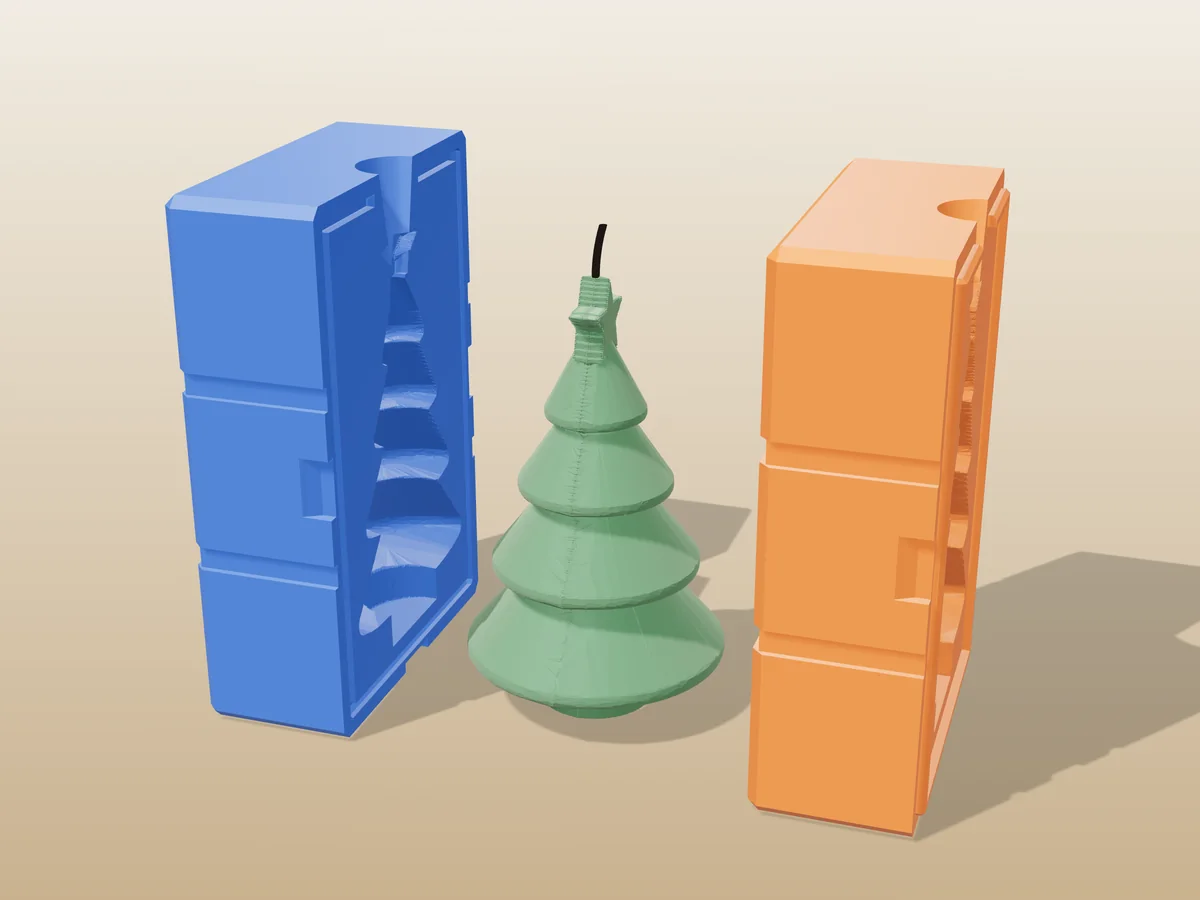
Free candle molds
All free designs →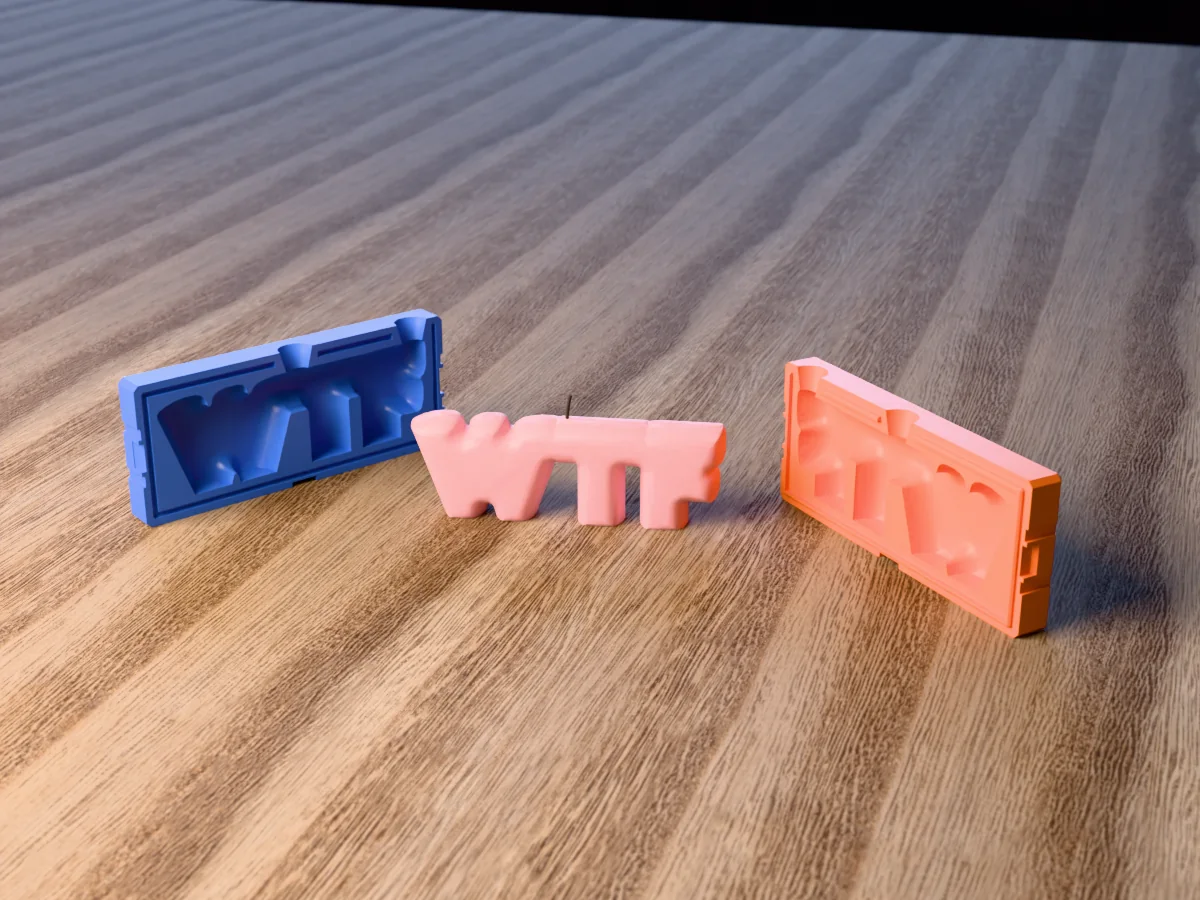
Troubleshooting
Wax leaked out of the seam
The halves aren't closing tight. Dry-fit and look for daylight at the seam, double-wrap the rubber bands, and reprint with 4 walls if a gap remains. For molds over 100 mm switch to #84 bands.
The candle won't come out
You skipped mold release, demolded too early (under 4 h), or the shape has undercuts. Run warm water over the outside for 30 s, then try again.
Rough or bumpy surface
Those are print layer lines. Fixes in order: reprint at 0.12 mm, sand the cavity (400 → 800 grit), or coat it with XTC-3D for a glass finish.
Air bubbles in the candle
Pour slower at the right temperature, make sure the vent isn't plugged, and tap the filled mold gently 2–3 times to release trapped air.
The PLA mold deformed
Wax too hot, or held against the wall too long. PLA goes soft from around 60 °C, below a normal paraffin pour, so the mold is relying on a 2 mm-plus wall and fast cooling. Check the temperature with a thermometer, pour steadily rather than in one slug, and reprint in PETG if you work hot regularly.
The candle tunnels when burning
Wick too small. Size up one or two steps on the chart, and burn ≥ 3 hours on first lighting so the full surface pools.
Common questions
Why did wax leak out of the mold seam?
The halves aren't closing tight. Dry-fit and look for daylight at the seam, double-wrap the rubber bands, and reprint with 4 walls if a gap remains. For molds over 100 mm use #84 bands.
Why won't the candle come out of the mold?
You skipped mold release, demolded too early (under 4 hours), or the shape has undercuts. Run warm tap water over the outside of the mold for 30 seconds and try again.
Why did my PLA candle mold deform?
The wax was too hot, or it sat too long. PLA goes soft from around 60°C, well below a normal paraffin pour, so what protects the mold is a 2mm-plus wall and the wax cooling fast. Check the pour temperature with a thermometer, pour steadily rather than in one slug, and reprint in PETG for hot waxes.
Why does the candle tunnel when burning?
The wick is too small for the diameter. Size up one or two steps on the wick chart, and burn at least 3 hours on first lighting so the full surface pools.
Made by meshcast.app. Some product links are affiliate links, they cost you nothing extra and help keep the tools free. Got stuck? Email a photo and I'll help you debug.