PLA vs PETG vs PP vs TPU: which filament should you actually use?
If you've started selling 3D-printed products - or you're planning to - filament choice will make or break your results. The wrong material means warped prints, returns, negative reviews, and wasted money. This guide compares the four most commercially useful filaments for small 3D-printing businesses: PLA, PETG, PP, and TPU. Not from a hobbyist angle, but from a "what do I actually stock and sell?" angle.
Quick comparison
| PLA | PETG | PP | TPU | |
|---|---|---|---|---|
| Print difficulty | Easy | Easy-Medium | Hard | Medium |
| Heat resistance | ~60°C | ~80°C | ~100°C+ | ~80°C |
| Flexibility | Rigid, brittle | Semi-rigid | Semi-rigid | Flexible / rubber-like |
| Moisture resistance | Poor | Good | Excellent | Moderate |
| Chemical resistance | Poor | Good | Excellent | Good |
| Food safe? | No | Conditional | Yes (with conditions) | No |
| Outdoor use? | No | Short-term | Yes | Short-term |
| Approx. cost / kg | $10-20 | $15-25 | $25-45 | $20-35 |
| Recommended brands | eSUN, Overture, Polymaker | Prusament, eSUN, Polymaker | Prusa, Fiberlogy | NinjaTek, eSUN, Polymaker |
PLA - the right start, with real limits
PLA is the entry point for almost every 3D-printing business. It's cheap, easy to print, available in hundreds of colors, and produces clean, sharp-looking results. Most beginner-friendly printers - including the Ender 3 series, Prusa MK4, and Creality K1 - are tuned with PLA in mind.
What PLA is good for: decorative items, figurines, display pieces, product mockups, signage, gifts, and anything where looks matter more than function. If your products sit on a shelf and don't get stressed, heated, or exposed to the elements, PLA is perfectly fine.
Who this is NOT for: anyone selling products used outdoors, in kitchens, in cars, or in situations where the customer will actually put the product through physical use. PLA starts to soften around 60°C - a parcel left in a hot car in summer, a product left on a sunny windowsill, or a kitchen tool near heat can all deform or warp. It's also brittle: PLA snaps rather than bending, which means hinges, clips, and structural parts break quickly.
PLA has poor moisture resistance and essentially zero chemical resistance. It will degrade if exposed to water repeatedly over time - so containers, plant holders, and bathroom accessories are risky.
Cost and sourcing: PLA is the cheapest filament on the market at roughly $10-20/kg. Budget brands like eSUN or Overture are reliable for decorative work. If color consistency matters for a product line, step up to Prusament or Polymaker.
Is PETG food safe? And other reasons to switch from PLA
PETG (Polyethylene Terephthalate Glycol) is the most important upgrade a small 3D-printing business can make. It's not dramatically harder to print than PLA, but it handles real-world use much better: stronger layer bonding, better heat resistance (~80°C), good moisture resistance, and solid chemical resistance.
Is PETG food safe?
This is one of the most searched questions about PETG - and the honest answer is: it depends.
The raw PETG material is generally considered food-safe, but a printed part made from PETG may not be. There are three reasons:
- Porosity. FDM prints have microscopic gaps between layers where bacteria can accumulate, even after washing. The surface looks solid but isn't.
- Nozzle contamination. Standard brass nozzles can contain trace amounts of lead. If you've printed other materials through the same nozzle, residue can contaminate your PETG print. Stainless steel nozzles eliminate this risk.
- Additives and colorants. Many filament manufacturers use colorants that aren't food-safe, even if the base PETG resin is. Brands like Comfy Materials CARBON, COEX 3D, and Siraya Tech offer lab-certified food-safe PETG that complies with FDA 21 CFR 177.1630.
Is PETG good for outdoor use?
PETG handles outdoor use reasonably well in the short-to-medium term. Its moisture resistance is strong, so rain and humidity aren't a problem. Heat resistance is better than PLA. But its UV resistance is only moderate - under constant direct sunlight, PETG will eventually fade and lose mechanical strength. For outdoor products in sheltered or shaded positions (garden brackets, planters, weatherproof enclosures), PETG is a solid choice. For anything in full sun year-round, look at ASA instead.
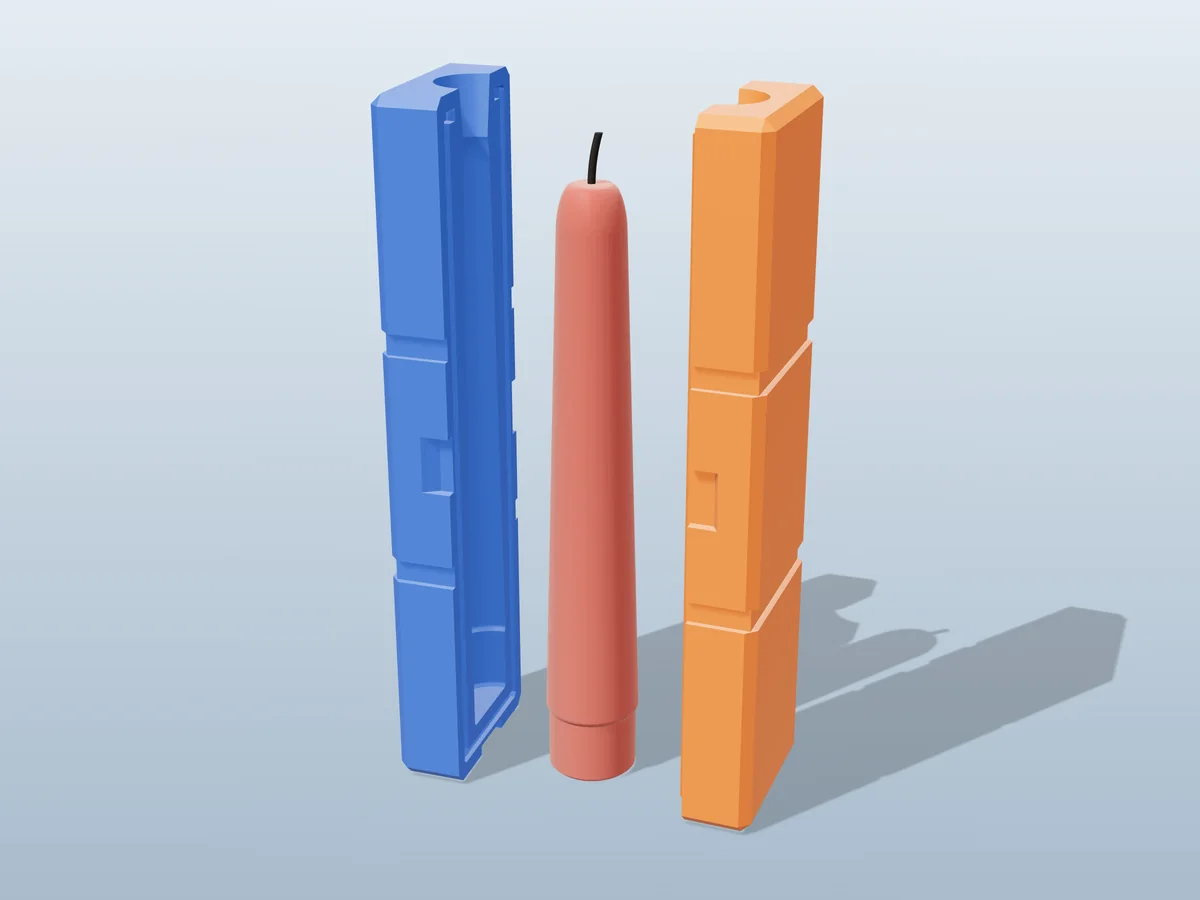
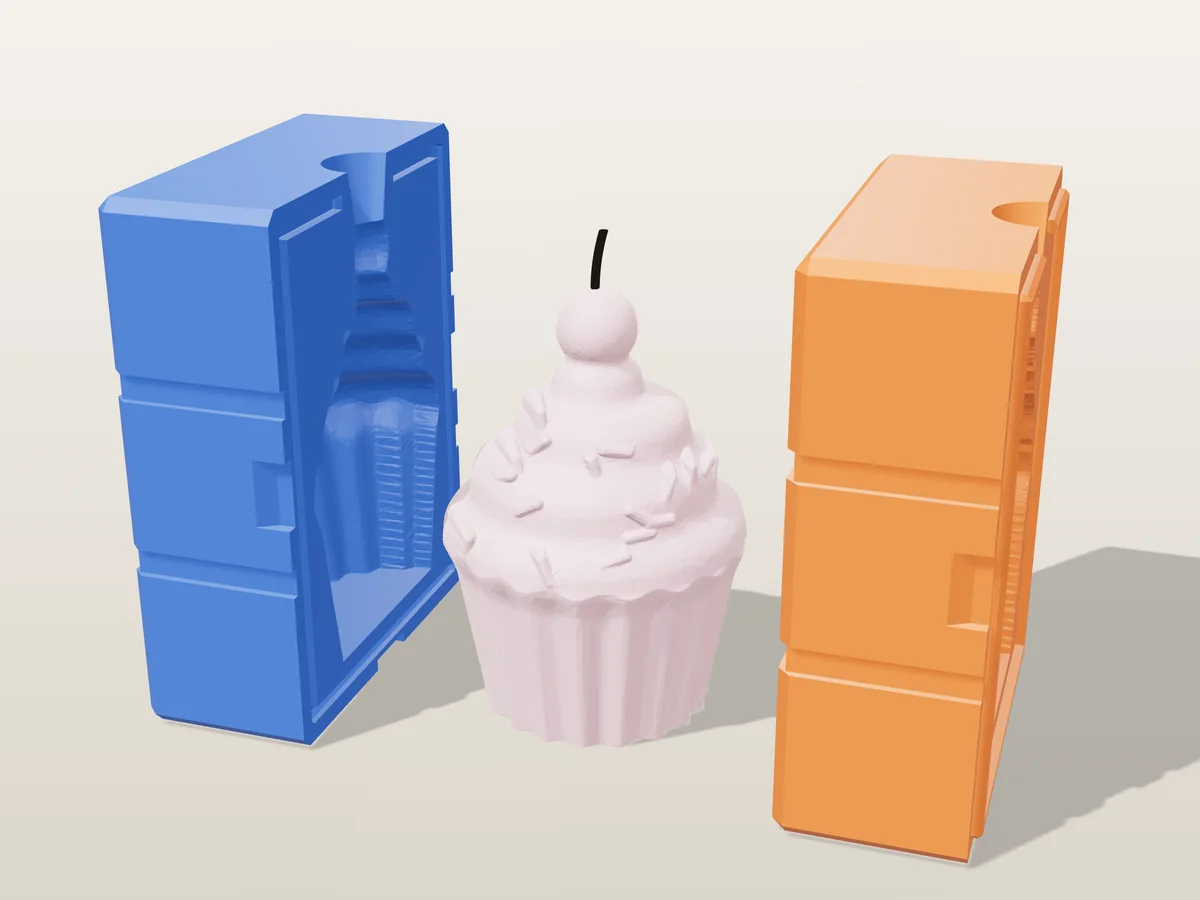
What PETG is good for: functional household products, replacement parts, outdoor accessories in sheltered positions, food-safe items (with the right setup), storage containers, brackets, enclosures, and anything that sees regular handling. It's also the filament we recommend for printing molds that will hold plaster, jesmonite or concrete, since PETG resists the moisture and alkalinity those mixes throw at it.
Who this is NOT for: anyone who needs a fully food-safe product without investing in the right nozzle and filament setup. Also not suitable for high-heat applications (oven-adjacent, automotive, or anything above 80°C), and not the right choice if you need true long-term outdoor UV stability.
Cost and sourcing: $15-25/kg for standard PETG. Certified food-safe PETG runs $25-40/kg. Prusament PETG and Polymaker PETG are reliable mid-range options. Budget brands like eSUN PETG work well for non-food applications.
PP (Polypropylene) - the specialist that's worth learning
Polypropylene is everywhere in the physical world: food containers, medical packaging, automotive parts, storage systems. It's one of the most widely used plastics on the planet. In desktop FDM printing, it's underused - partly because it's genuinely difficult to print, and partly because most guides skip it. That's a gap worth filling if you have a clear use case.
PP's standout properties
PP has the best chemical resistance of any common FDM filament. It resists acids, bases, oils, and most household solvents without degrading. It's naturally watertight. It has excellent fatigue resistance - meaning it can be flexed, bent, and stressed repeatedly without cracking. And it's naturally food-compatible for most applications.
This combination makes PP ideal for: food-safe containers and trays, living hinges (snap lids, clip closures), chemical-resistant parts, lab equipment, and anything that gets washed repeatedly with harsh cleaners. PP is also one of the lightest filaments available (density ~0.9 g/cm³), which can be a genuine selling point for products where weight matters.
Why PP is hard to print
PP warps. A lot. It's a semi-crystalline polymer that shrinks significantly as it cools, which causes parts to lift off the build plate and warp in the corners. Bed adhesion is a persistent challenge - PP doesn't stick to standard surfaces. You need PP-specific build plates, PP tape, or specialized adhesives (Magigoo PP works well). An enclosure is essentially mandatory to manage the ambient temperature during printing.
PP also doesn't glue well after printing - its low surface energy means most adhesives won't bond to it reliably. Assembly requires mechanical fasteners or ultrasonic welding. Print temperatures are higher: typically 220-270°C nozzle and 80-105°C bed, depending on the brand.
Who this is NOT for: anyone just starting out, or anyone without a printer that can reliably hold enclosure temperatures and heated-bed temps above 80°C. PP rewards a well-dialled setup. Attempting it on a basic open-frame printer without tuning your settings first will waste a lot of filament.
Cost and sourcing: $25-45/kg - noticeably more expensive than PLA or PETG. Prusa Research and Fiberlogy make reliable PP filaments with decent documentation on settings.
TPU - the flexible filament with real commercial potential
TPU (Thermoplastic Polyurethane) is the only common filament that's genuinely flexible. Depending on its Shore hardness - a measure of stiffness - it ranges from quite soft and squishy (85A) to fairly firm but still flexible (98A). This rubber-like behavior opens up product categories that no other material on this list can touch.
What TPU unlocks for your business
Phone cases, protective bumpers, flexible gaskets, cable tidies, grip-enhancing handles, vibration dampeners, shoe insoles, wearable accessories - these are all products people search for, buy regularly, and are willing to pay a premium for when they're well-designed. Most sellers on Etsy and similar platforms either don't offer TPU products, or they offer poorly-printed ones. That's a real opportunity.
TPU also has good abrasion resistance and handles oils and common chemicals reasonably well. It's worth noting that TPU doesn't have strong UV resistance - prolonged outdoor sun exposure will eventually cause degradation and brittleness, so it's better suited to indoor or sheltered use.
The printing challenge
TPU's flexibility creates a specific problem: it's hard to push through a bowden tube (the tube that feeds filament from the spool to the nozzle on many printers). The filament buckles under the pressure of the extruder rather than feeding cleanly. A direct-drive extruder is strongly recommended for TPU. Printers like the Prusa MK4 and Creality Ender 3 S1 Pro all have direct-drive setups that handle TPU well.
Print speed needs to come down significantly - typically 20-30 mm/s versus 60-100 mm/s for PLA. Stringing is common and requires dialled retraction settings. And unlike PLA or PETG, TPU can't really be sanded or painted - what comes off the printer is what you're selling, so print quality matters more upfront.
Who this is NOT for: anyone printing on a bowden-drive printer who isn't willing to upgrade. Also not ideal if you need high UV resistance or a material you can easily post-process.
Cost and sourcing: $20-35/kg for standard 95A TPU. NinjaTek Cheetah is a reliable professional-grade option. eSUN TPU and Polymaker PolyFlex are good mid-range choices. Budget options like Sunlu TPU are fine for testing but less consistent at volume.
Building a product line around multiple materials
The smartest 3D-printing businesses don't pick one filament - they build product lines that use the right material for each application, and they communicate that difference as a quality signal.
Anchor product in PLA, functional variant in PETG. If you sell desk organizers or decorative holders, offer them in PLA for the standard version and PETG for a "kitchen & bathroom safe" version at a slight premium. Same model, different material, broader market.
Add a flexible accessory in TPU. If you sell protective cases, mounts, or tool holders, a TPU grip or bumper version becomes an easy upsell. "PLA mount + TPU grip ring" is a bundle that adds perceived value with minimal extra complexity.
PP for a food-safe niche product. If you're in the kitchen or crafting space (candle containers, baking tools, cleaning product holders), offering a PP version as your "professional grade" product is a genuine differentiator. Most sellers on Etsy aren't going there - which is exactly why it's interesting. If your product is a candle vessel or a soap dish, the material story is part of the listing.
Tiered pricing works. PLA products can sit at the entry price point. PETG at mid-tier. PP and TPU at the top of your range, where the difficulty premium is justified by what the customer actually gets.
This approach also gives you something concrete to talk about in your product listings. "Printed in food-safe certified PETG with a stainless-steel nozzle" or "flexible TPU for 3,000+ flex cycles" are statements that build trust and justify higher prices.
FAQ
Can I print PETG without a heated bed?
No - PETG needs a heated bed, typically around 70-90°C. Without it you'll get poor adhesion and warping. A heated bed is a minimum requirement for PETG.
Is PLA safe for food contact?
No. Standard PLA is porous, typically contains non-food-safe colorants, and degrades with moisture over time. It's not suitable for food-contact applications.
What's the best filament for outdoor use?
PETG works well for sheltered outdoor positions (good moisture resistance, reasonable UV stability). For parts in direct sun year-round, ASA is the better choice - it's not covered in this article but worth noting as the specialist outdoor filament. TPU degrades with prolonged UV exposure and is better kept indoors.
Do I need an enclosure to print TPU?
Not strictly - but you do need a direct-drive extruder. An enclosure helps with temperature consistency but isn't mandatory for TPU.
Is PP filament worth the hassle for a small business?
Yes, but only if your product genuinely benefits from it. If you're selling functional food-safe, chemical-resistant, or high-cycle mechanical products, PP is worth learning. If you're selling decorative or general-use goods, stick with PLA or PETG.
What Shore hardness TPU should I buy first?
Start with 95A. It's flexible enough to be clearly different from rigid filaments, firm enough to print consistently, and versatile across most flexible product categories.