How to cast resin in a 3D-printed mold
This guide was drafted with AI assistance.
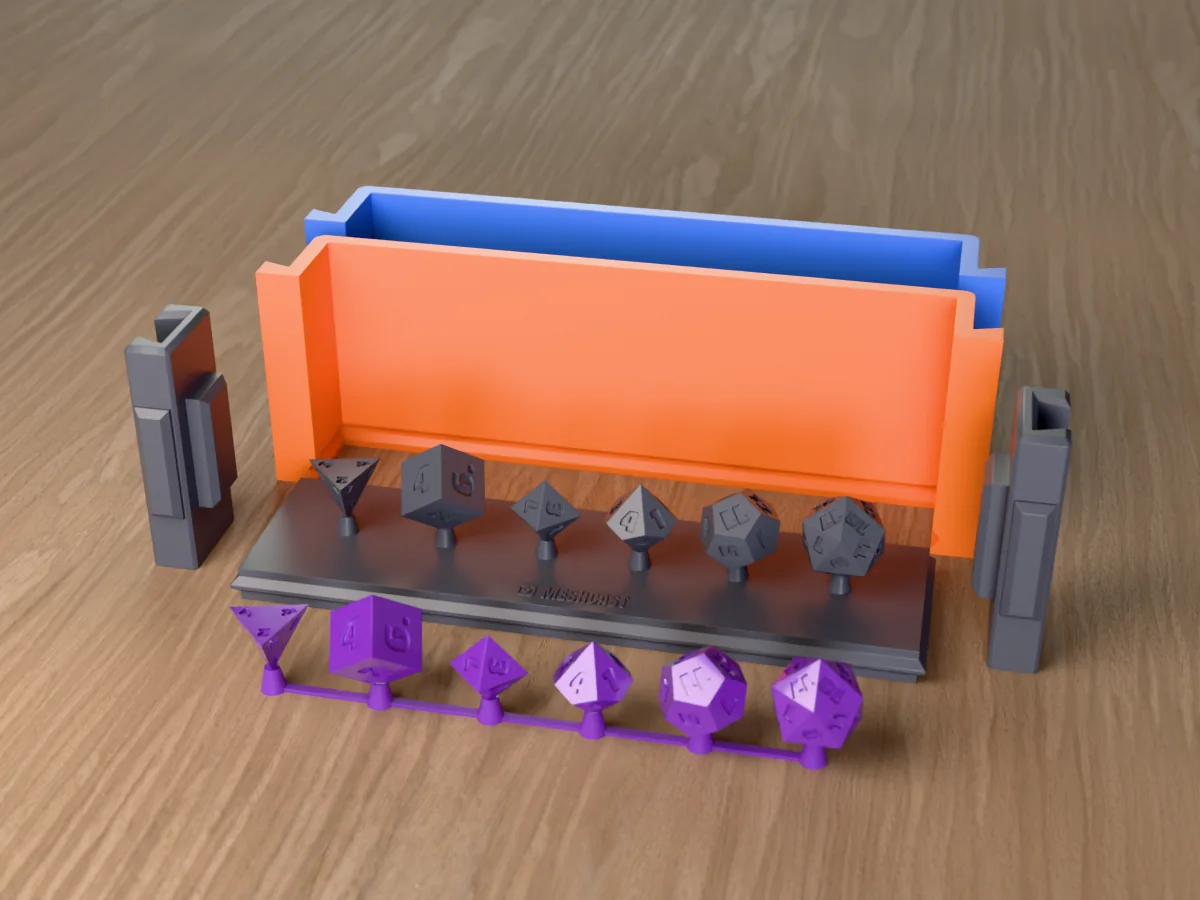
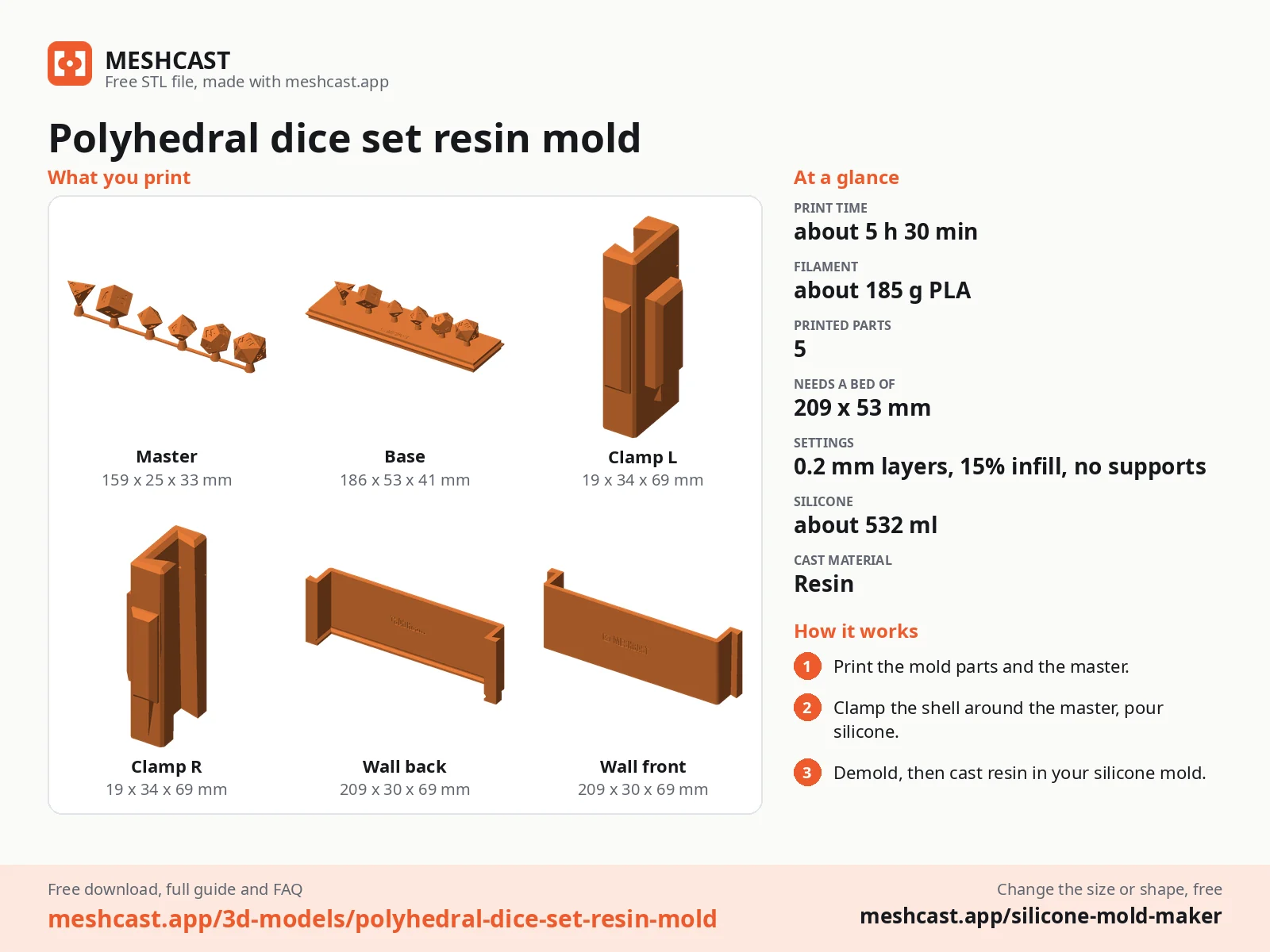
Resin needs a flexible silicone mold, print a master + shell, cast platinum-cure silicone around the master, then pour resin into the silicone. Weigh both parts to the exact ratio (even 5 % off keeps epoxy tacky forever), pour a thin stream from height to shed bubbles, and demold epoxy at 24 h or polyurethane at 30 min.
What you'll need
- PLA filament* for the master + shell, silicone cures cold, so PLA is fine here~$20
- Platinum-cure silicone, Shore 30A*, tears less and copies detail better than tin-cure~$35
- Epoxy or polyurethane resin*, 500 ml~$18
- Silicone-safe mold release*, generic release often inhibits platinum cure~$12
- Graduated mixing cups* + wooden stir sticks~$8
- Nitrile gloves + organic-vapor respirator*, resin eats latex; skin contact sensitizes for life~$18
Optional but recommended: a vacuum chamber (~$100) or pressure pot (~$150). Without one, the pour-from-height trick in step 4 still gets you 90 % of the way.
* Advertising: links marked with * are affiliate links. If you buy through one we earn a commission, at no extra cost to you. As an Amazon Associate we earn from qualifying purchases.
Epoxy or polyurethane?
| Resin | Mix ratio | Pot life | Demold | Pick it for |
|---|---|---|---|---|
| Epoxy (Art Resin) | 1:1 by volume | 45 min | 24 h | Clarity, working time |
| Epoxy (deep pour) | 2:1 A:B | 3 h | 48 h | Thick castings, slow cure keeps exotherm heat down |
| Polyurethane (Smooth-Cast 300) | 1:1 | 3 min | 30 min | Speed; but it yellows in UV |
Exotherm is the warping culprit: the thicker the pour, the more heat the cure builds, and too much heat softens the silicone and distorts the cast. For big volumes use a slow deep-pour epoxy instead of forcing a fast resin. Undecided on the whole approach? See silicone vs direct-print molds.
Print a master worth copying
Print the master + shell
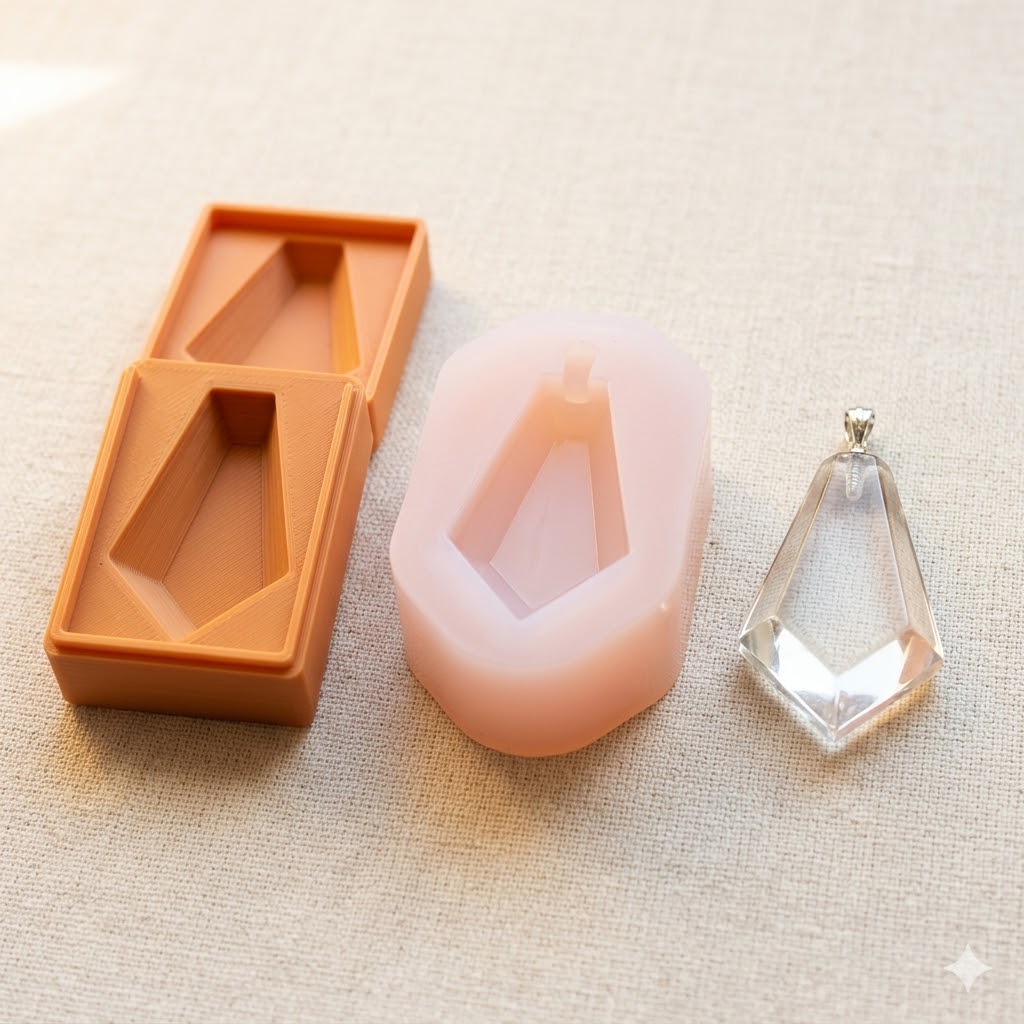
Turn your STL into a mold with the Silicone mold type: a master plus an outer shell with a ~10 mm silicone gap. Slice at 0.2 mm layers, 4 walls (so pressure can't crack the shell), 20 % infill, PLA at 210 °C.
Why the master gets sanded to 1500 grit
Sand the master 400 → 800 → 1500 grit. Silicone is a perfect mirror, every layer line and fingerprint ends up on your cast.
Spray release, avoid inhibitors
Two thin coats of silicone-safe release on the master and inside the shell, 5 minutes flash time between coats, wet release inhibits the cure.
Cast the silicone
Three shapes of mold box
 Square boxThe easiest to print and clamp.
 Round boxA little less silicone than square.
 Hugging shellWalls follow the model, so it takes less silicone.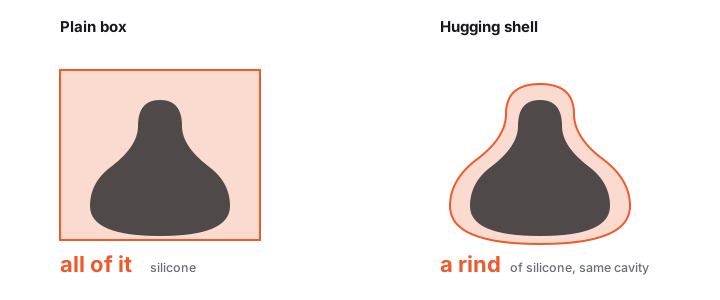
Weigh & stir slowly
Weigh A and B on a 0.1 g scale, Mold Star 30 is 1:1 by weight, Smooth-Sil is 10A:9.7B, so always read the data sheet. Stir slowly for 2 minutes, scraping sides and bottom every 30 s; whipping traps air.
| Silicone | Pot life | Demold |
|---|---|---|
| Mold Star 15 | 50 min | 4 h |
| Mold Star 30 | 45 min | 6 h |
| Smooth-Sil 940 | 20 min | 16 h |
| Dragon Skin 10 | 30 min | 5 h |
Degas, or fake it
Vacuum chamber: 28 inHg for 60–90 s; the silicone foams, peaks, collapses, hold 20 s past the collapse. Pressure pot: pour first, then cure the whole shell at 40 psi.
No vacuum chamber? Do this instead
No equipment? Pour a pencil-thin stream from 30 cm up into one corner and let gravity self-degas, then tap the shell on the table 3–4 times. That's 90 % as good for most shapes, over-pour into undercuts first, that's where bubbles hide.
Pour & cure the silicone
Pour into the shell with the master suspended by its pour-stub, vent open. Cure at room temperature per the table, or 30 min at 60 °C once it has set enough not to slump. Peel the shell off, then the silicone off the master.
Resin pour day
Mix exact, pour thin
Weigh A and B to the manufacturer ratio (table above), stir 3 minutes scraping the sides, and pour a thin stream into the silicone through the pour vent. Polyurethane gives you 3 minutes, pour fast.
Demold
Epoxy demolds at 24 h (deep pour 48 h), polyurethane at 30 min. Flex the silicone off, never pry with a tool, you'll cut it. Trim the sprue with a hobby knife; epoxy keeps hardening for another 24 h. Full walkthrough: how to make a cast.
Free resin molds
All free designs →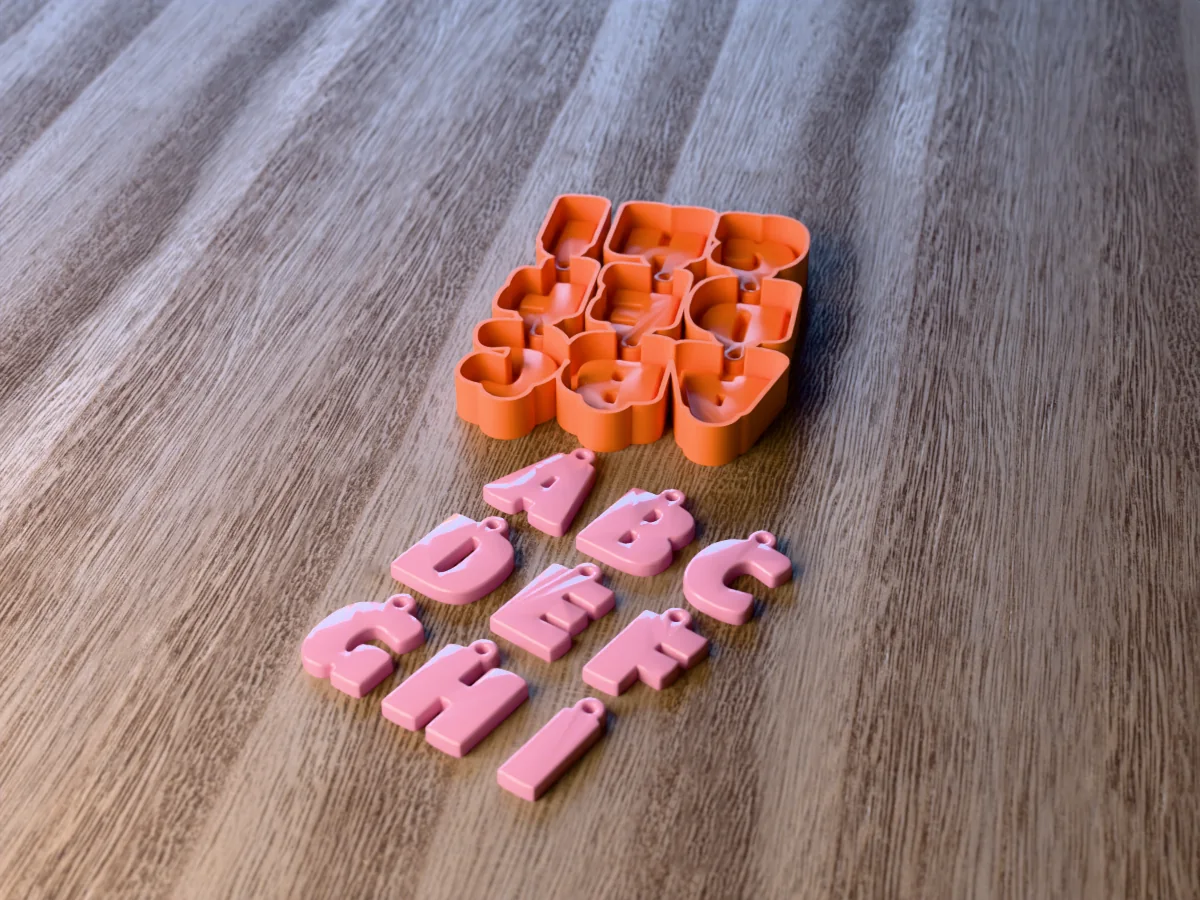
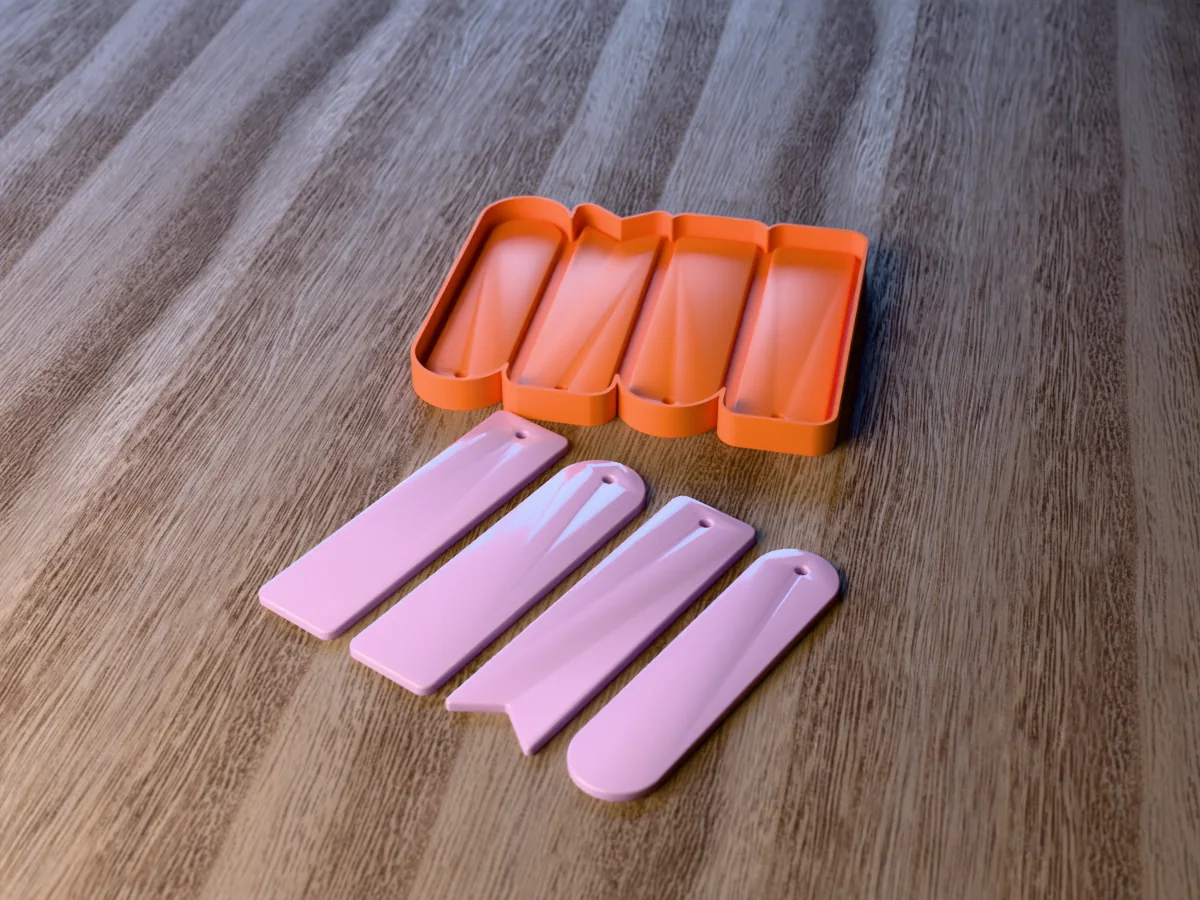
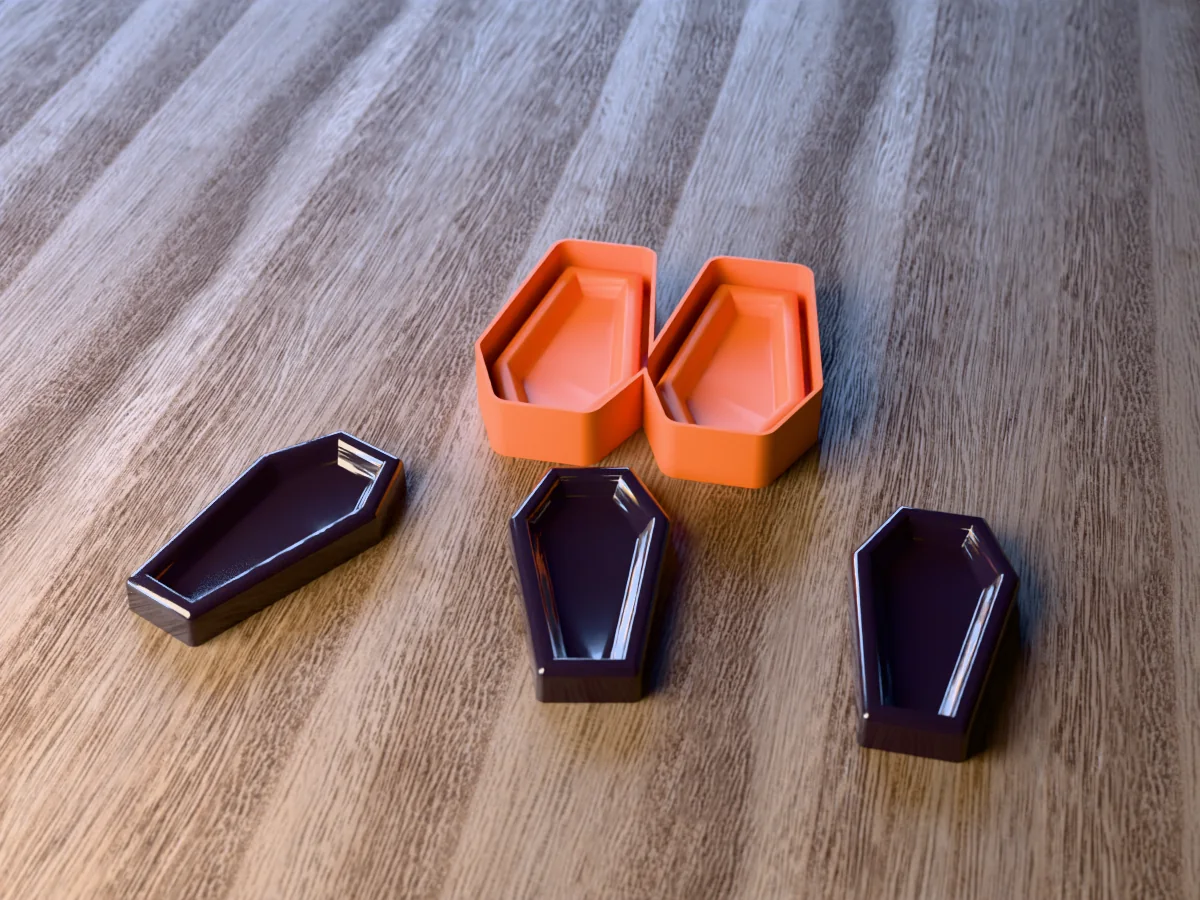
Resin troubleshooting
The resin is sticky and never fully hardens
Cause Off-ratio. Even 5 % out keeps epoxy permanently tacky, and it is the single most common resin failure.
Fix Throw it out, it does not recover. Weigh both parts on a scale rather than measuring by eye, and mix for longer than feels necessary, scraping the sides and bottom.
Also Below about 21 °C the cure slows dramatically. Warm the bottles in a bowl of hot water before mixing.
The cured resin is cloudy or milky
Cause Off-ratio, under-stirred, or moisture that got into the resin.
Fix Exact ratios by weight, thorough stirring, and store the bottles sealed and warm. Once moisture is in a bottle it stays in.
The cast has surface bubbles
Cause Air folded in while mixing, and air trapped against the cavity wall on the way in.
Fix Pour thinner and slower from higher up. For deep detail, paint a first layer into the cavity with a brush, then pour the rest onto it.
Fast fix A heat gun or a lighter passed briefly over the surface pops the bubbles that reached the top. It does nothing for the ones trapped below.
The resin will not demold from the silicone
Cause No release on the silicone, or an incomplete cure.
Fix For epoxy, wait another 12 hours before deciding it is stuck. Next time, mist release inside the silicone before every pour, even though silicone is meant to release on its own.
The silicone is still sticky and uncured
Cause Cure inhibition: sulphur in modelling clay, latex gloves touching the master, tin-cured silicone tools, or release that had not flashed off.
Fix Throw it out and seal the master with shellac or acrylic spray before re-pouring. Nitrile gloves, never latex.
Should I worry about the smell?
Yes, and this is the one entry on the page that is about you rather than the cast.
Why Resin VOCs and skin contact sensitise over time. Exposure compounds, so the person at risk is the one who has been casting happily for a year, not the beginner.
Fix Ventilate, wear nitrile gloves (resin eats latex), and use an organic-vapour respirator for anything more than a small pour.
Made by meshcast.app. Some product links are affiliate links, they cost you nothing extra and help keep the tools free. Got stuck? Email a photo and I'll help you debug.