Are 3D-printed molds food-safe?
This guide was drafted with AI assistance.
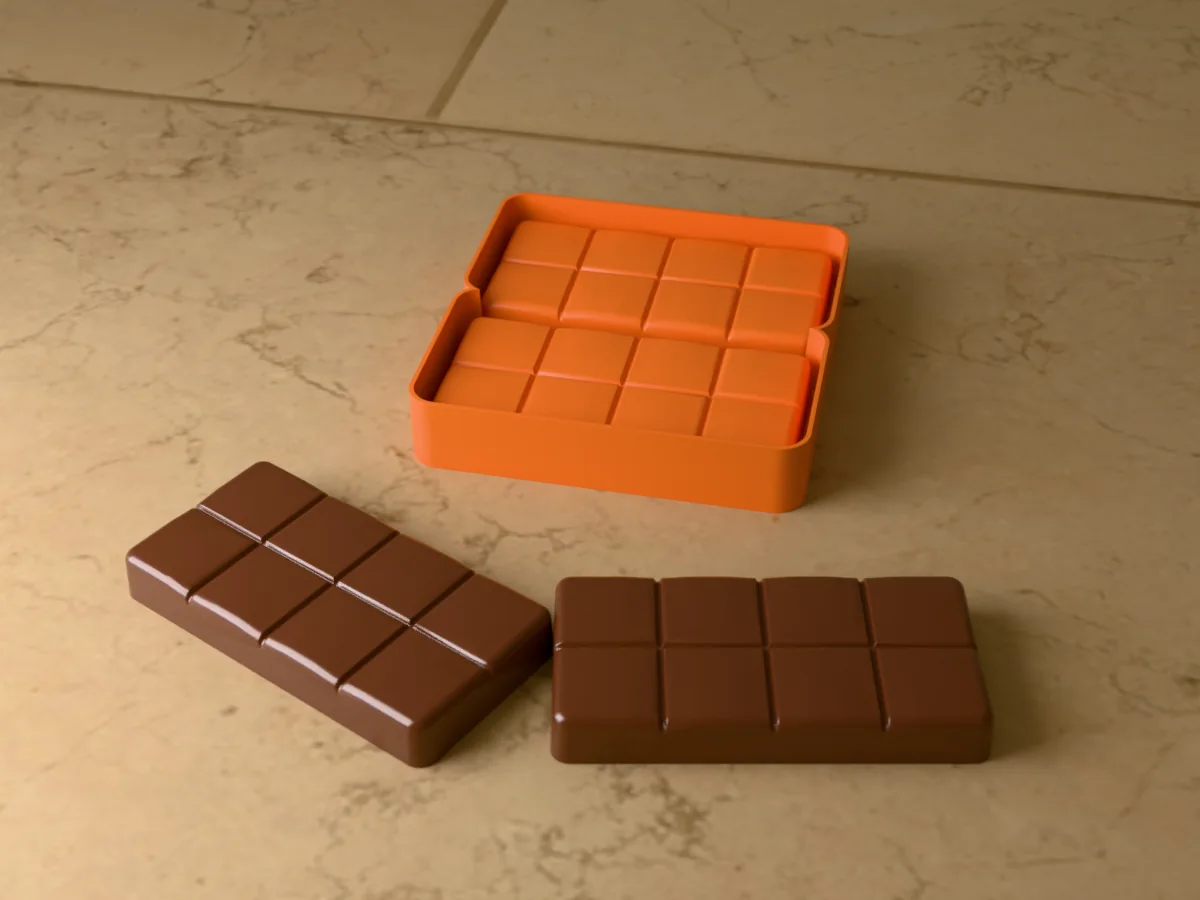
No, not directly. Layer-line crevices trap bacteria you can never fully clean out, and filament additives usually aren't food-grade. Certified coatings help but wear through. The reliable path: print a master, cast a certified platinum-cure food-grade silicone mold from it, and let the silicone, never the print, touch food.
What the generator does, and what it doesn't
Handled for you
- Builds the multi-cavity tray and the silicone caster that goes with it
- Adds cavity draft, so chocolate and candy release from a rigid tray
- Keeps the two routes separate: print-and-use for wax and soap, print-and-cast for anything edible
Still your call
- A printed mold is not automatically food safe. The layer lines hold residue whatever the filament is rated for
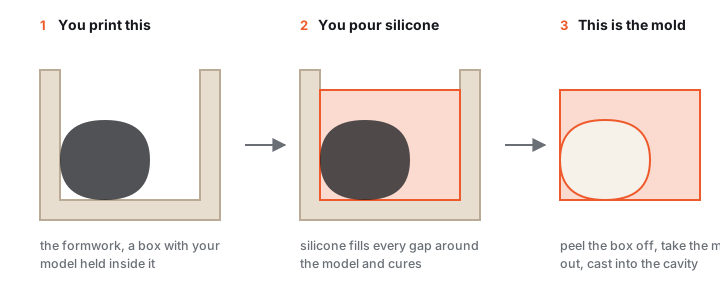
- The safe pattern is to print the formwork and cast a food-grade silicone from it, rather than casting food against the print
If the generator refused your file, the message is explained here: why was my model rejected. Almost every rejection is the same thing, a mesh with holes, and the “Fix it for me” button in the popup resolves most of them in one click.
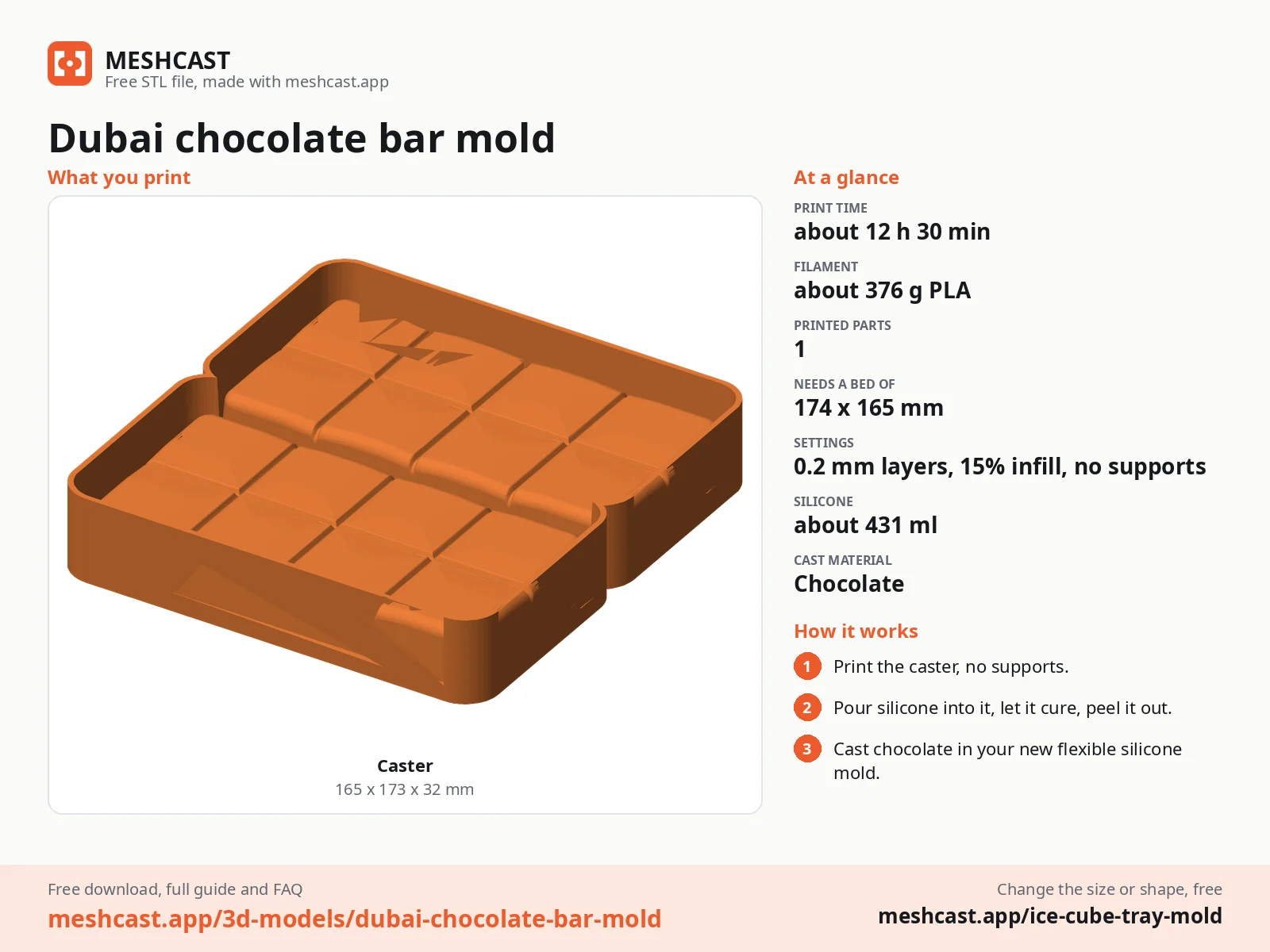
The honest answer: no, not directly
A mold straight off an FDM printer is not reliably food-safe for repeated or wet food contact, even when the filament is sold as food-grade. The print is built in layers, and those layers leave fine valleys across every face. Liquids, sugars and oils settle into them, bacteria grow in them, and ordinary washing doesn't reach them.
A surface you cannot sanitize is not one to put food on more than once. The one narrow exception: brief, dry, single-use contact, a chocolate press used once, then retired from food duty. Lower-risk, not certified-safe.
Why raw prints fail, four problems stack up
- Layer-line crevices trap bacteria. The microscopic gaps between layers are porous and cannot be fully cleaned or sanitized. Residue stays, and over repeated uses that becomes a real contamination risk.
- Additives and colorants aren't food-grade. Pigments and masterbatch mixed into commercial filament are frequently not certified for food contact, unless the spool carries a specific certification, you don't know what's in the surface.
- Brass nozzles can leach lead. Standard brass nozzles commonly contain a little lead that can transfer during extrusion. Anything intended near food should be printed through a stainless or hardened-steel nozzle.
- Not dishwasher-safe. PLA softens at dishwasher temperatures, you can't run the hot sanitizing cycle that would make the part safe without warping it.
Coatings help, with hard limits
A certified food-safe epoxy or sealant flows into the layer lines and cures to a smooth, non-porous, cleanable shell, it fixes the crevice problem. Three caveats are real limitations, not fine print:
- It must be fully cured. Uncured or partially cured coatings can leach, follow the manufacturer's full cure time before any food contact.
- It must be certified for food contact. "Epoxy" is not "food-safe epoxy", look for FDA or EU 10/2011 food-contact certification.
- It wears and must be recoated. Abrasion and cleaning thin the coating; once it wears through, you're back on raw, porous print. Inspect and recoat before it fails.
A coated print needs babysitting, for a surface you can trust, cast silicone instead.
The reliable path: cast food-grade silicone
What are you casting?
 ResinEpoxy or PU
 SiliconePlatinum cure
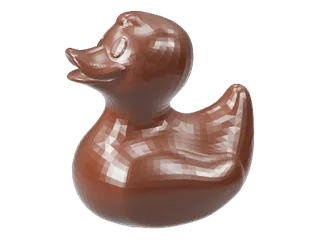 ChocolateFood-safe silicone mold
 WaxCandles, wax melts
 SoapMelt and pour
 ClayPressed or polymer
 PlasterSets in 30 min
 ConcreteCures for days
- Print the master, the positive shape. Surface quality matters here; food safety doesn't, because food never touches this part. (Start from any STL: STL to mold.)
- Cast a certified food-grade, platinum-cure silicone around it. Platinum-cure (addition-cure) silicones are the type commonly certified for food contact, confirm the specific product's certification. Full walkthrough: how to make a cast.
- Use the silicone mold for chocolate, ice and baked goods. Food touches only the smooth, non-porous, sanitizable silicone.
This sidesteps every problem at once, no crevices, a certified formulation, and the heat and cold tolerance printed plastic lacks. For ice specifically, see silicone & ice cube molds.
Use case → what to do
| Use case | Recommended approach | Notes |
|---|---|---|
| Chocolate / fondant, one-off | Coated print or food-grade silicone | A single dry use is lower-risk; a certified coating or cast silicone makes it safer and reusable. |
| Repeated food contact | Food-grade silicone, cast from a printed master | The reliable route: sanitizable, non-porous, heat- and cold-tolerant. |
| Ice cubes | Food-grade silicone | Prolonged wet contact, raw prints hold water and bacteria in the layer lines. |
| Non-food (plaster, soap, resin, wax) | Printed mold is fine | No food-safety concern, print directly and use a release agent as needed. |
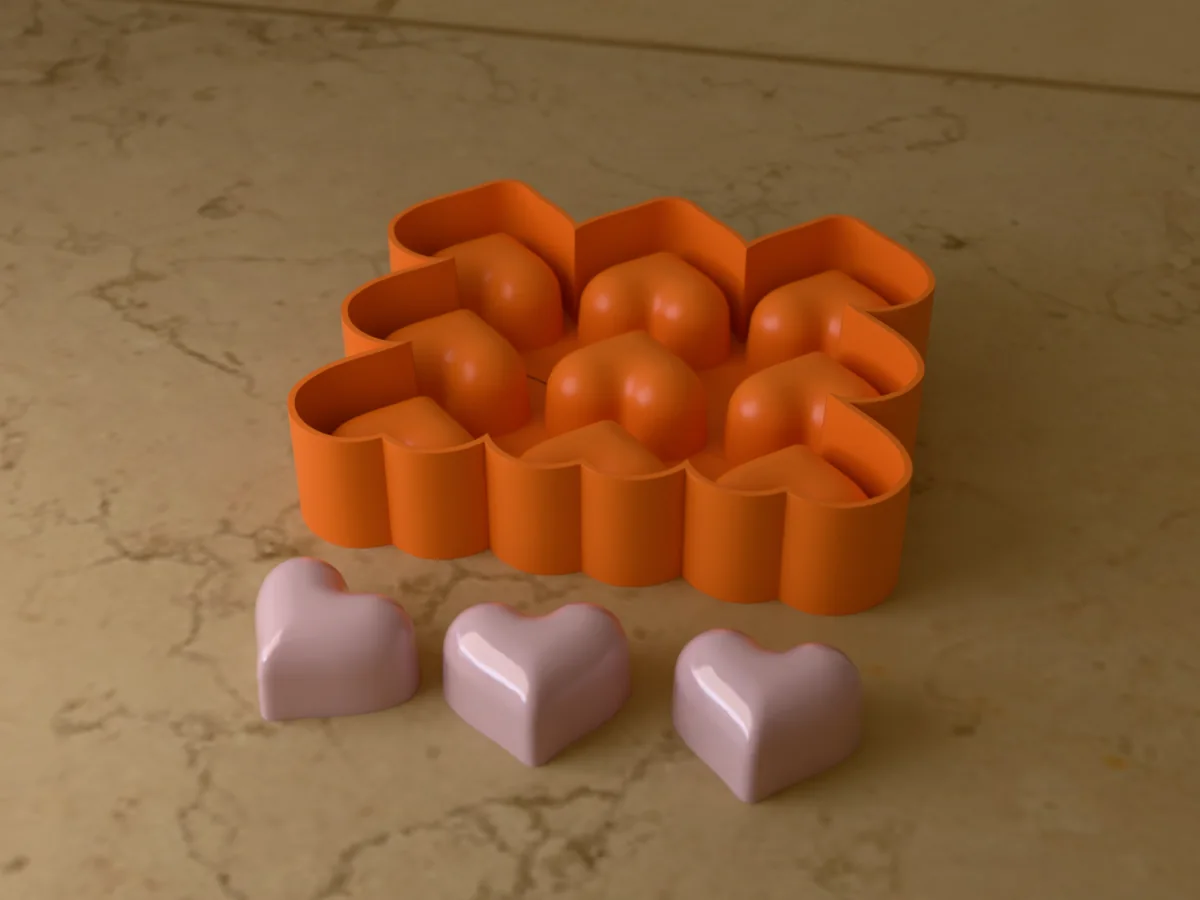
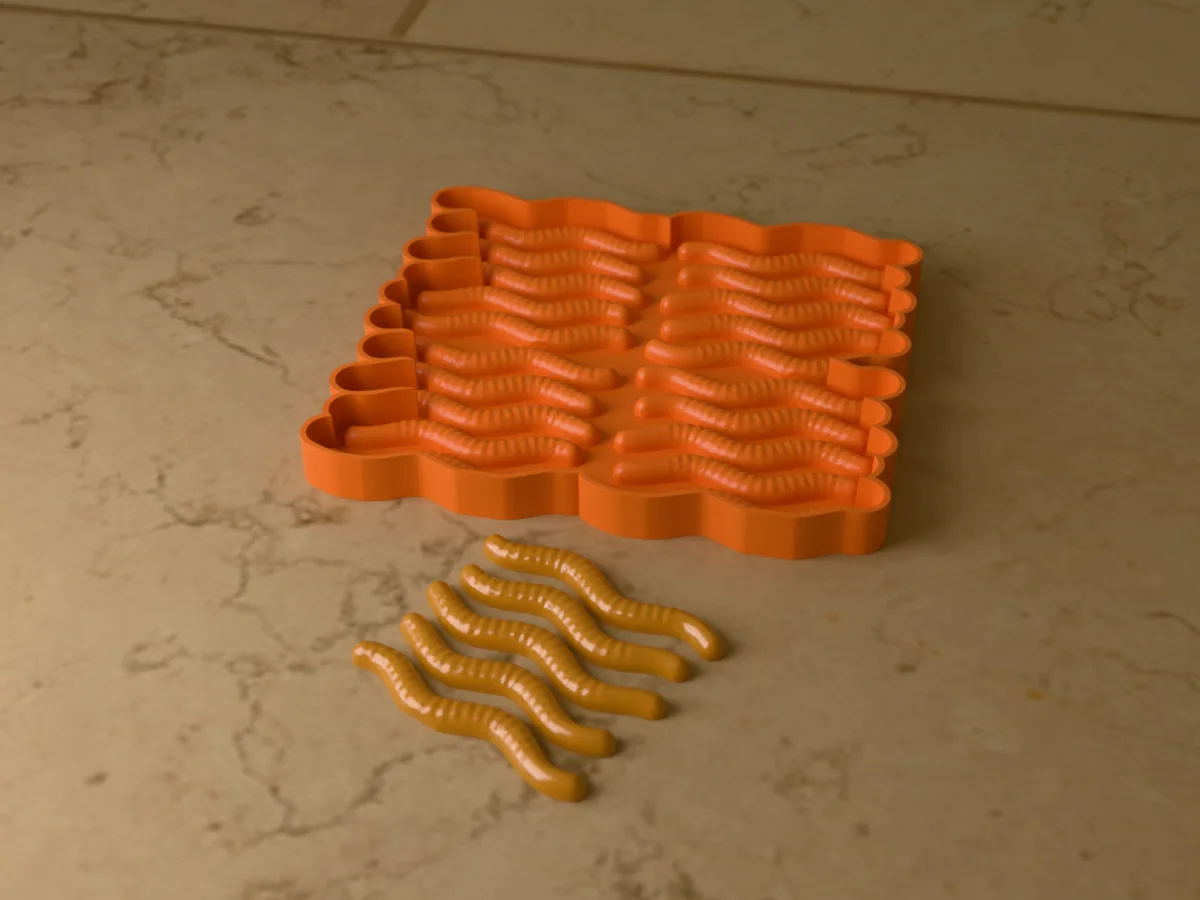
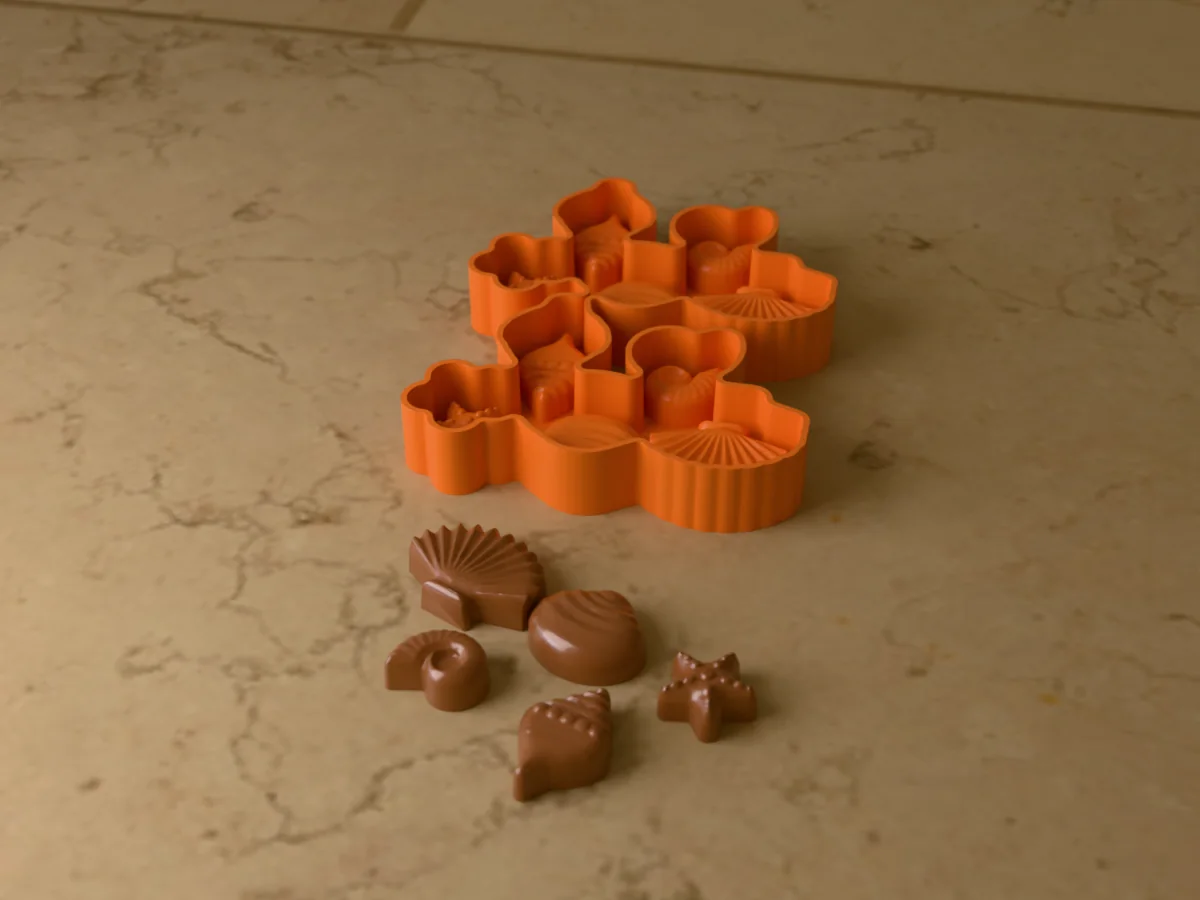
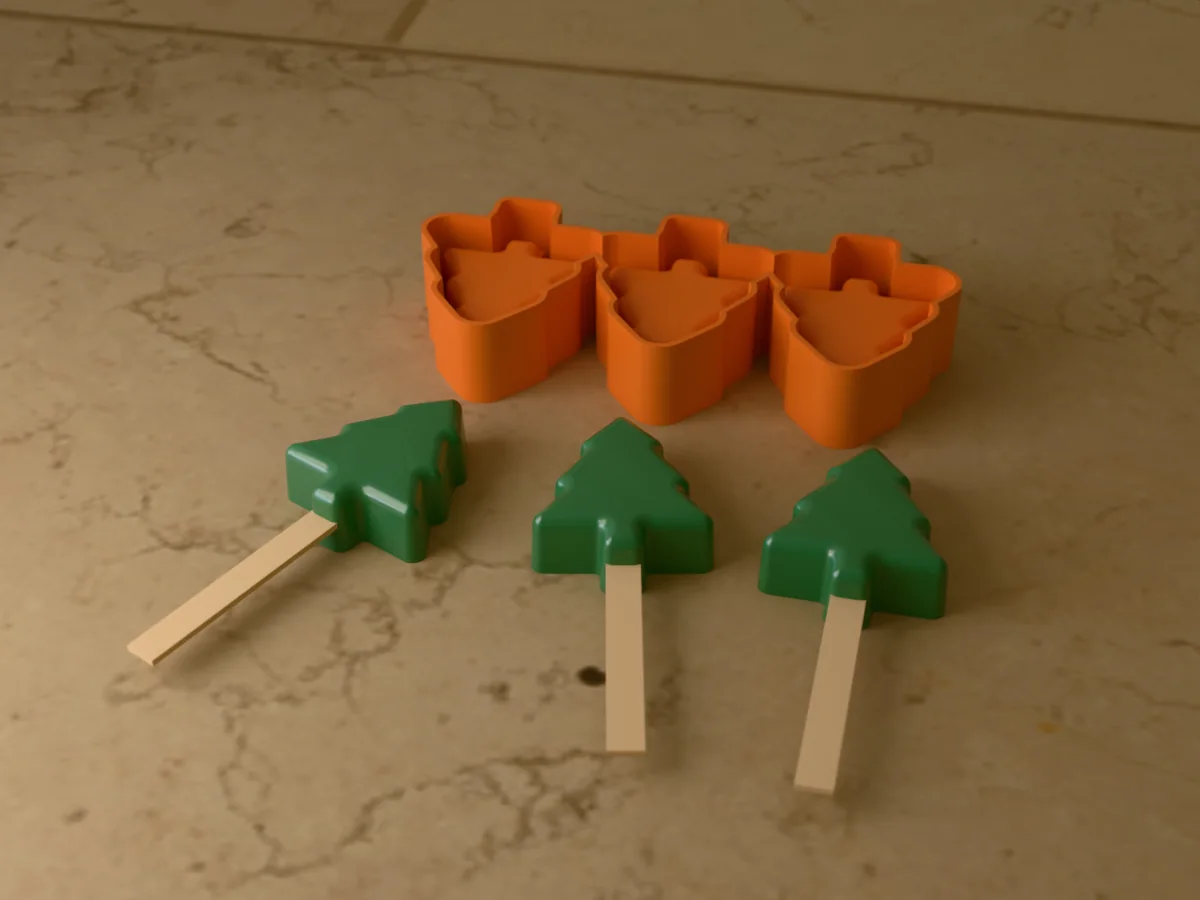
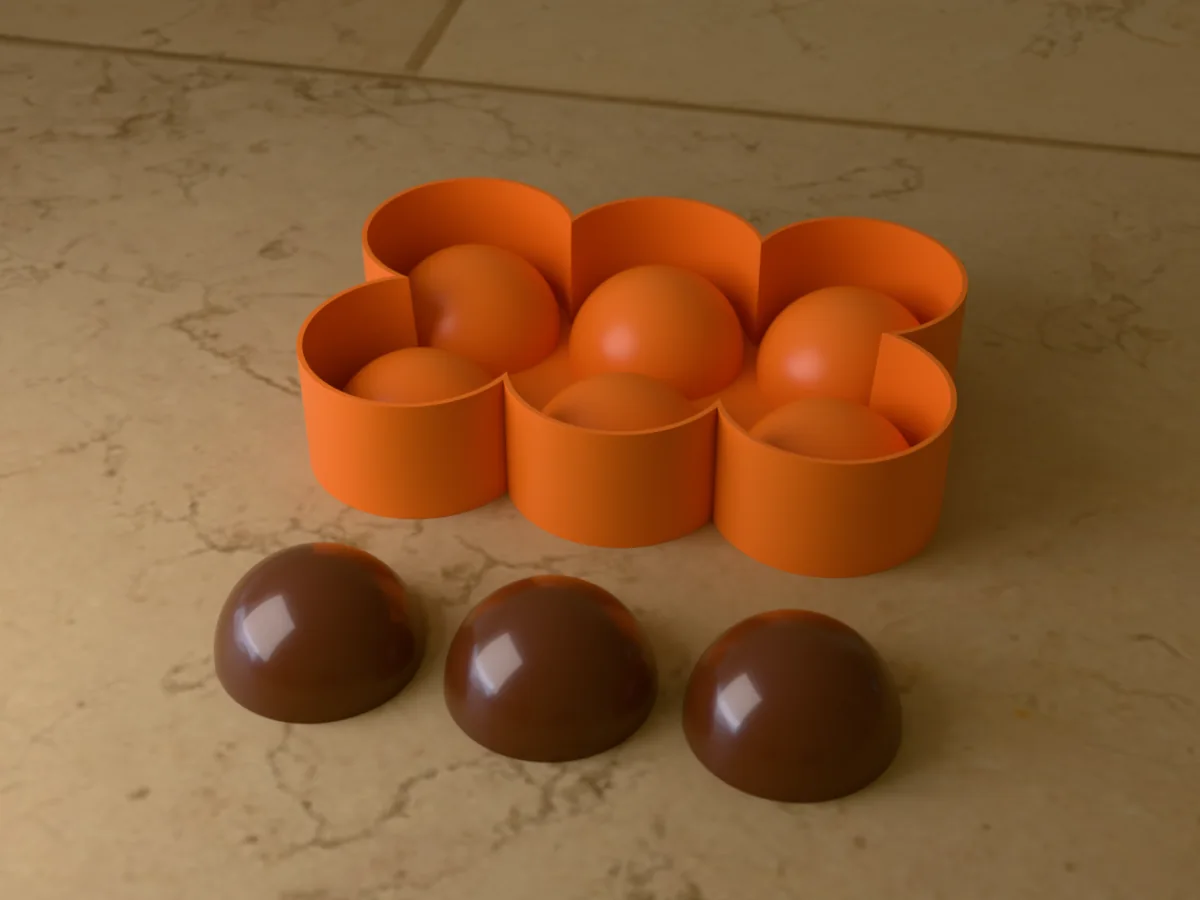
Chocolate and ice molds
All free designs →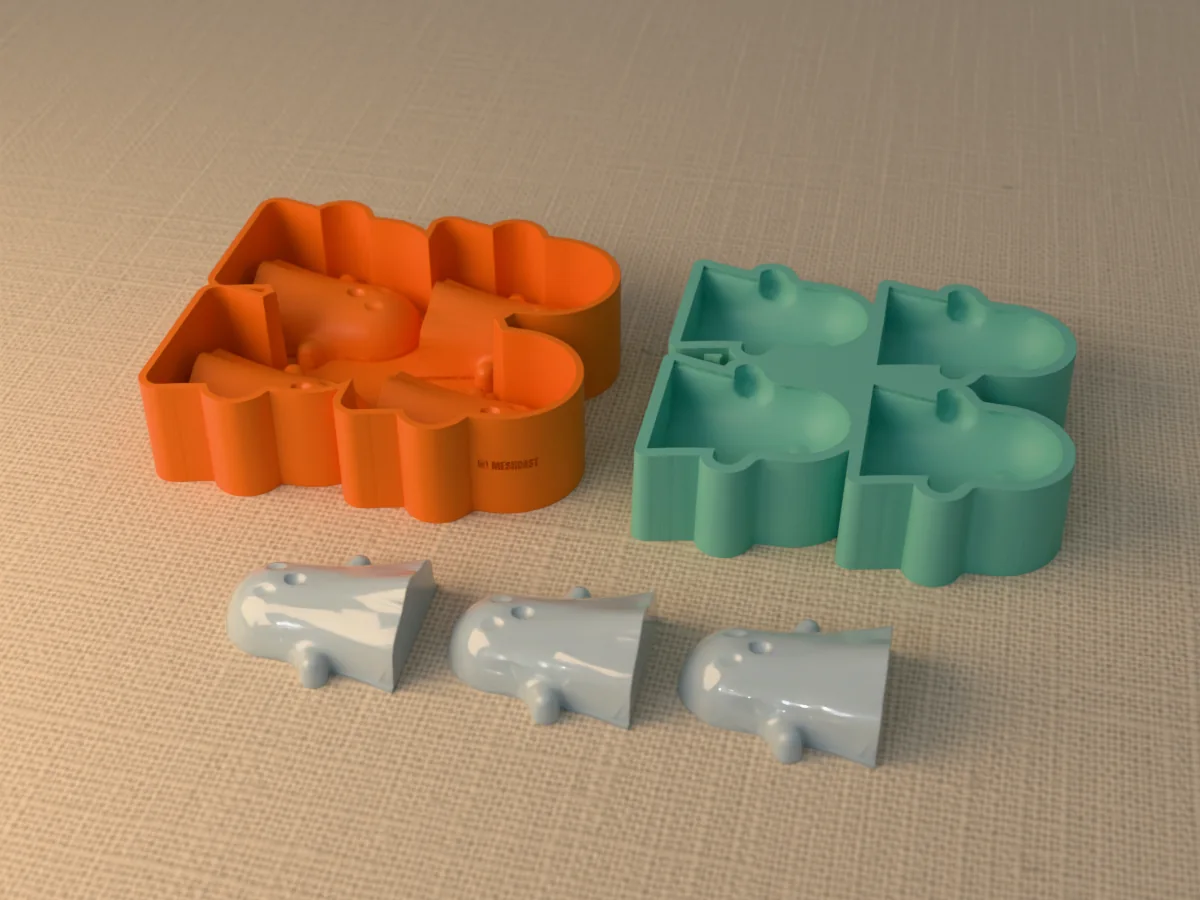
Food safety questions
Are 3D-printed molds food safe?
A raw FDM print is not reliably food safe for repeated or wet food contact, and the filament's own rating does not change that.
Why Three separate problems: layer-line crevices trap bacteria and cannot be sanitised; the brass nozzle and the printer's own path add contaminants the filament datasheet never covered; and colourants and additives are frequently not food-contact rated even when the base polymer is.
The safe pattern Print the formwork and cast a food-grade platinum-cure silicone from it. The silicone is the food-contact surface, it is smooth and non-porous, and it can actually be cleaned.
What would make a print genuinely food safe?
Three things at once, and missing any one of them voids the other two.
Surface Smooth and non-porous, with no crevices to harbour bacteria. That rules out an as-printed FDM surface on its own.
Material Filament and any coating carrying a food-contact certification such as FDA CFR 21 or EU 10/2011, including the colourant.
Process A clean nozzle and a clean printer. A machine that has run other filaments has cross-contaminated the path.
Can I make chocolate molds?
Yes, via silicone. Cast a food-safe silicone mold from the printed tray and pour chocolate into that.
Direct is lower risk than most Chocolate is dry, brief contact and gets cleaned immediately, so a one-off printed press is less risky than a wet mold. It is still not a guarantee, and it is not worth it when the silicone route is one extra step.
Are PLA ice cube molds safe?
A poor choice. Ice means prolonged wet contact, and the layer-line crevices hold water and bacteria that no wash reaches, even with food-grade PLA.
Use the printed tray as formwork and cast a flexible food-safe silicone tray from it. That also solves demolding, since ice does not release from a rigid tray. See the ice tray guide.
What do the certifications actually cover?
FDA CFR 21 / EU 10/2011 The material, under stated conditions of use. They say nothing about your printer, your nozzle or your surface finish.
LFGB A stricter German standard often used for silicone, and the one worth looking for on a silicone datasheet.
So a certification on a filament spool is necessary and nowhere near sufficient. The finished object is what has to be safe, not the raw material.
Made by meshcast.app. Got stuck? Email a photo and I'll help you debug.