How to make silicone ice cube molds
This guide was drafted with AI assistance.
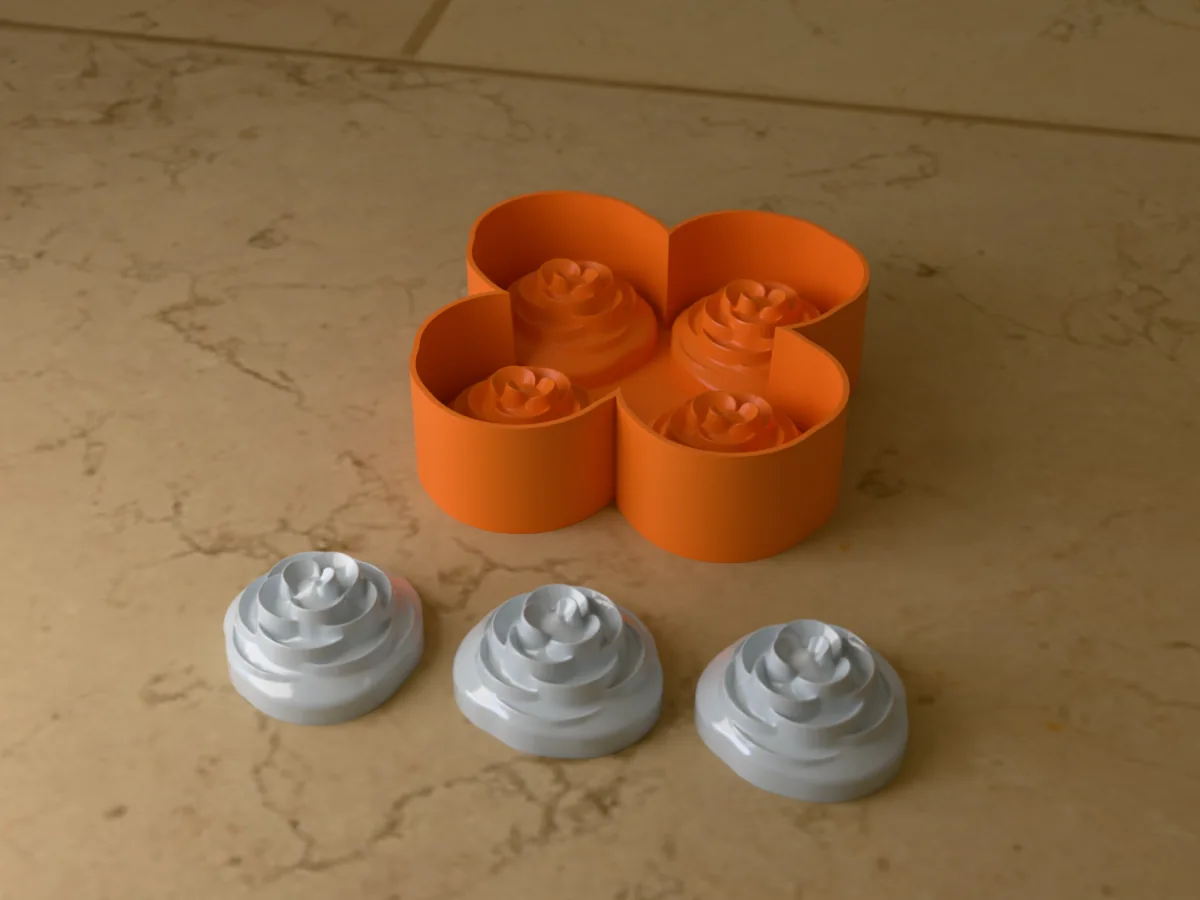
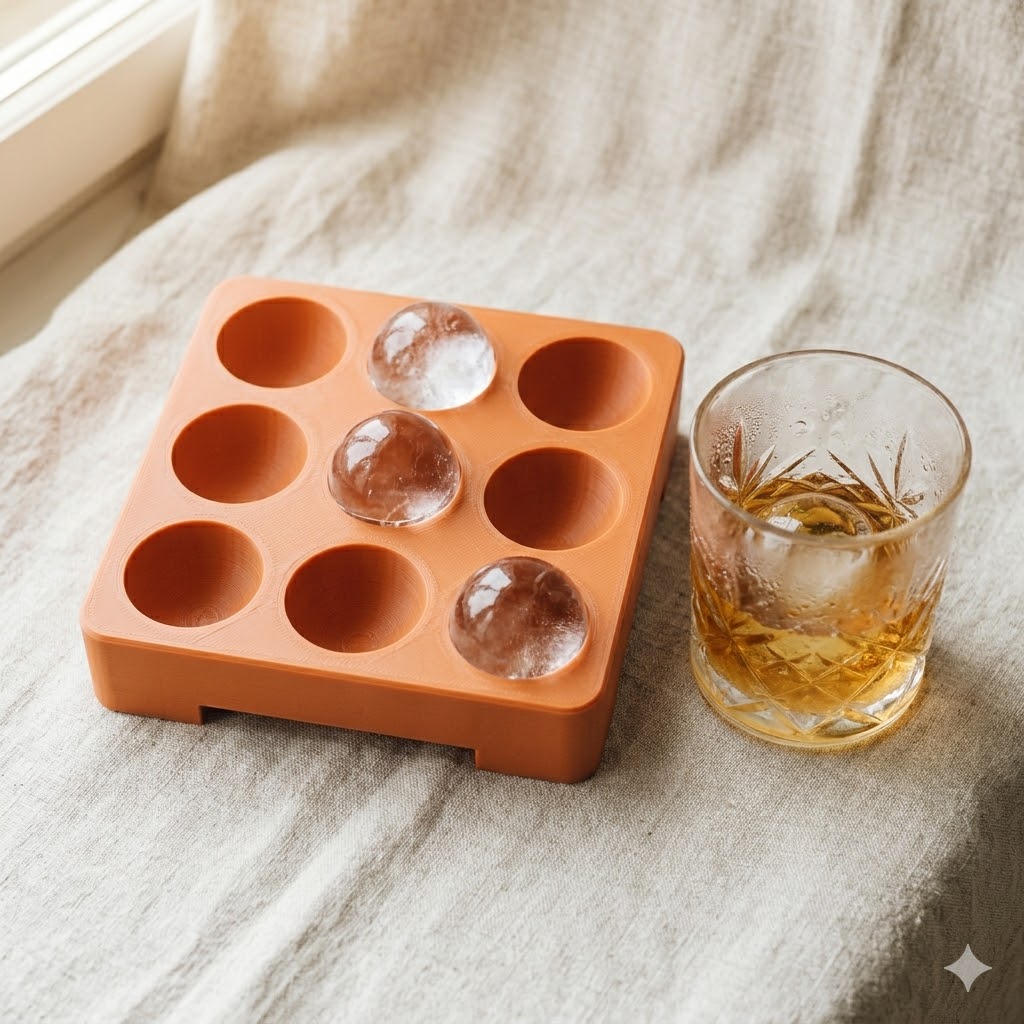
Ice never touches the print: 3D-print a positive master of your shape, cast food-safe platinum-cure silicone around it (FDA CFR 21 177.2600 or LFGB certified, tin-cure leaches), peel, wash, freeze. For crystal-clear cubes, use twice-boiled filtered water and insulate the mold so it freezes top-down for 18–24 h.
What you'll need
- PLA filament*, for master + shell only; only silicone ever touches the ice~€20
- Food-safe platinum silicone*, Shore 20–30A, Sorta-Clear 18, Smooth-Sil 940 FoodSafe, Mold Max 14 NV~€30
- Food-grade mold release*, vegetable oil spray works in a pinch~€10
- Graduated mixing cups* + wooden stir sticks~€8
- Nitrile gloves*, latex contains sulphur, which inhibits platinum silicone~€8
No vacuum chamber needed, cube shapes are simple enough that the pour-from-height trick removes nearly all bubbles.
* Advertising: links marked with * are affiliate links. If you buy through one we earn a commission, at no extra cost to you. As an Amazon Associate we earn from qualifying purchases.
Print a positive master
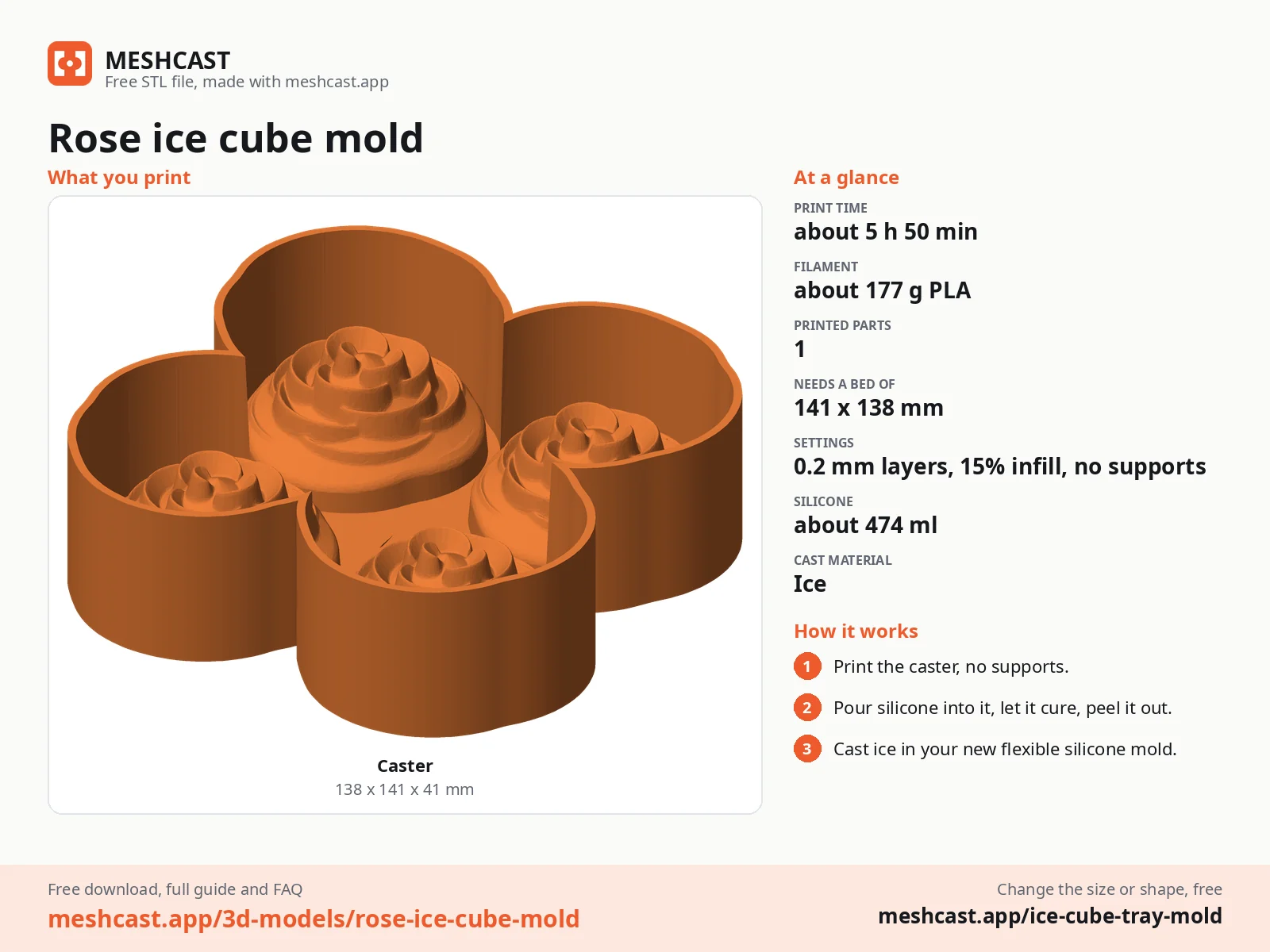
Generate master + shell
Drop your STL (or a sphere sample for whisky balls) into the mold generator: Tray type for batches of small cubes, Silicone type for single large shapes, spheres, skulls, logos. Set the silicone gap to 8–10 mm (thinner molds go floppy in the freezer) and wall thickness to 3 mm. New to the workflow? Start with STL to mold.
Print smooth, sand smoother
Slice at 0.2 mm layers, 3 walls, 15–20 % infill, PLA at 210 °C, master and shell flat on the same plate. Sand the master 400 then 800 grit: silicone is a perfect mirror, and every layer line becomes a ridge on your ice.
Pour the food-safe silicone
Release, weigh, stir slowly
Spray two light coats of food-grade release on the master and inside the shell, five minutes flash time between (wet release inhibits the cure). Then weigh part A and B on a 0.1 g scale exactly per the data sheet, usually 1:1, and stir slowly for two minutes, scraping the cup every 30 s.
| Silicone | Pot life | Demold |
|---|---|---|
| Sorta-Clear 18 | 30 min | 4 h |
| Mold Max 14 NV | 40 min | 16 h |
| Smooth-Sil 940 FoodSafe | 20 min | 16 h |
| Mold Star 30 (food-safe variant) | 45 min | 6 h |
Pour from 30 cm up
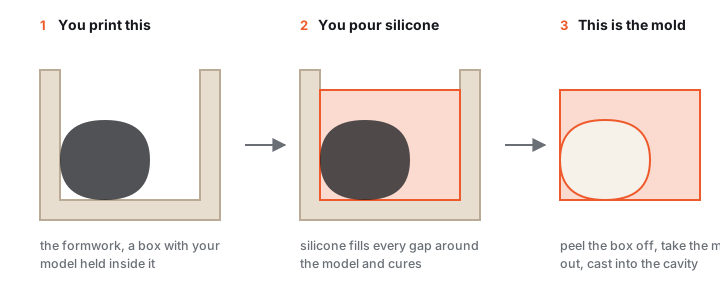
With the master suspended in the shell, pour a pencil-thin stream from 30 cm above into one corner, the falling stream sheds its own bubbles. Tap the shell 3–4 times after pouring. For multi-cavity trays, pour into the lowest corner and let the silicone flow across; pouring each cavity separately traps air between them.
Cure & peel
Cure at room temperature per the table, or 30 min at 60 °C once it has set enough not to slump. Peel the shell off the silicone, then the silicone off the master, pull on the thick outside, never pry with a knife. More demolding technique in how to make a cast.
Freeze crystal-clear ice
Wash, and sacrifice a batch
Hand-wash with warm water and dish soap (no dishwasher on the first wash). Then fill, freeze, and discard the first one or two batches, they pull any residual release out of the mold. Food-contact rules in full: food-safe molds.
The clear-ice trick
Cloudy centers come from dissolved air and minerals. For glass-clear cubes:
Getting the cube back out
To demold, flex the silicone outward at one corner, no twisting. Stuck cube? Warm tap water over the outside for five seconds.
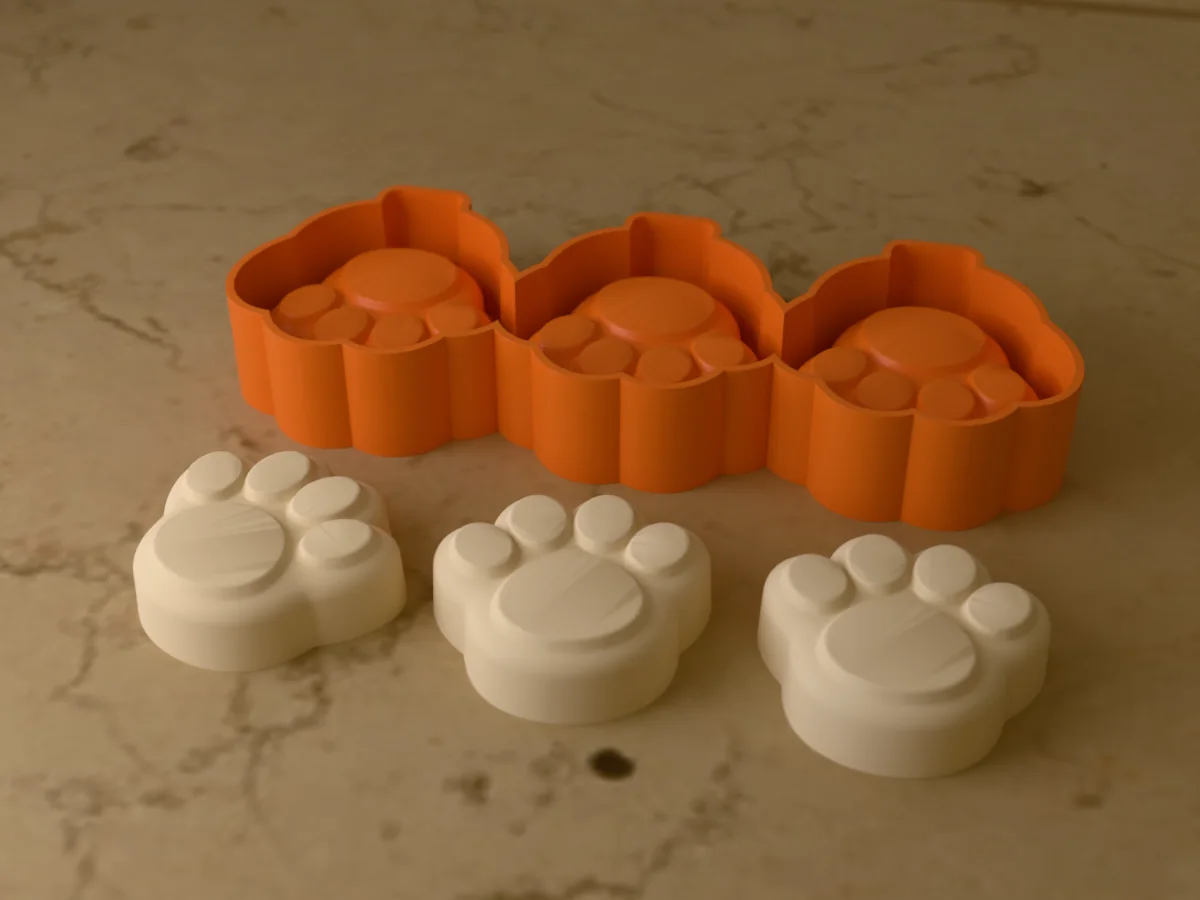
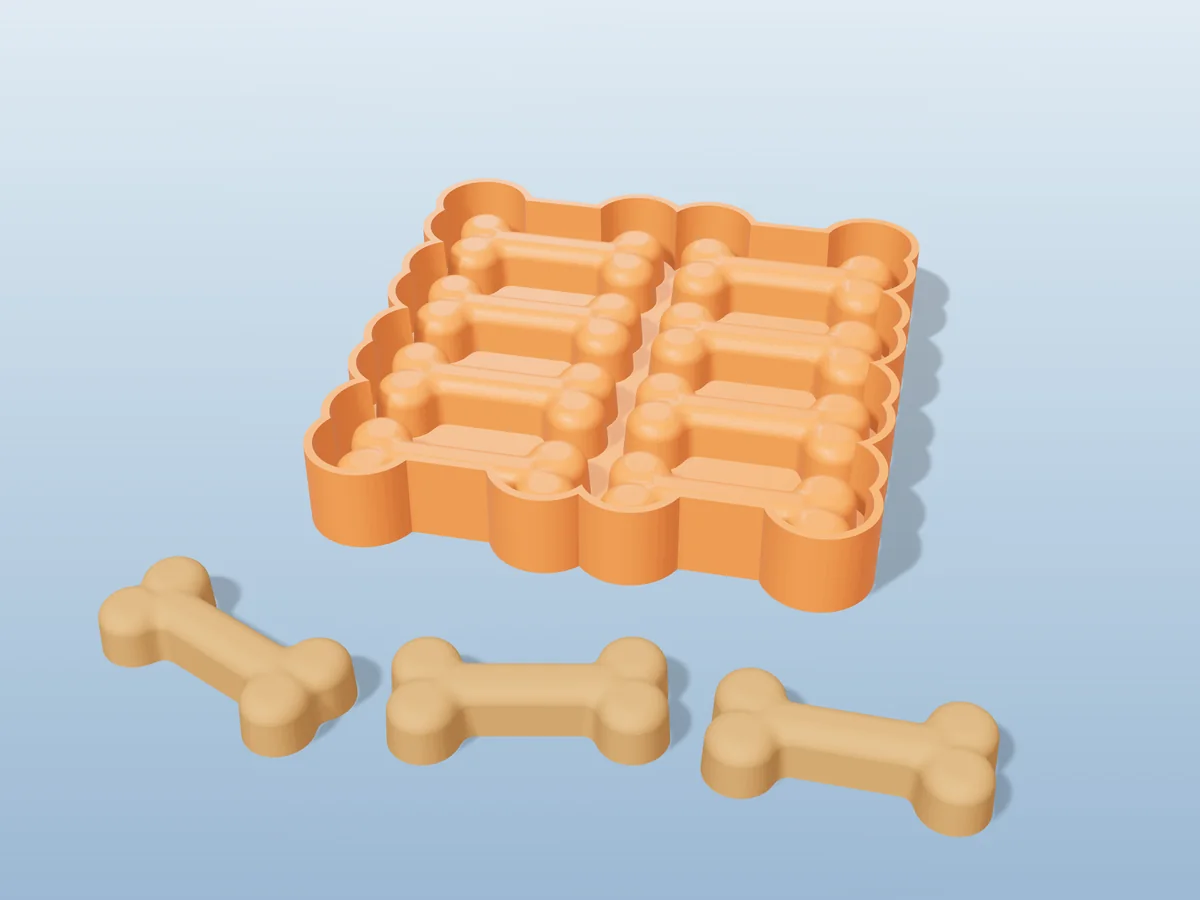
Silicone ice trays
All free designs →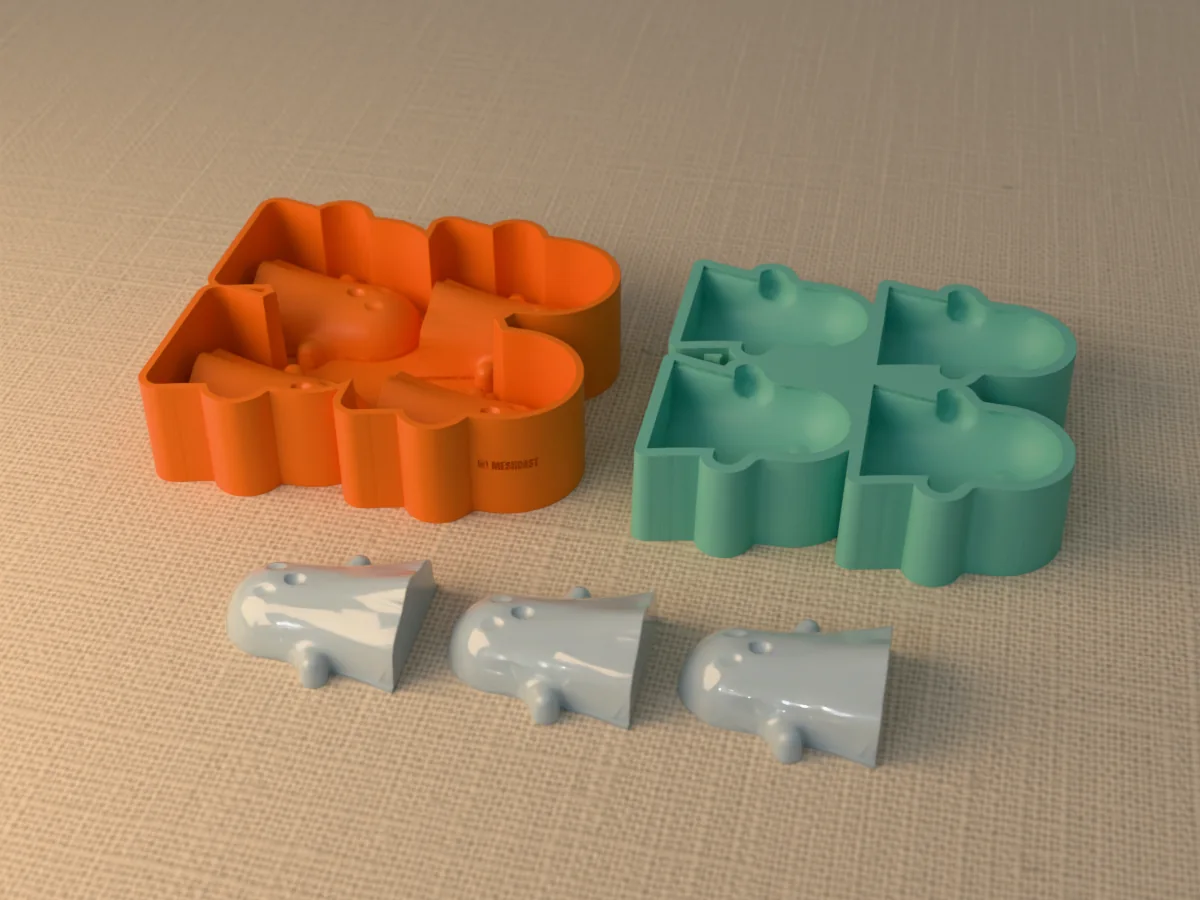
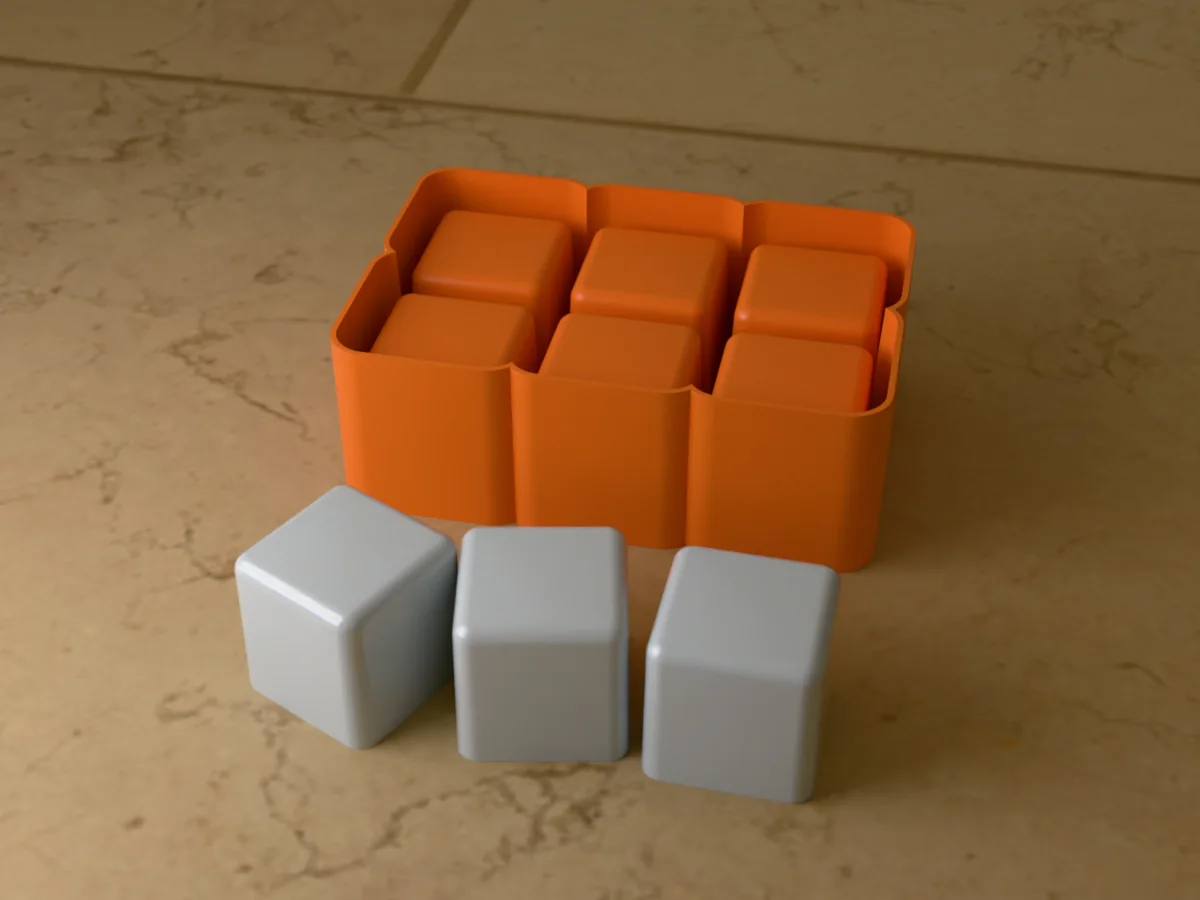
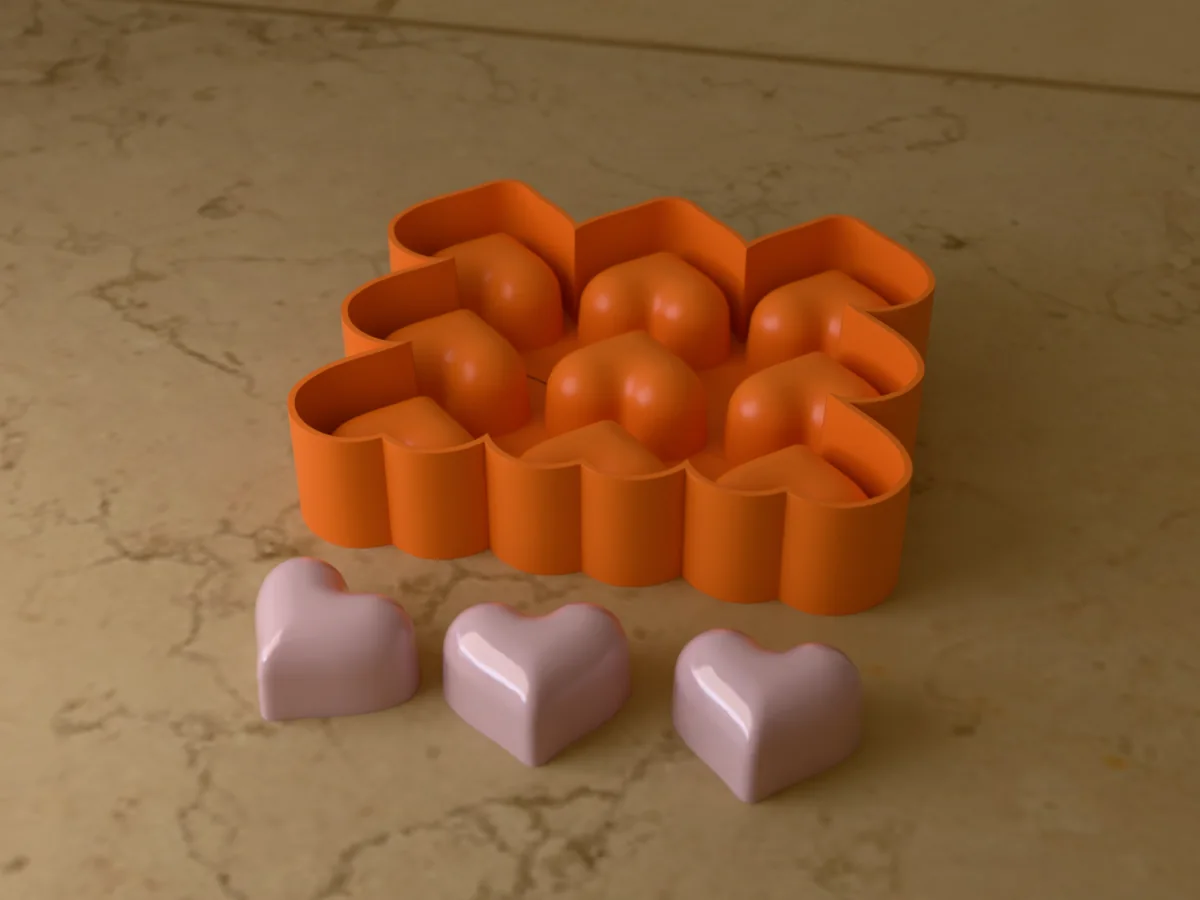
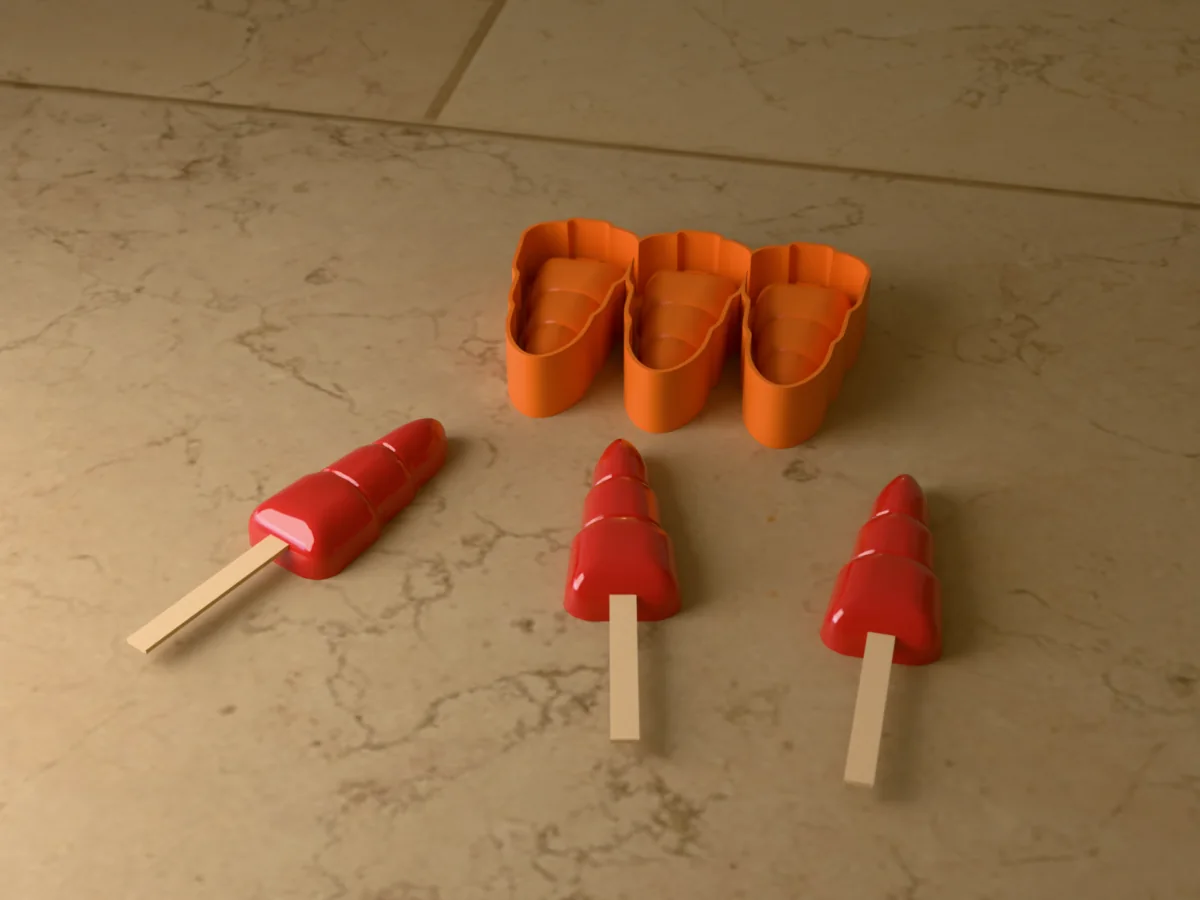
Ice tray troubleshooting
The silicone is still sticky and uncured
Cause Cure inhibition: sulphur in modelling clay or filament, latex gloves on the master, tin-cured silicone tools, or release that had not flashed off.
Fix Throw the batch out, it will never cure. Seal the master with a couple of light coats of shellac or acrylic spray, wear nitrile gloves, and re-pour.
Test first A coin-sized blob of mixed silicone on the suspect material, left overnight. If that cures, the pour will.
Cloudy patches on the ice surface
Cause Print layer lines, copied faithfully into the silicone and then into the ice.
Fix Sand the master smoother, up to 1500 grit for glass clarity, or coat it with XTC-3D for a mirror finish. This is a one-off job on the master.
The ice is cloudy through the middle
Cause Dissolved minerals and trapped air, not the mold. Water freezes from the outside in and pushes everything it cannot freeze into the centre.
Fix Filtered water, boiled twice and cooled. For genuinely clear ice, insulate the sides and bottom so it freezes top-down: directional freezing pushes the cloud out of the bottom.
The first cubes taste odd
Cause Residual mold release.
Fix Wash again with hot water and dish soap, then freeze and discard one more batch. After that the taste is neutral.
The silicone tore on demold
Cause Pulling near the cavity, or an undercut that needed more stretch than the wall could give.
Fix Pull on the thick outside of the silicone, never near the detail. For repeat tearing, use a firmer 30A silicone and reprint the master with more draft.
Made by meshcast.app. Some product links are affiliate links, they cost you nothing extra and help keep the tools free. Got stuck? Email a photo and I'll help you debug.