Draft angles & undercuts: design molds that actually release
This guide was drafted with AI assistance.
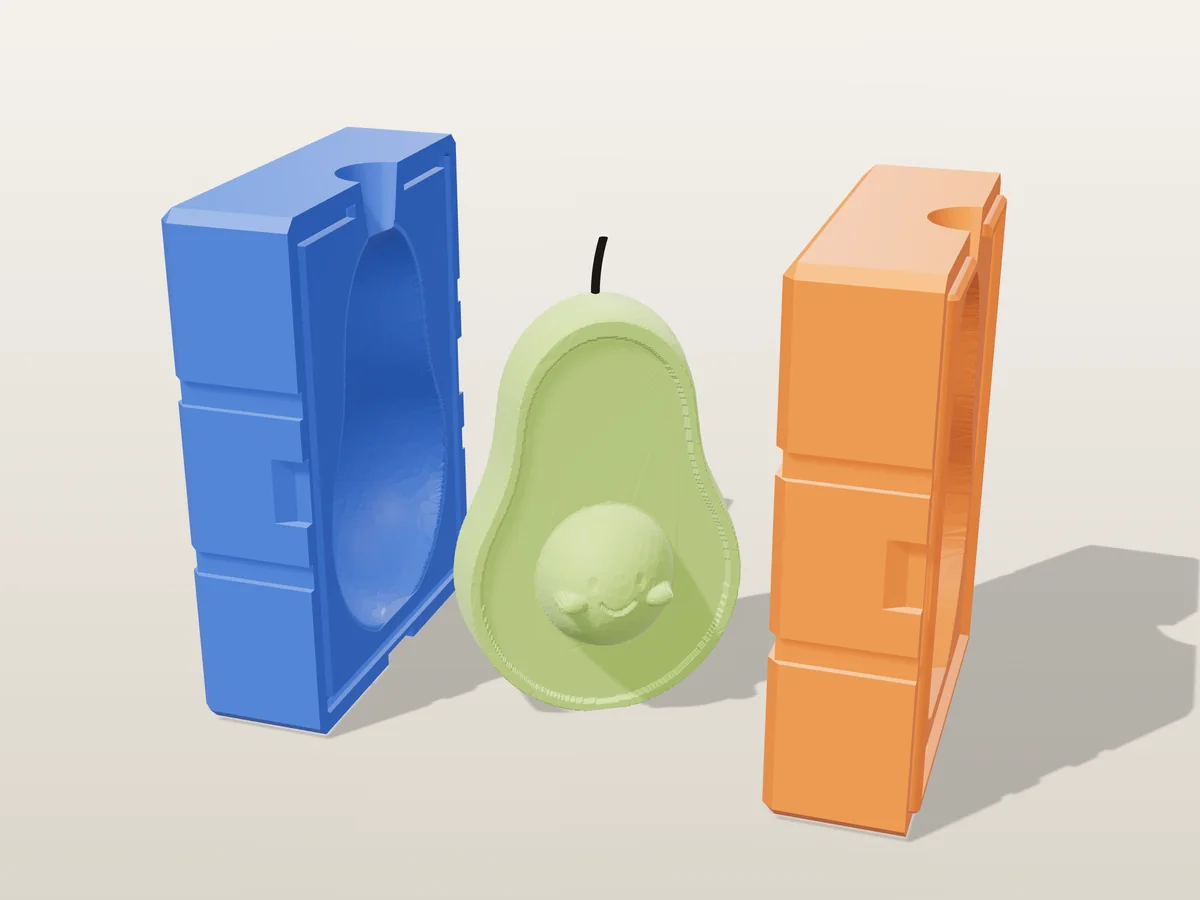
Give every vertical wall 1–2° of taper (3–5° for textured or deep cavities). Check for undercuts with the "pull straight up" test: anything that would catch will jam the cast. Put the parting line at the widest cross-section, and if the shape still can't release, split the mold or go flexible.
How much draft you actually need
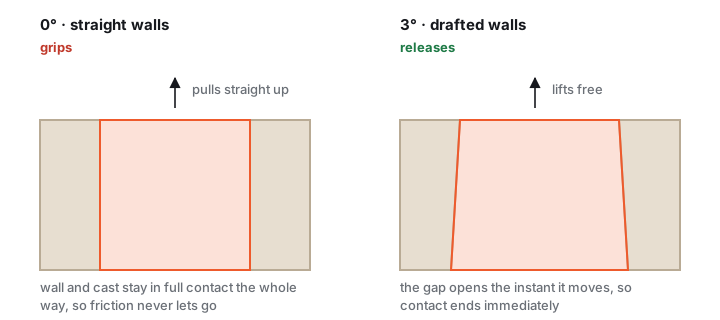
Draft is a slight outward taper on cavity walls so the opening is wider than the bottom. Without it, the cast stays in full wall contact the whole way out, friction plus suction, with FDM layer lines adding grip. The result feels glued in, and forcing it marks the cast, cracks plaster, or tears the mold.
| Surface / geometry | Draft | Why |
|---|---|---|
| Smooth rigid mold (polished / coated) | 1–2° | Low friction, a slight taper breaks contact instantly |
| Textured surface or raw layer lines | 3–5° | Texture and ridges grip the cast hard |
| Deep, narrow cavity | 5°+ | Long contact length plus suction, the hardest release |
| Flexible mold (silicone / TPU) | ~0° | The mold flexes off the cast instead |
Spot undercuts before you print
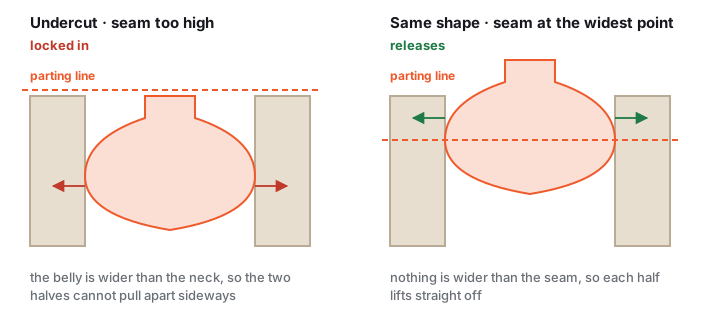
An undercut is any feature that mechanically locks the cast in: a lip, an overhanging rim, a groove, a bulge wider than the opening, any re-entrant shape. Draft is a matter of degree, an undercut is a hard catch that no release agent can fix.
- The pull-direction test. Mentally lift the finished cast straight out along the release axis. Every surface must move away from the wall or slide parallel to it; anything that would snag is an undercut.
- Look for negative draft. A wall that's narrower at the top and wider below is a built-in undercut along its whole height. Every wall should open toward the parting surface.
- Slicer preview. Cavity walls that overhang the layers below them often signal geometry that will also trap a cast.
Three ways out of an undercut
- 1. Redesign it away. Soften a lip into a draftable slope, fill a recess, or reorient the part so the feature points along the pull direction. Cleanest fix if the undercut isn't functional.
- 2. Split into a two-part mold. Divide along a parting line so each half pulls off in a direction that clears the undercut, how most real-world molds handle it. Meshcast generates the split automatically from any STL.
- 3. Go flexible. A silicone or TPU mold stretches off mild undercuts that lock a rigid mold solid. See silicone vs direct-print molds for the trade-offs.
Parting-line placement
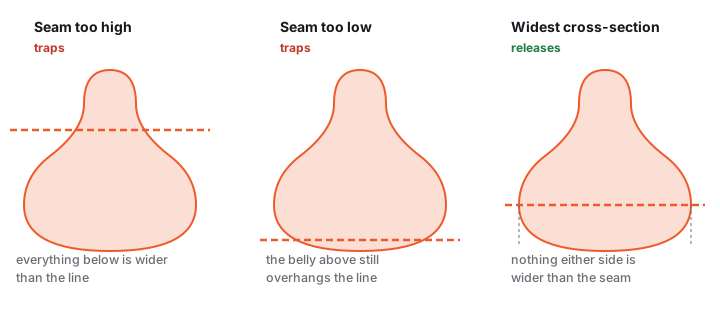
Split at the widest cross-section, the part's silhouette or "equator", so every surface tapers inward from the seam and both halves lift off cleanly. Two more rules:
- Keep it off show surfaces. A parting line always leaves a faint witness seam; run it along an edge or a back face that gets sanded or hidden.
- Align the draft to it. If any wall drafts back toward the seam, the parting line is in the wrong place.
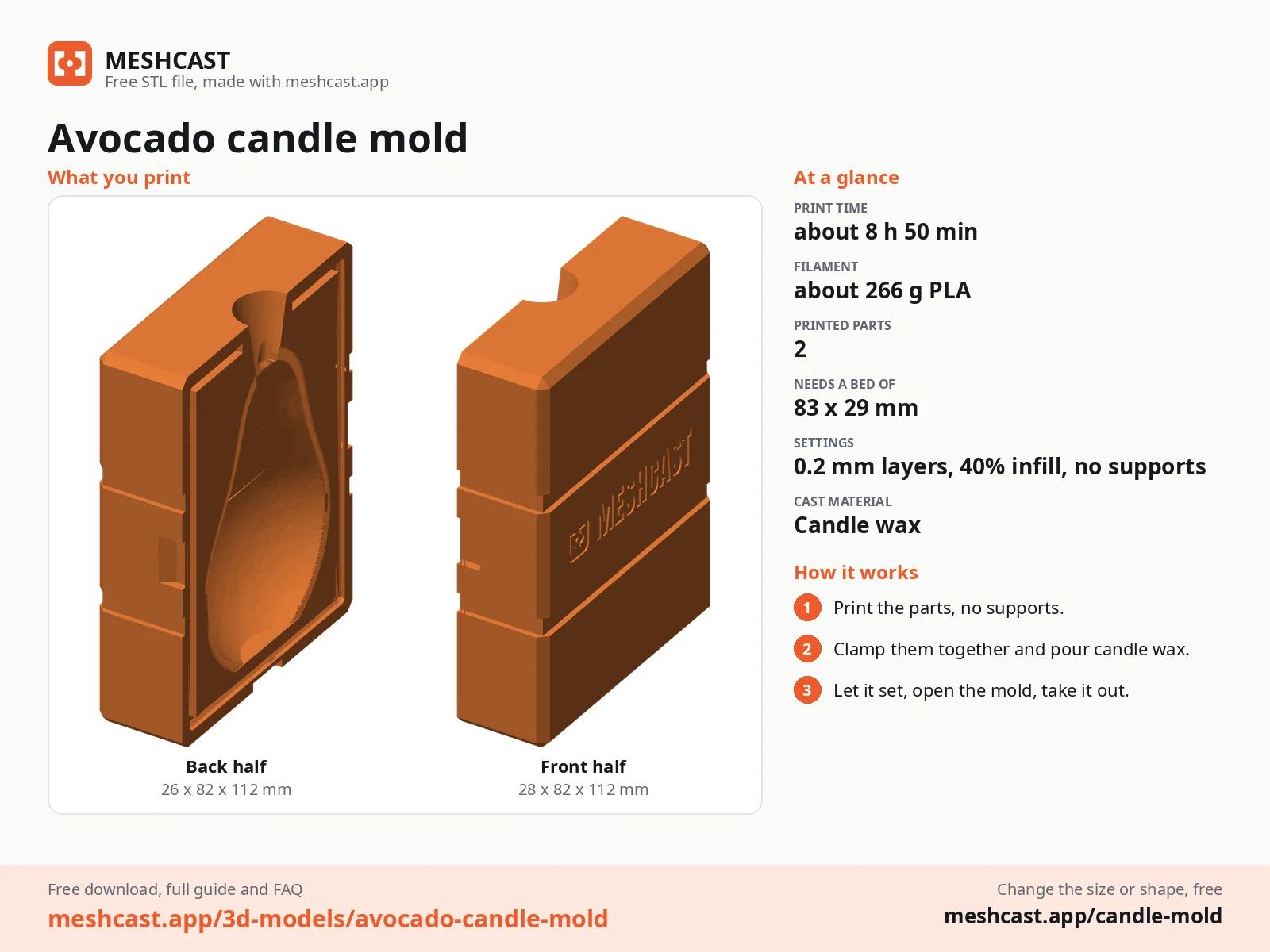
For the two-part mold itself: add registration keys or pins so the halves seat identically every time, plan clamping (bands, bolts, an outer shell) against pour pressure, and wipe a little soft wax or clay along the seam to stop flash. Then print it right, best print settings for molds covers keeping the mating faces flat and the cavity smooth.
Rigid molds that release
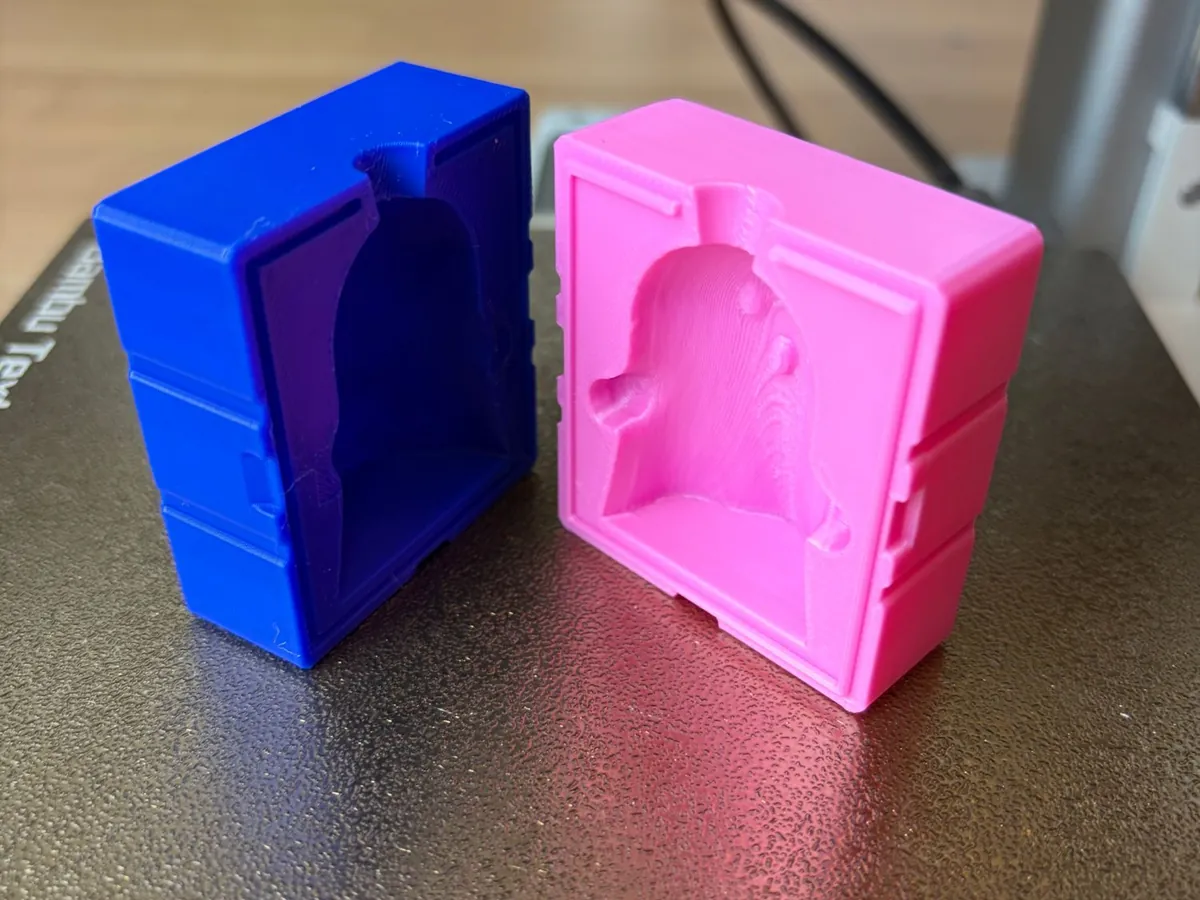
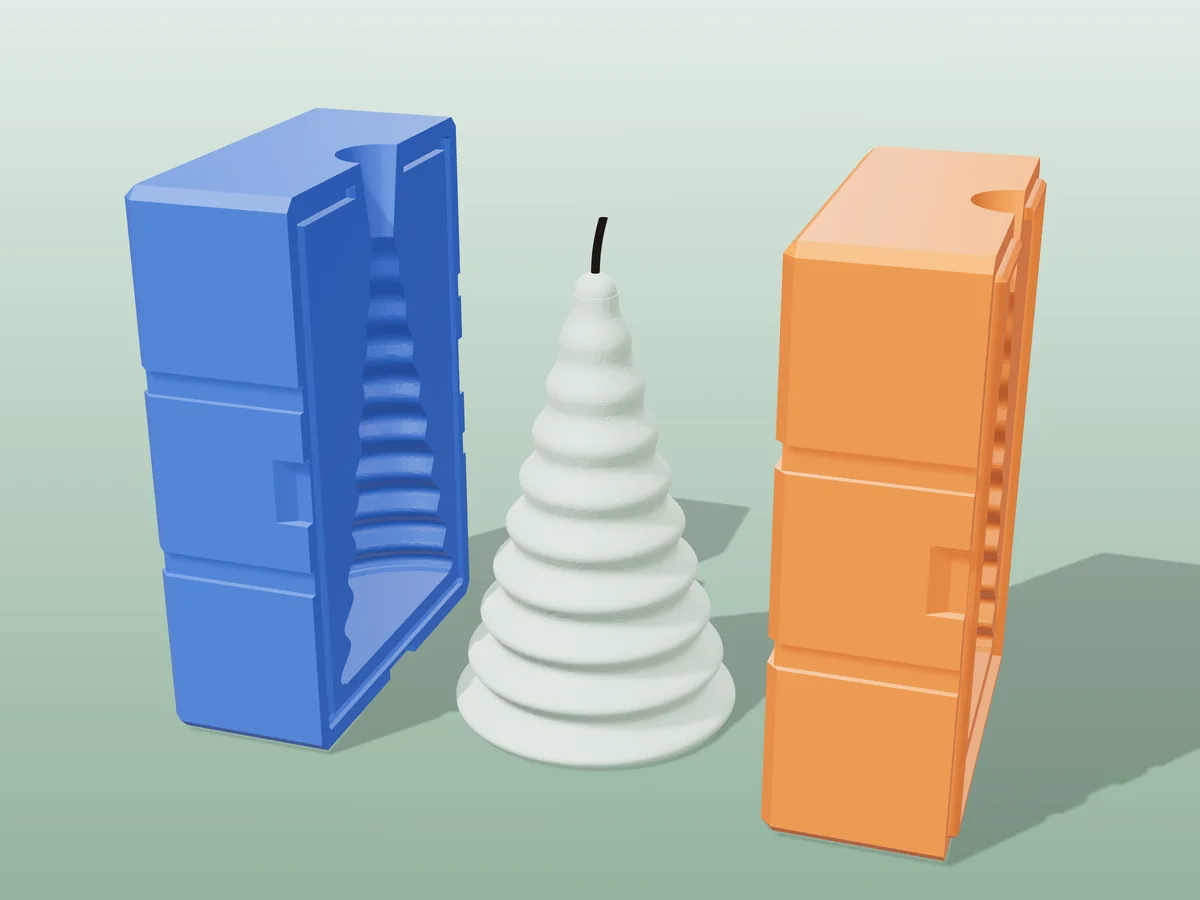
All free designs →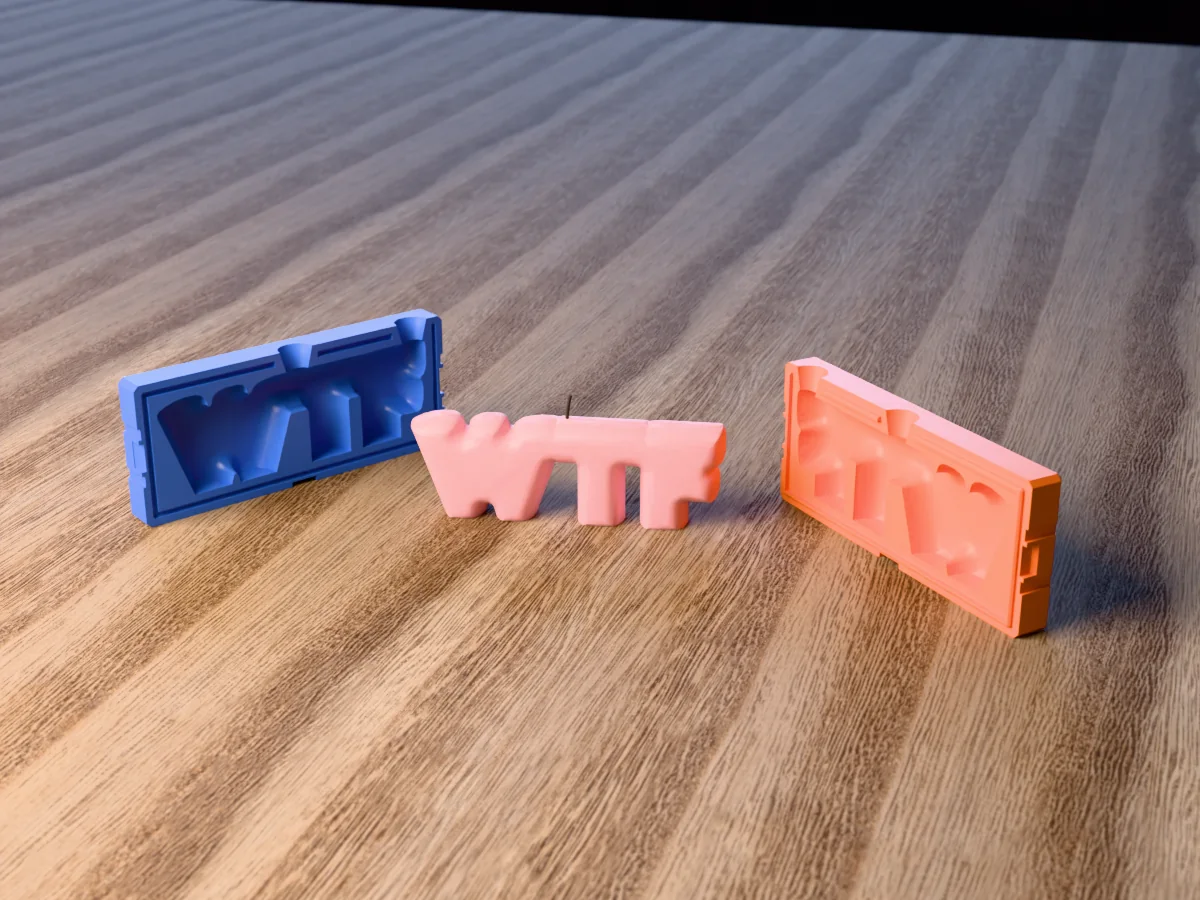
Draft & undercut questions
How much draft do I need?
Smooth rigid mold 1–2° on every vertical wall.
Textured or deep 3–5°, and more for tall narrow features where the contact area is long.
Flexible silicone or TPU Little to none. It stretches off.
Cost On a 30 mm wall, 2° widens each side by about 1 mm. Nobody notices that on a decorative piece, and it is the difference between a cast and a stuck cast.
What counts as an undercut?
Any feature that mechanically locks the cast so it cannot be pulled straight out along the release direction.
In practice A lip, an overhang, a re-entrant shape, or any wall that gets wider below the parting line than at it.
The test Look down the release direction. If you can see every surface, there is no undercut. If a surface hides behind another, that is one.
Do silicone molds need draft?
Not really, and that is the whole reason silicone exists in this workflow. It stretches and peels, so it releases vertical walls and mild undercuts that would lock a rigid mold solid.
Still worth it A little draft makes demolding faster and makes the mold last longer, because you are not stretching it as far on every cast.
How do I split a shape into two parts?
Where At the model’s widest cross-section, so each half drafts away from the seam. Anywhere else and part of the cast is wider than its own way out.
Registration Keys or pins, so the halves seat identically every time. Without them the two halves slide and you get a stepped cast.
Clamping Against the seam, not across it. Bands in grooves, or printed clamps.
The mold generator does all three from the STL, with the parting plane on a slider.
Made by meshcast.app. Got stuck? Email a photo and I'll help you debug.