Want your own version? Make it free in our texture roller tool. A free account gives you free downloads every week.
1 / 3
Clay~110 g
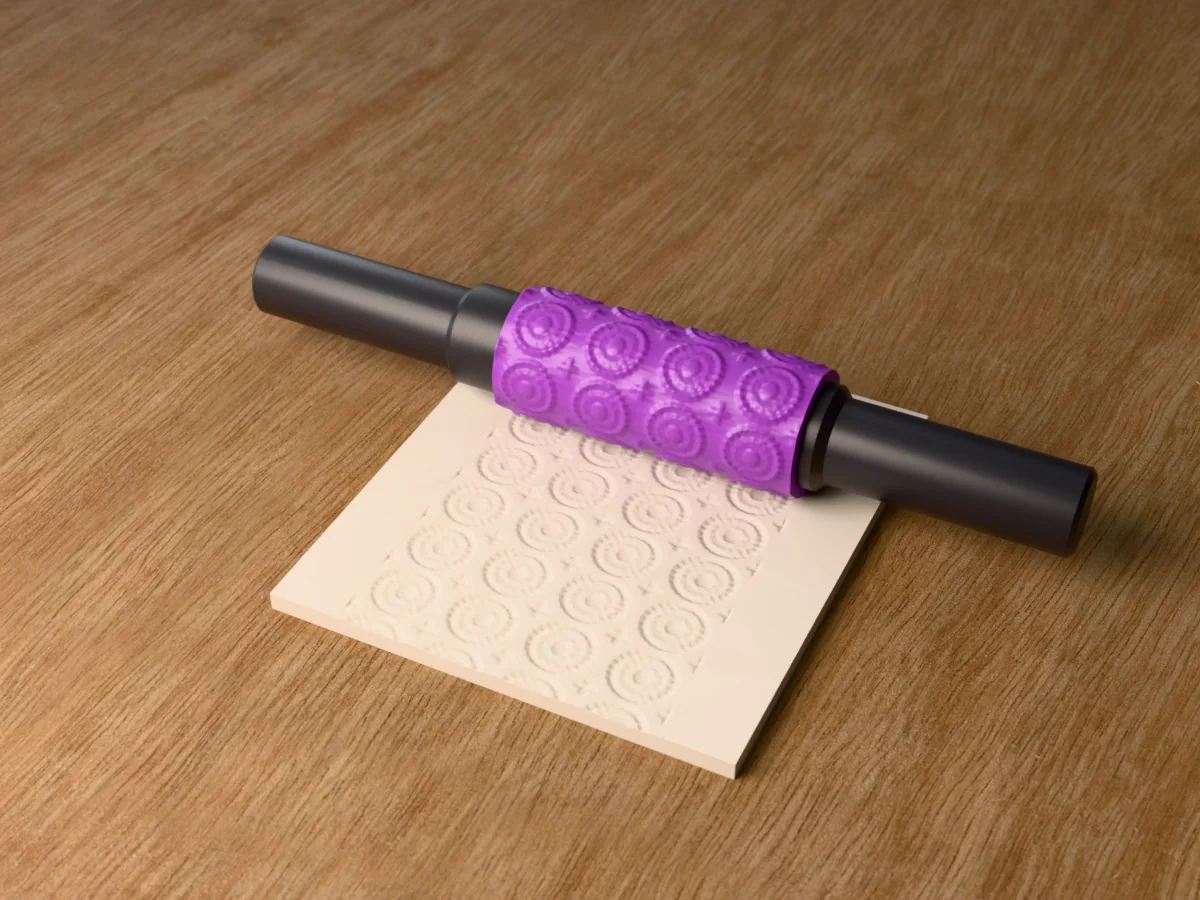
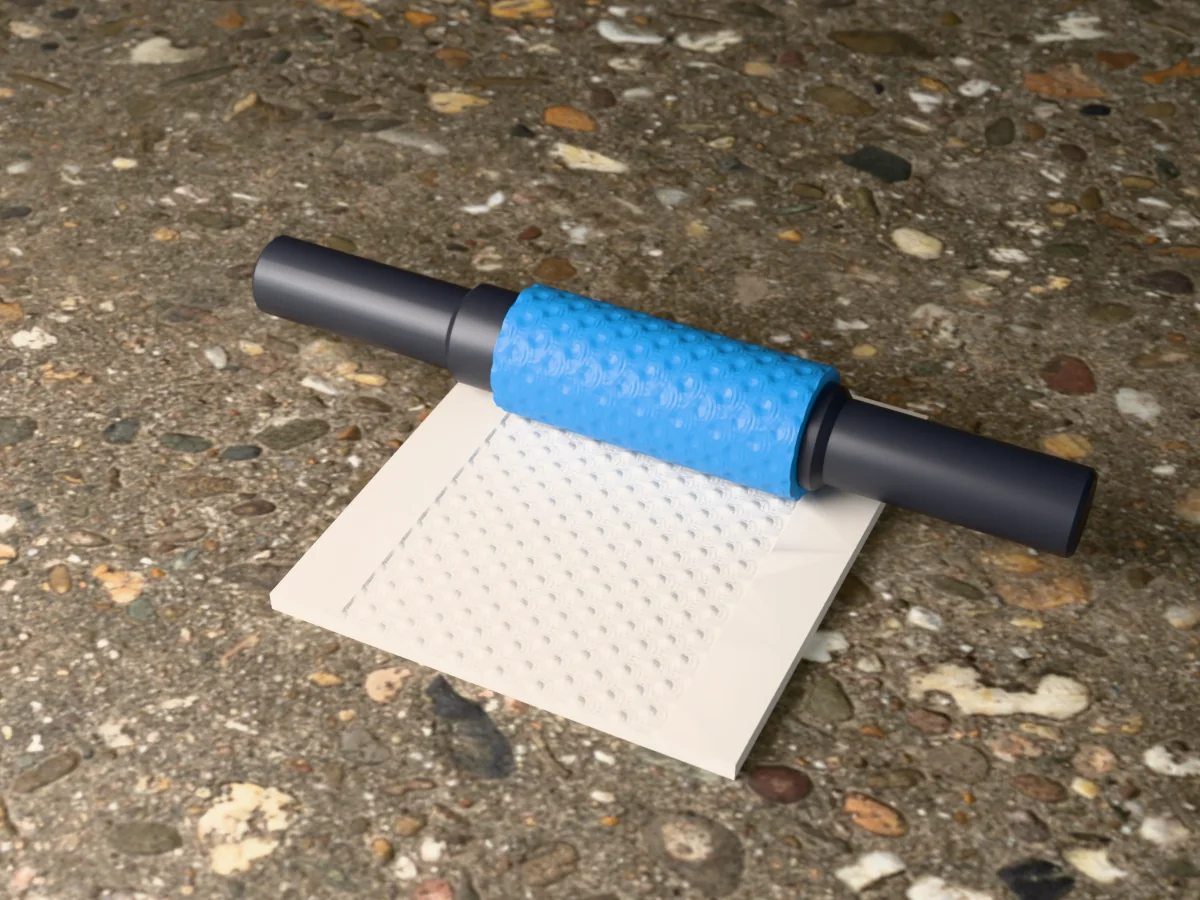
Round mandalas about 20 mm across in a grid, each a raised centre in a flower of eight petals, a ring, sixteen outlined pointed petals and an outer ring of dots, with a small four-point star in every gap between them. Roll it into porcelain and stoneware for plates, bowls, mugs and coasters, into polymer clay for pendants and earrings, or into air-dry clay for wall tiles.
Read more
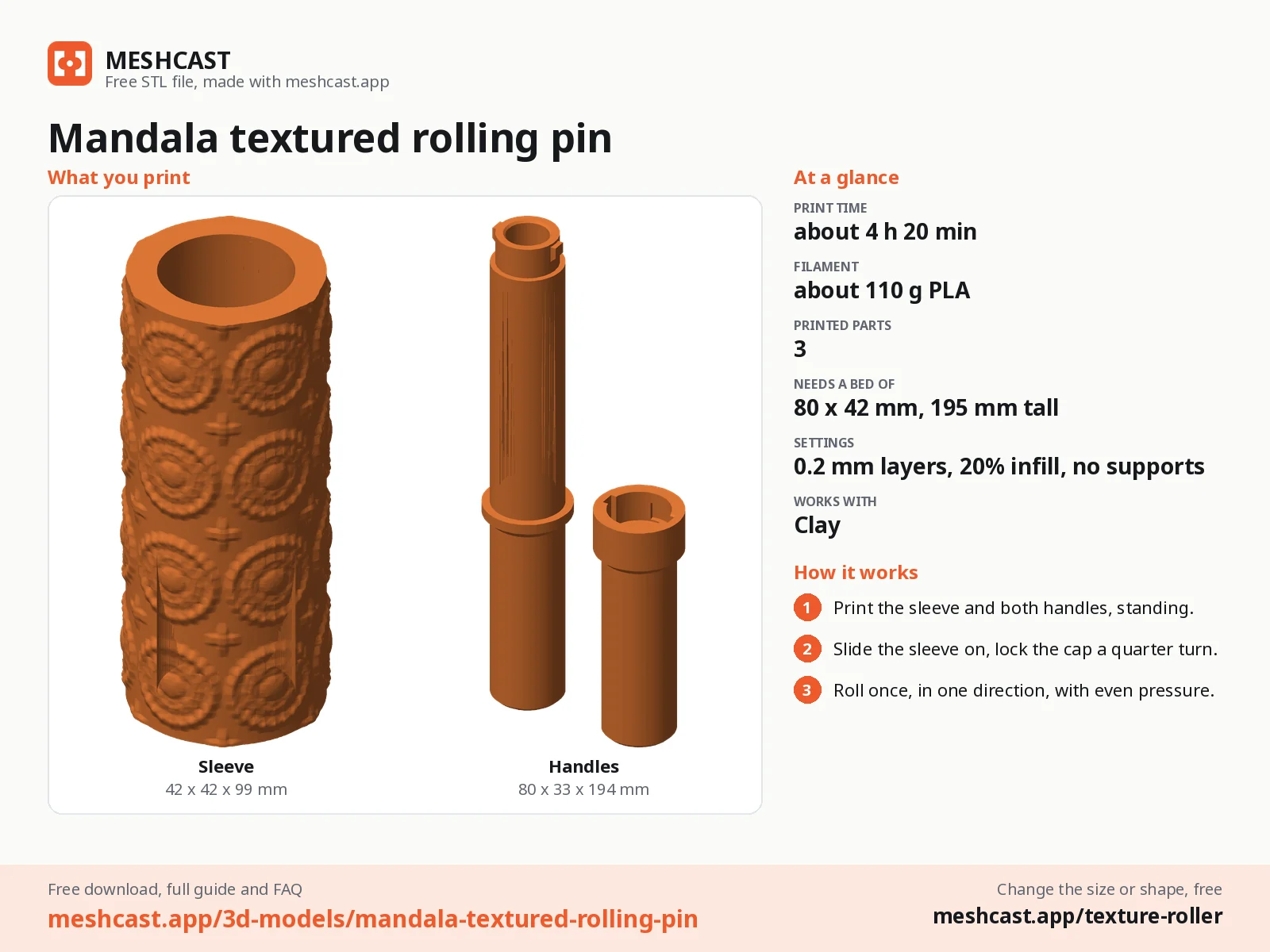
Made with our free texture roller tool in its Rolling pin style, not modelled by hand: we drew the pattern in code as a seamless picture, uploaded it, and set a sleeve 40 mm across and 100 mm long, the pattern raised 1.5 mm and repeated three times round and twice along. The tool prints the sleeve 1 mm shorter, 99 mm, so a printed sleeve turns freely between the handles. The zip holds the texture sleeve and the tool's current two rolling-pin handles, as two STL files, plus the pattern picture, so you can remake the sleeve at another diameter or depth.
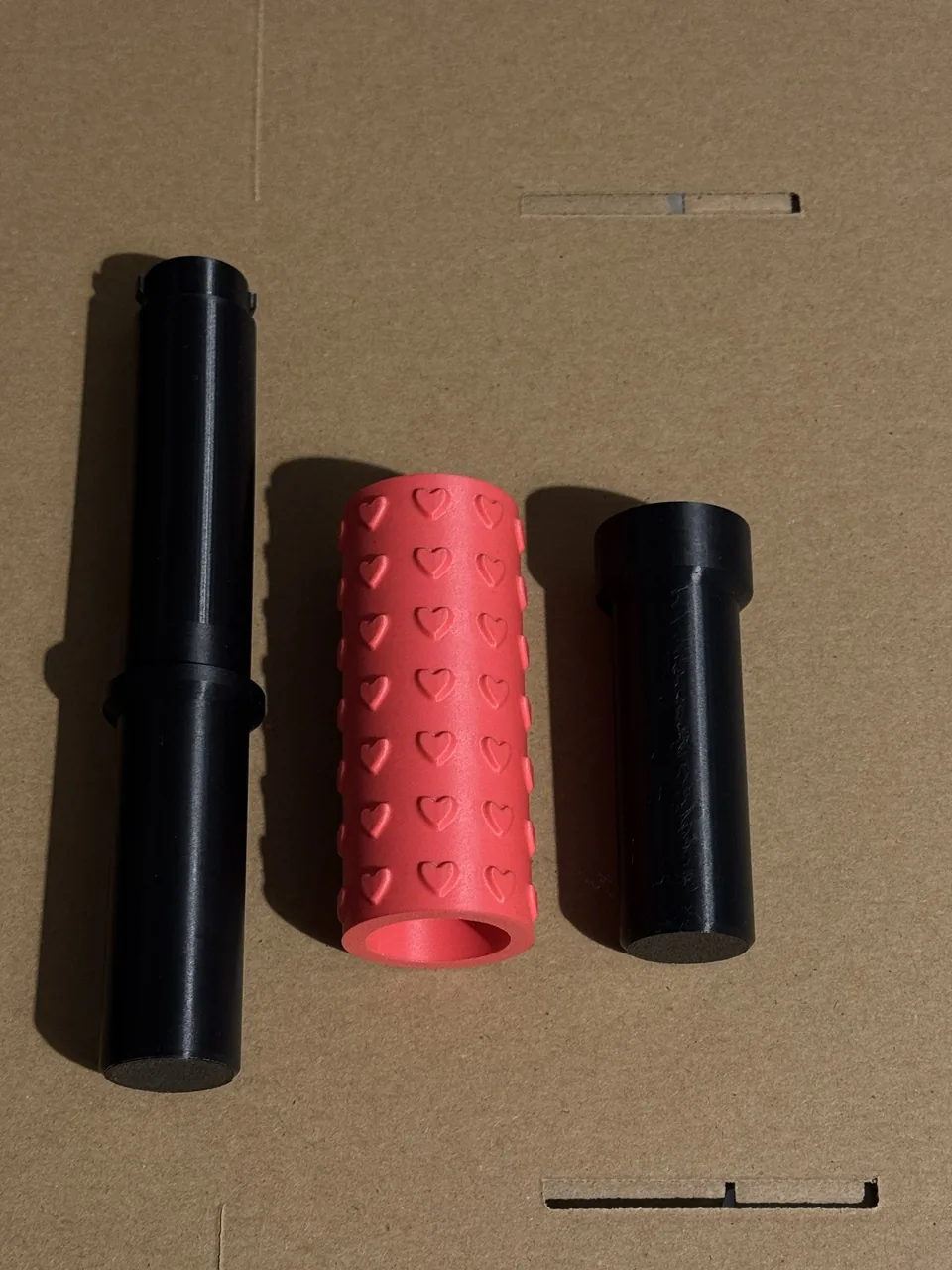
Every sleeve made for the current handles slides onto the same two handles: the core, 194 mm long overall, a handle with a 27 mm tube, and a cap that locks on with a quarter turn. Print the handles once, and after that only sleeves.
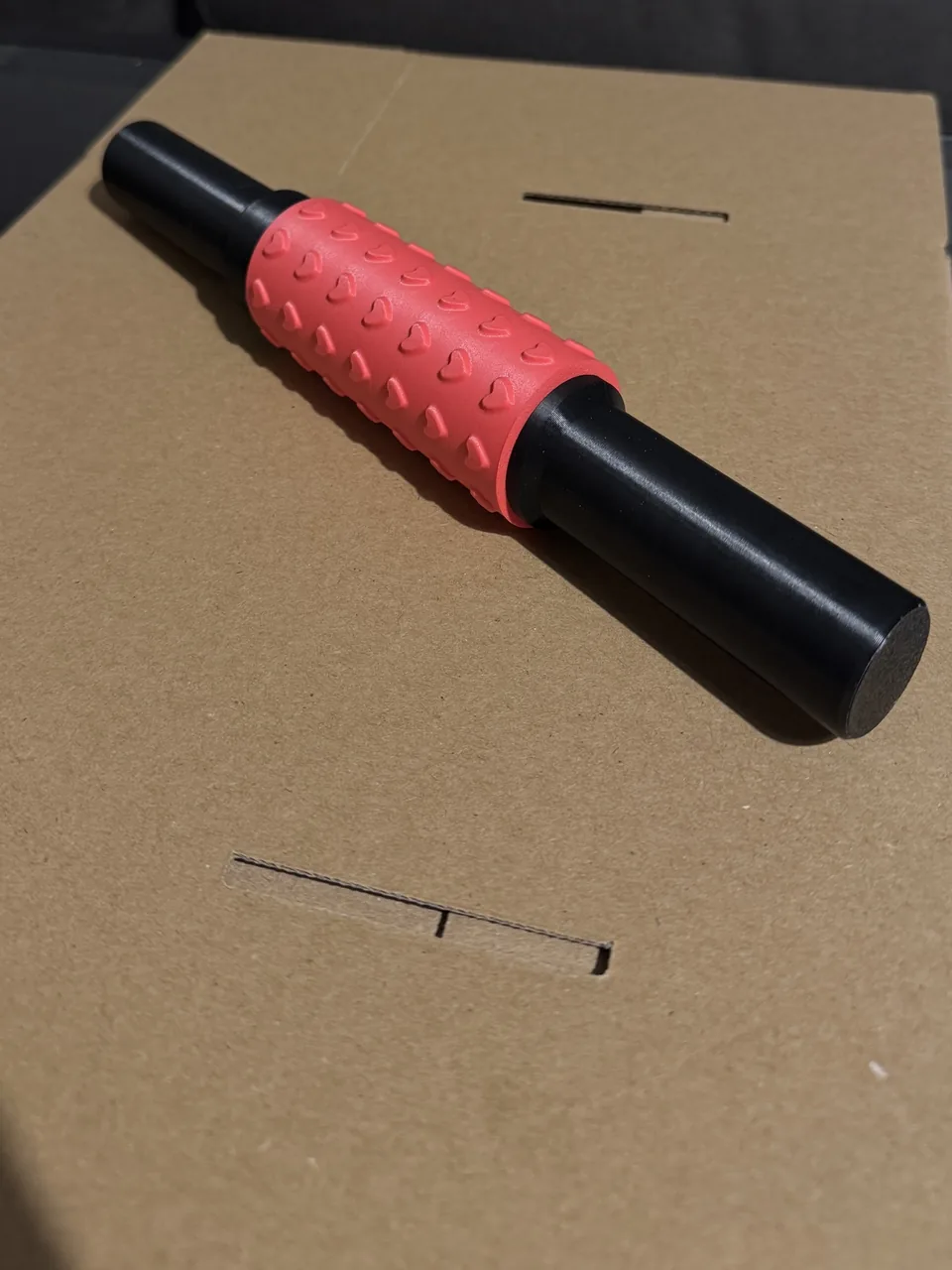
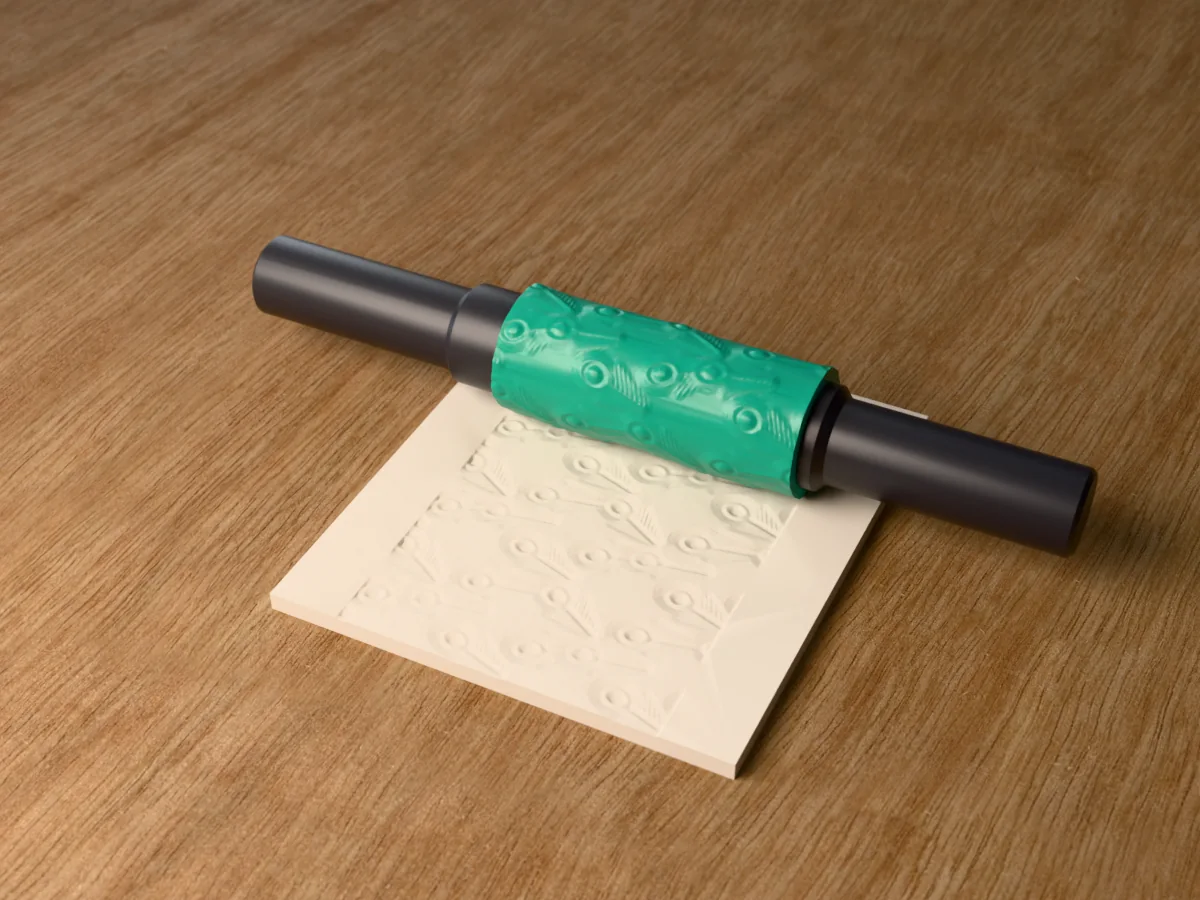
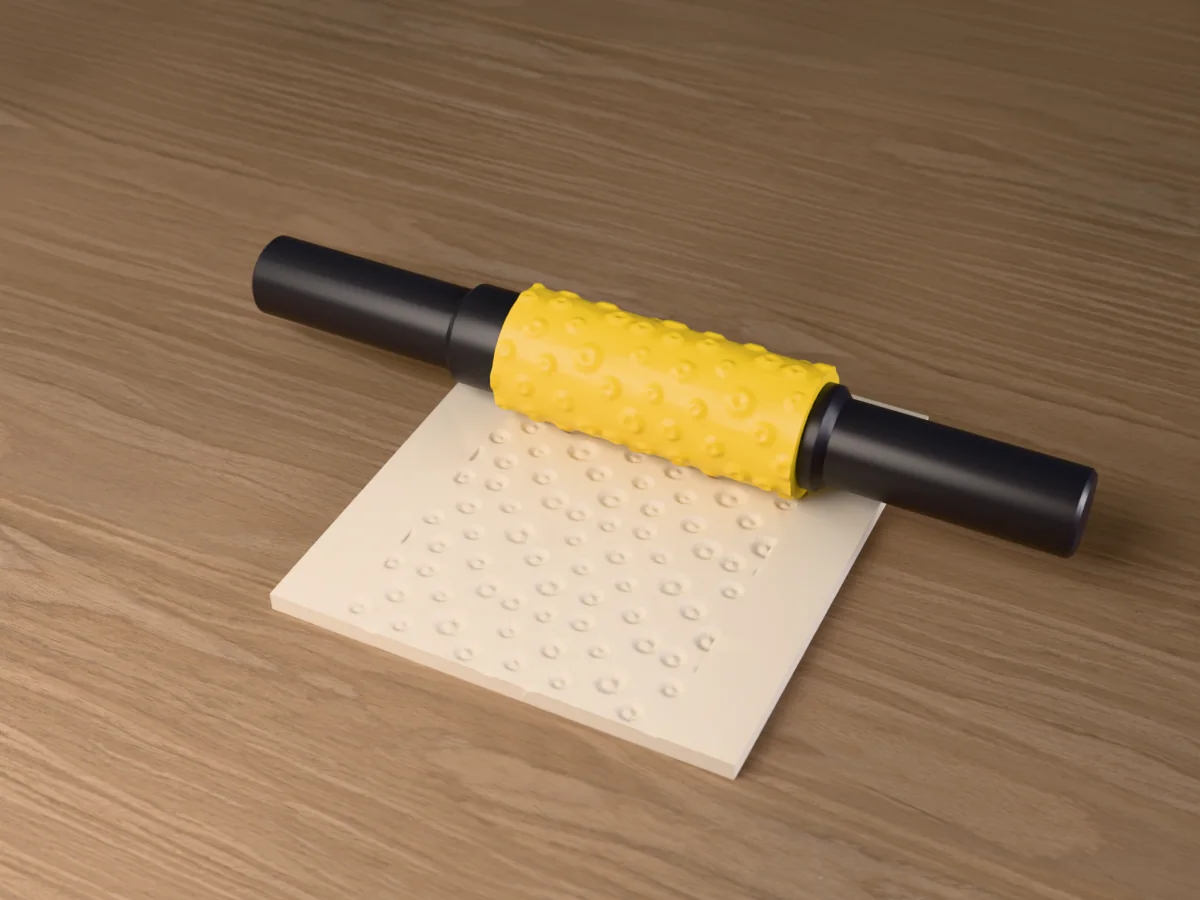
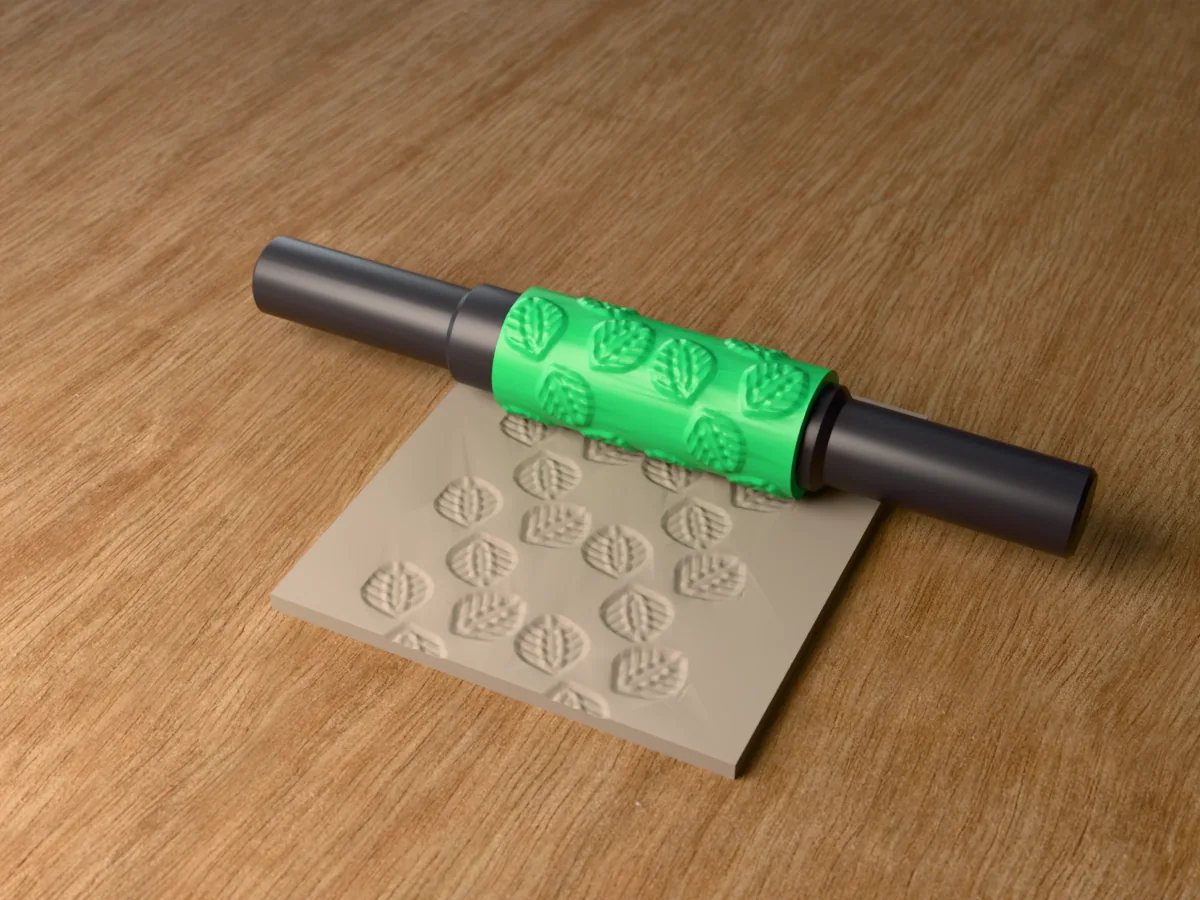
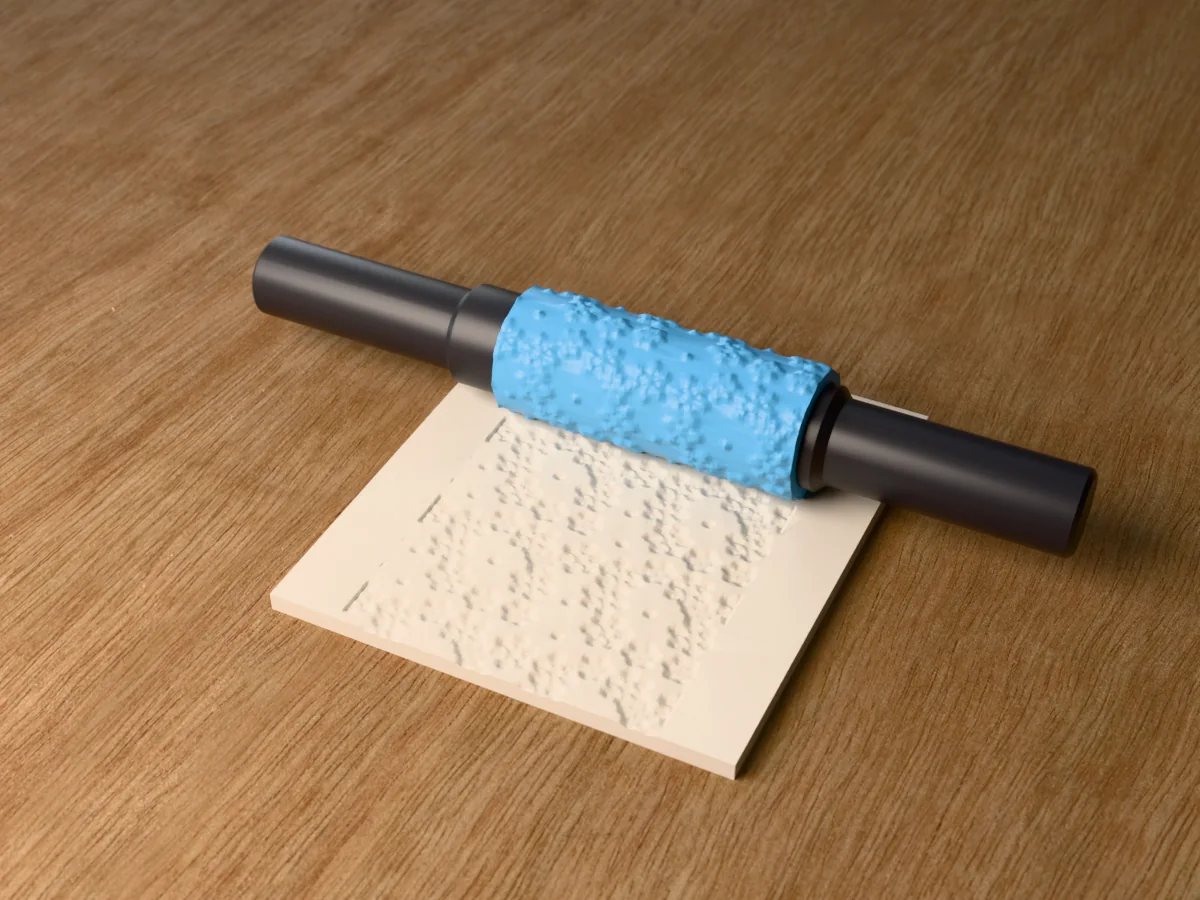
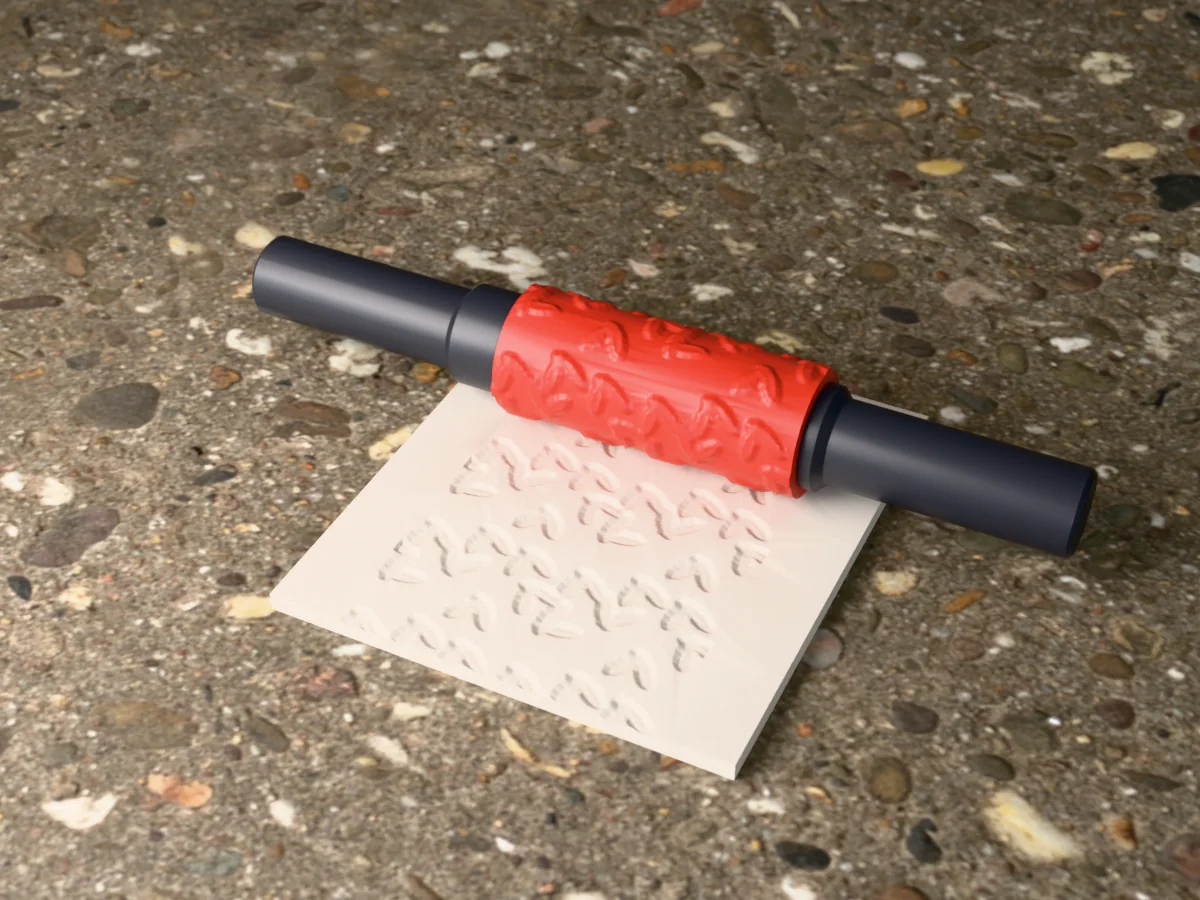
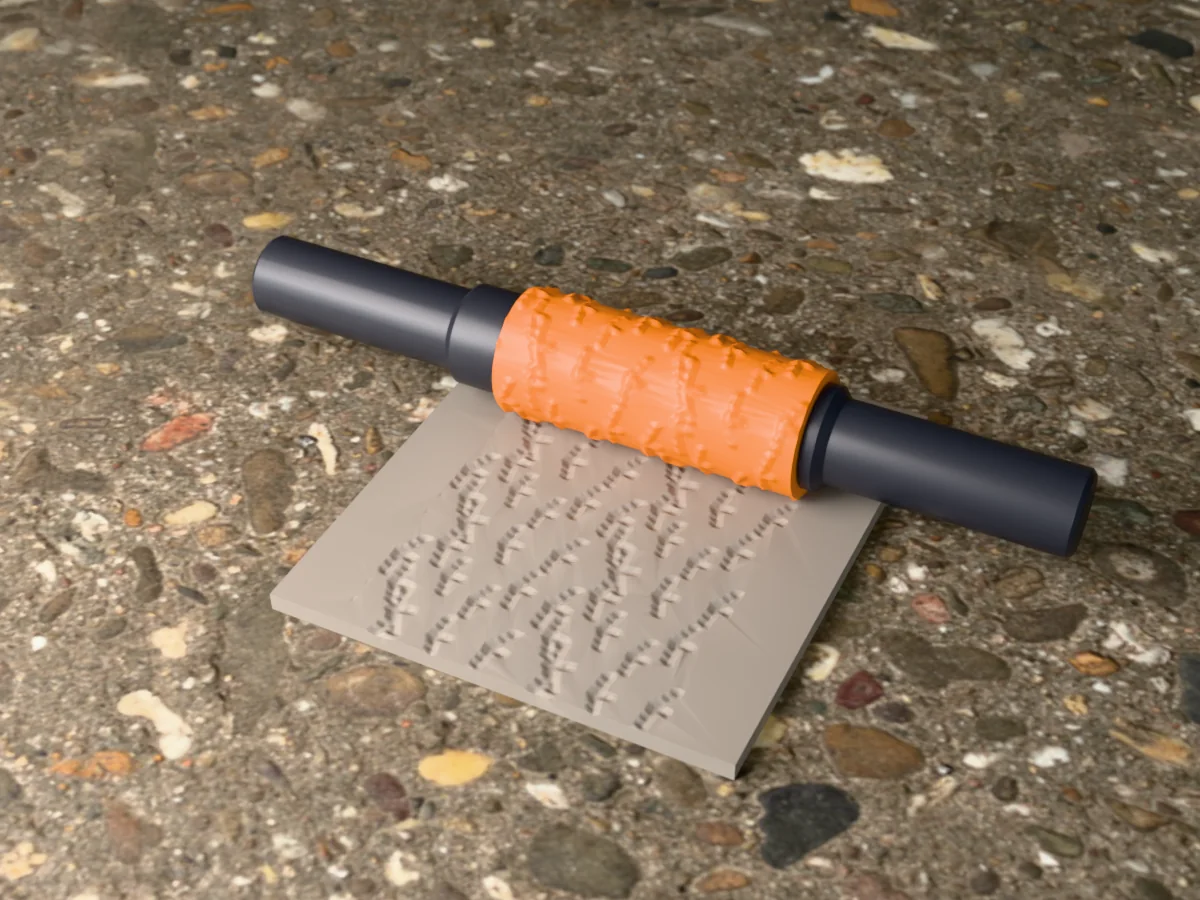
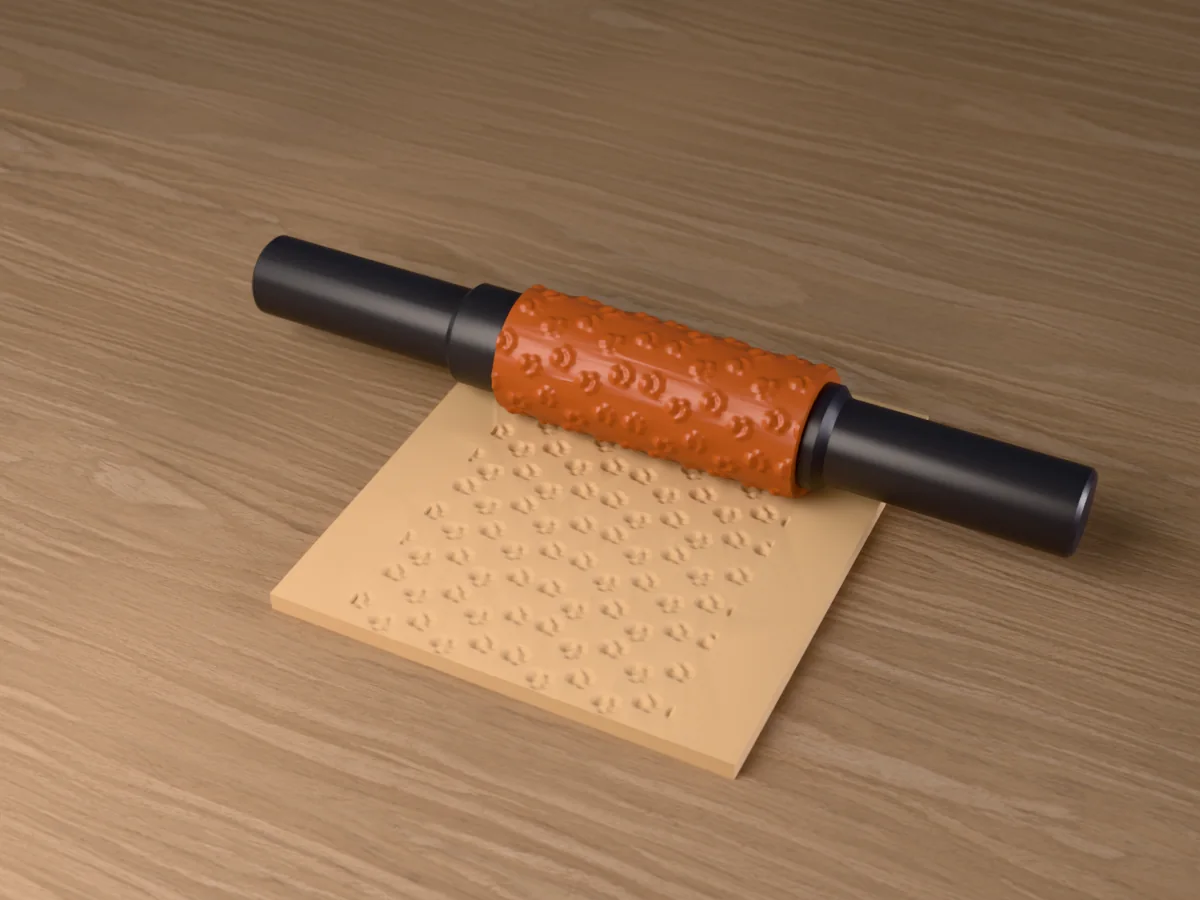
The first picture is a 3D render of this sleeve on the clay it has pressed. The two photos are our own test print of the rolling-pin system from the texture roller tool, with a hearts sleeve: put together, and as its three parts.
How it works
What you need
4
About 110 g of PLA or PETG for the sleeve and both handles (about 38 g for a sleeve alone)
Something to texture: stoneware, earthenware or porcelain slabs, or air-dry or polymer clay
A printer that can print 199 mm tall: the core handle stands 194 mm on the bed
A little cornstarch, or a water spray for pottery clay, if it starts to stick
How to use it
5
1
Print the sleeve and both handles standing on their ends, as exported, no supports. A 5 mm brim keeps the tall core steady.
2
Slide the sleeve over the core's tube, push the cap on with its slots over the two lugs and turn it a quarter turn to lock.
3
Roll the clay to an even thickness first: 5 to 8 mm for pottery slabs, 2 to 3 mm for jewellery and ornaments.
4
Roll across once, in one direction, with steady, even pressure, and lift off at the end. Going back and forth doubles the pattern.
5
Turn the cap back to swap to another sleeve from the set, and wash the sleeve in warm soapy water after use.
Free download. Opens the Thingiverse listing in a new tab.
Free for personal use. Selling the printed piece itself needs a commercial licence (Pro or Founder); passing on the file is not permitted on any plan. Full terms.
textured rolling pinmandala textureboho potterypottery texture rollerpolymer clay texture
Questions about this design
How do I centre one mandala from the mandala textured rolling pin on a pendant?
Roll the clay, then hold a round cutter about 20 to 22 mm across over one mandala so its outer dots sit just inside the edge, and cut. The mandalas sit in a grid, so a row of identical pendants is easy.
What glaze suits the mandala textured rolling pin pattern?
A glaze that breaks over edges: a rutile, a celadon or a tenmoku. It thins over the petals and dots and pools in the rings, so the whole mandala shows in two tones without any painting.
Does the mandala textured rolling pin fit the same handles as the other sleeves?
Yes. Every sleeve made for the current handles is 99 mm long with a 27.6 mm bore, and every zip carries the same core and cap, so you print the handles once and swap sleeves with a quarter turn of the cap. These are the handles the texture roller tool makes today, so a sleeve you design yourself in the tool fits them too. The older sleeves in the catalog with a 30.6 mm bore need their own, bigger handles.
How long does the mandala textured rolling pin take to print?
About 4 h 20 min for everything on a current printer at 0.2 mm layers: about 1 h 30 min for the sleeve and 2 h 55 min for both handles. Once you have the handles, each new sleeve is only the first part. The times are estimated from the parts' volume, not sliced.