◆ Print only
Waves magnetic fidget slider
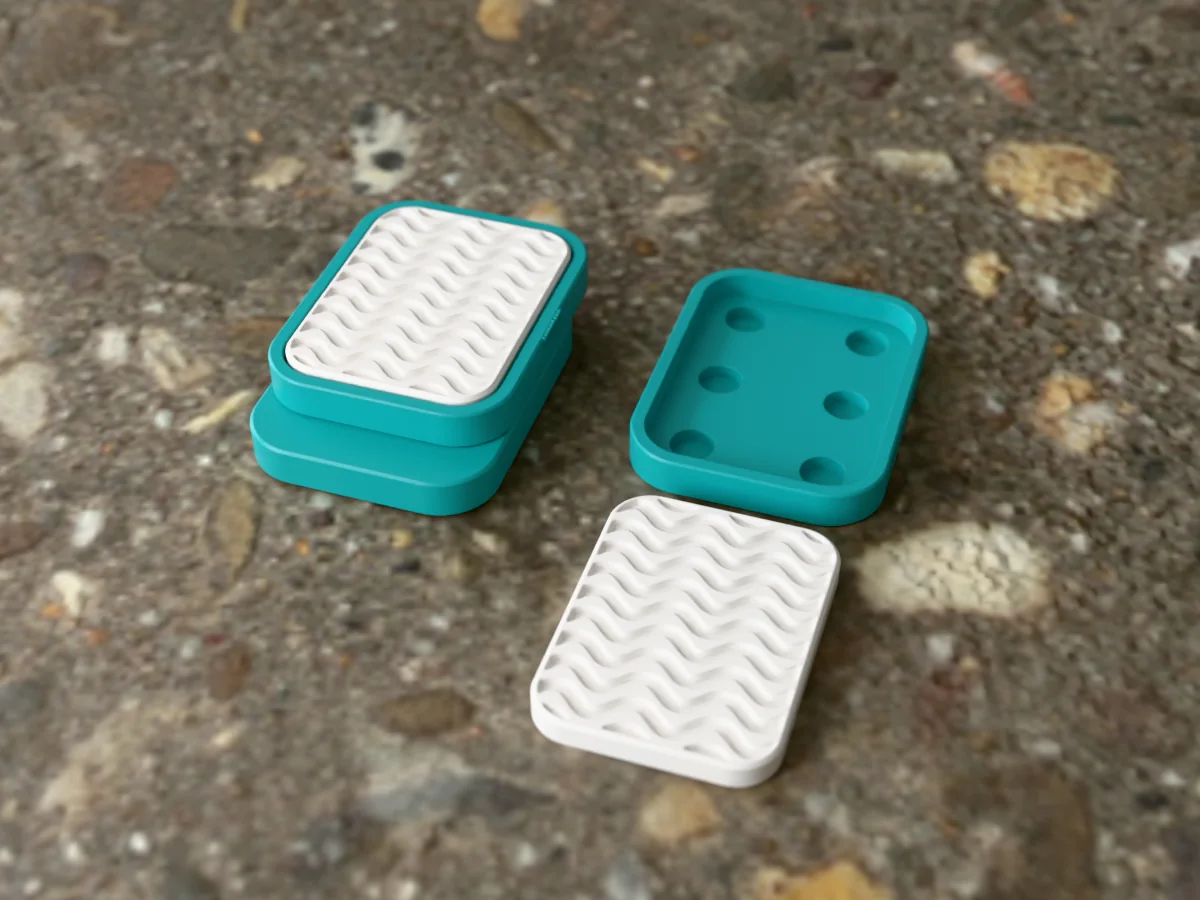
A magnetic fidget slider with soft rolling waves under your thumb, in teal and white.
Want your own version? Make it free in our fidget slider tool. A free account gives you free downloads every week.
◆ Print only
A magnetic fidget slider with soft rolling waves under your thumb, in teal and white.
Want your own version? Make it free in our fidget slider tool. A free account gives you free downloads every week.
Two identical plates held bottom to bottom by twelve magnets: slide one over the other and it clicks into the next row. The thumb faces carry soft parallel waves, smooth ridges that the thumb can stroke along while the plates click back and forth. Calm white waves on teal plates.
Made with our free fidget slider generator, not modelled by hand: we picked the Waves surface and set the plate colour to teal and the insert colour to white. Everything else is the tool's default: 35 by 45 mm plates, 5.8 mm thick, for 6 by 2 mm disc magnets, six per plate in three rows, under a 0.4 mm floor, with the insert a 0.15 mm press fit in its pocket. The zip holds exactly what the tool exports: a 3MF with both plates and both inserts in their two colours, and one plate and one insert as STLs to print twice. Like every free download from the tool, each plate carries a small raised MESHCAST mark on one long side.
Print the four parts flat with no supports, press in twelve magnets (the two plates the opposite way round) and the two inserts, and it is ready in an evening. It makes a good desk toy, a quiet thing for restless hands in meetings, or a small gift that looks bought.
Shown as a 3D render of the printed slider, assembled with the top plate slid one click along, next to a spare plate and insert, not a photo.
Print two plates and two inserts flat as exported, no supports. Finer layers (0.12 to 0.16 mm) on the inserts bring out the texture.
Stack the magnets and mark the top face of the stack with a pen.
Press six magnets into the first plate marked side up and six into the second marked side down.
Hold the plates bottom to bottom: they must snap together. If they push apart, flip the magnets in one plate.
Press an insert into each pocket over the magnets, put the plates together and slide.
Print details
| Type | Print only |
|---|---|
| Printed parts | 4 |
| Size (W x D x H) | 35 x 45 x 13 mm |
| Print bed needed | 45 x 36 mm, 6 mm tall |
| Filament | ~20 g |
| Layer height | 0.2 mm |
| Infill | 20% |
| Supports | Not needed |
| Download | ZIP: 3MF in two colours + plate and insert STLs + README with assembly |
| Added | 2026-10-05 |
Made with the free Fidget slider generator. Upload your own drawing and get the same kind of part built from it, in your browser.
Free download. Opens the Thingiverse listing in a new tab.
Free for personal use. Selling the printed piece itself needs a commercial licence (Pro or Founder); passing on the file is not permitted on any plan. Full terms.
New to this? Read the fidget slider guide.
The click comes from the magnets, not from plastic hitting plastic, so it is a soft snap rather than a loud clack. Most people find it fine in a meeting. The smooth waves are also the quietest surface to stroke, with no edges for a fingernail to tick on.
Twelve round neodymium disc magnets, 6 mm across and 2 mm thick, the most common size there is: six per plate. If you have a different size, open the free fidget slider generator, pick it under Magnets and it moves the holes and the pocket to fit.
About 2 h 10 min for all four parts and 20 g of filament at 0.2 mm layers, estimated from the files rather than sliced; a current printer is faster. The 3MF puts both plates and both inserts on one bed in two colours.
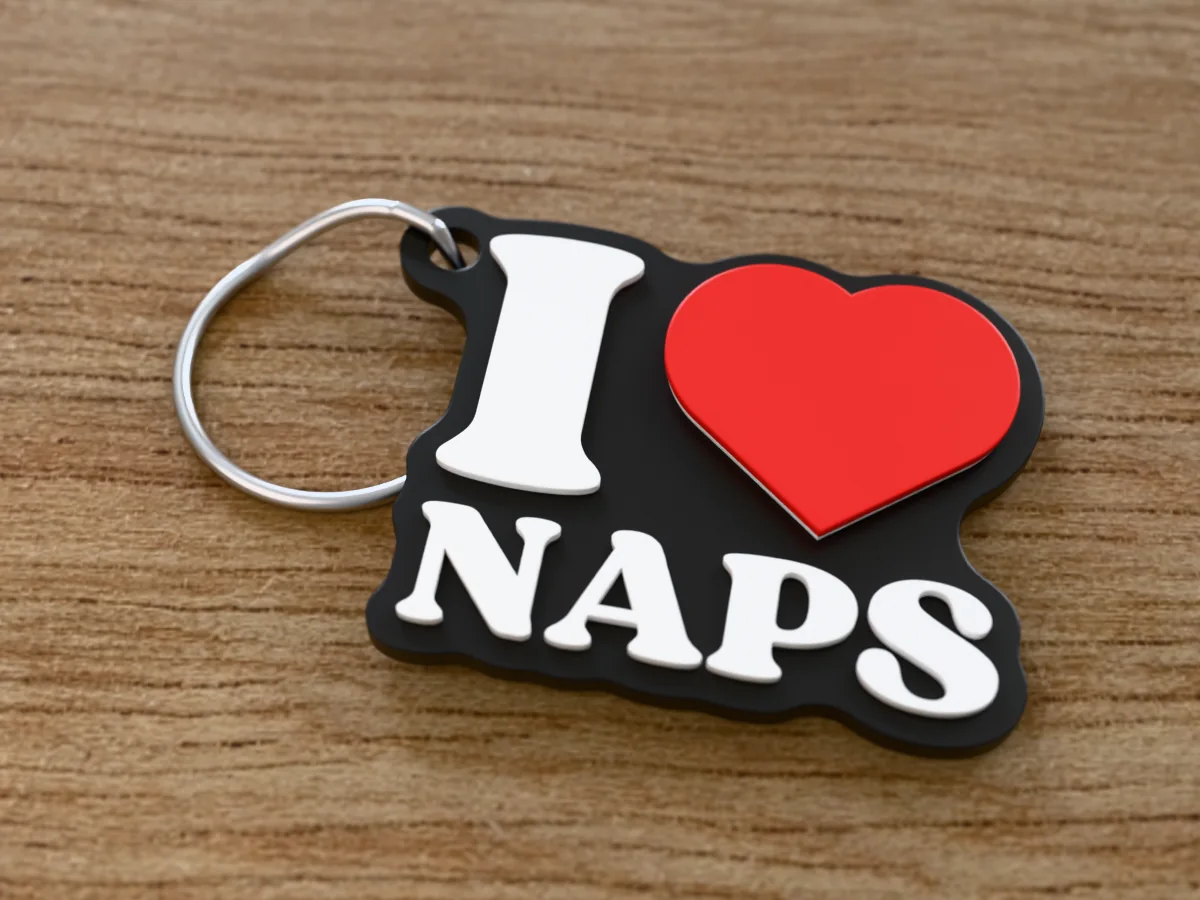
An "I heart NAPS" keychain in black, white and red, for the person who can sleep anywhere, any time.
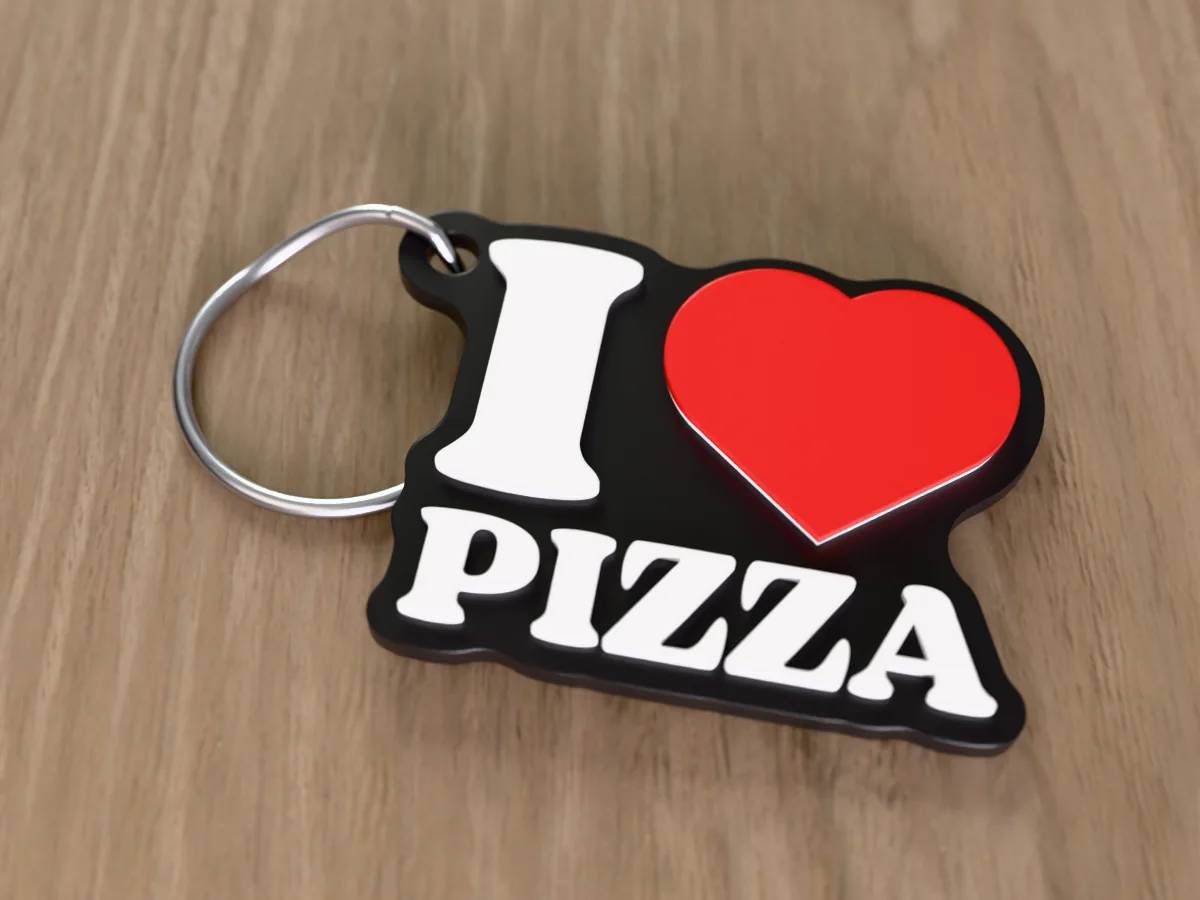
An "I heart PIZZA" keychain in black, white and red, for the friend who answers every dinner question the same way.
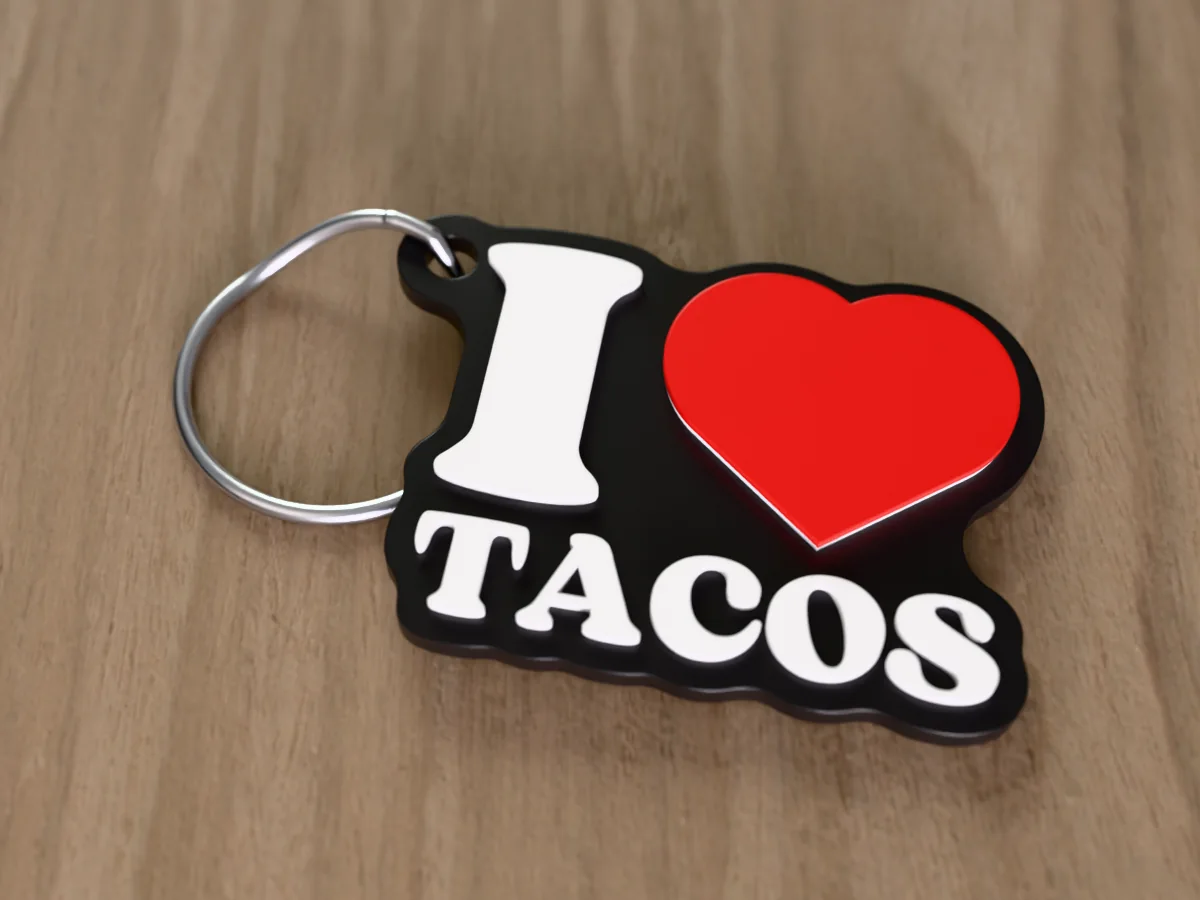
An "I heart TACOS" keychain in black, white and red. Every day is Taco Tuesday on this keyring.
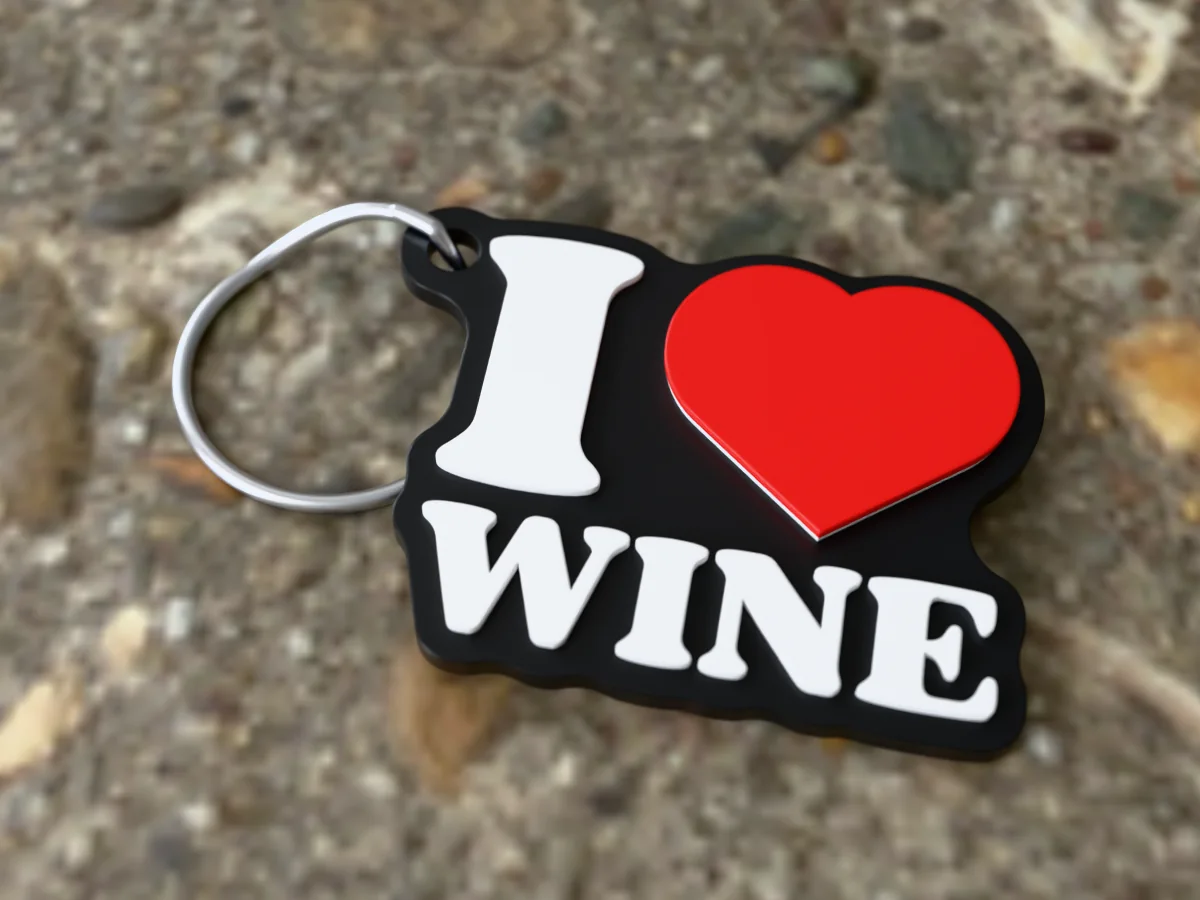
An "I heart WINE" keychain in black, white and red, for the friend who brings a bottle to everything.
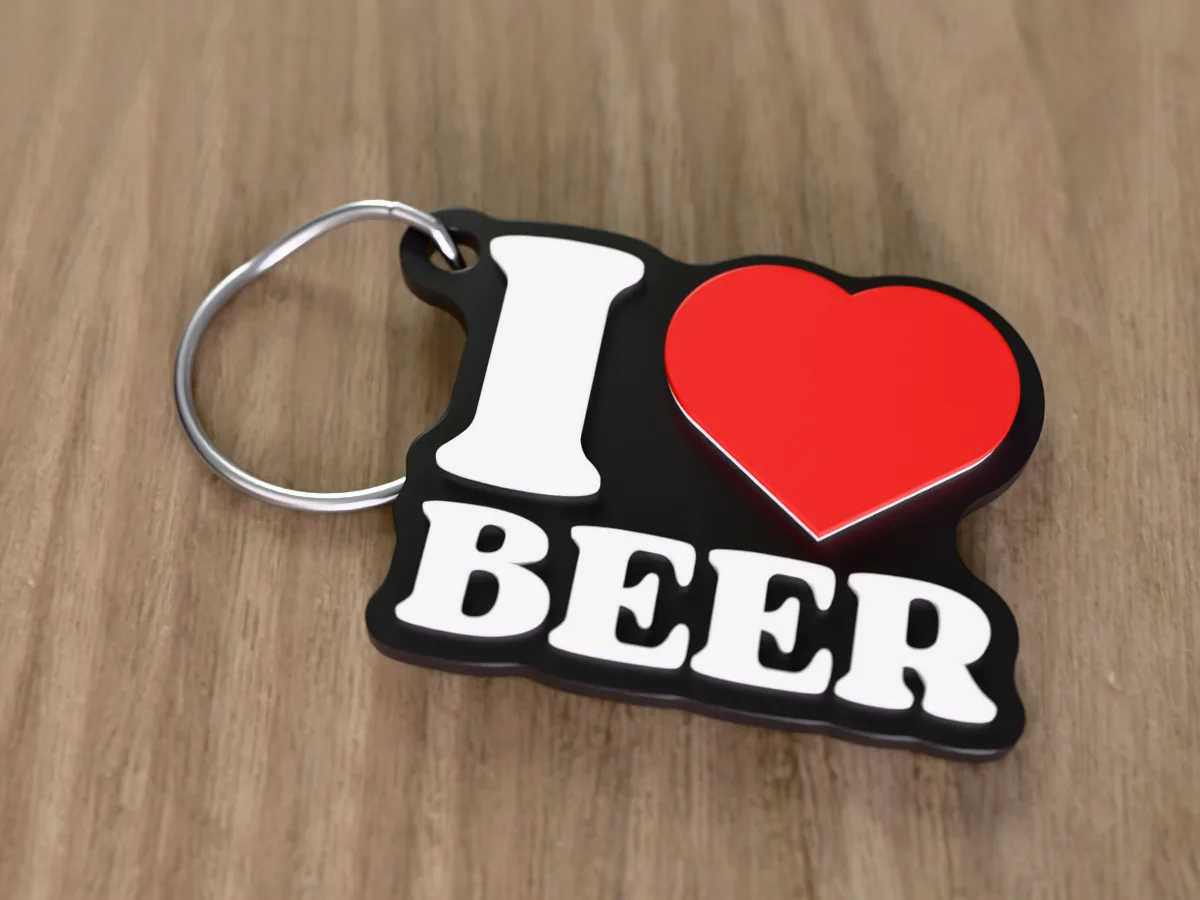
An "I heart BEER" keychain in black, white and red, for the friend who knows every brewery in town.
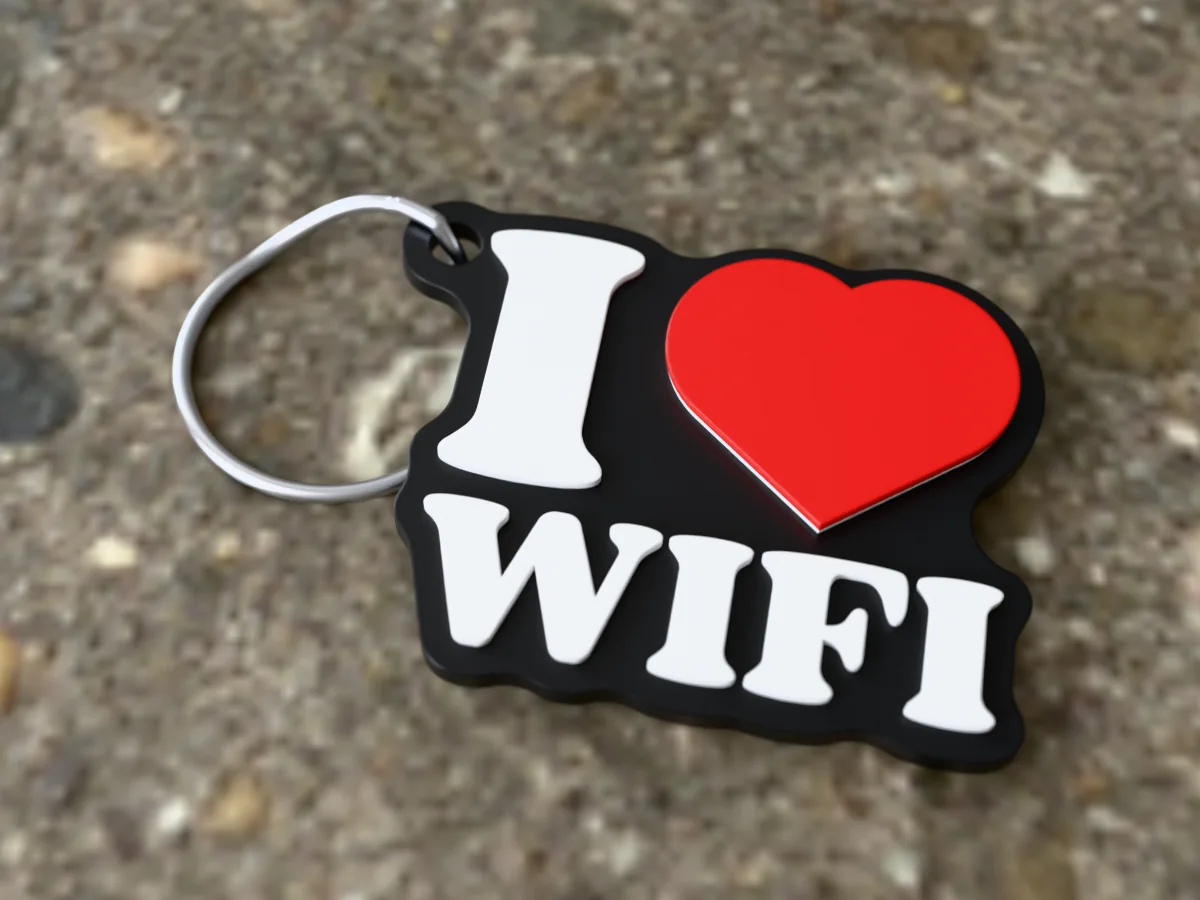
An "I heart WIFI" keychain in black, white and red. Honest about the one relationship that really matters.
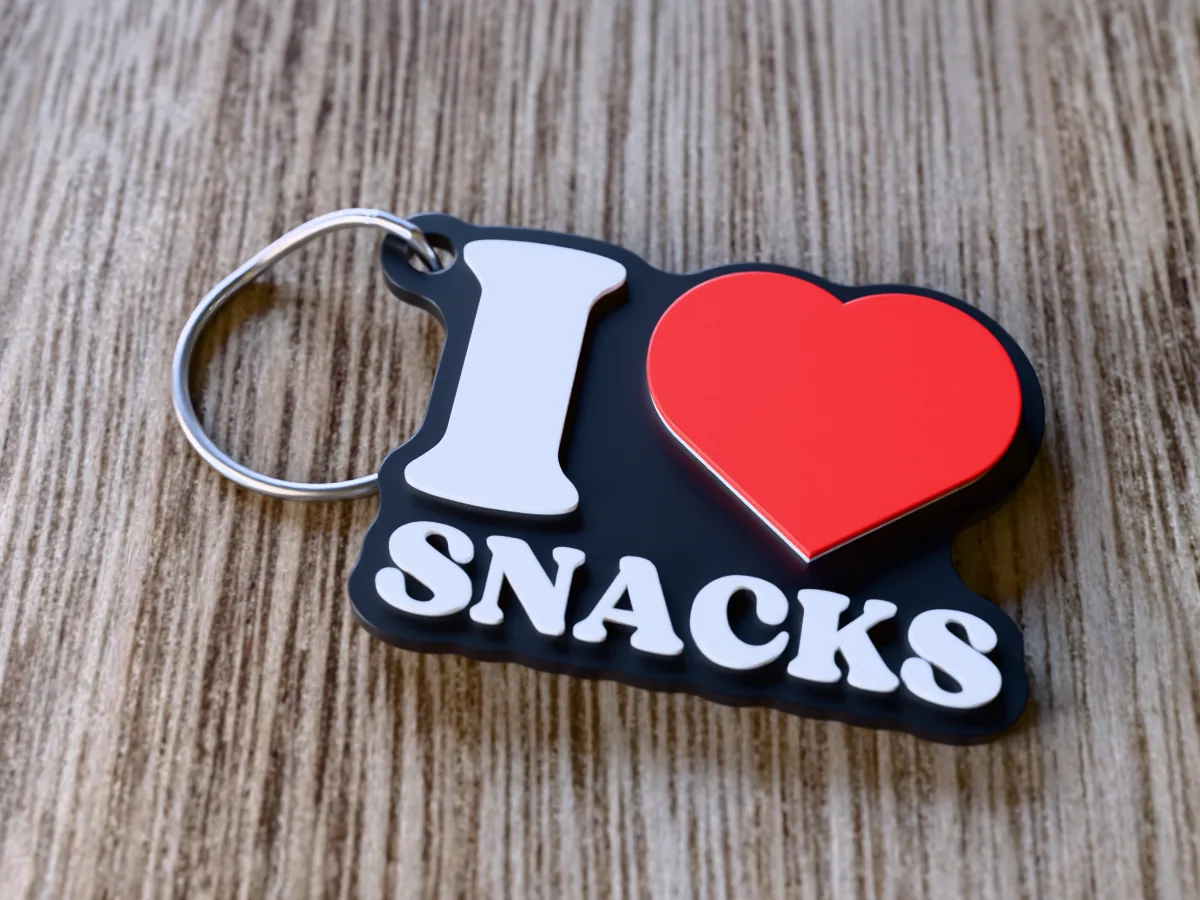
An "I heart SNACKS" keychain in black, white and red, for the friend with crisps in every bag.
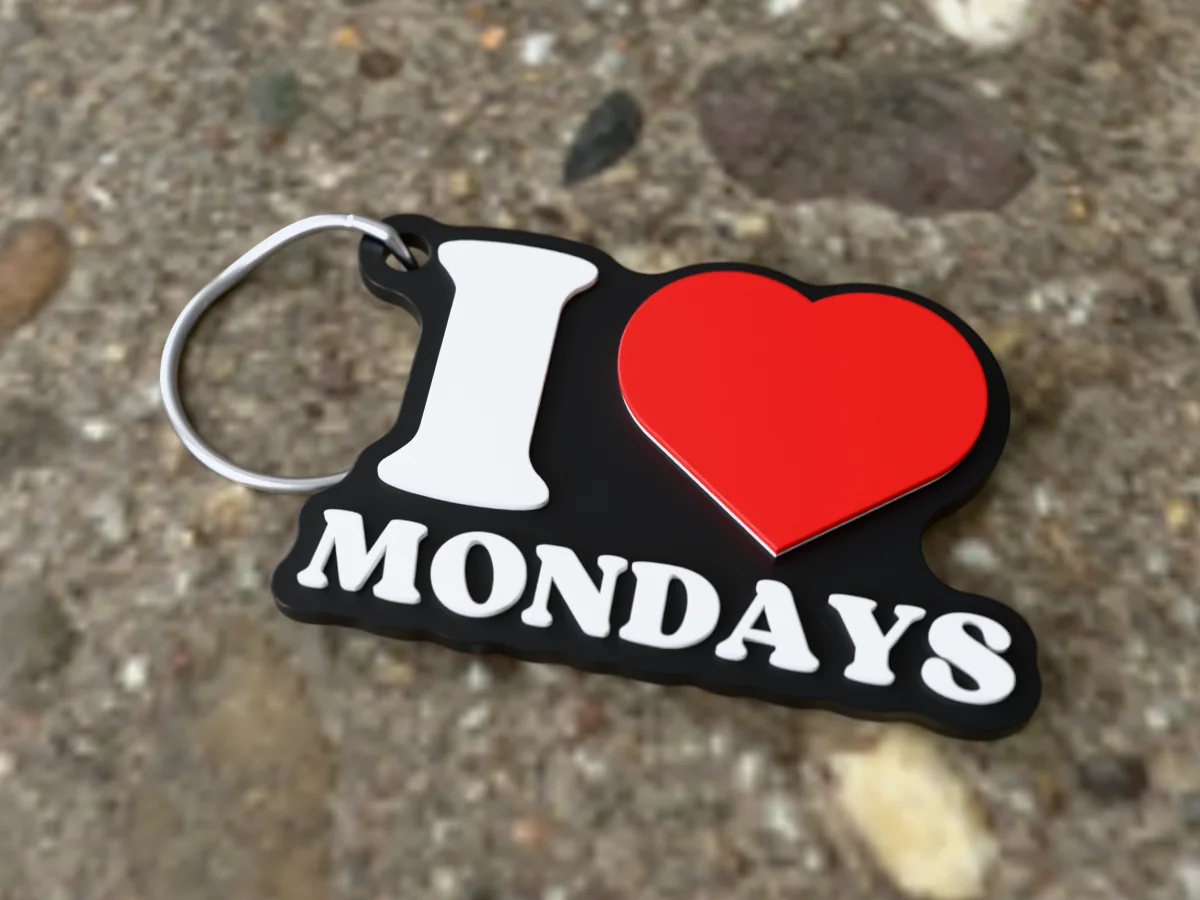
An "I heart MONDAYS" keychain in black, white and red. Said nobody, ever, until now.