◆ Candle wax
Duck candle mold
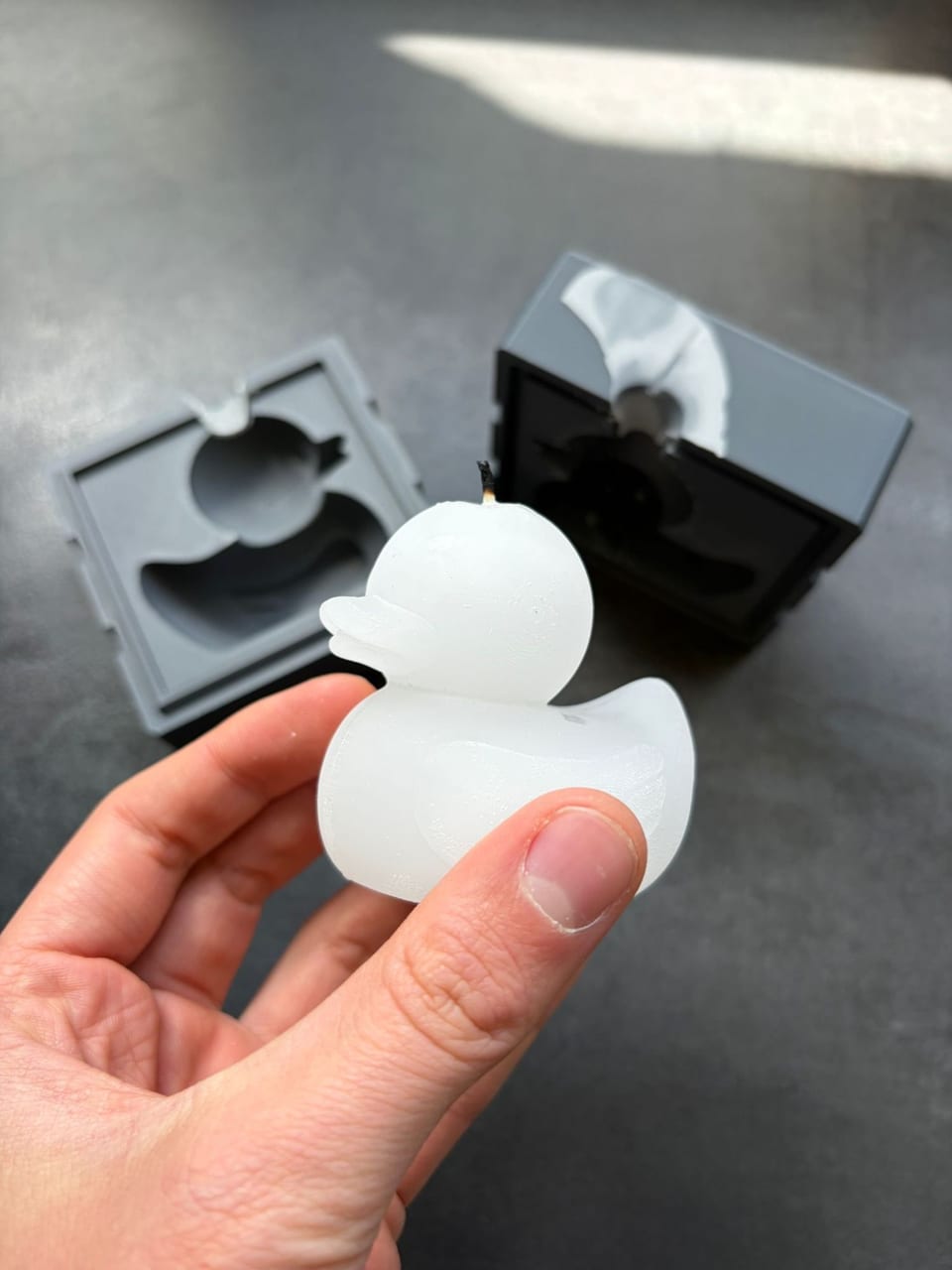
Two-part rubber duck mold. No silicone, pour the wax straight in.
◆ Candle wax
Two-part rubber duck mold. No silicone, pour the wax straight in.
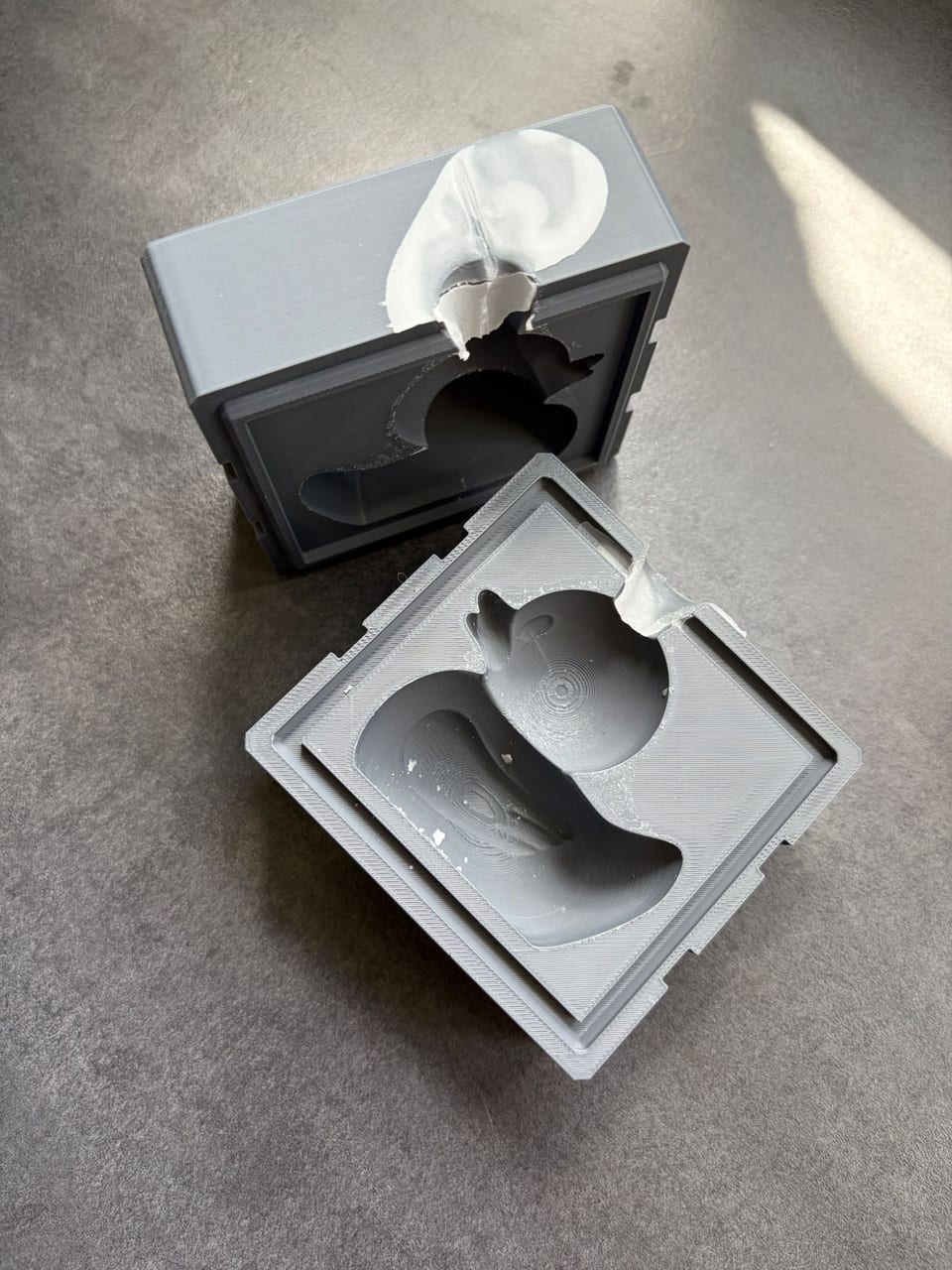
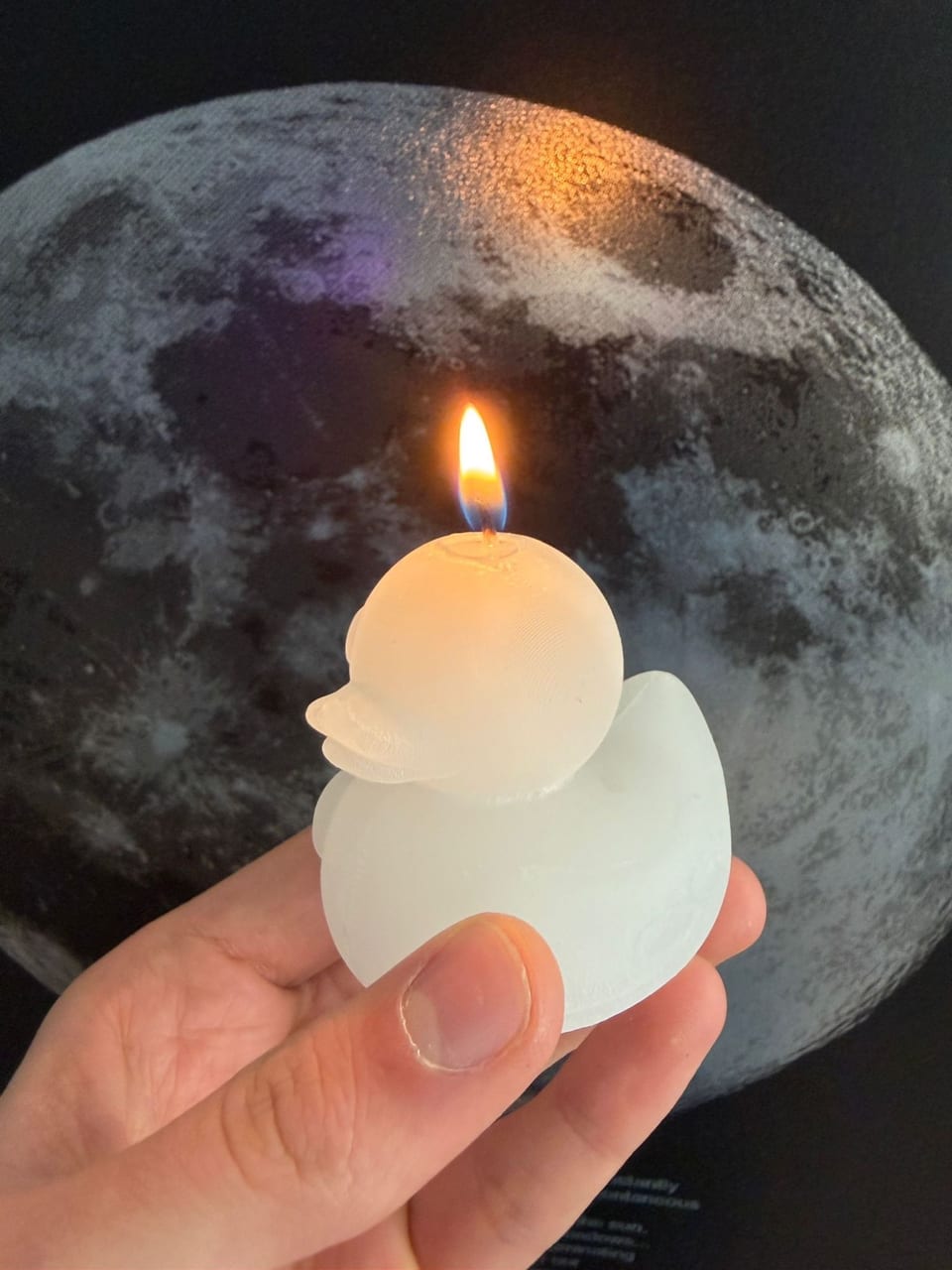
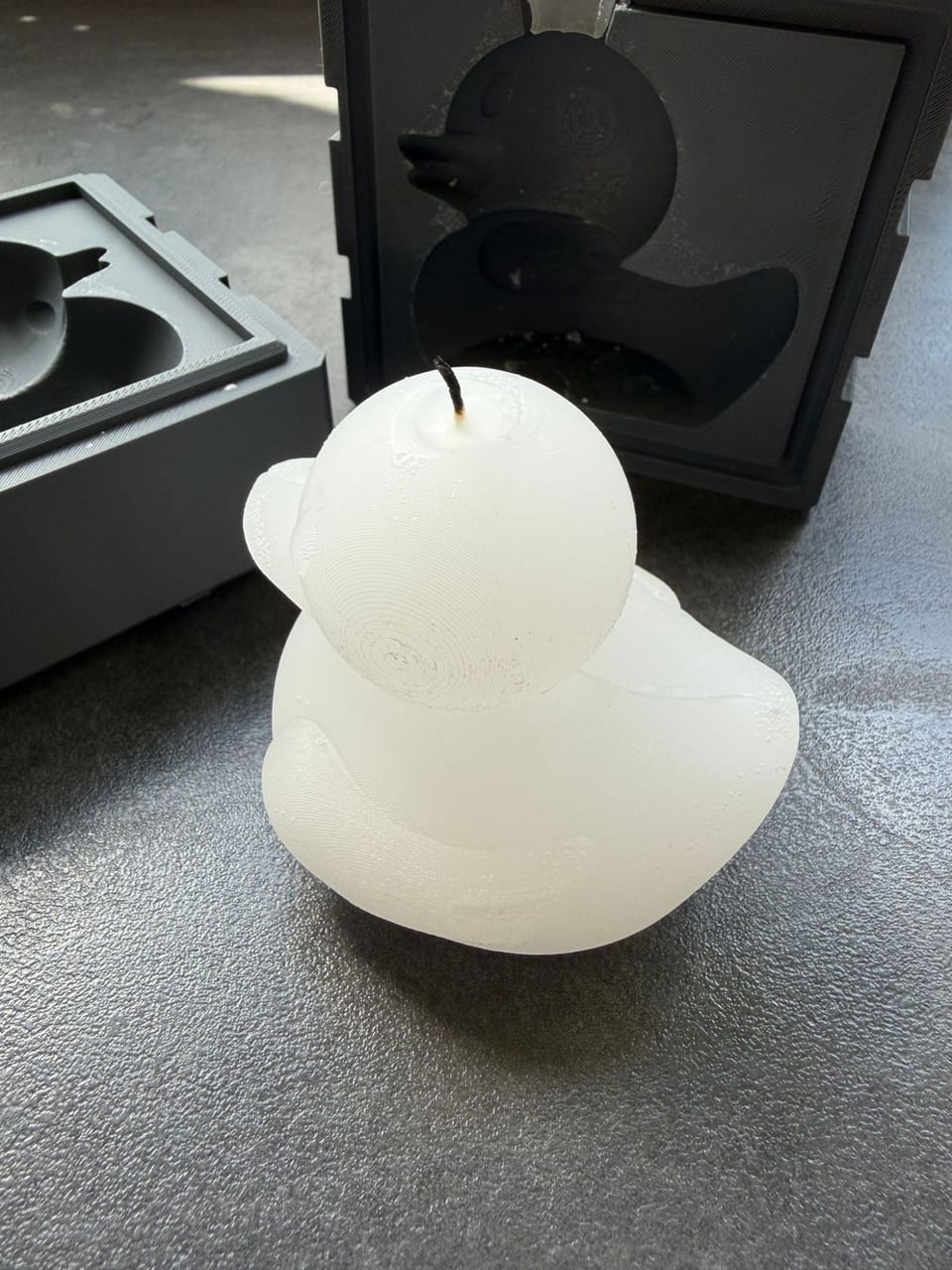
A two-part candle mold for a classic rubber duck. No silicone, no casting, no extra steps: print it, clamp it, and pour your wax straight in.
The mold has alignment keys so the halves close cleanly, a channel for rubber bands, a pry pocket to pop it open without damaging the surface, and a wick hole in the top so the wick sits centred while the wax sets.
You need wax (soy or paraffin), a wick and two rubber bands. Thread the wick through the hole and pull it tight, close the mold and band it shut around the channels, then pour at around 65 to 70 C. Let it cool fully, at least two hours, and longer is better. Pry the halves apart at the pocket and trim the wick.
Cool it slowly. Fast cooling leaves a sink hole in the base; if that happens, top it off with a small second pour. Print both halves flat side down, and a smooth build plate gives you a smoother candle.
Thread the wick through the hole in the top and pull it tight, so it runs straight down the middle.
Close the two halves and band them shut around the channels.
Heat the wax to 65 to 70 C and pour in one steady go.
Leave it to cool for at least two hours. Longer is better and a slow cool is what stops a sink hole forming in the base.
Pry the halves apart at the pocket, lift the duck out and trim the wick to about 10 mm.
Print details
| Cast material | Candle wax |
|---|---|
| Printed parts | 2 |
| Layer height | 0.2 mm |
| Infill | 15% |
| Supports | Not needed |
| Added | 2026-07-27 |
Made with the free Rigid box mold generator. Upload your own model and get the same kind of mold built around it, in your browser.
Free download. Opens the MakerWorld listing.
Free for personal use. Selling the pieces you cast needs a commercial licence (Pro or Founder); passing on the file itself is not permitted on any plan. Full terms.
New to casting? Read the candle mold guide.
No. PLA starts to soften around 60 C under load, but candle wax is poured at 65 to 70 C and the mold is a thick, unloaded shell that sheds that heat in seconds. Thousands of PLA candle molds are in daily use. If you want more margin, print it in PETG, which softens around 80 C.
That is a sink hole, and it is normal. Wax shrinks as it solidifies, and the last part to set is the thickest section in the middle, which pulls material down from the base. Cool it slower, and once it has set, top the base up with a small second pour of the same wax.
Dozens. Nothing in the process wears the mold out: wax does not stick to PLA or PETG, and there is no chemical attack. The usual reason a printed mold gets retired is a cracked alignment key from opening it with a screwdriver instead of at the pry pocket.
Yes. Add dye and fragrance oil off the heat, just before pouring, and stir gently to avoid whipping air into the wax. Dye blocks and liquid candle dye both work; wax crayons do not, their pigment clogs the wick.
No. Wax shrinks away from the walls as it cools and releases on its own. Release agent on a printed mold usually makes things worse, because it pools in the layer lines and prints that texture onto the candle.
Selling the physical candles needs an active commercial licence, which comes with Pro or Founder. Passing on the mold file itself is not permitted on any plan. The licences page has the full terms.
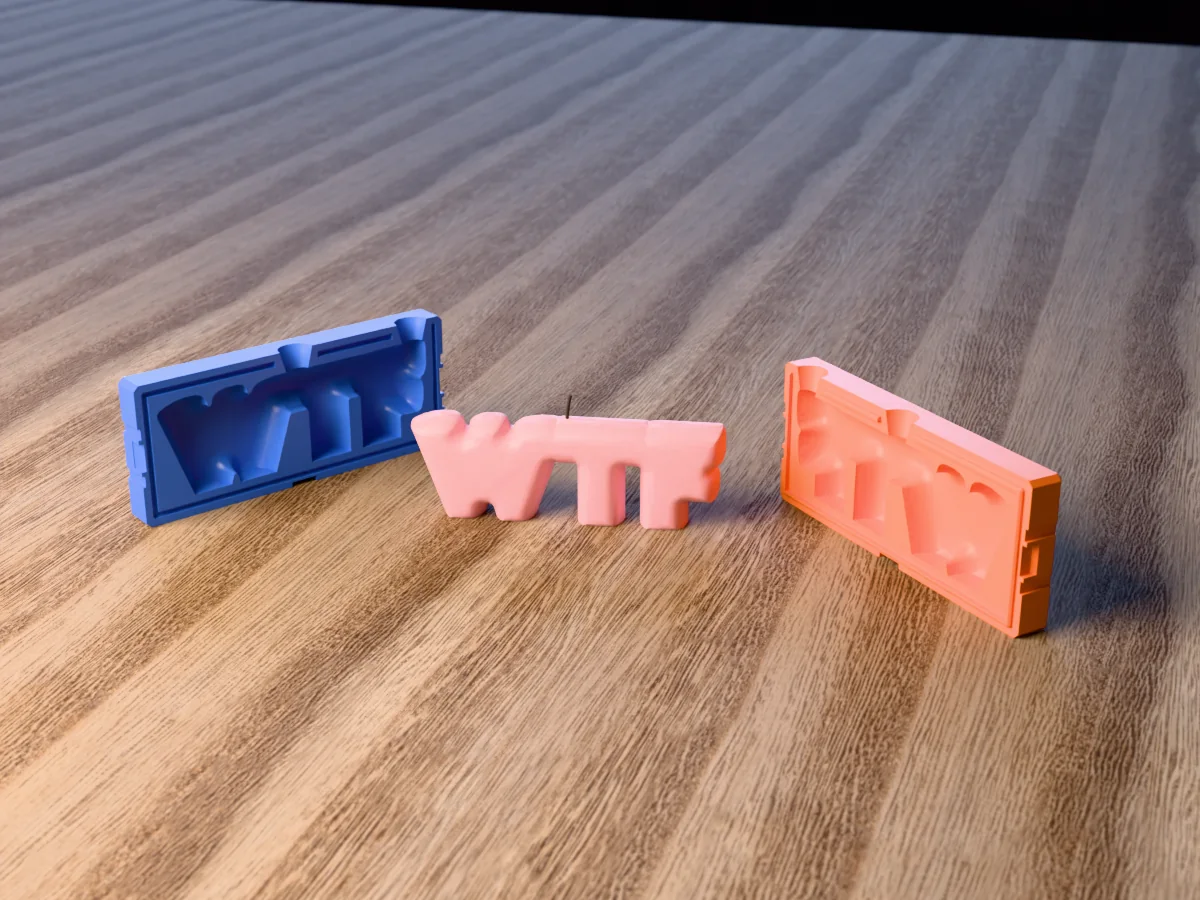 Candle wax
A puffy "WTF" bubble letter candle, 150 mm long, from a rigid two-part print. Two wicks, no silicone.
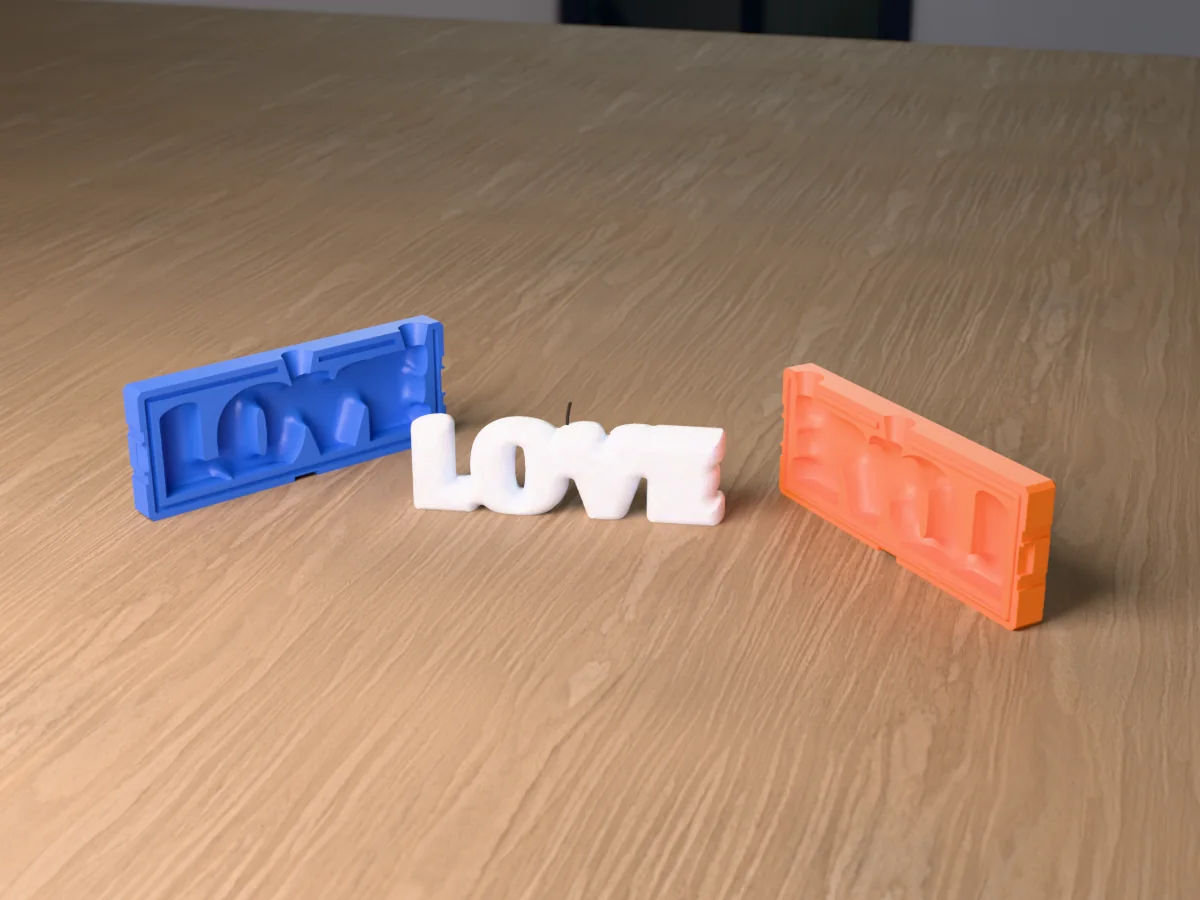 Candle wax
A puffy "LOVE" bubble letter candle, 160 mm long, from a rigid two-part print. Two wicks, no silicone.
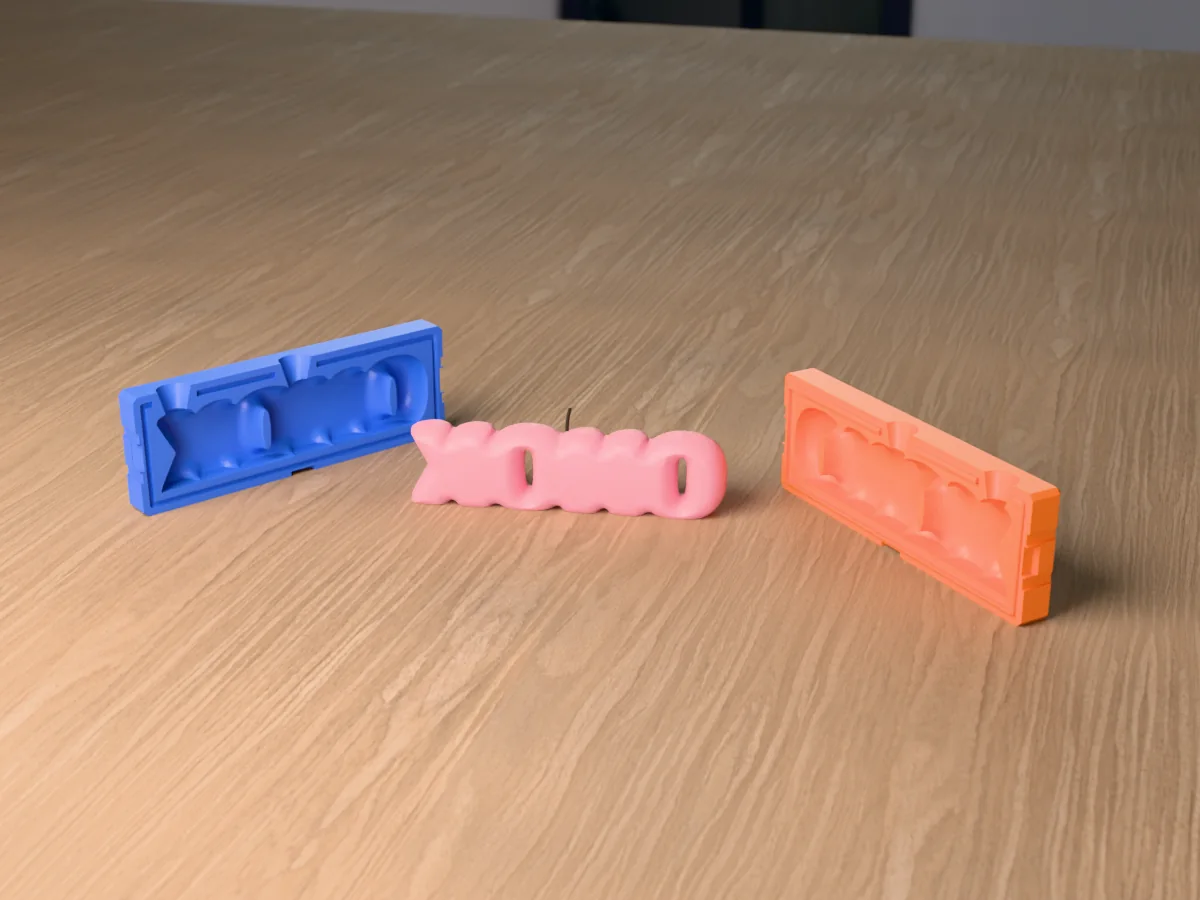 Candle wax
A puffy "XOXO" bubble letter candle, 160 mm long, from a rigid two-part print. Two wicks, no silicone.
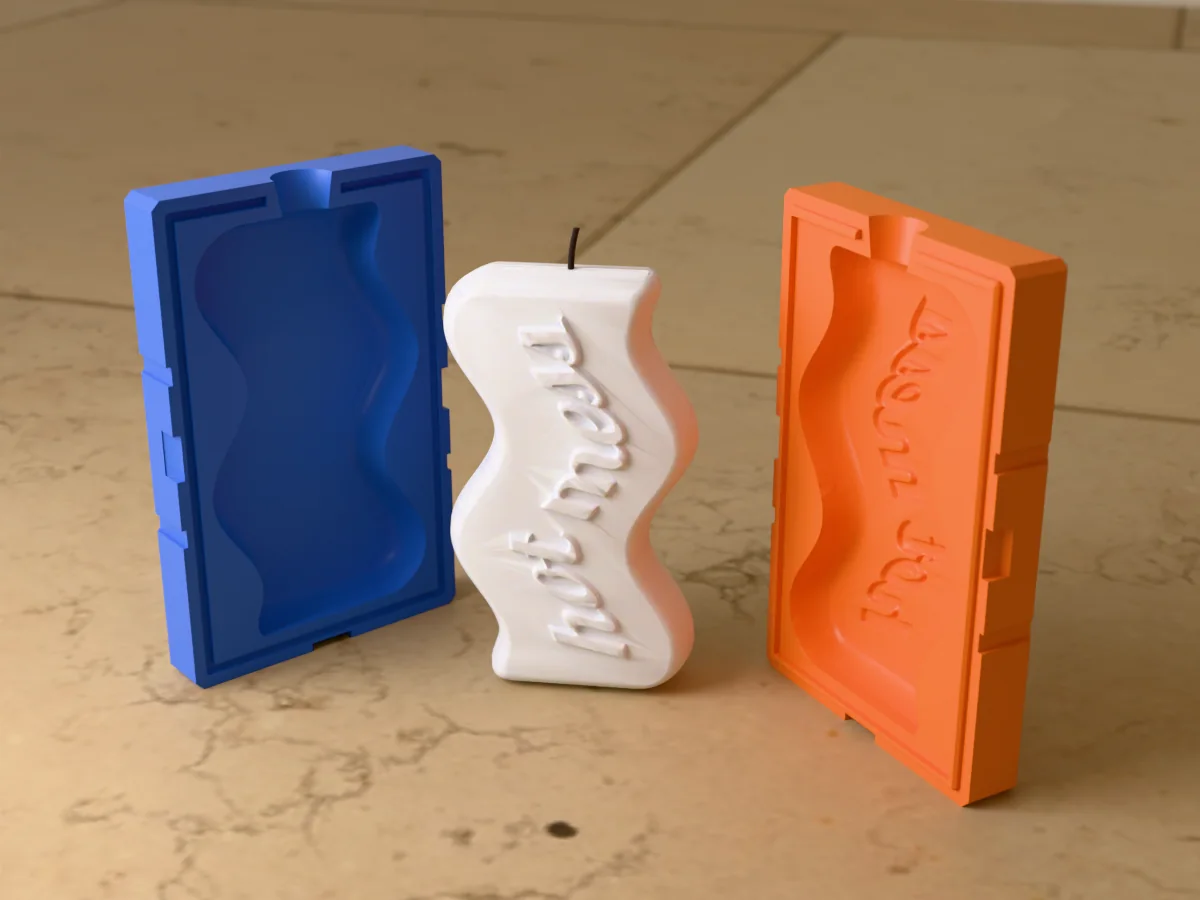 Candle wax
A tall wavy candle with "hot mess" in raised script running up the front. A rigid two-part print, no silicone.
 Candle wax
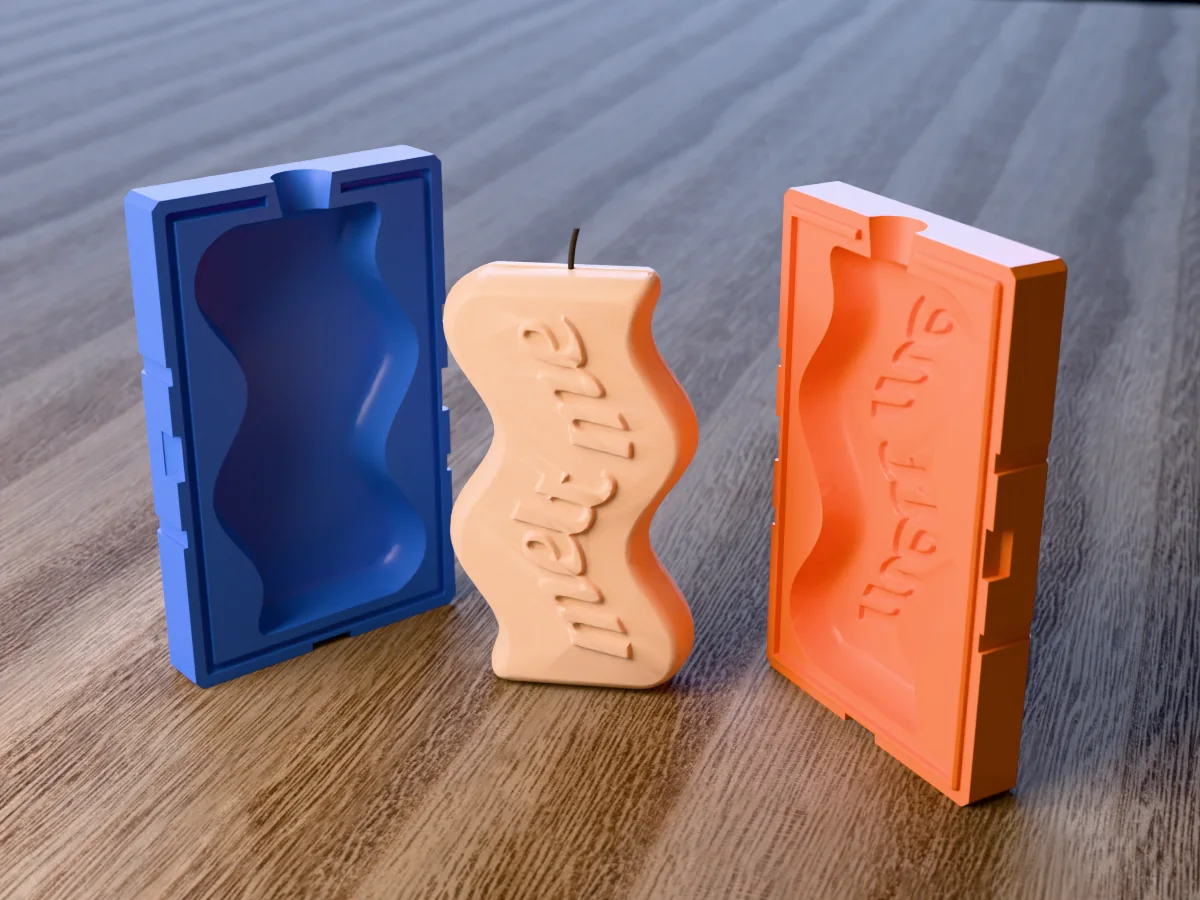
A tall wavy candle with "melt me" in raised script running up the front. A rigid two-part print, no silicone.
 Candle wax
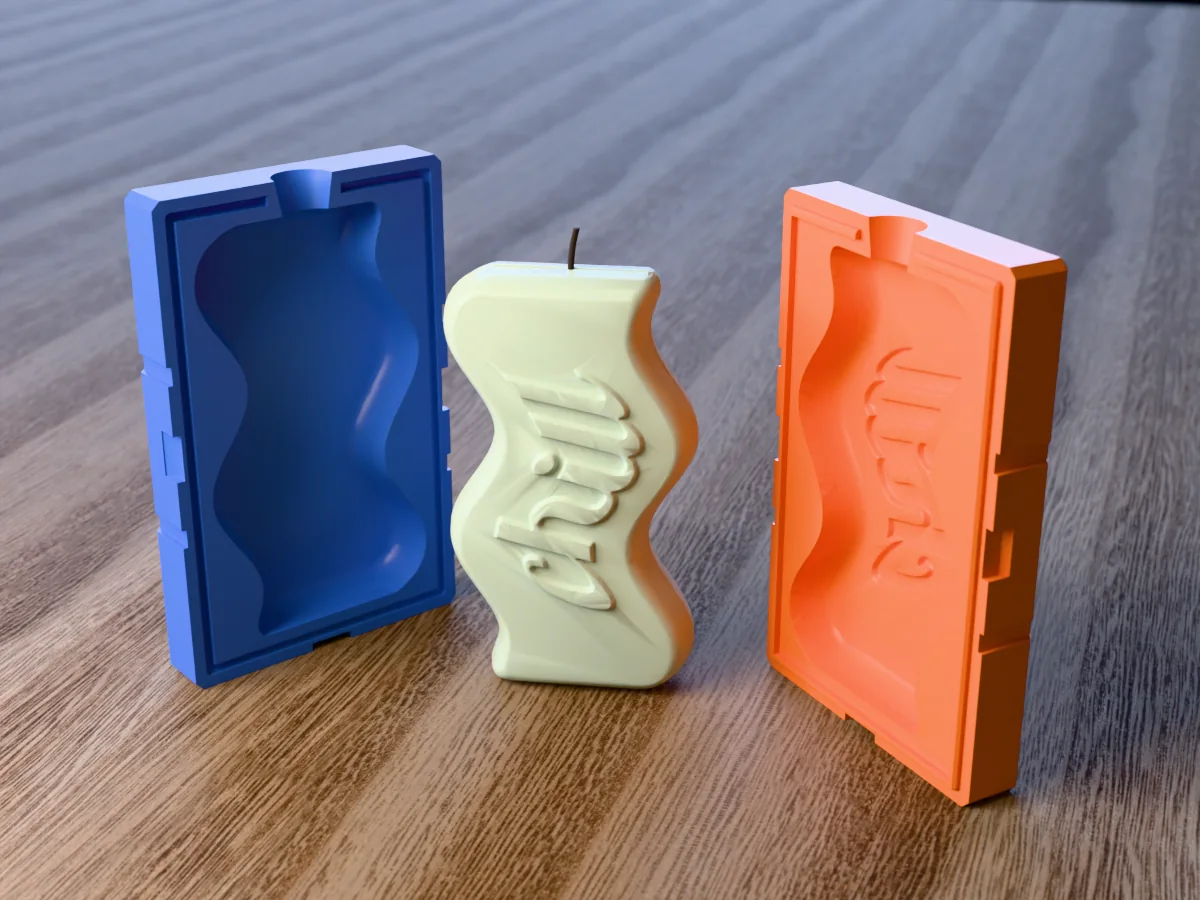
A tall wavy candle with "chill" in raised script running up the front. A rigid two-part print, no silicone.
 Candle wax
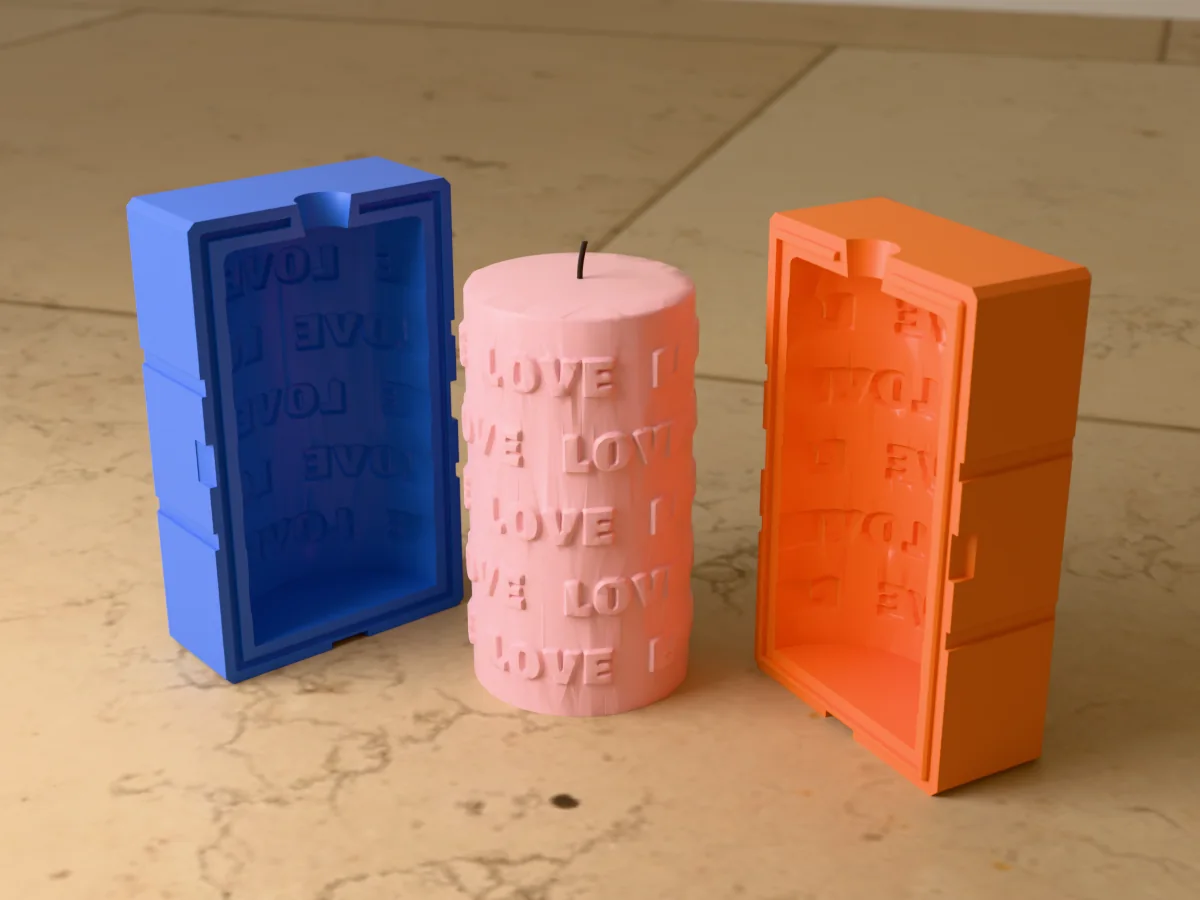
A 70 x 130 mm pillar candle with "LOVE" in raised letters in rows all round it. A rigid two-part print, no silicone.
 Candle wax
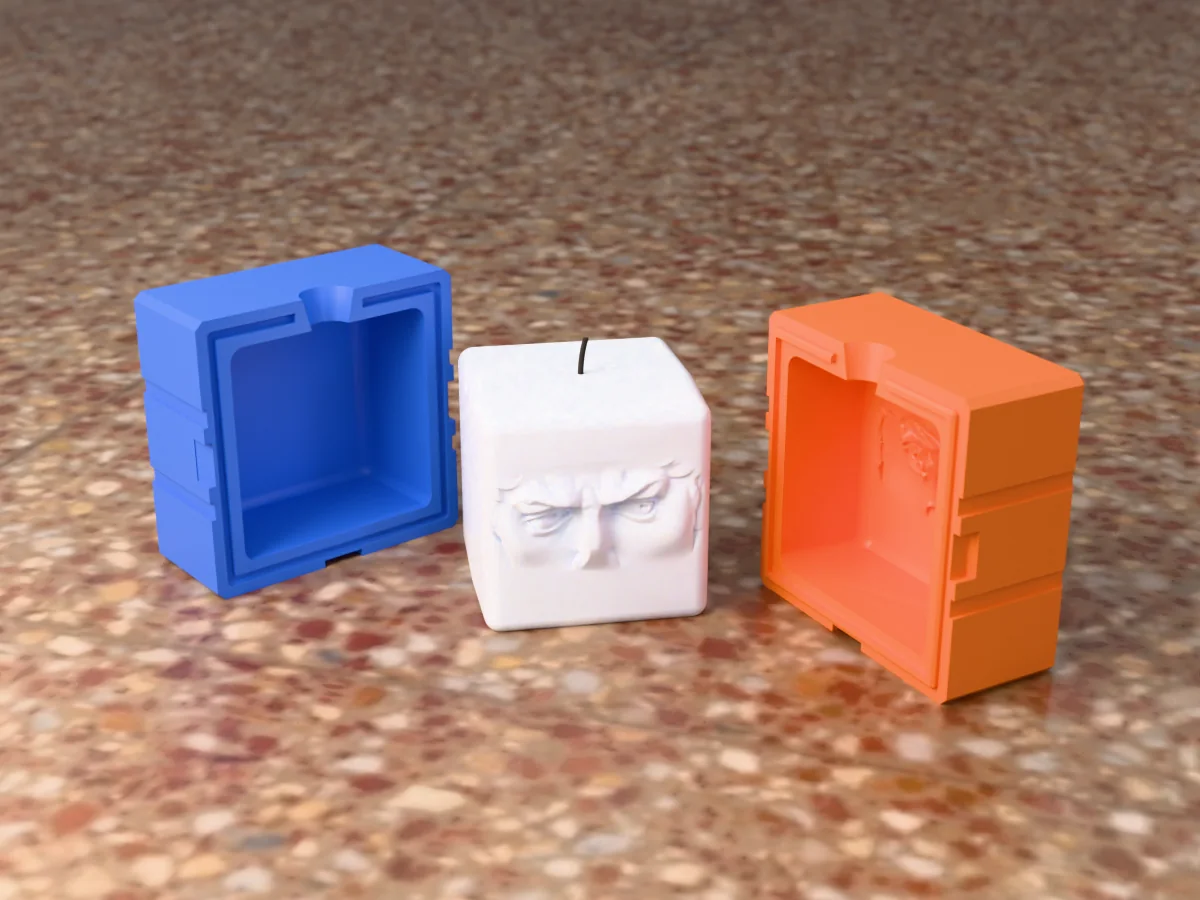
A 70 mm cube candle carrying the eyes of Michelangelo's David, from a museum scan. A rigid two-part print, no silicone.