◆ Concrete
Ribbed concrete vase mold
Reusable two-part mold with an inner core. Cast a ribbed vase or planter in concrete.
◆ Concrete
Reusable two-part mold with an inner core. Cast a ribbed vase or planter in concrete.
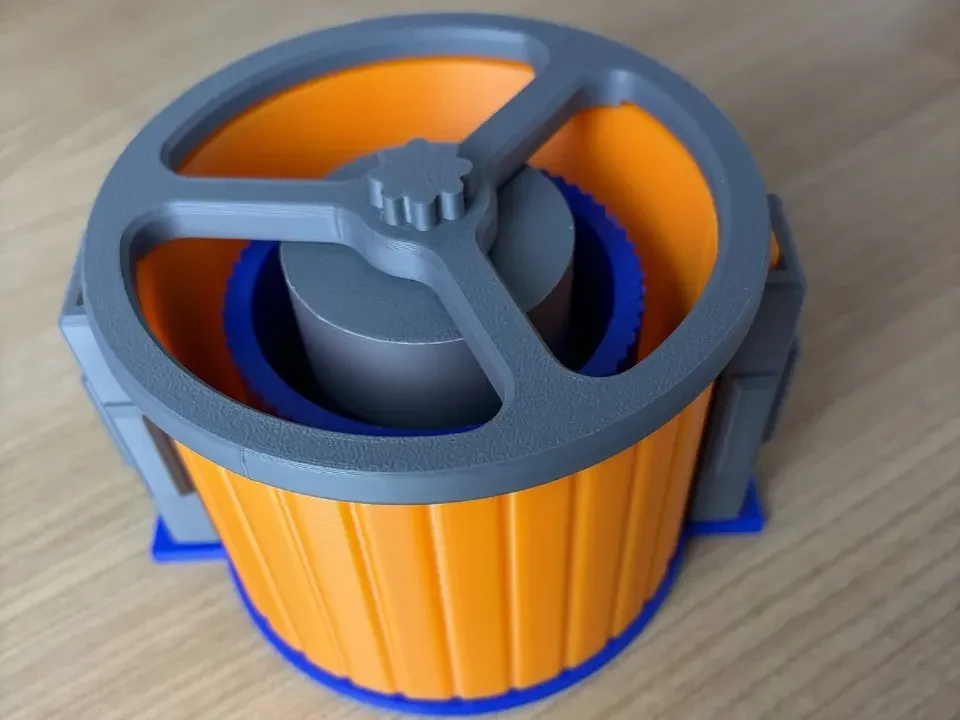
A reusable mold for casting a ribbed vase or planter. The outer shell has a fluted wall that keeps it stiff under the weight of a full pour, and an inner core hangs down the middle to hollow the casting out, so what you demold is a vessel rather than a solid block.
It works with concrete, cement, plaster, Jesmonite and resin. What comes out can be a vase, a planter, a pen pot, a brush holder or a candle holder, depending on how you finish it.
The spoked top ring drops over the shell and holds the core centred, and the side clamps squeeze the seam shut while the cast cures. The seam is the one thing worth being fussy about: a clamp left loose is how you get a fin of concrete down the side of the vase.
The whole mold is 87 x 87 x 72 mm, so it fits on any print bed. It is genuinely reusable, because nothing in a concrete pour attacks PLA or PETG and the parts lift off the cast rather than being broken away, but only if you use release agent every single time.
Seat the outer shell on the base plate, drop the inner core in, and fit the spoked ring over the top so the core sits centred.
Clamp the seam shut on both sides and check it is properly closed before you mix anything.
Coat every inside surface with release agent, the core included.
Mix a little wetter than you would for a slab, and pour into the gap between the shell and the core in two or three stages rather than one.
Tap or vibrate the mold after each stage so the trapped air rises. This is what decides whether the finished vase has pinholes in it.
Let it cure, then unclamp, lift the core straight up and out, and open the shell.
Print details
| Cast material | Concrete |
|---|---|
| Printed parts | 9 |
| Size (W x D x H) | 87 x 87 x 72 mm |
| Filament | ~314 g |
| Layer height | 0.2 mm |
| Infill | 15% |
| Supports | Not needed |
| Added | 2026-08-07 |
Made with the free Vase & planter mold generator. Upload your own model and get the same kind of mold built around it, in your browser.
Free download. Opens the MakerWorld listing.
Free for personal use. Selling the pieces you cast needs a commercial licence (Pro or Founder); passing on the file itself is not permitted on any plan. Full terms.
New to casting? Read the vase mold guide.
Not on its own. Concrete and plaster are both porous, so a vase filled with water weeps through the wall and marks whatever it is standing on. Seal the inside with a masonry or concrete sealer, or do what most people do and stand a glass tube or a jam jar inside it and put the water in that.
They are air bubbles trapped against the mold wall, and two things fix most of them. Mix slightly wetter than you think you need, and vibrate the mold after each pouring stage rather than only at the end. An orbital sander with no paper on it, held against the outside of the shell for a few seconds, brings a surprising amount of air up.
Yes, every cast. Concrete grips bare PLA harder than people expect, and the flutes on the inside of the shell give it plenty to hold on to. A thin coat of cooking spray, petroleum jelly or proper mold release is enough. Skipping it is the usual reason a printed mold gets damaged during demolding instead of lasting for dozens of casts.
Plaster is ready in a couple of hours and Jesmonite in about one, but concrete wants at least 24 hours before the rim will survive being handled, and it goes on gaining strength for weeks after that. Opening it early is the most common way a first cast gets ruined.
The shell is two halves, and every two-part mold leaves a witness line where they meet. Clamping harder makes it thinner. Whatever is left sands off in a minute with a sanding sponge once the cast is fully cured, and on a ribbed vase it tends to disappear into one of the flutes anyway.
Not from these files, which are one fixed size. The vase and planter mold generator that produced this one is free and in your browser, so you can upload your own vessel and get the same shell, core, ring and clamps built around it at whatever size you want.
 Concrete
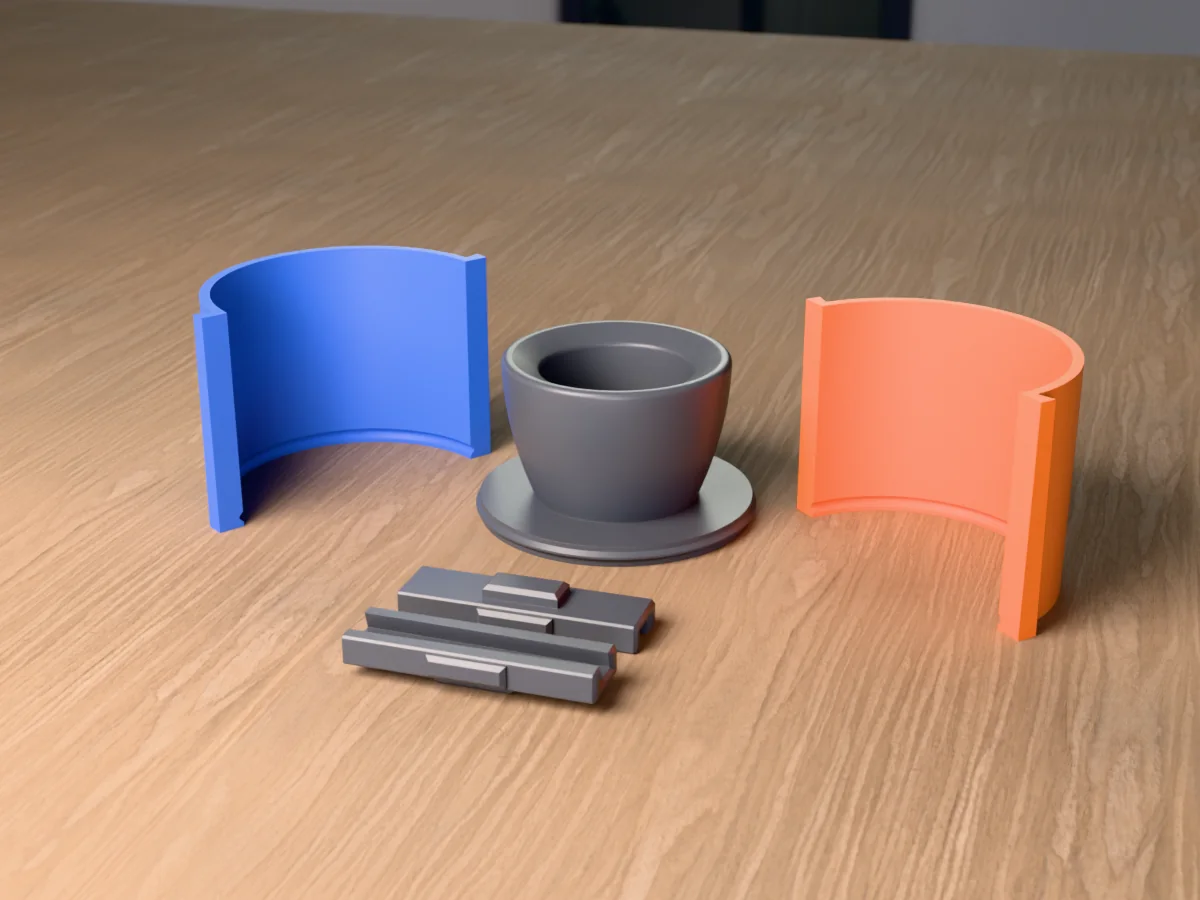
A round concrete tabletop fire bowl, 110 mm across, with a pocket for a standard gel fuel can. A silicone mold kit from printed parts.
 Concrete
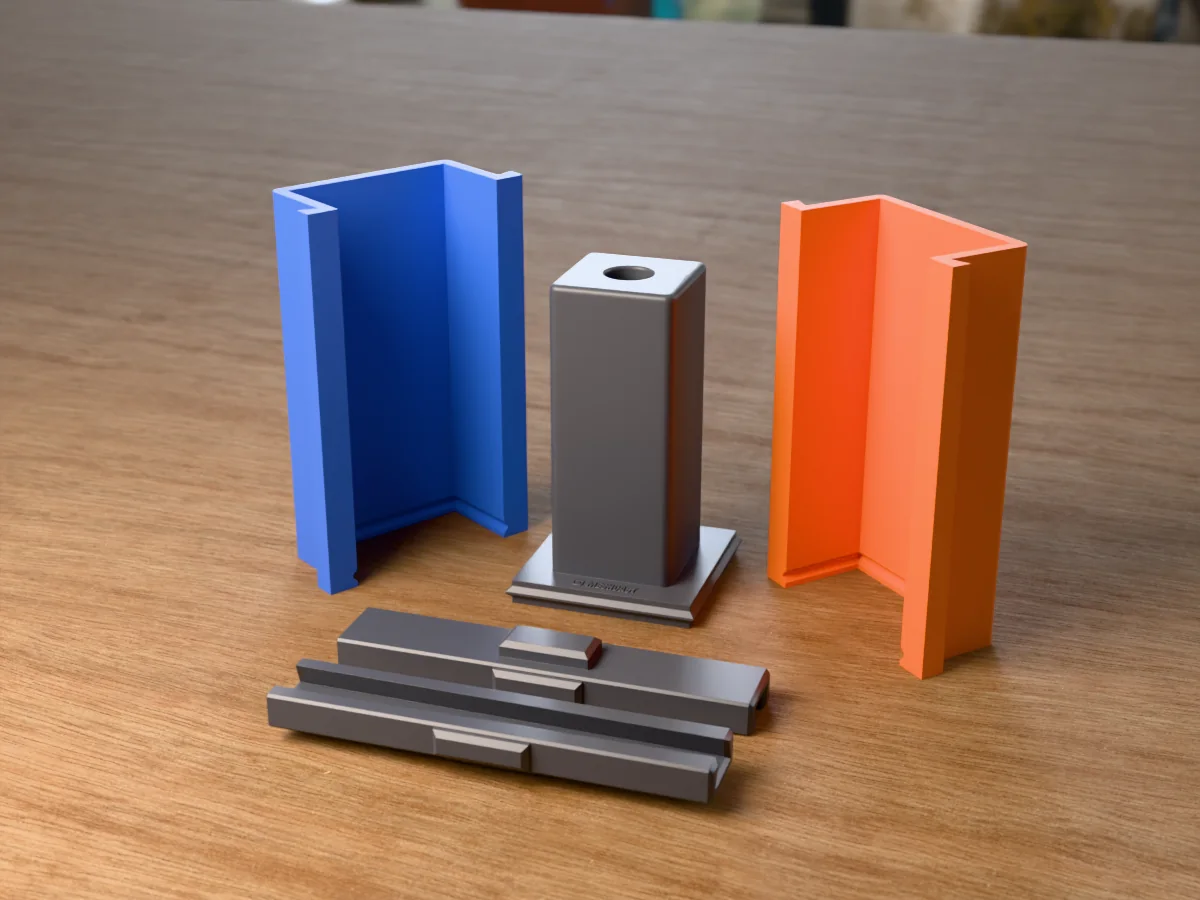
A square concrete bud vase with a glass test tube inside, 50 x 50 x 120 mm. A silicone mold kit from printed parts.
 Concrete
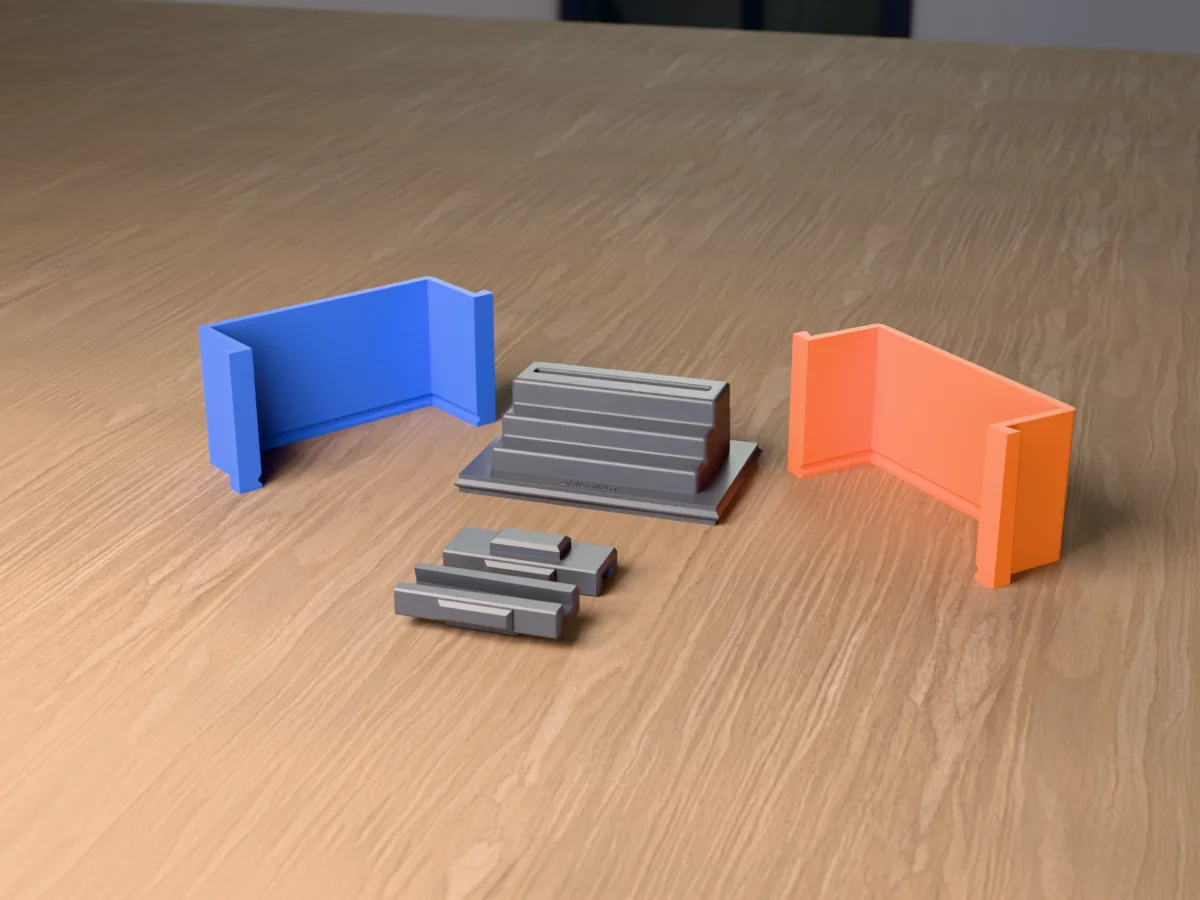
A concrete card holder shaped like a little staircase, with a slot for a business card, postcard or photo on the top step.
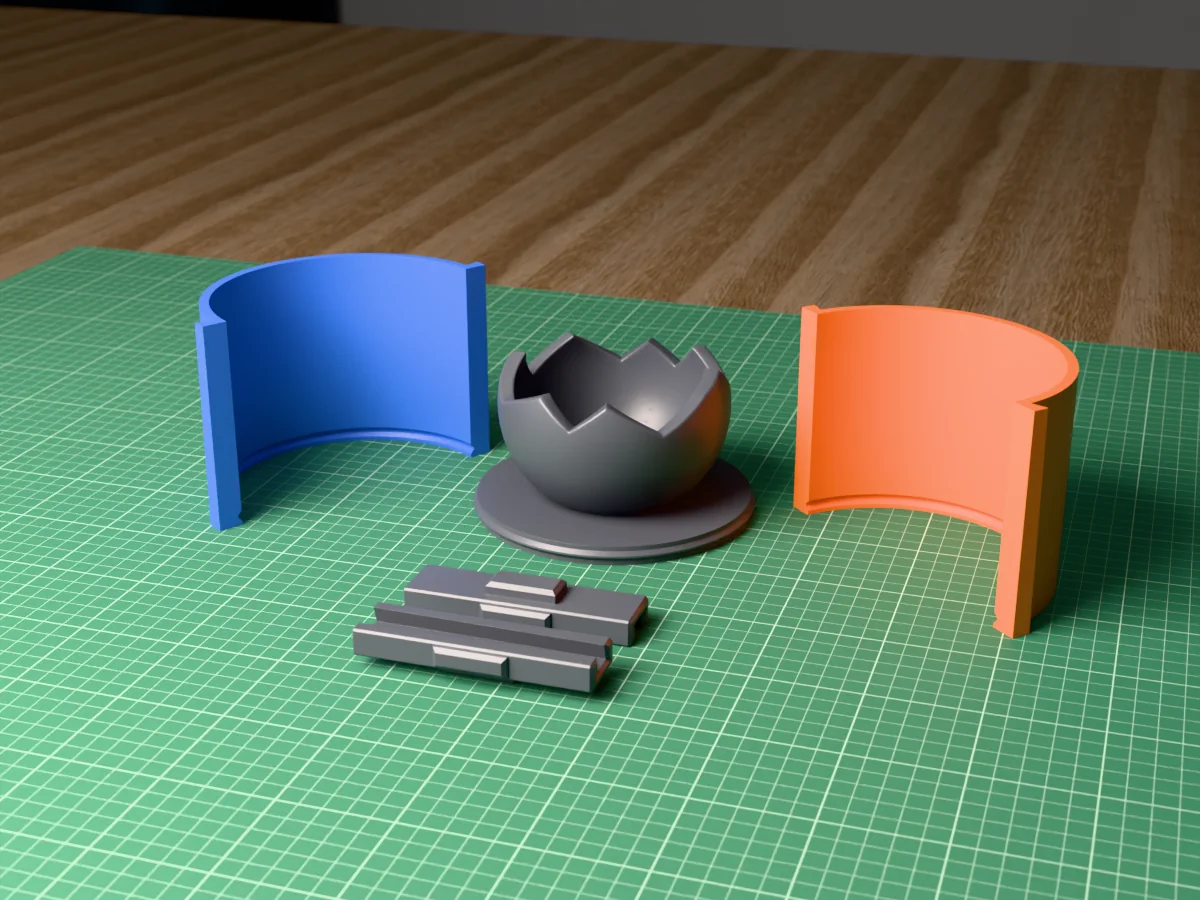 Concrete
A broken-open concrete sphere, 120 mm across, as a three-wick candle vessel. A silicone mold kit from printed parts.
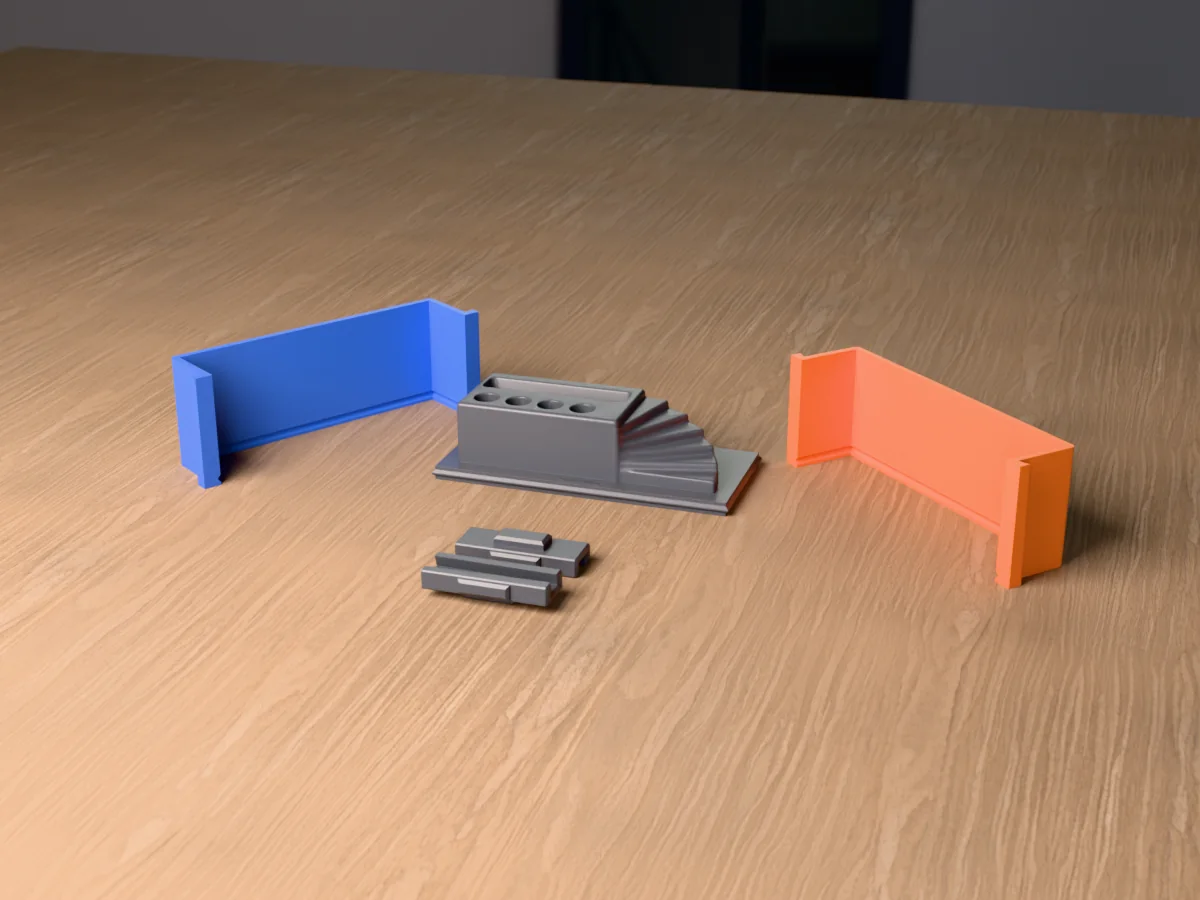 Concrete
An architectural concrete desk organizer: pen holes, a phone slot and a spiral staircase winding down its end.
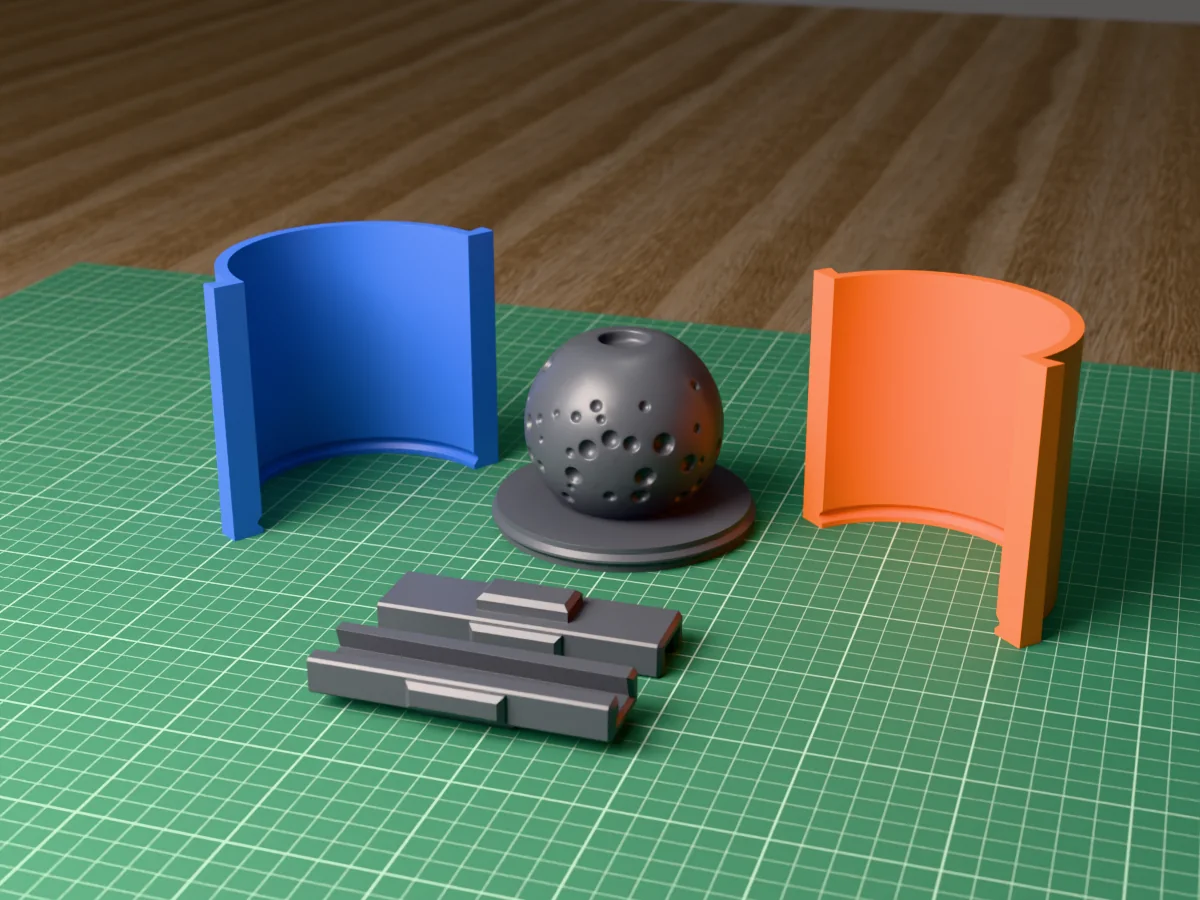 Concrete
An 80 mm lava stone look incense sphere in concrete, pitted all over, with a well on top for a cone. A silicone mold kit from printed parts.
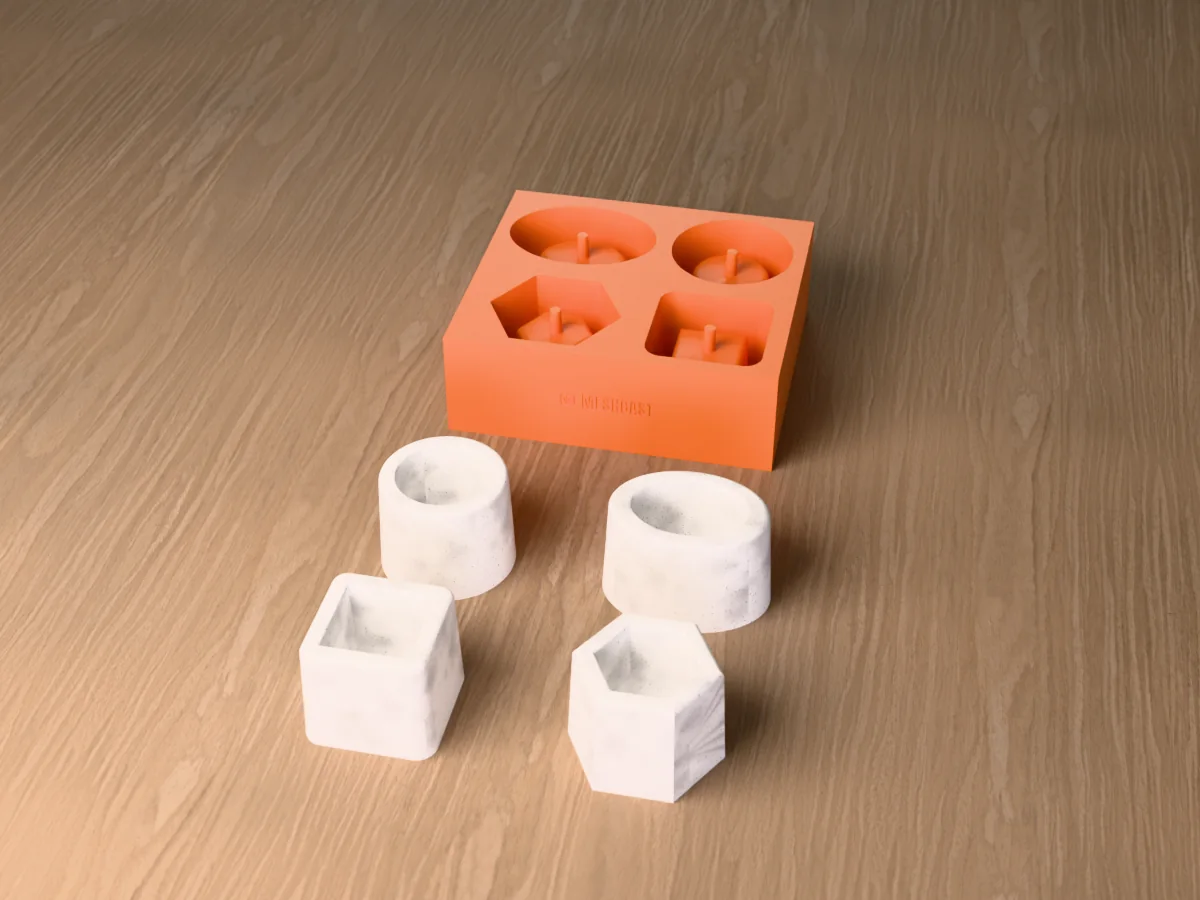 Concrete
Four mini concrete succulent pots, oval, round, hexagon and square, each with a drainage hole, cast straight in one printed tray.
 Concrete
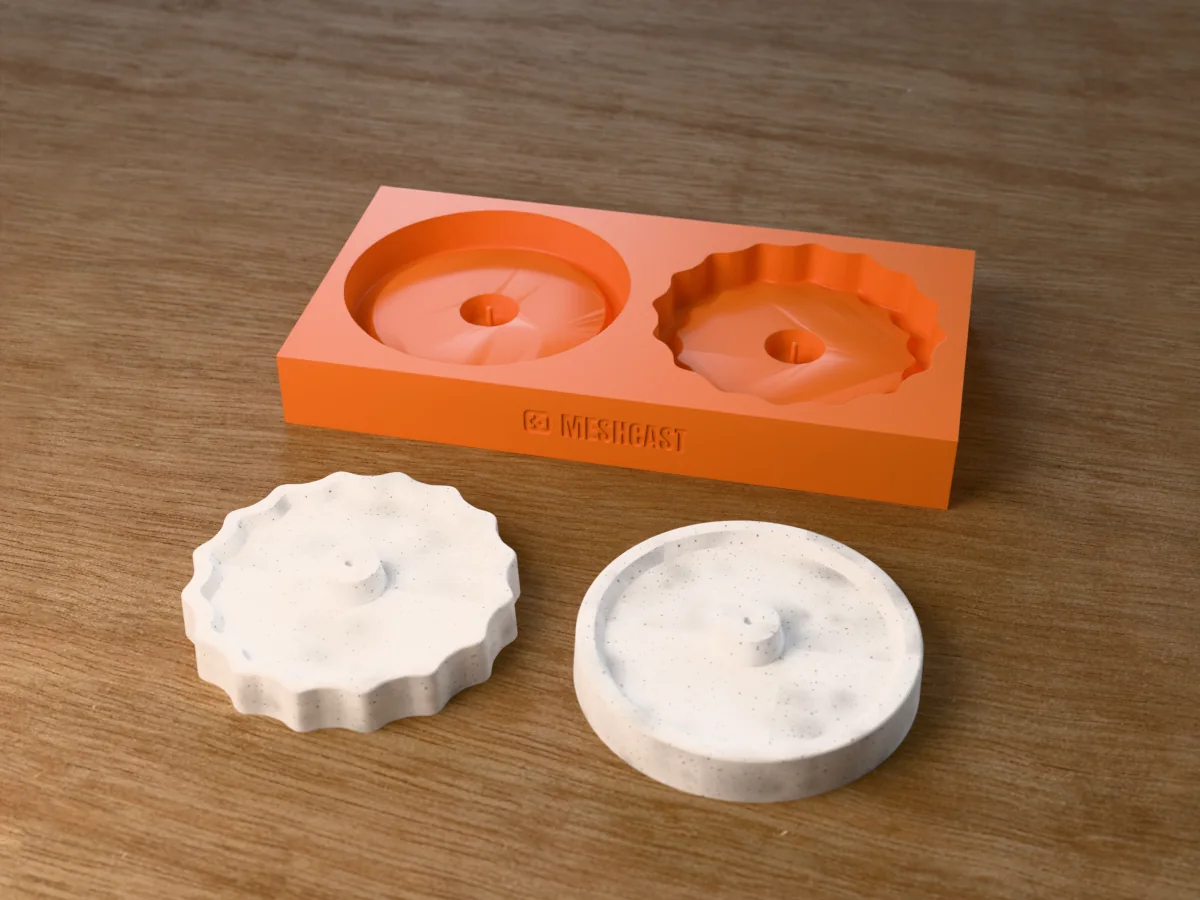
Two 90 mm concrete incense holder discs, one plain and one with a gear edge, each with a raised stick holder, cast in one printed tray.