◆ Mold library
Concrete mold STL files
Printable molds and silicone mold kits for concrete coasters, planters, soap dishes and sculptures.
◆ Mold library
Printable molds and silicone mold kits for concrete coasters, planters, soap dishes and sculptures.
7 designs · print times from 10 h 33 min
Pro early access
Concrete
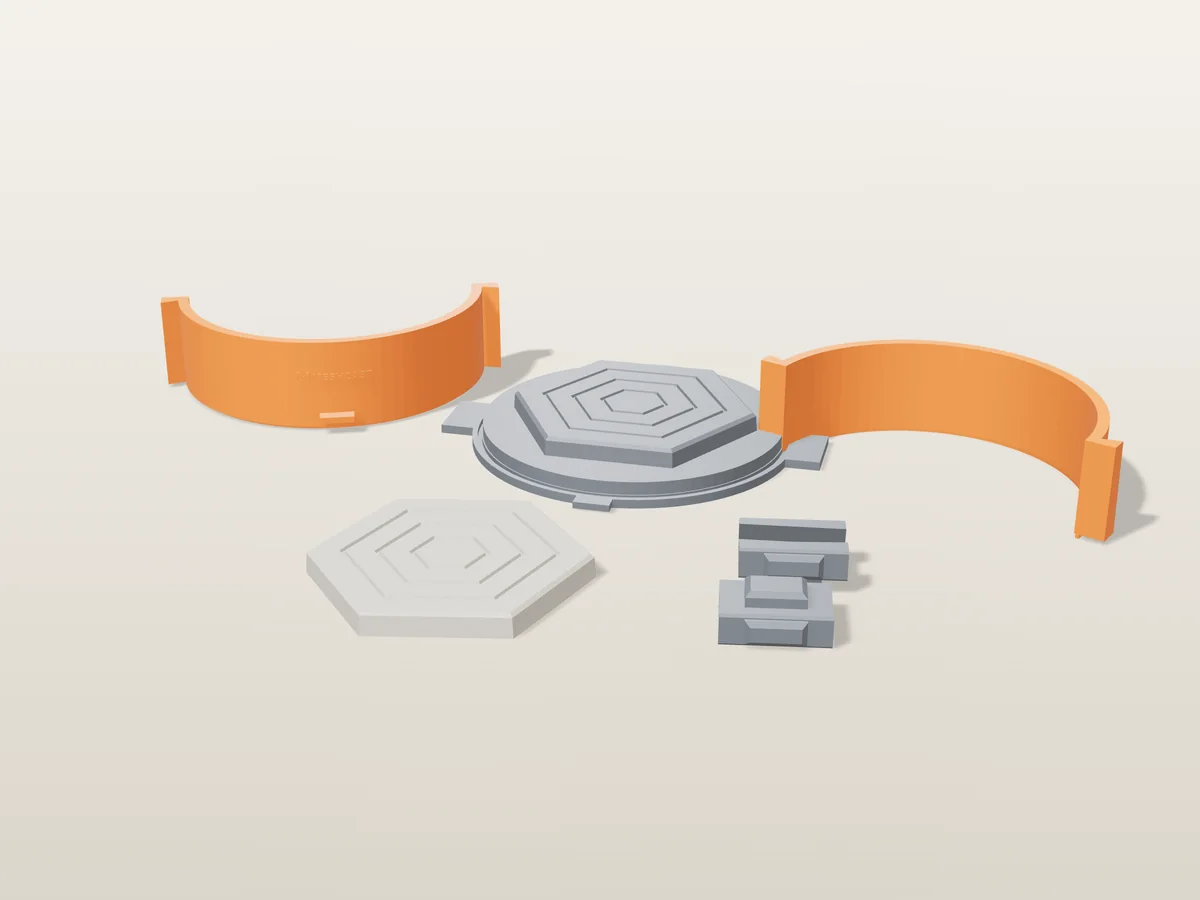
A 100 mm hexagon coaster with three nested grooves, as an open-face silicone mold.
Concrete
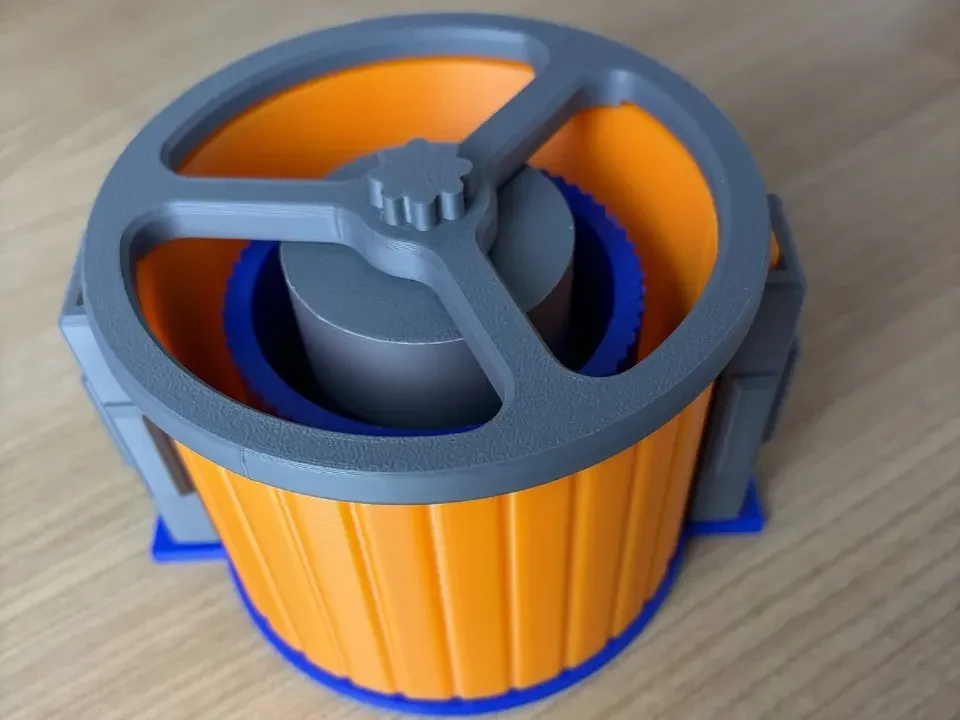
Reusable two-part mold with an inner core. Cast a ribbed vase or planter in concrete.
Pro early access
Concrete
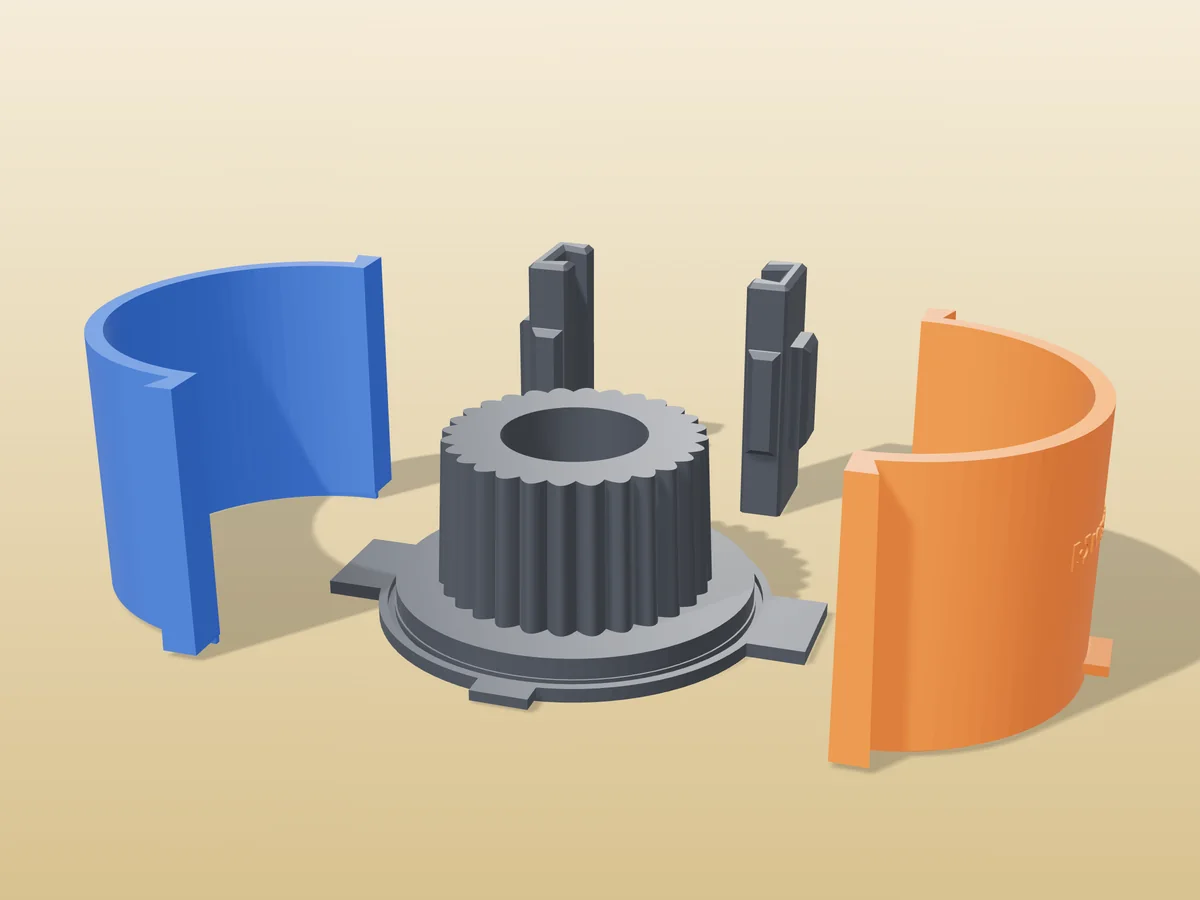
A fluted concrete tealight holder, 78 mm across, as a silicone mold from printed parts.
Pro early access
Concrete
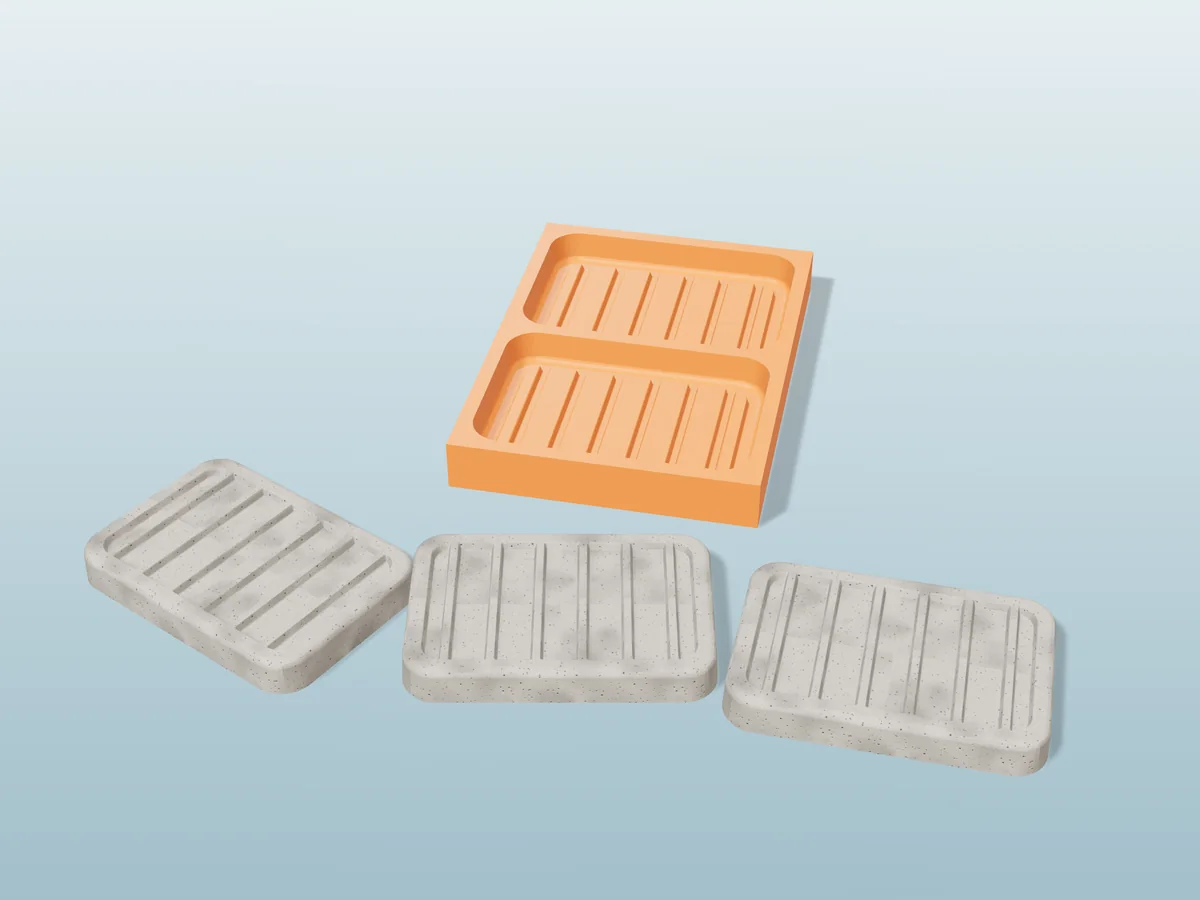
Two concrete soap dishes with a rim and drain ridges, cast straight in a printed tray.
Pro early access
Concrete
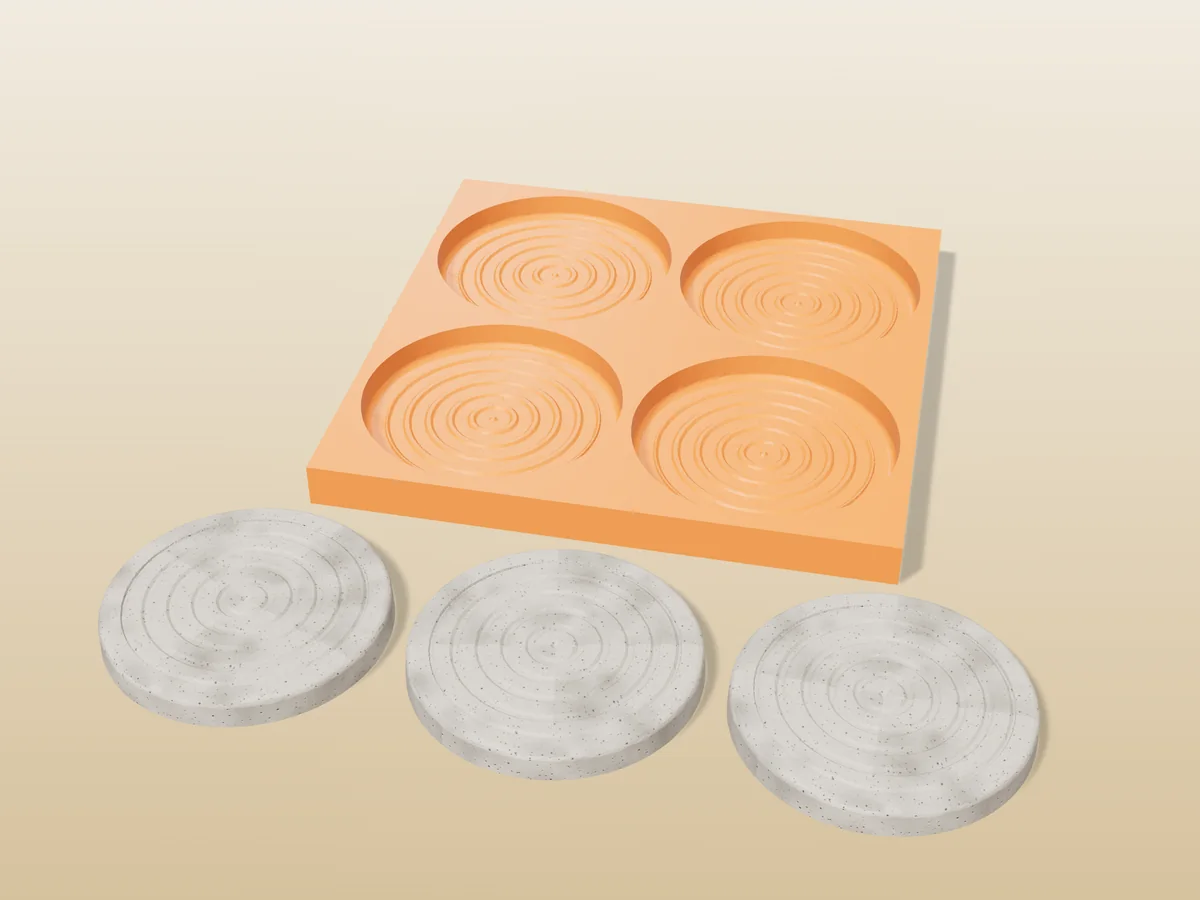
Four round concrete coasters with ripple grooves, cast straight into a printed tray.
Pro early access
Concrete
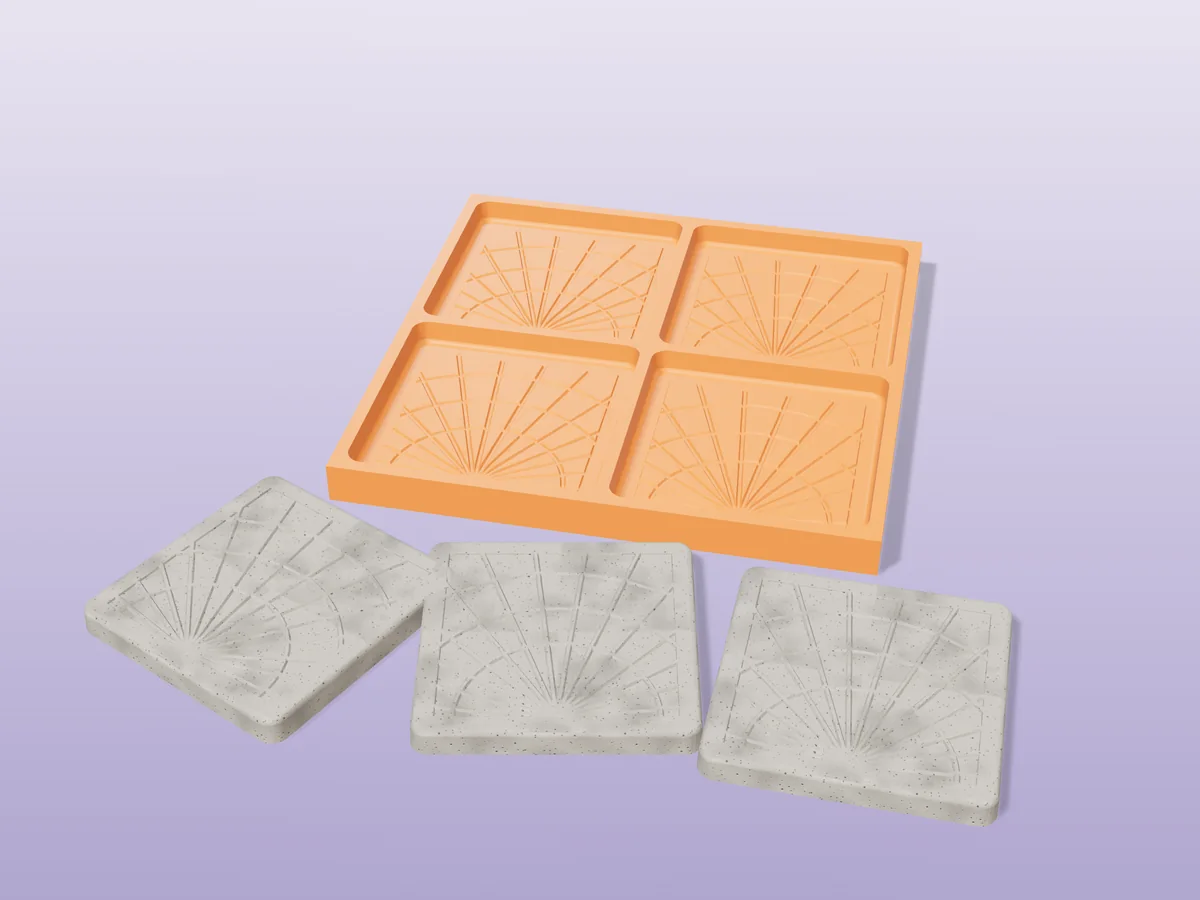
Four square art deco coasters with a sunburst in the face, cast in a printed tray.
 Pro early access
Concrete
Pro early access
Concrete
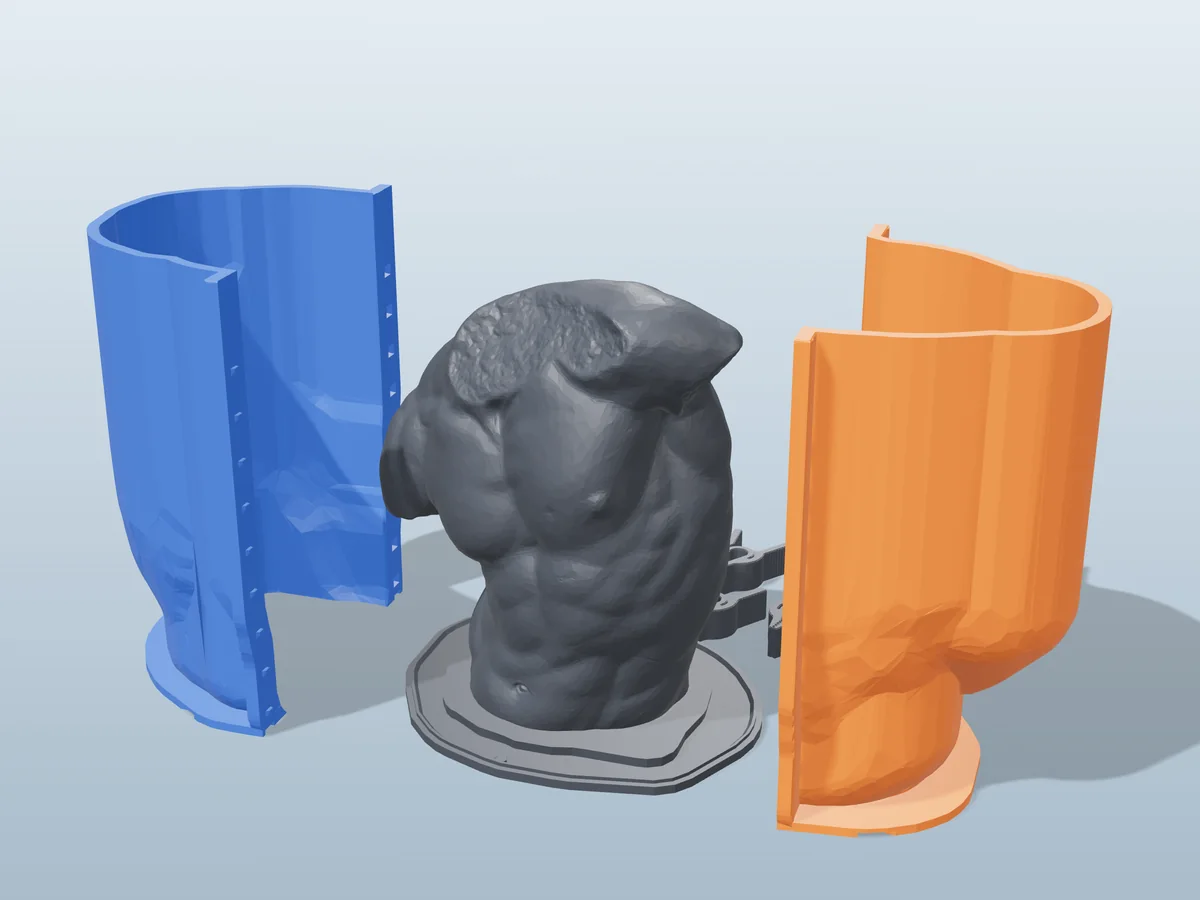
Cast a 140 mm classical male torso in concrete or plaster. Silicone mold kit.
Concrete is heavy, abrasive and alkaline, so most of these designs do not have you pour it straight into a print. They give you a printed master and housing, you pour a flexible silicone mold once, and cast concrete in the silicone as often as you like. Silicone bends out of fine detail and textured faces that would lock into a rigid PLA mold.
Use a fine casting mix or a cement with a small aggregate, vibrate or tap out the bubbles, and give it at least 24 hours before you demold. Each card lists what it casts, the print time and the footprint.
Questions
You can, for simple shapes with plenty of draft, sealed and coated with release. For anything with texture or detail, cast concrete in a silicone mold made from the printed kit: it demolds without breaking edges and lasts far longer.
A fine casting or countertop mix, or cement with fine sand only. Coarse aggregate cannot fill thin sections and leaves holes on the face. Mix it like thick yoghurt and tap the mold for a minute to bring the air out.
At least 24 hours for small pieces at room temperature, longer when it is cold. Keep the cast covered so it does not dry out on top, and let it cure a few more days before it takes a load or water.
Yes. Upload any STL to the free silicone mold maker and it builds the housing for a silicone mold around it. For pots and planters, the vase mold maker adds a tapered core so the cast comes out hollow.