◆ Mold library
Ice cube and popsicle mold STL files
Rose cubes, big cocktail cubes, hearts, popsicles and frozen dog treats, cast in food-safe silicone you pour yourself.
◆ Mold library
Rose cubes, big cocktail cubes, hearts, popsicles and frozen dog treats, cast in food-safe silicone you pour yourself.
8 designs · print times from 2 h 30 min
Ice
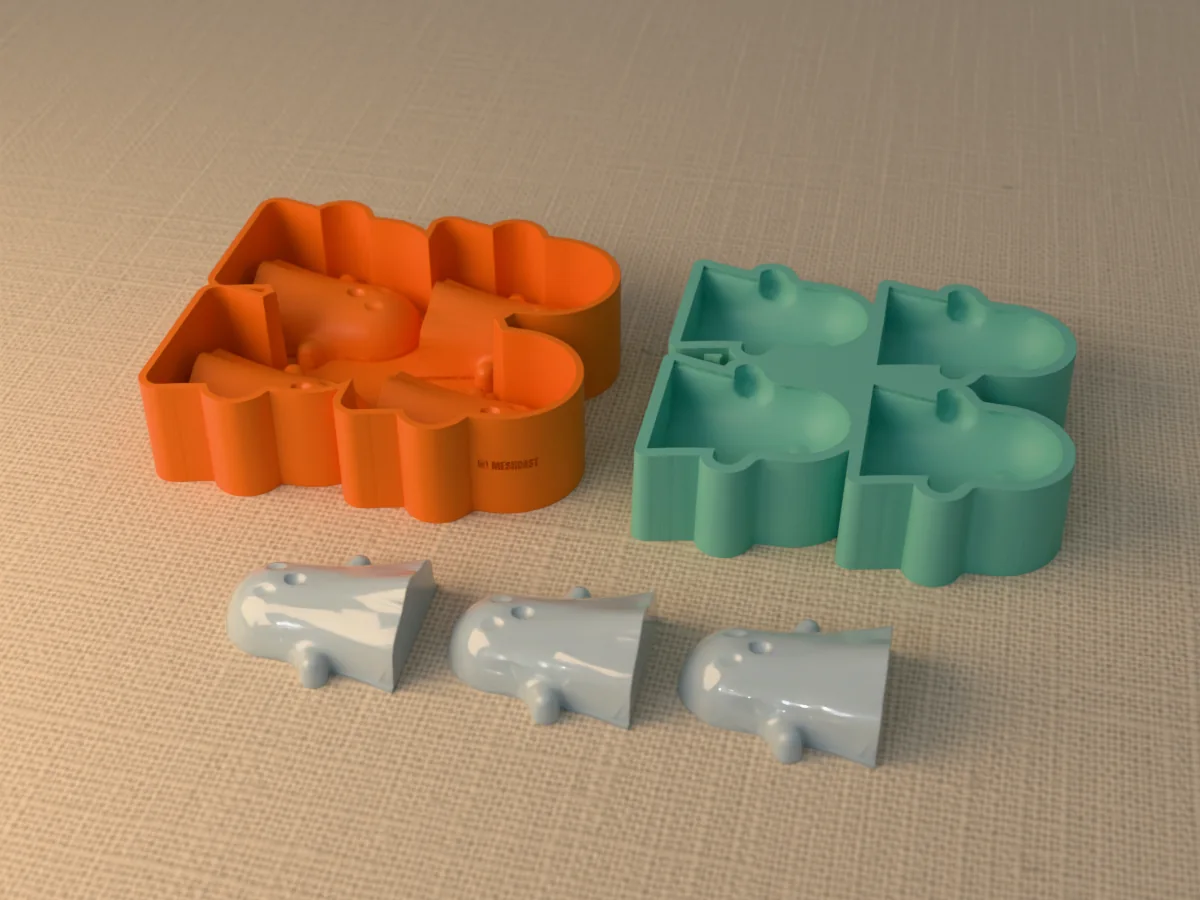
Four little ghost ice cubes per tray, eyes and an "o" mouth included. A food-safe silicone Halloween ice mold you make yourself.
Ice
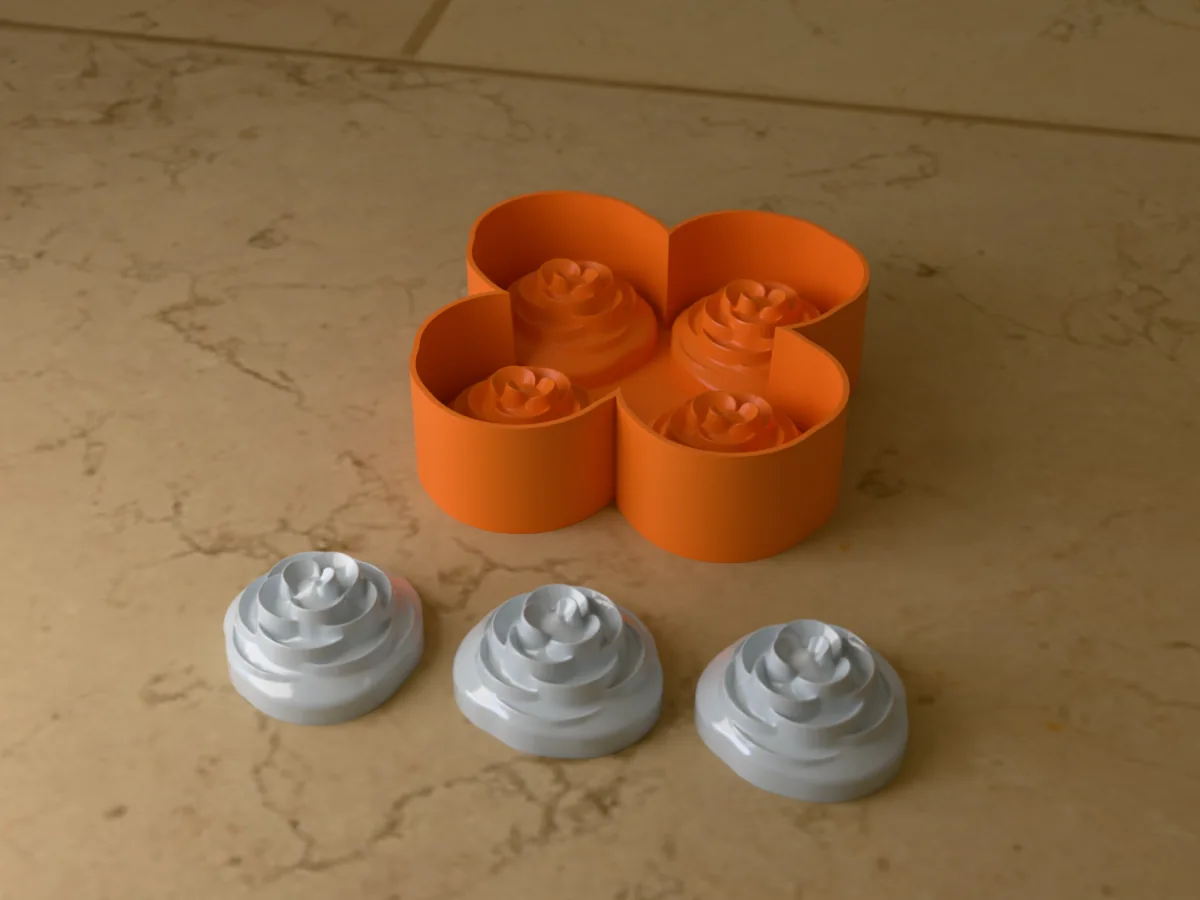
Four big rose ice cubes per tray. A food-safe silicone mold you make yourself, petals and all.
Ice
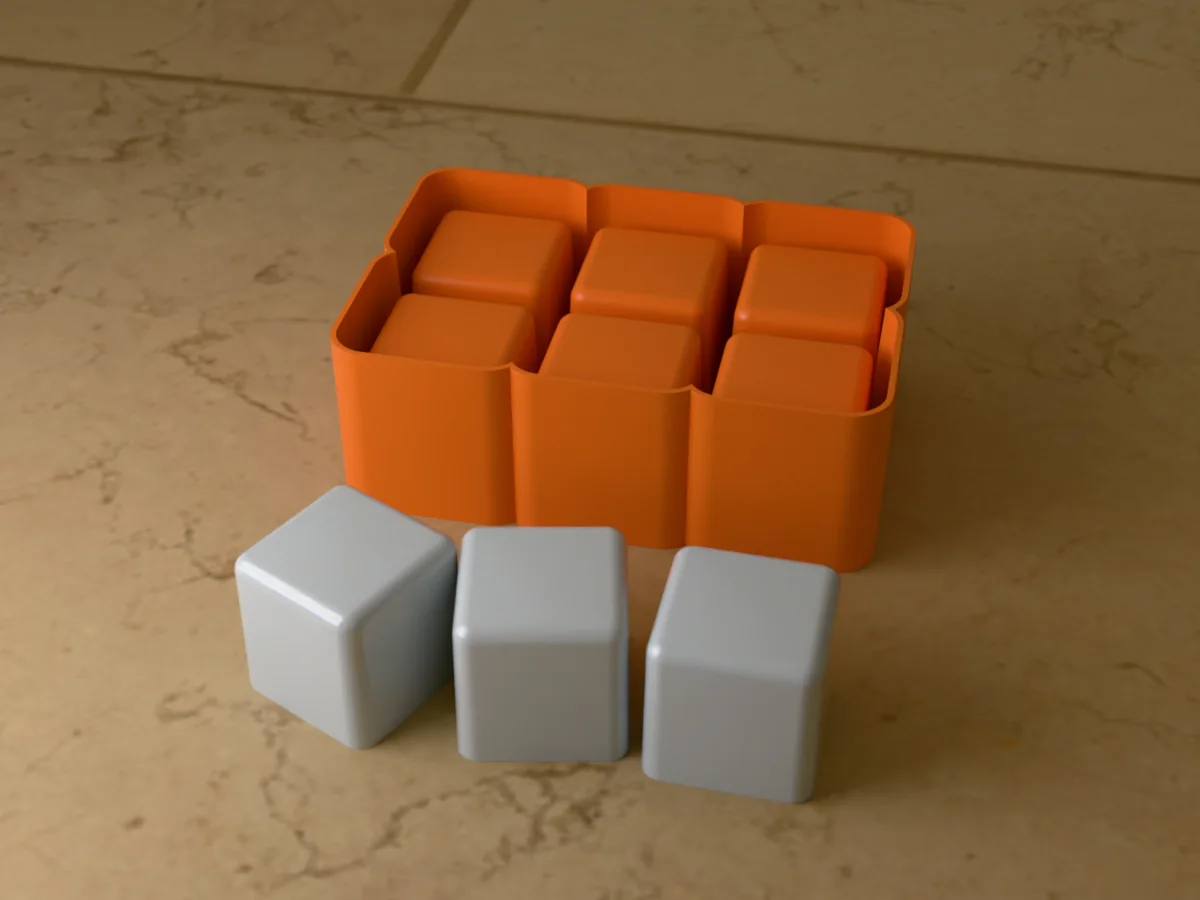
Six 2 inch whiskey ice cubes per tray. A food-safe silicone mold you make yourself.
Ice
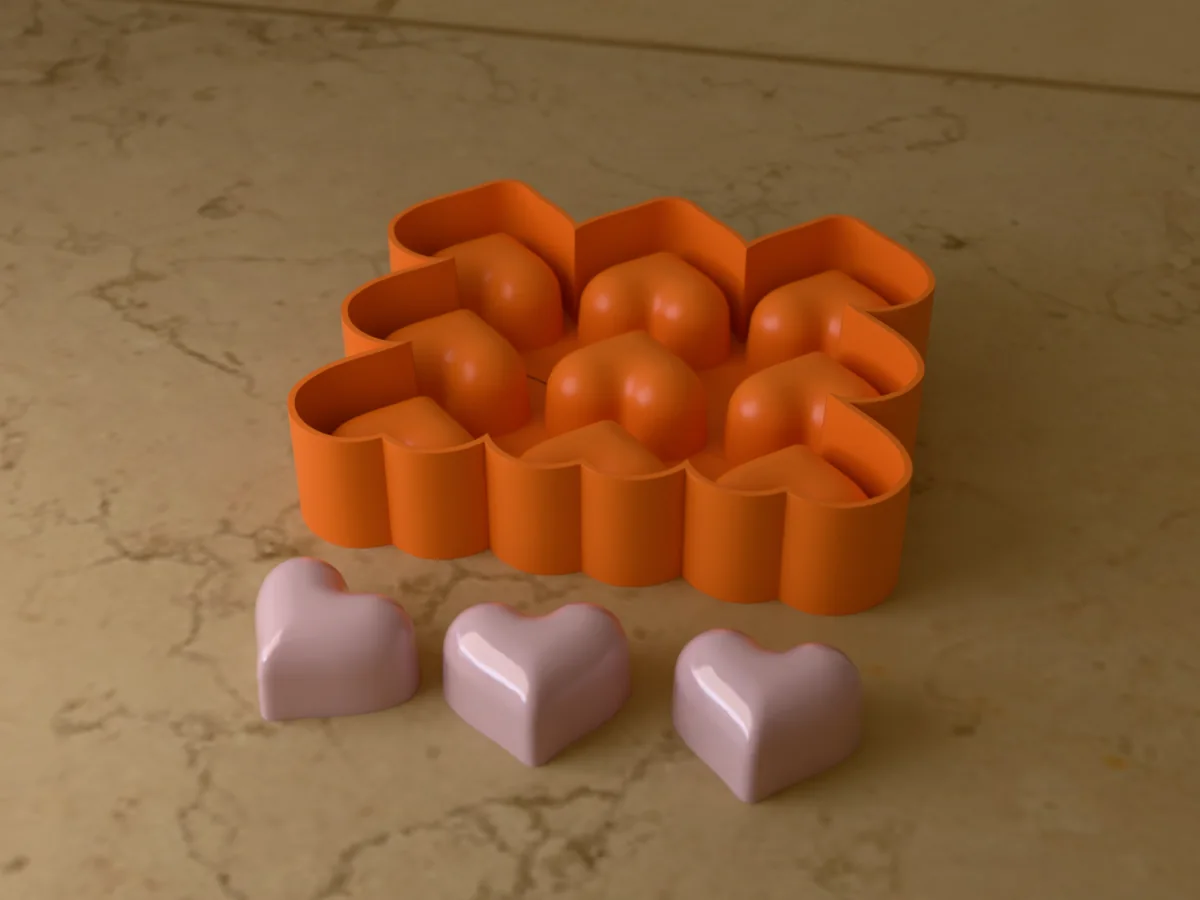
Nine puffy heart ice cubes per tray. A food-safe silicone mold for Valentine's drinks.
Ice
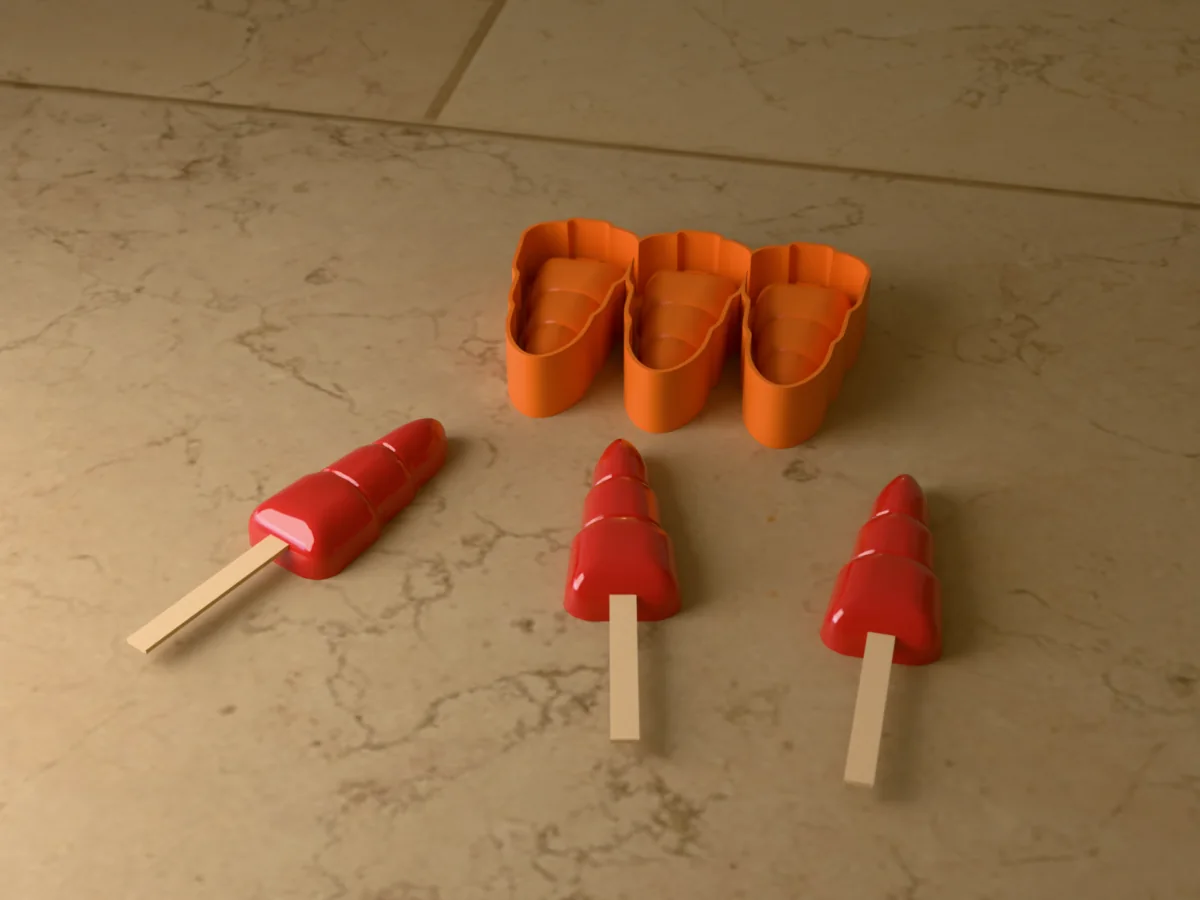
Three rocket popsicles per batch, stick grooves included. A food-safe silicone mold you make yourself.
Ice
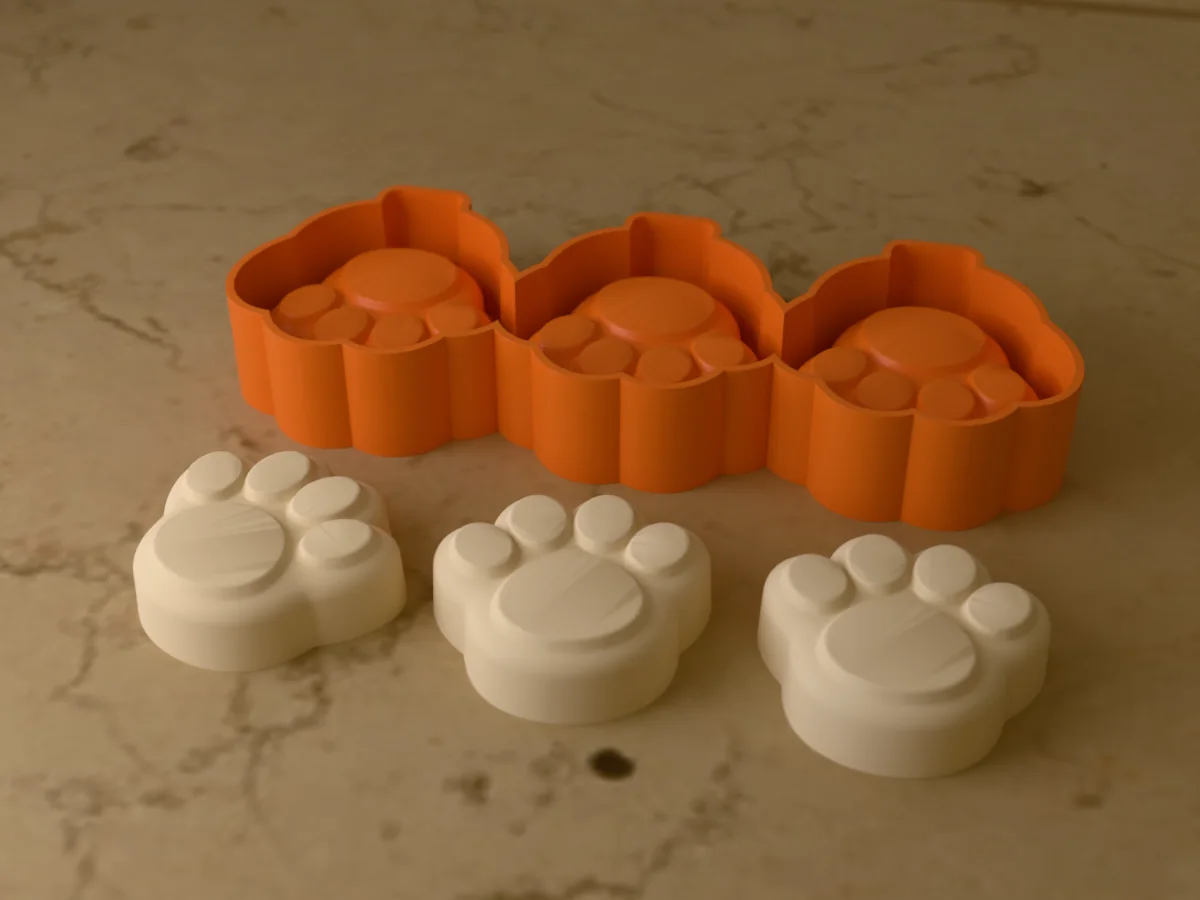
Three paw print pupsicles per batch, with a groove for a chew stick. A food-safe silicone mold.
 Ice
Ice
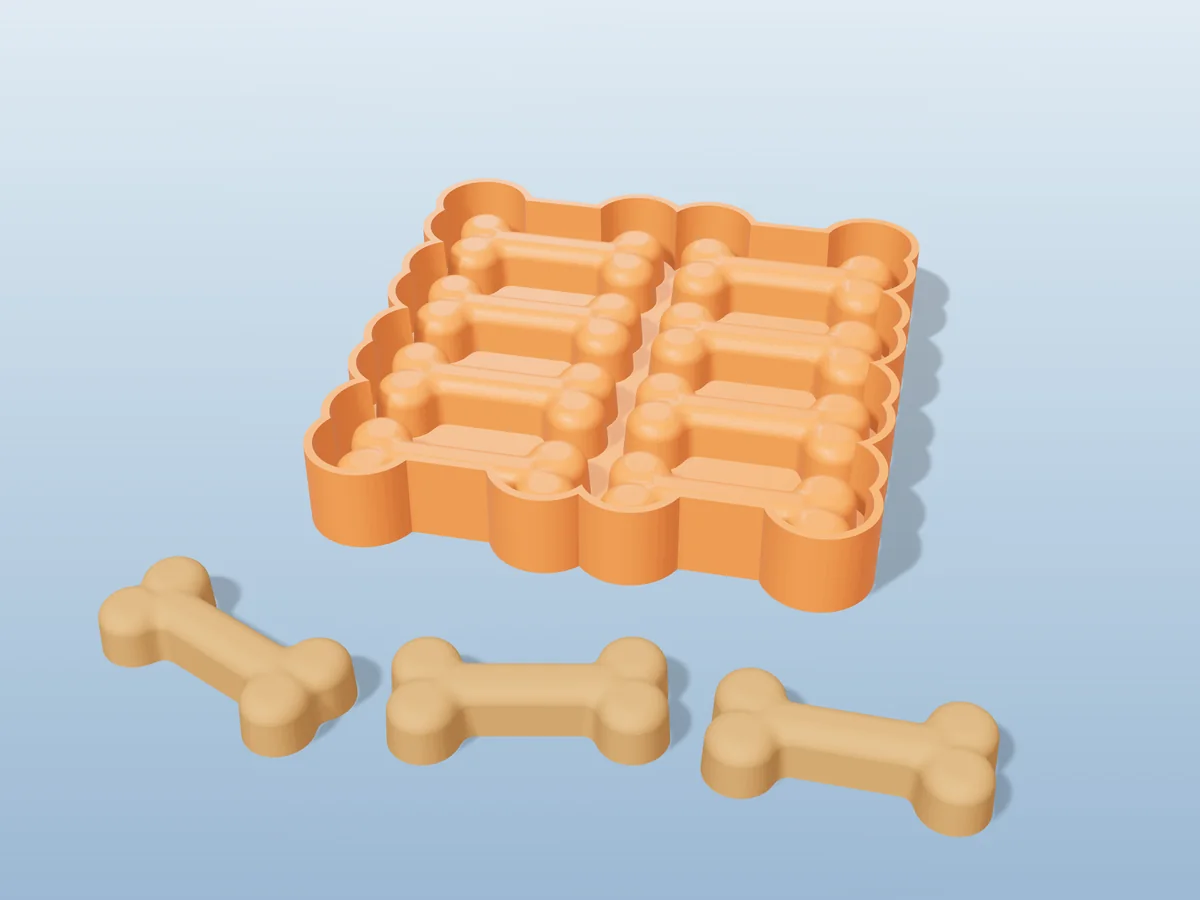
Eight dog bone treats per batch, from a silicone tray you pour yourself.
 Ice
Ice
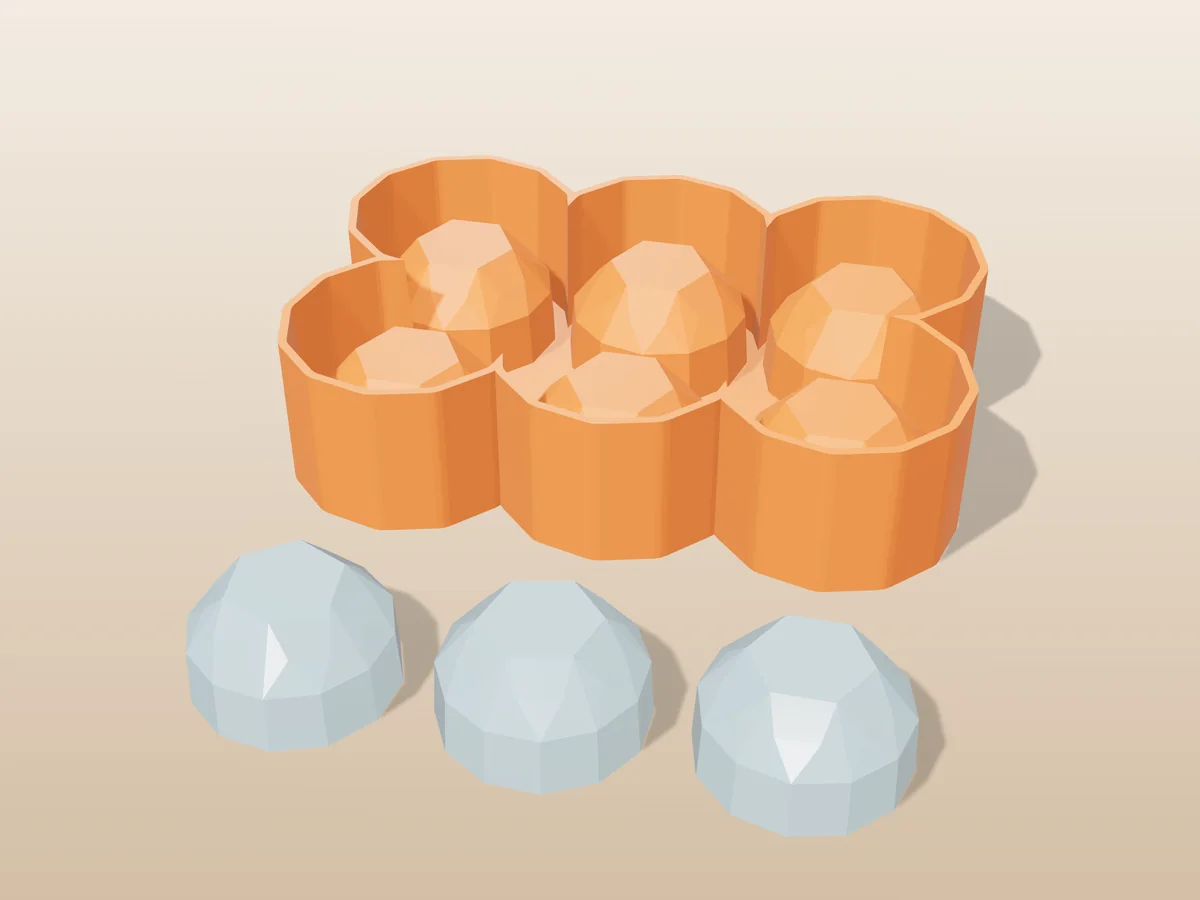
Six big brilliant-cut ice cubes, the kind that makes a drink look expensive.
Ice is the one thing you should never freeze straight in a printed part: water sits in the layer lines and stays there between uses. So every design here is a caster. You print it, pour a food-safe platinum silicone into it, and the flexible silicone tray that comes out is what holds the water, juice or treat mix. The printed part never touches food.
Silicone also solves demolding. Ice expands as it freezes and grips a rigid tray, but a flexible one twists and the cubes pop out whole, even a rose with every petal. Fill to just under the rim, freeze flat, and run the back of the tray under the tap for a second if a cube sticks.
The popsicle molds take a standard wooden stick through a slot in the lid, and the dog treat molds are sized for frozen yogurt or broth bites.
Questions
A print is made of layers, and the tiny valleys between them hold water and bacteria that no wash reaches. A smooth food-safe silicone tray cast from the print has no layer lines, goes in the dishwasher and flexes so the ice comes out.
A platinum-cure silicone sold as food-safe, around Shore 20A to 30A. Tin-cure silicone is not rated for food. Let it cure fully and wash the tray once before the first use.
Boil the water twice and let it cool, or freeze it slowly in an insulated box so it freezes from the top down. Most cloudiness is trapped air and minerals pushed to the middle of the cube.