◆ Mold library
Fishing lure mold STL files
Hand-pour soft plastic bait molds: worms, grubs, craws, creature baits and trailers.
◆ Mold library
Hand-pour soft plastic bait molds: worms, grubs, craws, creature baits and trailers.
10 designs · print times from 1 h 40 min
Soft plastic
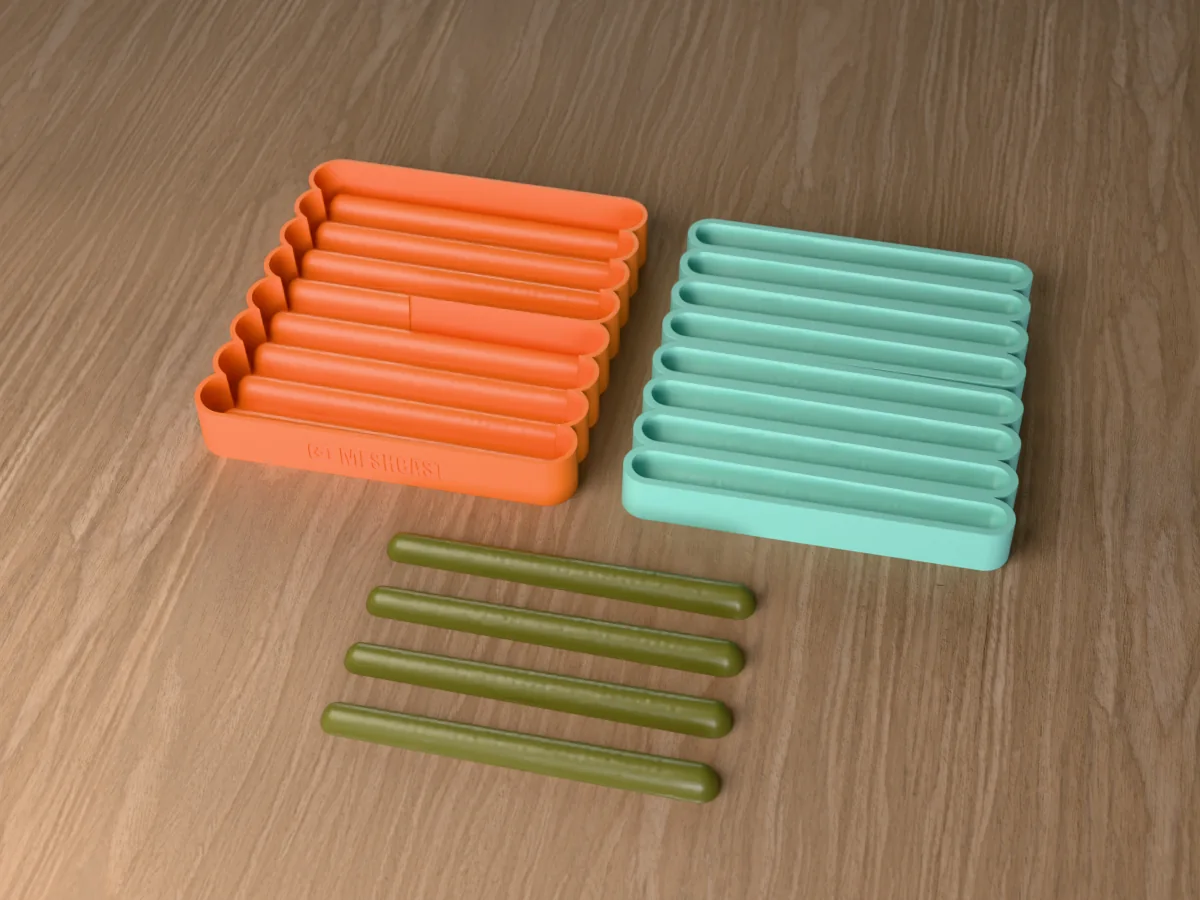
Eight 5 inch stick baits per pour, the do-nothing worm for wacky and Texas rigs. A silicone lure mold you make yourself.
Soft plastic
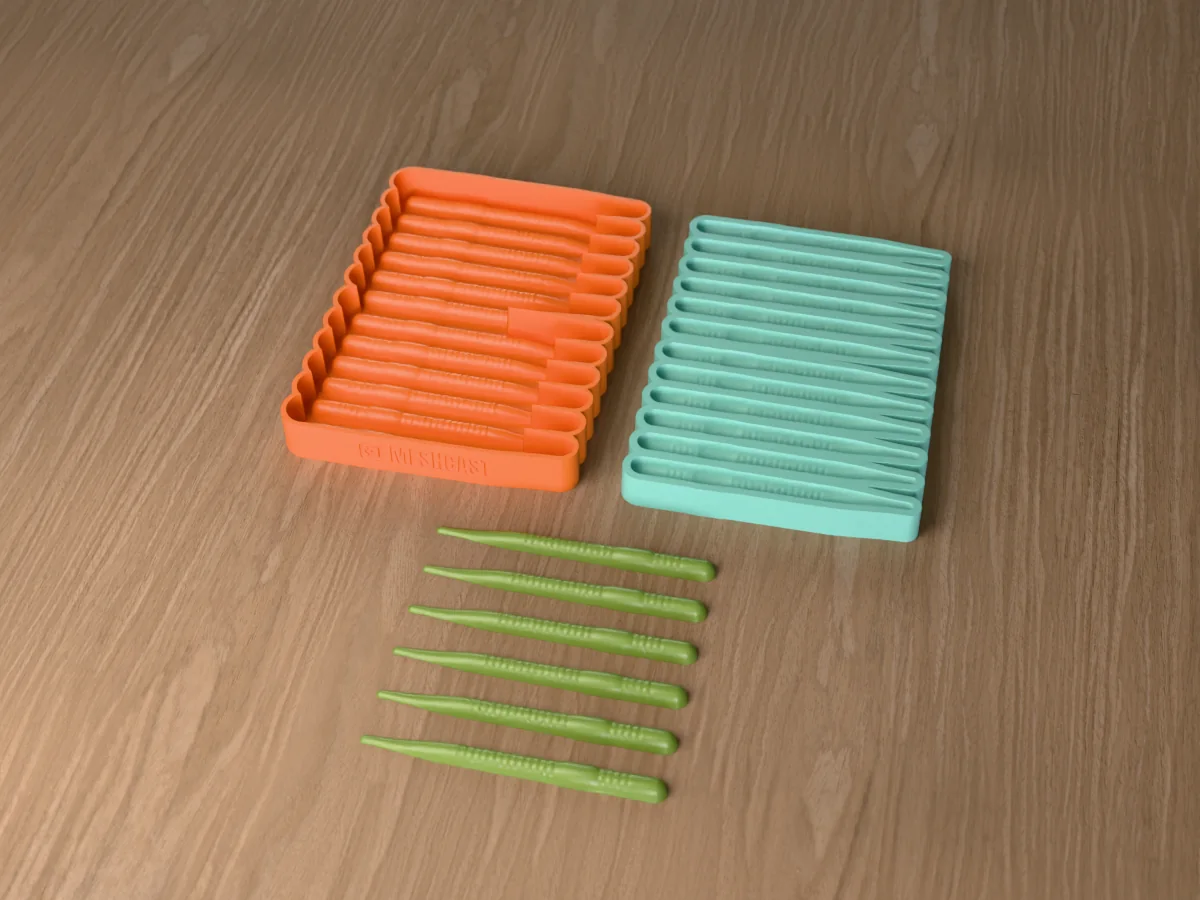
Twelve 4 inch finesse worms per pour, ringed with a flat tail, for drop shot and shaky head. A silicone lure mold.
Soft plastic
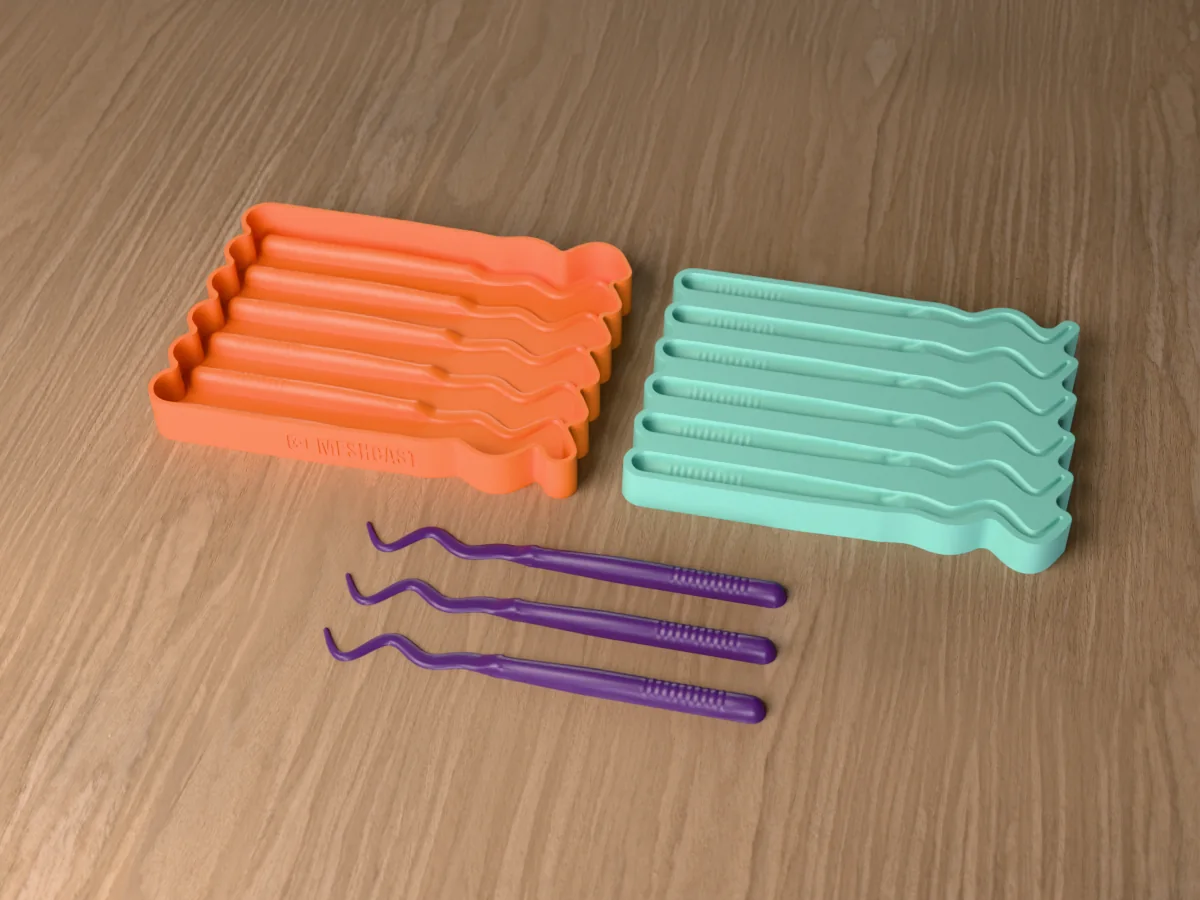
Six 6 inch ribbon tail worms per pour, the long curly tail that swims on a slow retrieve. A silicone lure mold.
Soft plastic
Sixteen 2.75 inch ned rig baits per pour, ringed with a flat tail that stands up off the bottom. A silicone lure mold.
Soft plastic
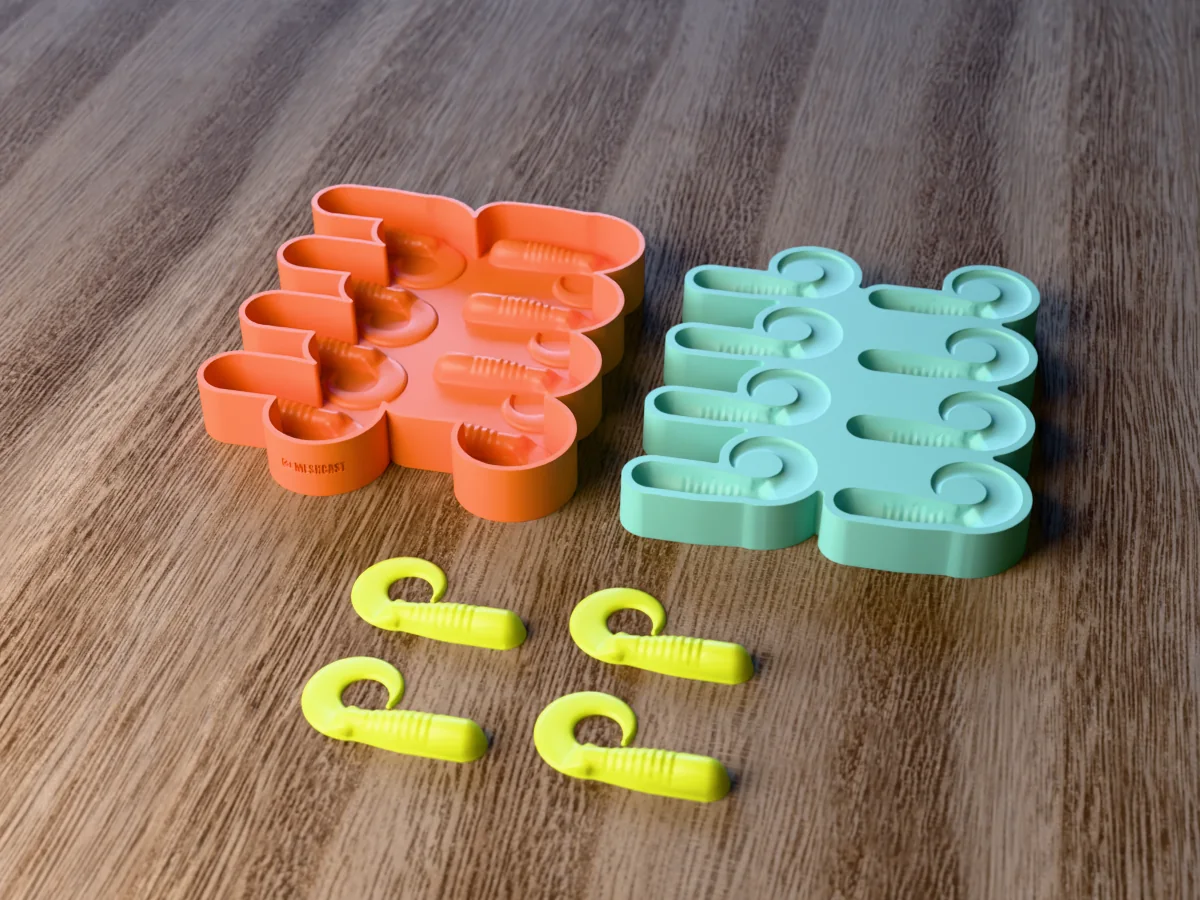
Eight 3 inch curly tail grubs per pour, a ringed body and a flat tail curled once round. A silicone lure mold.
Soft plastic
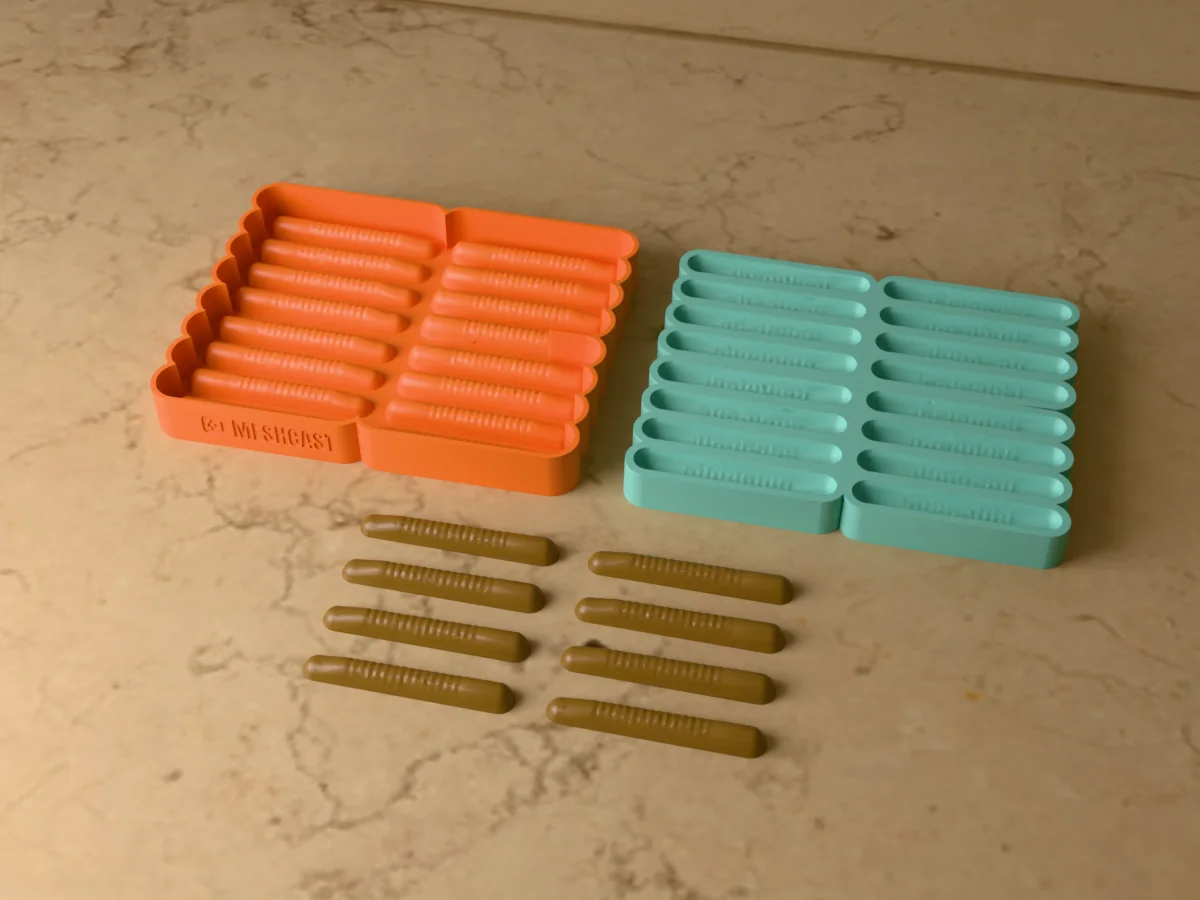
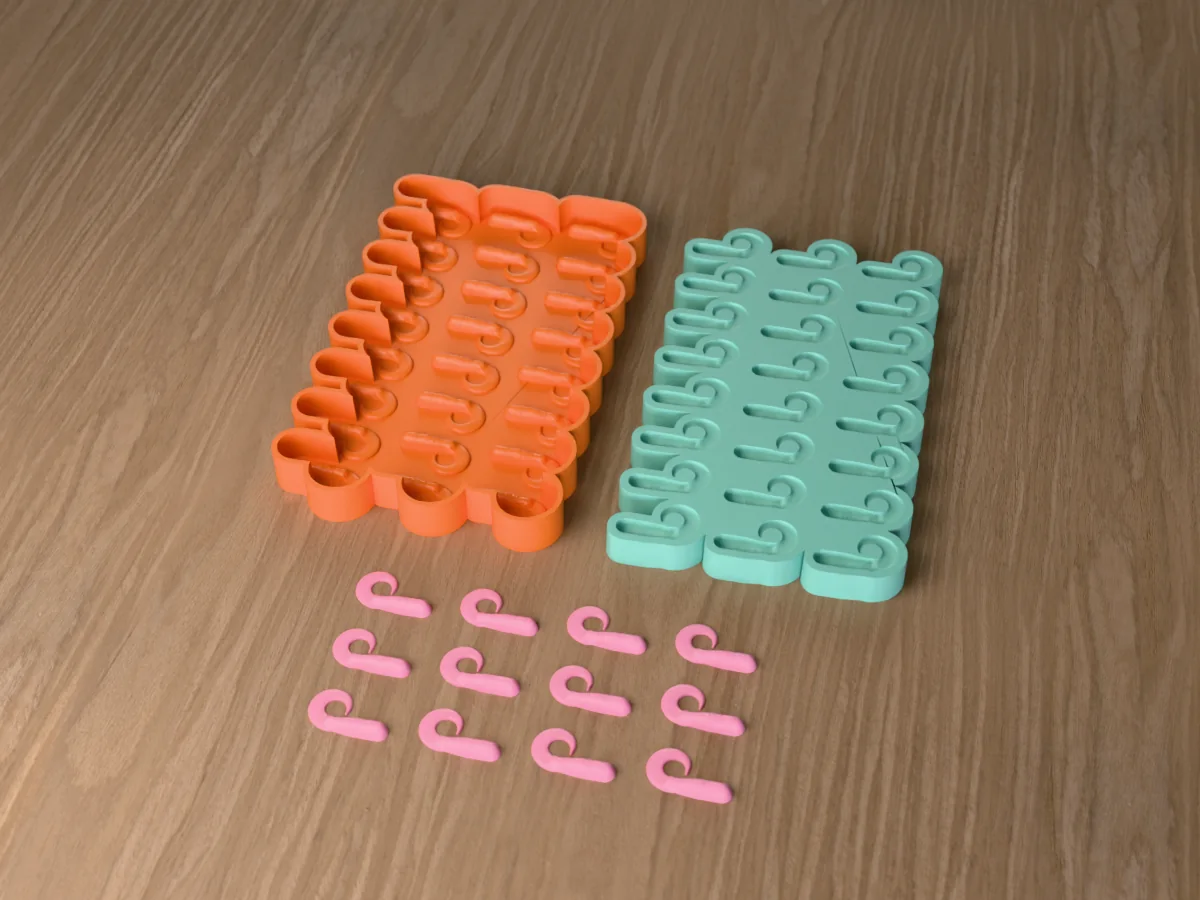
Twenty-four 1.5 inch curly tail grubs per pour for crappie, perch and panfish. A silicone lure mold you make yourself.
 Soft plastic
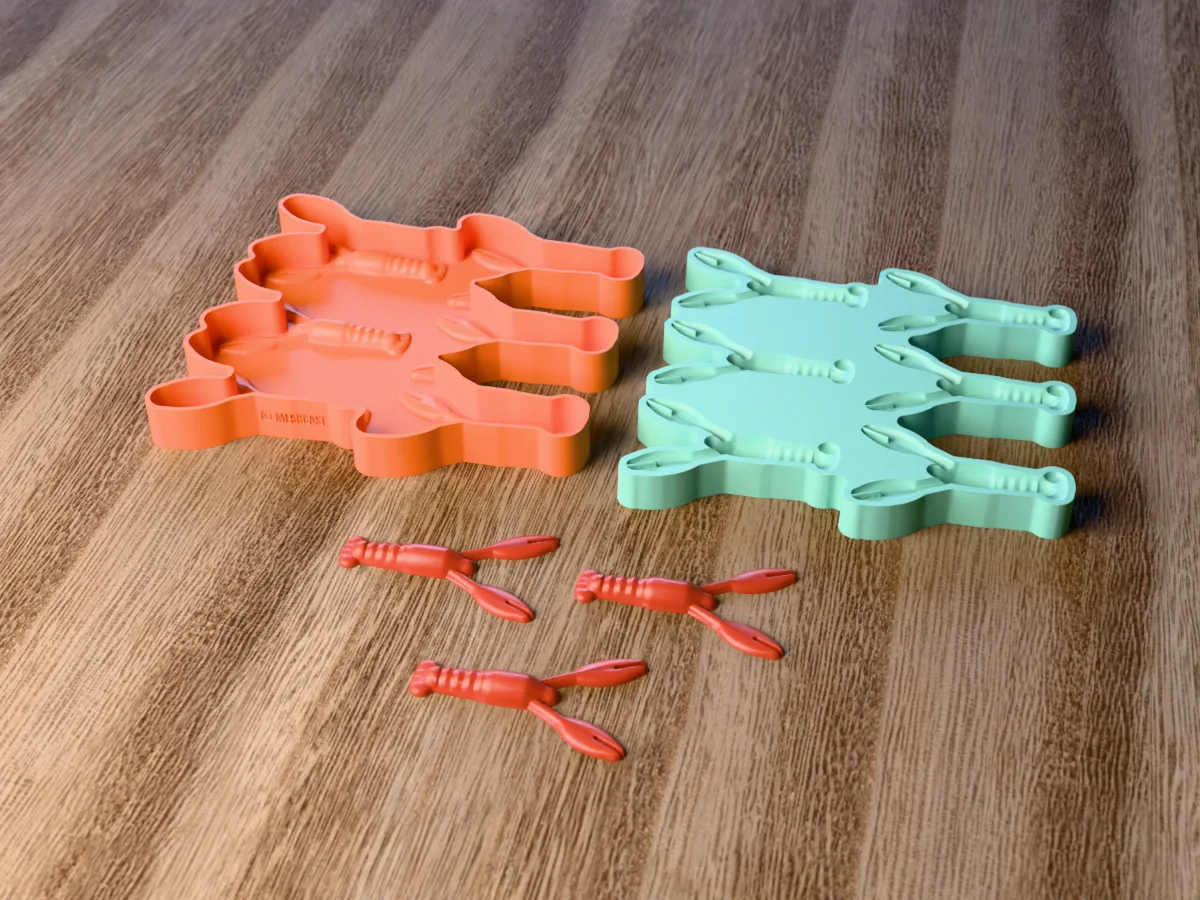
Six 3 inch craws per pour, a ringed tail, a carapace and two flat claws that float up. A silicone lure mold.
 Soft plastic
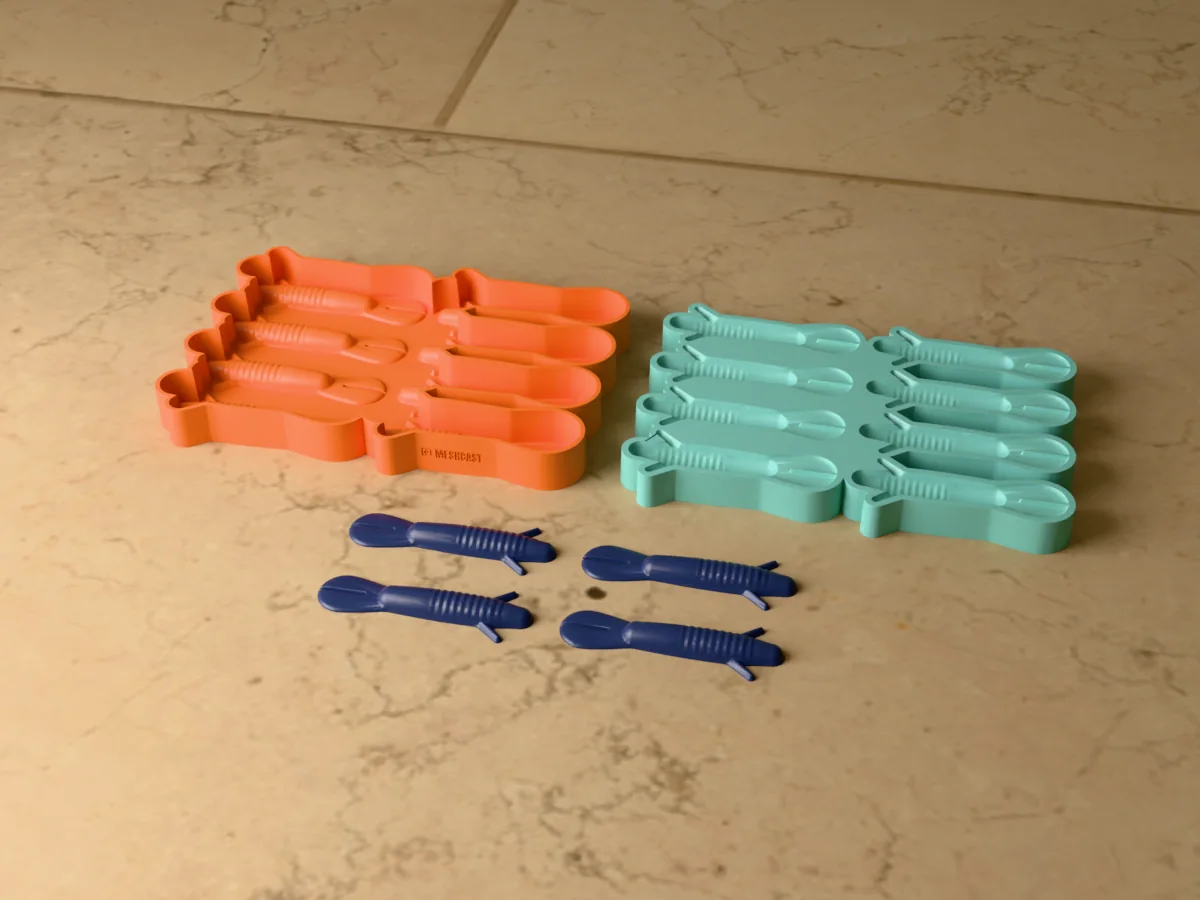
Eight 3.5 inch creature baits per pour, a ribbed body, two arms and a forked flapper tail. A silicone lure mold.
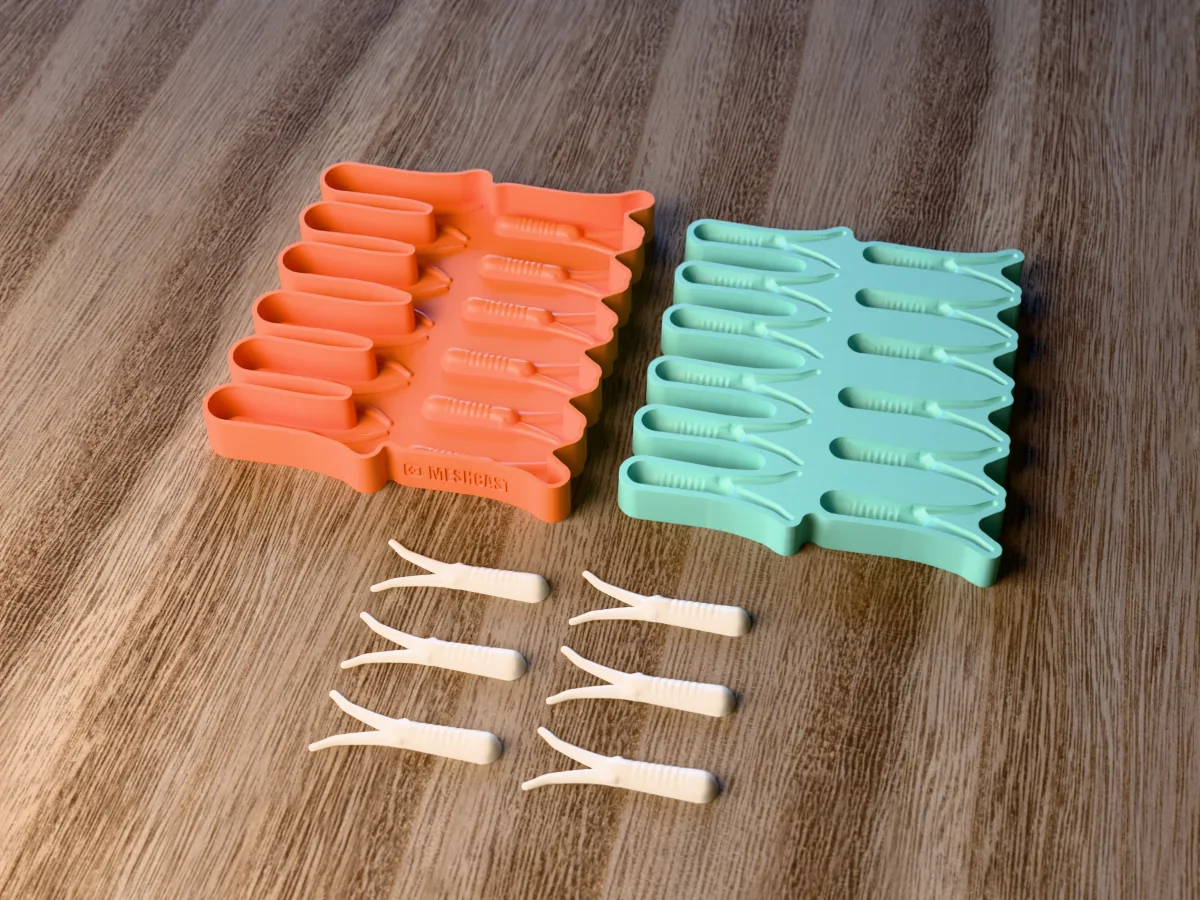 Soft plastic
Twelve 2.5 inch twin tail jig trailers per pour, a ribbed chunk and two flat tails. A silicone lure mold you make yourself.
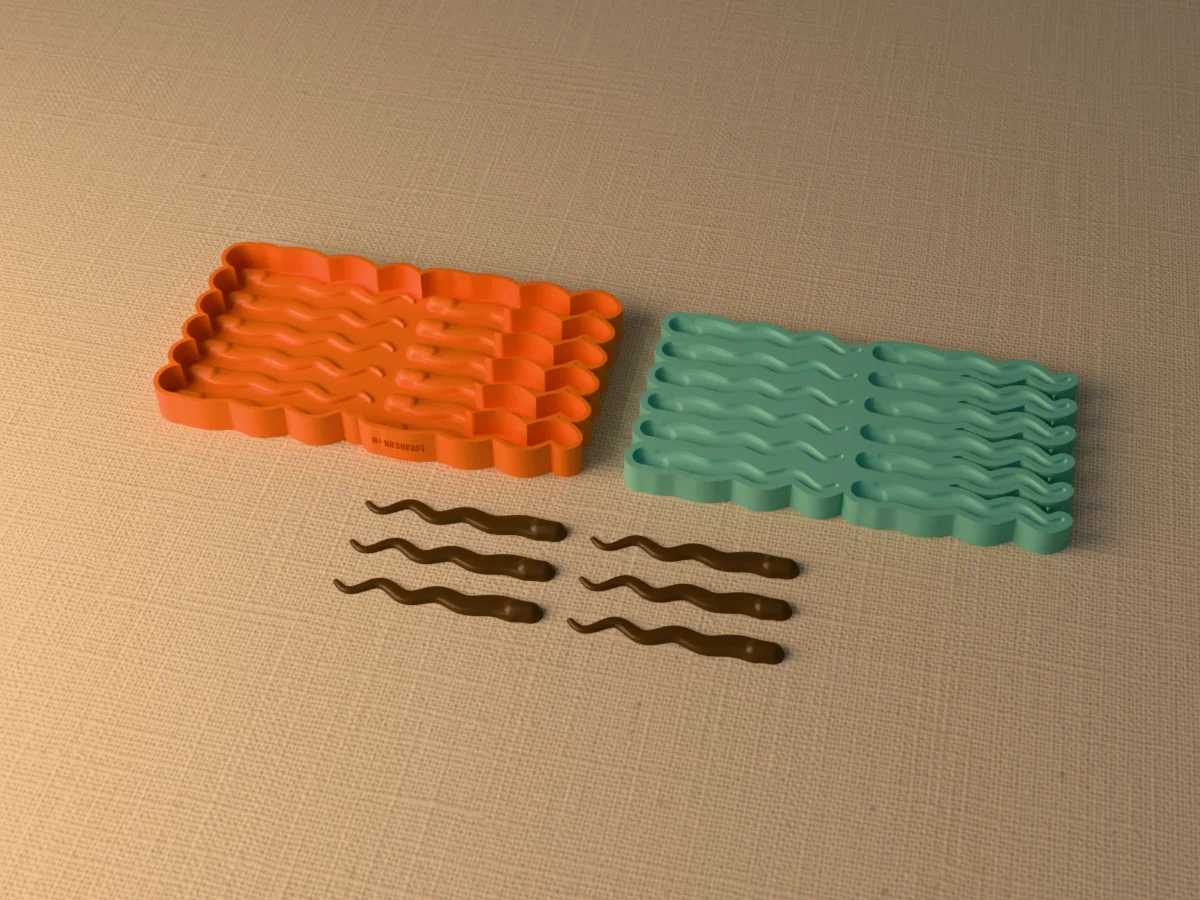 Soft plastic
Twelve 3 inch ribbon leeches per pour, a small head and a thin wavy body. A silicone lure mold you make yourself.
Each design is a caster you print once: pour a heat-rated mold silicone into it, peel out a flexible multi-cavity mold, and pour liquid plastisol into the silicone. Plastisol goes in at 160 to 180 °C, far past what PLA or PETG survives, so the printed part never touches it, and the thin tails peel out of silicone in one piece.
The baits are open-pour and flat-backed, the way every hand-pour mold makes them. Pour the thin tail first while the plastisol is hottest, fill slightly over the rim, and peel them out after five to ten minutes. These molds are for soft plastics only: never pour lead or any other metal into them.
Questions
No. Plastisol is poured at 160 to 180 °C and PLA softens around 60 °C, PETG around 80 °C. Print the caster, make a silicone mold from it with a silicone rated for 200 °C or more, and pour the plastisol into the silicone.
Most tin-cure and platinum-cure mold silicones are rated to 200 °C or more; check the datasheet for the continuous heat rating. Let the mold cool between rounds and it lasts for many dozens of pours.
In a microwave kept for plastisol only, in 30 to 60 second bursts with a stir between them, until it is clear and runny. Work with good ventilation and gloves, and never let it pass about 190 °C, where it starts to smoke and yellow.
Yes. Drop a bait STL into the free tray mold maker, pick the flexible silicone tray, and it builds a multi-cavity caster around it in your browser.