◆ Mold library
Plaster mold STL files
Silicone mold kits and trays for plaster busts, aroma stones and chalk, ready to print.
◆ Mold library
Silicone mold kits and trays for plaster busts, aroma stones and chalk, ready to print.
7 designs · print times from 8 h 1 min
Pro early access
Plaster
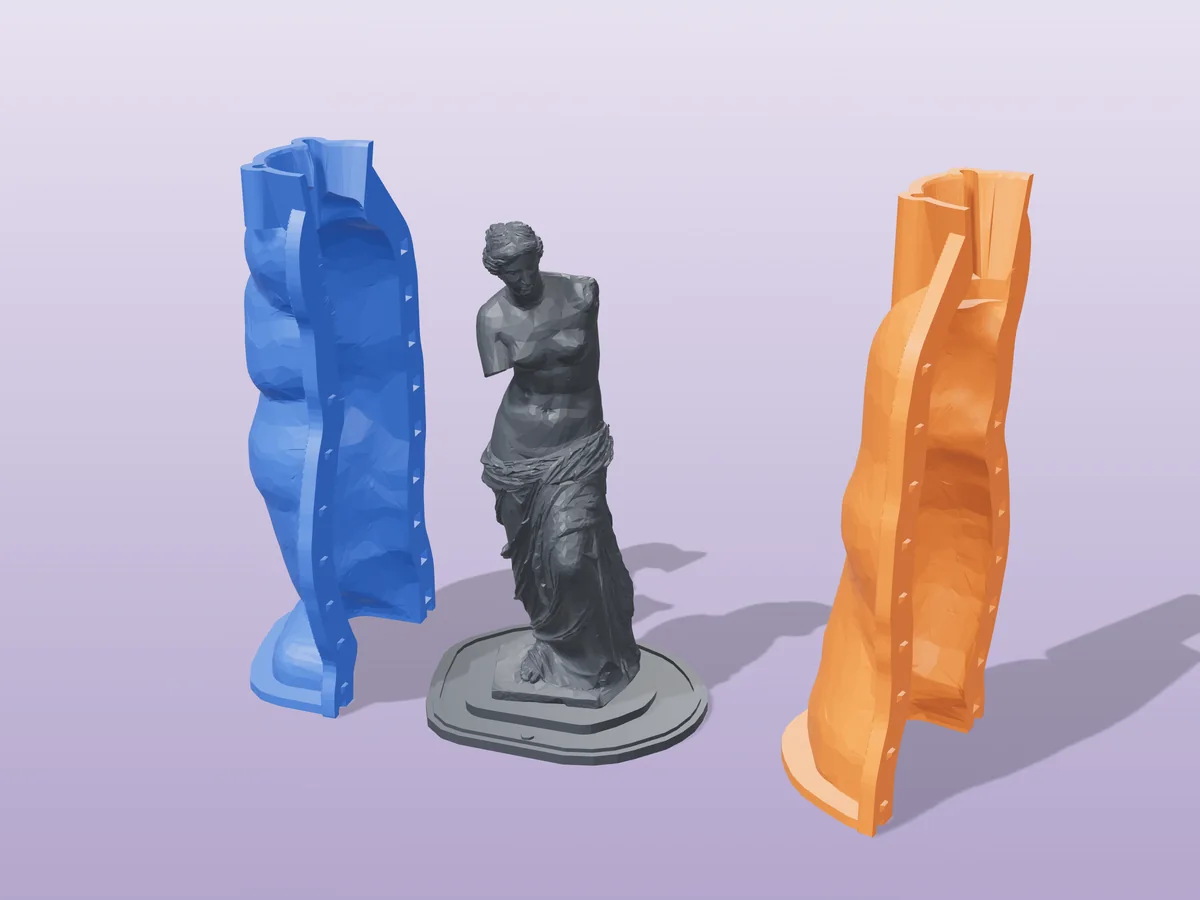
Cast your own 140 mm Venus de Milo in plaster or concrete, from a public-domain museum scan.
Pro early access
Plaster
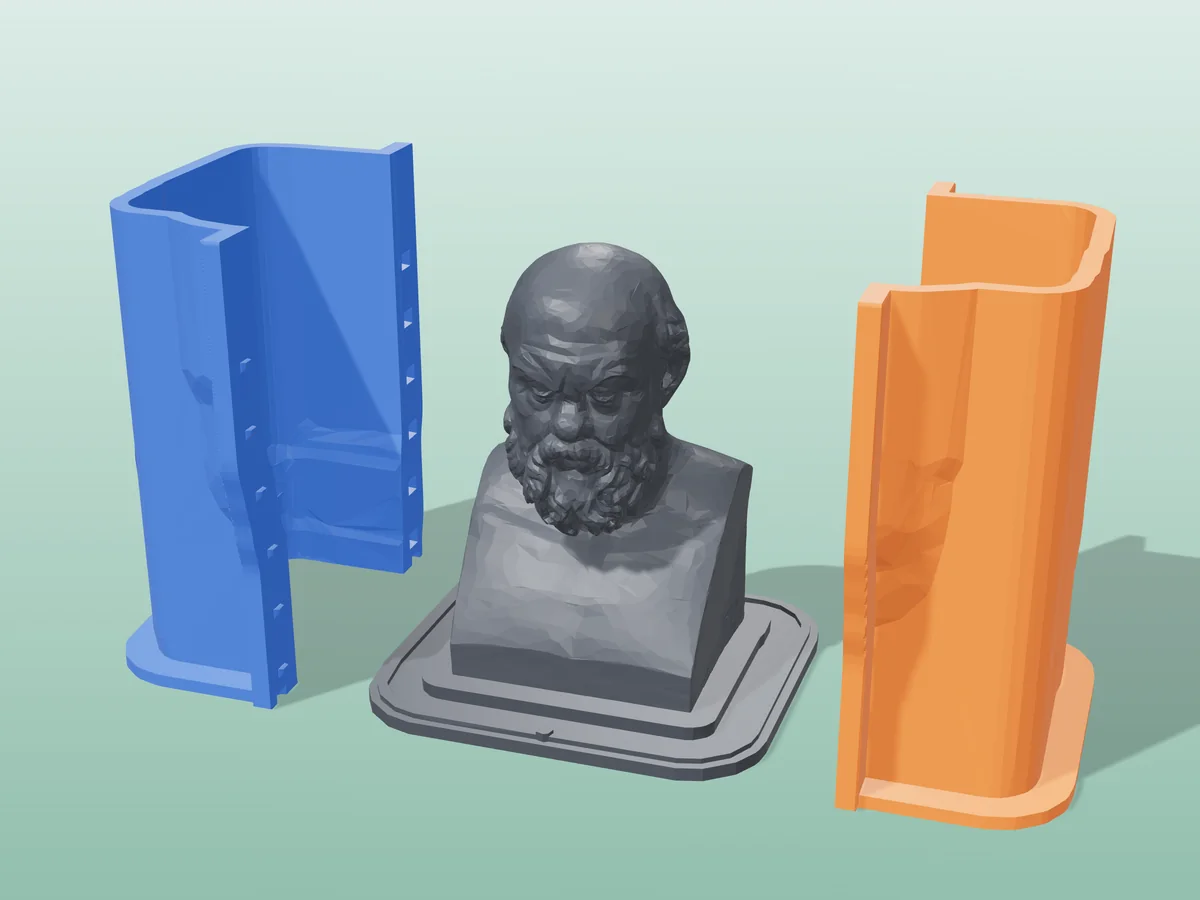
Cast a 95 mm bearded Socrates bust in plaster or concrete, from a public-domain museum scan.
Pro early access
Plaster
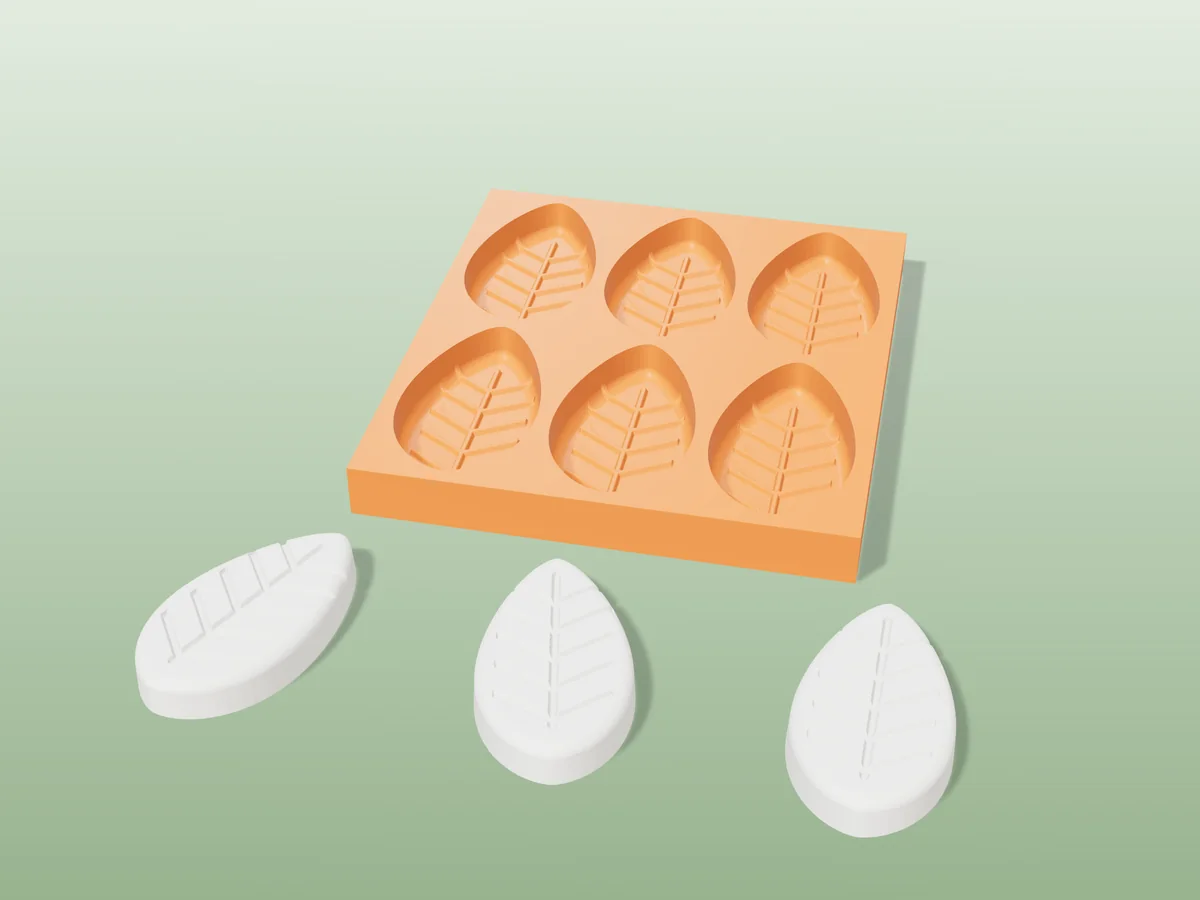
Six leaf-shaped aroma stones in plaster, from one printed tray. Drip oil on, let it scent the room.
Pro early access
Plaster
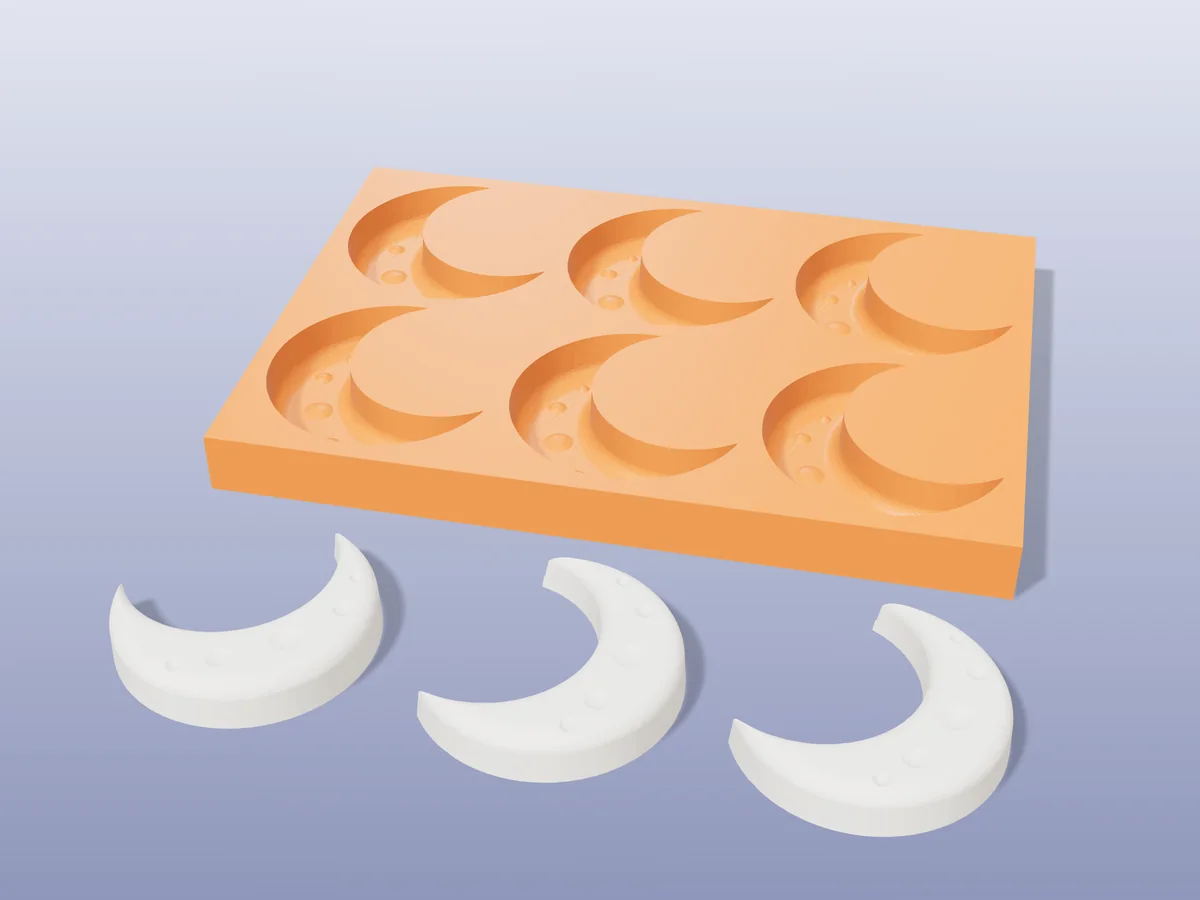
Six crescent moon aroma stones with craters, cast in plaster in a printed tray.
Pro early access
Plaster
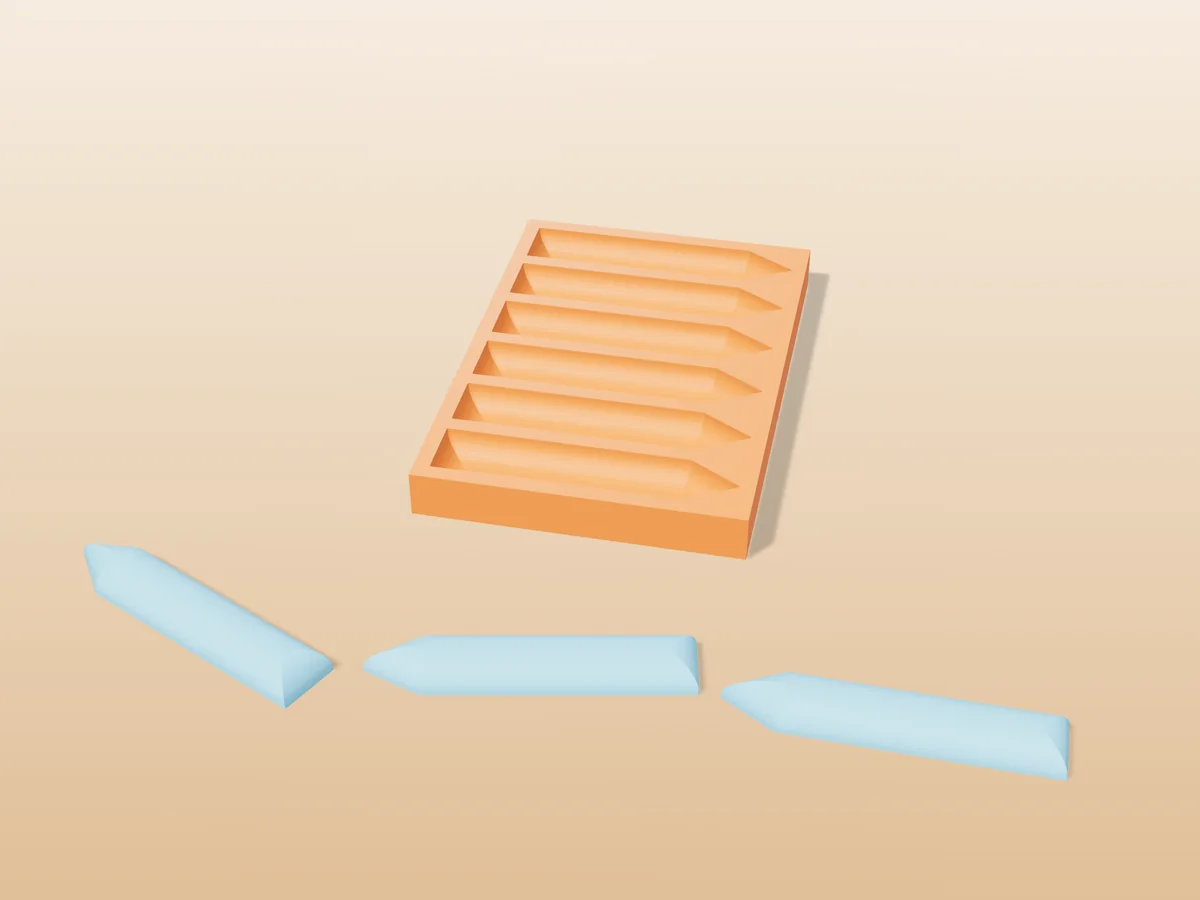
Six chunky sidewalk chalk crayons from plaster and poster paint, cast in a printed tray.
Pro early access
Plaster
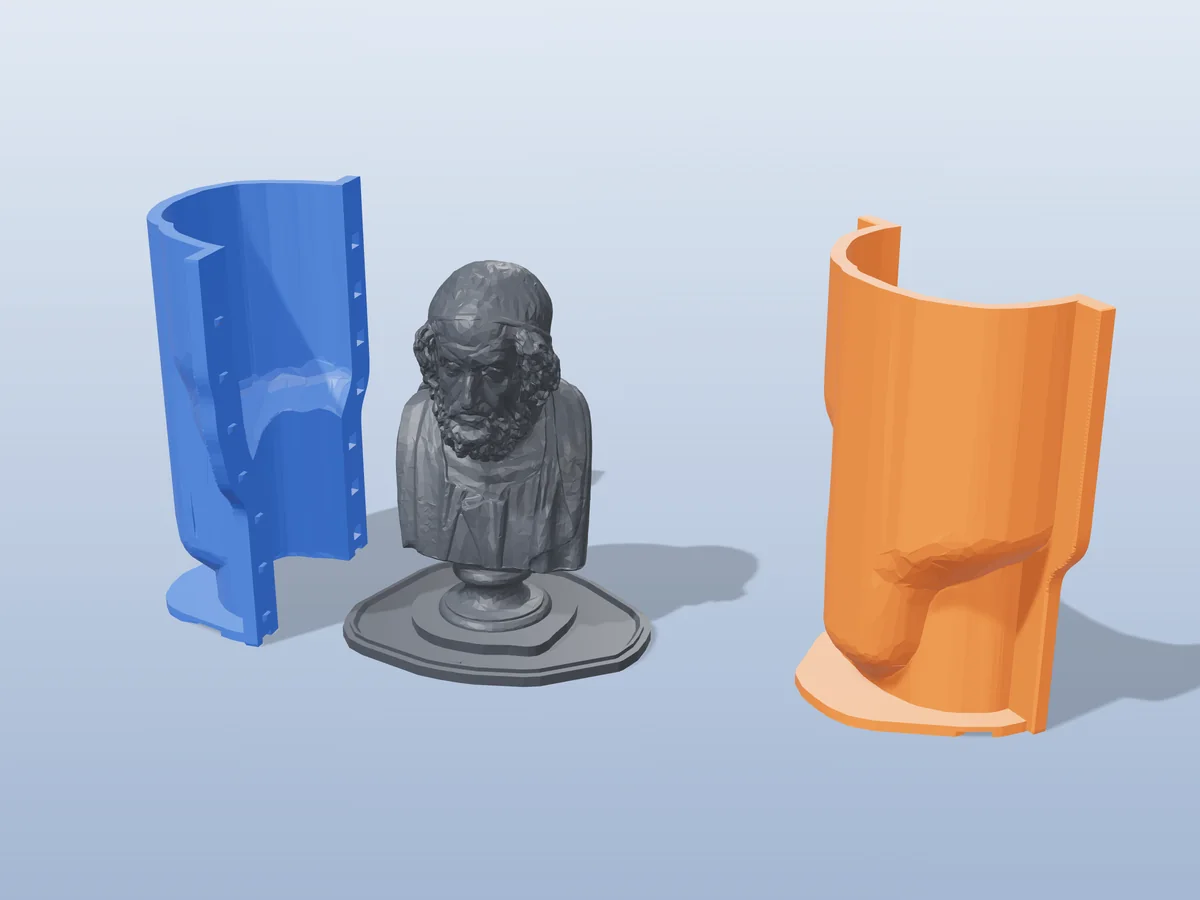
Cast a 100 mm bust of Homer, blind poet of the Iliad, in plaster or concrete. From a museum scan.
 Pro early access
Plaster
Pro early access
Plaster
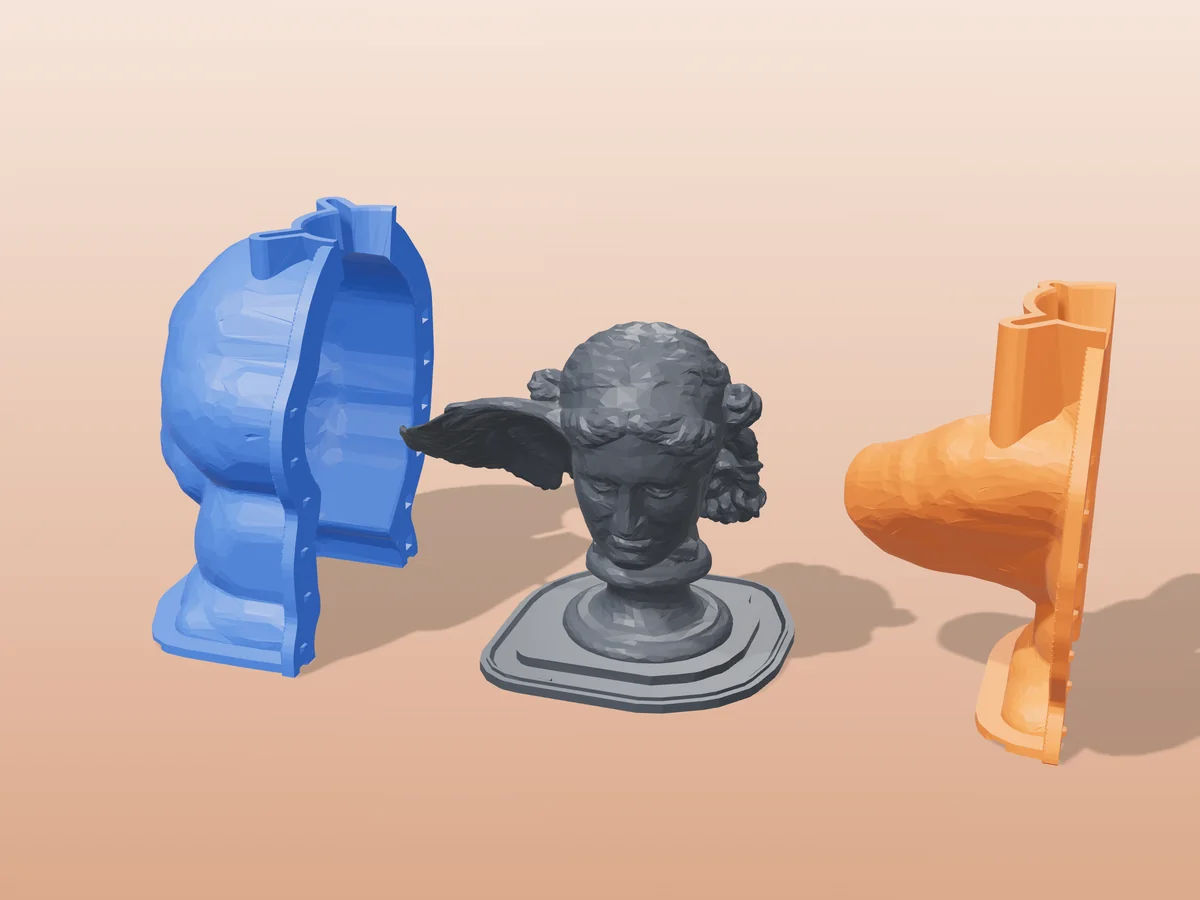
The winged head of Hypnos, Greek god of sleep, as a 100 mm plaster or concrete piece.
Plaster picks up every detail and every layer line, which is why most of these are silicone mold kits: you print the master and housing, pour a silicone mold once, and cast plaster, Jesmonite or gypsum in the silicone. The classical busts come from public-domain museum scans; the trays are for aroma stones, chalk and small gifts.
Mix plaster by adding powder to water, never the other way round, until it stops sinking, then stir slowly to keep air out. Most small casts can be demolded after 30 to 60 minutes and need a day or two to dry fully before painting or scenting.
Questions
It grips layer lines and any undercut, so pouring plaster straight into PLA only works for simple shapes with release agent. The kits here are made for casting plaster in a silicone mold, which releases it cleanly.
A hard casting plaster or dental stone for busts, and Jesmonite if you want a stronger, water-resistant piece. Ordinary plaster of Paris is fine for aroma stones and chalk.
Most casting plasters can be demolded after 30 to 60 minutes. Let the piece dry for a day or two before painting, sealing or adding fragrance oil.
Yes. Upload any STL to the free silicone mold maker. Contoured mode builds a thin shell that follows your model, so you need far less silicone than a box.