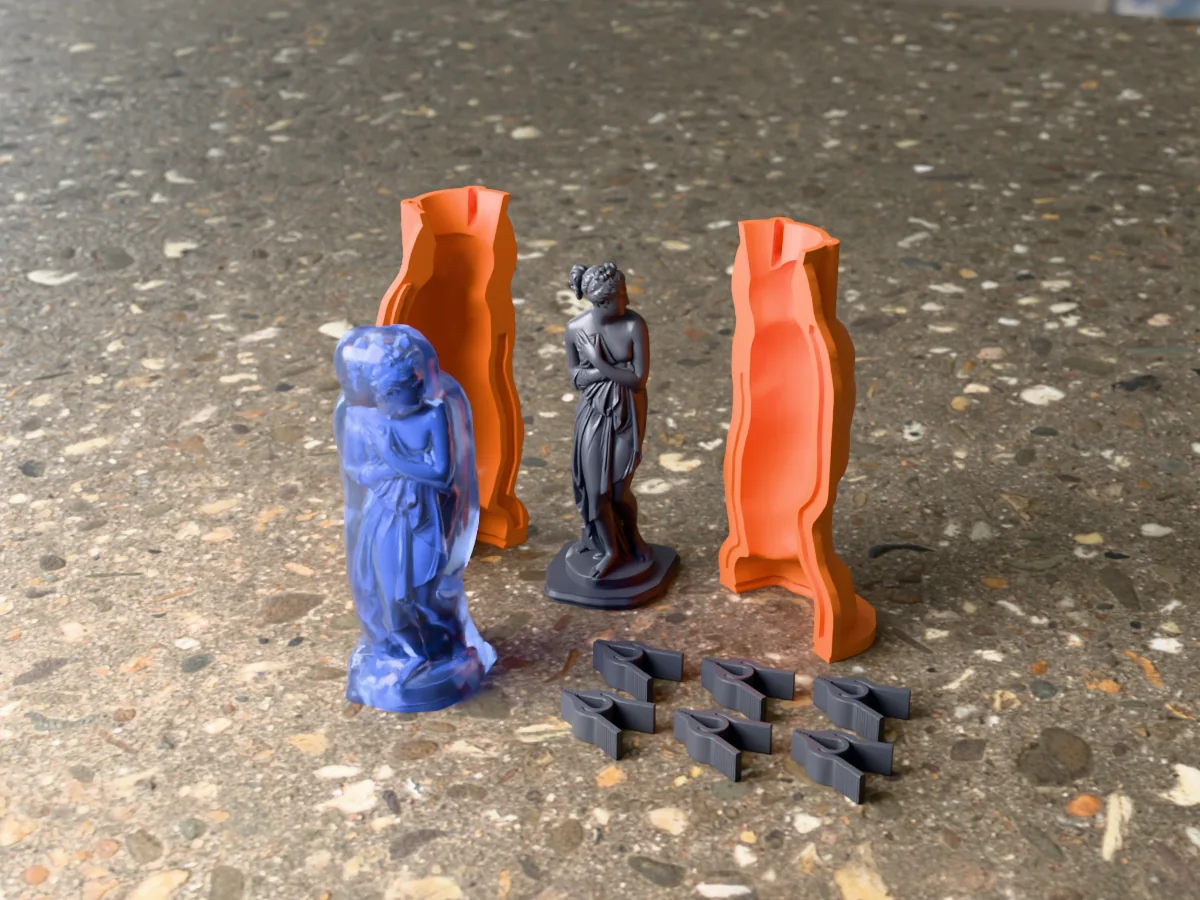
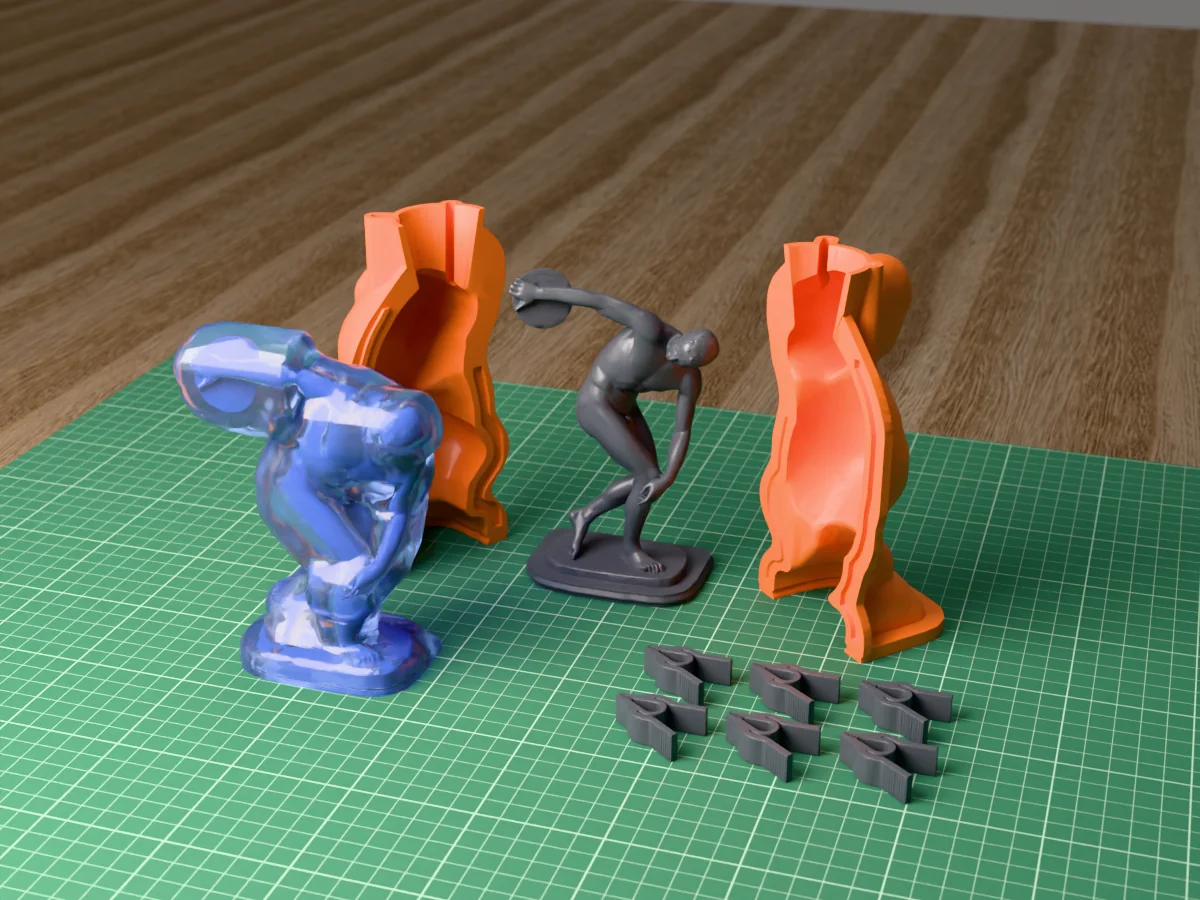
Need it bigger, smaller or from your own model? Make it free in our silicone mold maker tool. With a free account, every mold you make is saved under My molds, with its settings and material amounts.
Plaster~180 g
The Doryphoros as a 140 mm statue: the athlete standing in perfect contrapposto, weight on one leg, the other relaxed. Polykleitos made the bronze around 440 BC as his canon of ideal proportions; it survives in Roman marble copies, the best known in Naples.
Read more
The master is a 3D scan of the plaster cast of the Doryphoros in the Royal Cast Collection of SMK, the National Gallery of Denmark, published by SMK as public domain. The mold is made with the hugging-shell mode of our silicone mold maker, the mode the site's own mold advisor picks for a statue: every fold and limb would lock a rigid two-part mold, and silicone peels out of them.
A calm, upright figure that casts cleanly in plaster, Jesmonite or fine concrete, for a desk, a shelf or a gift for anyone who trains or draws figures. The same mold also takes resin, soap or candle wax.
Print the base with the statue fused onto it, the two shell halves and the six clamps that hold them shut (all six are in clamps.stl, no binder clips needed), pour about 216 ml of silicone, and cast in the flexible mold that comes out. The zip carries every printed part, the statue as its own STL, the tool's own print-settings sheet and a recipe file for the generator.
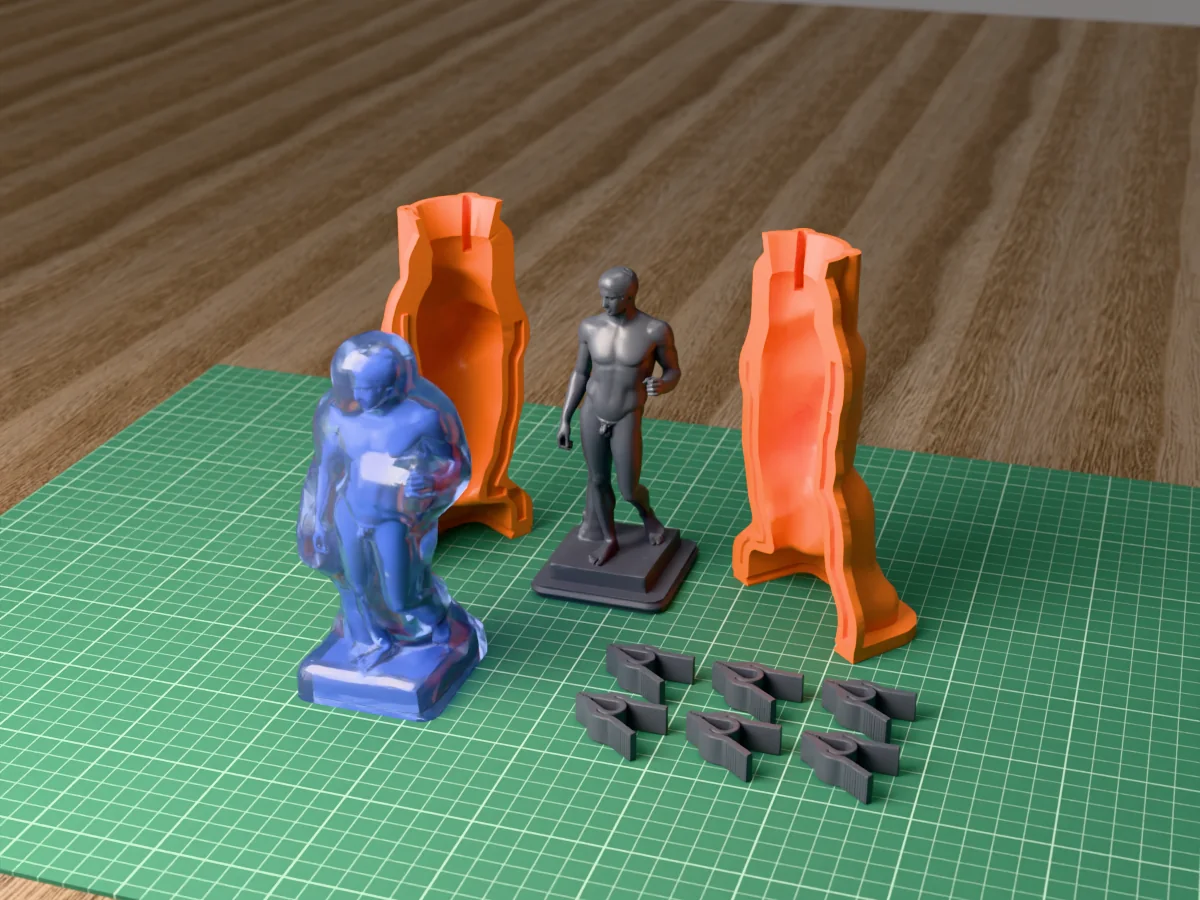
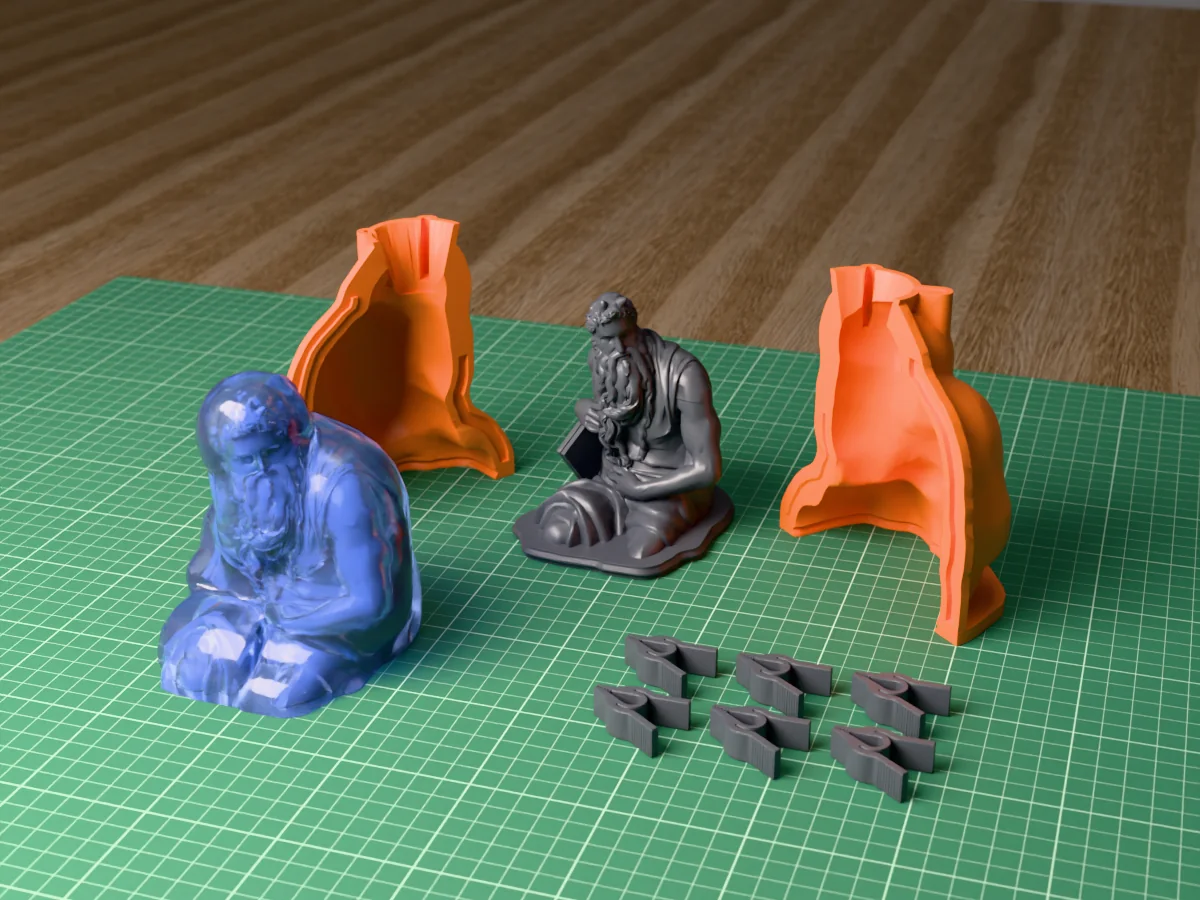
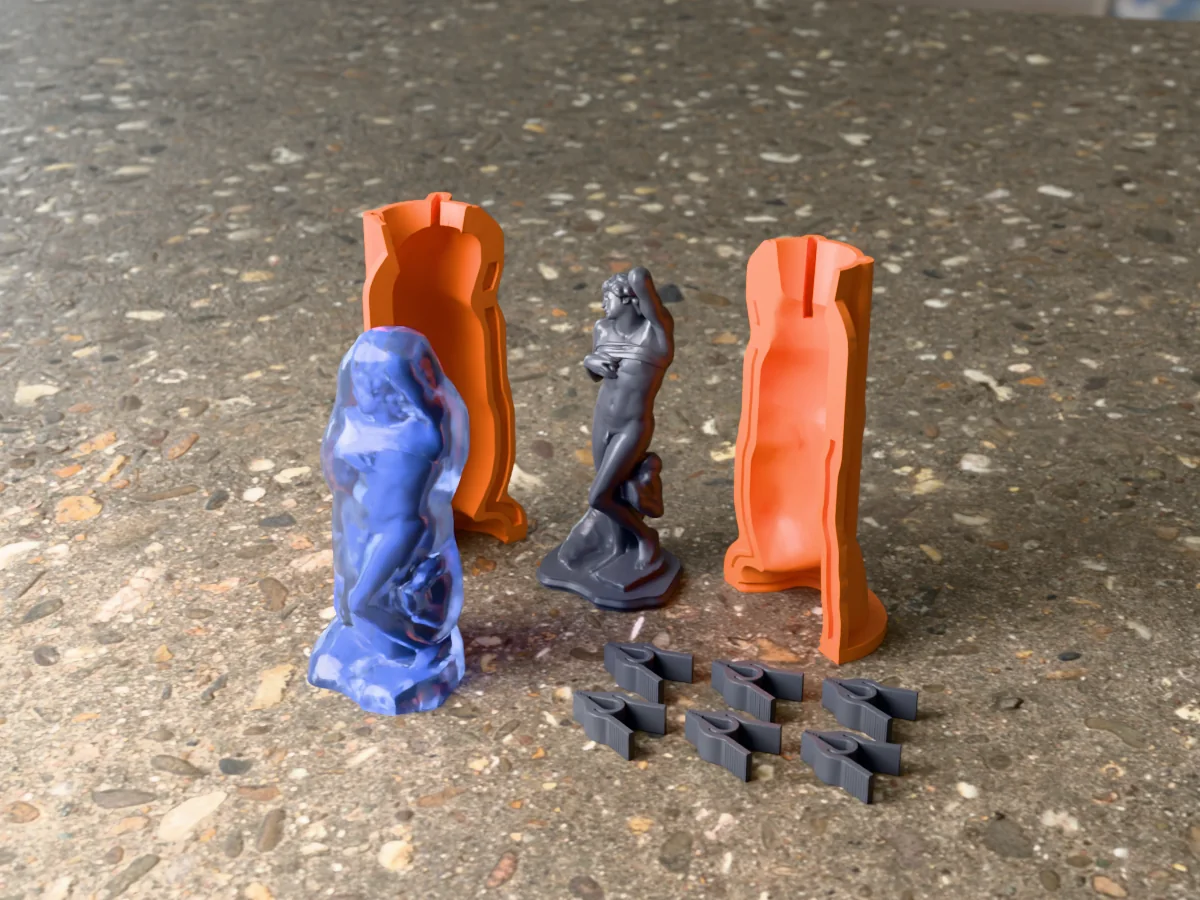
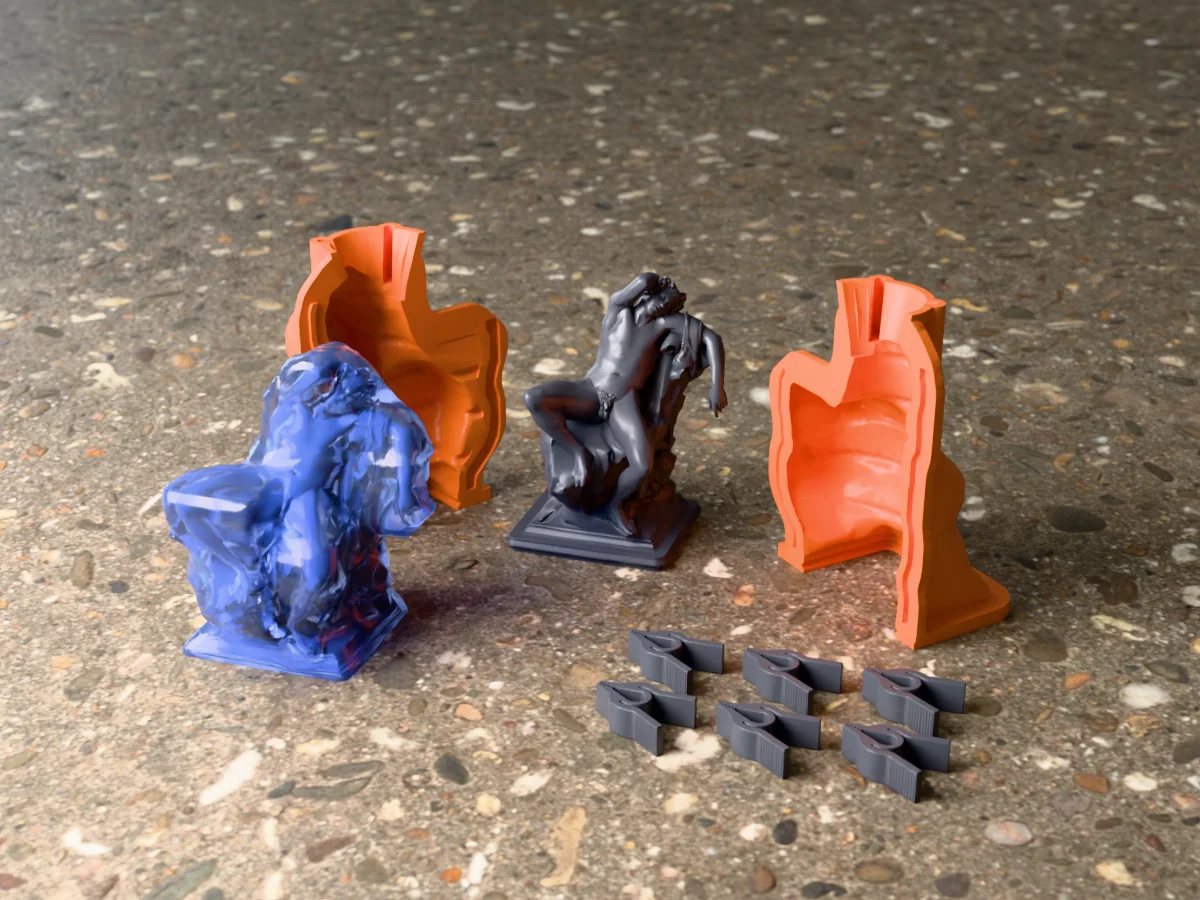
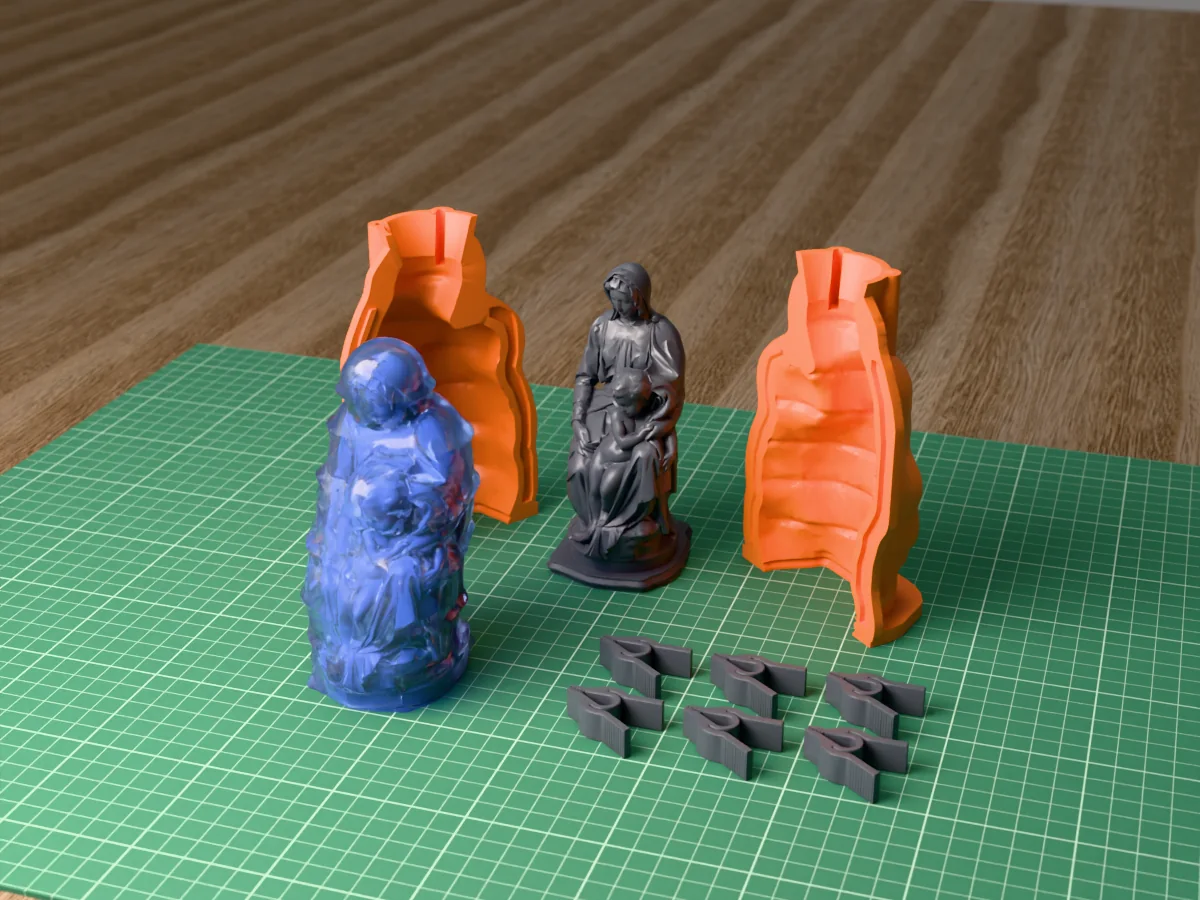
Shown as a 3D render of the printed mold parts, the six printed clamps and the cured blue silicone mold they make, not a photo.
How this mold works
What you need
4
About 242 ml of silicone (mix it in one batch)
About 69 ml of casting plaster, Jesmonite or fine concrete per statue
Tape or a hot glue gun for the outside seams
Optional: a few steel binder clips if you want extra hold on top of the six printed clamps
How to cast it
7
1
Print the base, which has the statue already fused onto it, the two shell halves and the six clamps (all six are in clamps.stl, laid out on one plate). No supports.
2
Stand the base on the table. Set each shell down a few centimetres out from it and slide it in over the table until the ridge round the base sits in the groove at its foot, then push the six printed clamps over the wings, three down each seam, so the shell is clamped shut from top to bottom. Steel binder clips work too.
3
Tape the outside seams or run a bead of hot glue along them, because silicone finds every gap.
4
Mix 242 ml of silicone in one batch and pour it into the opening on top in a thin stream until it is full.
5
Once it has cured, take the six clamps off, slide each shell straight out and peel the silicone off the statue. That silicone is your mold.
6
Before the first cast, read the notes in PRINT-SETTINGS.txt: if they flag air trapped in the cast, cut a thin vent in the cured silicone from that spot toward the opening with a craft knife, so the plaster fills it.
7
Set the silicone back in the shell to keep its shape, and pour plaster, Jesmonite or fine concrete into it through the opening the base left. Tap it for a minute so the bubbles rise.
Print details
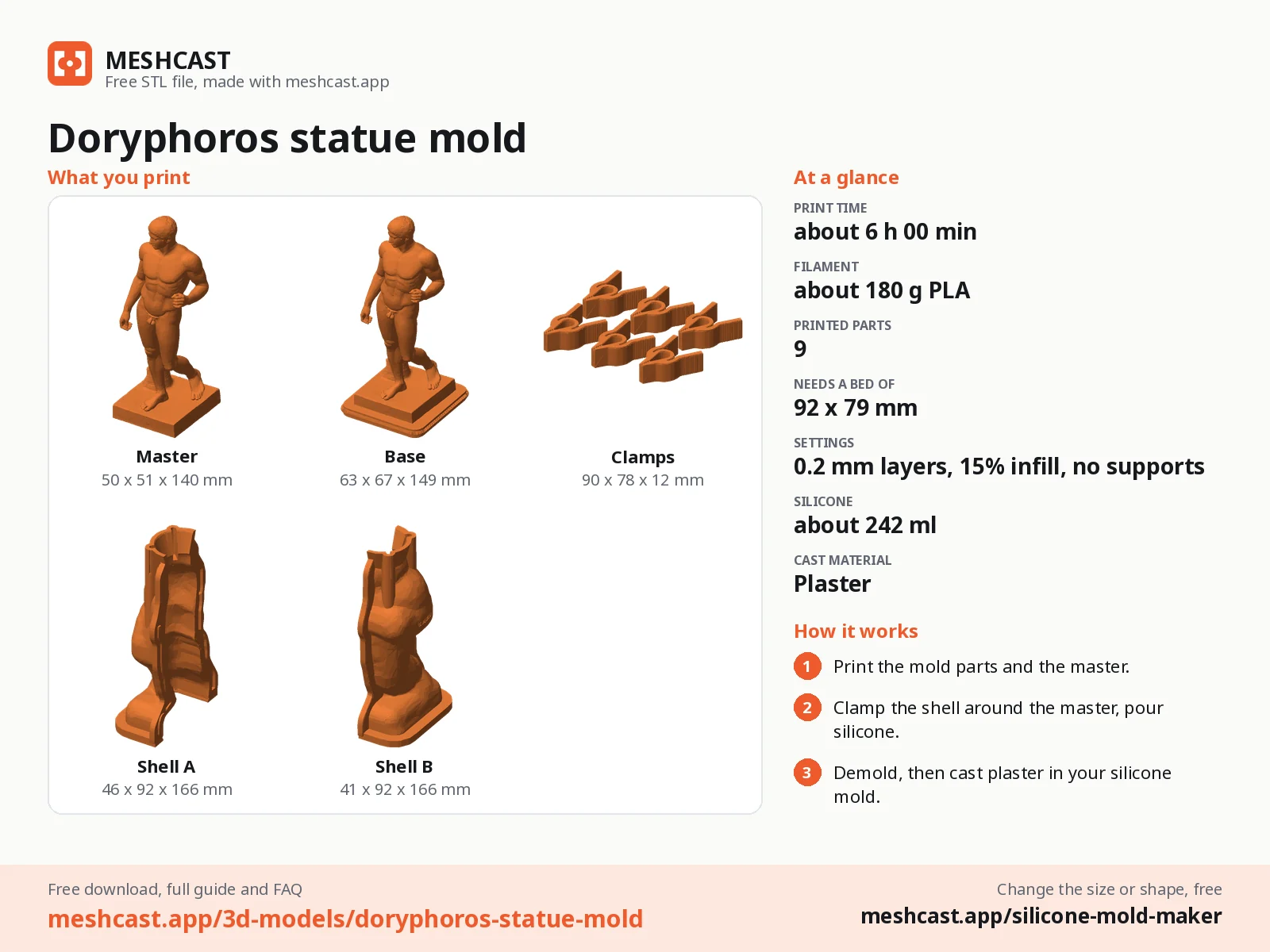
6 hPrint time
~180 gFilament
9Printed parts
87 × 92 × 166 mmSize (W x D x H)
All print details
Print details
Cast material
Plaster
Printed parts
9
Size (W x D x H)
87 x 92 x 166 mm
Print bed needed
92 x 79 mm, 166 mm tall
Filament
~180 g
Layer height
0.2 mm
Infill
15%
Supports
Not needed
Download
ZIP: 9 printed parts in 4 STL files + statue master (STL) + print sheet + recipe
Free download. Opens the Thingiverse listing in a new tab.
Free for personal use. Selling the pieces you cast needs a commercial licence (Pro or Founder); passing on the file itself is not permitted on any plan. Full terms.
About 216 ml, so mix 242 ml in one batch. The shell follows the figure, which is why it takes far less than a box around a statue this size would. A tin or platinum casting silicone of Shore 20 to 30 A works well.
How is the Doryphoros mold held shut while the silicone cures?
With six printed clamps, all in clamps.stl in the zip. The two shell halves have wings along both seams; push three clamps over each seam, top, middle and bottom, and the shell is closed tight with no gap for silicone to escape. Tape or a bead of hot glue along the outside seams on top of that makes it leak-proof. If you have steel binder clips, a few more never hurt, but you do not need them.
Where does the Doryphoros scan come from?
From SMK, the National Gallery of Denmark. Its Royal Cast Collection holds plaster casts of famous sculptures, made in the 19th century so artists could study them, and SMK has 3D scanned many of them and published the scans as public domain. This is their cast of the Doryphoros of Polykleitos. We only cut it flat under the plinth, scaled it and simplified the mesh for printing.
Is it useful as a drawing model?
Yes. The Doryphoros was made as a rule book for the human figure, which is why art schools have drawn from casts of it for centuries. A white plaster cast under a single lamp gives the clearest shadows to draw.
Does the Doryphoros match the Venus de Milo and the other statues in the catalog?
Yes. They are all scans from the same museum collection, made at a matching shelf size (most stand 140 mm tall), so a few of them cast in the same plaster make a small sculpture gallery for a shelf or a mantelpiece.