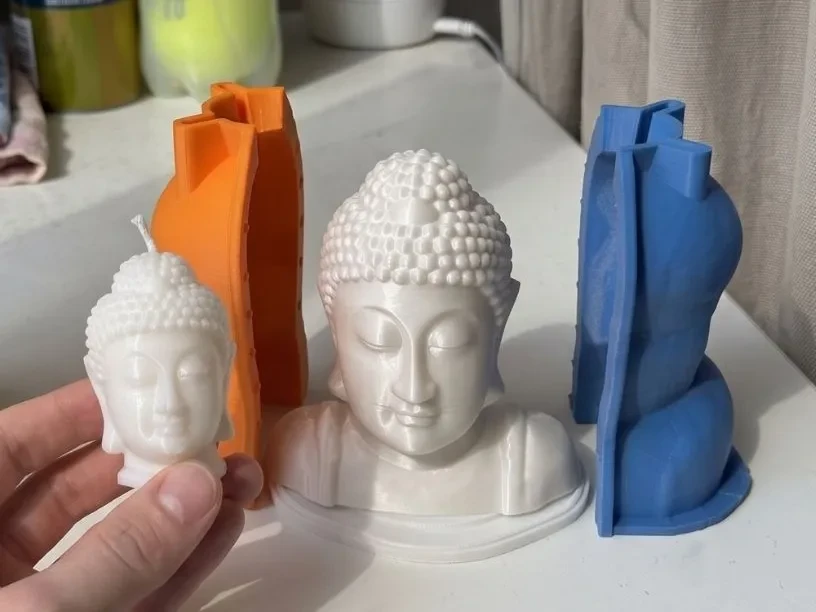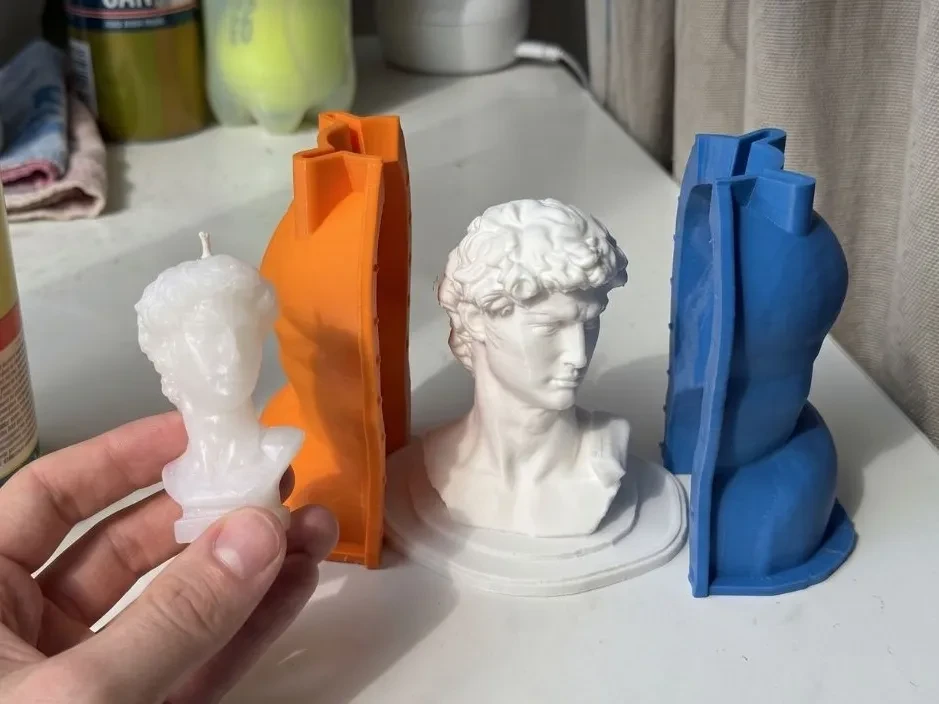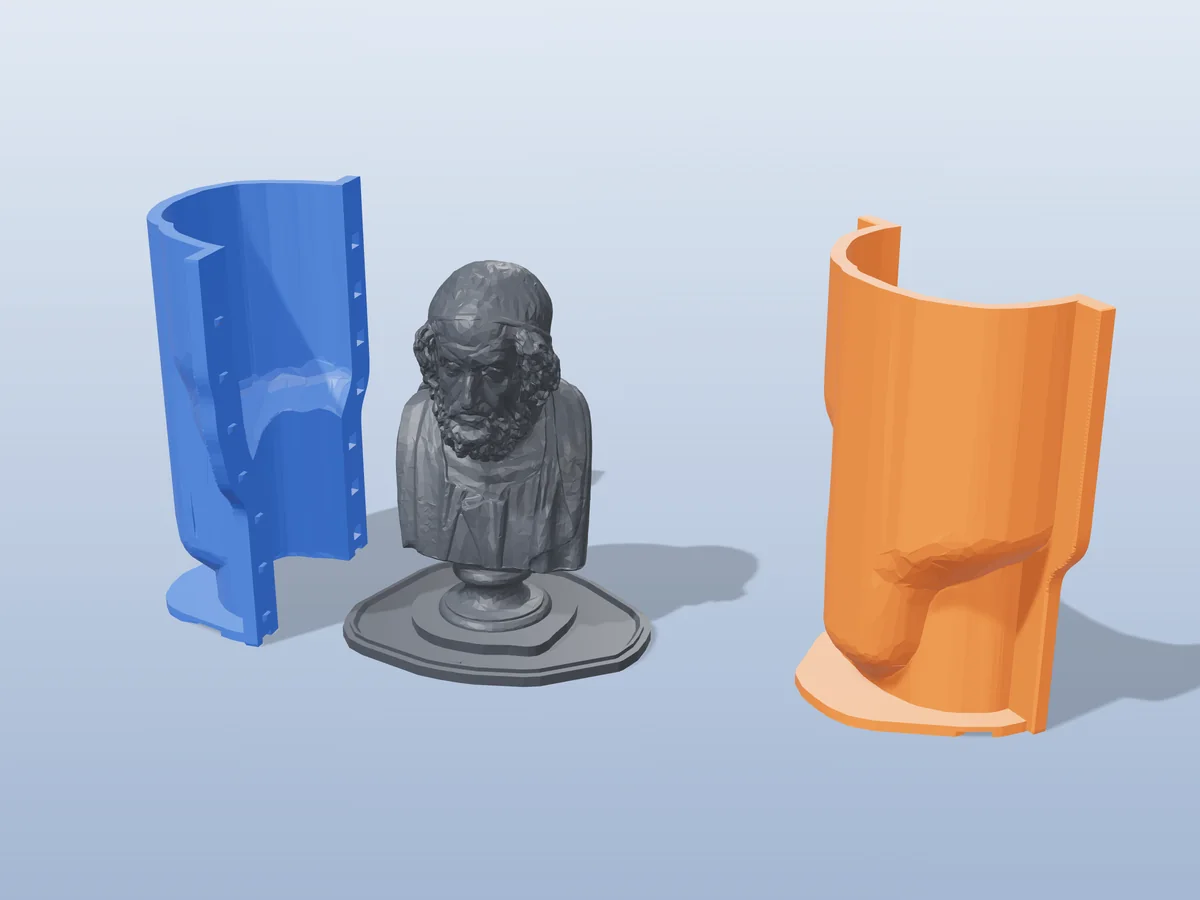
Homer as a 100 mm bust: the headband, the deep-set blind eyes, the full curling beard and the cloak over one shoulder, standing on the round turned foot of the original cast. Next to the Socrates bust from this catalog it makes a pair of Greek thinkers for a shelf, or a pair of bookends.
The master is a 3D scan of the plaster cast of the portrait of Homer in the Royal Cast Collection of SMK, the National Gallery of Denmark, published by SMK as public domain. The mold is made with the hugging-shell mode of our silicone mold maker, the mode the site picks for this shape: the beard and the curls would lock a rigid mold, and silicone peels out of them.
Cast it in plaster or Jesmonite for a crisp white bust, or in a fine concrete for a heavier one. The same silicone mold also takes resin, soap or candle wax.
Print the base with the bust fused onto it and the two shell halves, pour about 286 ml of silicone, and cast in the flexible mold that comes out. The zip carries every printed part, the bust as its own STL, the tool's own print-settings sheet and a recipe file for the generator.
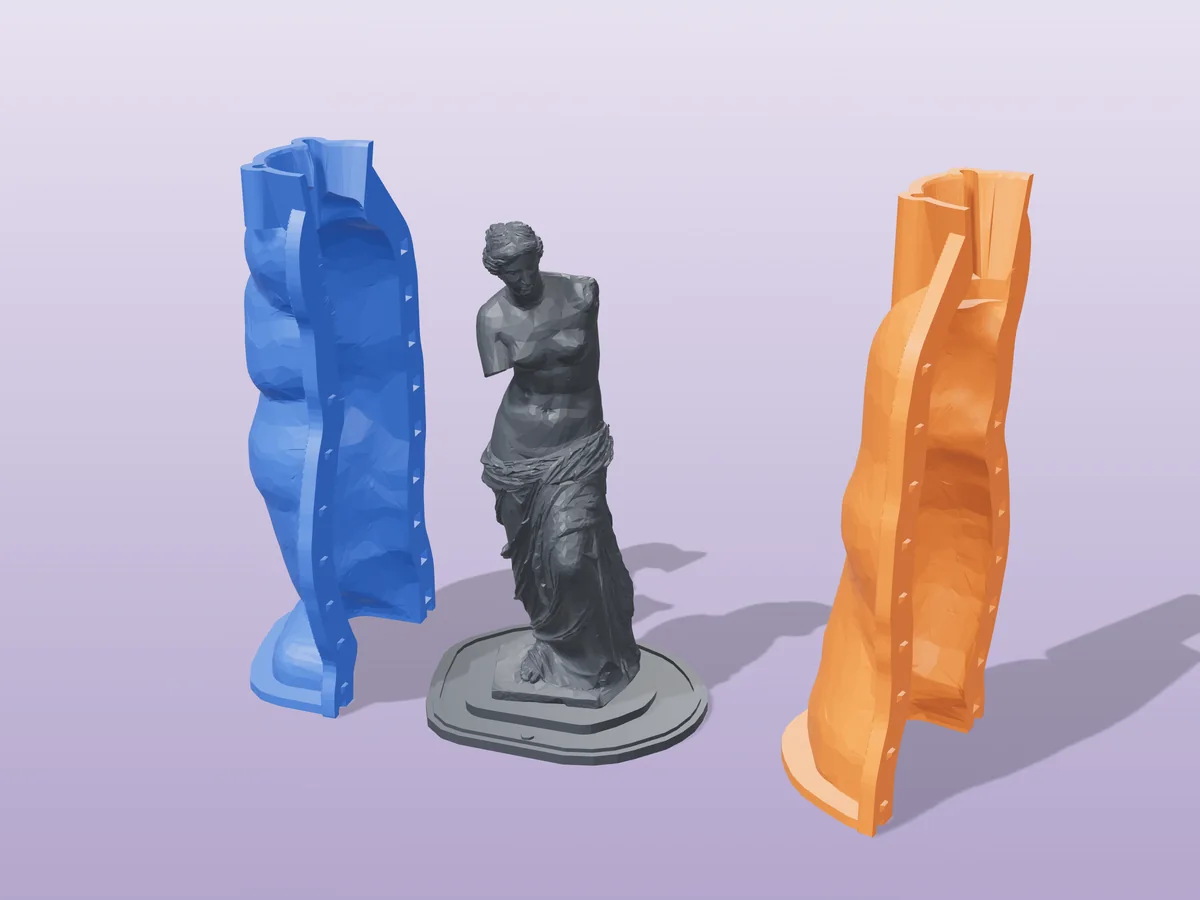
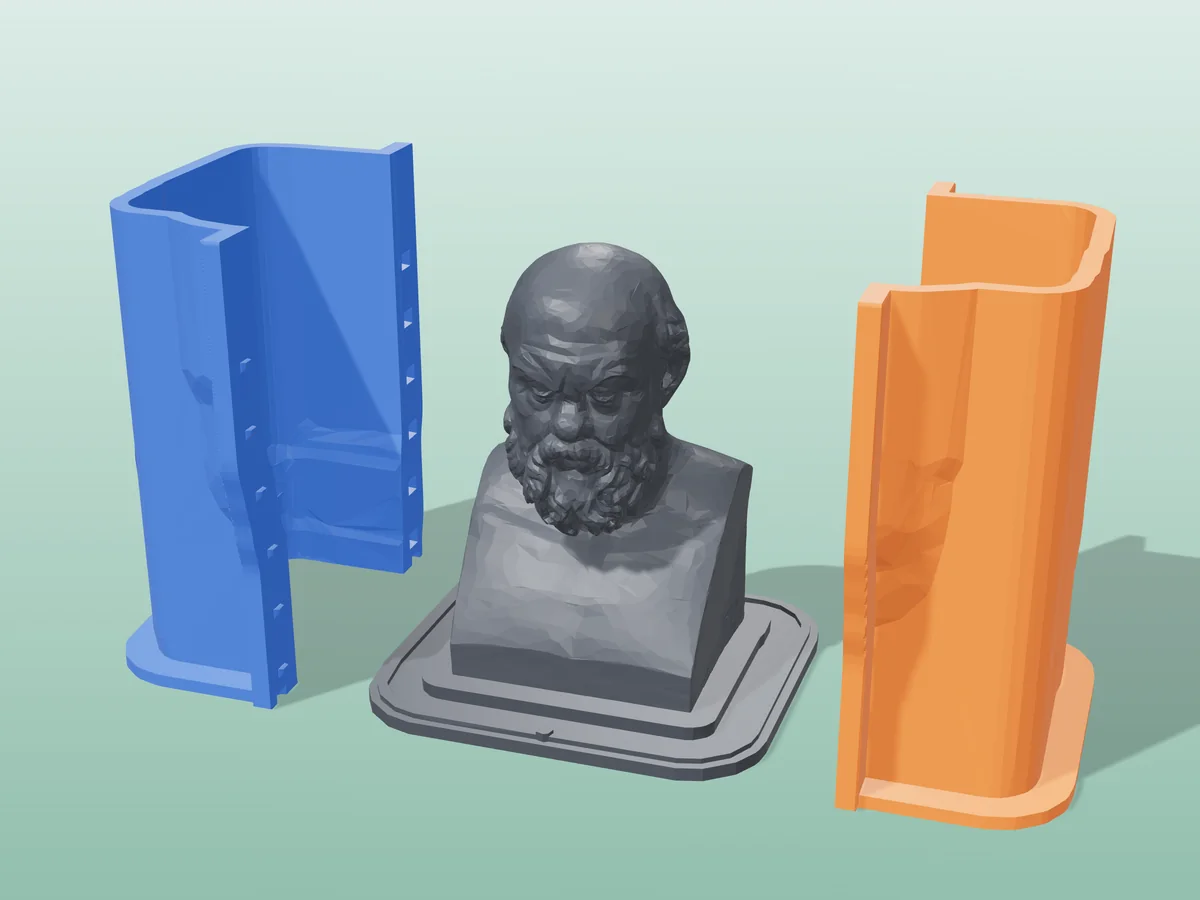
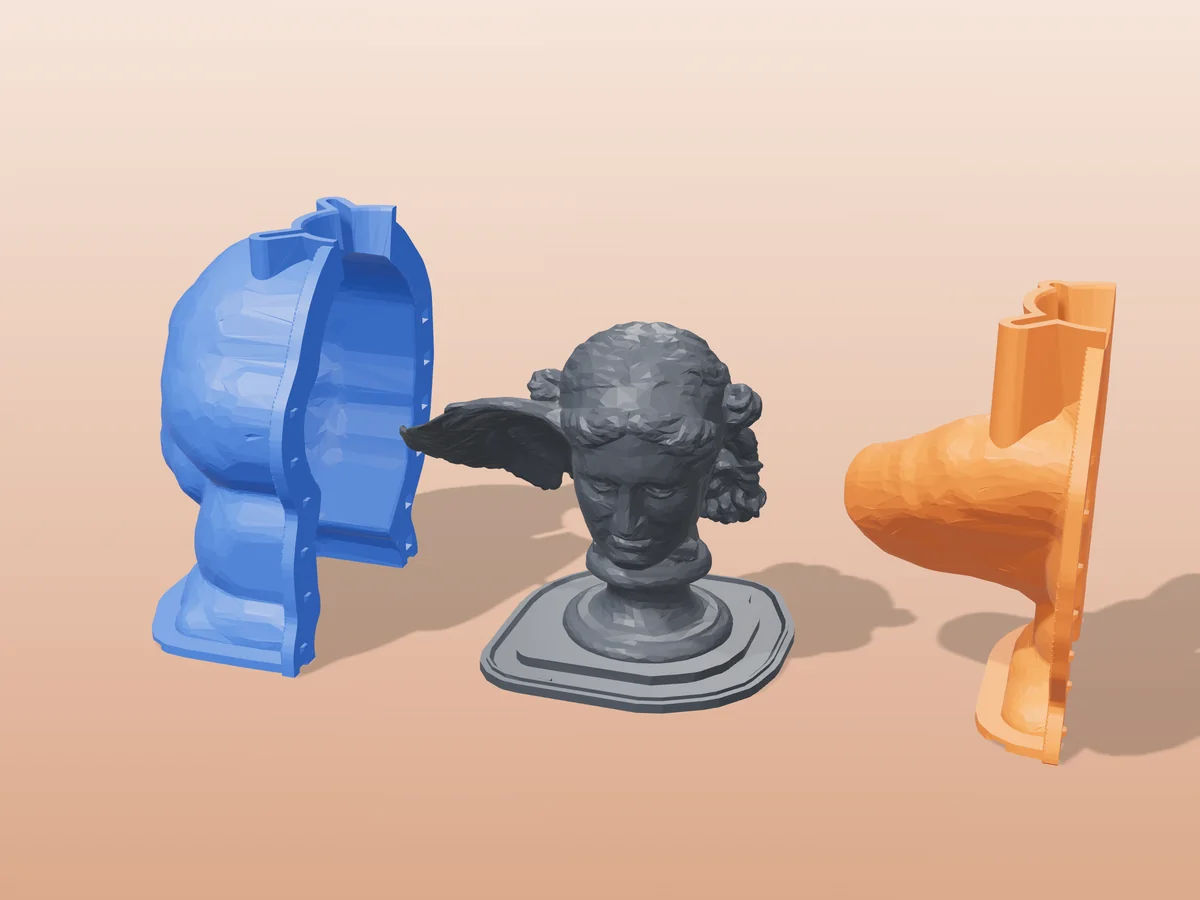
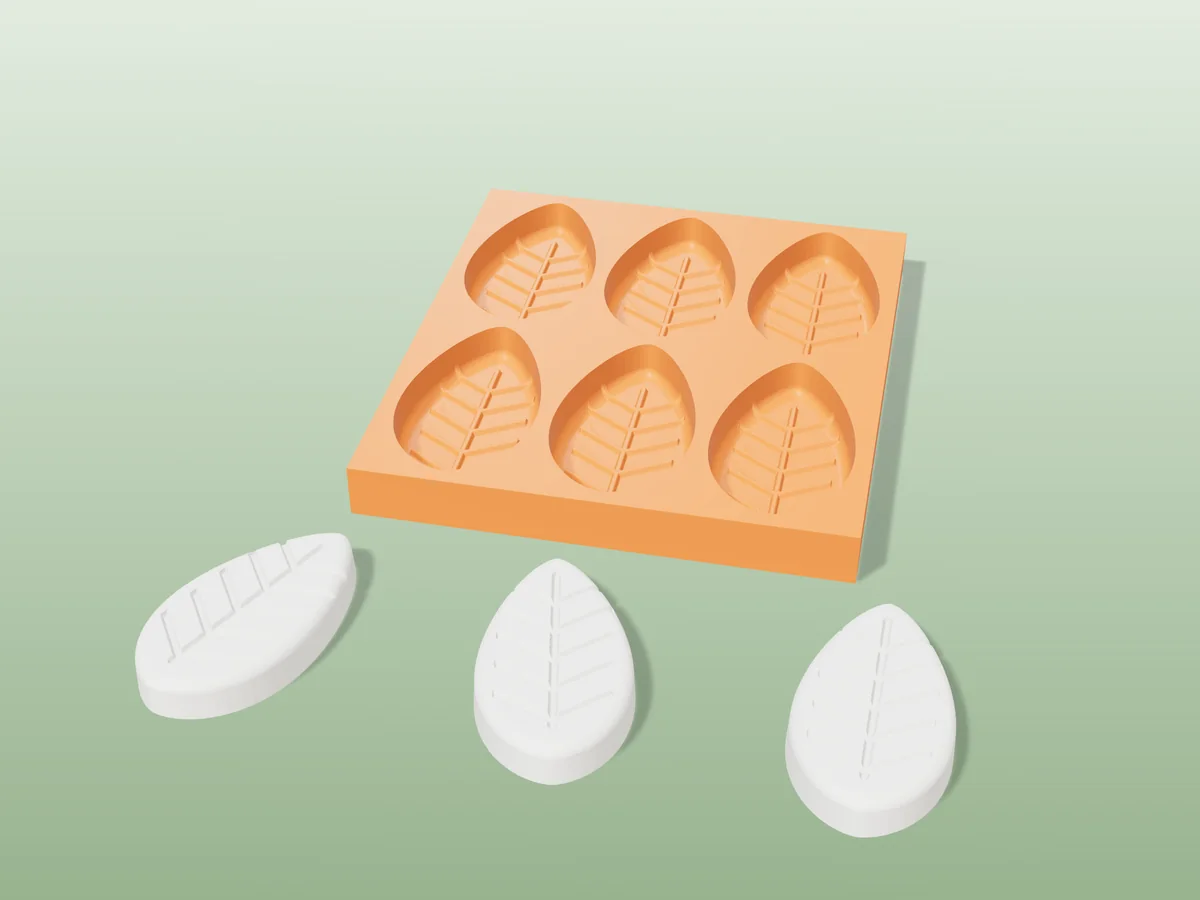
Shown as a 3D render of the printed mold parts pulled apart around the master, not a photo.
What you need
- About 315 ml of silicone (mix it in one batch)
- About 67 ml of casting plaster, Jesmonite or fine concrete per bust
- Steel binder clips, tape or a hot glue gun
How to cast it
- Print the base, which has the master already fused onto it, and the two shell halves. No supports.
- Stand the shell halves on the base around the master and hold the seams shut with steel binder clips. The seats for them are built into the shell.
- Tape the outside seams or run a bead of hot glue along them, because silicone finds every gap.
- Mix 315 ml of silicone in one batch, pour it into the open top in a thin stream, and fill level with the rim.
- Once it has cured, unclip the shell and slide each half off SIDEWAYS, not upward: the master is wider above its foot, so the base rib is left open for that. Then peel the silicone off the master. That silicone is your mold.
- Set the silicone back in the shell to keep its shape, and cast into it through the opening the base left.
| Cast material | Plaster |
|---|---|
| Total print time | 13 h 6 min |
| Printed parts | 3 |
| Size (W x D x H) | 86 x 68 x 115 mm |
| Filament | ~163 g |
| Layer height | 0.2 mm |
| Infill | 15% |
| Supports | Not needed |
| Printer | Sliced with PrusaSlicer 2.7.2: 0.4 mm nozzle, 0.2 mm layers, 3 walls, 15% infill, MK3-class speeds. These parts only hold liquid silicone while it cures, so PLA is fine. No supports. |
| Download | ZIP: 3 printed parts (STL) + bust master (STL) + print sheet + recipe |
| Added | 2026-09-24 |
Pro early access until October 24, 2026, then free with any account.
Free for personal use. Selling the pieces you cast needs a commercial licence (Pro or Founder); passing on the file itself is not permitted on any plan. Full terms.
Made with the free silicone mold maker generator. Upload your own model and get the same kind of mold built around it, in your browser.
New to casting? Read the silicone mold maker guide.