◆ Plaster
Ceiling rosette mold
A 150 mm ceiling rosette with a beaded rim, sixteen leaves and a flower boss, to cast in plaster. Silicone box mold.
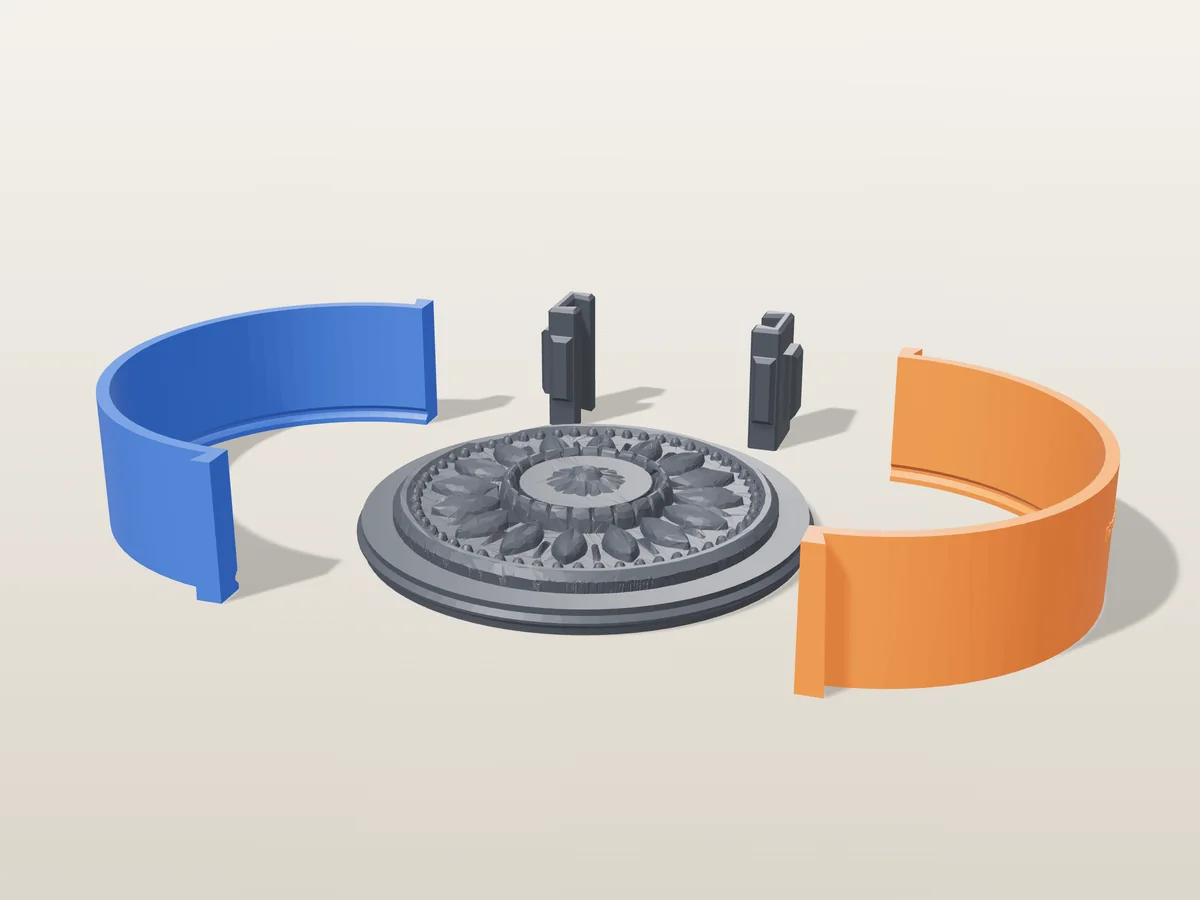
◆ Plaster
A 150 mm ceiling rosette with a beaded rim, sixteen leaves and a flower boss, to cast in plaster. Silicone box mold.
A ceiling rosette (or wall medallion) 150 mm across and 19 mm high: a beaded outer ring of 56 pearls, sixteen pointed leaves with raised midribs and small darts between them, a notched inner ring, and an eight-petal flower with a button in the middle.
Made with the box mode of our silicone mold maker in its round shape. It is a pure relief with no undercut at all, so a silicone block releases every bead cleanly. Print the base with the rosette fused onto it, the two walls and the two clamps, and pour about 870 ml of silicone. That is a lot of silicone for the size, but the block lasts for hundreds of plaster casts.
A small rosette above a pendant light, a set of medallions on a wall or a panel door, or a decorative trivet in Jesmonite. The base is 212 x 196 mm, so check it fits your printer. The zip carries every printed part, the rosette master as its own STL, the tool's own print-settings sheet and a recipe file for the generator.
Shown as a 3D render of the printed mold parts pulled apart around the master, not a photo.
Print the base with the master fused onto it, the two walls and the two clamps.
Stand the base on the table. Set each wall down a few centimetres out from it and slide it in over the table until the ridge round the base sits in the groove at its foot, then slide the clamps down over the seams. Once they are on, the walls cannot lift, and the ridge seals the bottom.
Mix 929 ml of silicone in one batch and pour it into a corner, letting it rise around the master until it covers the top.
Once it has cured, take the clamps off, slide the walls straight out and pull the silicone block off the master. That block is your mold.
Turn the block over: the flat back of the rosette is the open face. Brush a thin coat of plaster over the beads and the leaves first, then fill to the brim and tap the block for a minute to lift the bubbles.
Strike the back flat, demold after an hour and let the rosette dry for a day or two before you glue it up or paint it.
Print details
| Cast material | Plaster |
|---|---|
| Printed parts | 5 |
| Size (W x D x H) | 178 x 178 x 55 mm |
| Print bed needed | 201 x 178 mm, 55 mm tall |
| Filament | ~302 g |
| Layer height | 0.2 mm |
| Infill | 15% |
| Supports | Not needed |
| Download | ZIP: 5 printed parts (STL) + rosette master (STL) + print sheet + recipe |
| Added | 2026-09-25 |
Pro early access until October 25, 2026, then free with any account.
Make your own silicone mold →Made with the free Silicone mold maker generator. Upload your own model and get the same kind of mold built around it, in your browser.
Free for personal use. Selling the pieces you cast needs a commercial licence (Pro or Founder); passing on the file itself is not permitted on any plan. Full terms.
New to casting? Read the silicone mold maker guide.
Drill a hole through the flower boss once the plaster is fully dry, with a spade bit and light pressure, big enough for the cable and the ceiling cup. Then stick the rosette up with a plaster or ceiling-rose adhesive and fill the joint to the ceiling with a little filler.
Box mode surrounds the whole 150 mm disc with a wall of silicone thick enough to keep the block flat, which comes to about 870 ml. In return you get a rigid, long-lived block with no seam across the relief, and plaster releases from it cleanly for hundreds of casts.
Yes. Jesmonite gives a harder, chip-proof medallion, and a fine concrete makes a heavy trivet or a garden wall plaque once it is sealed. Resin works too, with a mold release. For a ceiling, plaster is the lightest and the easiest to glue up.
 PlasterPro early access
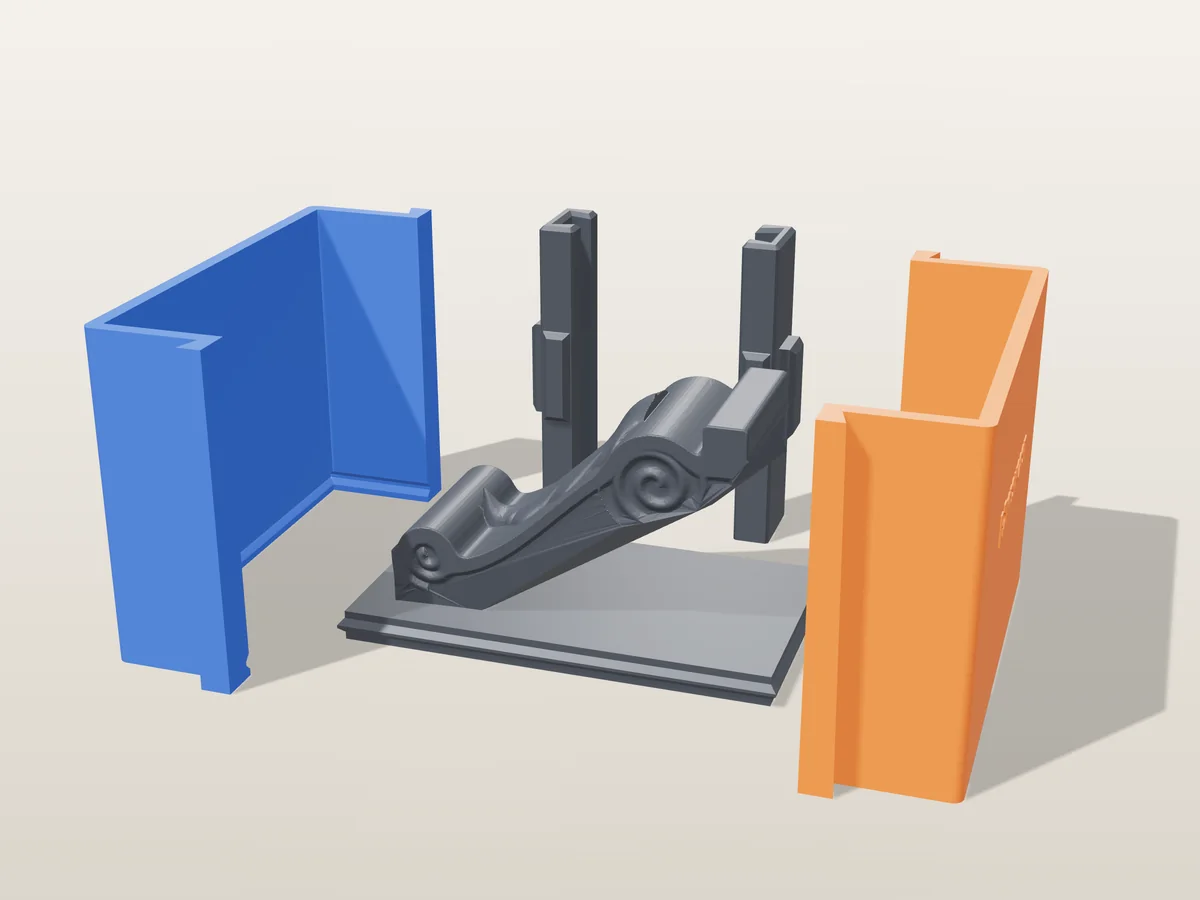
A 118 mm scroll corbel with an acanthus leaf and volutes, to cast in plaster or concrete. Silicone box mold from printed parts.
 PlasterPro early access
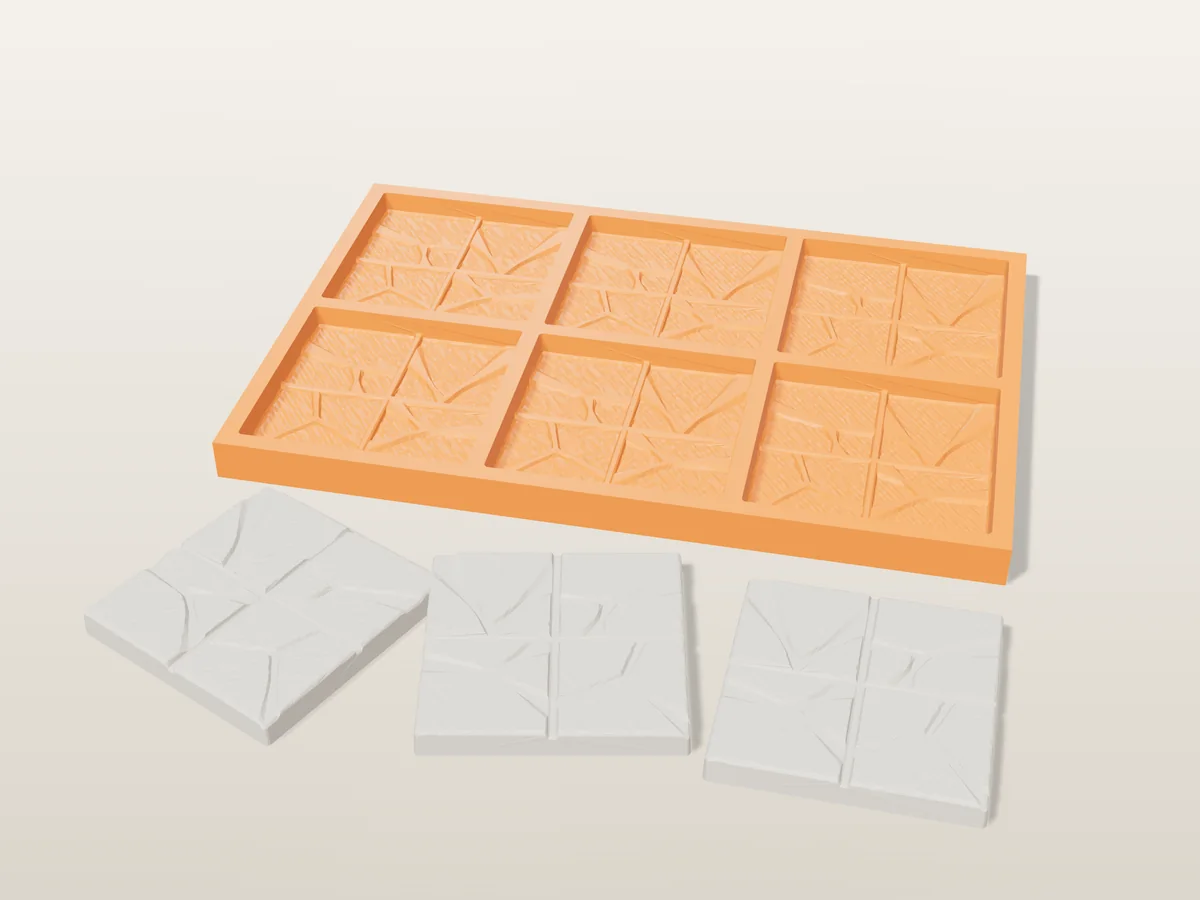
Six 2 x 2 inch flagstone floor tiles for D&D and wargaming terrain, cast in plaster in a printed tray.
 PlasterPro early access
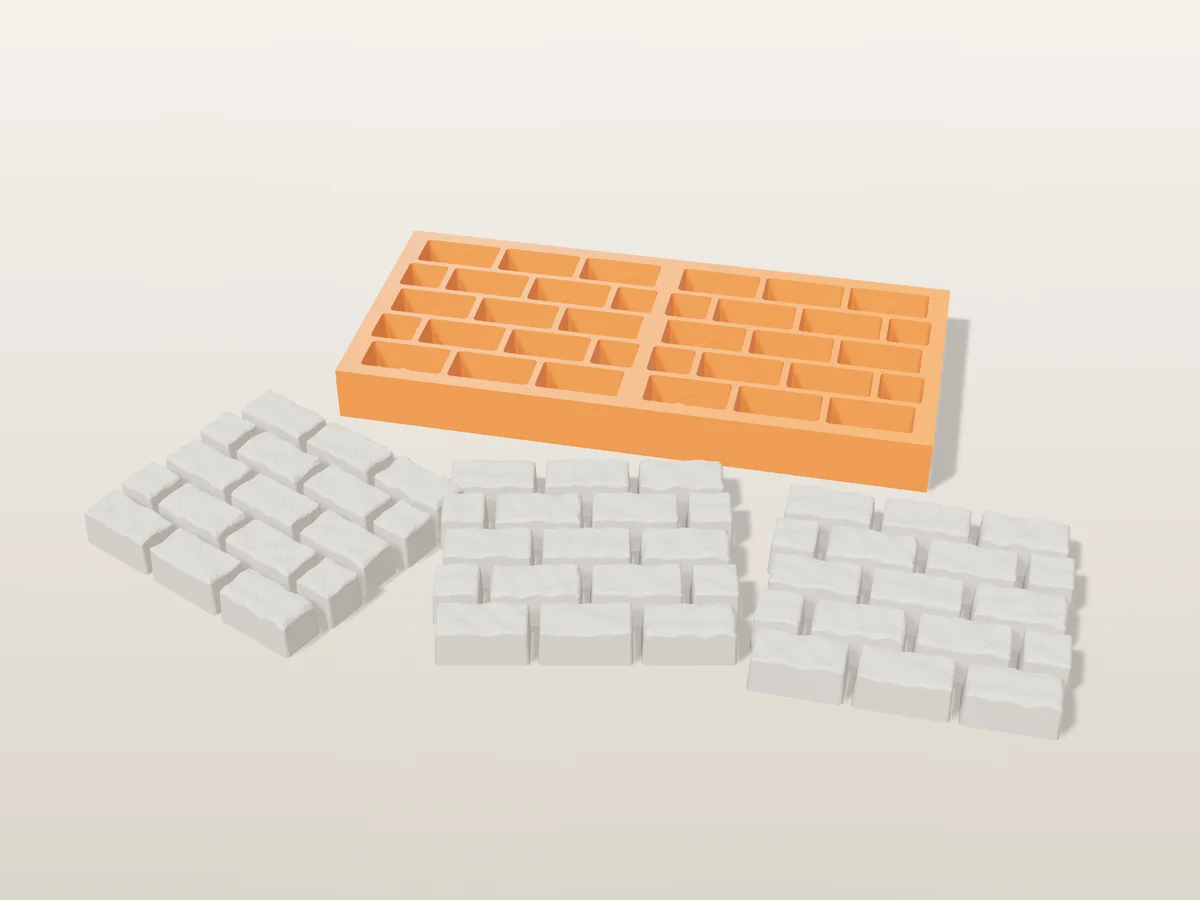
A sprue of chiselled dungeon wall bricks for tabletop terrain, cast in plaster and glued up into walls.
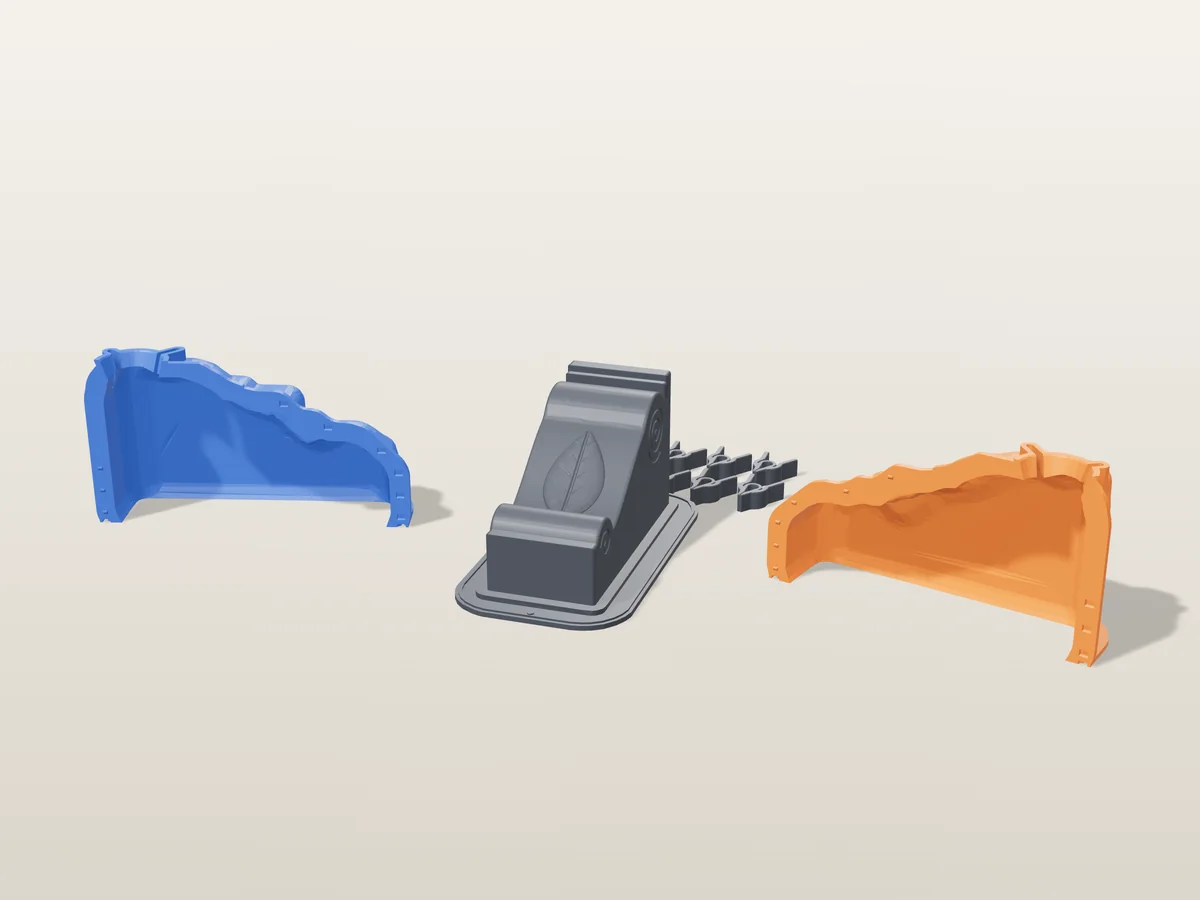 PlasterPro early access
A classic scroll corbel, 150 mm tall, with volutes and a carved leaf. Cast it in plaster as a shelf bracket or decor.
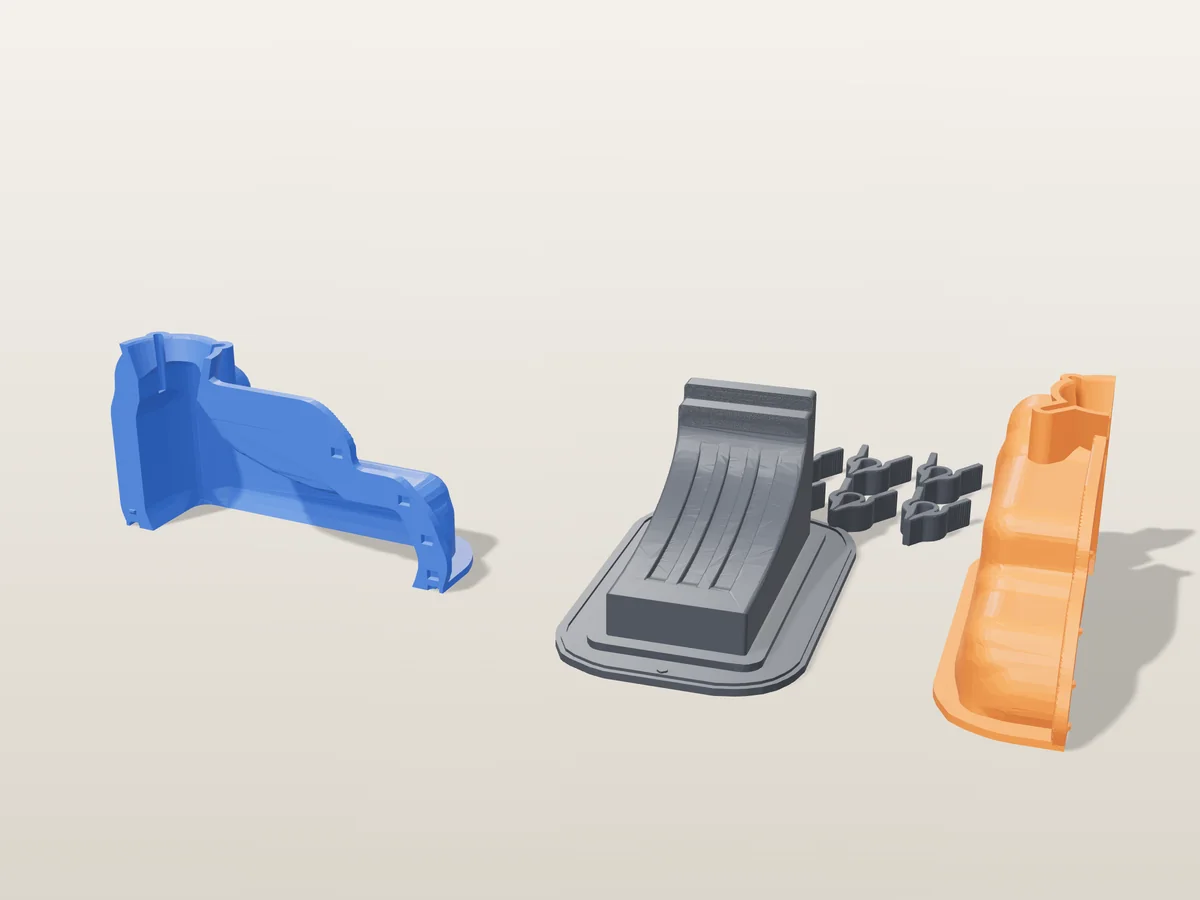 PlasterPro early access
A fluted block corbel, 110 mm tall, with a stepped top and three flutes down a cove. Cast it in plaster.
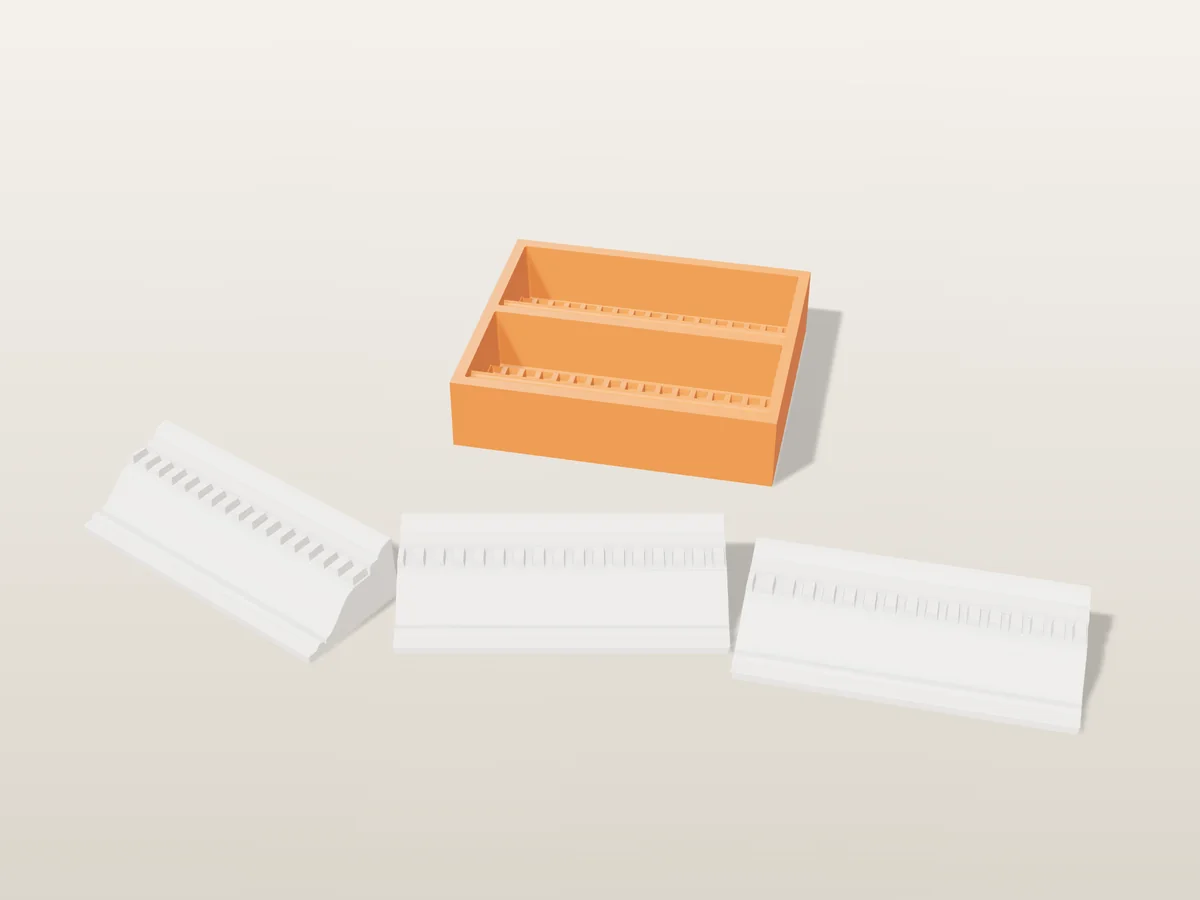 PlasterPro early access
Two 180 mm lengths of cornice with dentils, cast in plaster straight in a printed tray. Butt them into a run.
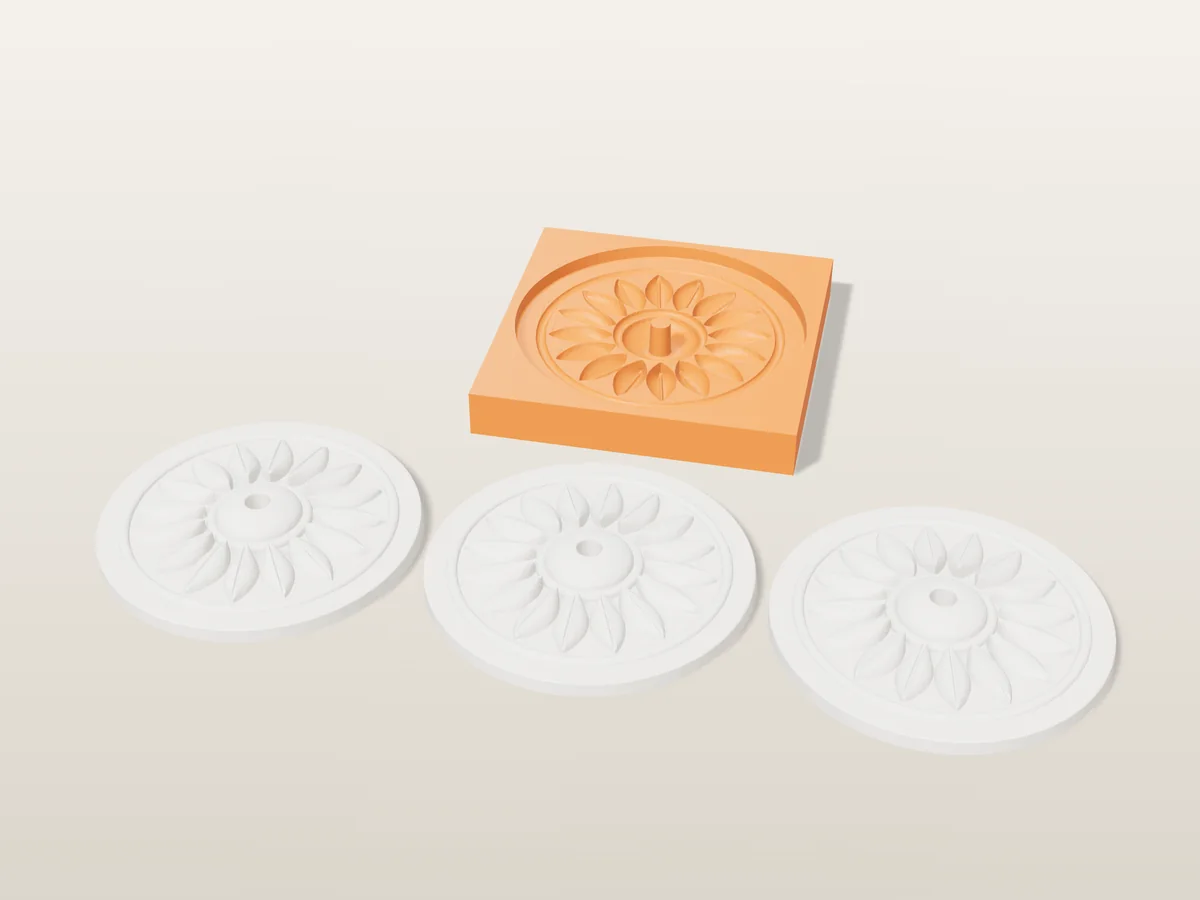 PlasterPro early access
A 180 mm plaster ceiling rose with sixteen leaves and a cable hole, cast straight in a printed tray.
 PlasterPro early access
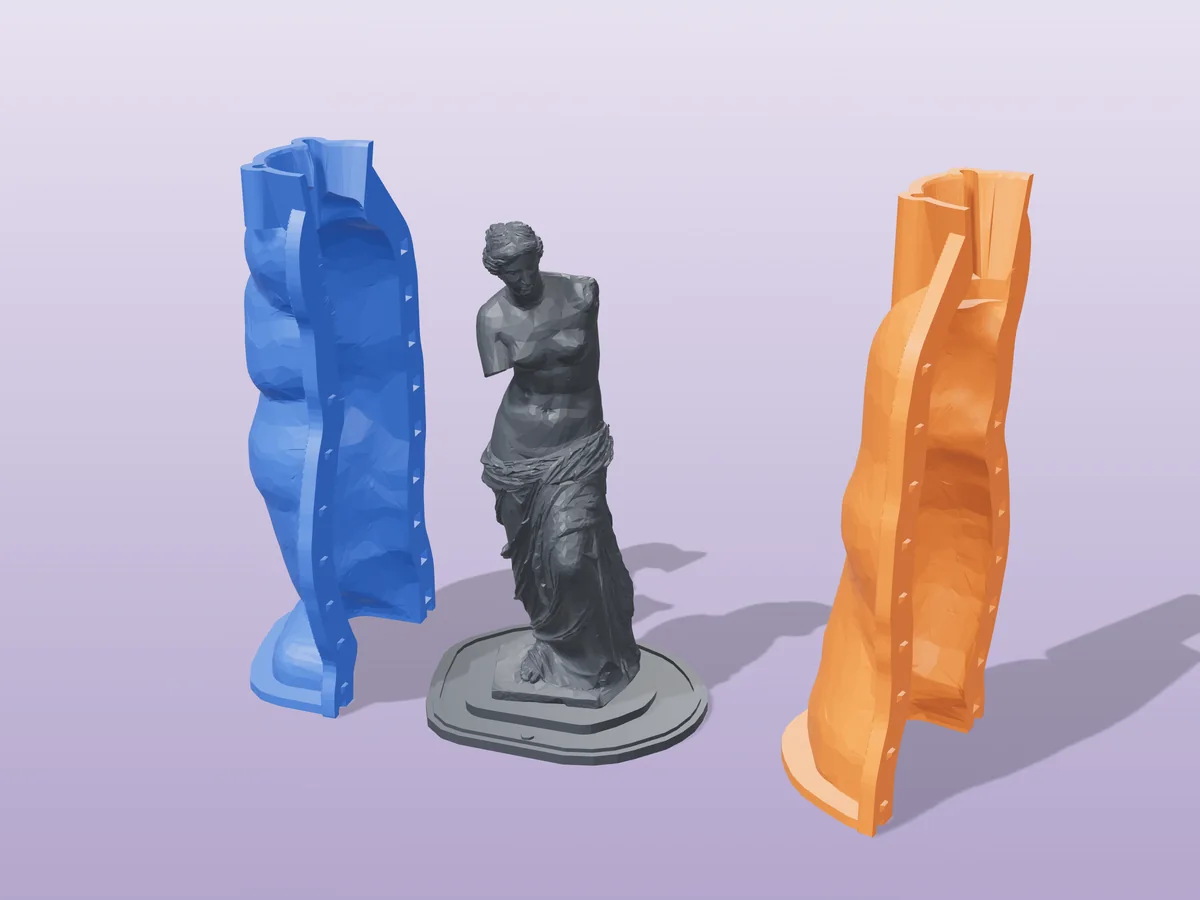
Cast your own 140 mm Venus de Milo in plaster or concrete, from a public-domain museum scan.