◆ Mold library
Candle mold STL files
3D printable candle molds, from pour-straight-in box molds to silicone mold kits for busts and figures.
◆ Mold library
3D printable candle molds, from pour-straight-in box molds to silicone mold kits for busts and figures.
38 designs · print times from 6 h 14 min
Candle wax
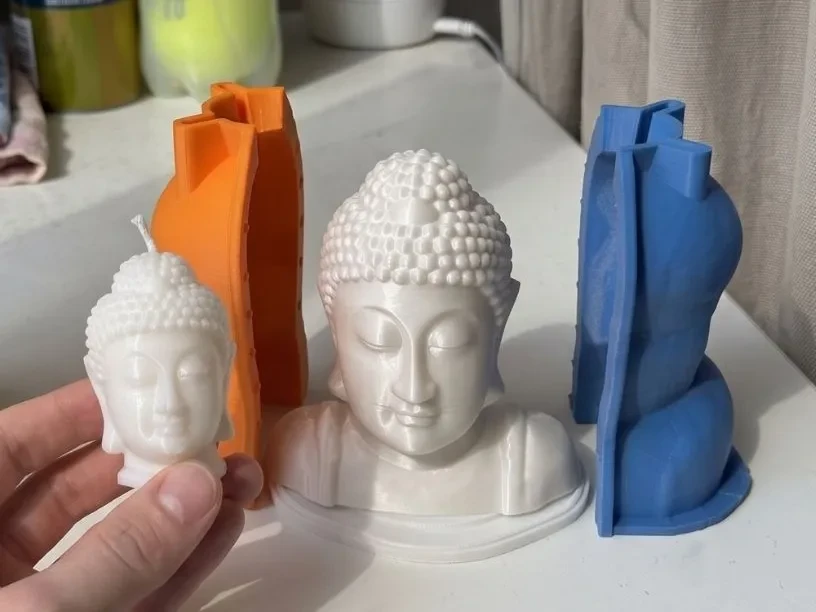
Printed two-part housing that casts your own silicone Buddha mold. Then pour wax candles in it.
Candle wax
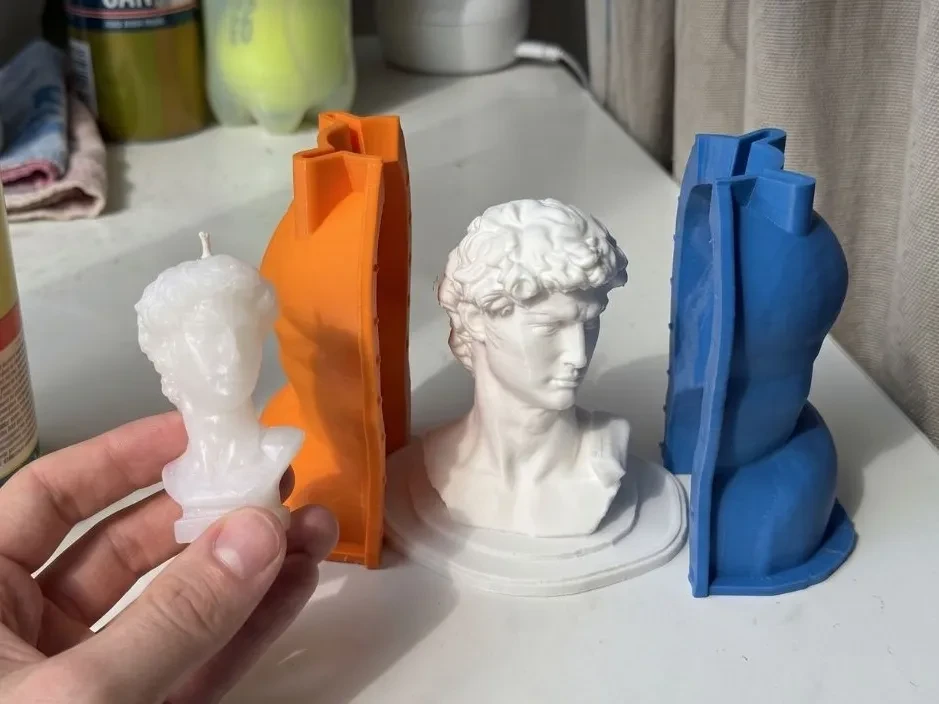
Printed two-part housing that casts your own silicone David mold, for statue candles.
Pro early access
Candle wax
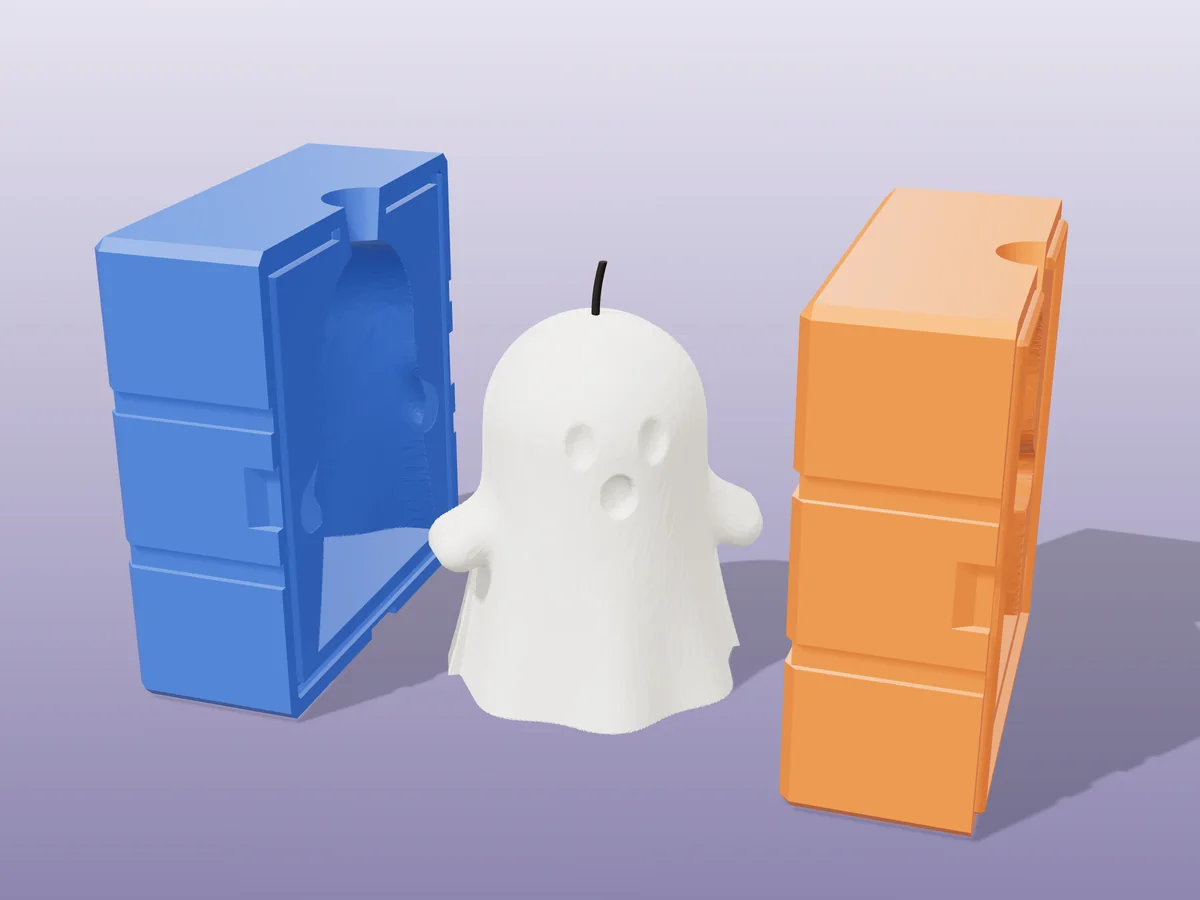
A little sheet ghost with big eyes and an "o" mouth, 86 mm tall. A rigid two-part print for Halloween candles.
Pro early access
Candle wax
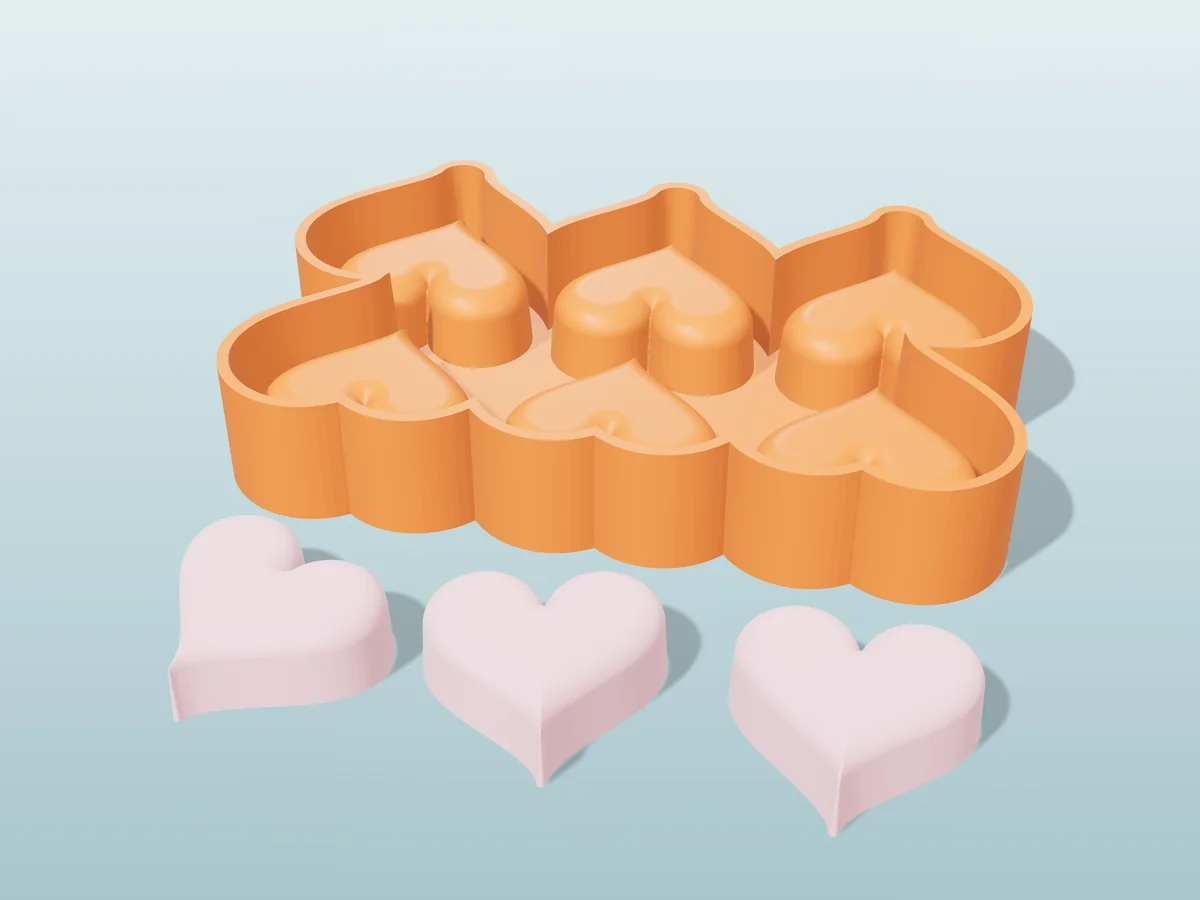
Six pillowy heart wax melts at a time, from a silicone tray you pour yourself.
Pro early access
Candle wax
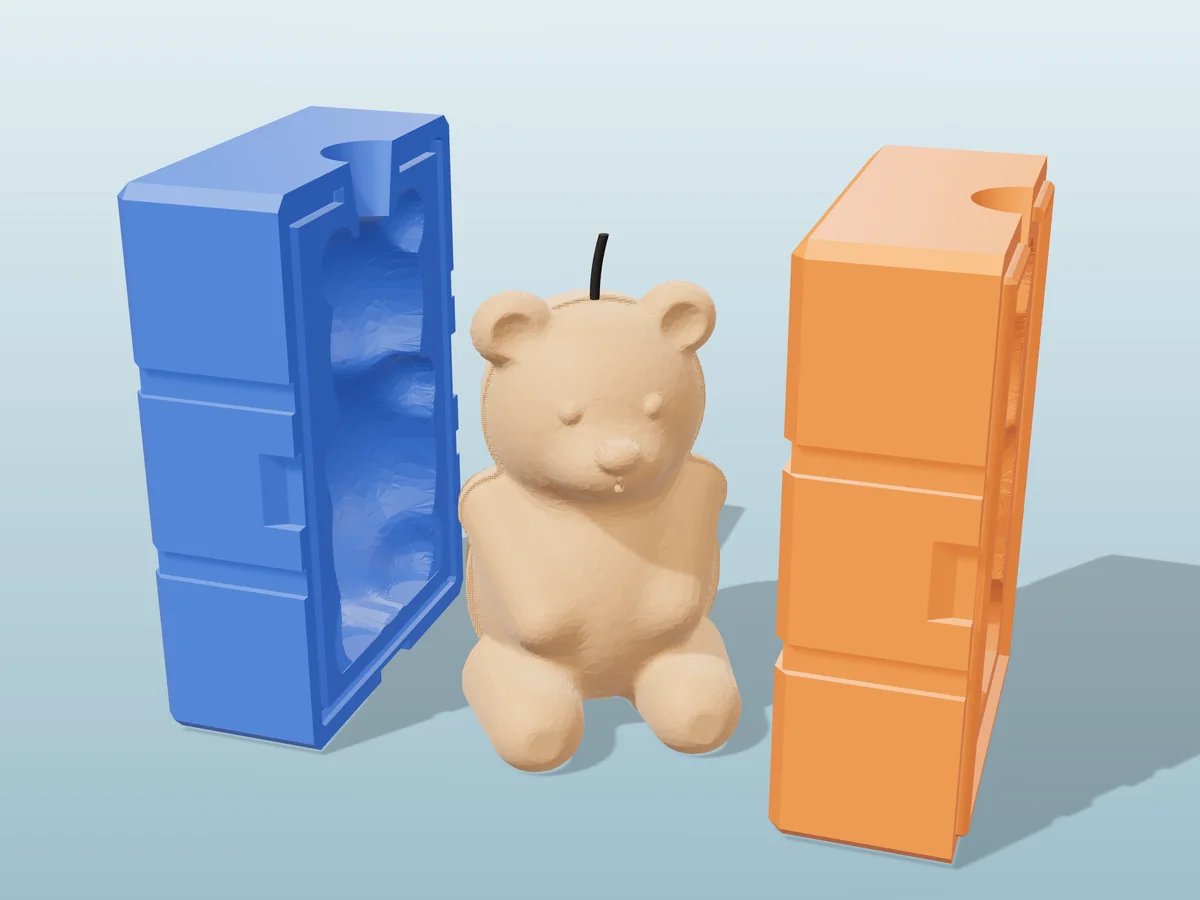
A sitting teddy bear with button eyes, a stitched smile and its paws on its tummy. A rigid two-part print.
 Pro early access
Candle wax
Pro early access
Candle wax
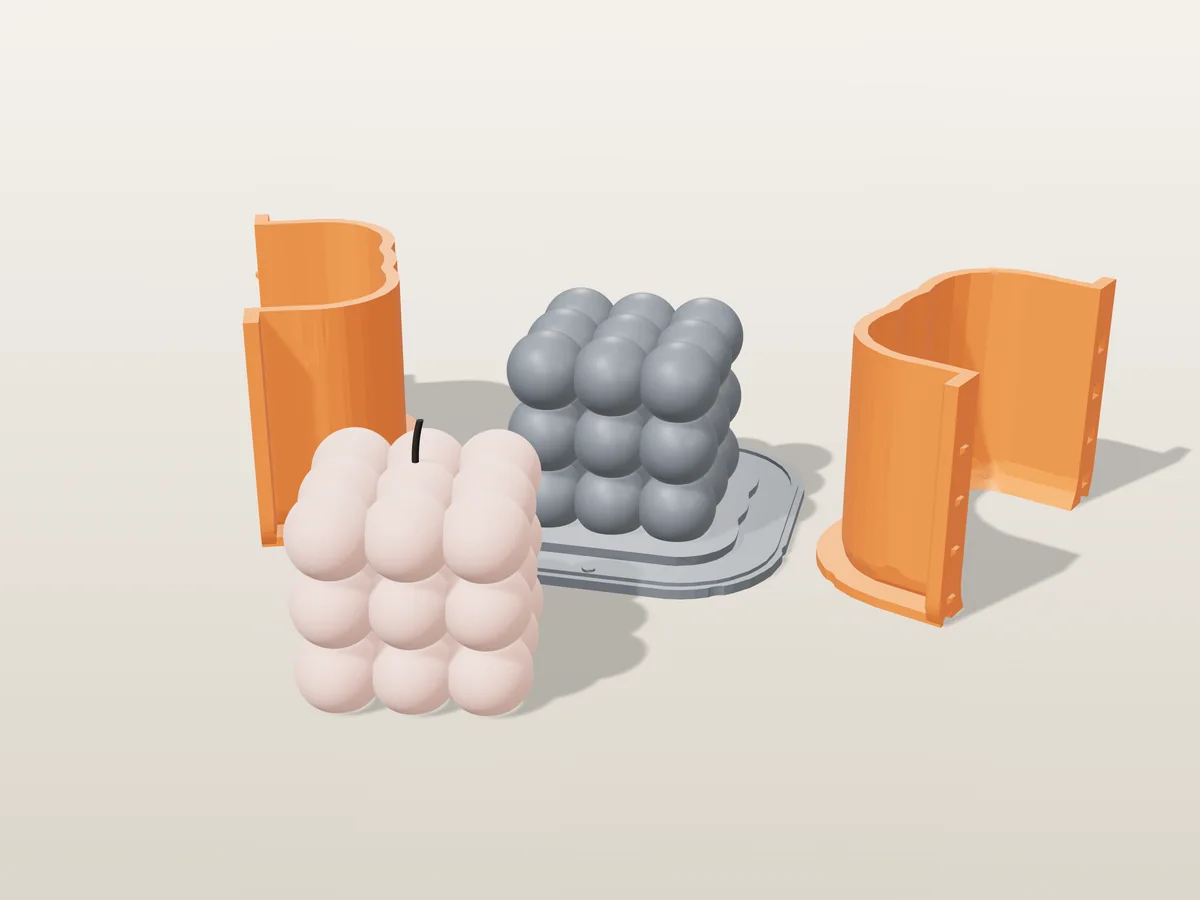
The viral 27-bubble cube candle, as a silicone mold from a printed hugging shell.
 Pro early access
Candle wax
Pro early access
Candle wax
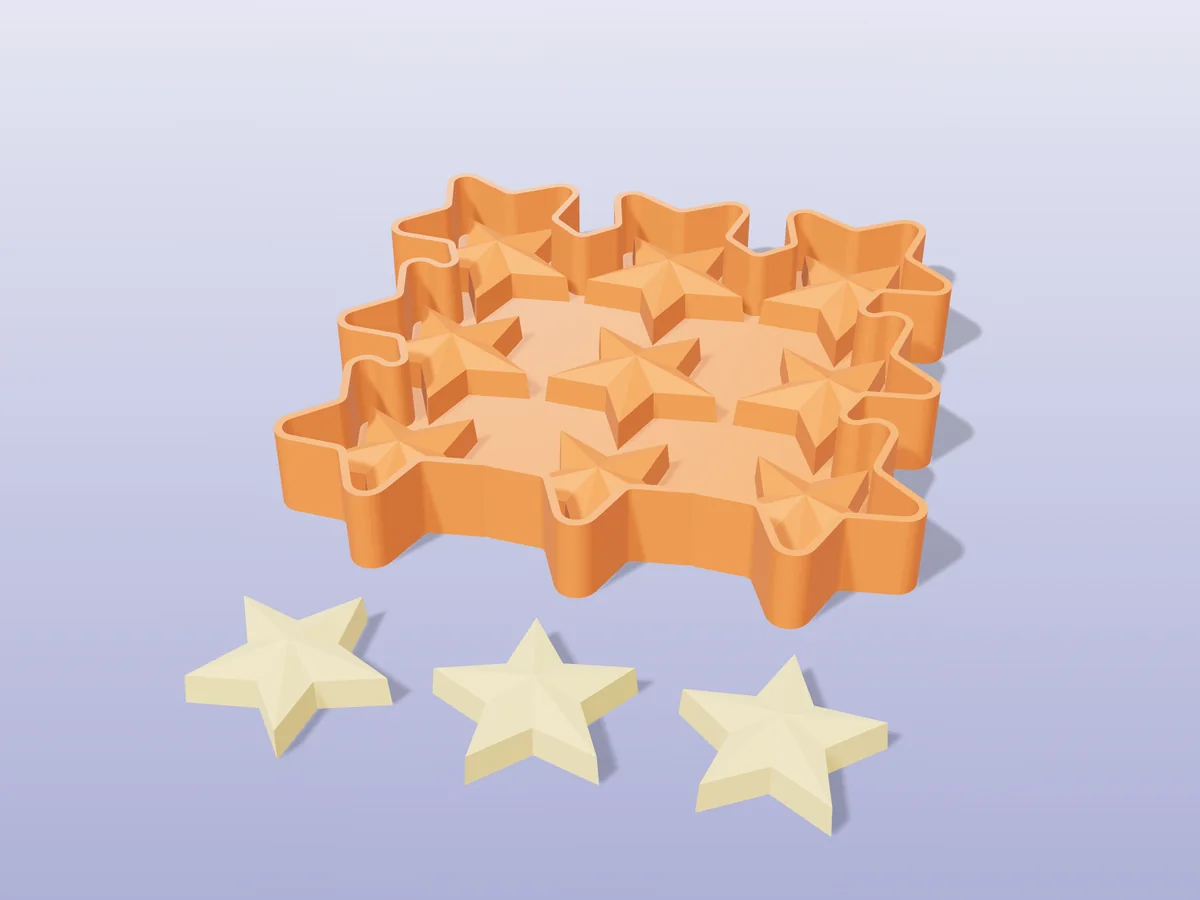
Nine faceted star wax melts per pour, from a silicone tray you make yourself.
 Pro early access
Candle wax
Pro early access
Candle wax
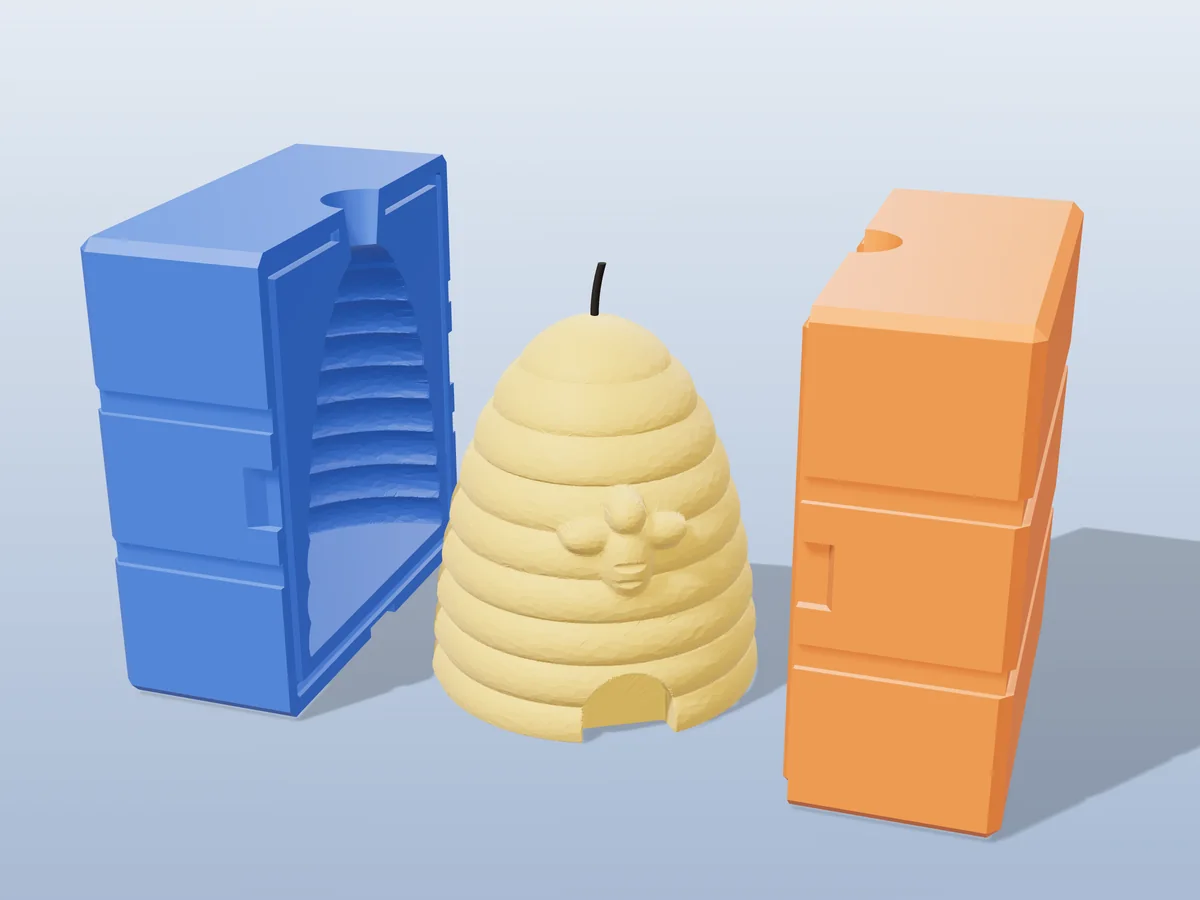
A traditional straw beehive with coiled bands, an arched entrance and a bee above the door. A rigid two-part print.
 Pro early access
Candle wax
Pro early access
Candle wax
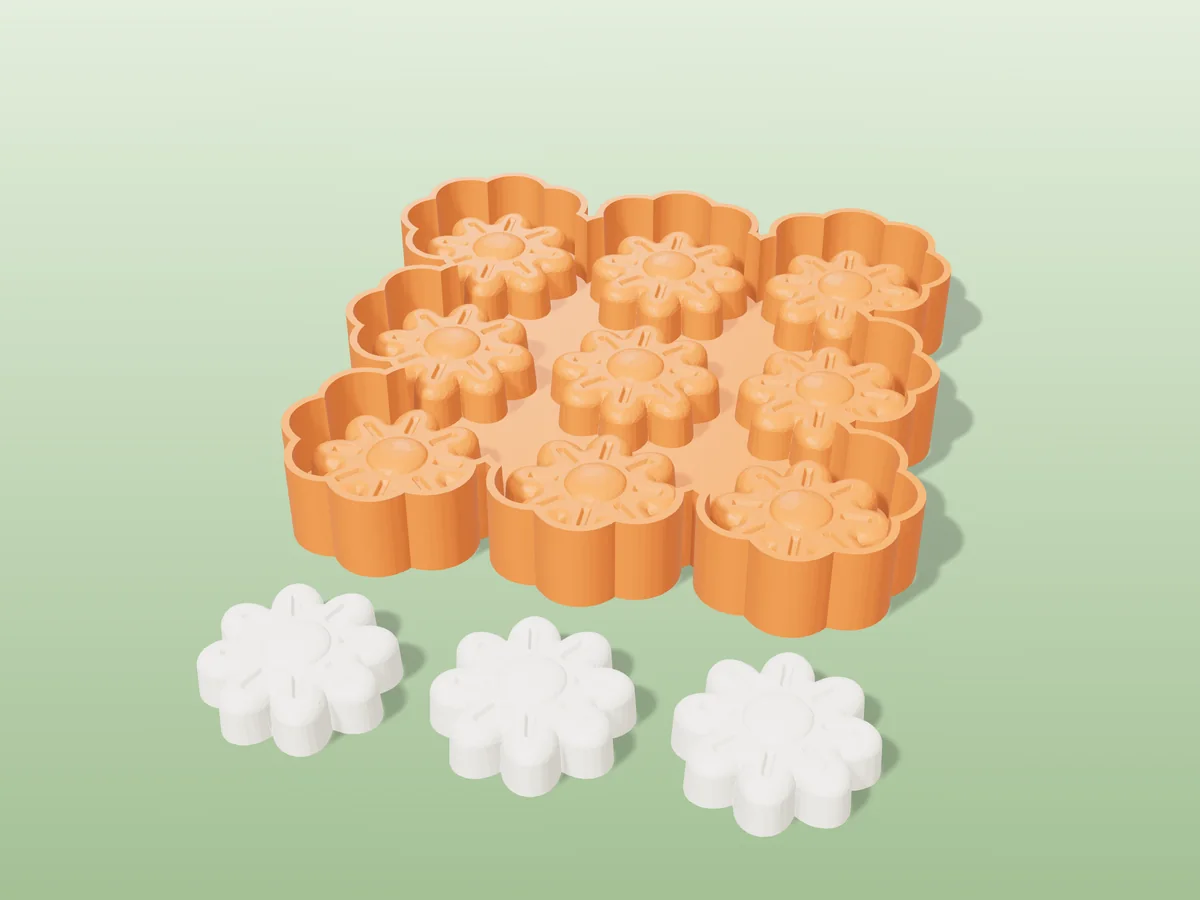
Nine daisy wax melts with a domed centre and a groove down every petal.
 Pro early access
Candle wax
Pro early access
Candle wax
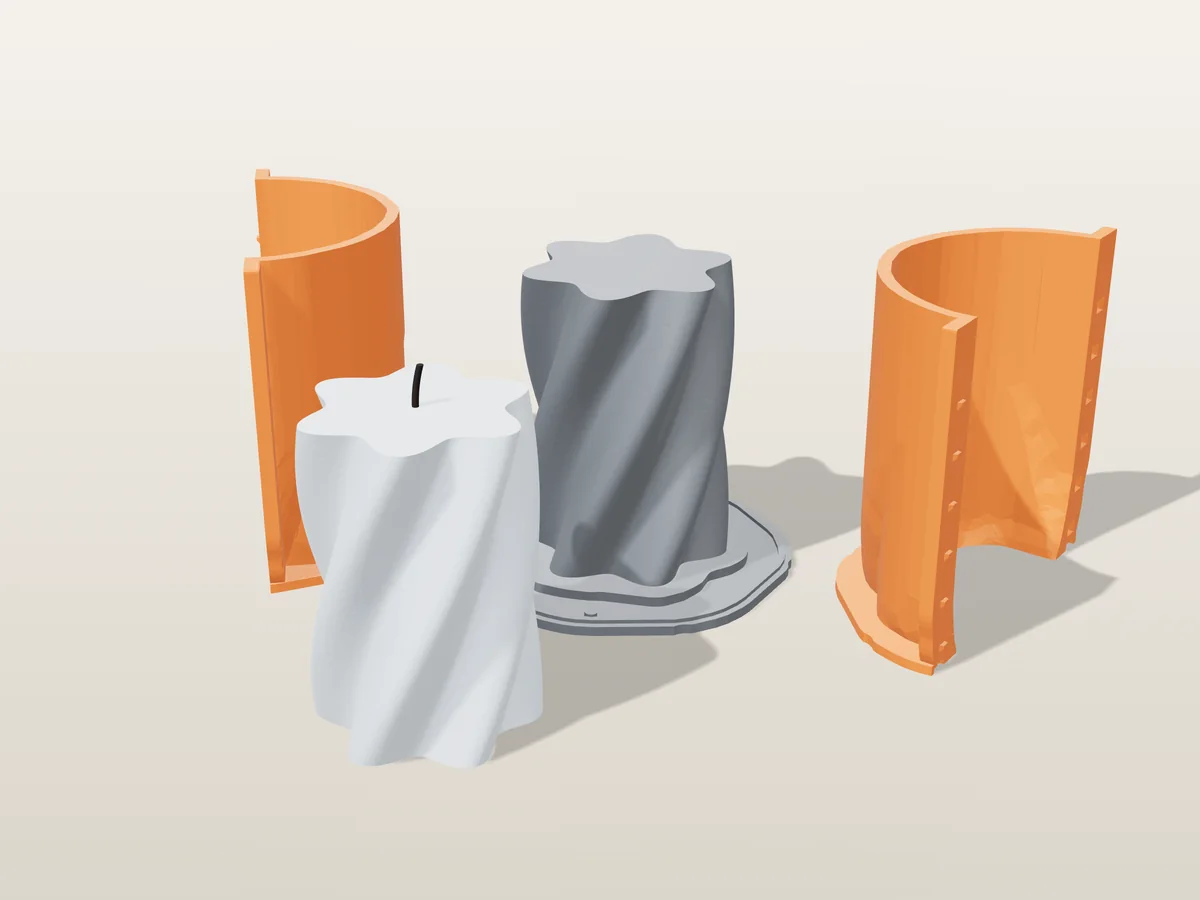
A 90 mm pillar with six lobes and a quarter turn of twist, as a silicone mold.
 Pro early access
Candle wax
Pro early access
Candle wax
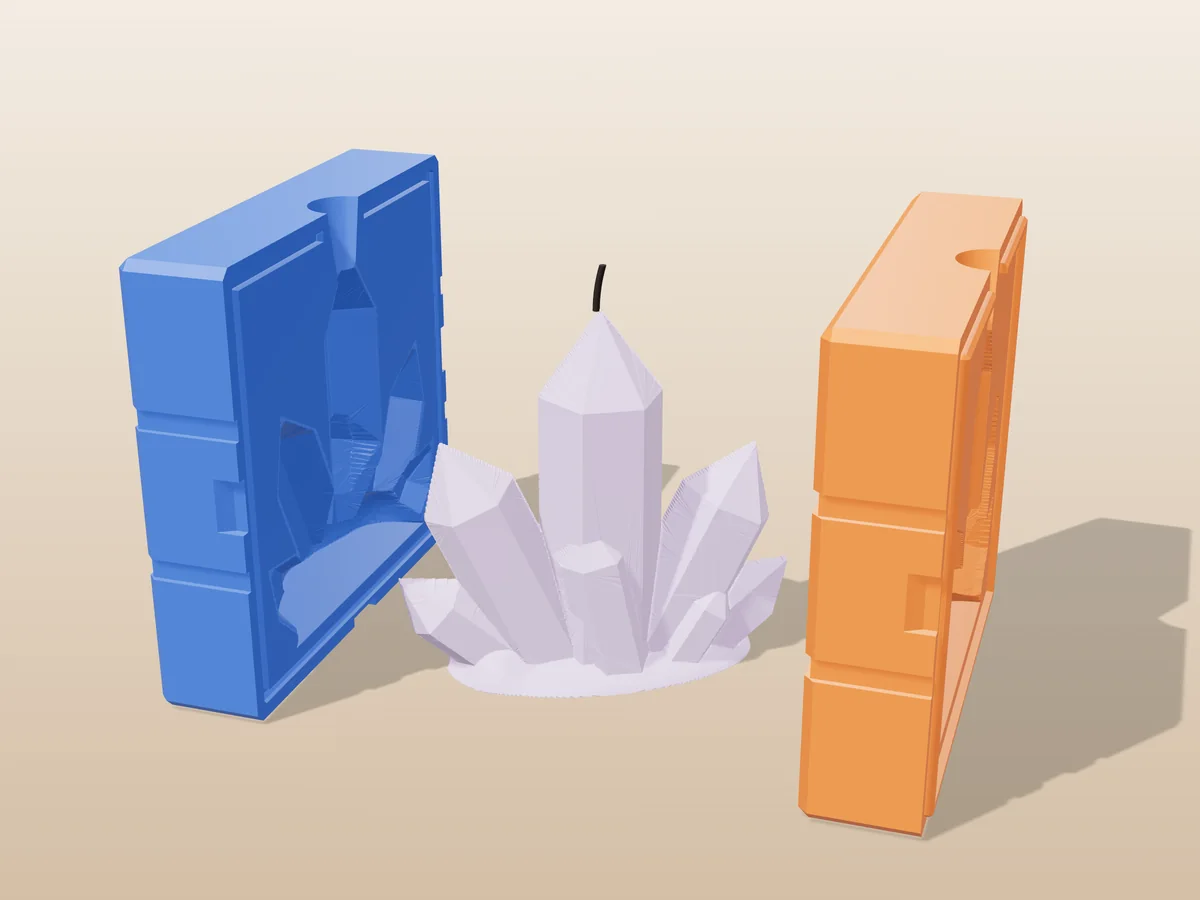
Pointed quartz crystals fanned out of a rough stone base, 98 mm tall. A rigid two-part print.
 Pro early access
Candle wax
Pro early access
Candle wax
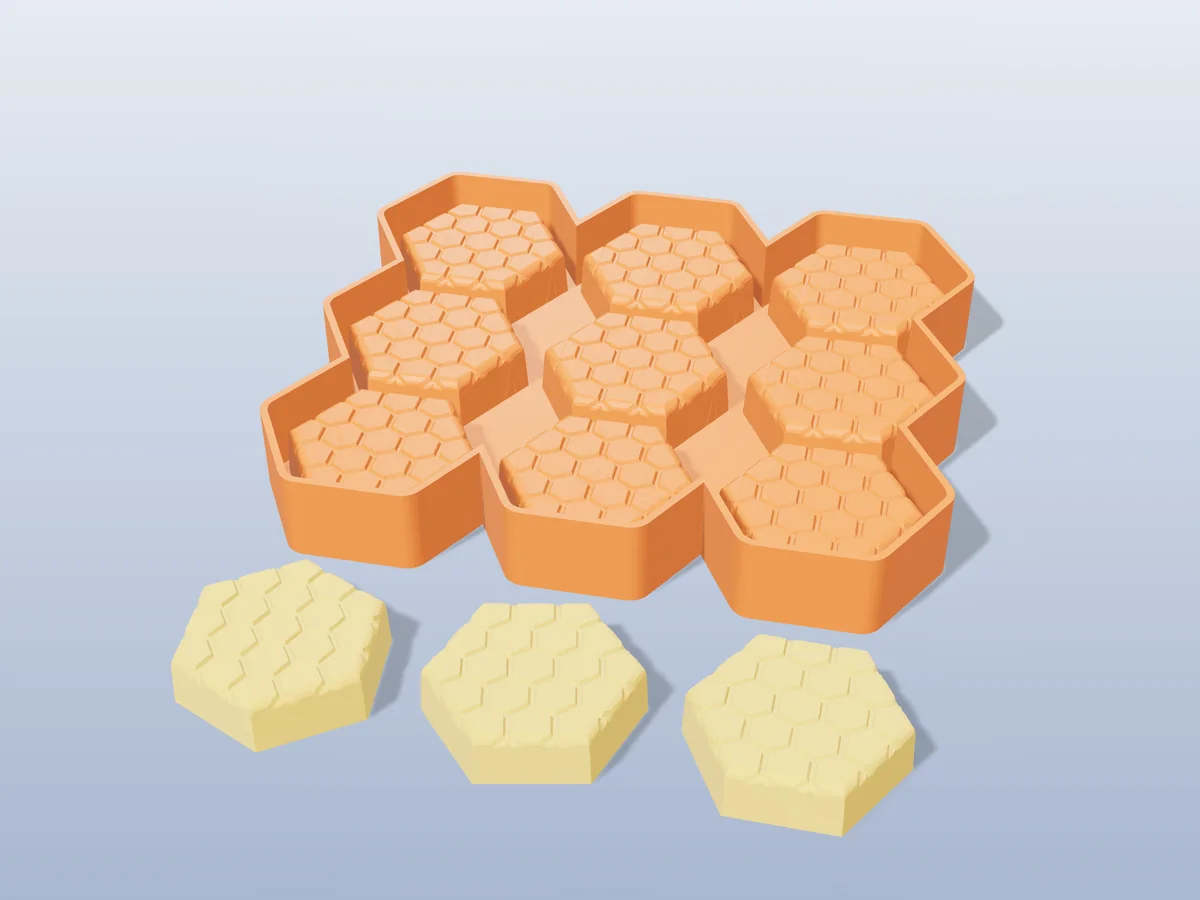
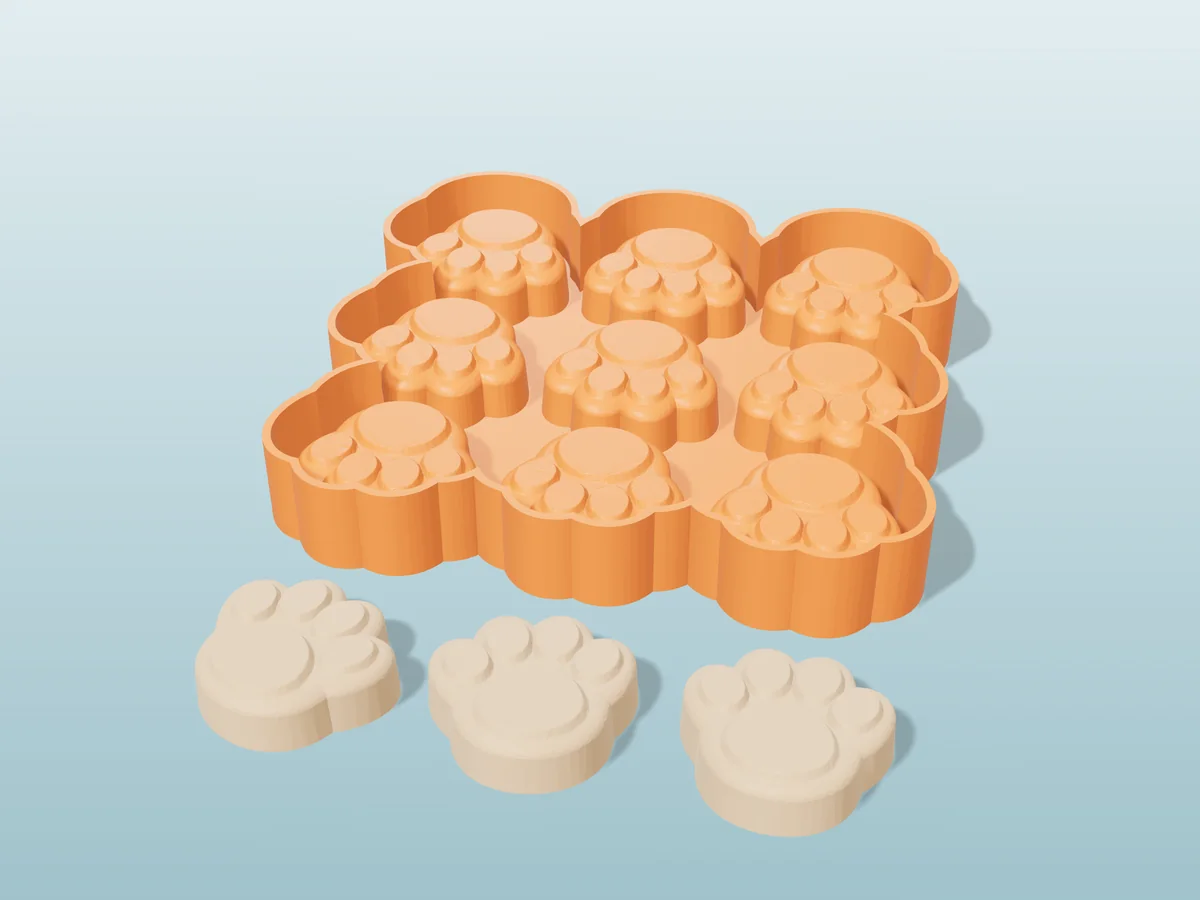
Nine hexagon wax melts with a honeycomb pattern pressed into the face.
 Pro early access
Candle wax
Pro early access
Candle wax
A snail with a spiral shell and two eye stalks, 92 mm long. A rigid two-part print.
 Pro early access
Candle wax
Pro early access
Candle wax
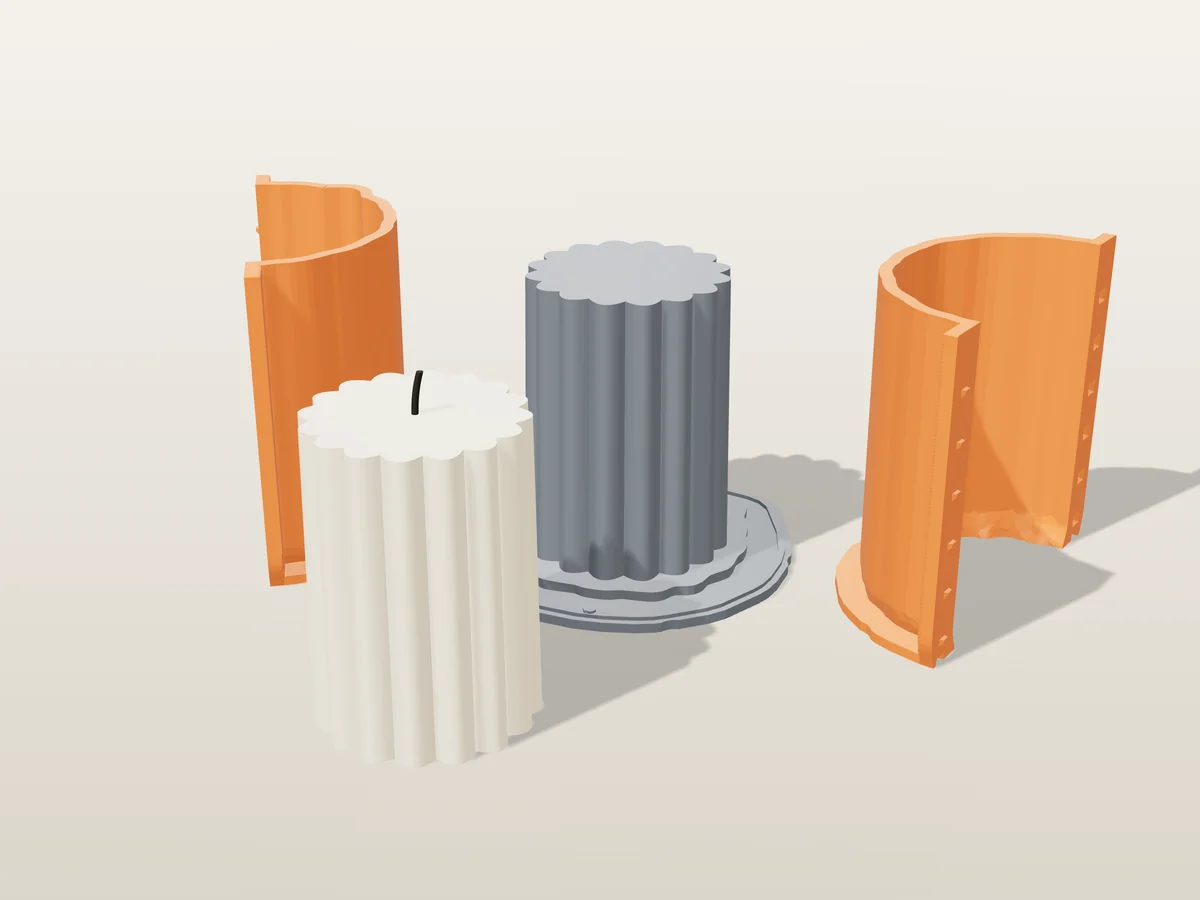
An 85 mm pillar with 16 rounded flutes, as a silicone mold from a printed shell.
 Pro early access
Candle wax
Pro early access
Candle wax
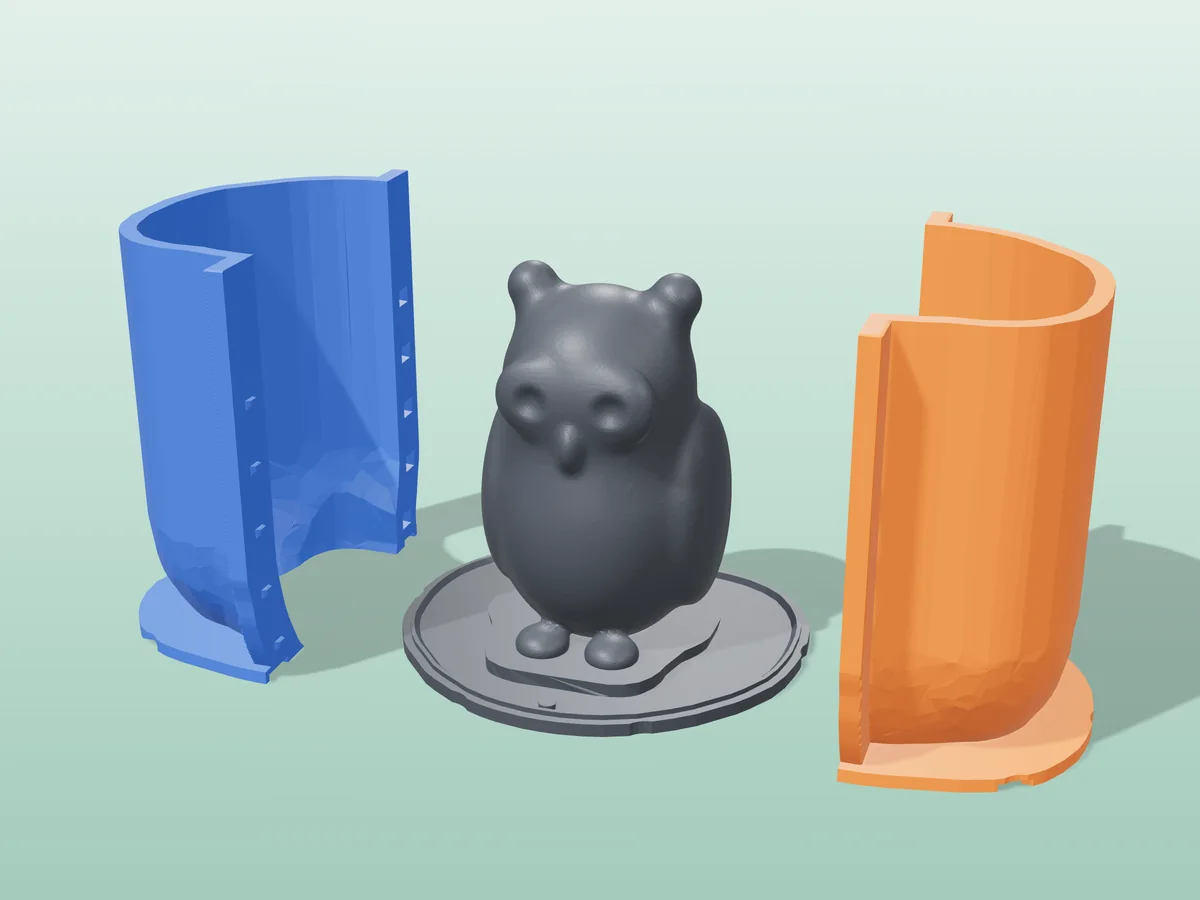
A sitting owl candle with ear tufts, big eyes and folded wings, as a silicone mold kit.
 Pro early access
Candle wax
Pro early access
Candle wax
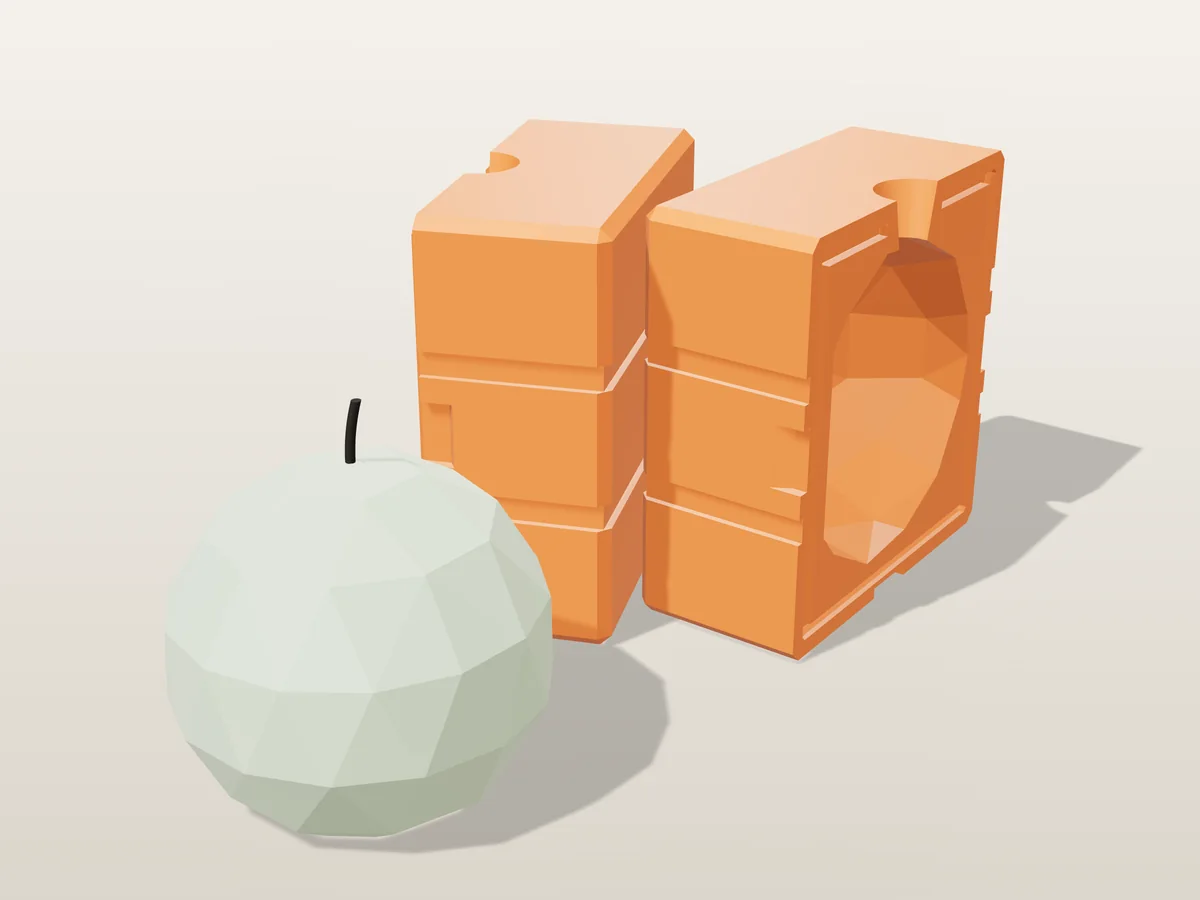
A low-poly crystal candle from a rigid two-part print. No silicone, no supports on the facets.
 Pro early access
Candle wax
Pro early access
Candle wax
 Pro early access
Candle wax
Pro early access
Candle wax
 Pro early access
Candle wax
Pro early access
Candle wax
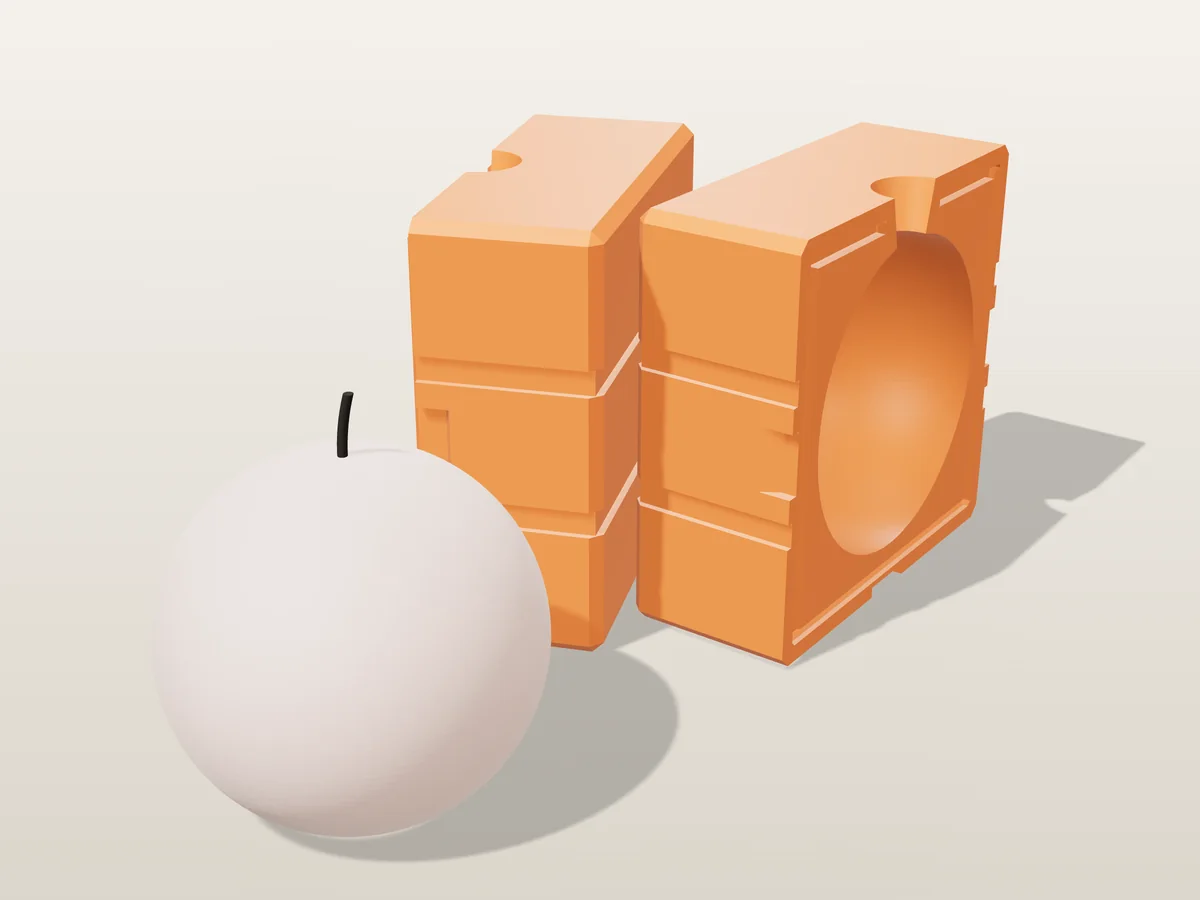
The classic 70 mm sphere candle, from two rigid printed halves. No silicone needed.
 Pro early access
Candle wax
Pro early access
Candle wax
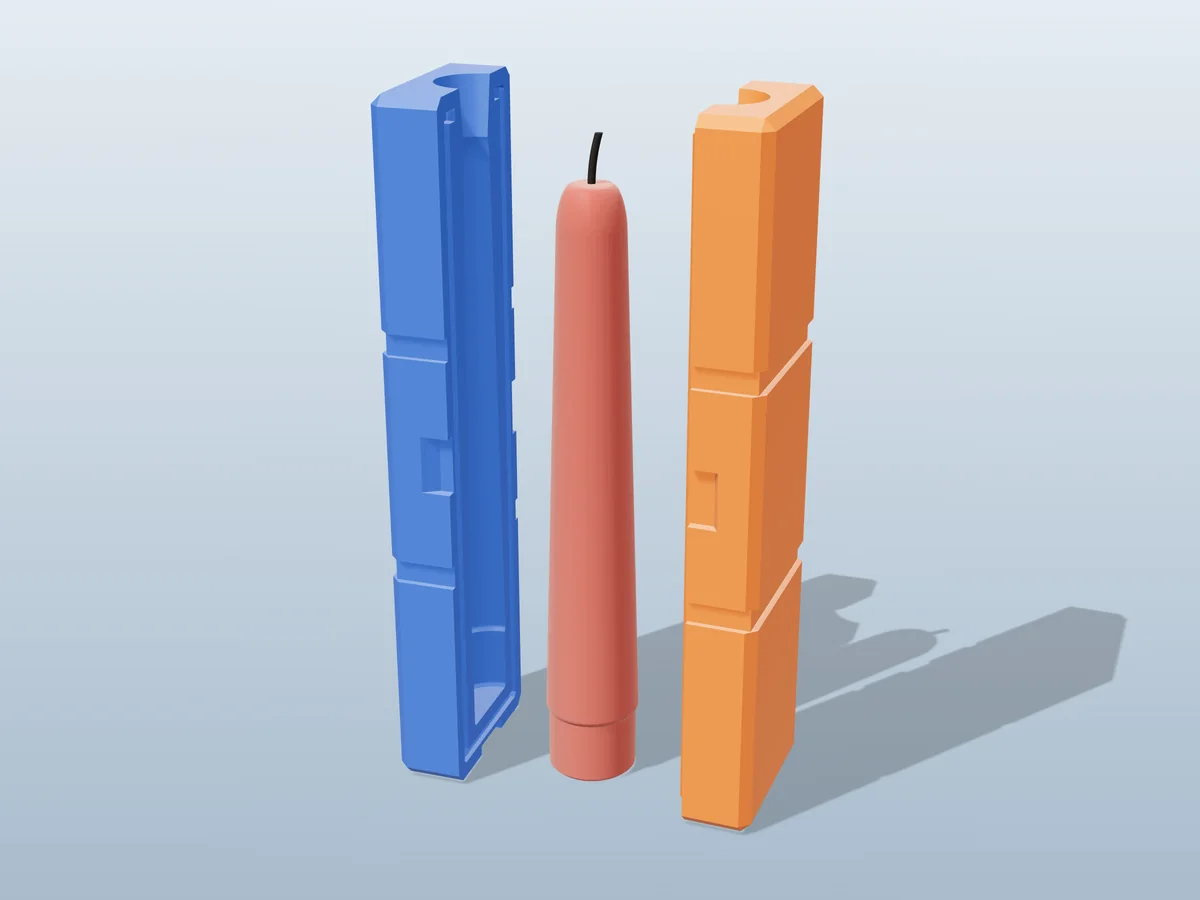
A 150 mm taper candle with a standard 22 mm foot, from two rigid printed halves. No silicone needed.
 Pro early access
Candle wax
Pro early access
Candle wax
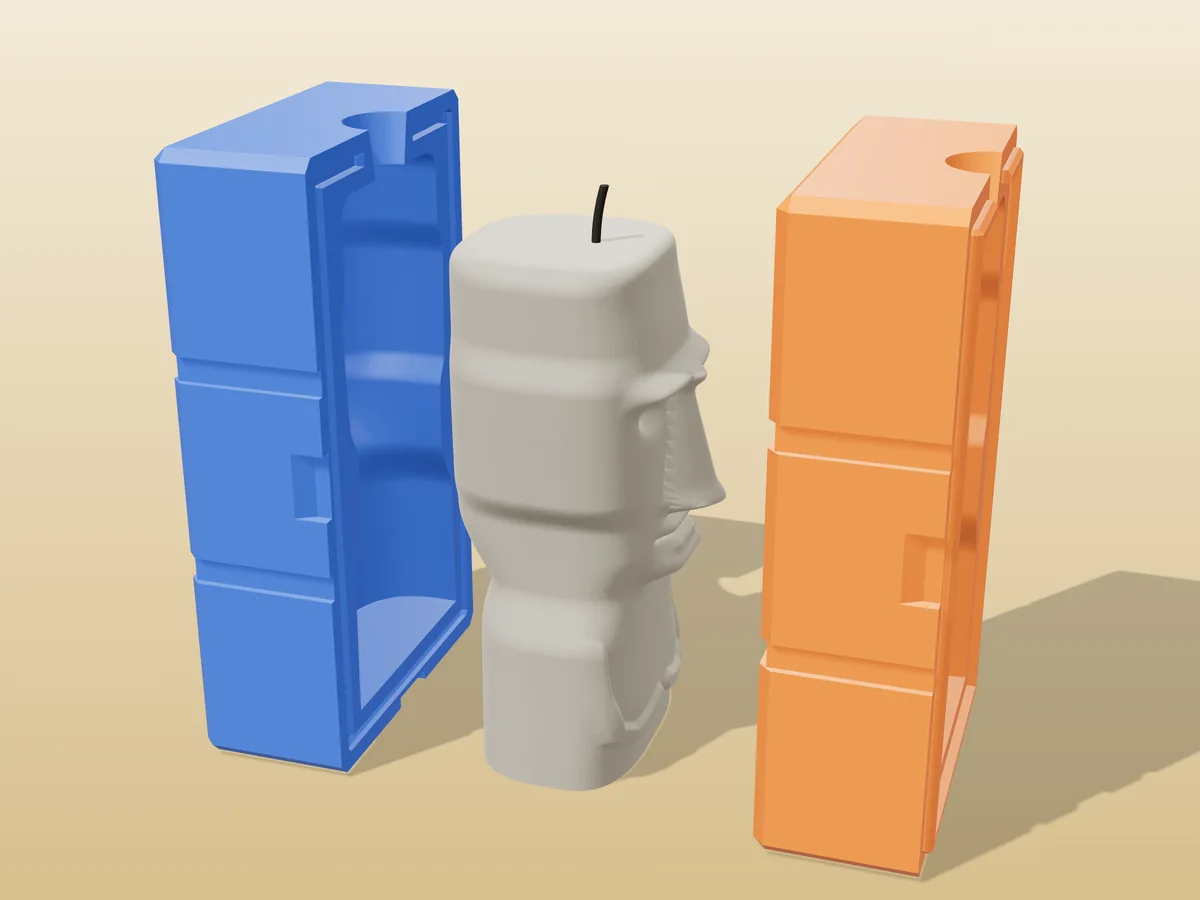
A 110 mm Moai candle, the Easter Island head, from a rigid two-part print. No silicone needed.
 Pro early access
Candle wax
Pro early access
Candle wax
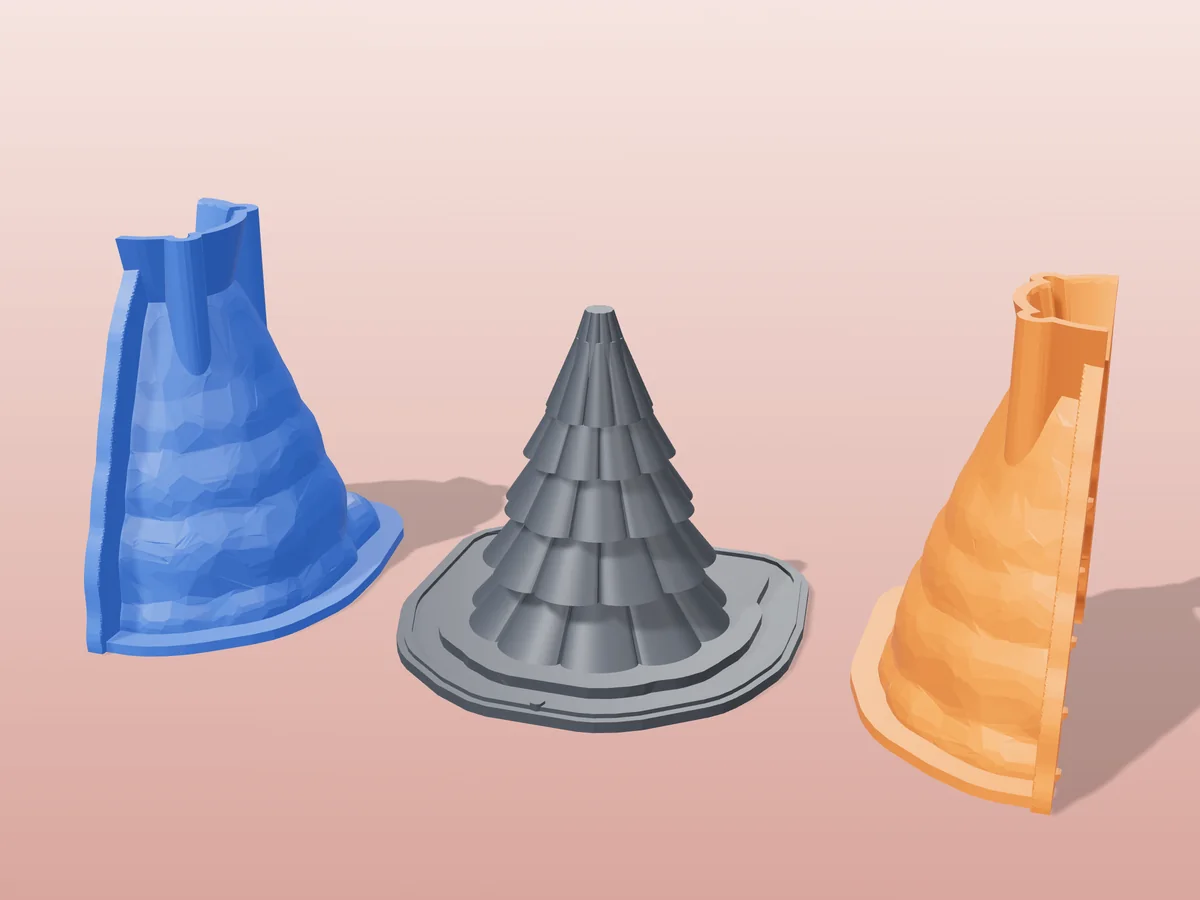
An 84 mm Christmas tree candle with six layered tiers, as a silicone mold from a printed shell.
 Pro early access
Candle wax
Pro early access
Candle wax
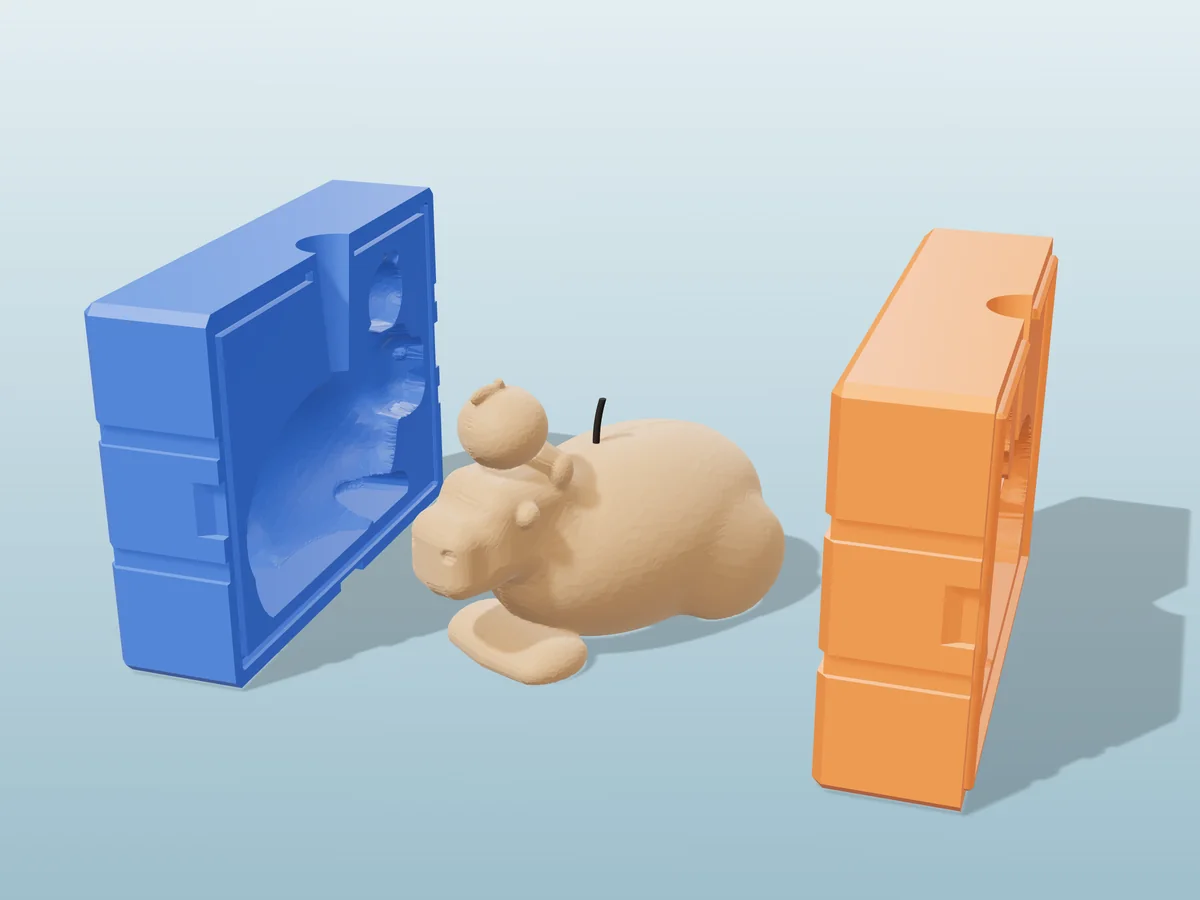
A capybara lying down with an orange on its head, the hot-spring meme, from a rigid two-part print.
 Pro early access
Candle wax
Pro early access
Candle wax
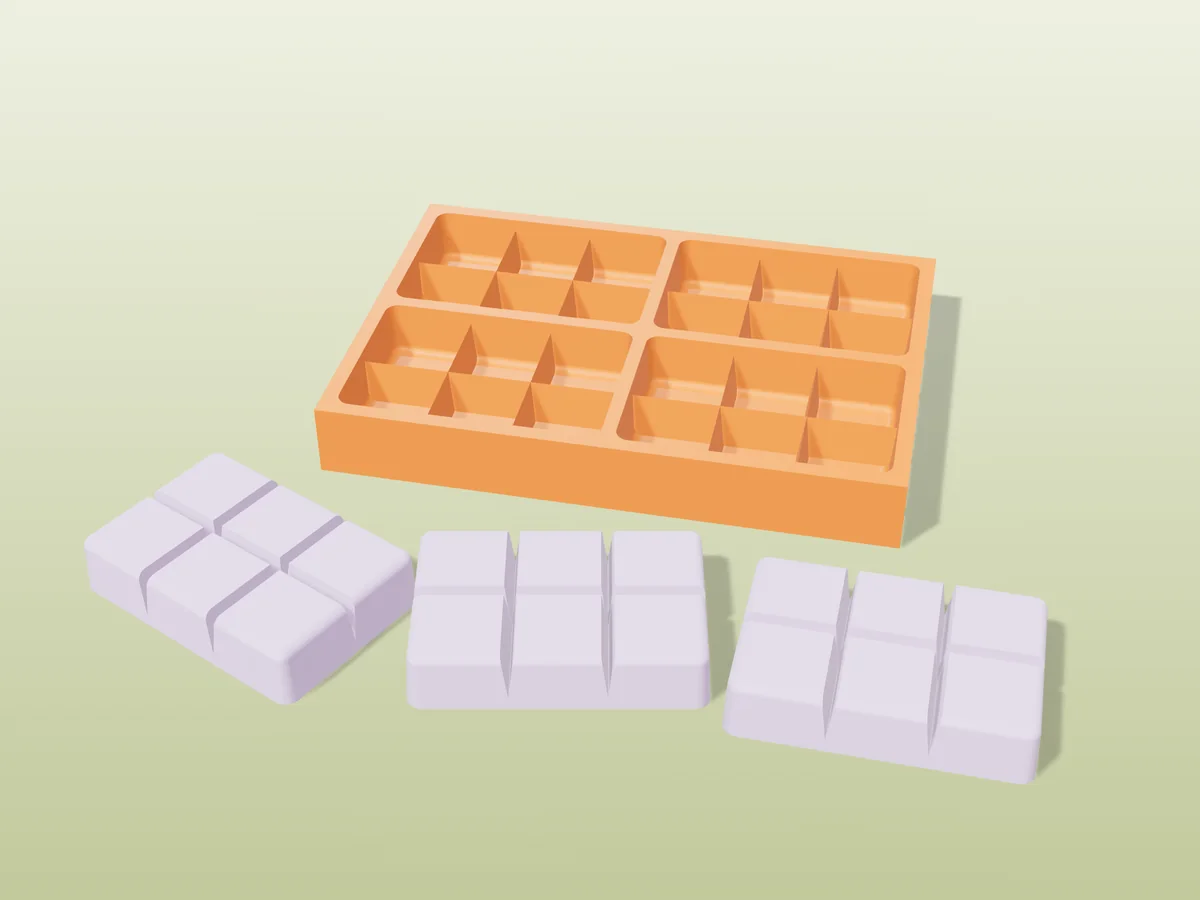
Four wax melt snap bars at a time, poured straight into a printed tray.
 Pro early access
Candle wax
Pro early access
Candle wax
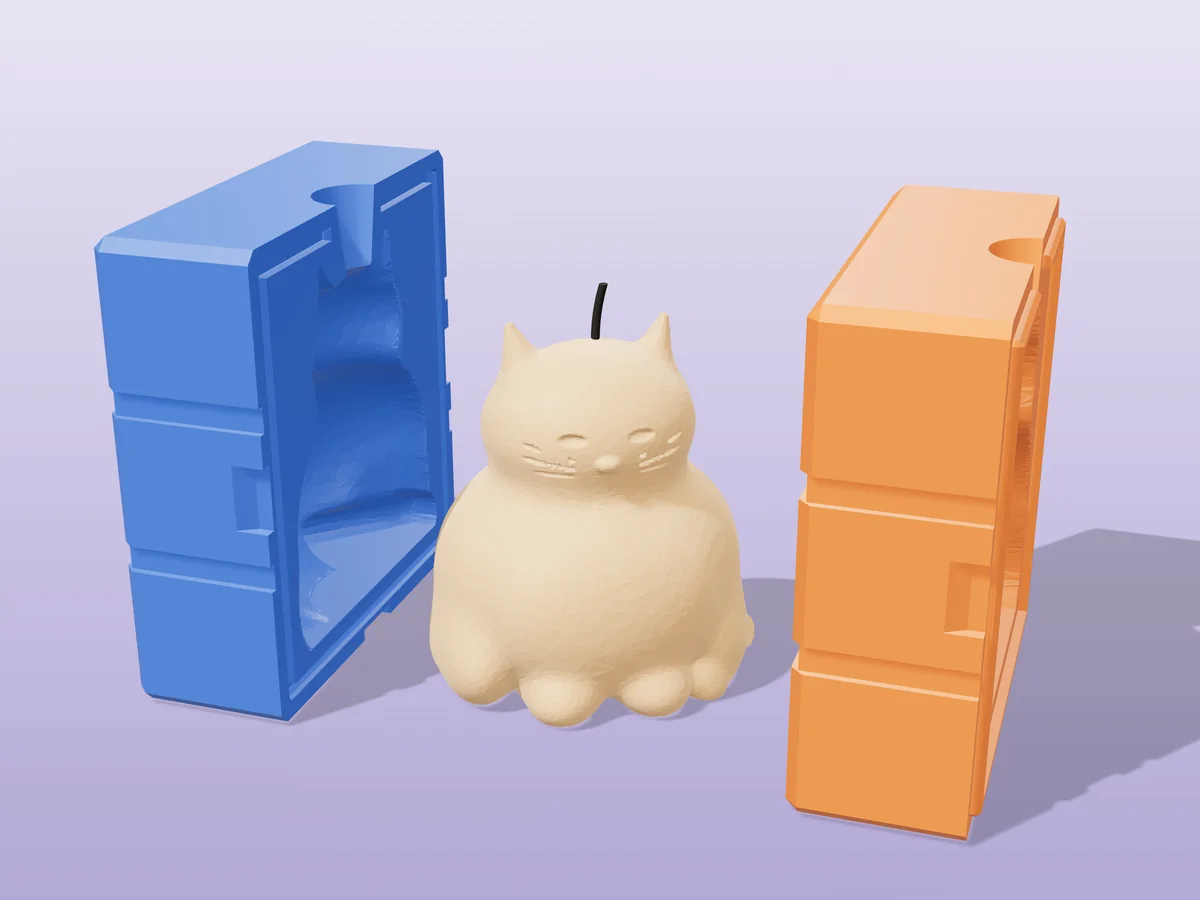
An absolute unit: a round, content cat candle with its tail wrapped round its paws, from a rigid two-part print.
 Pro early access
Candle wax
Pro early access
Candle wax
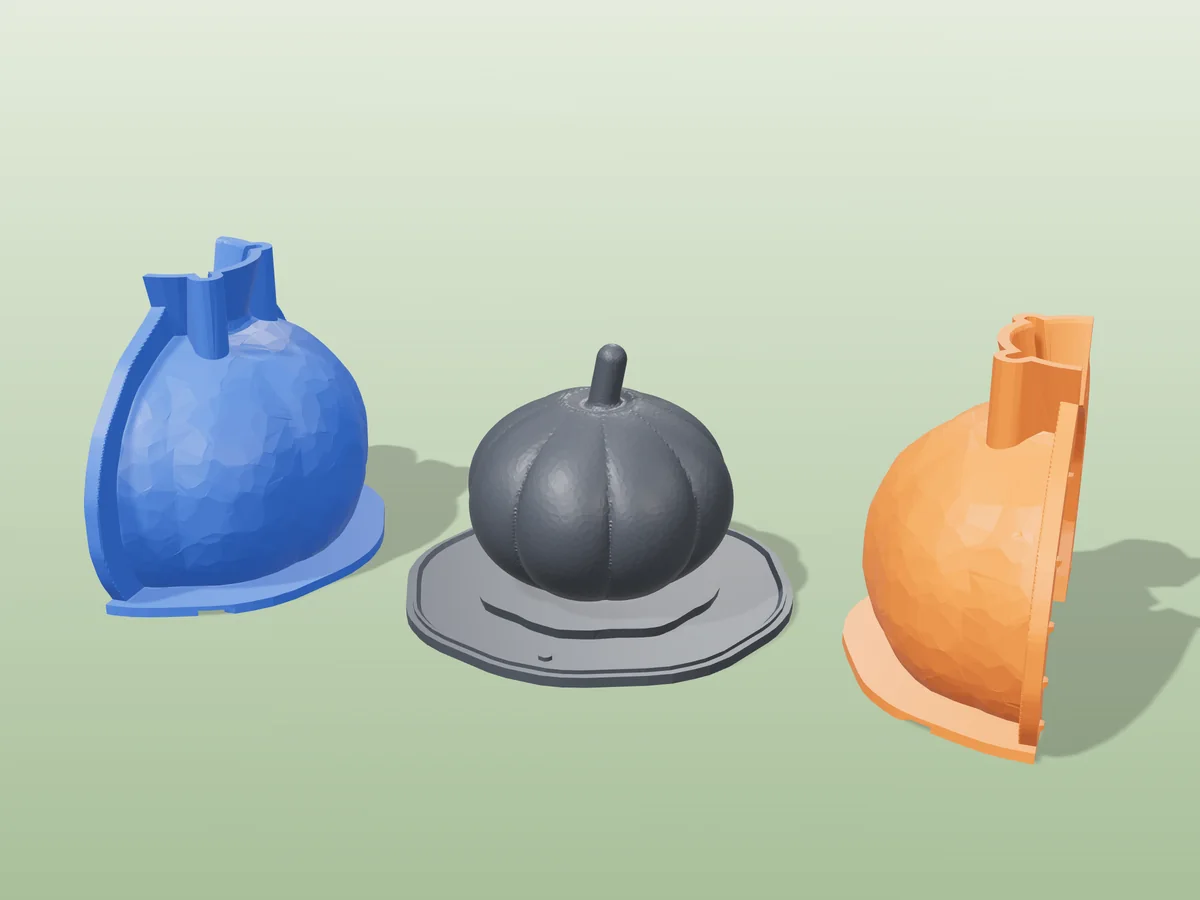
A 76 mm pumpkin candle with eight lobes and a curved stem, as a silicone mold.
 Pro early access
Candle wax
Pro early access
Candle wax
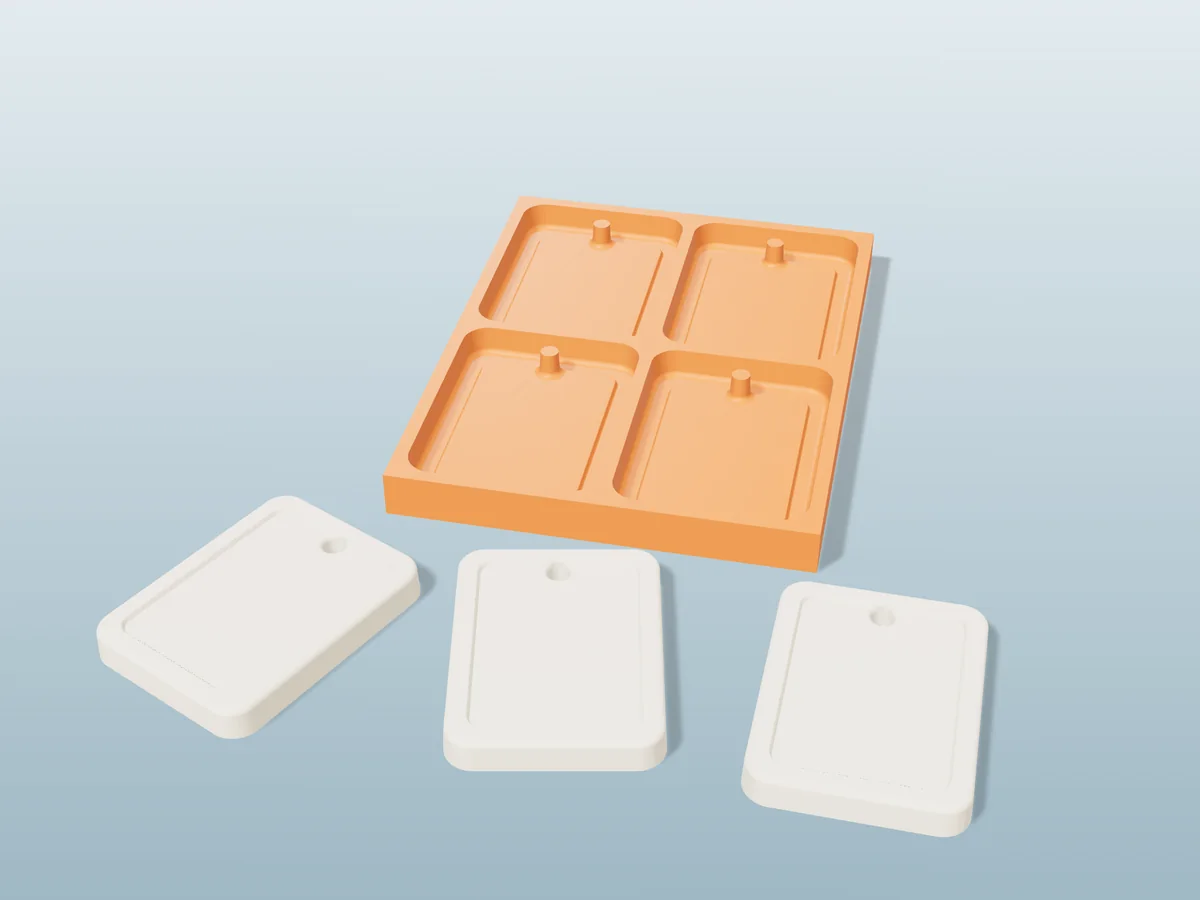
Four scented wax sachets with a raised frame and a hanging hole, from one printed tray.
 Pro early access
Candle wax
Pro early access
Candle wax
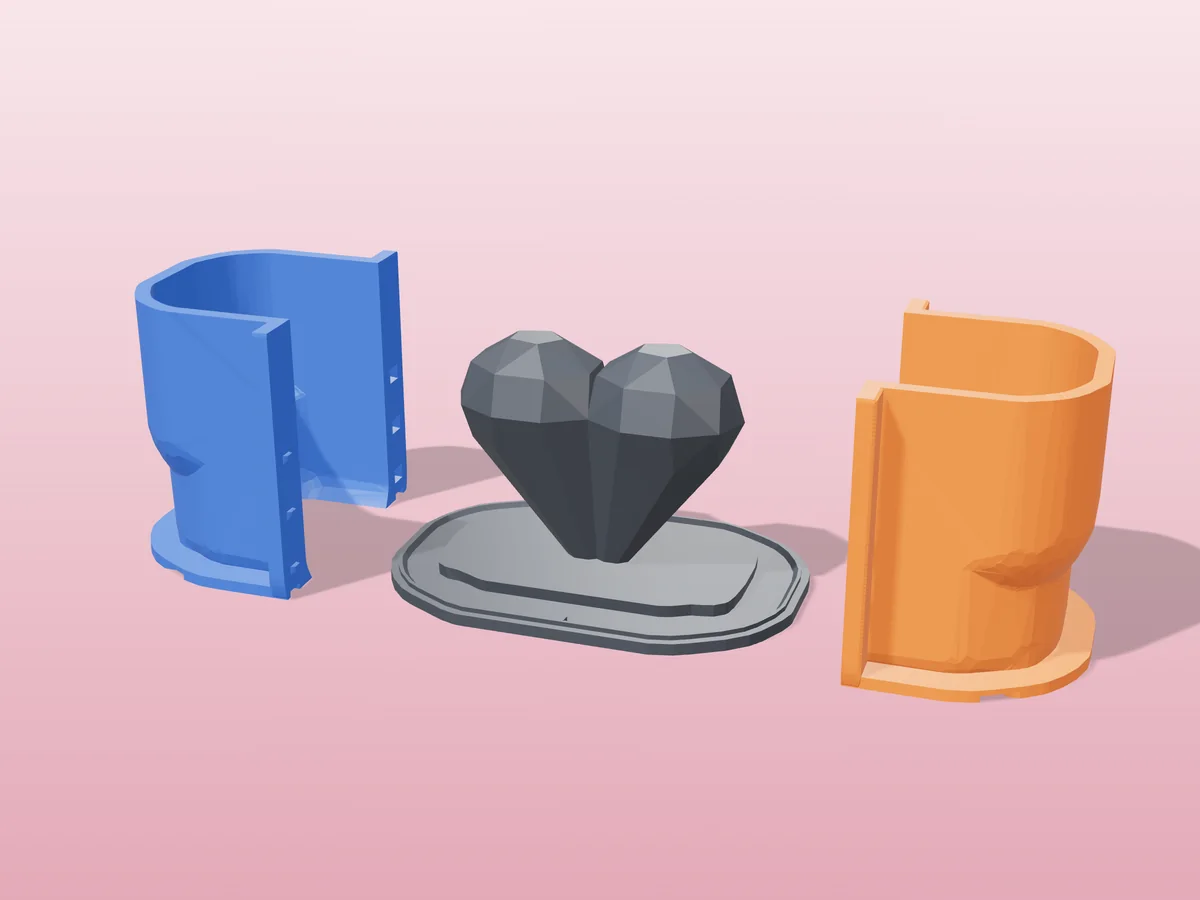
A 72 mm low-poly heart candle, standing up, as a silicone mold from a printed shell.
 Pro early access
Candle wax
Pro early access
Candle wax
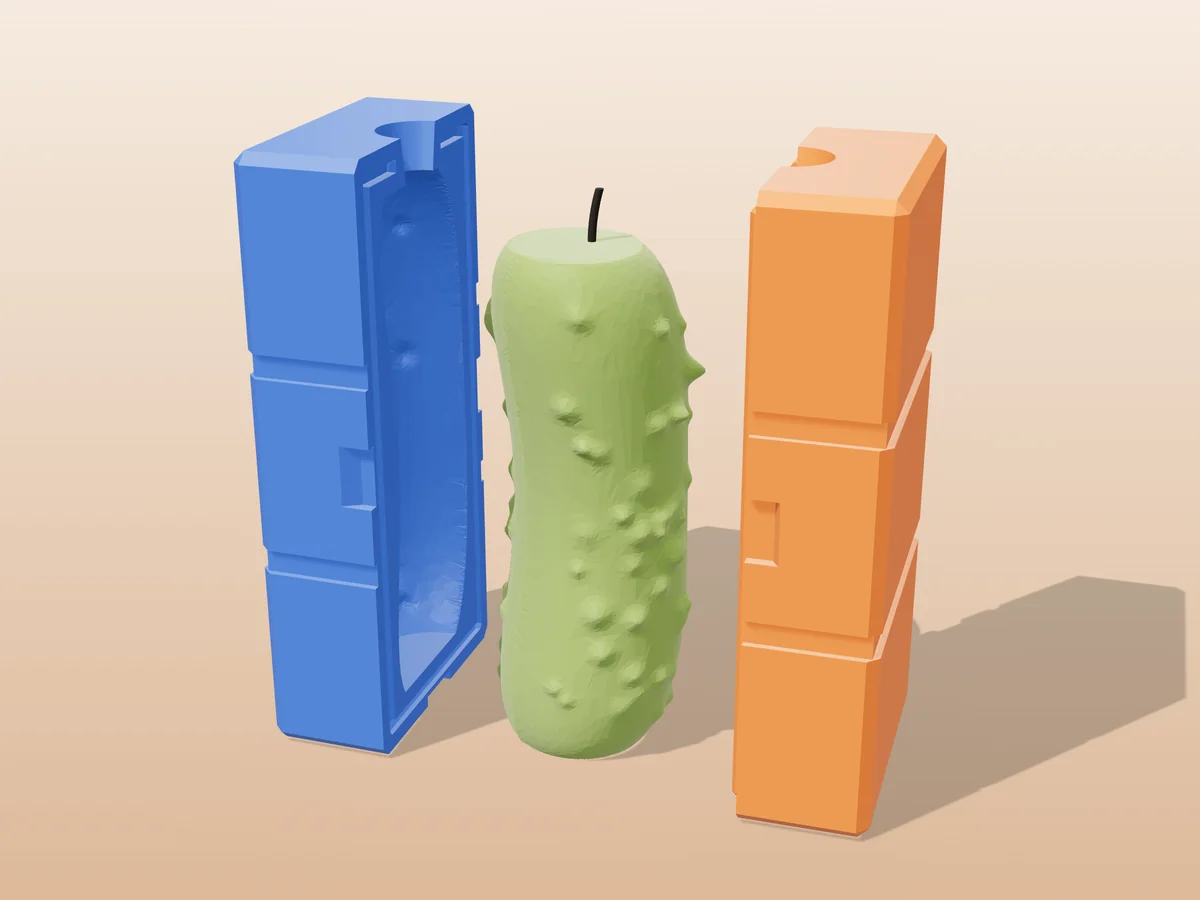
A 117 mm dill pickle candle, warts and all, standing on its end. A rigid two-part print, no silicone.
 Pro early access
Candle wax
Pro early access
Candle wax
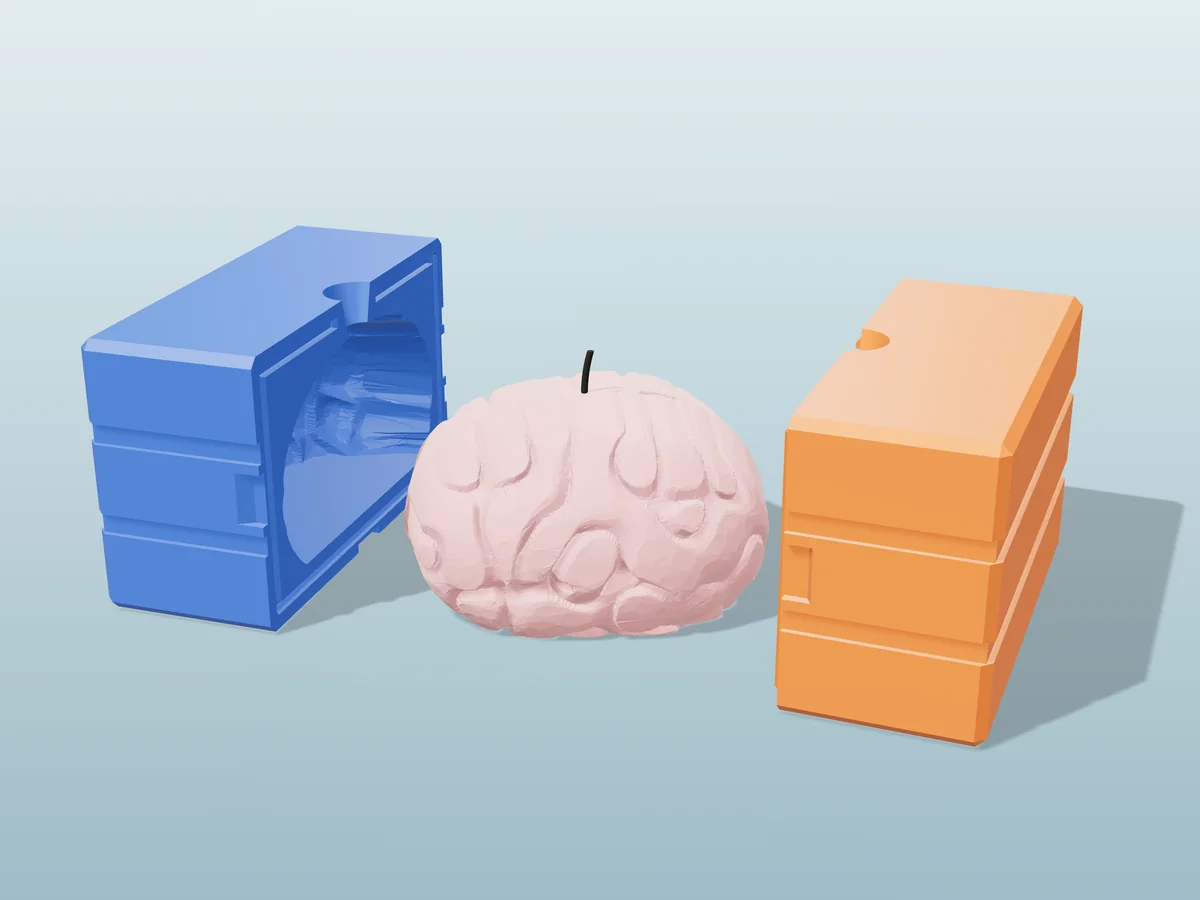
A 98 mm brain candle, folds and all, the 🧠 side view. A rigid two-part print for Halloween and big-brain moments.
 Pro early access
Candle wax
Pro early access
Candle wax
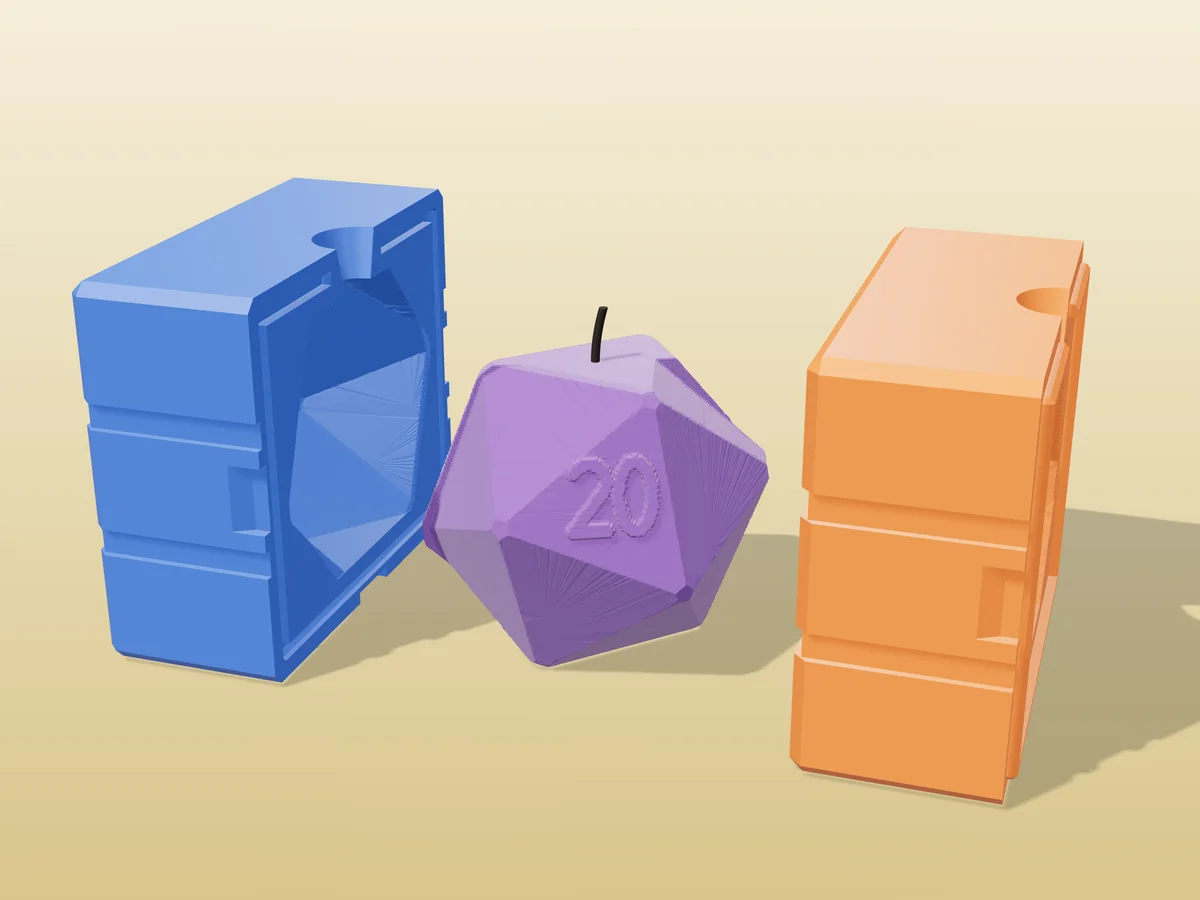
A 60 mm d20 candle with a raised natural 20 on the front. A rigid two-part print for the D&D table.
 Pro early access
Candle wax
Pro early access
Candle wax
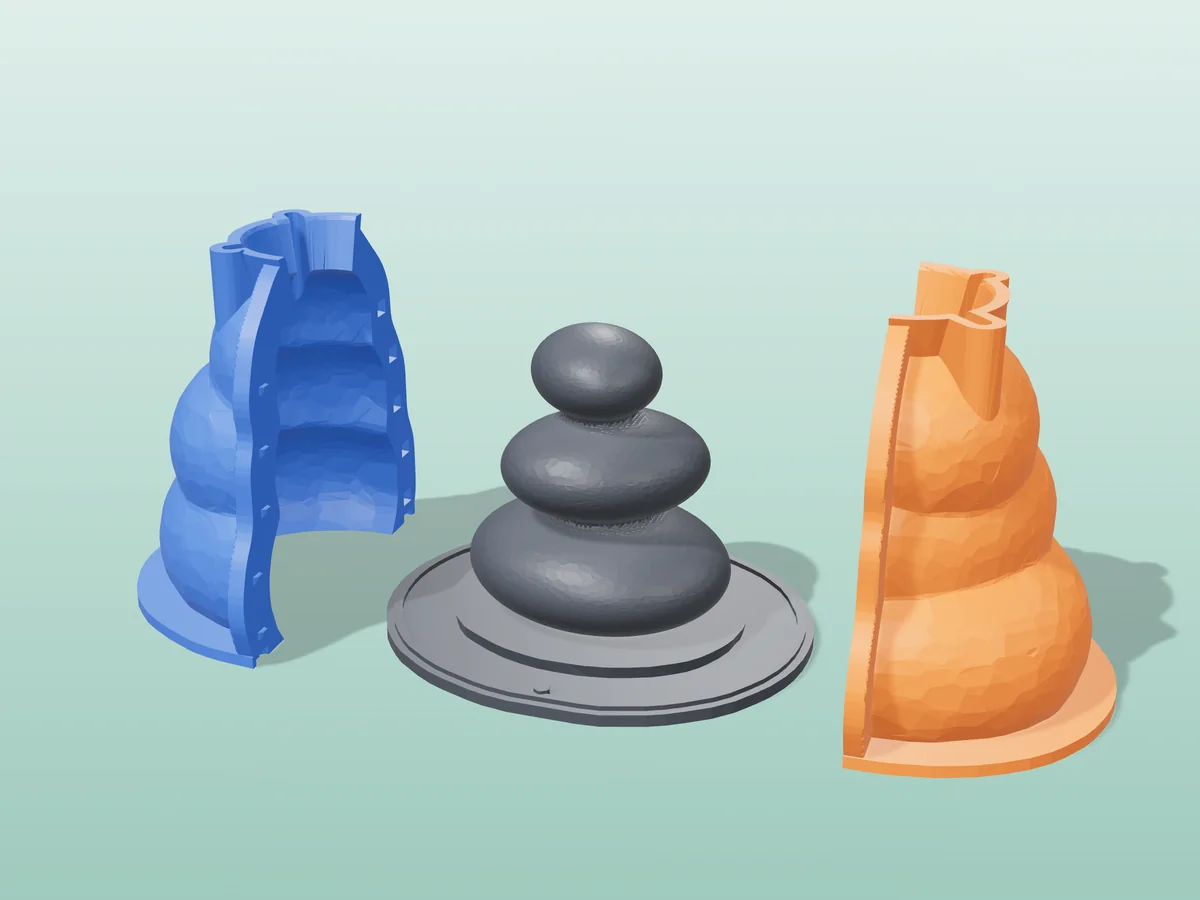
A 72 mm stacked stones candle, three smooth pebbles balanced on each other, as a silicone mold.
 Pro early access
Candle wax
Pro early access
Candle wax
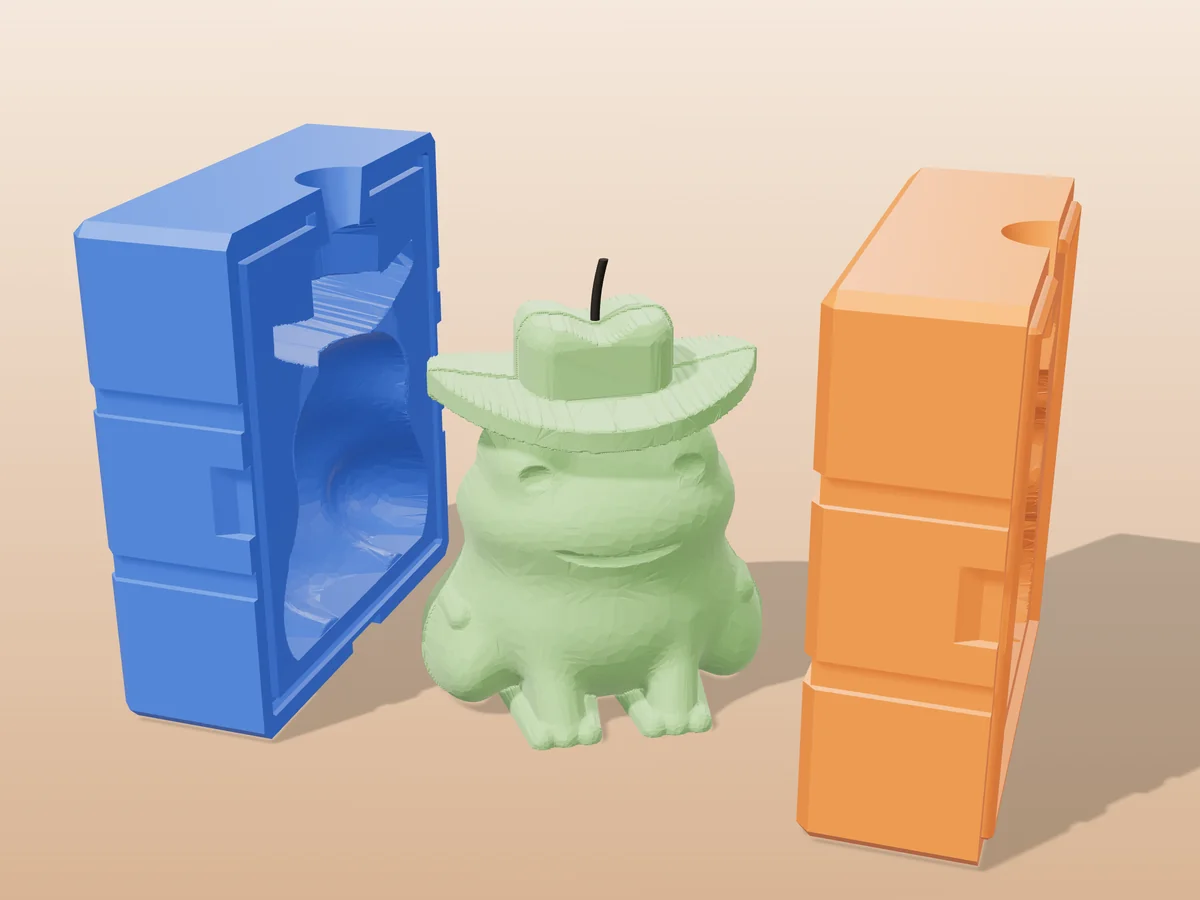
A frog in a cowboy hat, the internet's favourite frog, as a candle. A rigid two-part print, no silicone.
 Pro early access
Candle wax
Pro early access
Candle wax
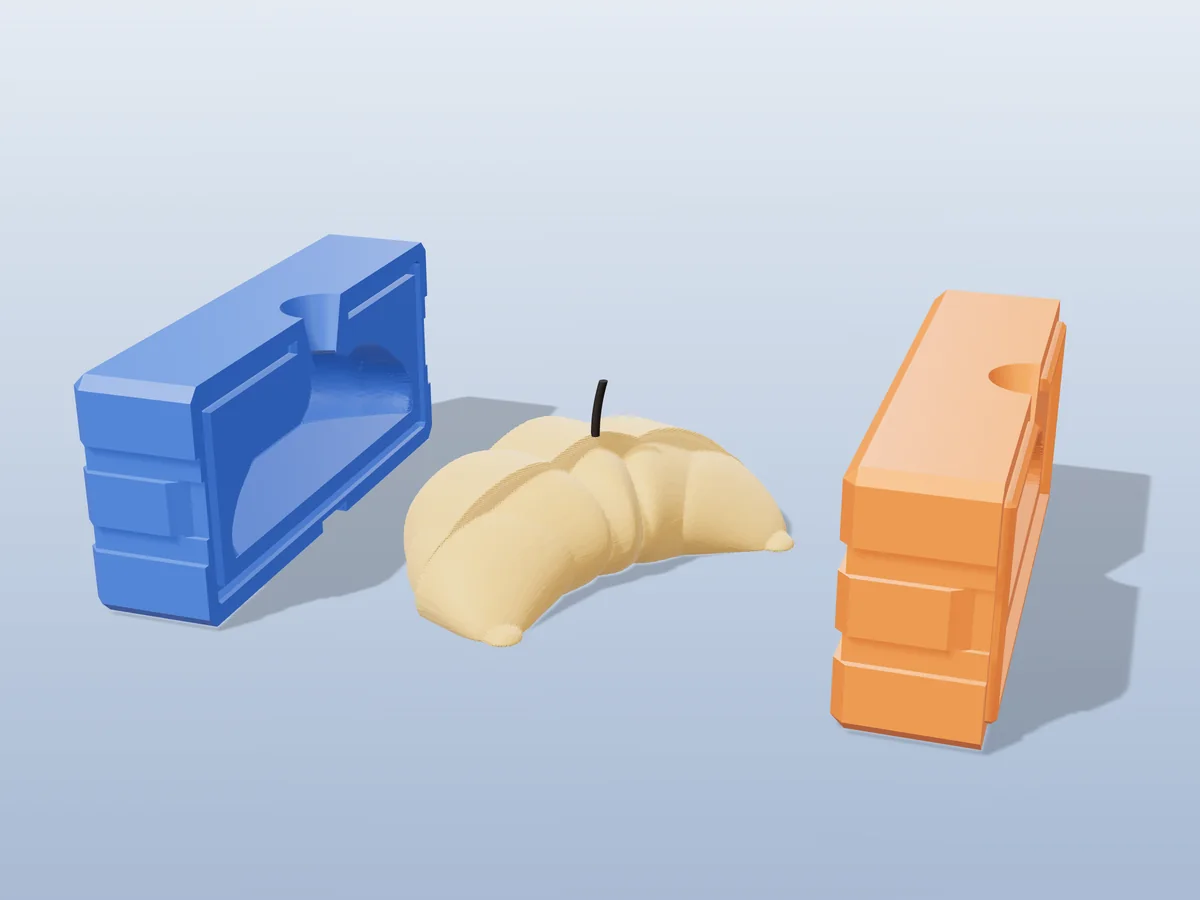
A croissant candle with rolled layers and curled horns, the bakery candle trend, from a rigid two-part print.
 Pro early access
Candle wax
Pro early access
Candle wax
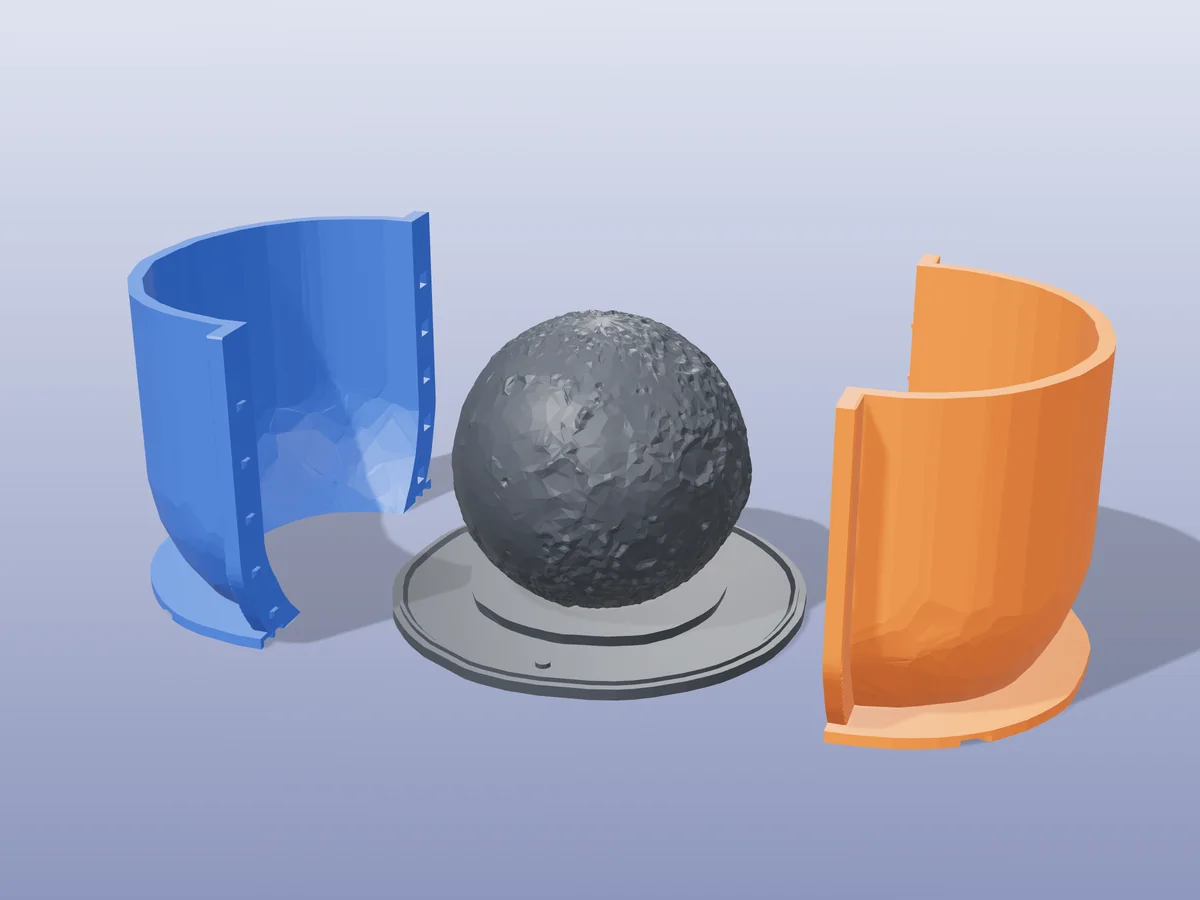
A 76 mm Moon candle with the real craters, built from NASA elevation data. Silicone mold kit.
 Pro early access
Candle wax
Pro early access
Candle wax
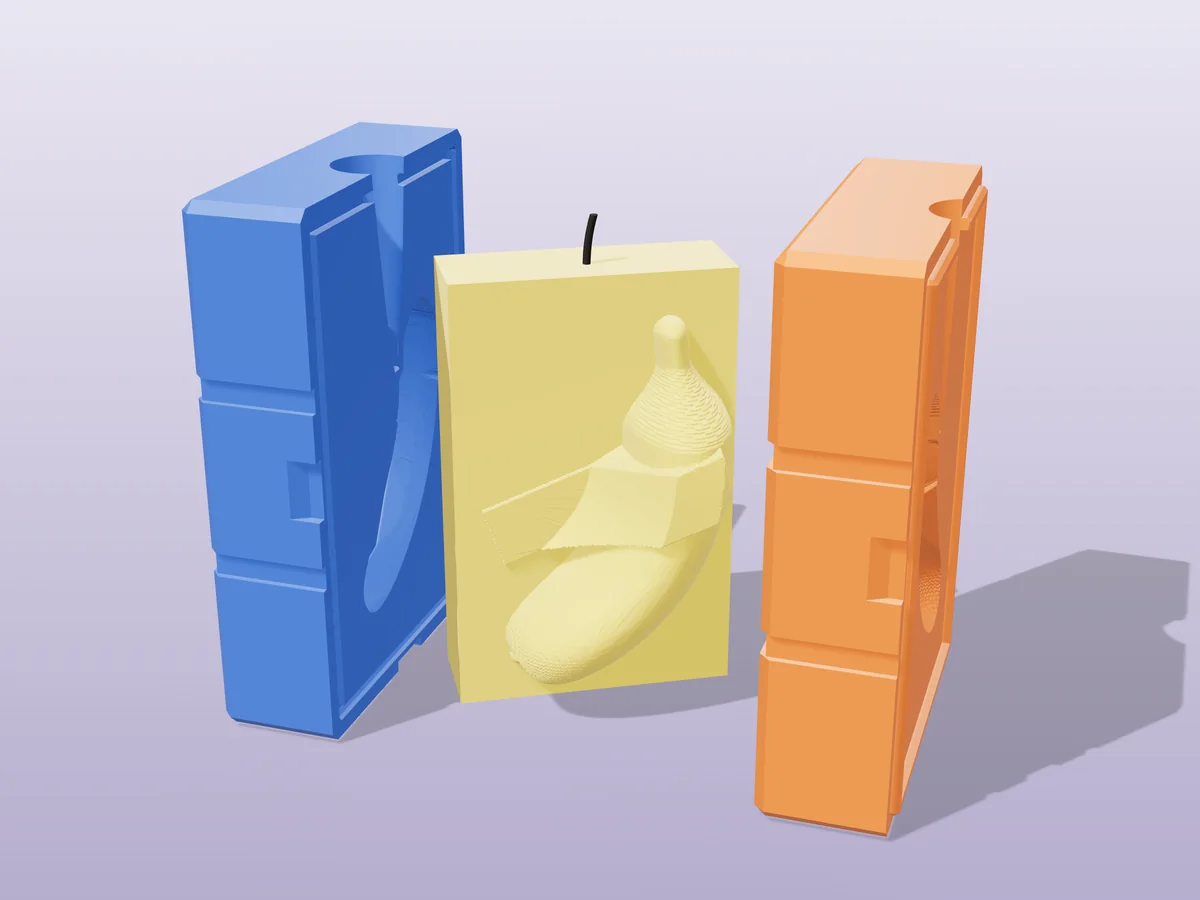
The $6 million banana: a banana duct-taped to a chunk of gallery wall, as a candle. A rigid two-part print.
Candle wax
 Pro early access
Candle wax
Pro early access
Candle wax
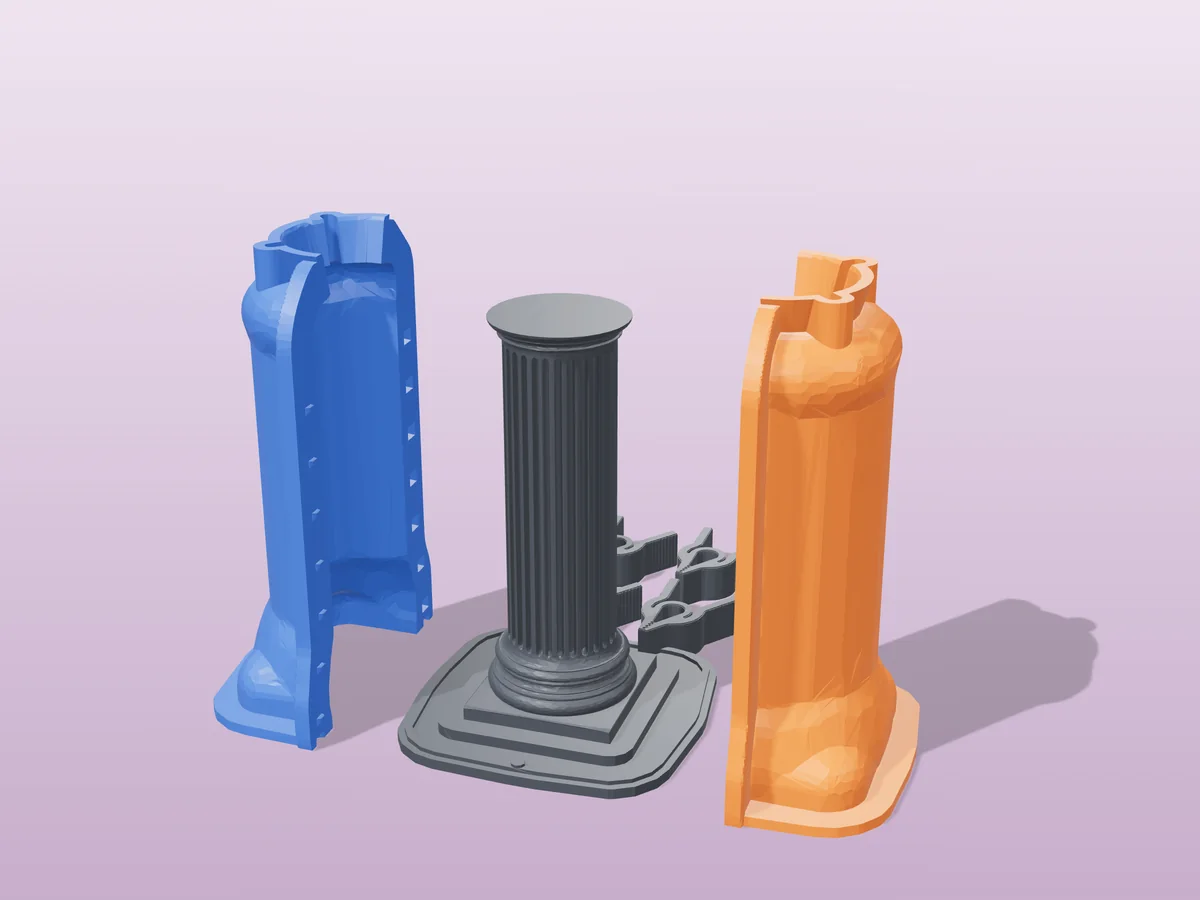
A 111 mm Greek column candle: fluted shaft, round capital, square plinth. Silicone mold kit.
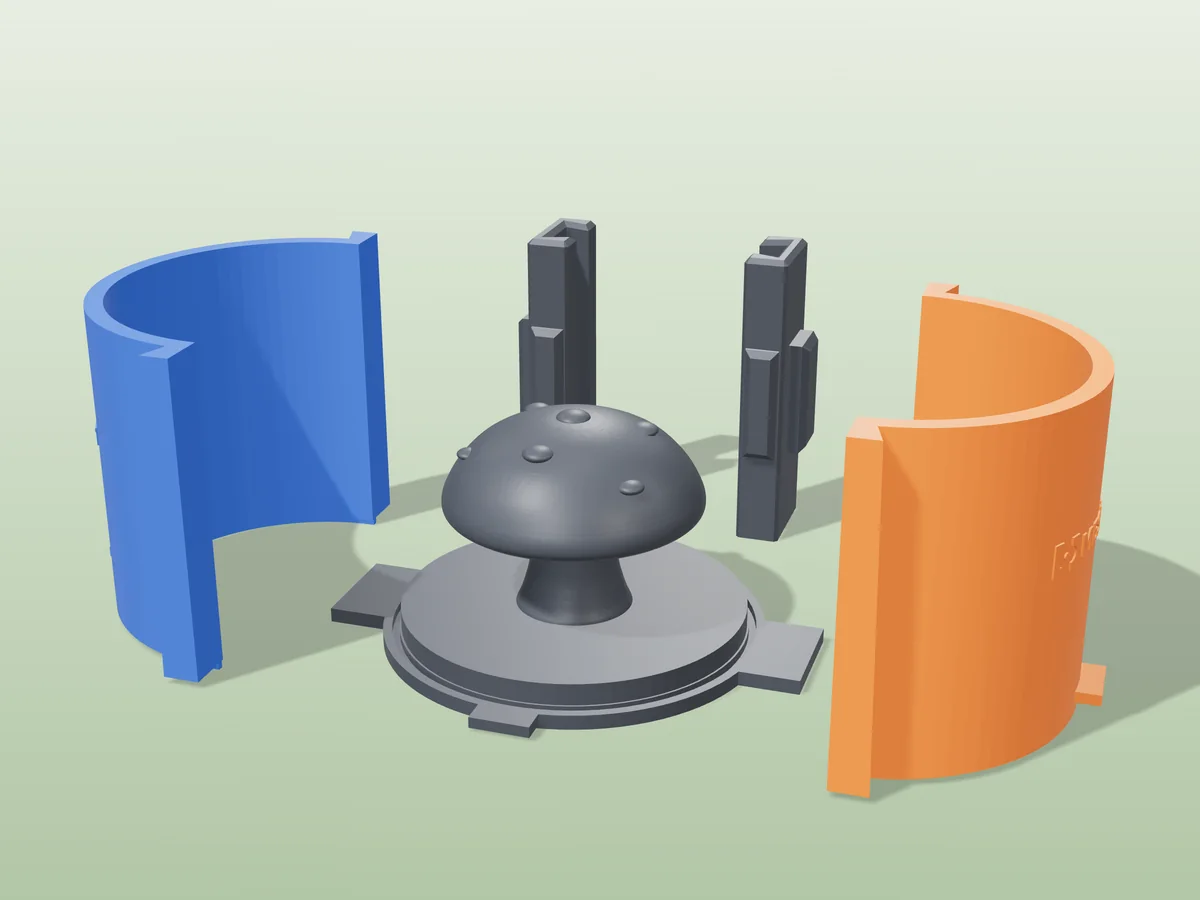
Two kinds of candle mold live here, and the card tells you which. A rigid two-part box mold is printed and poured straight into: clamp the halves, thread the wick, pour. It is quick and suits shapes without deep undercuts. A silicone mold kit is a printed master plus a housing: you pour silicone around the master once, and from then on you cast wax in that flexible silicone mold, which lets busts, faces and figures with real undercuts come out whole.
Every design lists its total print time and footprint, so you can check it fits your bed before you download. Soy and paraffin blends both work; pour below about 80 °C into PLA, or use PETG for the printed parts if you pour hotter. A thin coat of mold release or a drop of dish soap on the printed surfaces makes a rigid mold open cleanly.
Questions
Yes, if the wax is not too hot. PLA starts to soften around 55 to 60 °C at the surface, so let paraffin or soy cool to roughly 70 to 80 °C before pouring and the mold holds its shape for many casts. PETG tolerates more heat. For busts and figures, cast in a silicone mold made from the printed kit instead.
Not for the rigid box molds: you pour wax straight into the print. Silicone is only needed for the silicone mold kits, whose shapes have undercuts a rigid mold could never release. Each card says which type it is.
Wipe a thin film of mold release, silicone spray or a drop of dish soap onto the inside, and let the candle cool fully before opening. Sanding the inside faces lightly also helps, because wax grips layer lines.
Yes. Drop any STL into the free candle mold maker and it builds a two-part box mold around it with a pour spout, in your browser. For shapes with deep undercuts, the silicone mold maker builds a housing for a silicone mold instead.