◆ Mold library
Crayon mold STL files
Turn broken old crayons into dinosaurs, stars, rainbows and building bricks, baked in a silicone mold you make.
◆ Mold library
Turn broken old crayons into dinosaurs, stars, rainbows and building bricks, baked in a silicone mold you make.
4 designs · print times from 3 h 50 min
Crayons
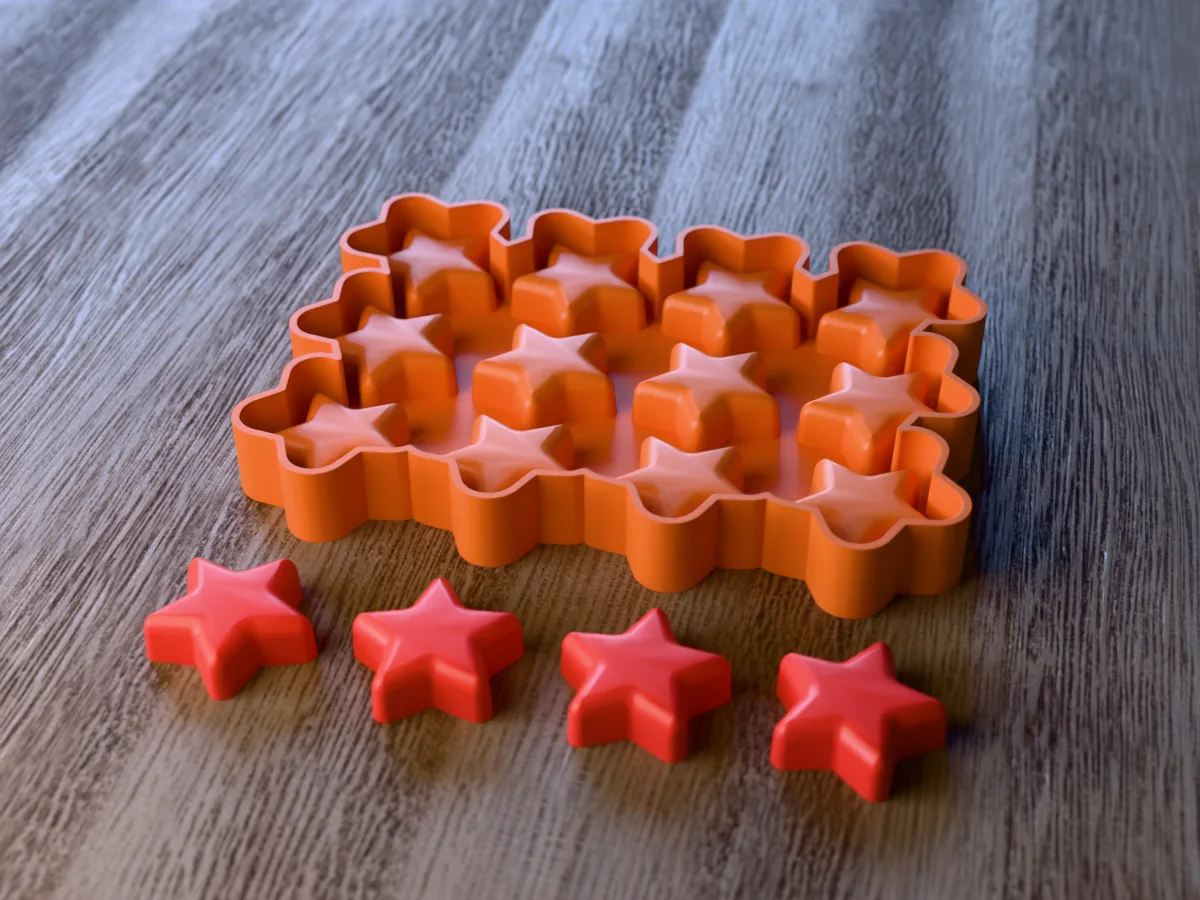
Twelve chunky star crayons from broken old crayons, melted in the oven in a silicone tray you make.
Crayons
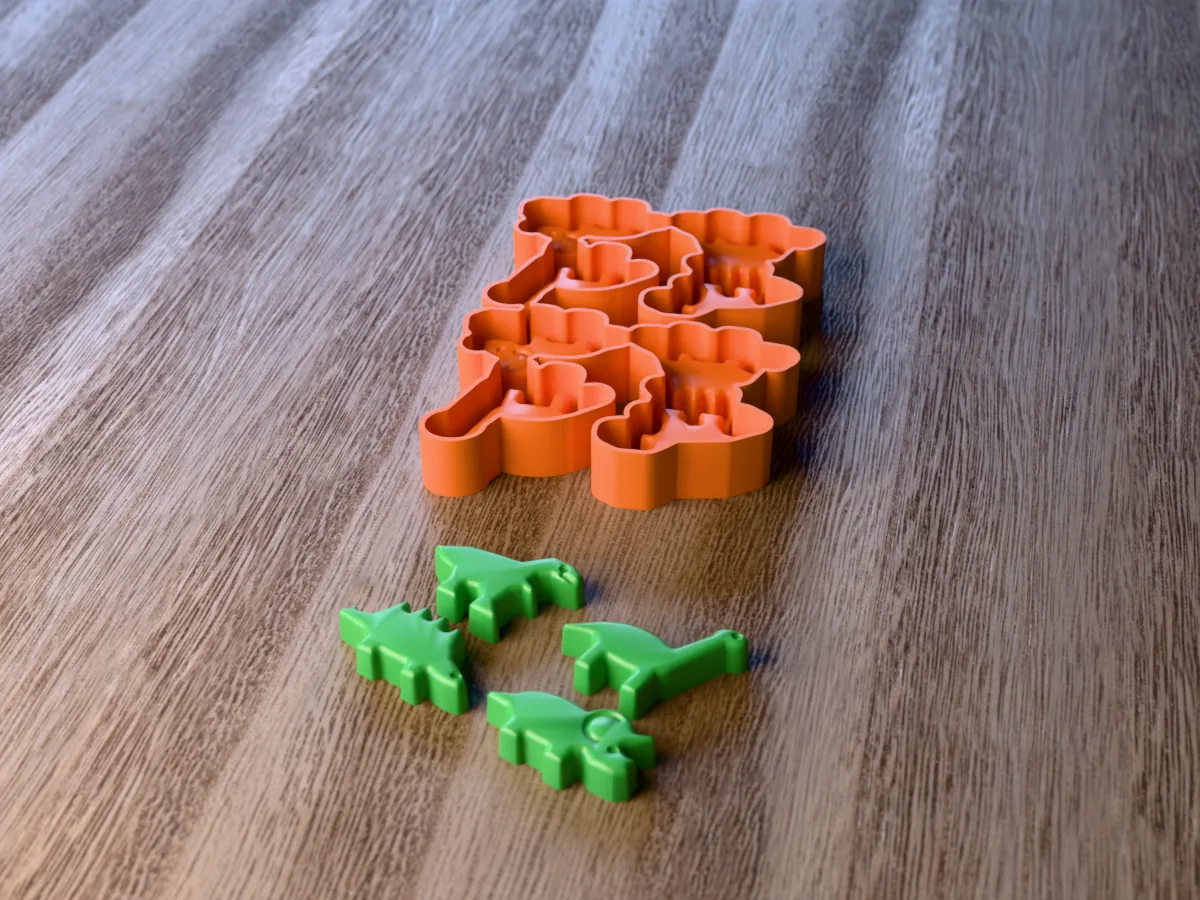
Eight dinosaur crayons per bake: T. rex, long-neck, stegosaurus and triceratops, from broken old crayons.
Crayons
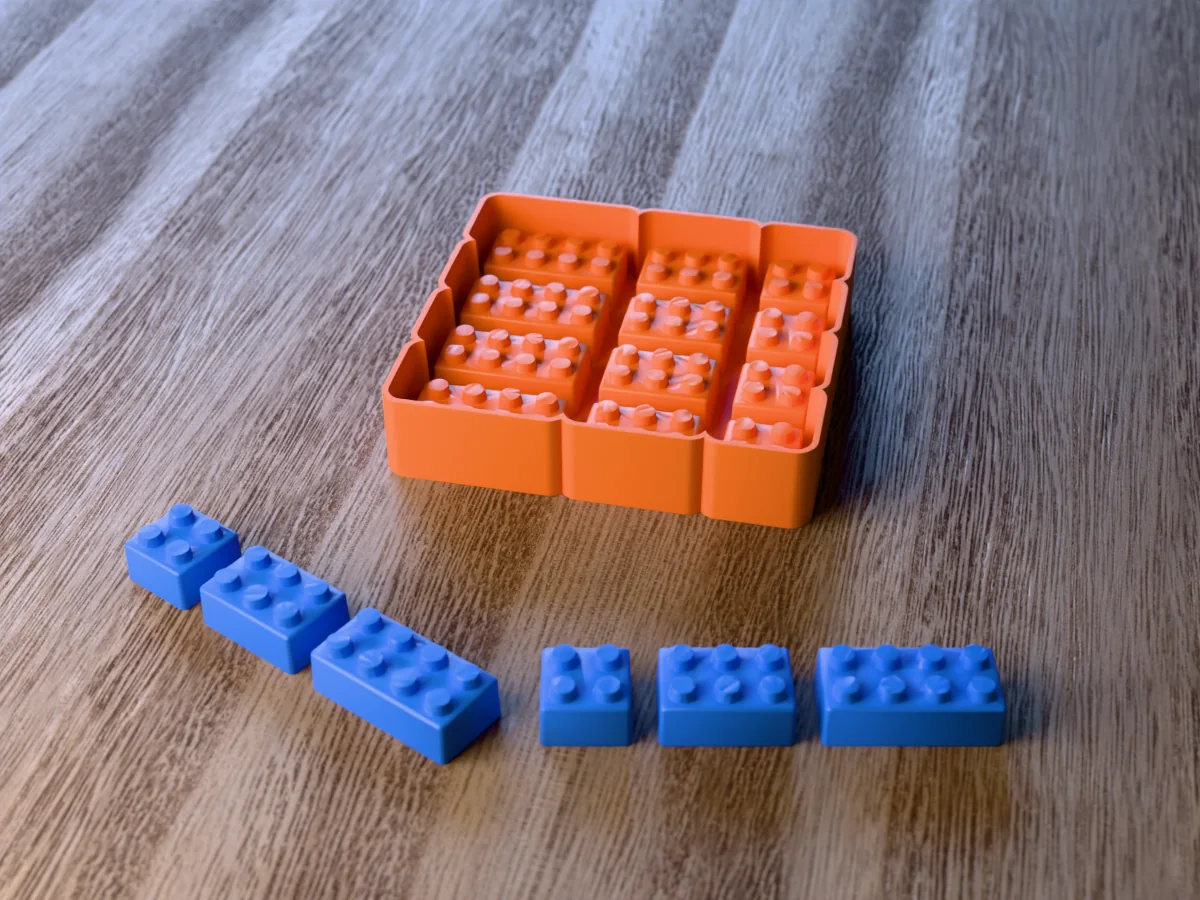
Twelve toy brick crayons with studs, in 2x2, 2x3 and 2x4 sizes. Melted from broken crayons in the oven.
Crayons
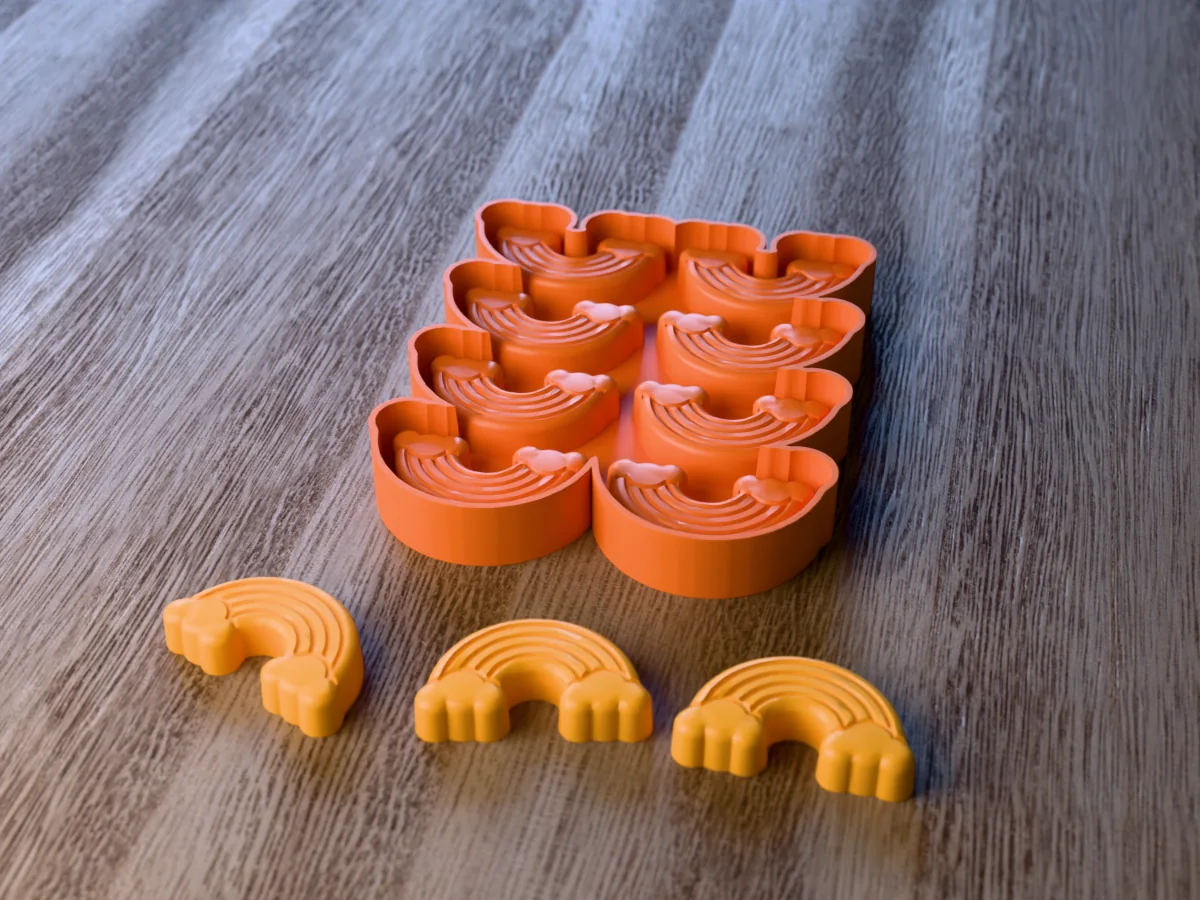
Eight rainbow crayons on clouds, with a groove between every band. Melted from broken crayons in the oven.
Recycled crayons are a classic rainy-day project: peel the broken stubs, chop them, fill a mold and melt them into chunky new shapes that small hands can hold. Wax melts at around 60 to 70 C, but an oven is the easy way to do it, so the mold is silicone, not a printed part. You print the caster, pour silicone into it, and use the flexible tray that comes out.
Mix colours in one cavity for swirls, or keep them separate for clean rainbows. Bake low and slow until the wax is just liquid, then let the tray cool completely on a flat surface. A crayon pulled out warm bends or cracks.
Each tray makes several crayons per bake, and the shapes are thick enough that they do not snap the first time a child presses hard.
Questions
About 110 to 120 C (230 to 250 F) for 10 to 15 minutes, until every piece is liquid. Hotter makes the colours bleed into each other and can smoke. A microwave in short bursts works too if your silicone is microwave safe.
Usually they came out of the mold before they were cold right through, or cooled too fast in the fridge. Let them cool at room temperature, then chill for 10 minutes if they still feel soft.
Yes, but cheap and premium crayons melt at slightly different temperatures, so a mixed batch can come out with a grainy patch. Bake a little longer and stir gently with a toothpick.