◆ Crayons
Dinosaur crayon mold
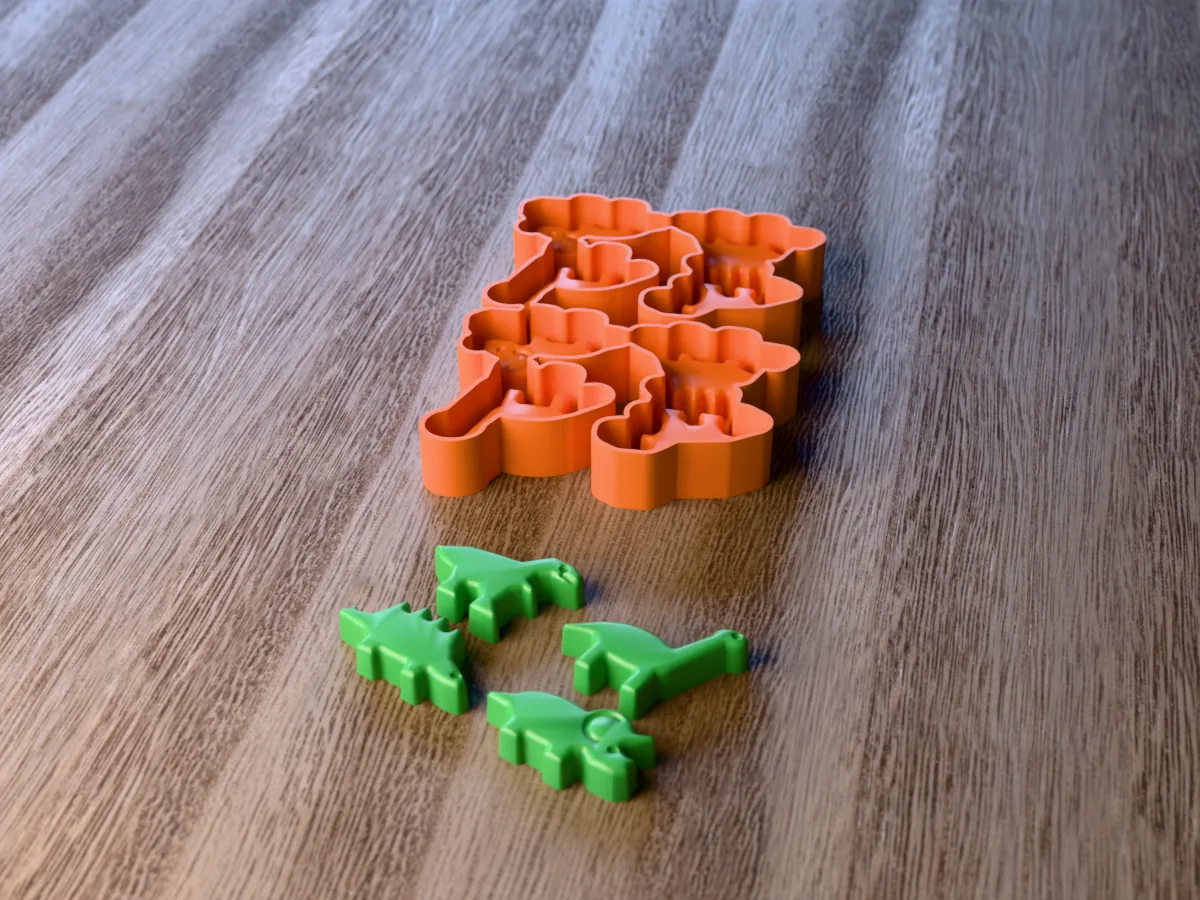
Eight dinosaur crayons per bake: T. rex, long-neck, stegosaurus and triceratops, from broken old crayons.
◆ Crayons
Eight dinosaur crayons per bake: T. rex, long-neck, stegosaurus and triceratops, from broken old crayons.
A silicone tray for eight chunky dinosaur crayons, two each of a T. rex, a long-necked sauropod, a stegosaurus with plates on its back and a triceratops with its frill and horns. Each is about 50 mm long and 12 mm thick, with an eye pressed in, and the set of four takes about 38 ml of melted crayon.
Made with our tray mold generator in its flexible silicone tray mode: print the caster, pour a heat-proof platinum silicone into it and peel out the tray. The crayons melt in that silicone in the oven; the printed caster never goes near it. The silicone flexes round the legs, tails and horns, which a rigid mold would snap off.
Dinosaur crayons are a favourite party bag filler and a good use for a box of broken stubs: one colour per dinosaur, or a swirl. The zip carries the printed caster exactly as the tool exported it, the set of four dinosaurs on its own as an STL, the master uploaded to the tool, and a print and pour sheet with the silicone figure the tool measured.
Shown as a 3D render of the printed caster with a set of four green dinosaur crayons in front, not a photo.
Print the caster as exported, open side up, no supports. It never goes in the oven: PLA softens at about 60 C.
Pour 218 ml of a platinum silicone rated for 200 C (400 F) or more into one corner in a thin stream, letting it rise over the shapes to the rim. Tap out the bubbles, let it cure and peel it out: that silicone is the crayon mold.
Soak old crayons in warm water for ten minutes, peel off the paper and break them into pieces about 1 cm long. Sort them by colour, or mix colours for swirled crayons.
Set the silicone tray on a baking sheet. Push small pieces into the legs, tails and horns with a skewer first, then fill each dinosaur to the top and heap it a little: the pieces shrink as they melt.
Bake at 230 to 275 F (110 to 135 C) for 10 to 20 minutes, until every piece has melted. Hotter makes the wax separate into a white film on top.
An adult lifts the sheet out. Let the crayons cool for 30 minutes, give the tray 10 minutes in the freezer, then flex it and pop them out. Keep this tray for crafts, never food.
Print details
| Cast material | Crayons |
|---|---|
| Printed parts | 1 |
| Size (W x D x H) | 124 x 171 x 24 mm |
| Print bed needed | 171 x 124 mm, 25 mm tall |
| Filament | ~115 g |
| Layer height | 0.2 mm |
| Infill | 15% |
| Supports | Not needed |
| Download | ZIP: printed caster (STL) + one set of four dinosaur crayons (STL) + tool master (STL) + print and pour sheet |
| Added | 2026-09-26 |
Pro early access until October 26, 2026, then free with any account.
Make your own tray mold →Made with the free Tray mold generator. Upload your own model and get the same kind of mold built around it, in your browser.
Free for personal use. Selling the pieces you cast needs a commercial licence (Pro or Founder); passing on the file itself is not permitted on any plan. Full terms.
New to casting? Read the ice cube tray mold guide.
Let them cool completely, then 10 minutes in the freezer, before you touch them: warm wax is soft and snaps at the thinnest point. Peel the silicone back from each dinosaur instead of pushing it out, legs and tail first, and store them flat.
A set of four takes about 38 ml, so the full tray of eight needs roughly twice that, about 15 to 20 standard crayons once peeled. Fill every cavity heaped, because the pieces settle by about a third as they melt.
No. Once crayon wax has been in the silicone, keep the tray for crafts: the pigments stay in the surface. For chocolate dinosaurs, pour a second tray from the same caster in a food-safe platinum silicone and keep that one for food only.
 CrayonsPro early access
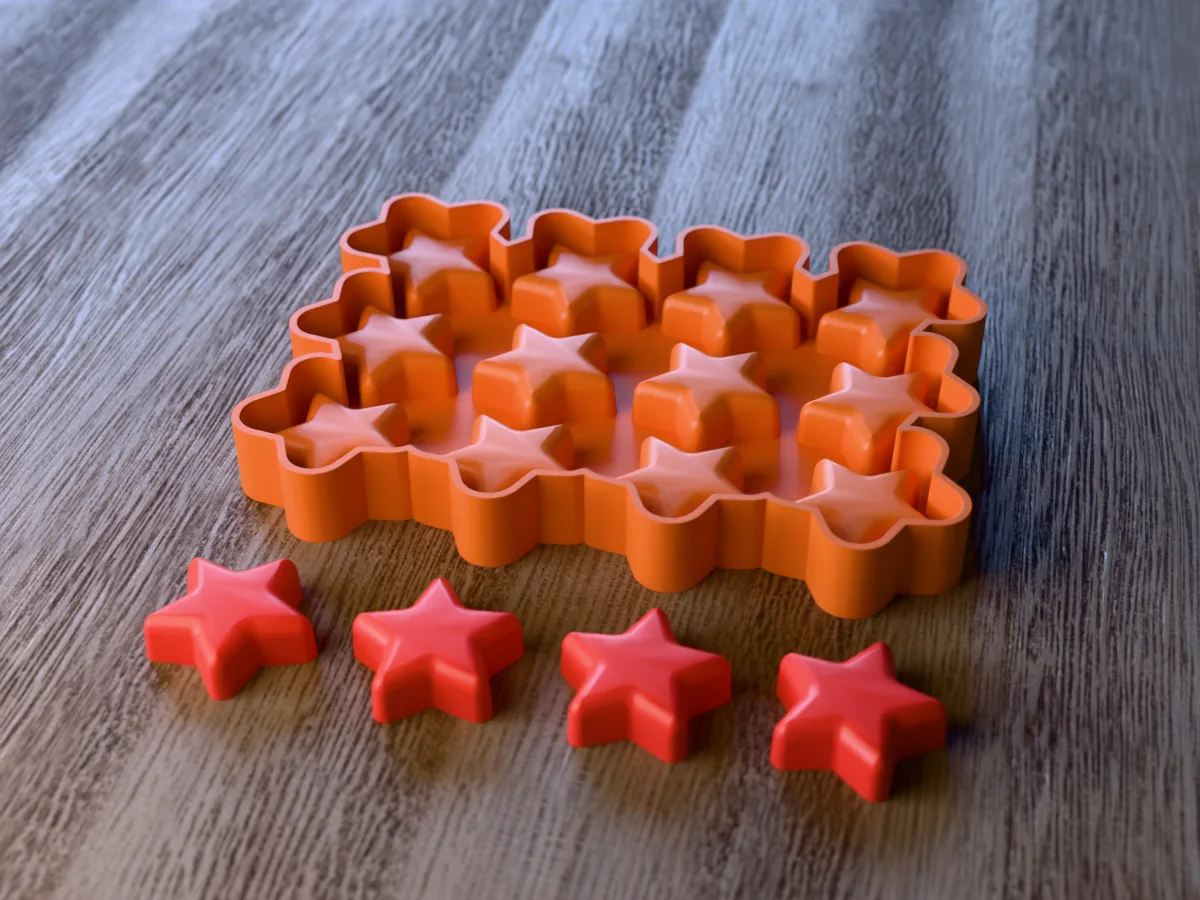
Twelve chunky star crayons from broken old crayons, melted in the oven in a silicone tray you make.
 CrayonsPro early access
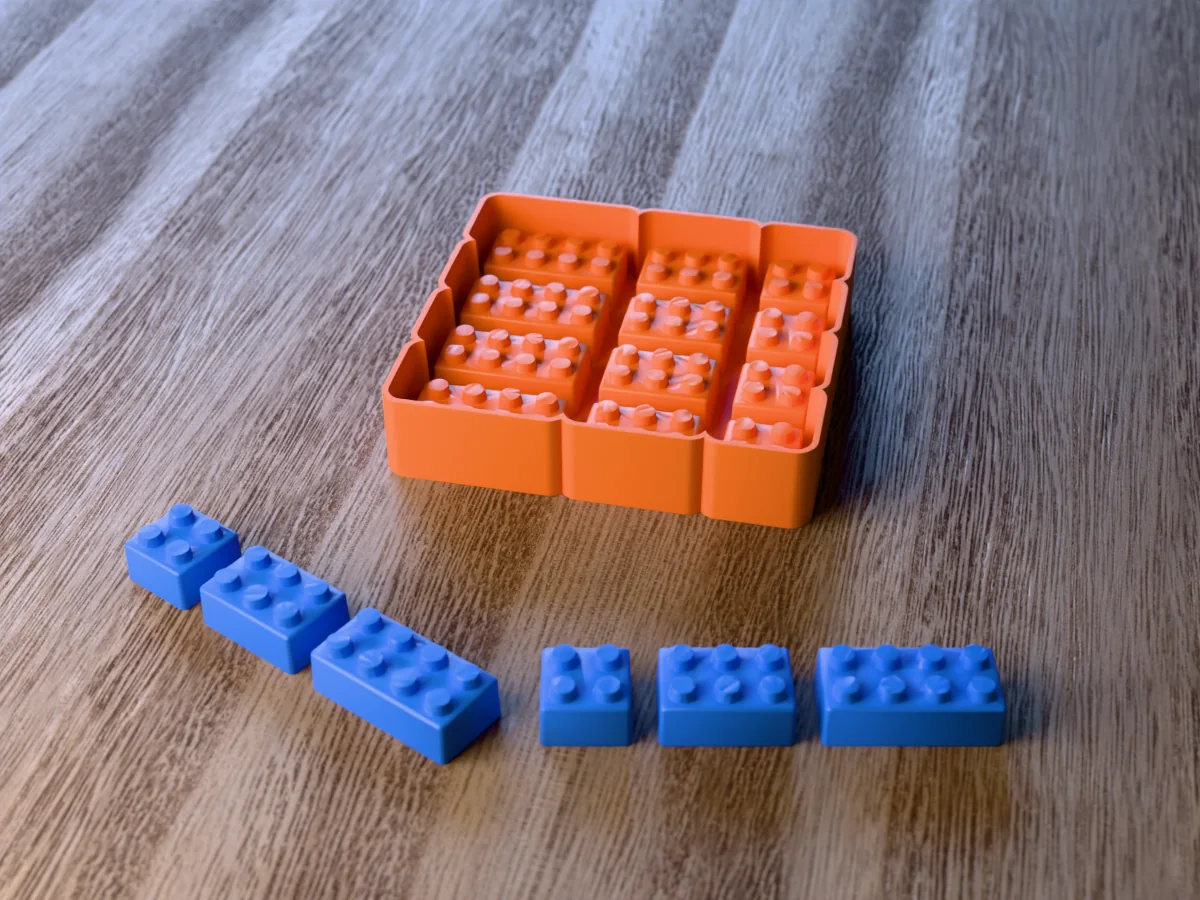
Twelve toy brick crayons with studs, in 2x2, 2x3 and 2x4 sizes. Melted from broken crayons in the oven.
 CrayonsPro early access
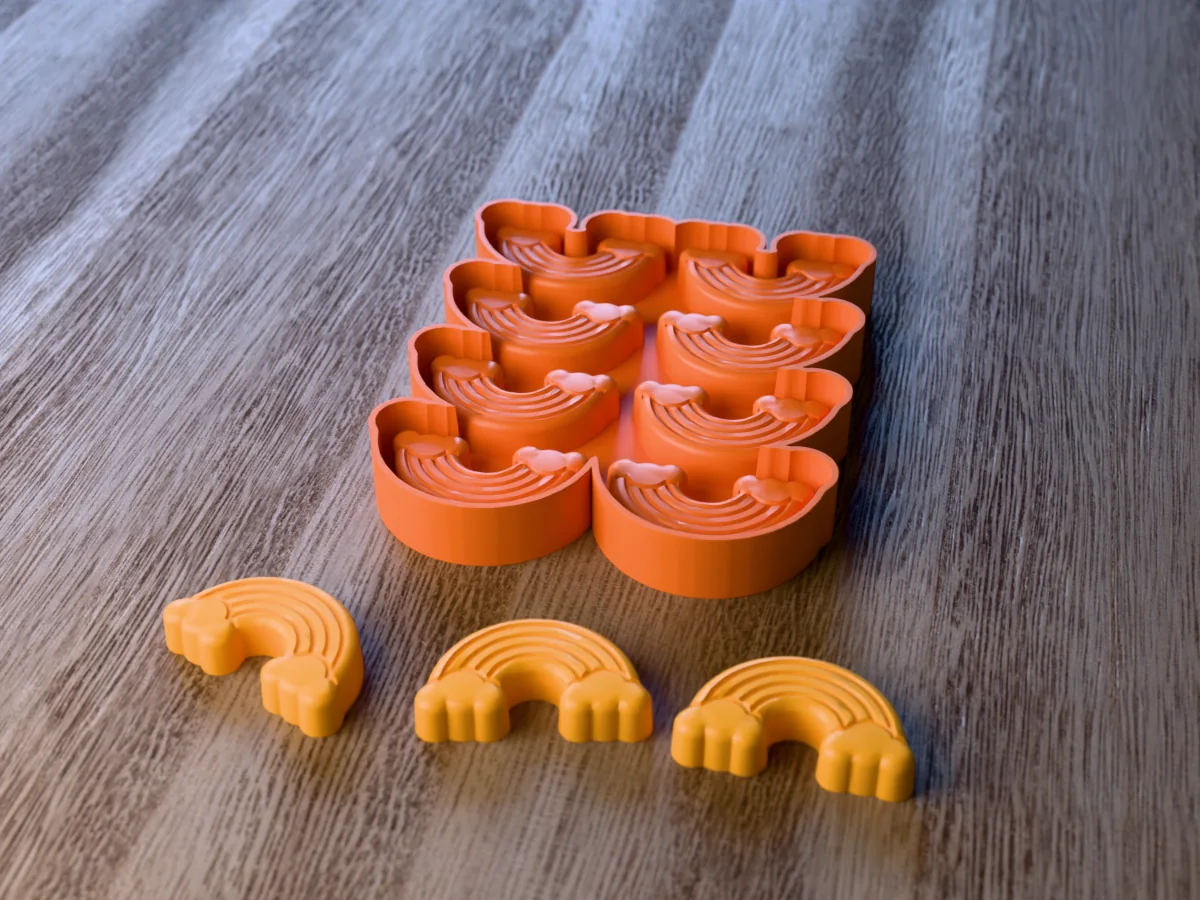
Eight rainbow crayons on clouds, with a groove between every band. Melted from broken crayons in the oven.
 Pro early access
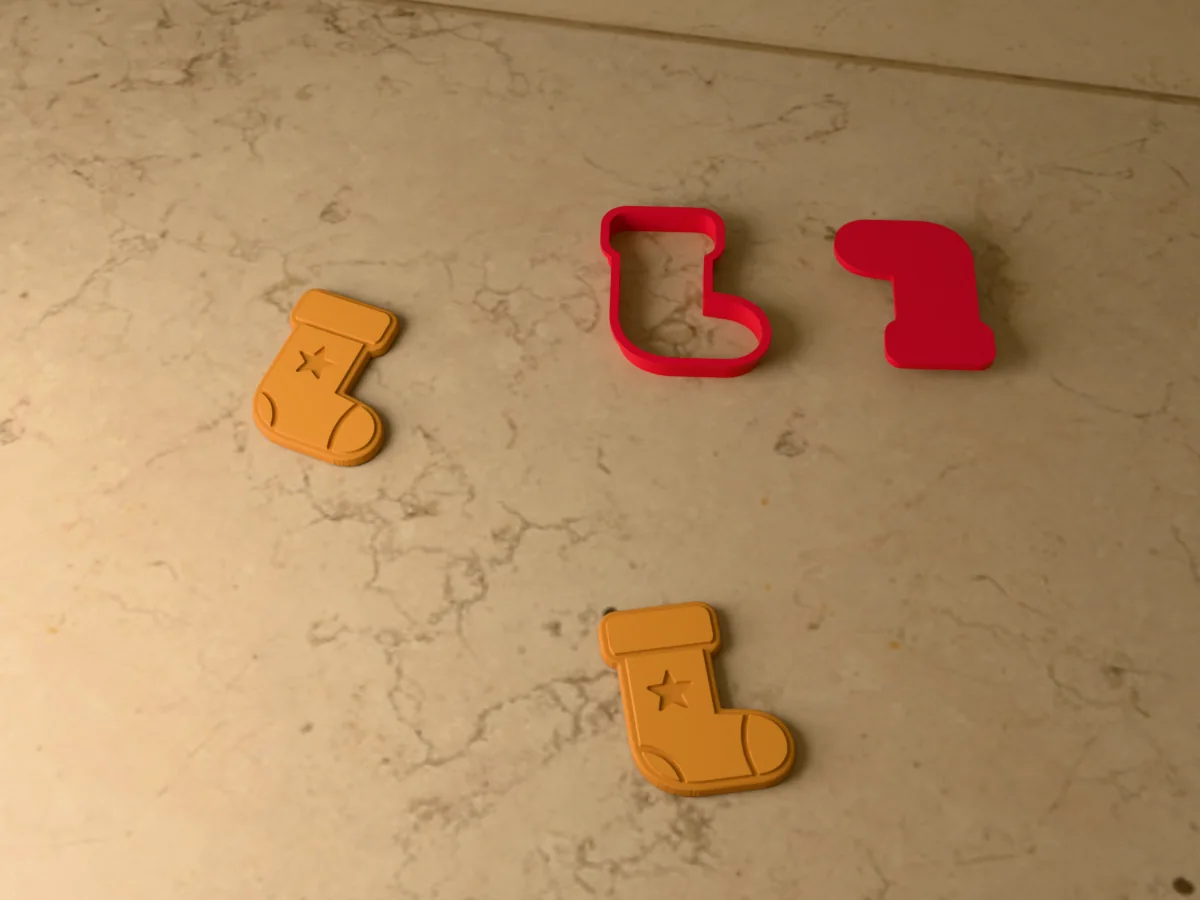
A Christmas stocking cutter with a matching stamp that presses in the cuff, heel, toe and a star.
 Pro early access
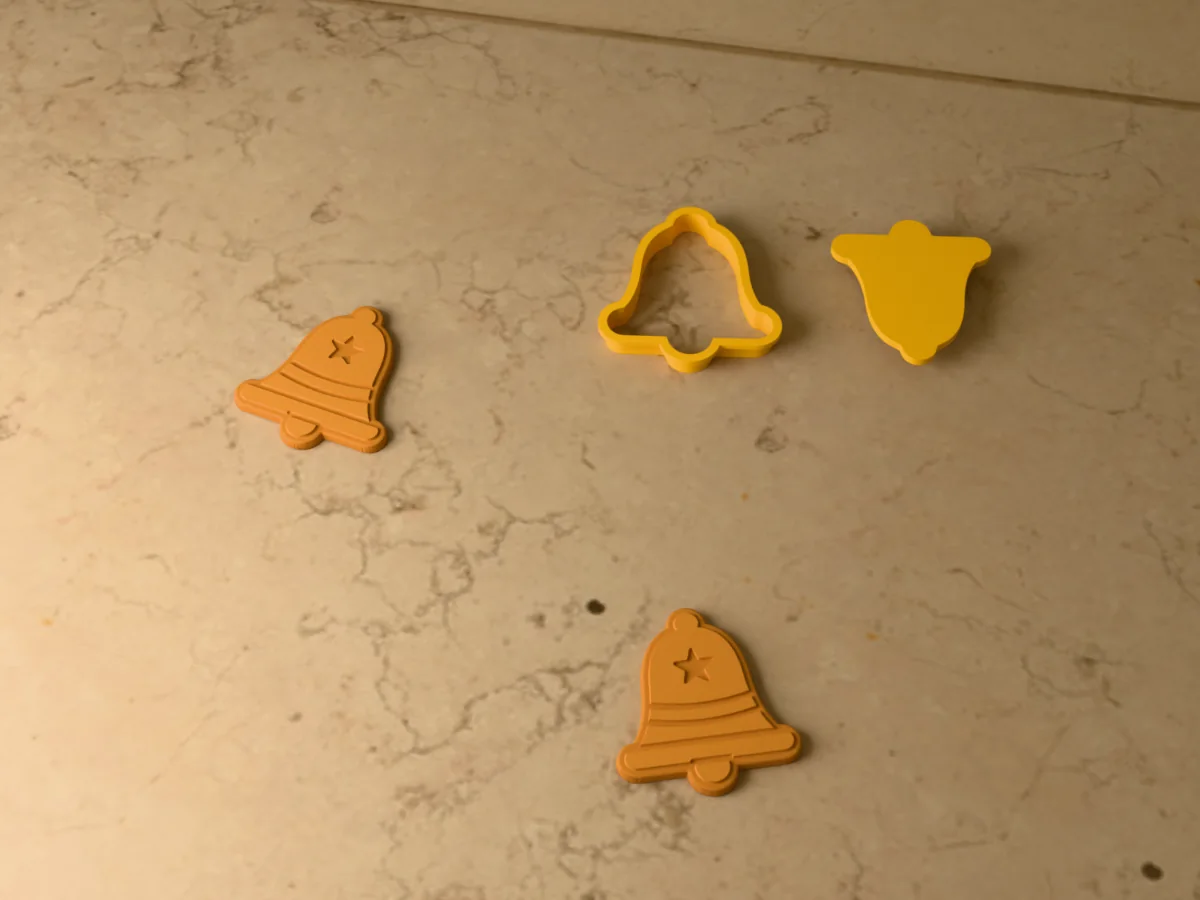
A Christmas bell on its rim with a clapper, and a stamp that presses in two bands and a star.
 Pro early access
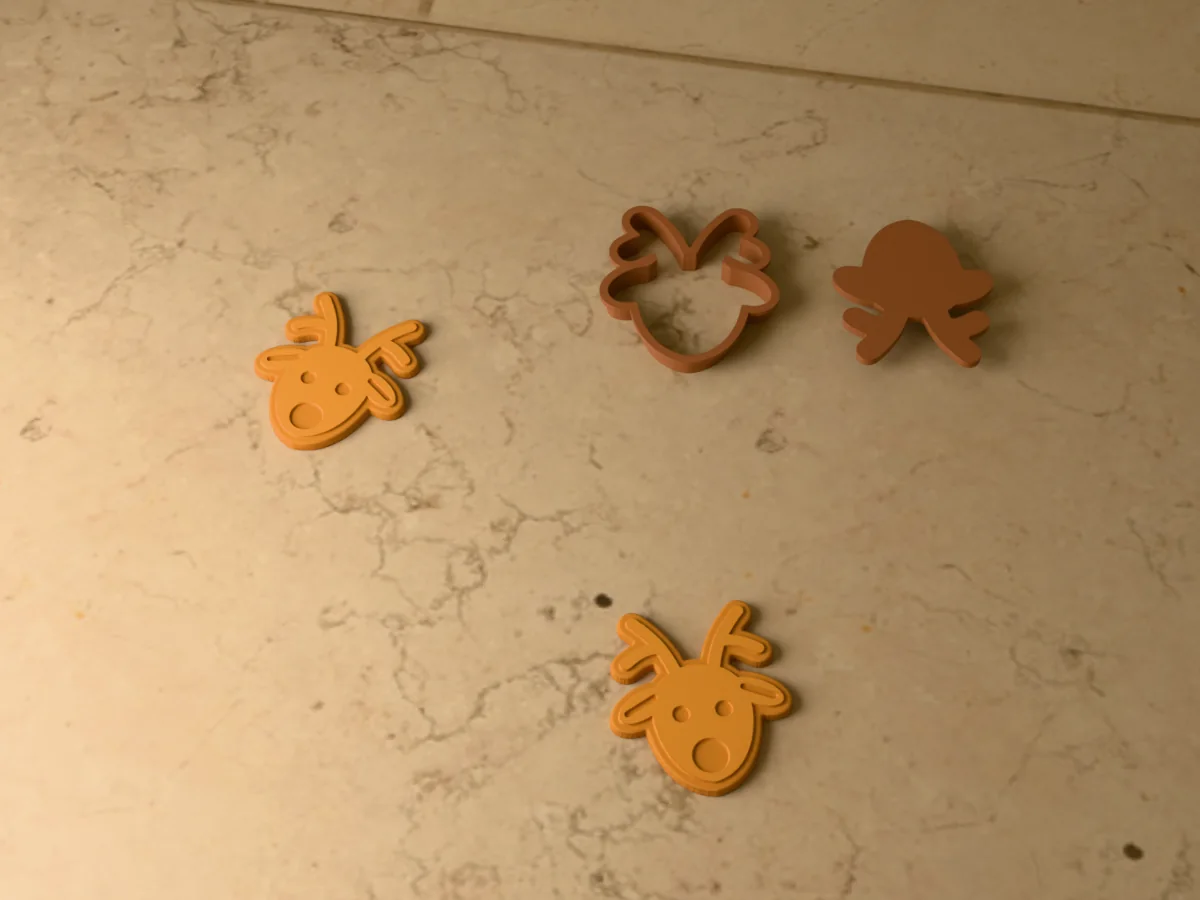
A reindeer head with chunky antlers, and a stamp that presses in the eyes, ears and a big round nose.
 Pro early access
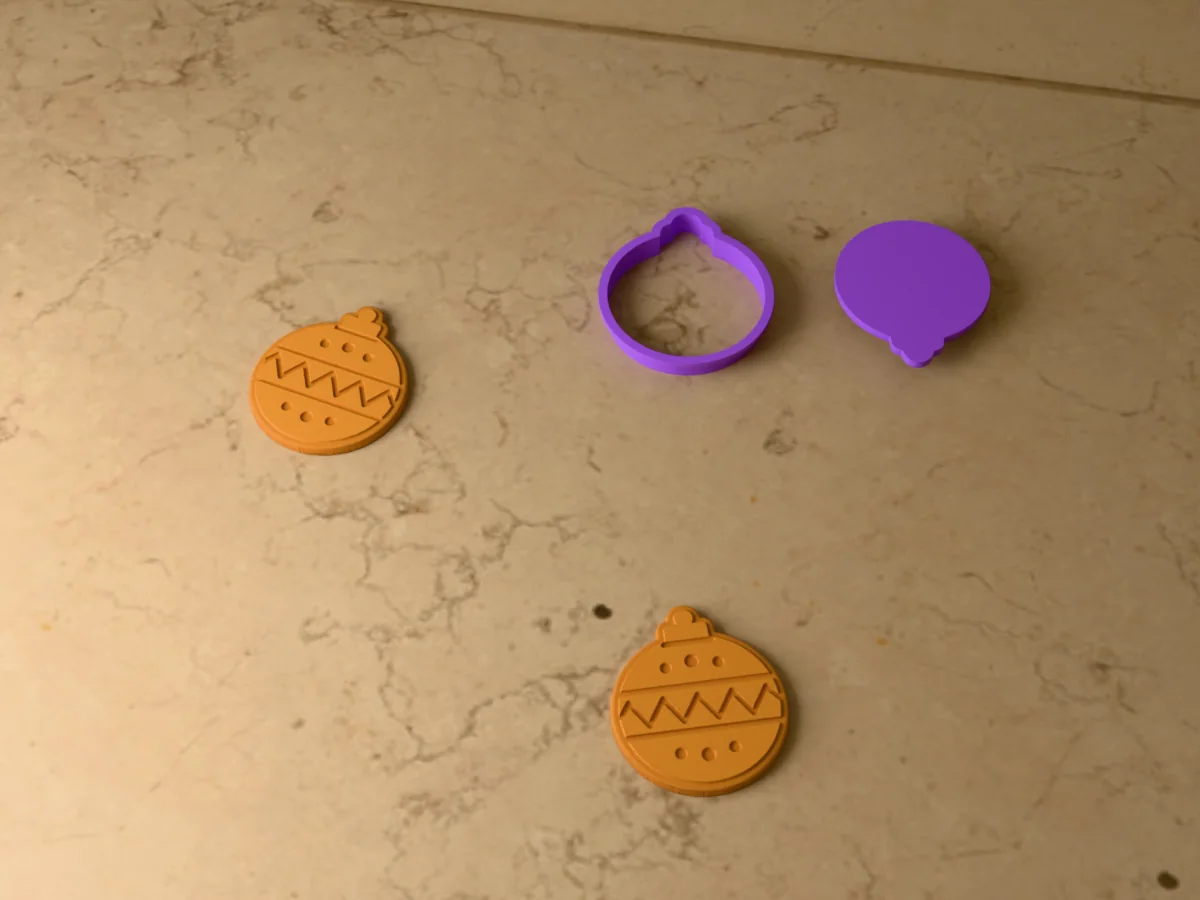
A round Christmas bauble with its cap, and a stamp that presses in two bands, a zigzag and dots.
 Pro early access
Two holly leaves and three berries, with a stamp that presses in the leaf veins and the berries.