◆ Candle wax
Stacked donut pillar candle mold
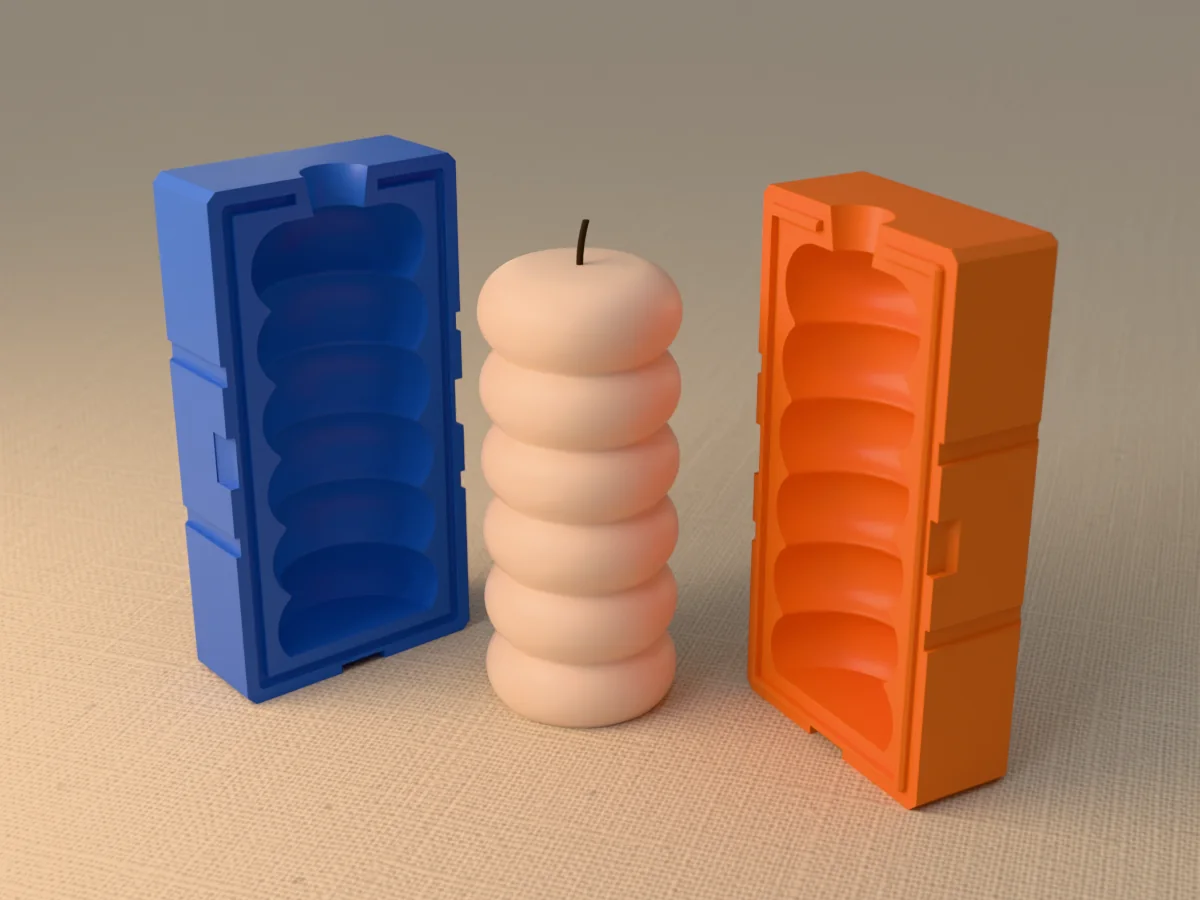
A 120 mm pillar of six stacked rings, like a pile of donuts. A rigid two-part print, no silicone.
◆ Candle wax
A 120 mm pillar of six stacked rings, like a pile of donuts. A rigid two-part print, no silicone.
A stacked donut pillar candle 120 mm tall and 52 mm across: six rings stacked on each other, each a 12 mm round tube around a 14 mm core, with soft, rounded creases between them. The bottom ring is cut flat into a 46 mm foot, so it stands steady.
The mold is exactly what our two-part candle mold generator builds for it: two rigid halves with rubber-band grooves, pry pockets and a pour funnel on top. The pillar is turned round one axis, so every horizontal slice is a circle and a seam through its middle releases the rings cleanly. The tool's own seam check finds nothing stuck, and you pour straight into the print.
A playful sculptural pillar that fits a standard pillar plate. Pour it in one colour, or in stripes: let each ring's worth set before you pour the next colour. The zip carries both halves, the pillar master as its own STL, the tool's own print-settings sheet and a recipe file for the generator.
Shown as a 3D render of the printed mold halves pulled apart around the candle they cast, not a photo.
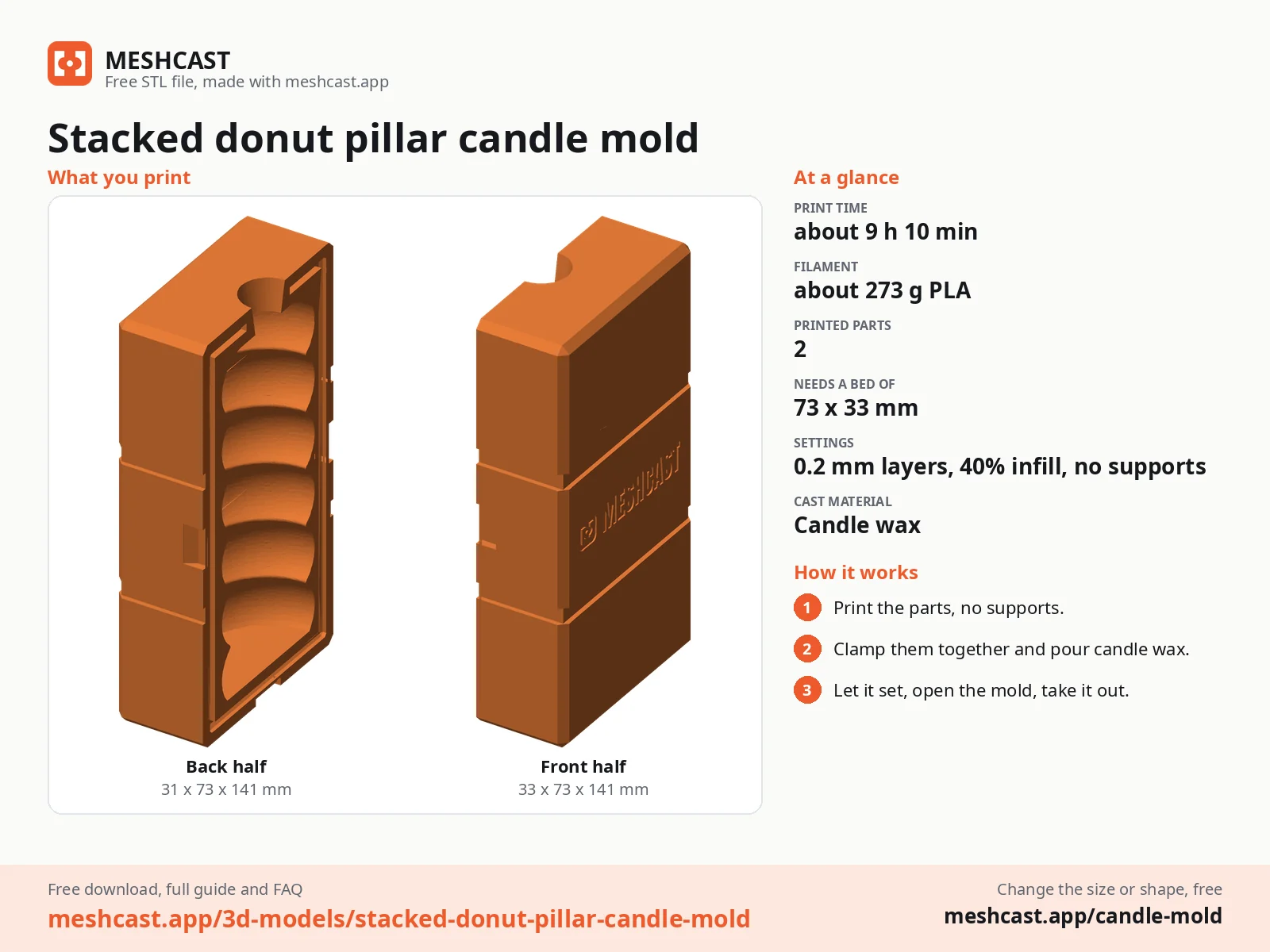
Print both halves as exported. Clamp-strength settings: 4 walls, 40% gyroid infill, no supports.
Drop a tabbed wick into one half so the tab sits on the cavity floor, close the halves and band them along the whole seam.
Clip the wick centred across the pour funnel and pour at 65 to 75 C.
Once the first pour is firm but still warm, top up the funnel. Wax shrinks, and the second pour fills the dip.
Cool fully, open the halves at the pry pockets and trim the wick.
Print details
| Cast material | Candle wax |
|---|---|
| Printed parts | 2 |
| Size (W x D x H) | 64 x 73 x 141 mm |
| Print bed needed | 73 x 33 mm, 141 mm tall |
| Filament | ~273 g |
| Layer height | 0.2 mm |
| Infill | 40% |
| Supports | Not needed |
| Download | ZIP: 2 printed parts (STL) + candle master (STL) + print sheet + recipe |
| Added | 2026-10-01 |
Made with the free Rigid box mold generator. Upload your own model and get the same kind of mold built around it, in your browser.
Free download. Opens the Thingiverse listing in a new tab.
Free for personal use. Selling the pieces you cast needs a commercial licence (Pro or Founder); passing on the file itself is not permitted on any plan. Full terms.
New to casting? Read the candle mold guide.
Pour the first colour up to about one ring, let it skin over for a few minutes, then pour the next colour a few degrees cooler. Keep the funnel side up and the wick clipped throughout. The creases between the rings hide the line, so each ring can be its own colour.
Yes. It is 52 mm across at the rings and stands on a 46 mm flat foot, so it sits on any plate or holder made for 50 mm pillars. Burn it on a plate, since wax will run into the creases as the top ring melts.
About 202 g of pillar wax per candle: the cavity holds 225 ml. Pour at 75 to 80 C so the wax fills each crease before it skins, and top up the funnel once as it sets.
 Candle wax
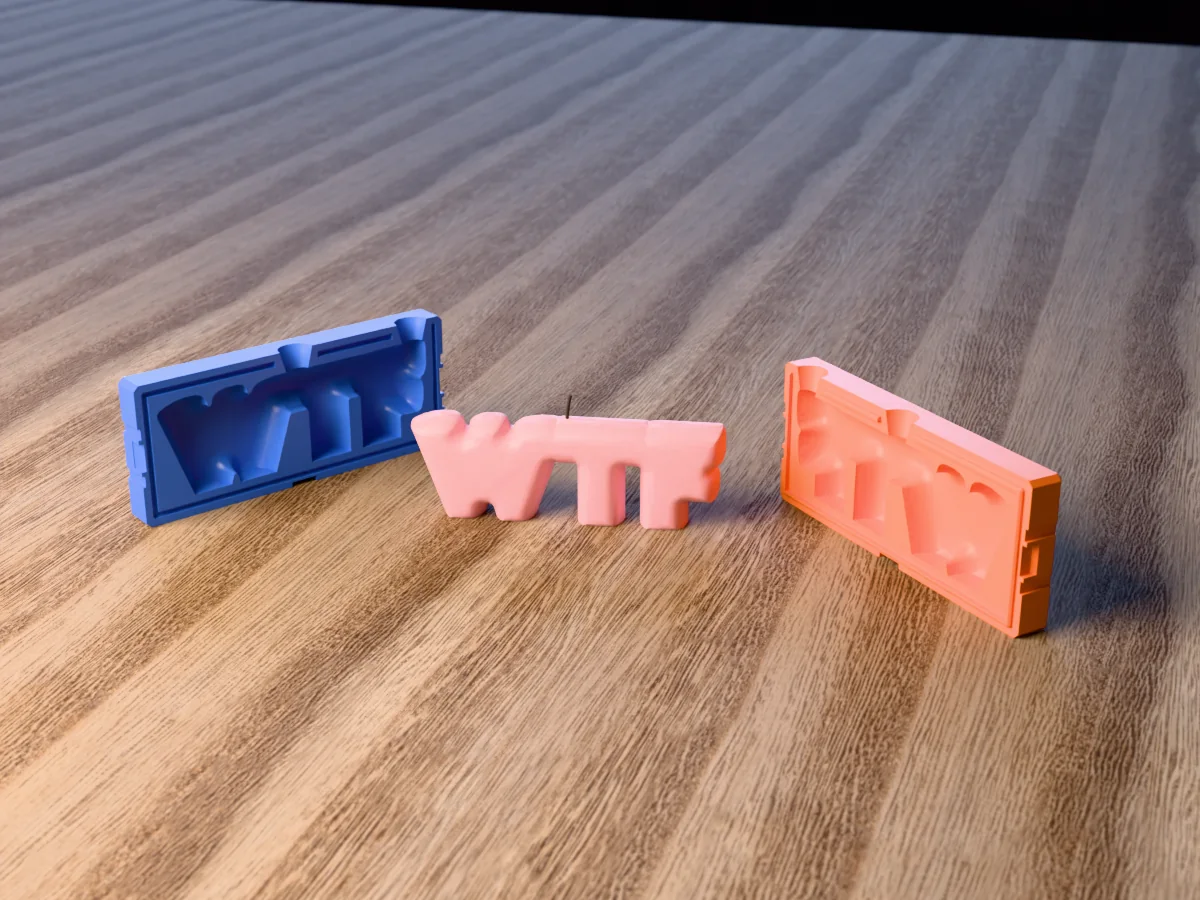
A puffy "WTF" bubble letter candle, 150 mm long, from a rigid two-part print. Two wicks, no silicone.
 Candle wax
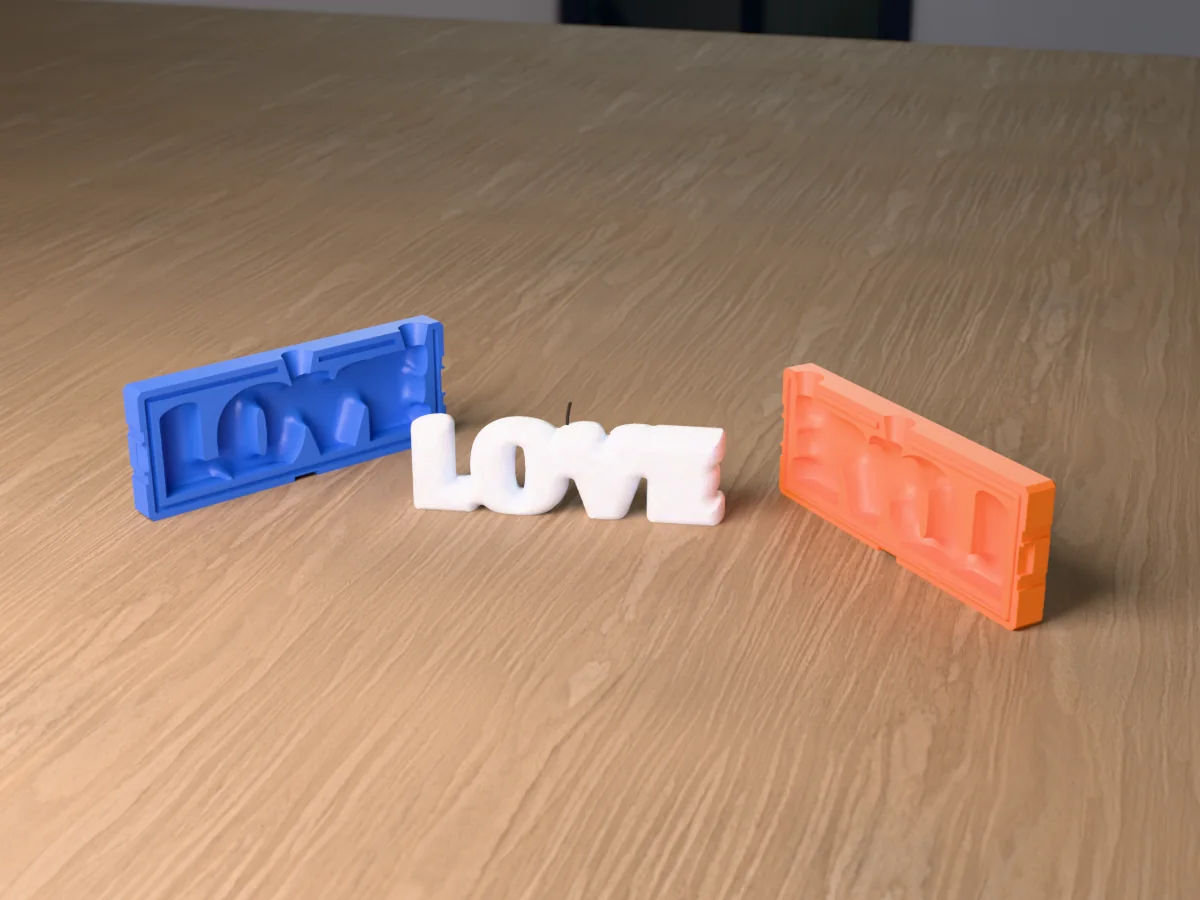
A puffy "LOVE" bubble letter candle, 160 mm long, from a rigid two-part print. Two wicks, no silicone.
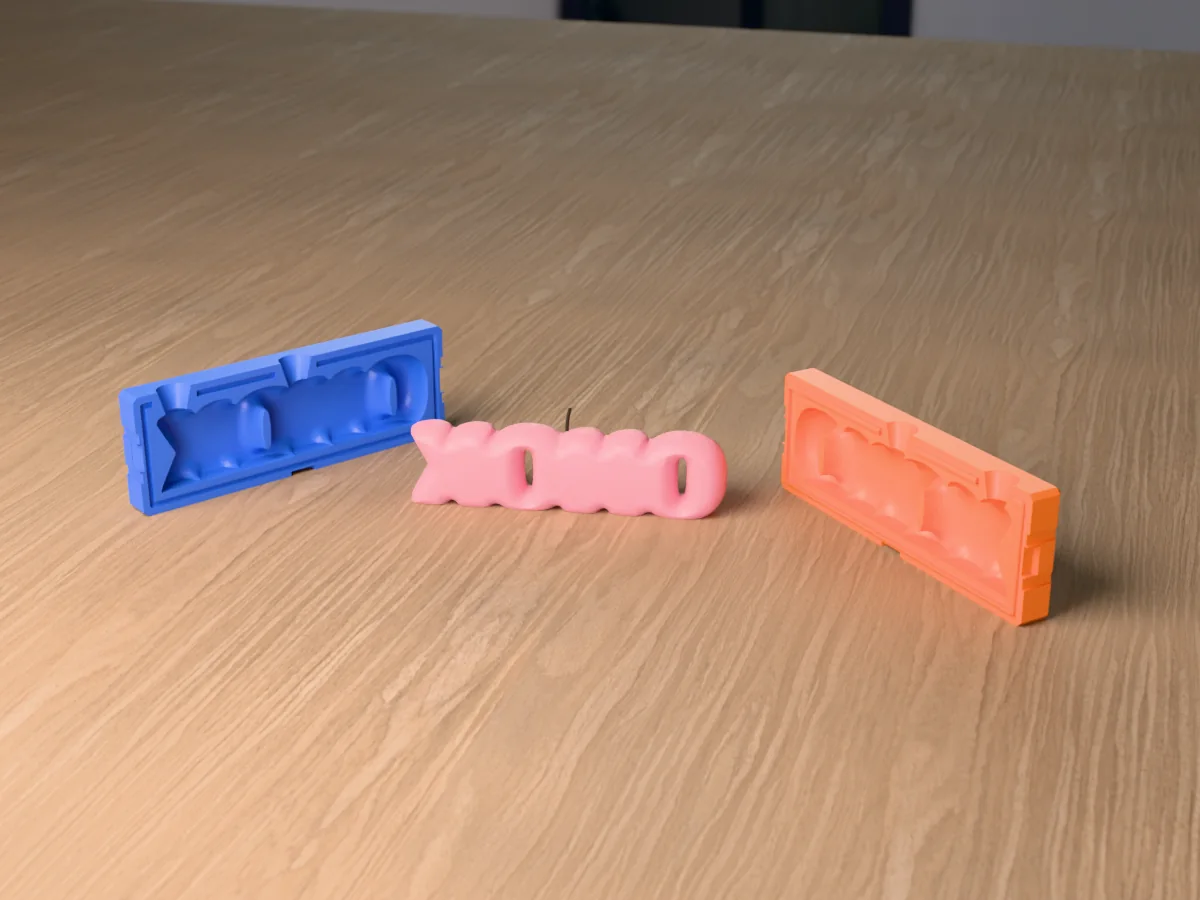 Candle wax
A puffy "XOXO" bubble letter candle, 160 mm long, from a rigid two-part print. Two wicks, no silicone.
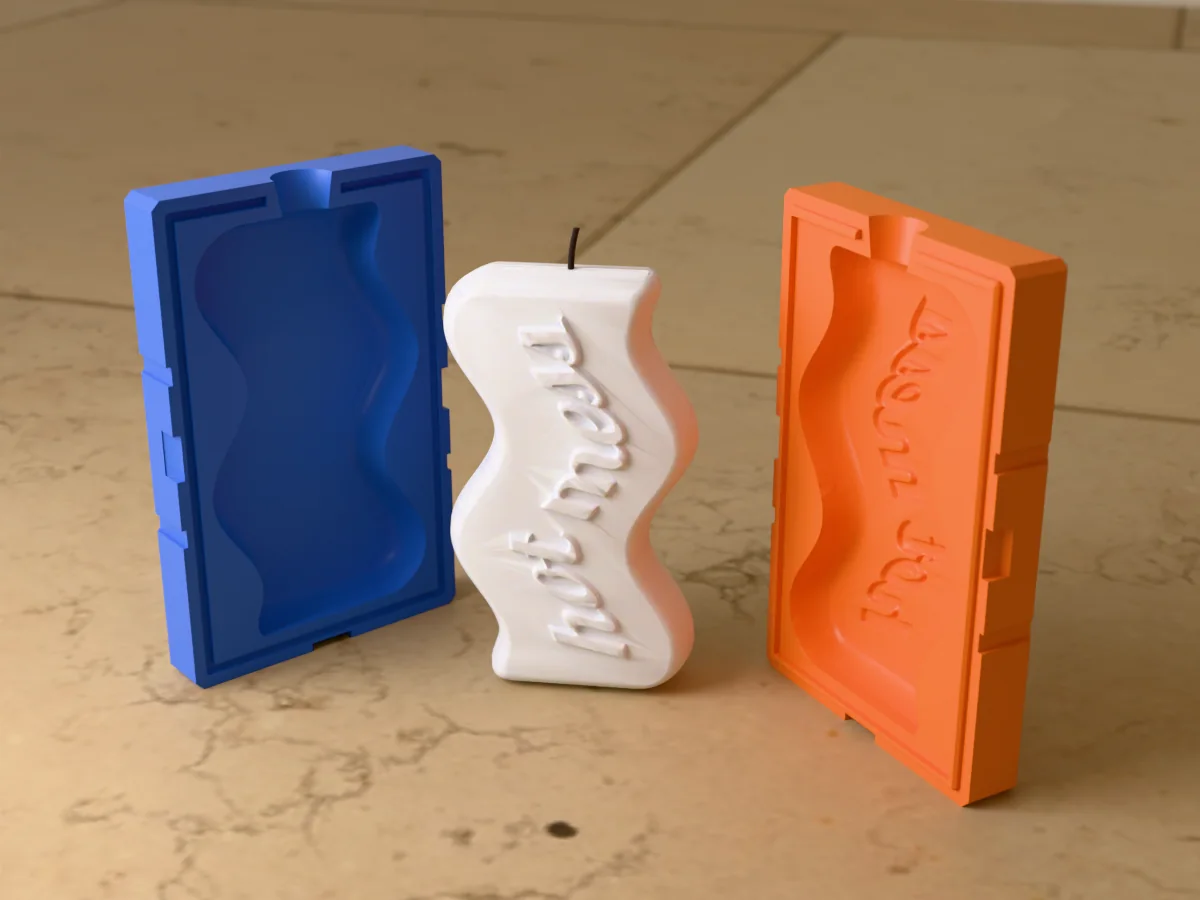 Candle wax
A tall wavy candle with "hot mess" in raised script running up the front. A rigid two-part print, no silicone.
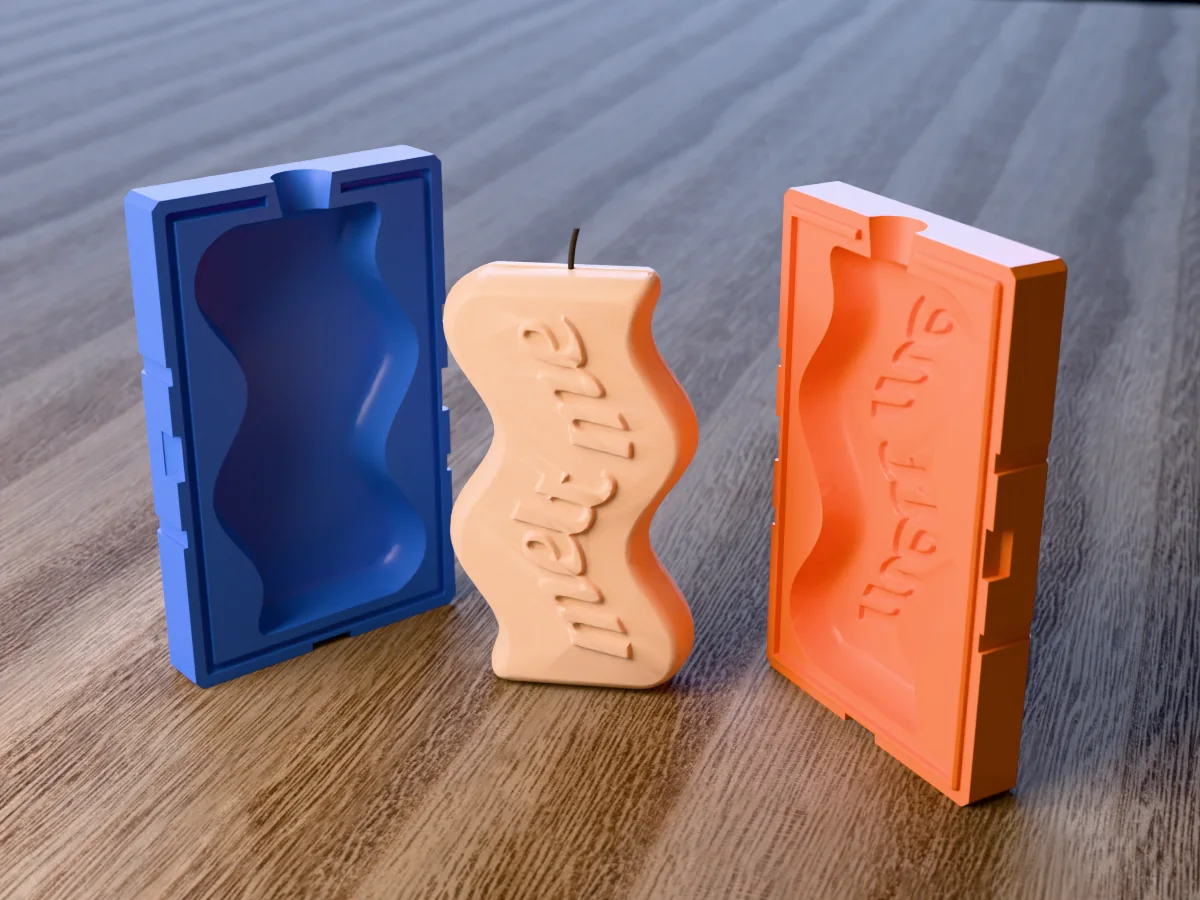 Candle wax
A tall wavy candle with "melt me" in raised script running up the front. A rigid two-part print, no silicone.
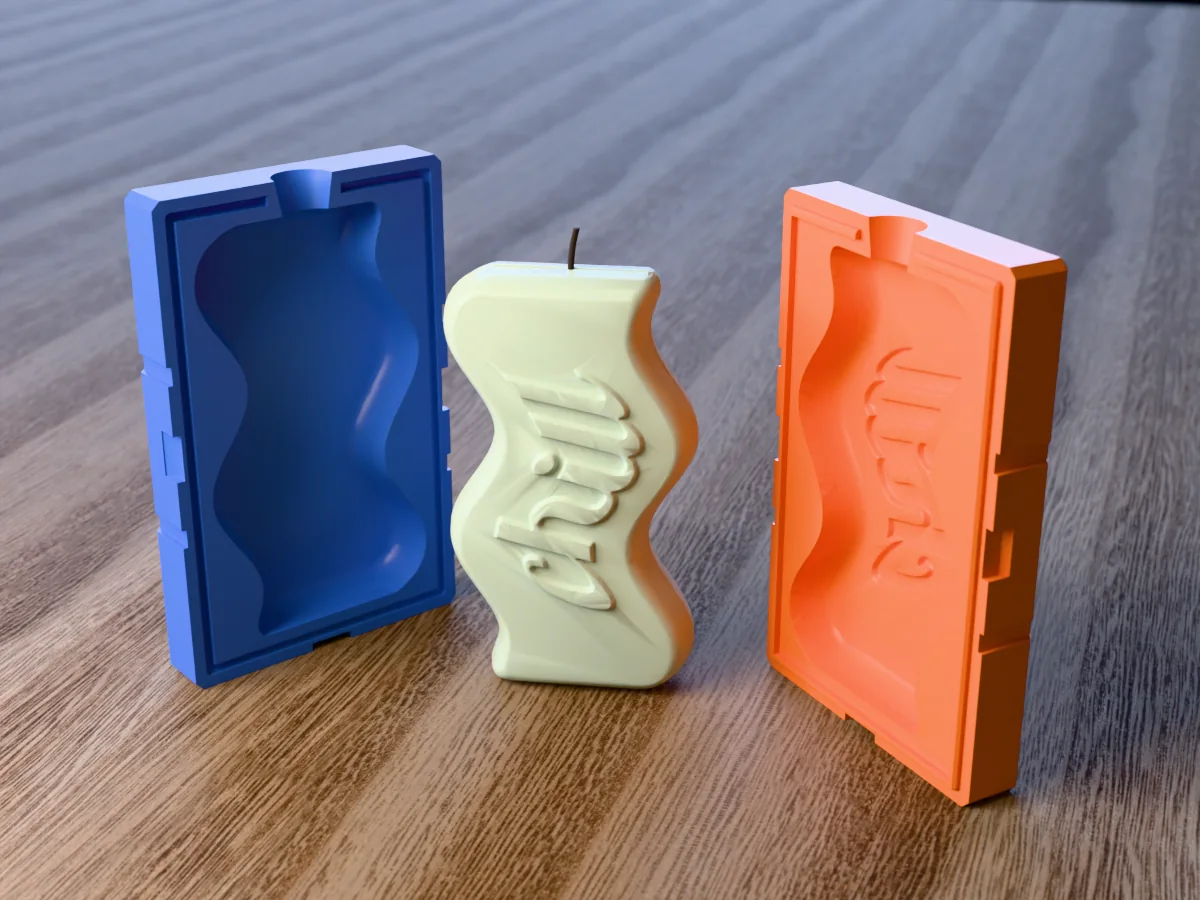 Candle wax
A tall wavy candle with "chill" in raised script running up the front. A rigid two-part print, no silicone.
 Candle wax
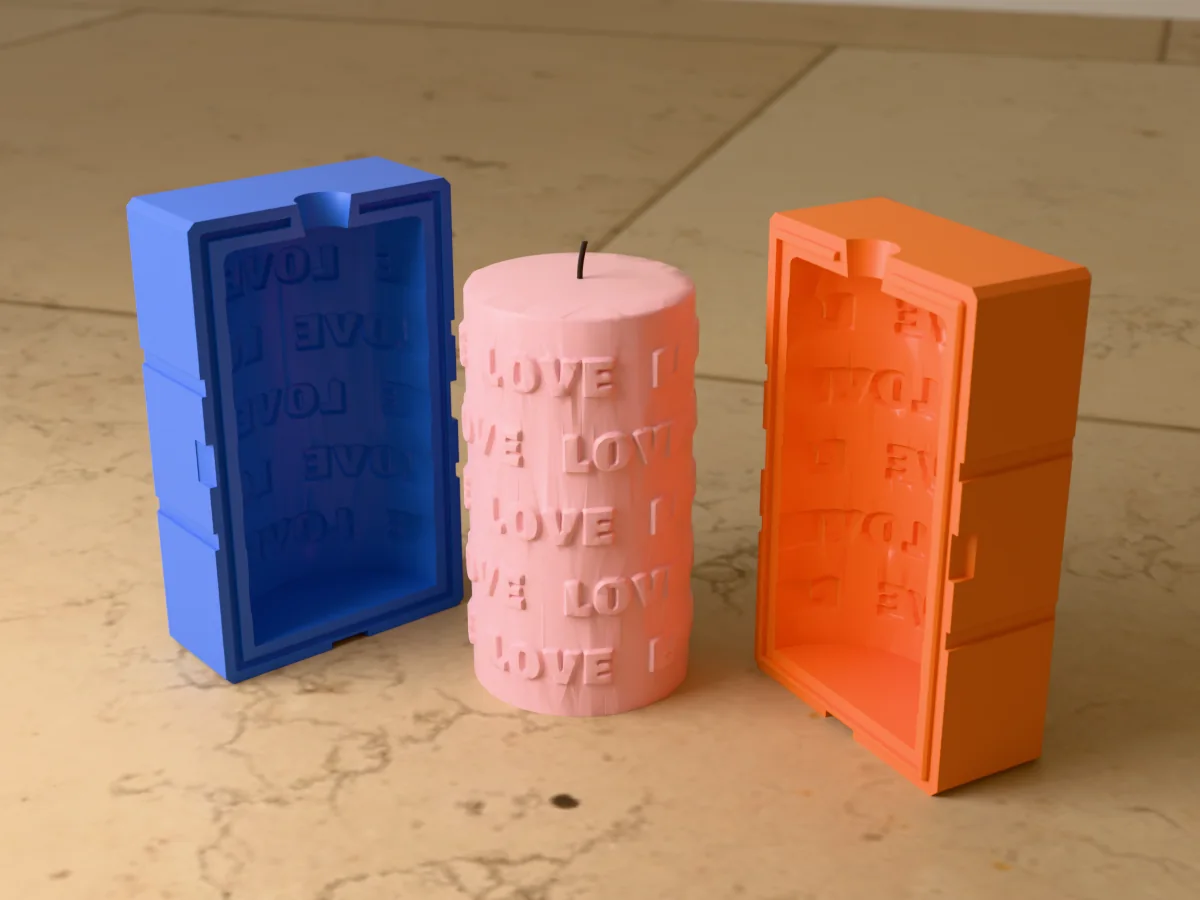
A 70 x 130 mm pillar candle with "LOVE" in raised letters in rows all round it. A rigid two-part print, no silicone.
 Candle wax
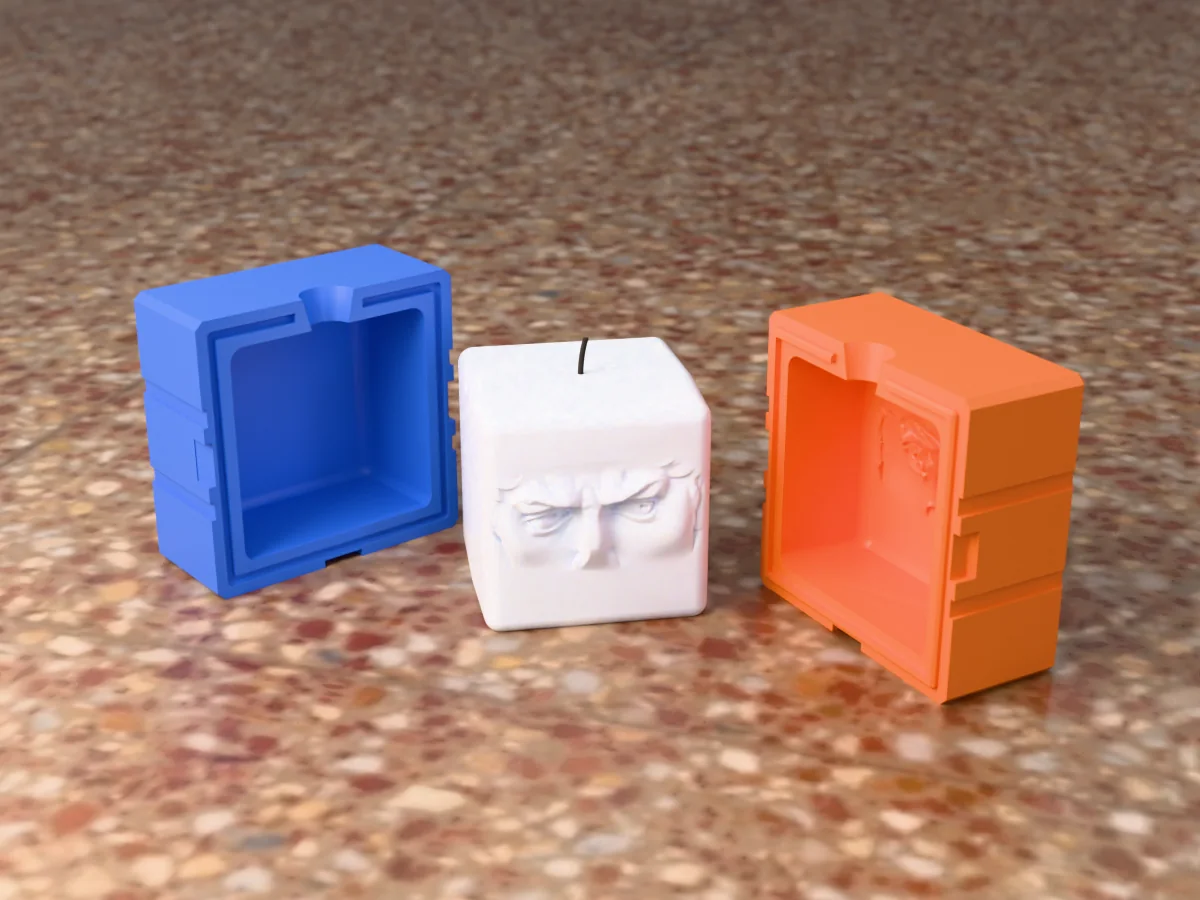
A 70 mm cube candle carrying the eyes of Michelangelo's David, from a museum scan. A rigid two-part print, no silicone.