◆ Plaster
Wavy trinket tray mold
A wavy oval trinket tray for Jesmonite or plaster. Two per pour, from a silicone tray you make yourself.
◆ Plaster
A wavy oval trinket tray for Jesmonite or plaster. Two per pour, from a silicone tray you make yourself.
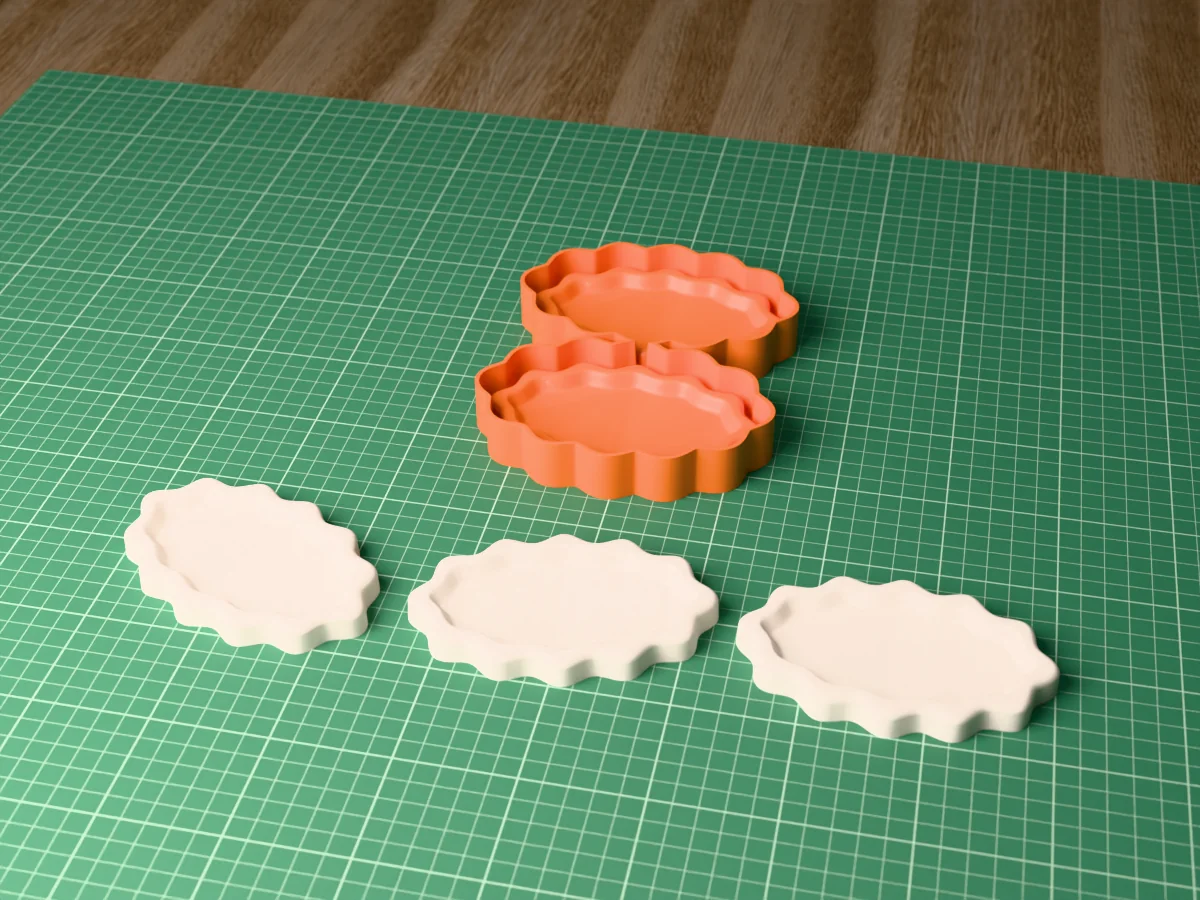
A wavy trinket tray 131 x 83 mm and 12.5 mm tall: twelve soft waves round an oval, a rounded lip 5 to 8 mm wide that rises and falls with them, and a 6.5 mm deep well whose edge waves gently in step. A low, easy shape for rings, hair clips, a candle or a bar of soap.
Made with our tray mold generator in its flexible silicone tray mode: print the caster, pour silicone into it and peel out a flexible two-cavity tray. Each tray is cast upside down in it, so the wavy lip forms against the silicone and the poured side becomes the flat underside.
Wavy trays are a staple of Jesmonite makers, poured in pastels, terrazzo and marble. The zip carries the printed caster exactly as the tool exported it, one tray on its own as an STL, the master uploaded to the tool, and a print and pour sheet with the silicone figure the tool measured.
Shown as a 3D render of the printed caster with three white trays in front, not a photo.
Print the caster as exported, open side up. It is one part, so there are no seams to seal. No supports.
Mix 331 ml of silicone in one batch and pour it into one corner of the caster in a thin stream, letting it rise over the dish shapes until it is level with the rim. Tap the caster on the table for a minute and let it cure for as long as its datasheet says.
Peel the cured silicone out of the caster. That silicone is your tray: the dome in the middle of each cavity is what forms the well of the dish.
Mix Jesmonite or a casting plaster to a thick pour and fill each cavity to the brim, about 63 ml each. Tap the tray on the table for a minute so the air lifts off the lip, the deepest part of the cavity.
Leave Jesmonite about an hour, or plaster until it is warm and hard, then flex the tray and peel it back. Sand the back flat and seal the tray once it is dry.
Print details
| Cast material | Plaster |
|---|---|
| Printed parts | 1 |
| Size (W x D x H) | 142 x 183 x 25 mm |
| Print bed needed | 184 x 143 mm, 25 mm tall |
| Filament | ~145 g |
| Layer height | 0.2 mm |
| Infill | 15% |
| Supports | Not needed |
| Download | ZIP: printed caster (STL) + one tray (STL) + tool master (STL) + print and pour sheet |
| Added | 2026-09-26 |
Pro early access until October 26, 2026, then free with any account.
Like it or post your print on Thingiverse
Make your own tray mold →Made with the free Tray mold generator. Upload your own model and get the same kind of mold built around it, in your browser.
Free for personal use. Selling the pieces you cast needs a commercial licence (Pro or Founder); passing on the file itself is not permitted on any plan. Full terms.
New to casting? Read the ice cube tray mold guide.
Use Jesmonite pigment, or a pinch of mica, and stir it into the liquid before the powder: colour added to the finished mix streaks. A few drops of white pigment first make any pastel softer and more even. Mix a little extra so the second tray matches the first.
Yes, and it comes out beautifully white, but plaster is softer and chips on a hard edge. Use a strong casting plaster rather than plaster of Paris, let it dry for a few days, then seal it. Jesmonite is tougher and takes water once sealed.
Air trapped in the lip: it is the deepest part of the mold, and every wave is a small corner. Brush a thin coat of the mix into the lip first, then pour the rest, and tap the tray on the table until no more bubbles rise.
 PlasterPro early access
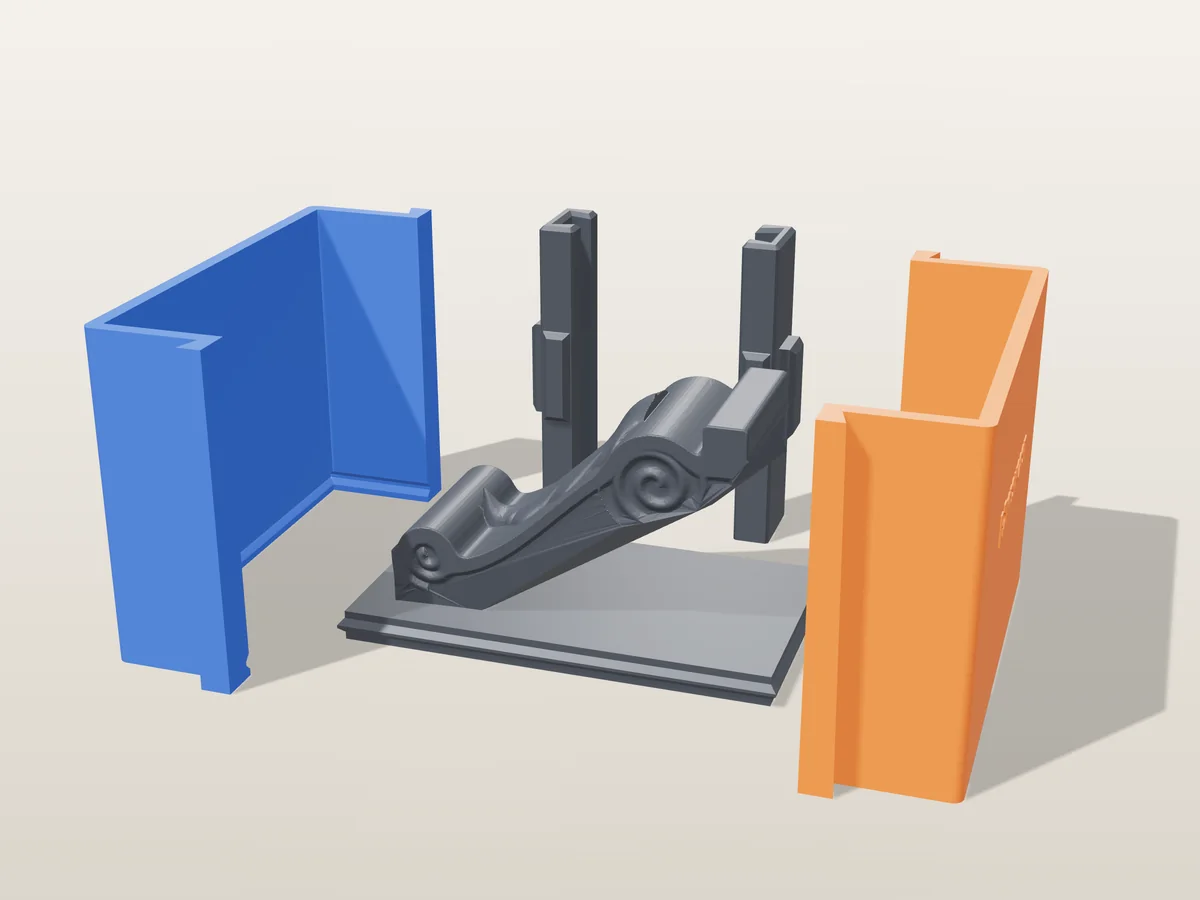
A 118 mm scroll corbel with an acanthus leaf and volutes, to cast in plaster or concrete. Silicone box mold from printed parts.
 PlasterPro early access
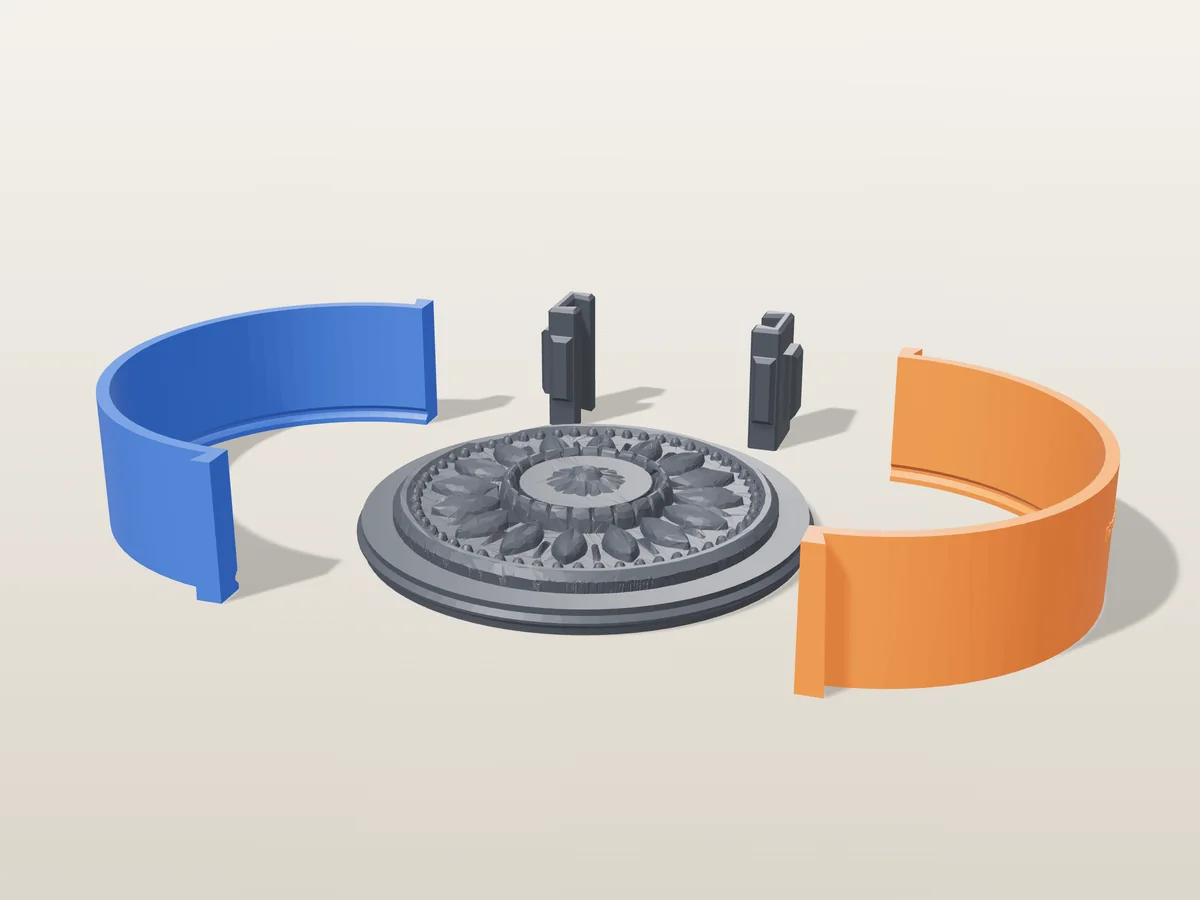
A 150 mm ceiling rosette with a beaded rim, sixteen leaves and a flower boss, to cast in plaster. Silicone box mold.
 PlasterPro early access
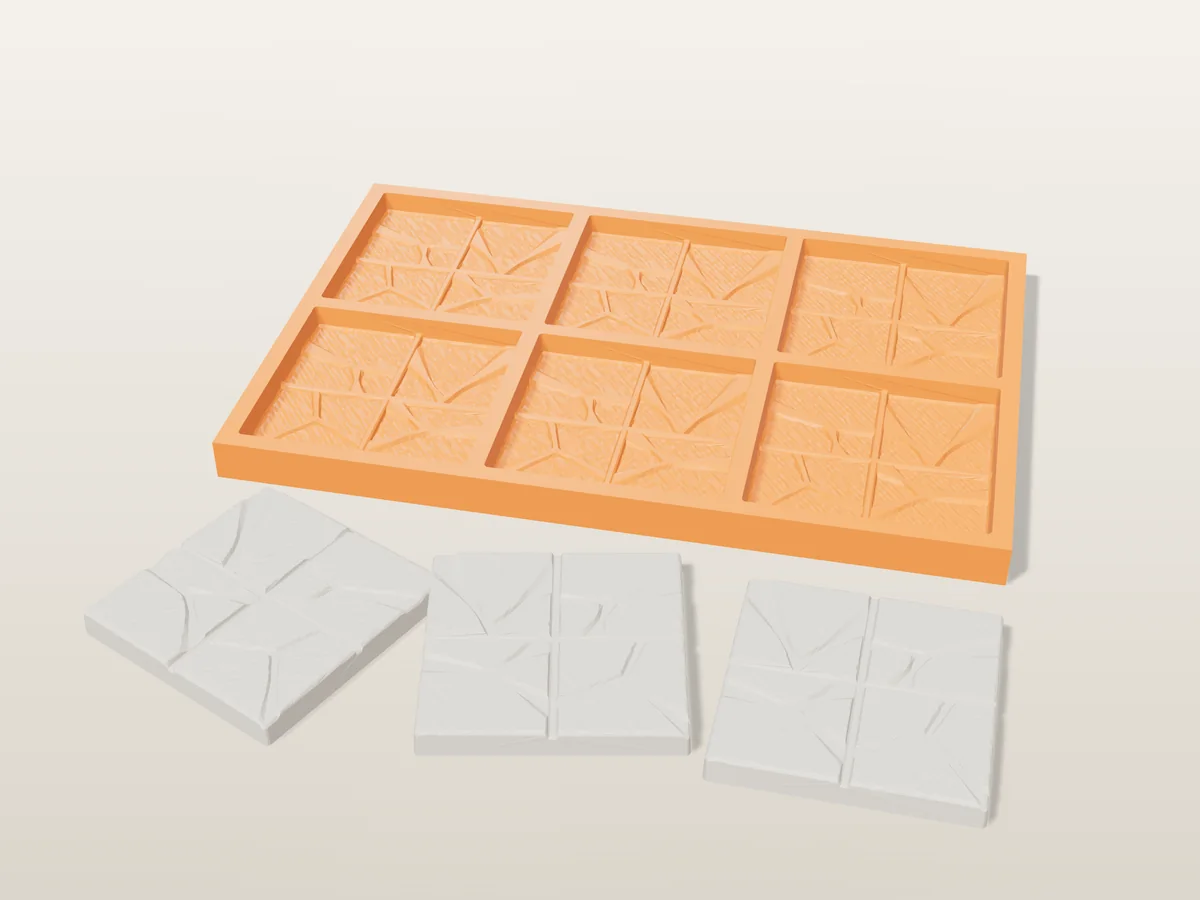
Six 2 x 2 inch flagstone floor tiles for D&D and wargaming terrain, cast in plaster in a printed tray.
 PlasterPro early access
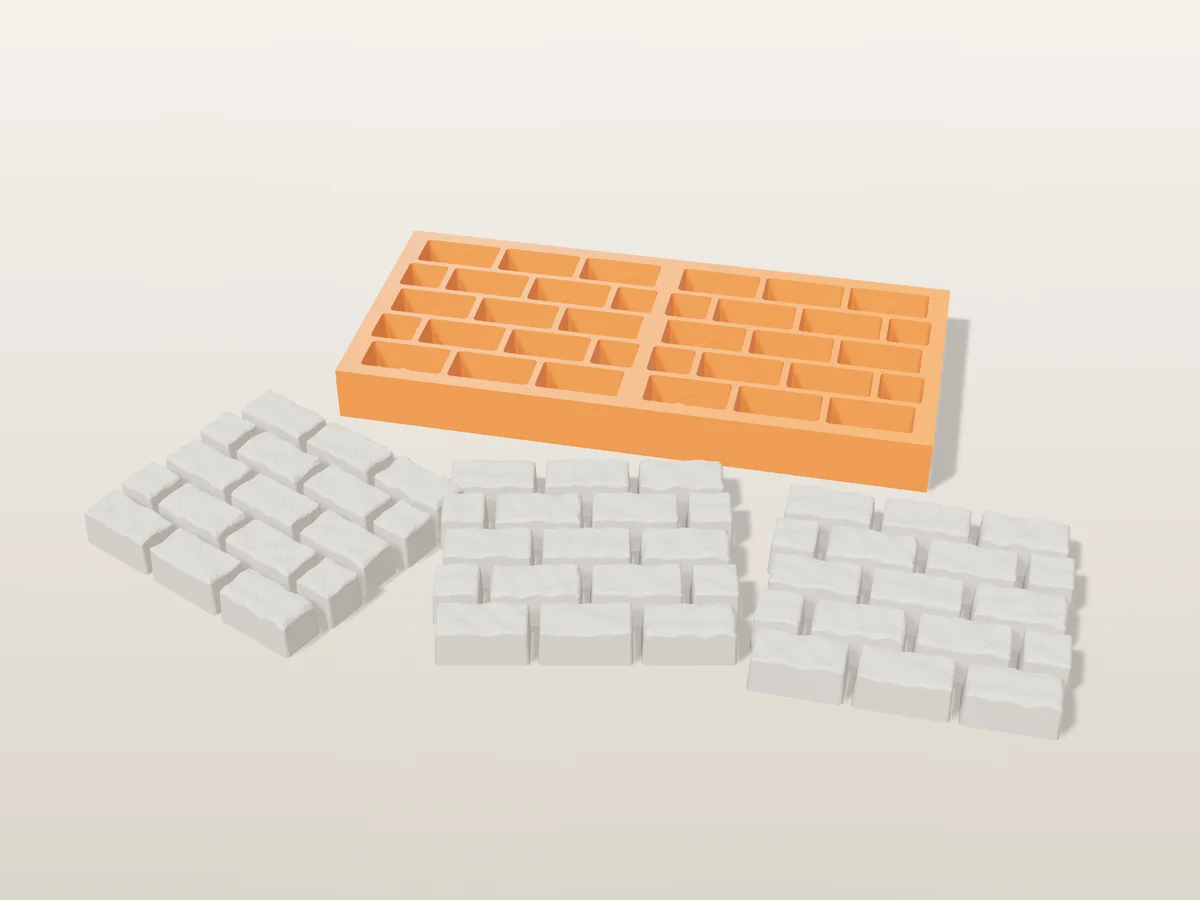
A sprue of chiselled dungeon wall bricks for tabletop terrain, cast in plaster and glued up into walls.
 PlasterPro early access
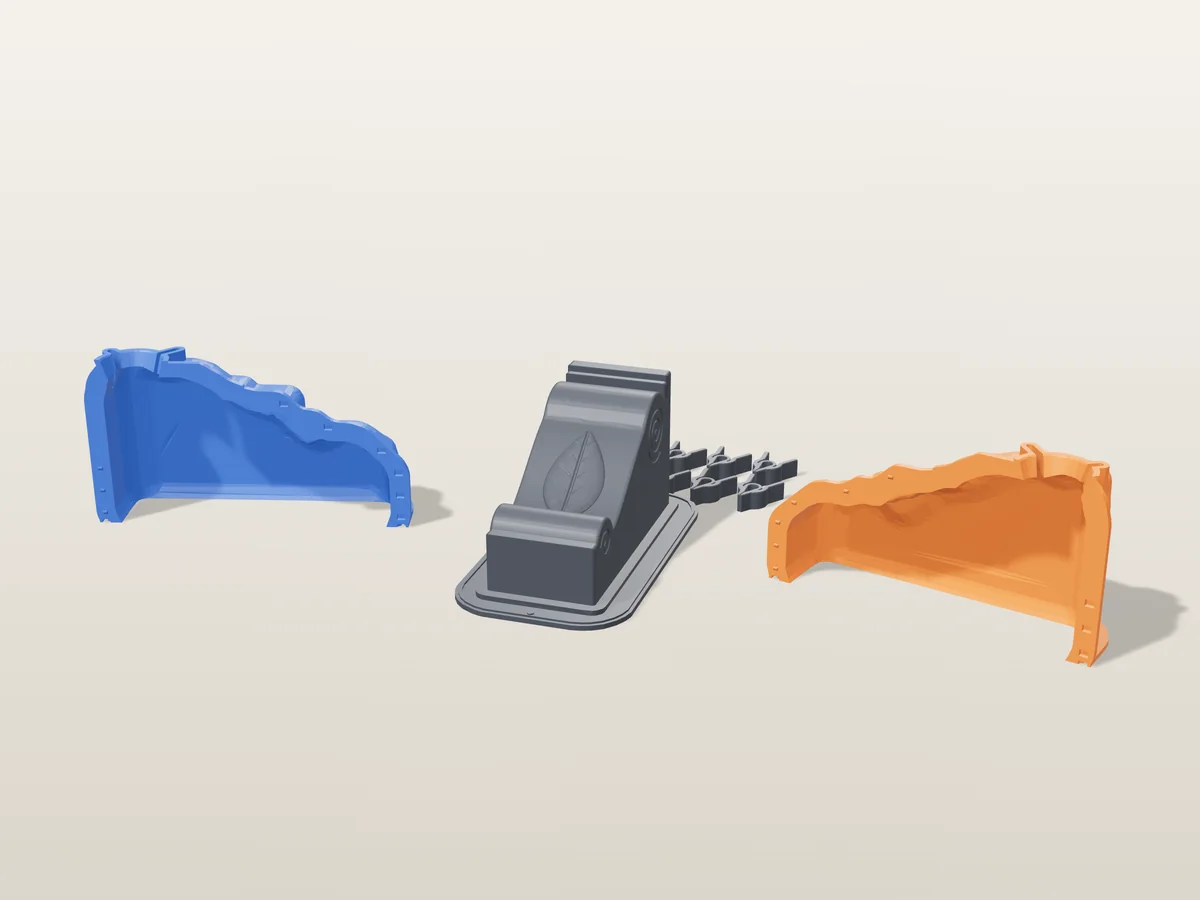
A classic scroll corbel, 150 mm tall, with volutes and a carved leaf. Cast it in plaster as a shelf bracket or decor.
 PlasterPro early access
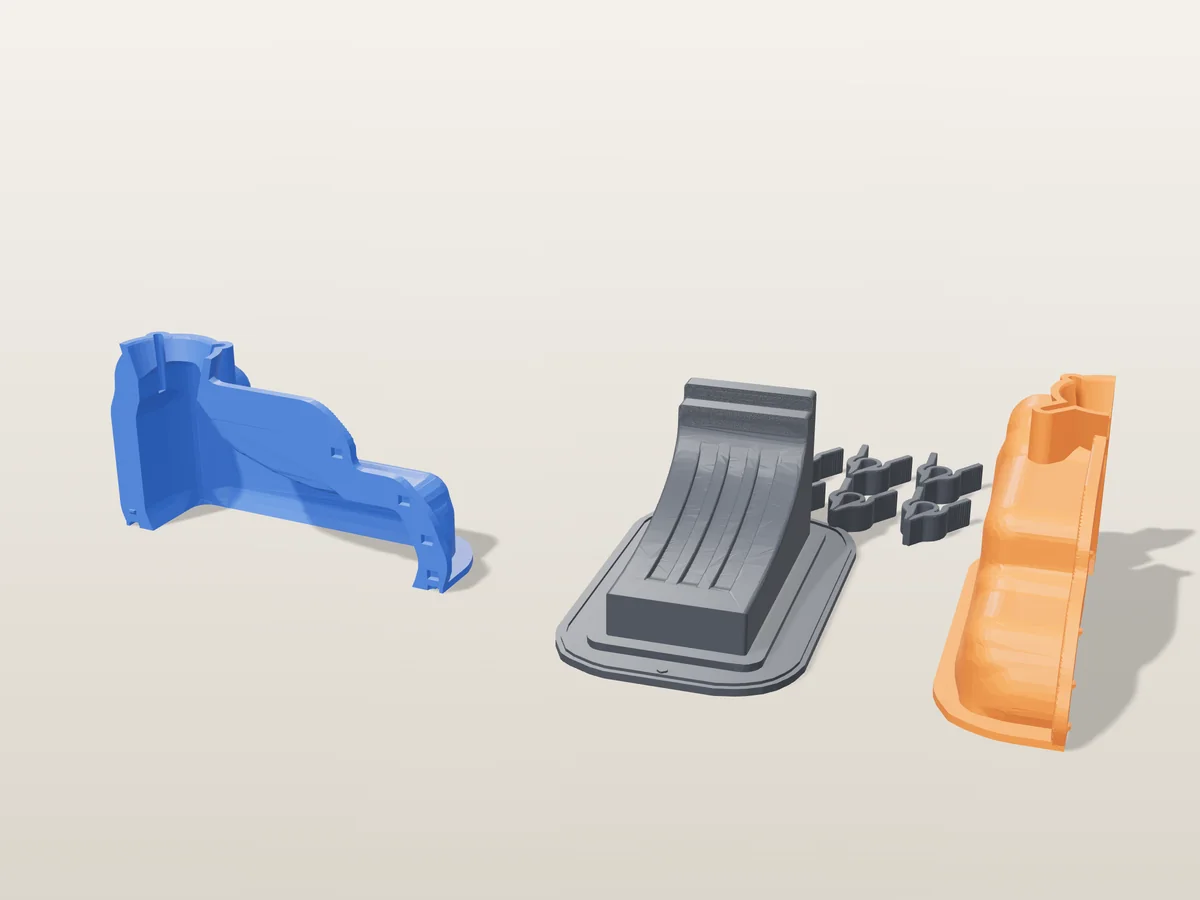
A fluted block corbel, 110 mm tall, with a stepped top and three flutes down a cove. Cast it in plaster.
 PlasterPro early access
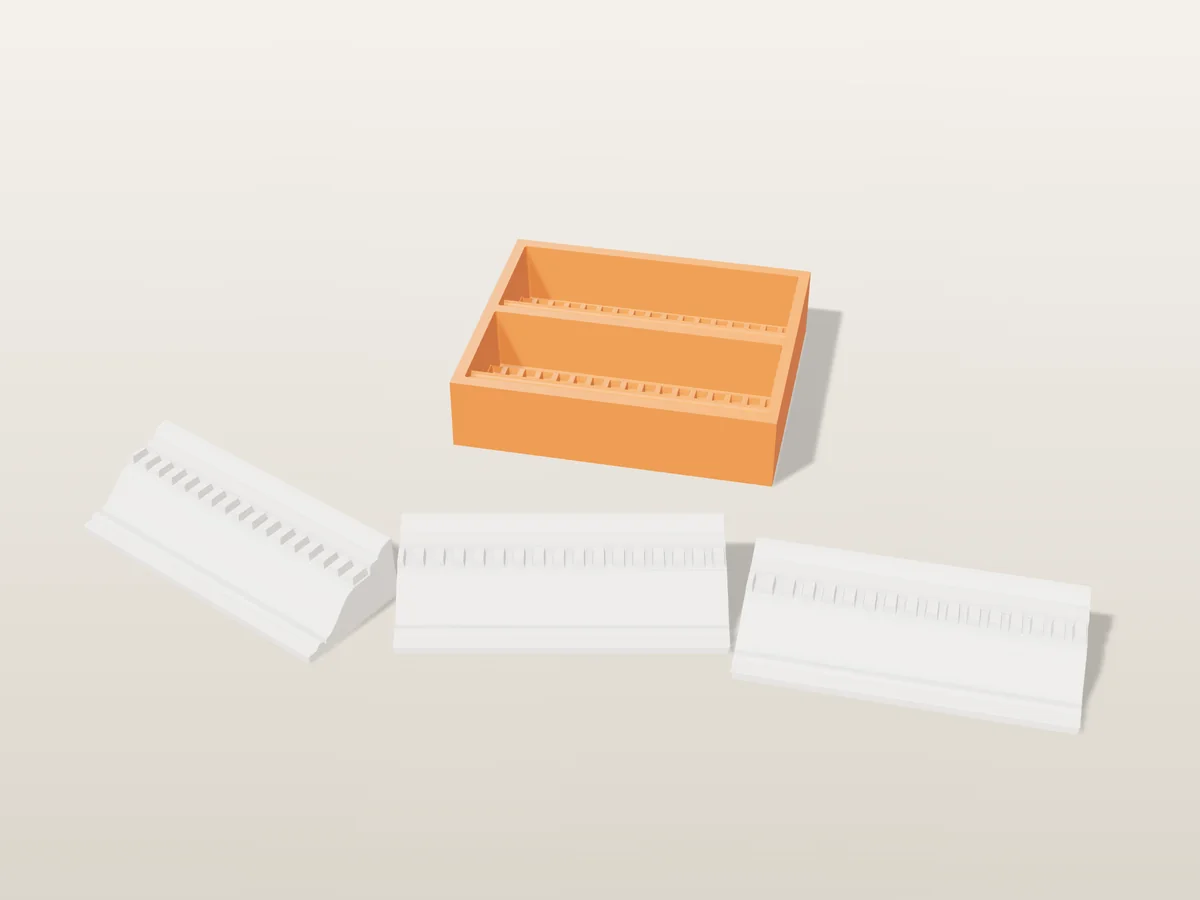
Two 180 mm lengths of cornice with dentils, cast in plaster straight in a printed tray. Butt them into a run.
 PlasterPro early access
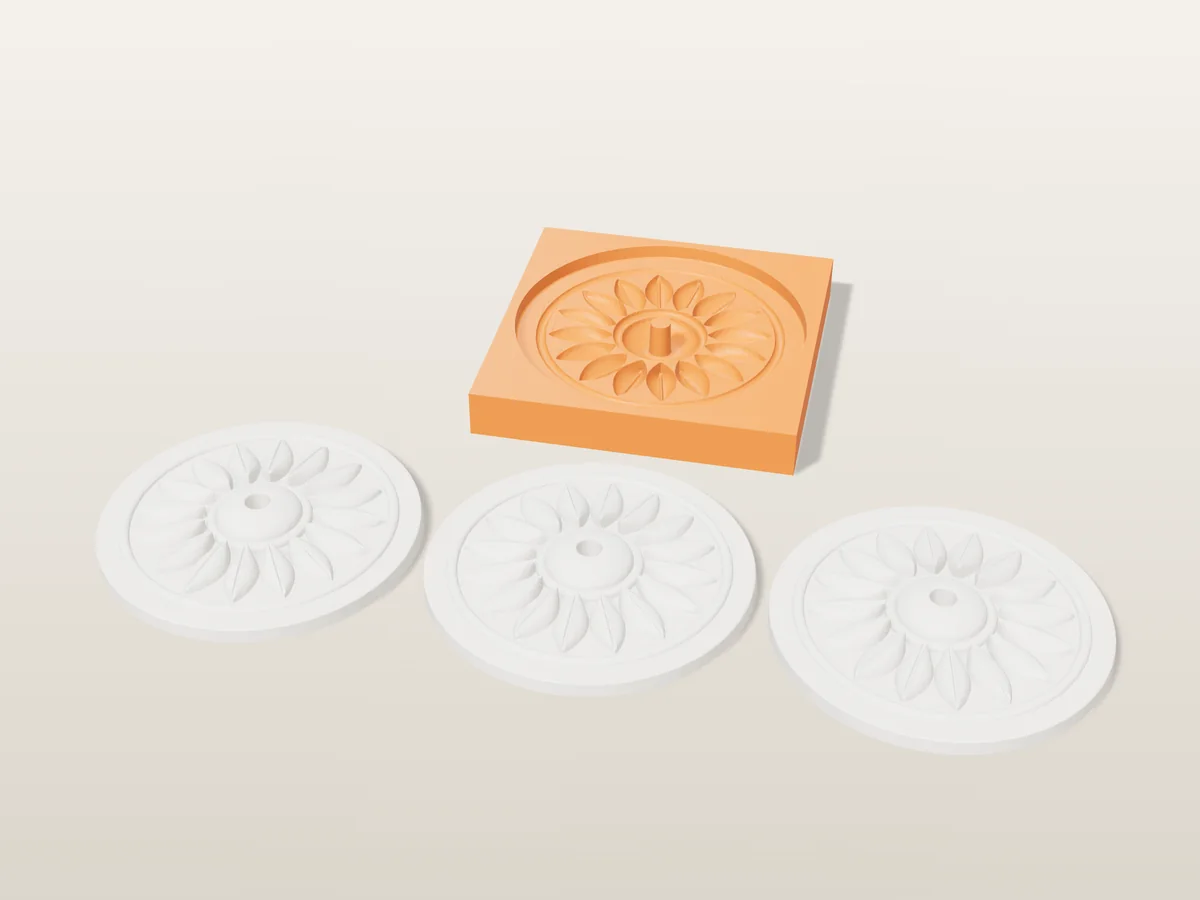
A 180 mm plaster ceiling rose with sixteen leaves and a cable hole, cast straight in a printed tray.