◆ Soft plastic
Ribbon leech lure mold, 3 inch
Twelve 3 inch ribbon leeches per pour, a small head and a thin wavy body. A silicone lure mold you make yourself.
◆ Soft plastic
Twelve 3 inch ribbon leeches per pour, a small head and a thin wavy body. A silicone lure mold you make yourself.
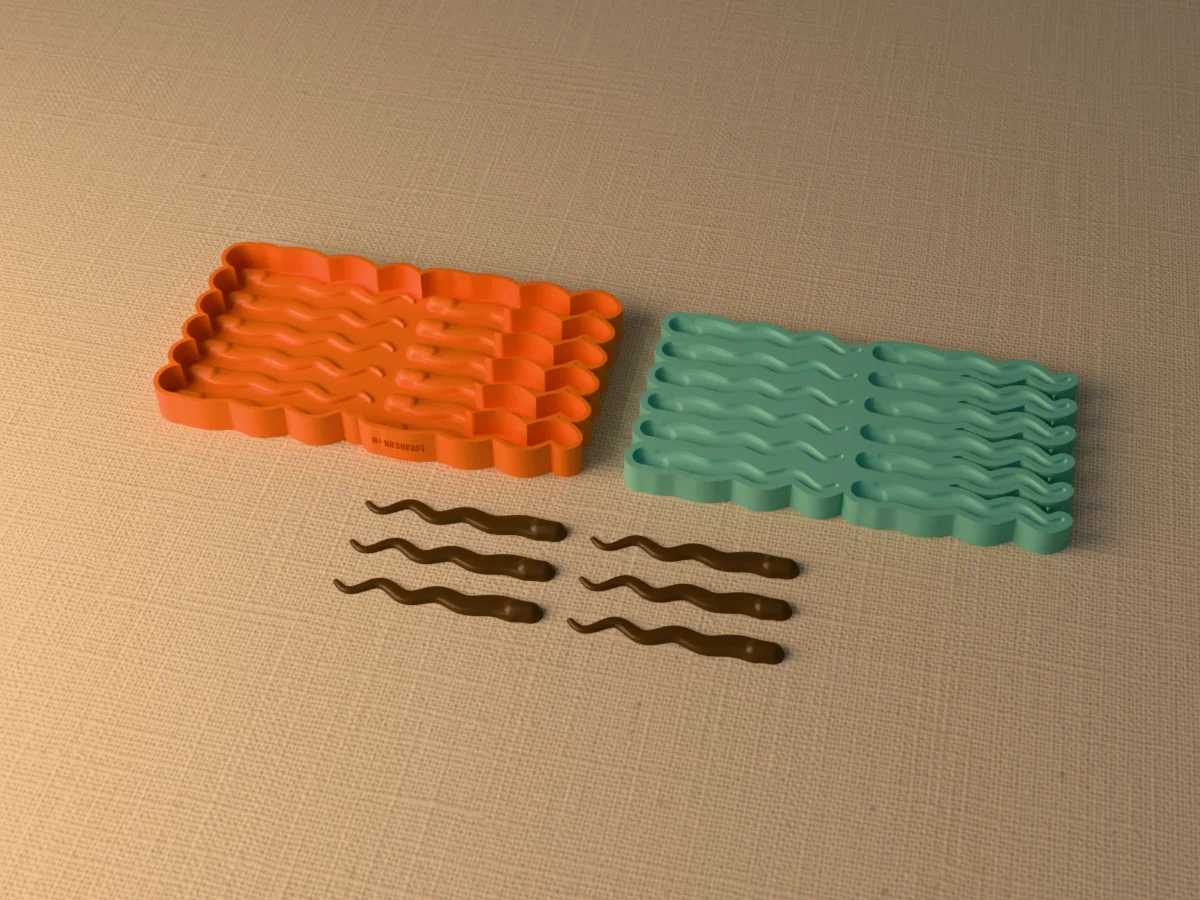
A hand-pour mold for twelve 3 inch (77 mm) ribbon leeches: a small rounded head and a thin, flat ribbon of a body, 9.6 mm wide behind the head and tapering to 2 mm, laid in a wave that grows towards the tail, so it undulates on a slow drop or a steady crawl. Each set of six takes about 7 ml of plastisol.
Made with our tray mold generator in its flexible silicone tray mode: print the caster, pour a heat-rated mold silicone into it and peel out a twelve-cavity lure mold. Plastisol goes in at 160 to 180 C, which no printed mold survives, and the thin ribbon peels out of silicone in one piece.
The leeches are open-pour and flat-backed, as every hand-pour mold makes them. Fish one on a light jig or a live-bait rig for walleye, perch and trout, or under a float. The zip carries the printed caster exactly as the tool exported it, one set of six leeches as an STL, the master uploaded to the tool, and a print and pour sheet with the silicone figure the tool measured.
Shown as a 3D render of the printed caster with the silicone mold it makes and dark brown ribbon leeches in front, not a photo.
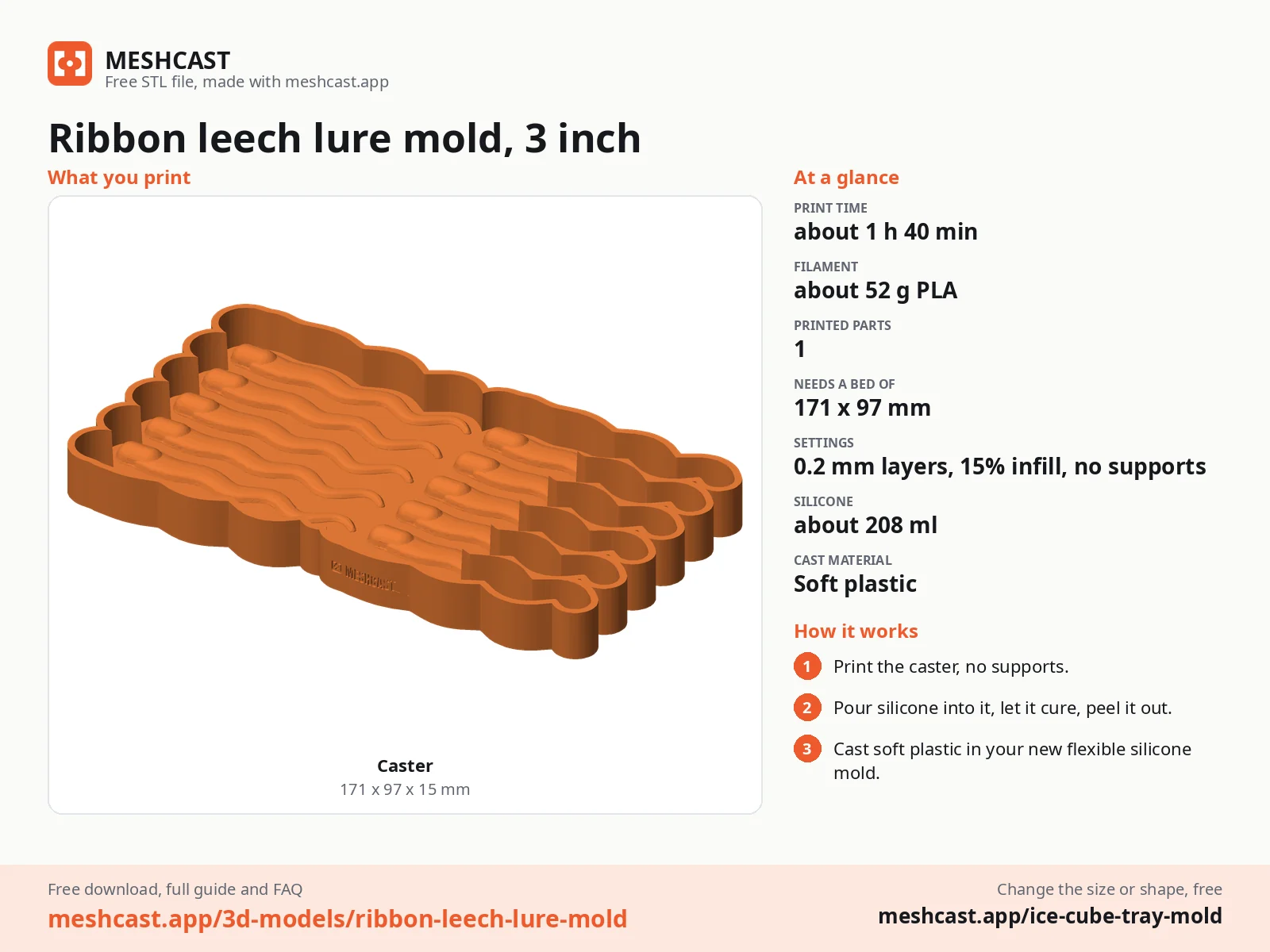
Print the caster as exported, open side up, no supports. It only ever holds silicone, never hot plastisol: PLA softens at about 60 C.
Mix 208 ml of a mold silicone rated for 200 C (400 F) or more (most tin- and platinum-cure mold silicones are, check the datasheet) and pour it into one corner of the caster in a thin stream until it covers the shapes to the rim. Tap out the bubbles and let it cure for as long as its datasheet says.
Peel the cured silicone out of the caster. That silicone is your lure mold: lay it flat on a heat-proof board.
Heat soft plastisol in a microwave you keep for plastisol only, in 30 to 60 second bursts, stirring between them, until it is clear and runny at 160 to 180 C (320 to 350 F). Stir in colour, glitter or salt now. Work with a window open or under an extractor and wear gloves: hot plastisol burns, and it smokes if it goes past 190 C.
Pour each leech from the pour cup in one steady stream, starting at the tip of the tail, which cools first, and fill each cavity slightly over the rim. Never pour lead or any metal into this mold.
Let the mold cool for 5 to 10 minutes, then peel each leech out, the thin end first. Trim any flash off the flat back with scissors, and keep the mold for plastisol only.
Print details
| Cast material | Soft plastic |
|---|---|
| Printed parts | 1 |
| Size (W x D x H) | 171 x 97 x 15 mm |
| Print bed needed | 171 x 97 mm, 16 mm tall |
| Filament | ~52 g |
| Layer height | 0.2 mm |
| Infill | 15% |
| Supports | Not needed |
| Download | ZIP: printed caster (STL) + one set of six ribbon leeches (STL) + tool master (STL) + print and pour sheet |
| Added | 2026-09-28 |
Made with the free Tray mold generator. Upload your own model and get the same kind of mold built around it, in your browser.
Free, no account needed. Opens Thingiverse in a new tab.
Free for personal use. Selling the pieces you cast needs a commercial licence (Pro or Founder); passing on the file itself is not permitted on any plan. Full terms.
New to casting? Read the ice cube tray mold guide.
Hook it once through the head on a 1/16 to 1/8 oz jig or a live-bait rig and fish it slowly: a slip bobber over a rock pile, a slow drag, or a lift and drop. Walleye, perch, trout and smallmouth all eat leeches.
Black, dark brown and dark olive copy real leeches, with a little red or gold glitter. Purple and black works in stained water, and a pumpkin or brown with orange flake in clear water.
The plastisol was too hard for such a thin bait. Use a soft plastisol, or thin a medium one with a spoon of softener, and the ribbon waves on the slowest drop. Hardener is for trailers and tough stick baits, not leeches.
 Soft plastic
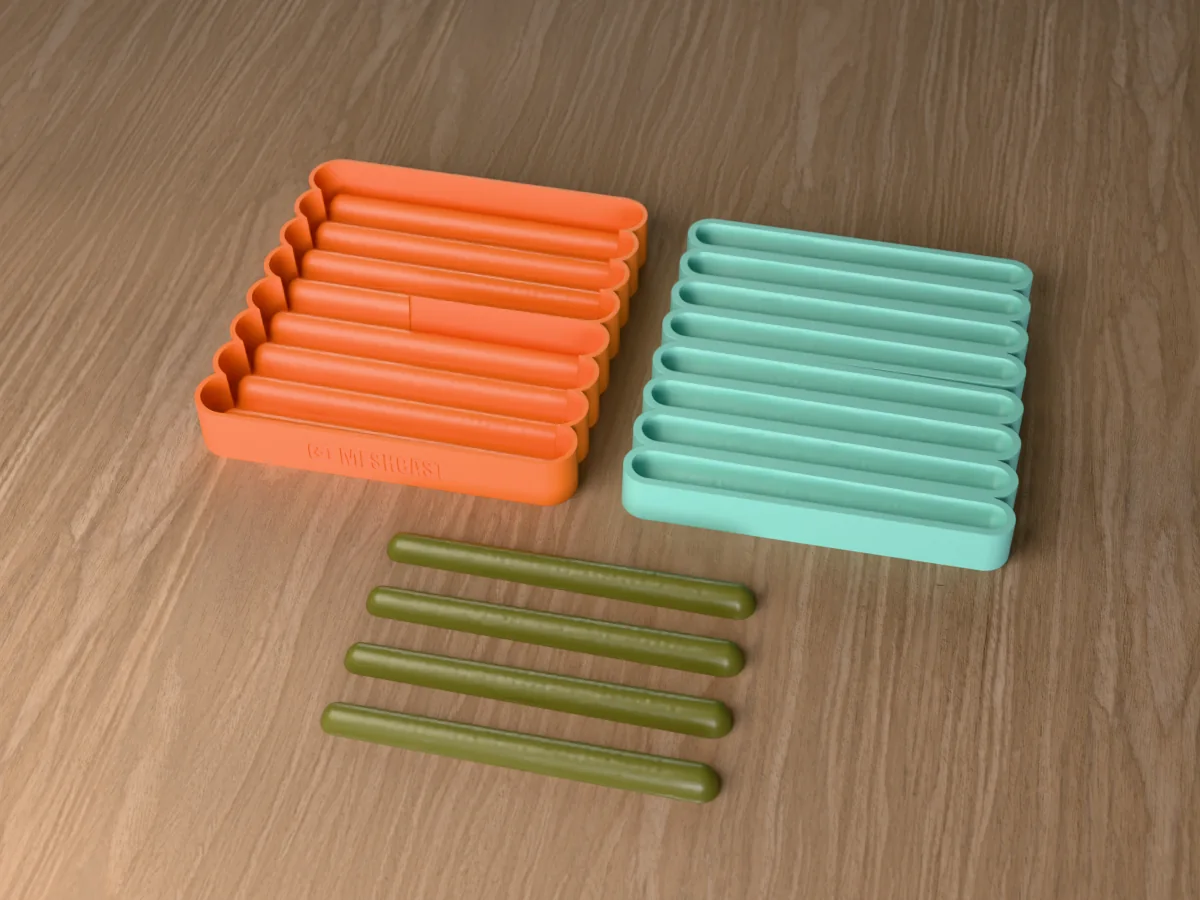
Eight 5 inch stick baits per pour, the do-nothing worm for wacky and Texas rigs. A silicone lure mold you make yourself.
 Soft plastic
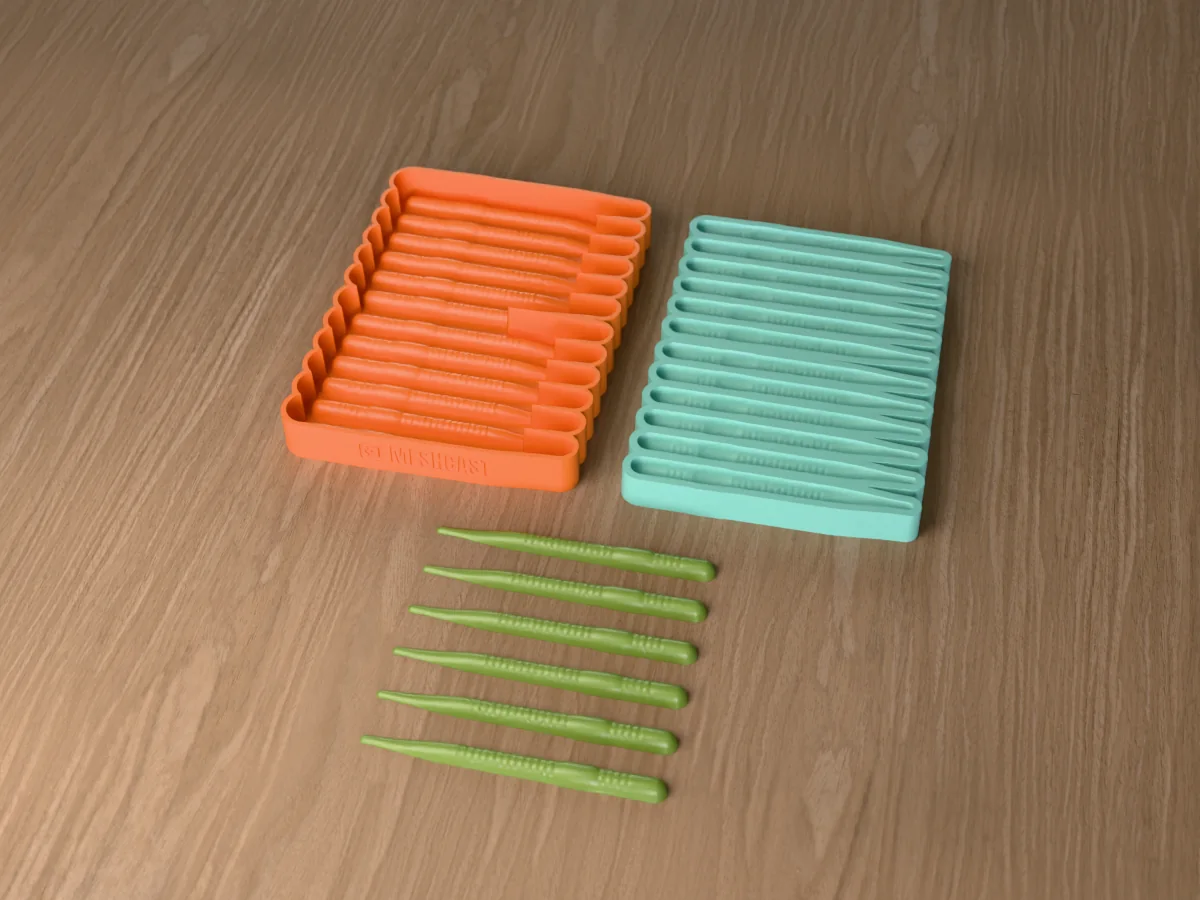
Twelve 4 inch finesse worms per pour, ringed with a flat tail, for drop shot and shaky head. A silicone lure mold.
 Soft plastic
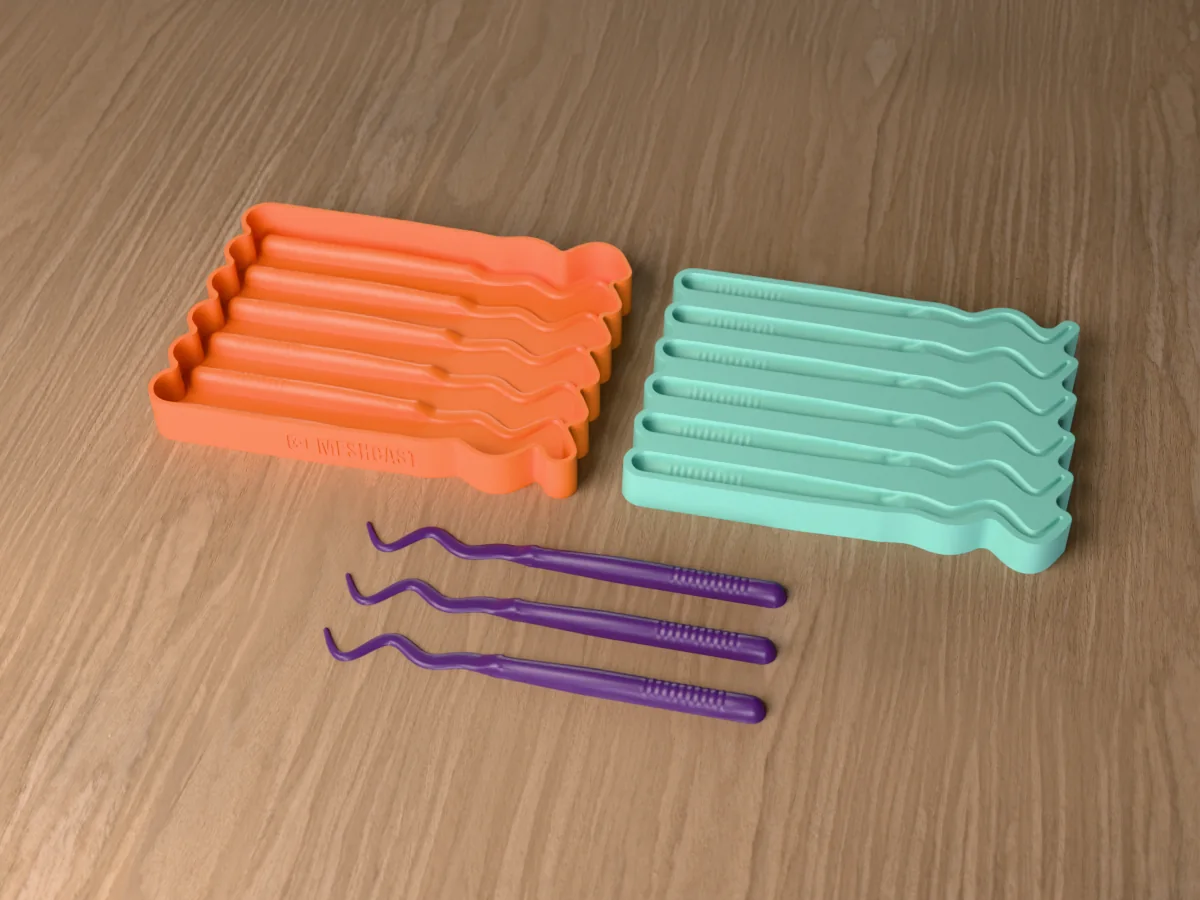
Six 6 inch ribbon tail worms per pour, the long curly tail that swims on a slow retrieve. A silicone lure mold.
 Soft plastic
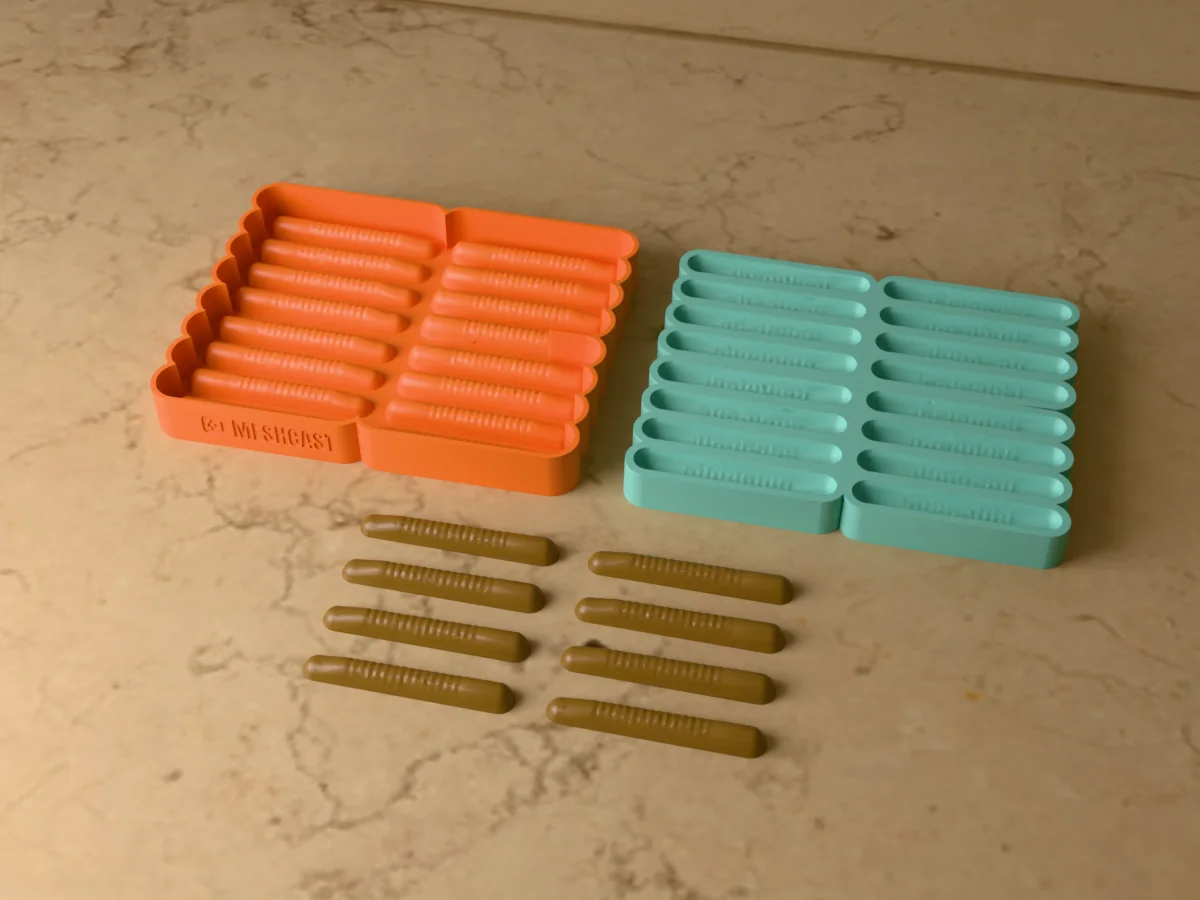
Sixteen 2.75 inch ned rig baits per pour, ringed with a flat tail that stands up off the bottom. A silicone lure mold.
 Soft plastic
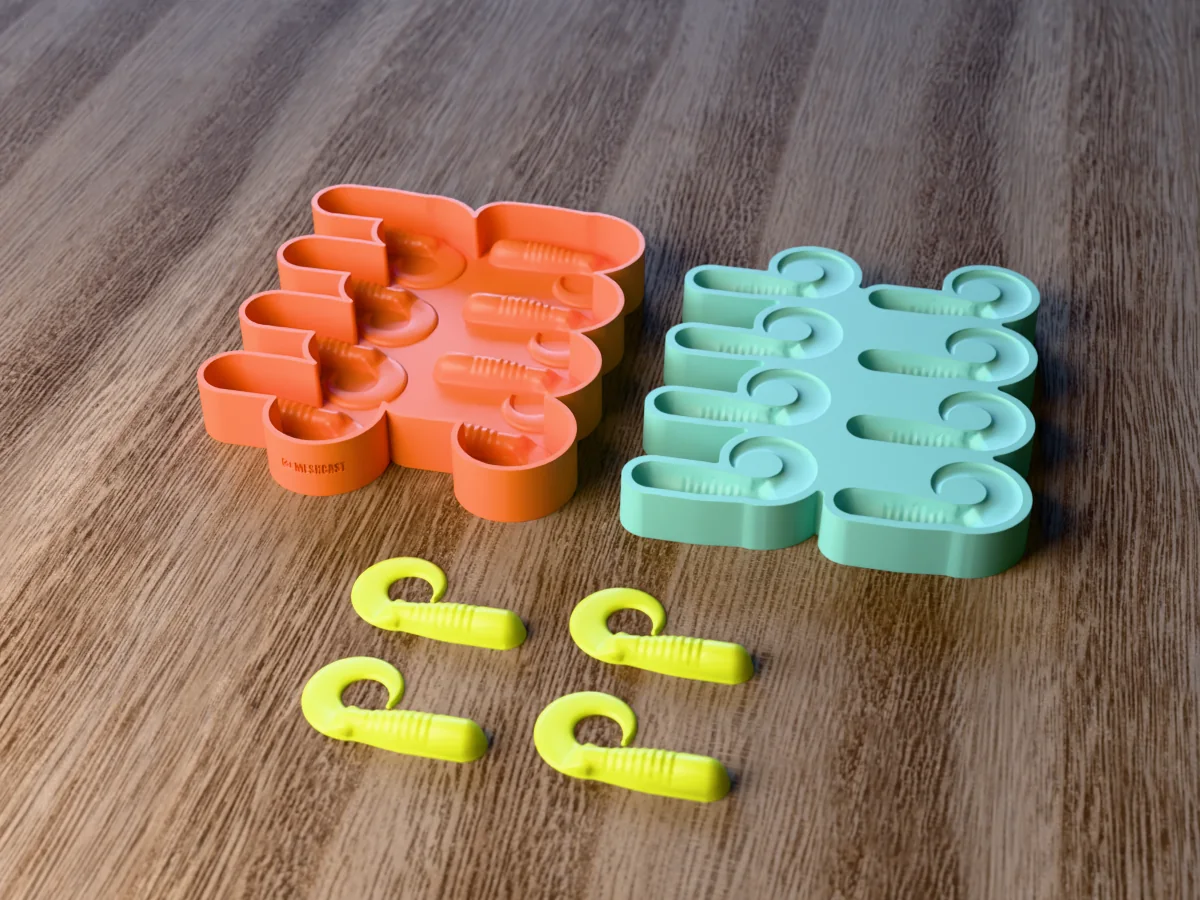
Eight 3 inch curly tail grubs per pour, a ringed body and a flat tail curled once round. A silicone lure mold.
 Soft plastic
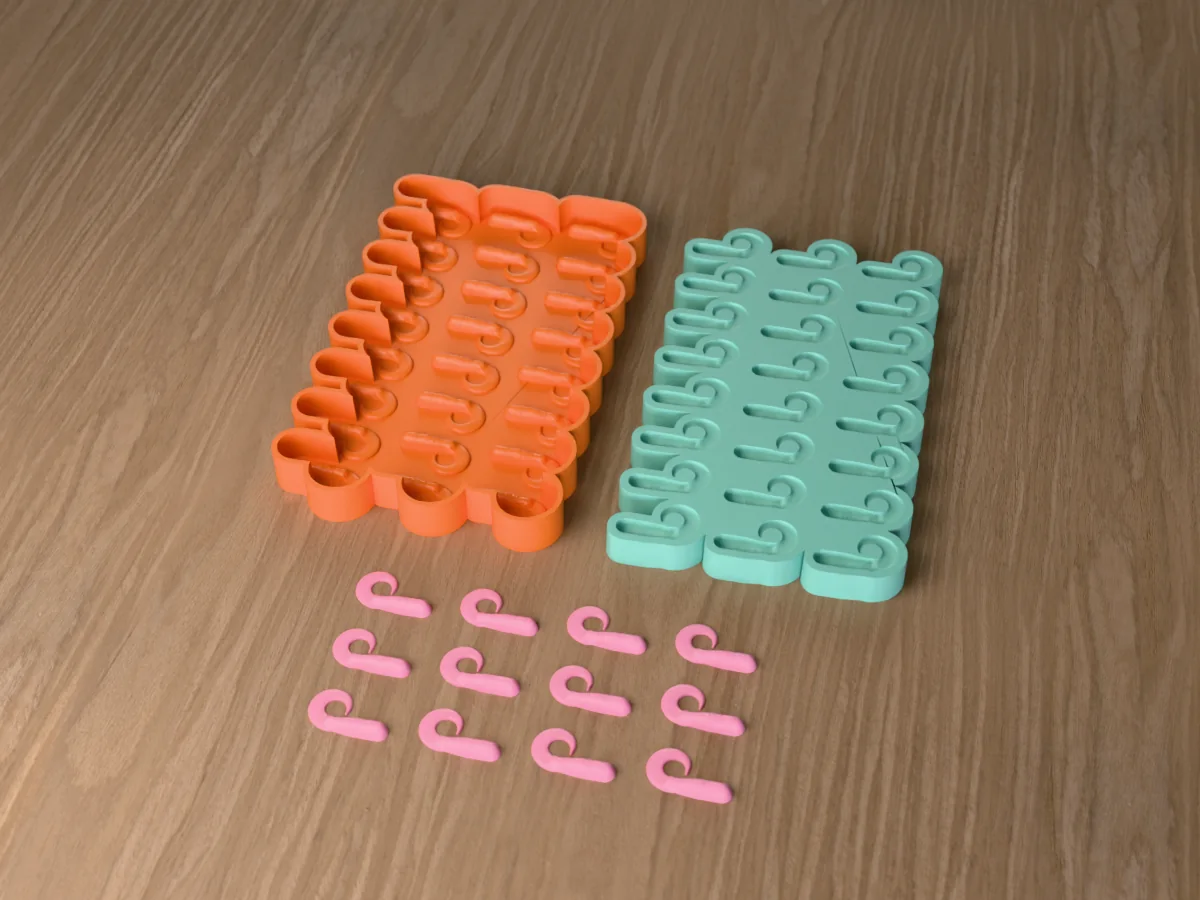
Twenty-four 1.5 inch curly tail grubs per pour for crappie, perch and panfish. A silicone lure mold you make yourself.
 Soft plastic
Six 3 inch craws per pour, a ringed tail, a carapace and two flat claws that float up. A silicone lure mold.
 Soft plastic
Eight 3.5 inch creature baits per pour, a ribbed body, two arms and a forked flapper tail. A silicone lure mold.