◆ Concrete
Hexagon catch-all tray mold
A hexagon catch-all tray for keys, coins and rings. Cast in concrete or Jesmonite from a silicone mold you make yourself.
◆ Concrete
A hexagon catch-all tray for keys, coins and rings. Cast in concrete or Jesmonite from a silicone mold you make yourself.
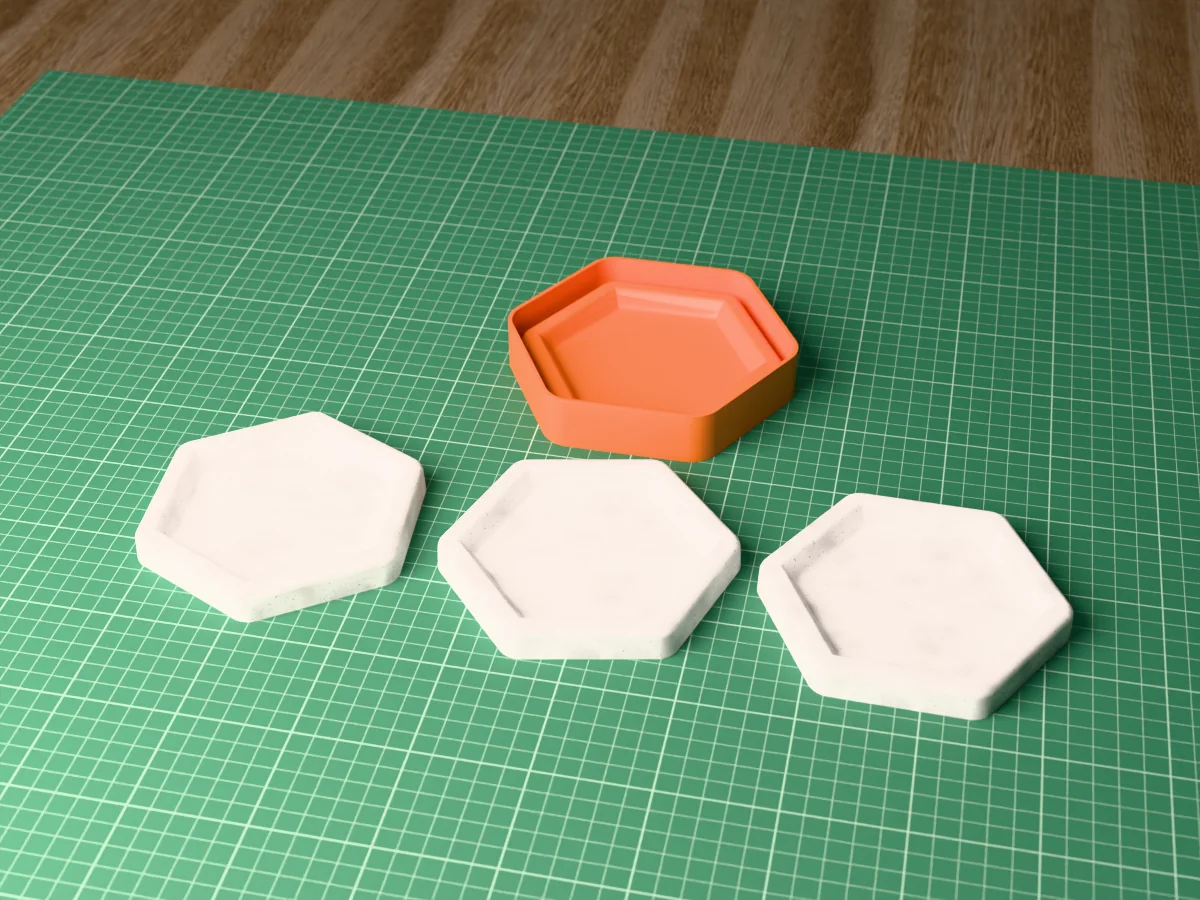
A hexagon catch-all tray 137 mm corner to corner (122 mm flat to flat) and 15 mm tall: an 8 mm lip with rounded corners round a 9 mm deep well with a flat floor. Big enough for keys, a wallet, earbuds and the change from your pockets.
Made with our tray mold generator in its flexible silicone tray mode: print one part, pour silicone into it, and the silicone you peel out is the mold. The tray is cast upside down: the raised hexagon in the middle of the cavity forms the well, the lip forms against the silicone, and the poured side becomes the flat underside.
Hexagons tile, so two or three make a set on a hallway shelf, and the flat floor suits terrazzo chips or a marbled pour. The zip carries the printed caster exactly as the tool exported it, one tray on its own as an STL, the master uploaded to the tool, and a print and pour sheet with the silicone figure the tool measured.
Shown as a 3D render of the printed caster with three concrete trays in front, not a photo.
Print the caster as exported, open side up. It is one part, so there are no seams to seal. No supports.
Mix 291 ml of silicone in one batch and pour it into one corner of the caster in a thin stream, letting it rise over the dish shapes until it is level with the rim. Tap the caster on the table for a minute and let it cure for as long as its datasheet says.
Peel the cured silicone out of the caster. That silicone is your tray: the dome in the middle of each cavity is what forms the well of the dish.
Mix Jesmonite or a fine concrete to a thick pour and fill each cavity to the brim, about 116 ml each. Tap the tray on the table for a minute so the air lifts off the lip, the deepest part of the cavity.
Leave Jesmonite about an hour and concrete a full day, then flex the tray and peel it back. Sand the back flat and seal the dish once it is dry.
Print details
| Cast material | Concrete |
|---|---|
| Printed parts | 1 |
| Size (W x D x H) | 149 x 134 x 28 mm |
| Print bed needed | 150 x 134 mm, 28 mm tall |
| Filament | ~122 g |
| Layer height | 0.2 mm |
| Infill | 15% |
| Supports | Not needed |
| Download | ZIP: printed caster (STL) + one tray (STL) + tool master (STL) + print and pour sheet |
| Added | 2026-09-26 |
Pro early access until October 26, 2026, then free with any account.
Like it or post your print on Thingiverse
Make your own tray mold →Made with the free Tray mold generator. Upload your own model and get the same kind of mold built around it, in your browser.
Free for personal use. Selling the pieces you cast needs a commercial licence (Pro or Founder); passing on the file itself is not permitted on any plan. Full terms.
New to casting? Read the ice cube tray mold guide.
Mix one batch of Jesmonite, split it into cups and tint two of them with a little pigment. Pour the plain one into the cavity, drizzle the tinted ones over it and drag a stick through once or twice. Stop early: every extra swirl turns the marble into one muddy colour.
Bare concrete can. Once it has cured, sand the back flat on coarse paper laid on a flat board, then glue a thin cork sheet or four felt pads under it. Sealing the tray also stops keys picking up grey dust.
Yes. The floor is 6 mm thick and the lip 15 mm tall, which is plenty for keys, a wallet or a phone in fine concrete or Jesmonite. What breaks thin concrete is a knock on a corner, which is why the corners are rounded 10 mm.
 ConcretePro early access
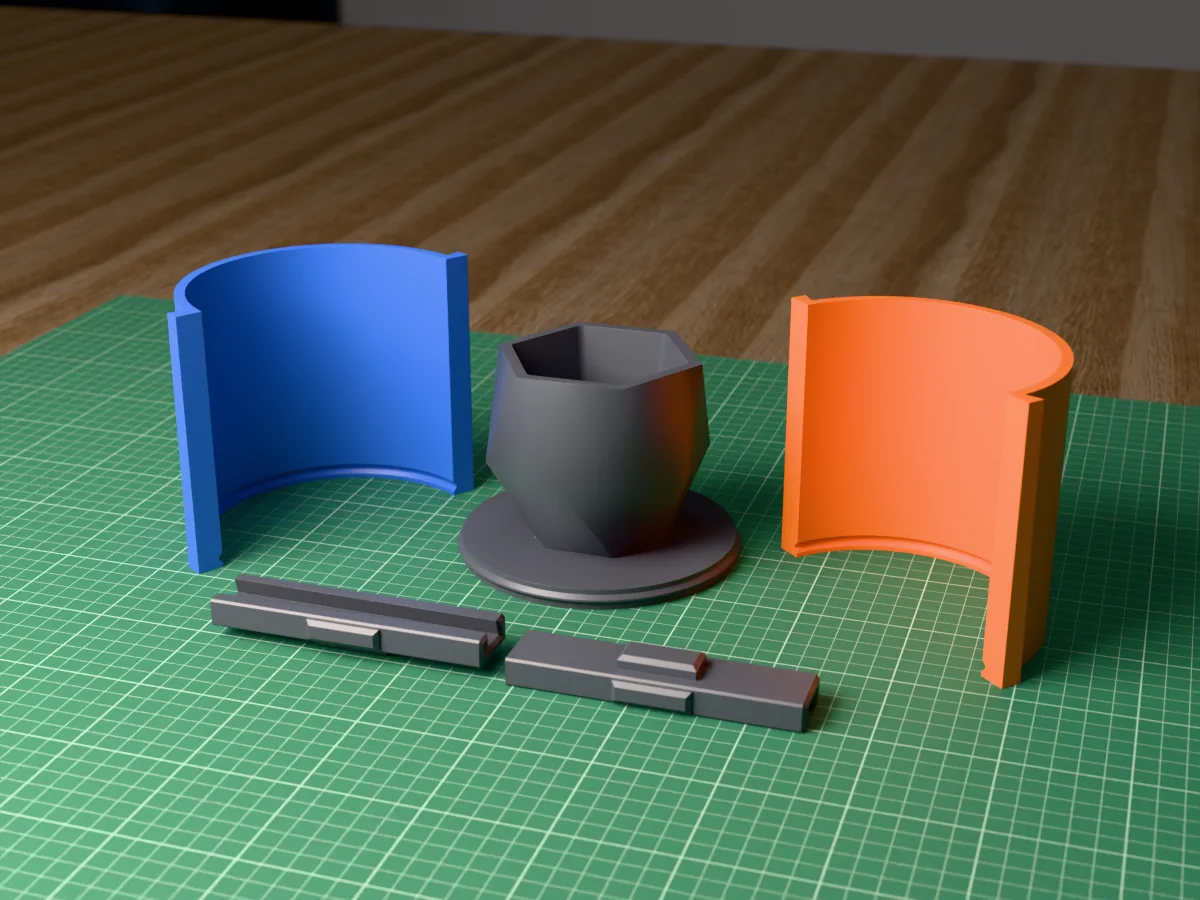
A low-poly geometric planter, 110 mm across and 90 mm tall, to cast in concrete. A silicone mold kit from printed parts.
 ConcretePro early access
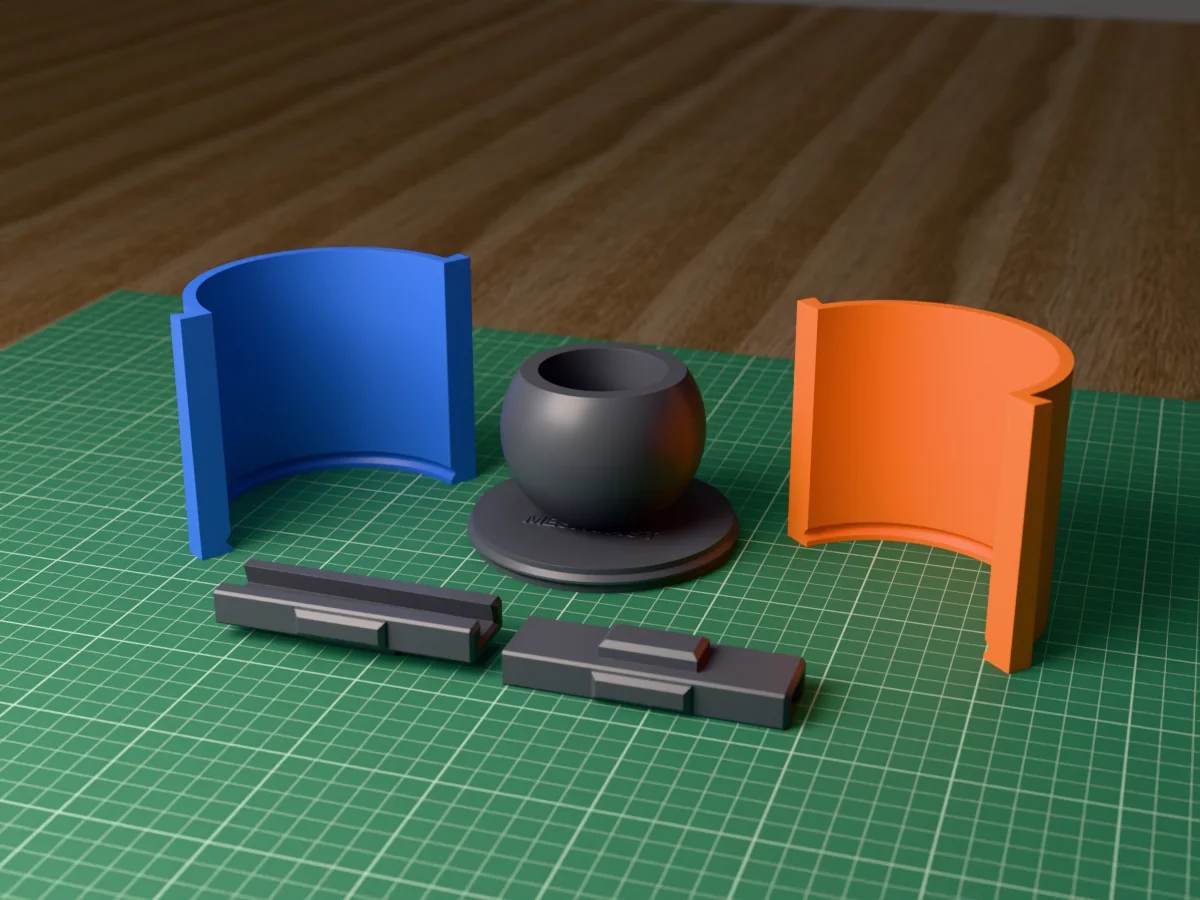
The classic 8 x 6 cm sphere planter to cast in concrete, with a drainage hole. A silicone mold kit from printed parts.
 ConcretePro early access
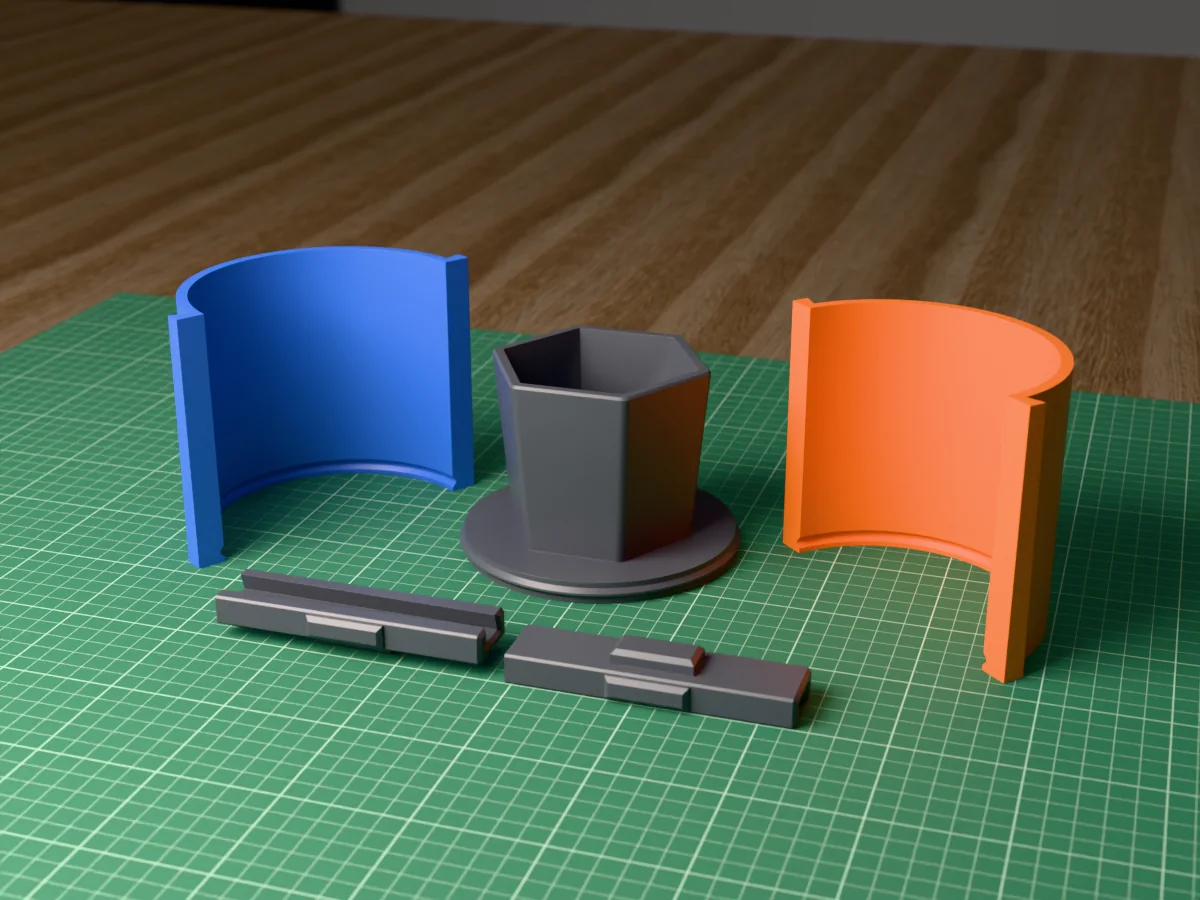
A hexagon planter, 90 mm across the flats, to cast in concrete with even 8 mm walls. A silicone mold kit from printed parts.
 ConcretePro early access
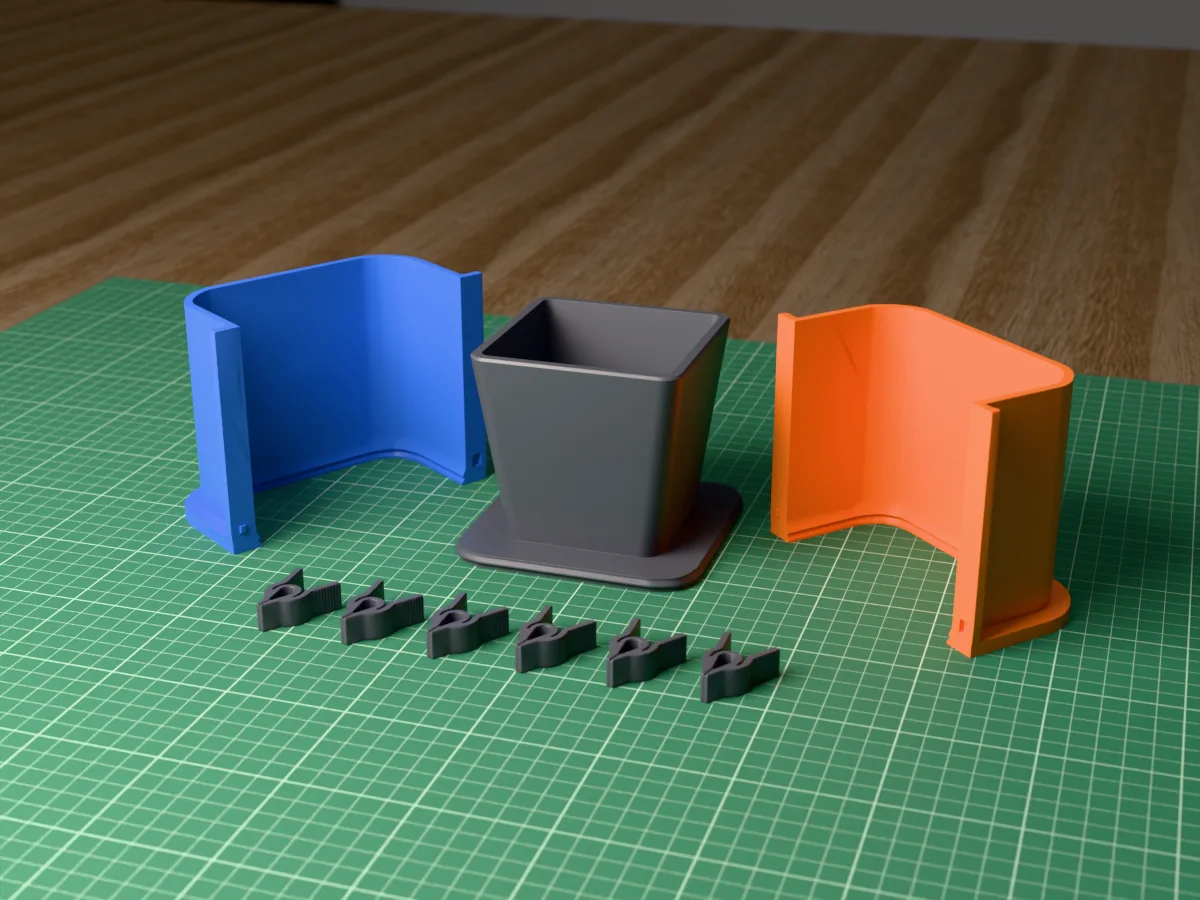
A tapered square planter, 95 mm at the rim and 88 mm tall, to cast in concrete. A silicone mold kit from printed parts.
 ConcretePro early access
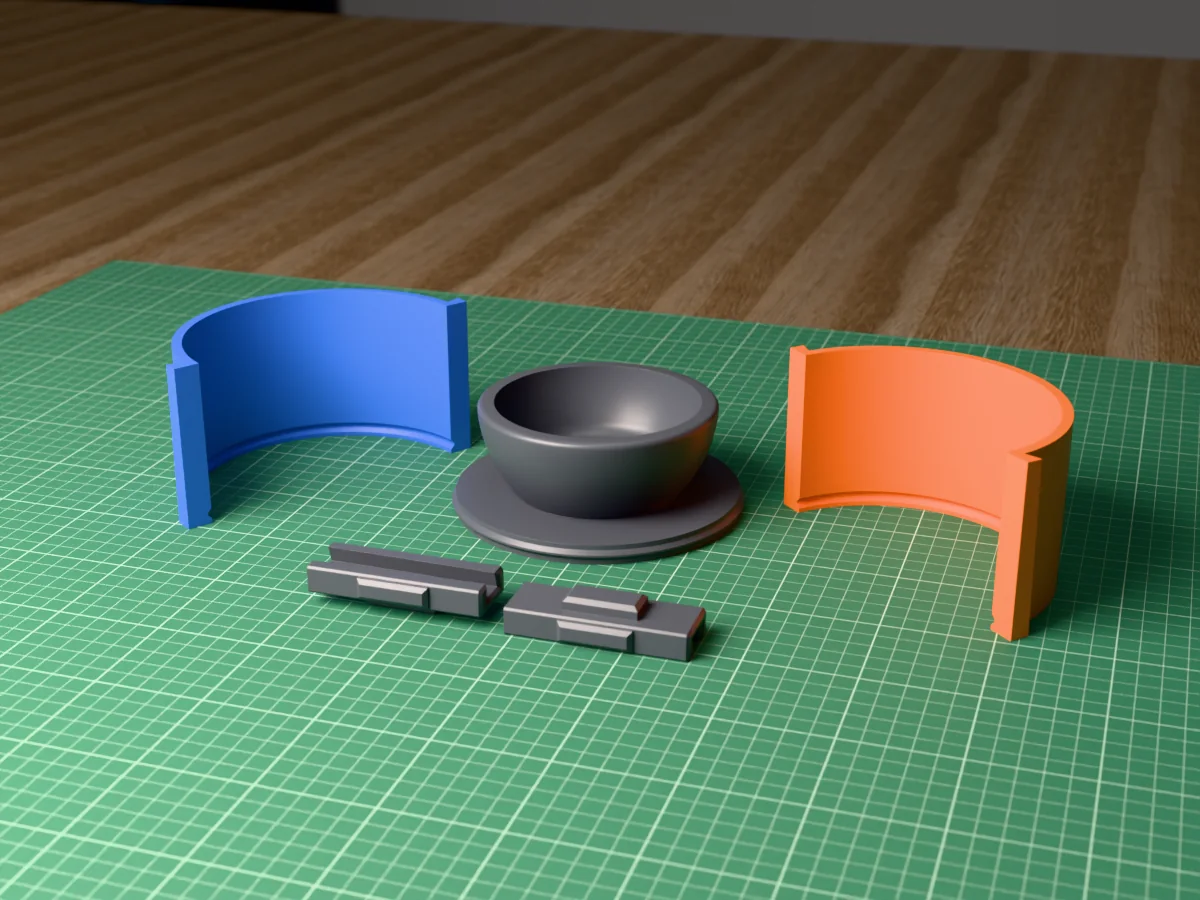
A 120 mm succulent bowl to cast in concrete, with a rounded rim and a drainage hole. A silicone mold kit from printed parts.
 ConcretePro early access
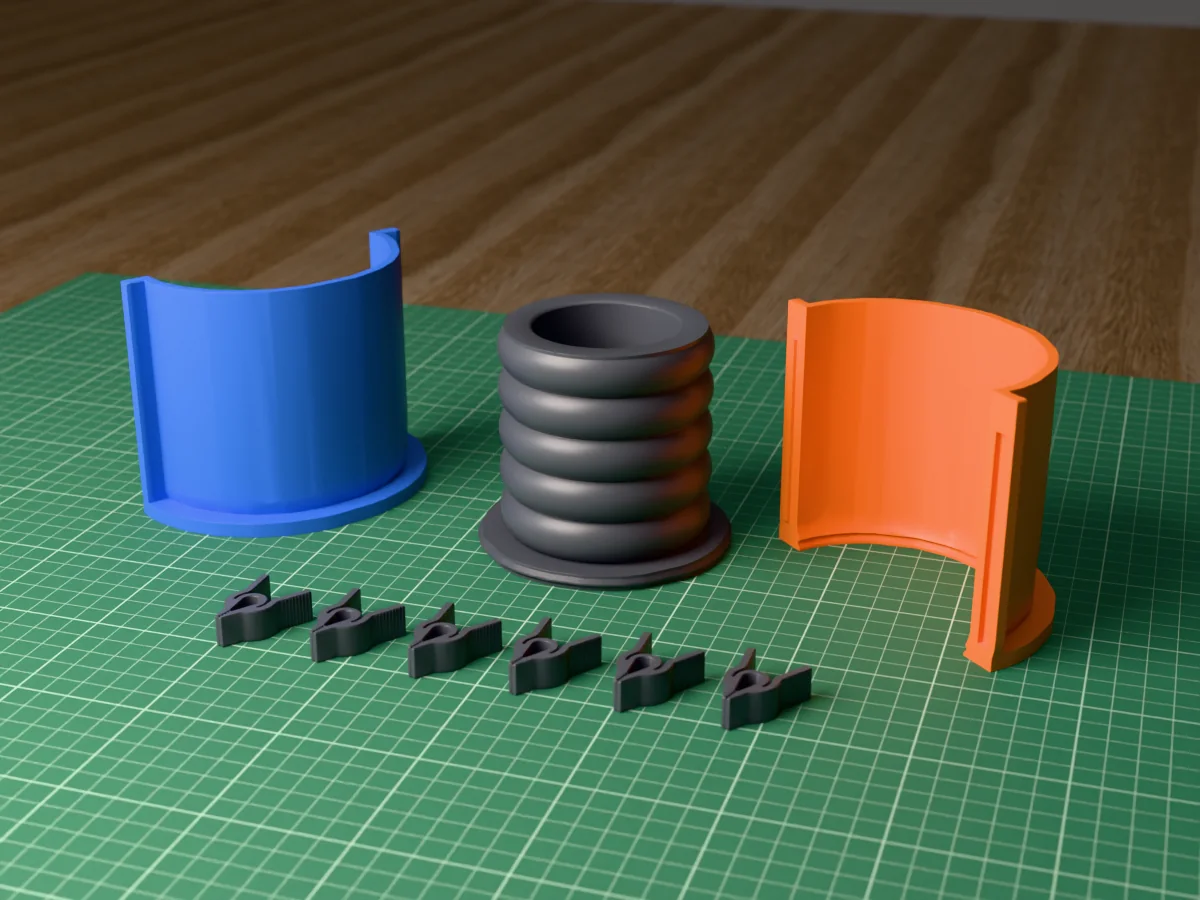
A ring-stack planter, 85 mm tall with five soft ripples, to cast in concrete. A silicone mold kit from printed parts.
 ConcretePro early access
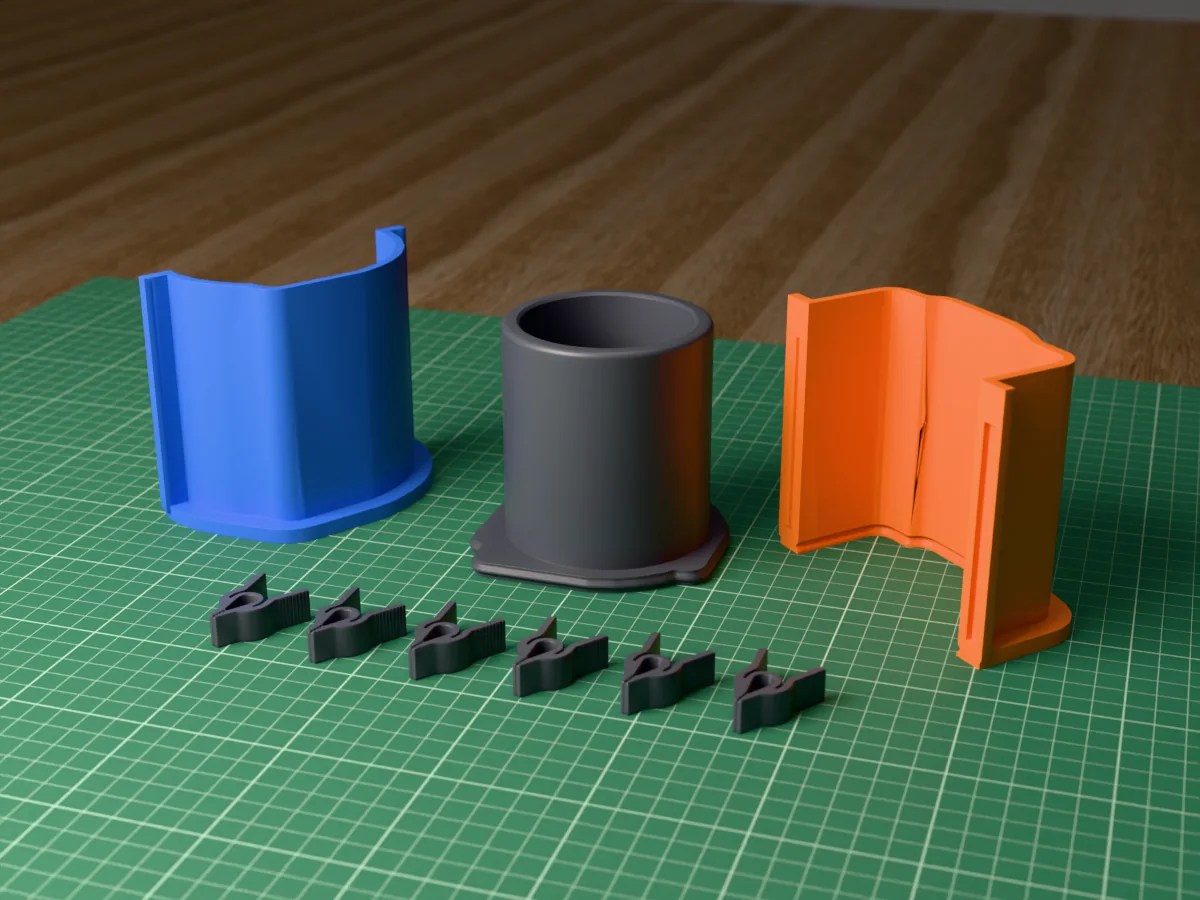
A straight concrete candle jar, 80 mm across, for the classic 8 oz candle. A silicone mold kit from printed parts.
 ConcretePro early access
A ribbed concrete candle vessel, 92 mm across with 30 rounded ribs. A silicone mold kit from printed parts.