◆ Concrete
Concrete Christmas ornament mold, 4 shapes
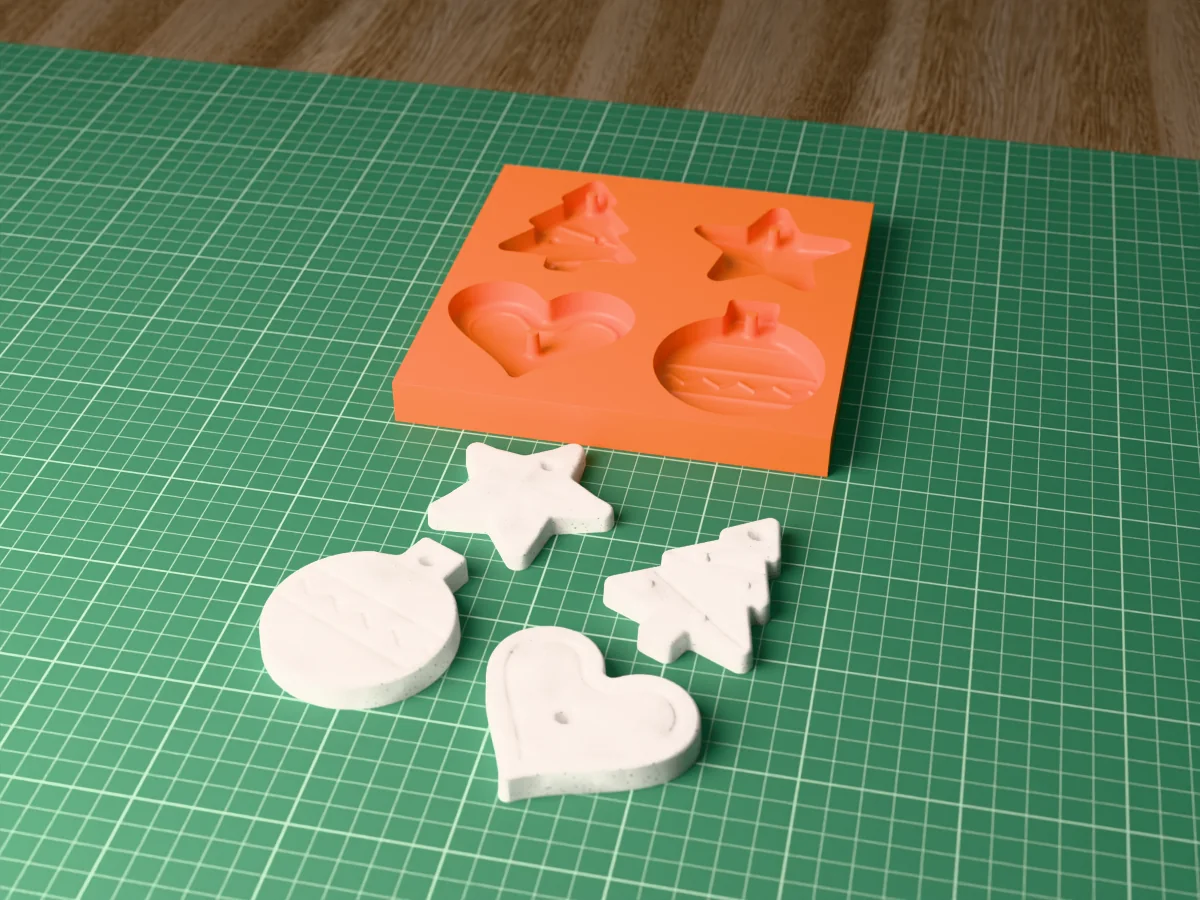
Four concrete Christmas ornaments, a star, a tree, a bauble and a heart, each with a hanging hole, cast in one printed tray.
◆ Concrete
Four concrete Christmas ornaments, a star, a tree, a bauble and a heart, each with a hanging hole, cast in one printed tray.
A printed tray for four concrete Christmas ornaments, each about 80 mm: a faceted star that rises to a point in the middle, a fir tree with a garland and four raised baubles, a round bauble with two bands and a zigzag, and a heart with a second heart inside it. Each is 8 to 11 mm thick with a 6 mm hanging hole for a ribbon. The four take 118 ml, about 260 g in concrete, so each ornament weighs about 60 g, fine for a sturdy branch, a gift tag or a door hanger.
Made with our tray mold generator in its rigid tray mode: print the tray, wipe in release and pour, no silicone. The ornaments are cast face down, so the relief comes off the smooth tray floor, and each hanging hole is a drafted post in the tray. Every edge is rounded and every point of the star is blunted, so nothing snaps off. The tray is 170 x 175 mm.
Leave them raw grey with a red ribbon, dip the lower half in white paint, or gild the star. They also cast beautifully in plaster or Jesmonite for pure white ornaments. The zip carries the tray exactly as the tool exported it, the four ornaments on their own as an STL, the master uploaded to the tool, and a print and pour sheet.
Shown as a 3D render of the printed tray with the concrete ornaments in front, not a photo.
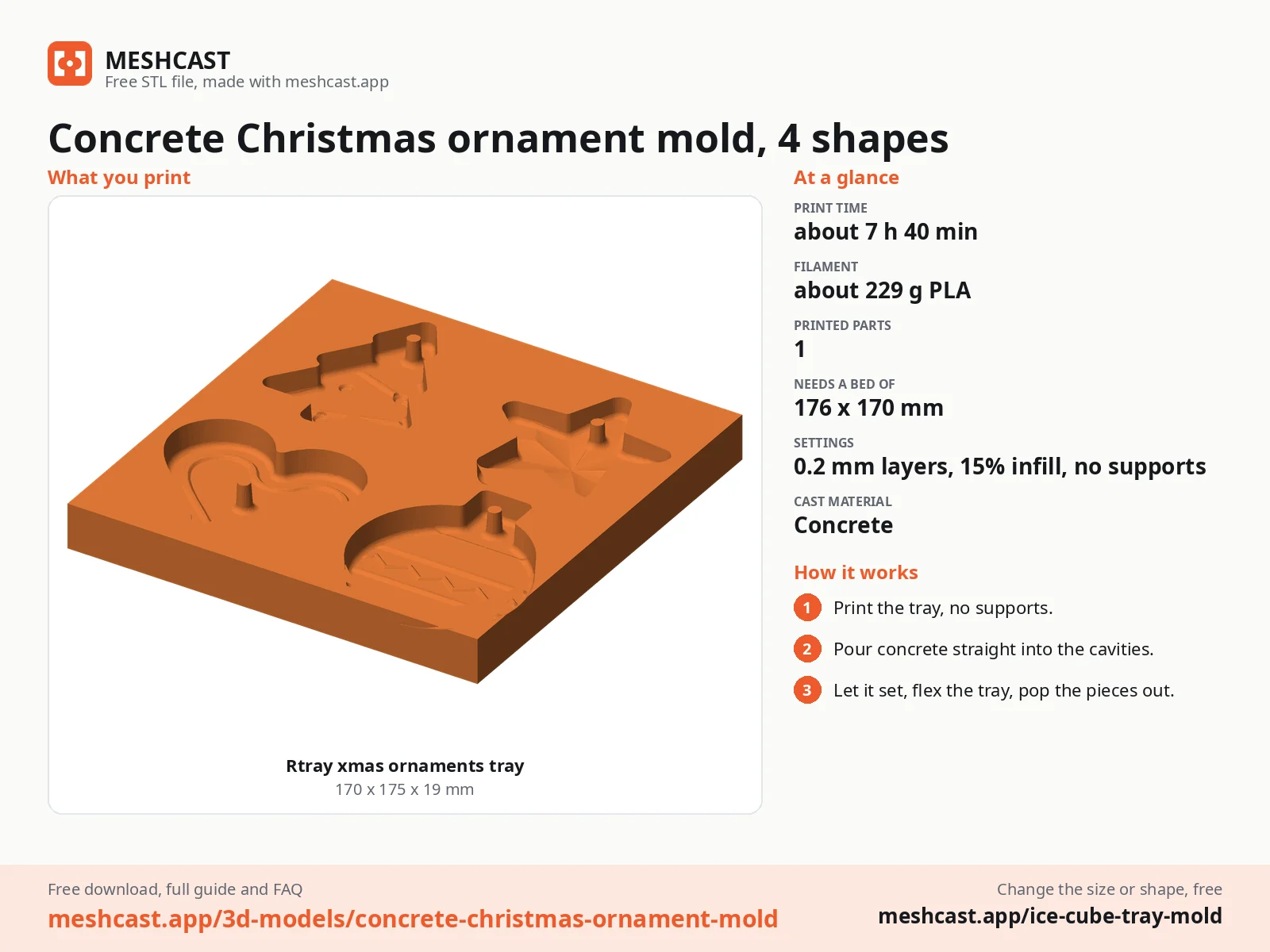
Print the tray as exported, cavities up, no supports. PLA is fine.
Wipe a thin film of mold release or cooking oil into every cavity, including the grooves.
Mix a fine concrete or Jesmonite to a thick pour, fill each cavity, and vibrate it out: tap the tray on the table or hold a sander against the side for a minute until no more bubbles rise.
Cover the tray and let it cure for 24 hours, then flex the tray and tip the pieces out. Sand the back flat, and seal them once they have dried for a few days.
Let them cure a few days, sand the backs smooth, paint or gild them, and thread a ribbon through each hole.
Print details
| Cast material | Concrete |
|---|---|
| Printed parts | 1 |
| Size (W x D x H) | 170 x 175 x 19 mm |
| Print bed needed | 176 x 170 mm, 19 mm tall |
| Filament | ~229 g |
| Layer height | 0.2 mm |
| Infill | 15% |
| Supports | Not needed |
| Download | ZIP: printed tray (STL) + one set of four ornaments (STL) + tool master (STL) + print and pour sheet |
| Added | 2026-09-27 |
Pro early access until October 27, 2026, then free with any account.
Like it or post your print on Thingiverse
Make your own tray mold →Made with the free Tray mold generator. Upload your own model and get the same kind of mold built around it, in your browser.
Free for personal use. Selling the pieces you cast needs a commercial licence (Pro or Founder); passing on the file itself is not permitted on any plan. Full terms.
New to casting? Read the ice cube tray mold guide.
Each one is about 60 g, like a big glass bauble. Hang them near the trunk on sturdy branches of a real tree, or use them where weight is welcome: on a wreath, a garland, a gift, a door knob or a string of fairy lights along a mantel.
Yes, and plaster gives a bright white ornament with a crisp star and heart. Wipe in release, pour casting plaster to a thin cream, and tip them out after an hour. Plaster is softer than concrete, so keep plaster ornaments indoors and seal them before you paint.
They are formed by posts in the tray, so they come out open. Fill each cavity only to the top of the tray, strike the back level and wipe the tip of each post clean with a finger before the concrete sets, so no skin closes the hole on the back.
 ConcretePro early access
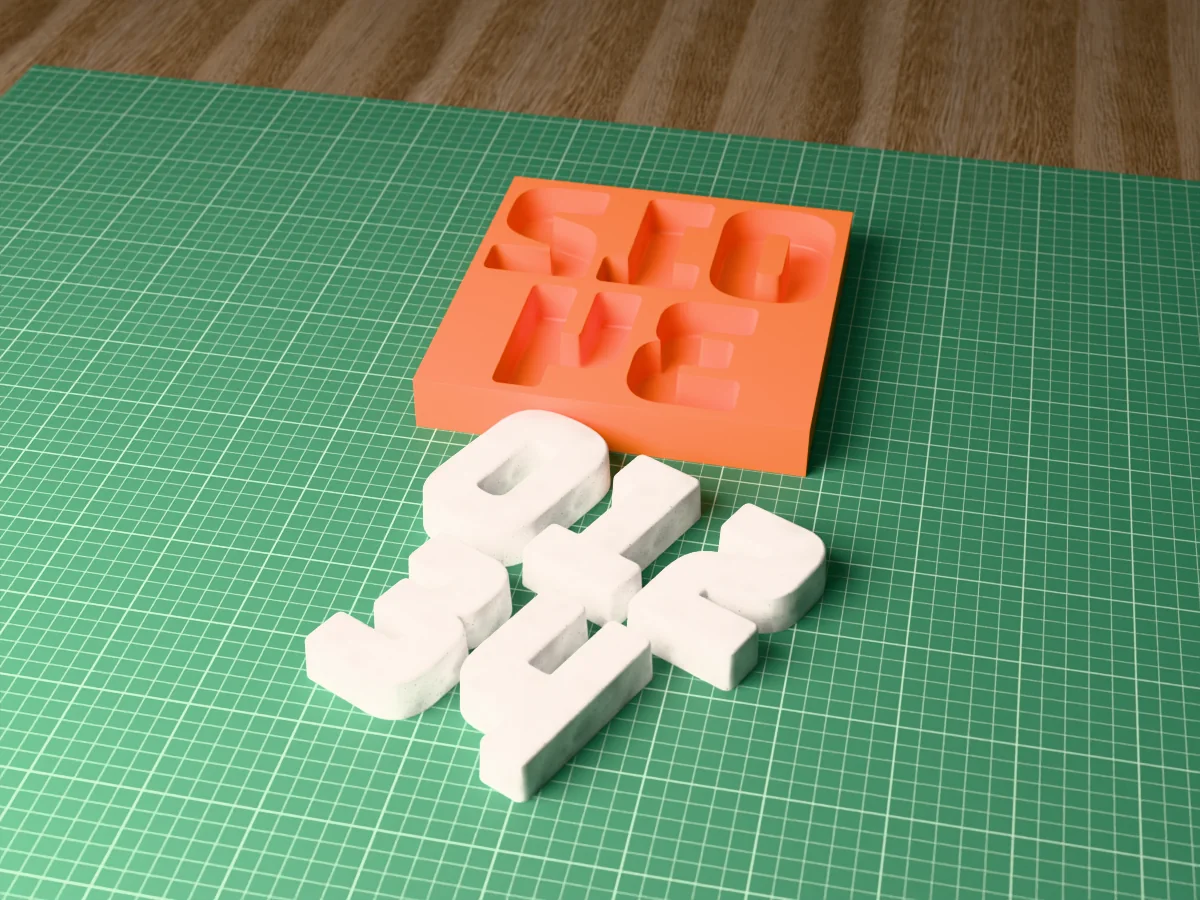
Modern house numbers 0 to 4, 95 mm tall, cast in concrete straight in one printed tray that fits a 220 mm bed.
 ConcretePro early access
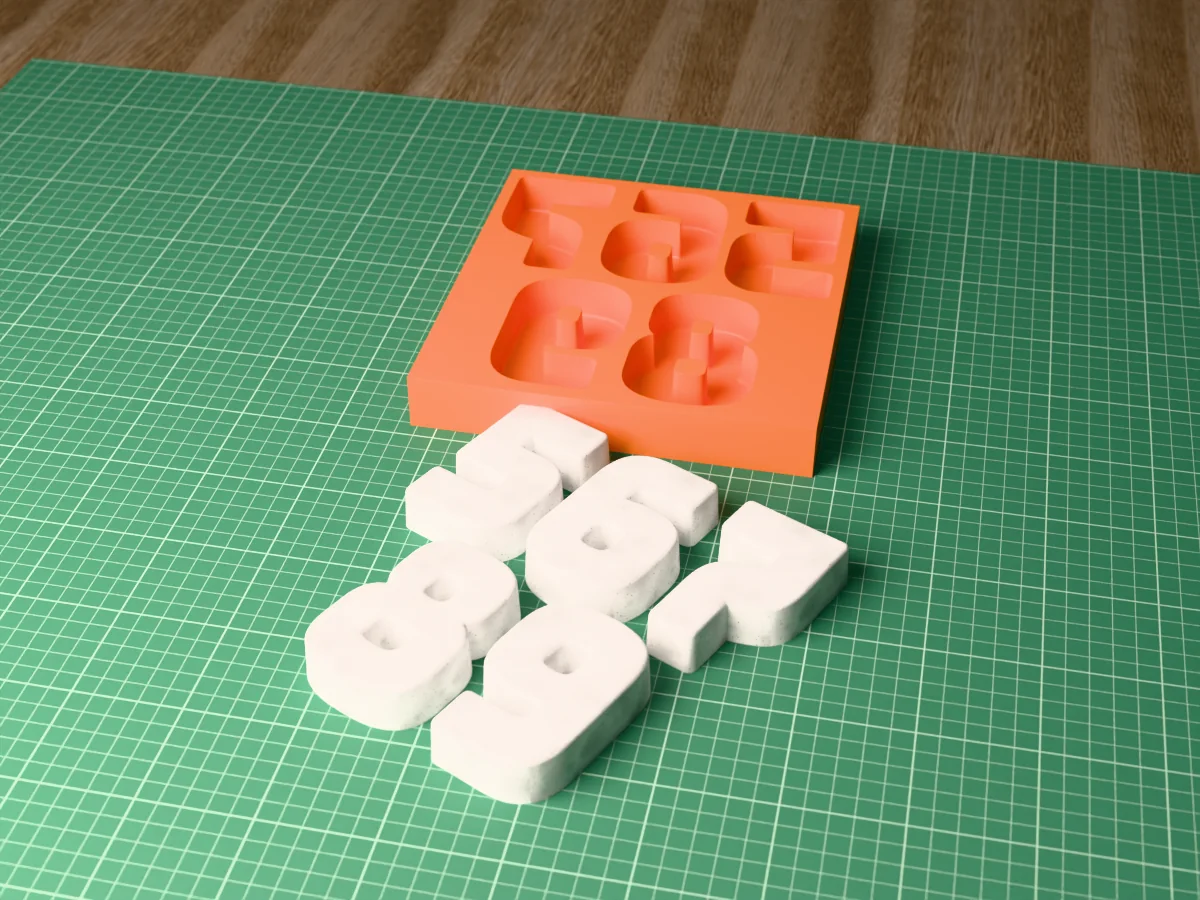
Modern house numbers 5 to 9, 95 mm tall, cast in concrete straight in one printed tray that fits a 220 mm bed.
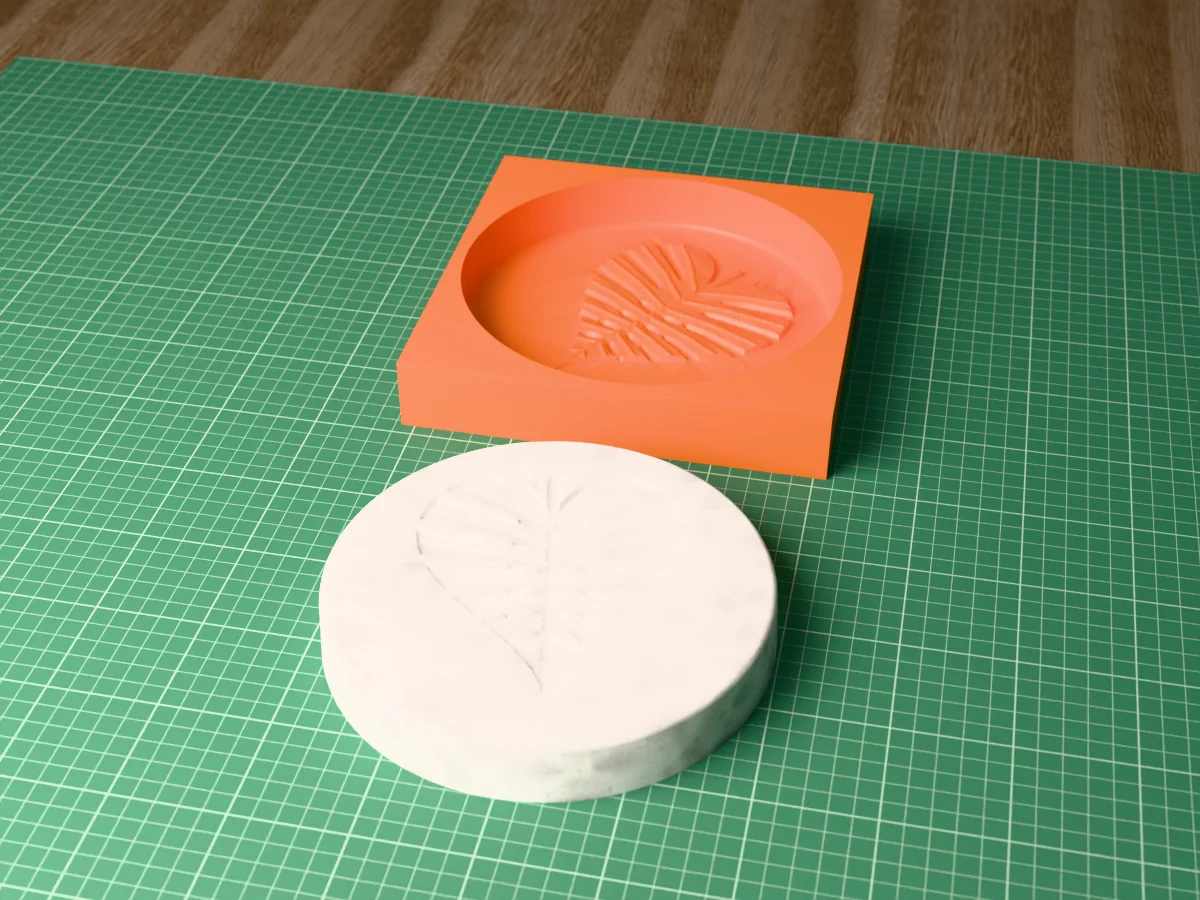 ConcretePro early access
A round stepping stone, 195 mm across, with a monstera leaf pressed into its face. Cast in concrete straight in a printed tray.
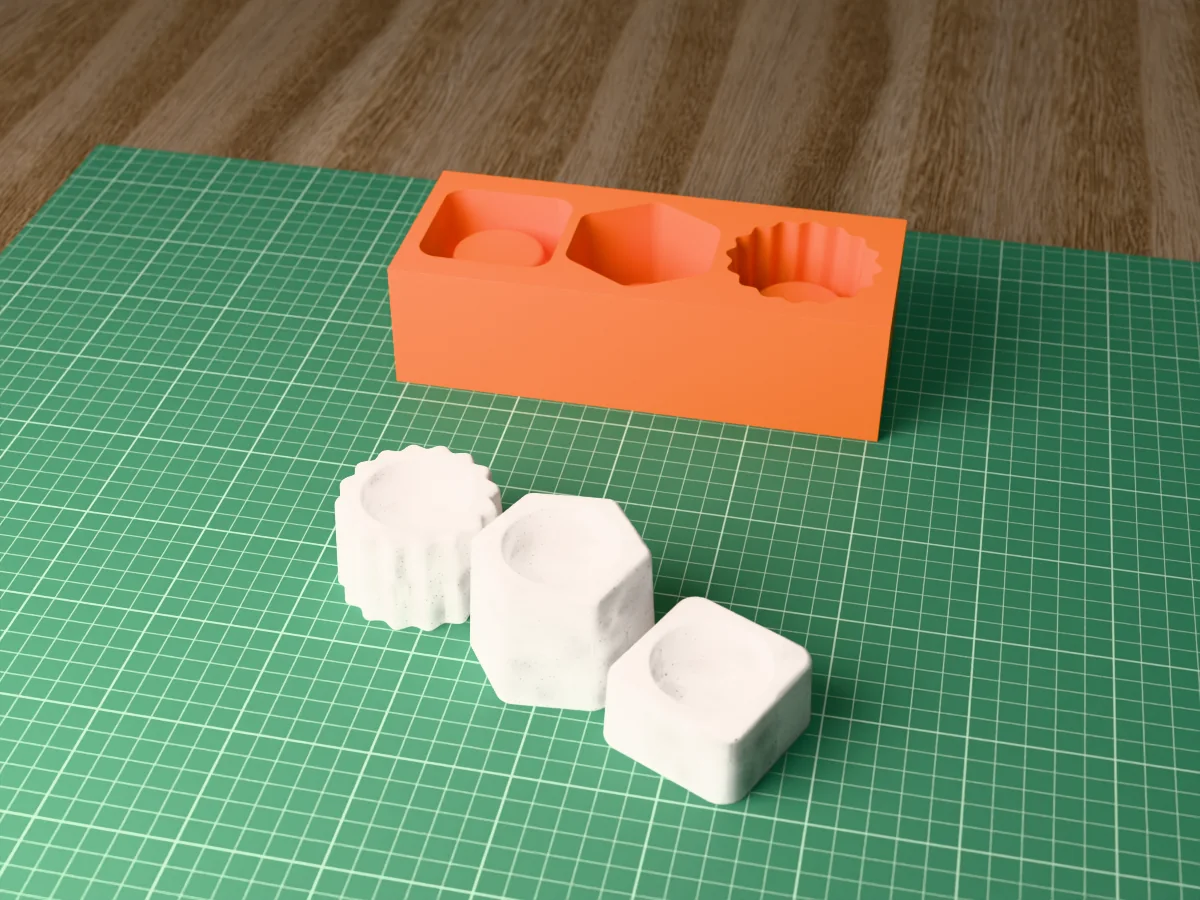 ConcretePro early access
Three concrete tealight holders in three heights, square, hexagon and scalloped, cast straight in one printed tray.
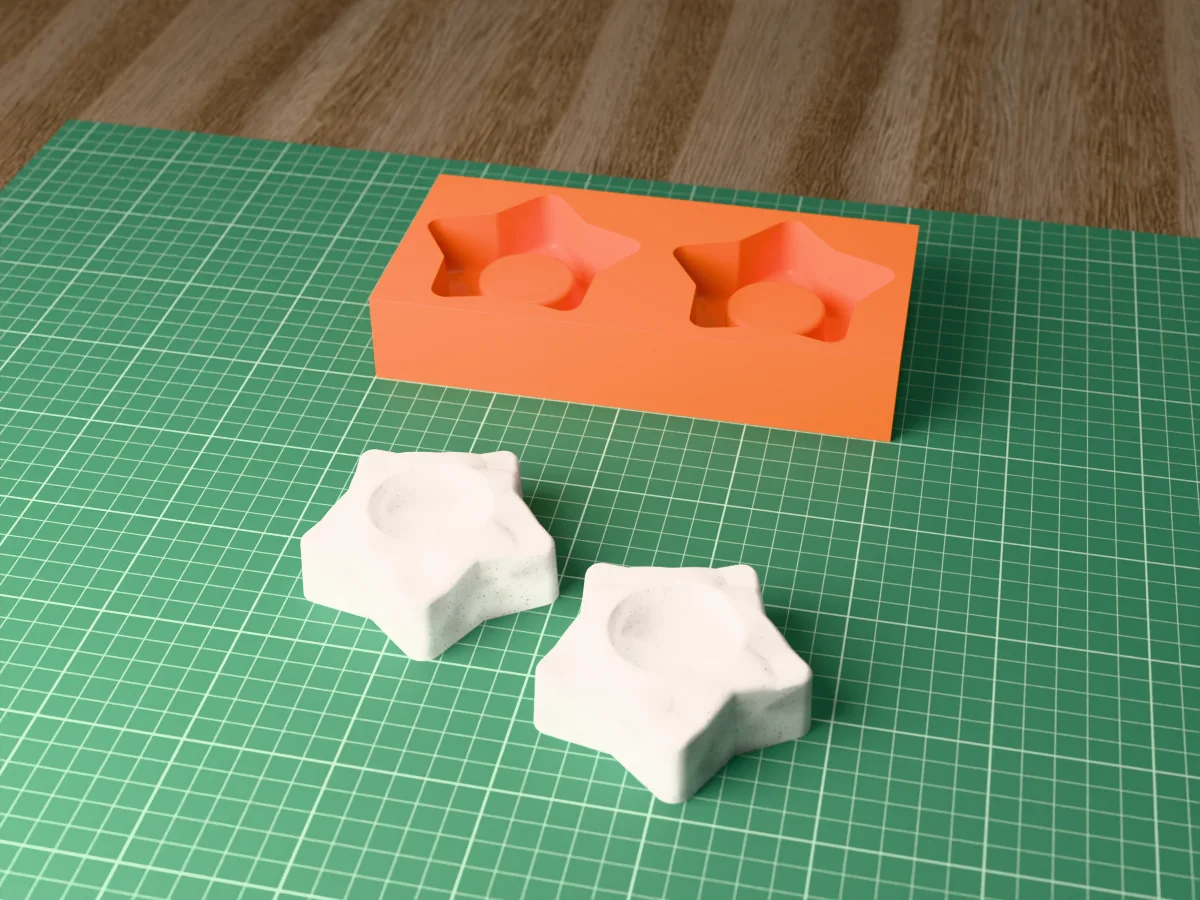 ConcretePro early access
A pair of chunky concrete Christmas star tealight holders, 95 mm across, cast straight in one printed tray.
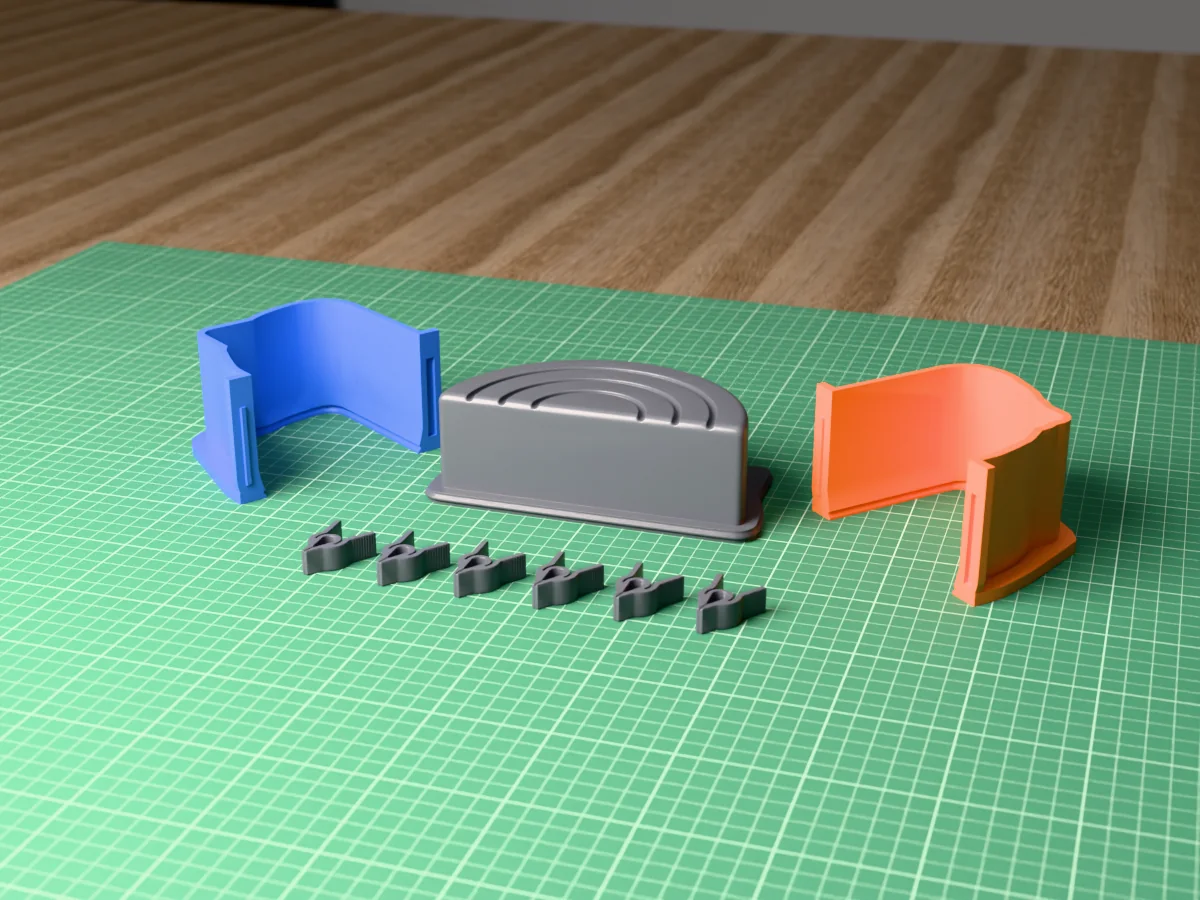 ConcretePro early access
A heavy rainbow arch bookend, 156 mm wide, to cast in concrete. A silicone mold kit from printed parts.
 ConcretePro early access
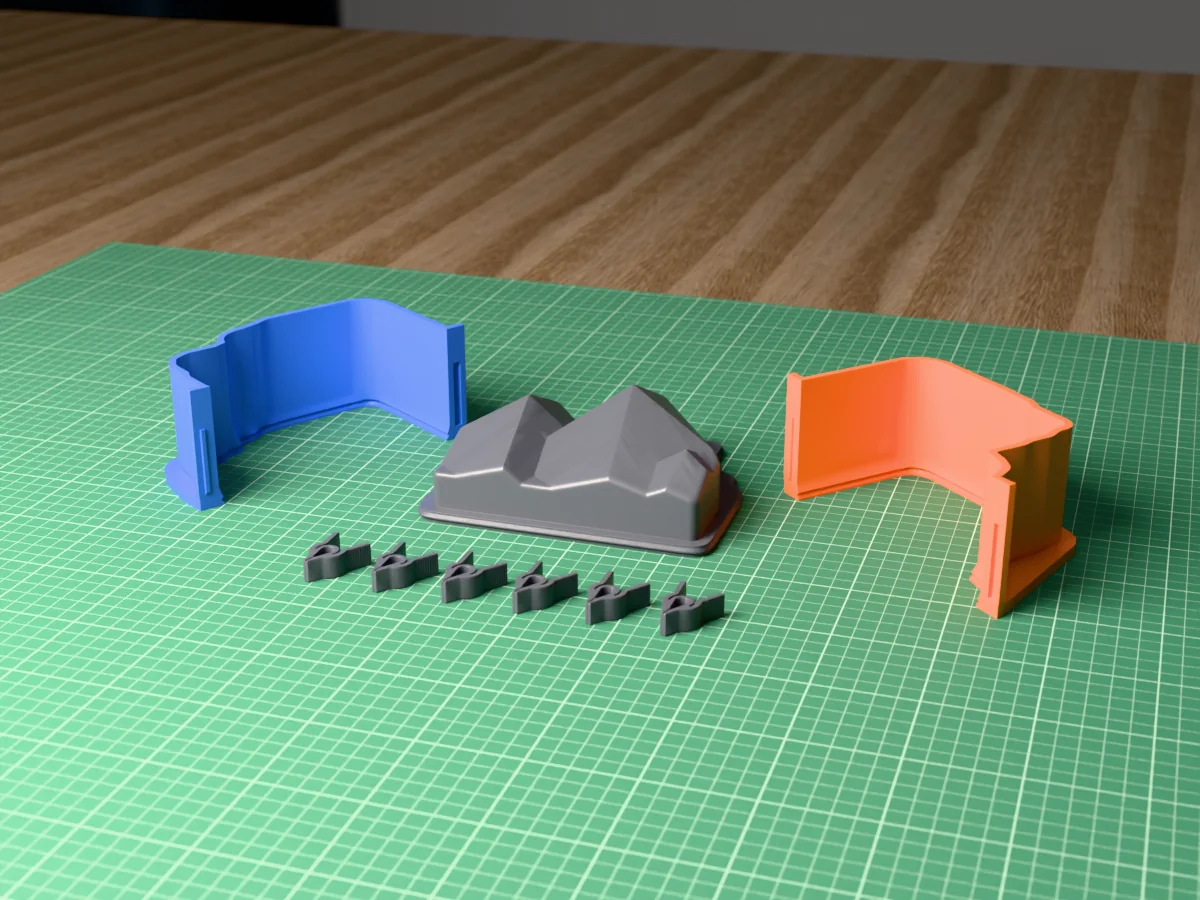
A low-poly mountain bookend, 150 mm wide with two faceted peaks, to cast in concrete. A silicone mold kit from printed parts.
 ConcretePro early access
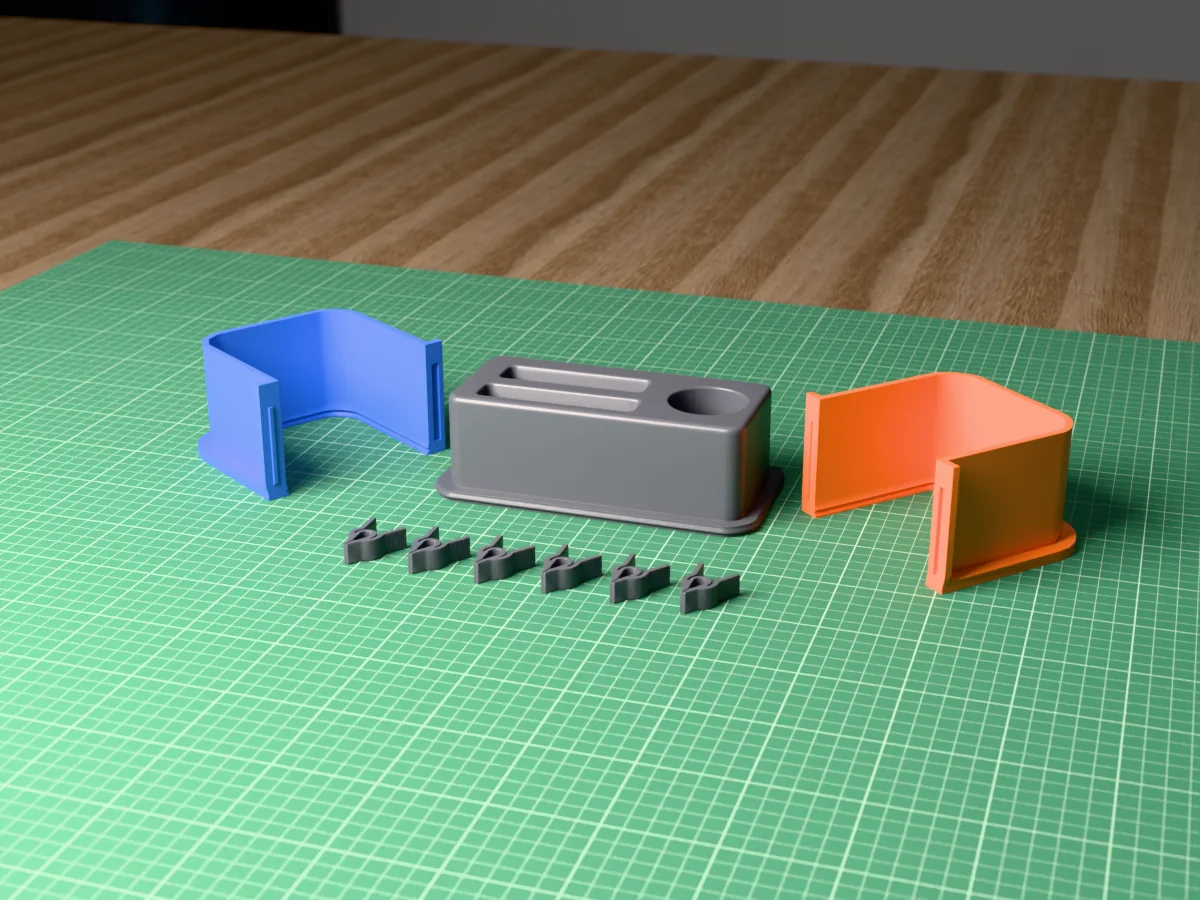
A concrete desk organizer with a pen cup, a phone slot and a business card slot in one block. A silicone mold kit from printed parts.