◆ Concrete
Ribbed concrete candle vessel mold
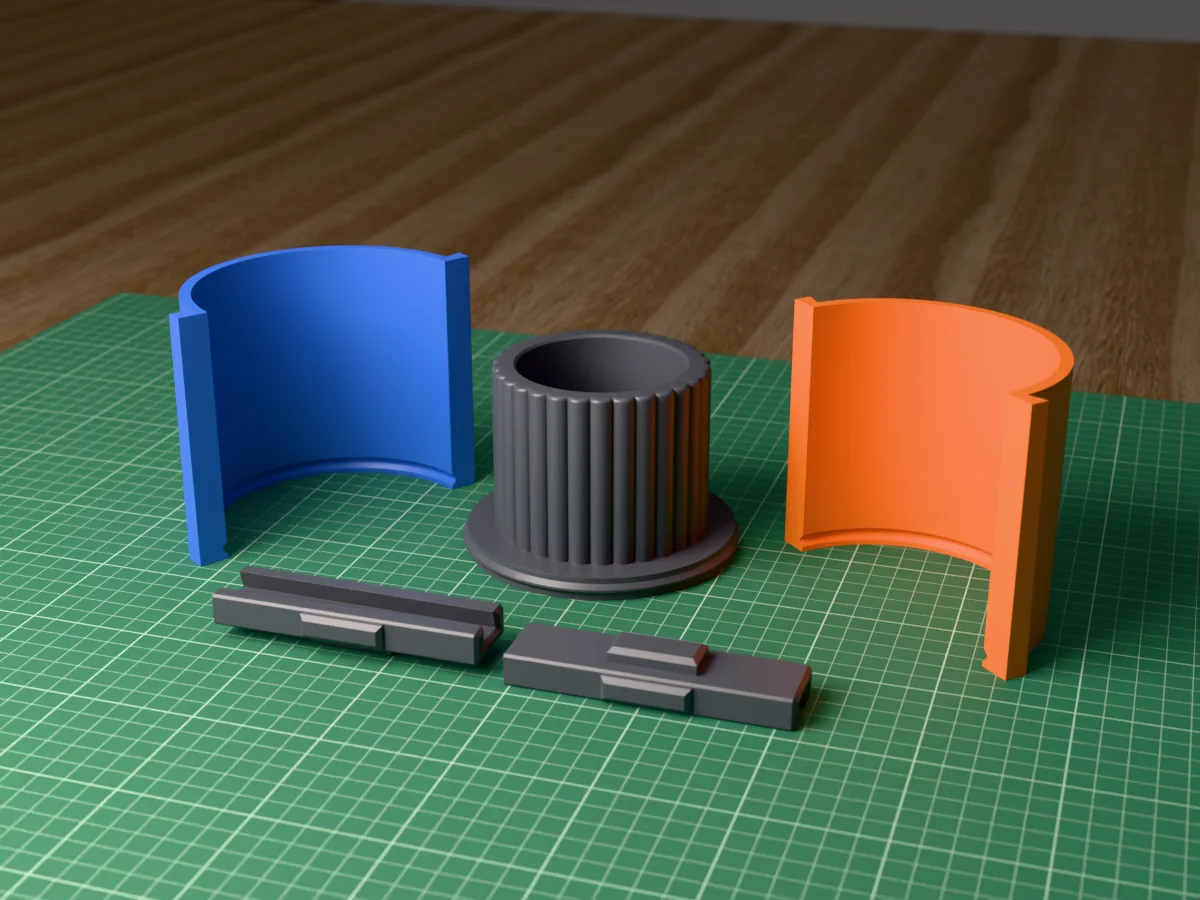
A ribbed concrete candle vessel, 92 mm across with 30 rounded ribs. A silicone mold kit from printed parts.
◆ Concrete
A ribbed concrete candle vessel, 92 mm across with 30 rounded ribs. A silicone mold kit from printed parts.
A ribbed candle vessel 92 mm across and 72 mm tall: 30 rounded ribs run straight from the foot to a softly rounded rim, meeting in soft valleys. The well is a smooth cup 71 mm across at the rim with a rounded floor corner, 62 mm deep over a 10 mm floor, and holds about 230 ml of wax, room for one wide wick or two small ones.
Made with the box mode of our silicone mold maker in its round shape, the mode the tool itself suggests for this low, wide vessel. Print the base with the vessel fused onto it, the two walls and the two clamps, and pour about 789 ml of silicone. It fills the well and becomes the core, so each cast is hollow with no insert, and because the ribs run straight the vessel slides out of the block with no cut.
Seal the inside before the first pour so the oils stay out of the concrete, then fill it with container wax. The ribs catch the light like the fluted vessels in candle shops. The zip carries every printed part, the vessel master as its own STL, the tool's own print-settings sheet and a recipe file for the generator.
Shown as a 3D render of the printed mold parts pulled apart around the master, not a photo.
Print the base with the master fused onto it, the two walls and the two clamps.
Stand the base on the table. Set each wall down a few centimetres out from it and slide it in over the table until the ridge round the base sits in the groove at its foot, then slide the clamps down over the seams. Once they are on, the walls cannot lift, and the ridge seals the bottom.
Mix 843 ml of silicone in one batch and pour it in a thin stream down the inside of a wall, letting it rise round the master and into its well until it covers the top.
Once it has cured, take the clamps off, slide the walls straight out and pull the silicone block off the master. That block is your mold.
Turn the block over and stand it back inside the walls with the clamps on. The opening is the foot of the vessel, with the silicone core standing up in the middle.
Mix a fine concrete or Jesmonite a little wetter than for a slab, pour it slowly down one side of the ring round the core, and tap the walls for a minute to raise the air. Fill level with the opening and strike it flat.
Leave it to cure for a day, take the walls off, peel the silicone off the outside and twist the vessel off the core. Sand the foot flat and seal it.
Seal the inside with two coats of a heat-resistant concrete sealer and let it cure as long as the tin says before the first pour of wax.
Print details
| Cast material | Concrete |
|---|---|
| Printed parts | 5 |
| Size (W x D x H) | 120 x 120 x 110 mm |
| Print bed needed | 142 x 120 mm, 110 mm tall |
| Filament | ~355 g |
| Layer height | 0.2 mm |
| Infill | 15% |
| Supports | Not needed |
| Download | ZIP: 5 printed parts (STL) + candle vessel master (STL) + print sheet + recipe |
| Added | 2026-09-26 |
Pro early access until October 26, 2026, then free with any account.
Like it or post your print on Thingiverse
Make your own silicone mold →Made with the free Silicone mold maker generator. Upload your own model and get the same kind of mold built around it, in your browser.
Free for personal use. Selling the pieces you cast needs a commercial licence (Pro or Founder); passing on the file itself is not permitted on any plan. Full terms.
New to casting? Read the silicone mold maker guide.
Yes. The well is 71 mm across, so use either one wick rated for a 70 mm pool or two smaller ones about 35 mm apart, each rated for a 40 mm pool, in the wax you use. Two wicks melt a wide vessel evenly and stop the tunnel a single small wick digs.
Because every rib runs straight from the foot to the rim, with nothing wider above it, so the vessel slides out through the foot of the block along its own ribs. That is also why the ribs carry on right up to the rim instead of stopping under a plain band.
Use a fine mix, brush a thin first coat into the rib valleys, then pour the rest slowly down one side and vibrate the mold for a minute. The ribs are rounded, so they fill well; a pinhole that stays usually sits in a valley, where a smear of the same mix fills it after demolding.
 ConcretePro early access
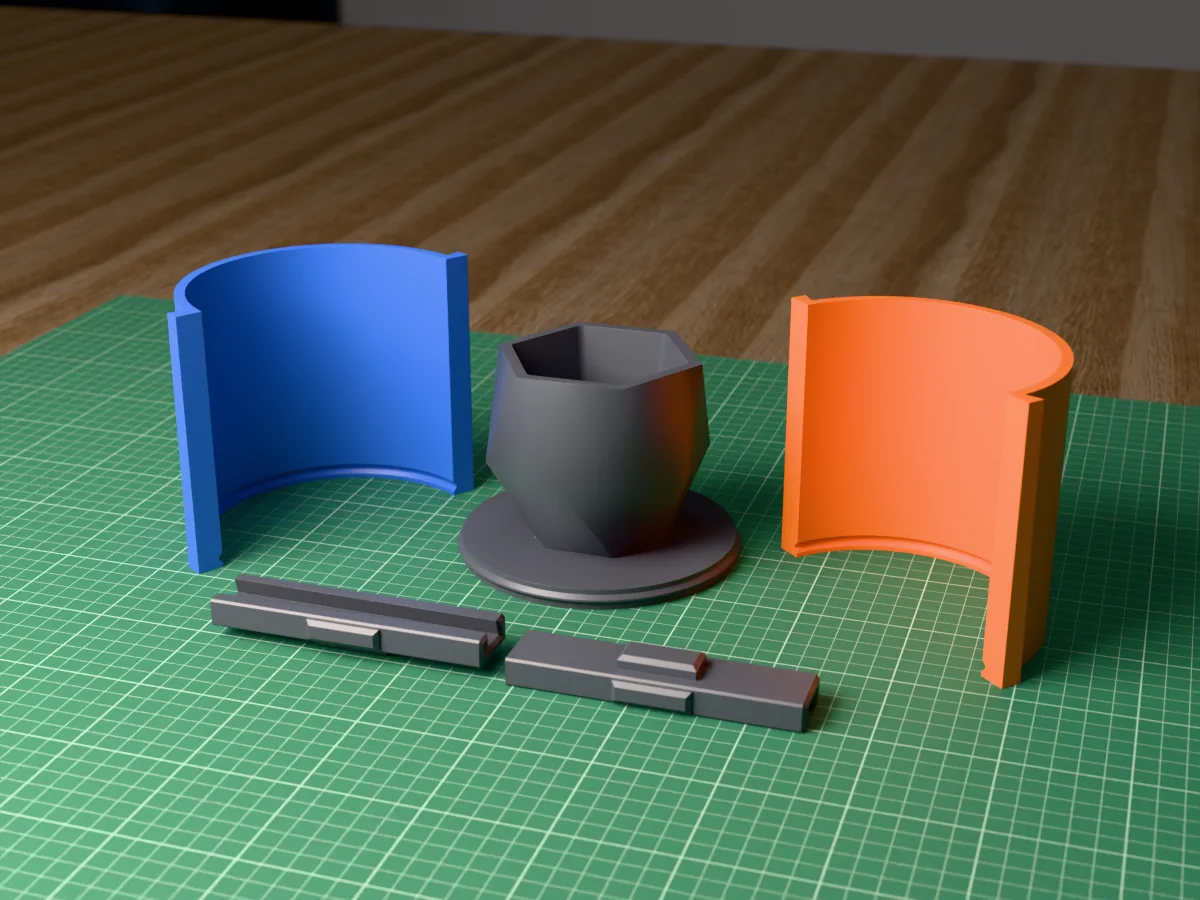
A low-poly geometric planter, 110 mm across and 90 mm tall, to cast in concrete. A silicone mold kit from printed parts.
 ConcretePro early access
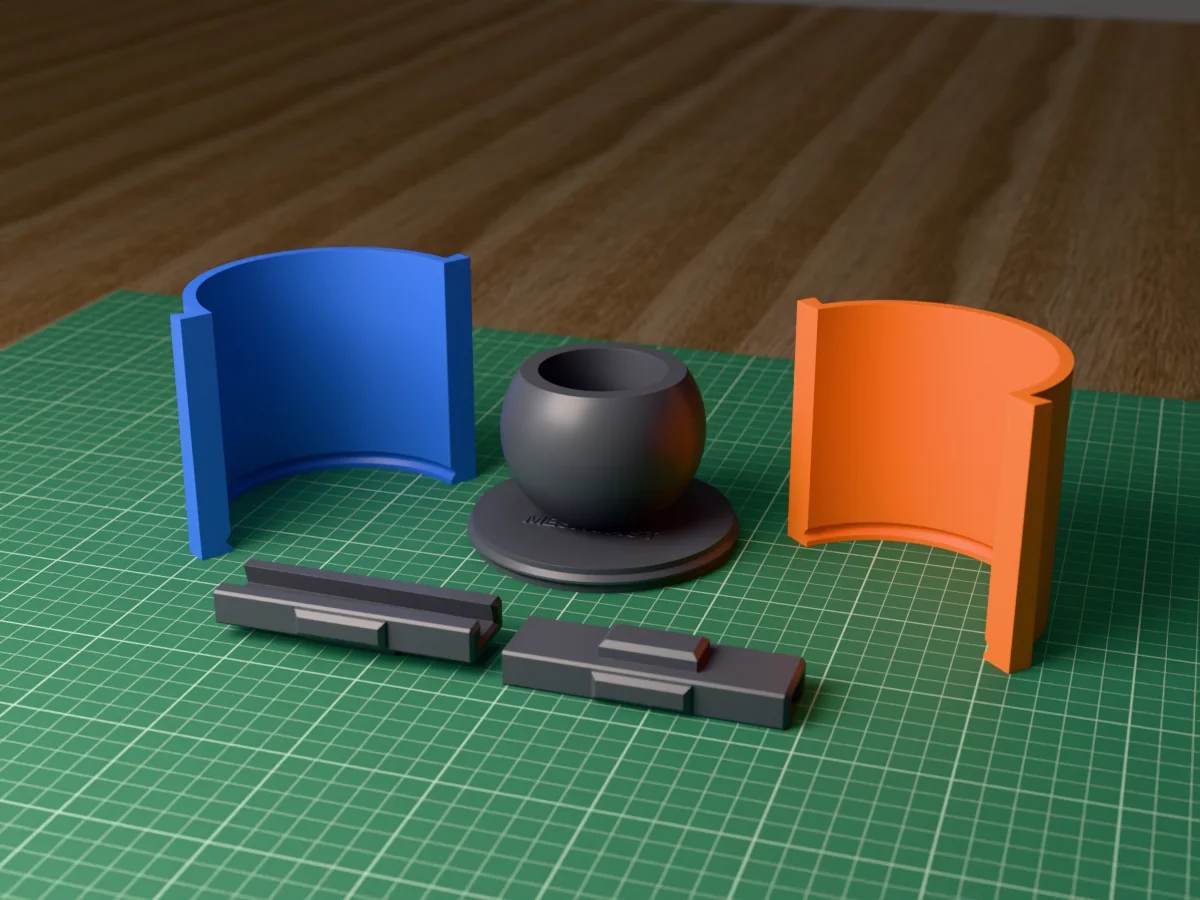
The classic 8 x 6 cm sphere planter to cast in concrete, with a drainage hole. A silicone mold kit from printed parts.
 ConcretePro early access
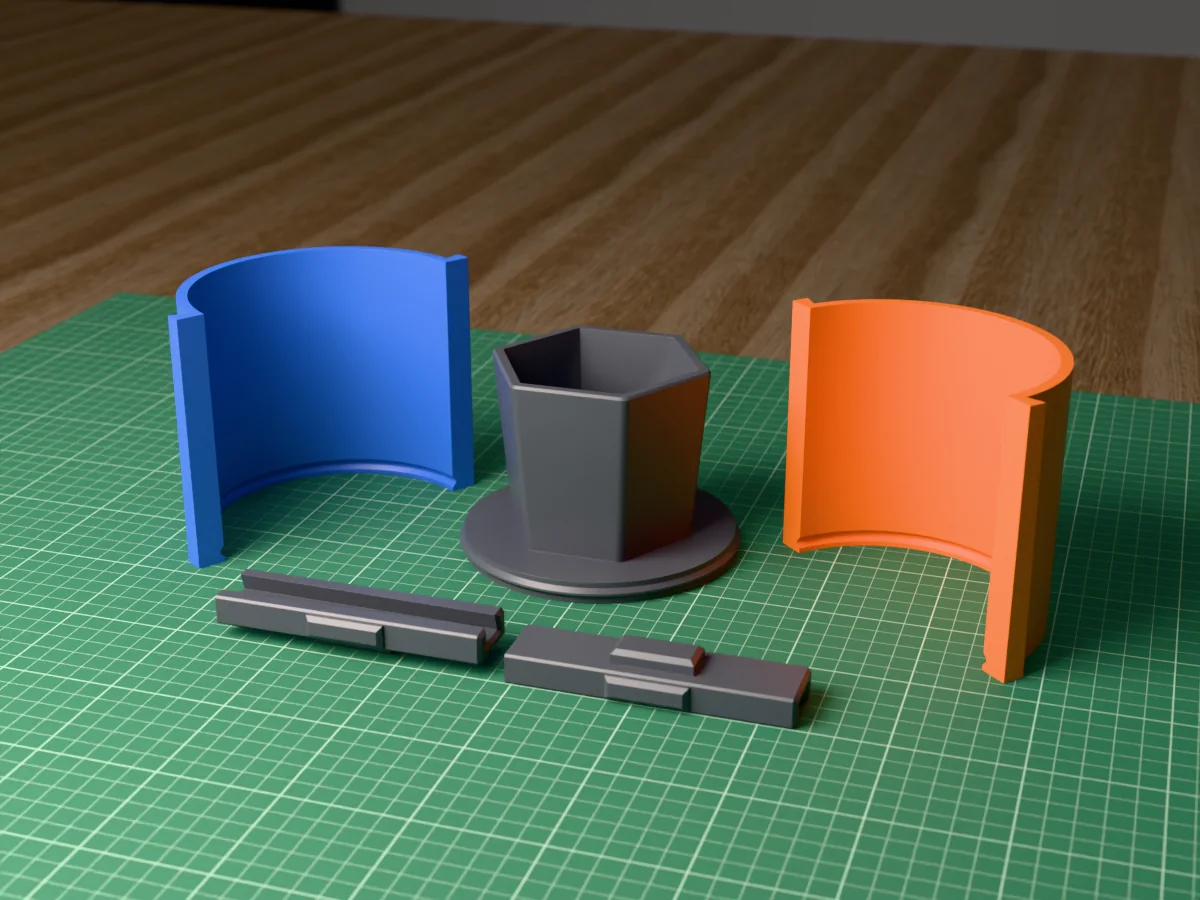
A hexagon planter, 90 mm across the flats, to cast in concrete with even 8 mm walls. A silicone mold kit from printed parts.
 ConcretePro early access
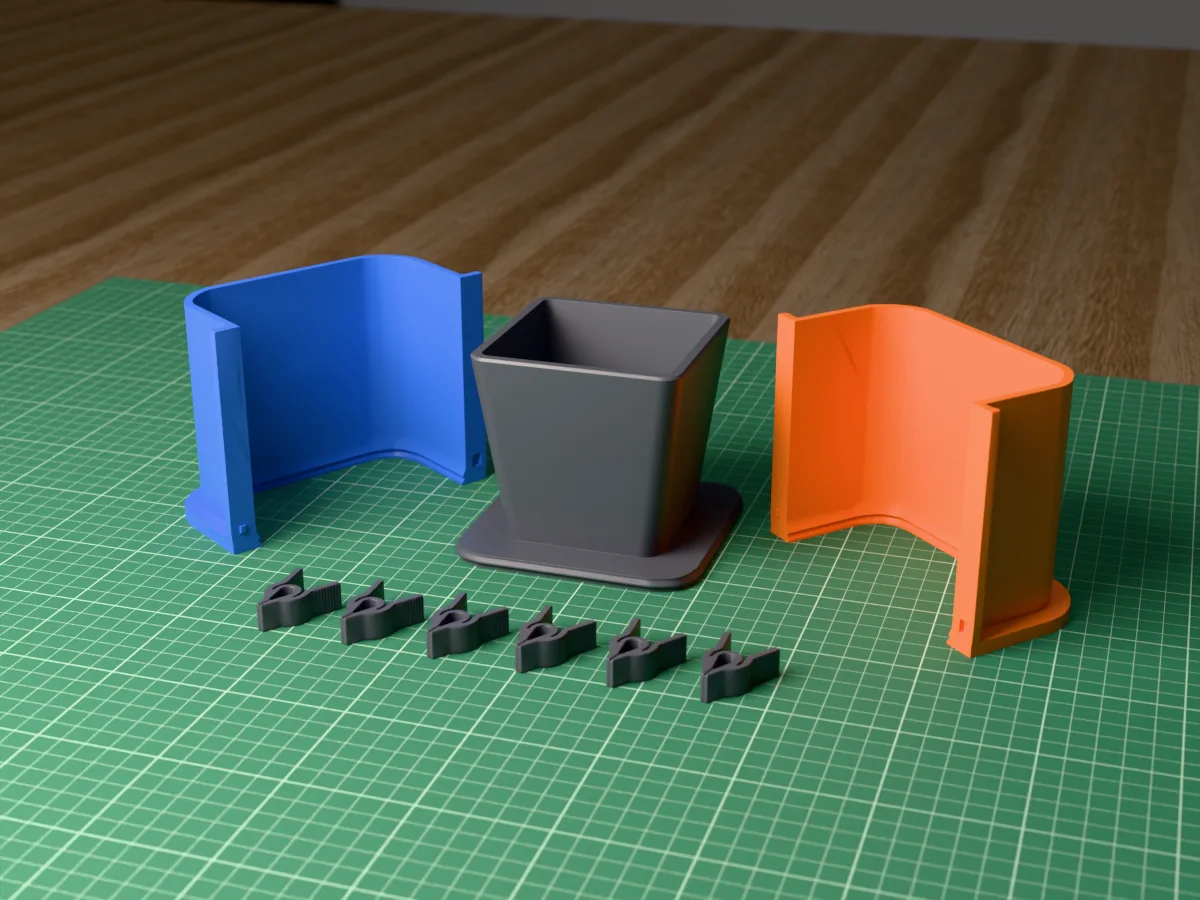
A tapered square planter, 95 mm at the rim and 88 mm tall, to cast in concrete. A silicone mold kit from printed parts.
 ConcretePro early access
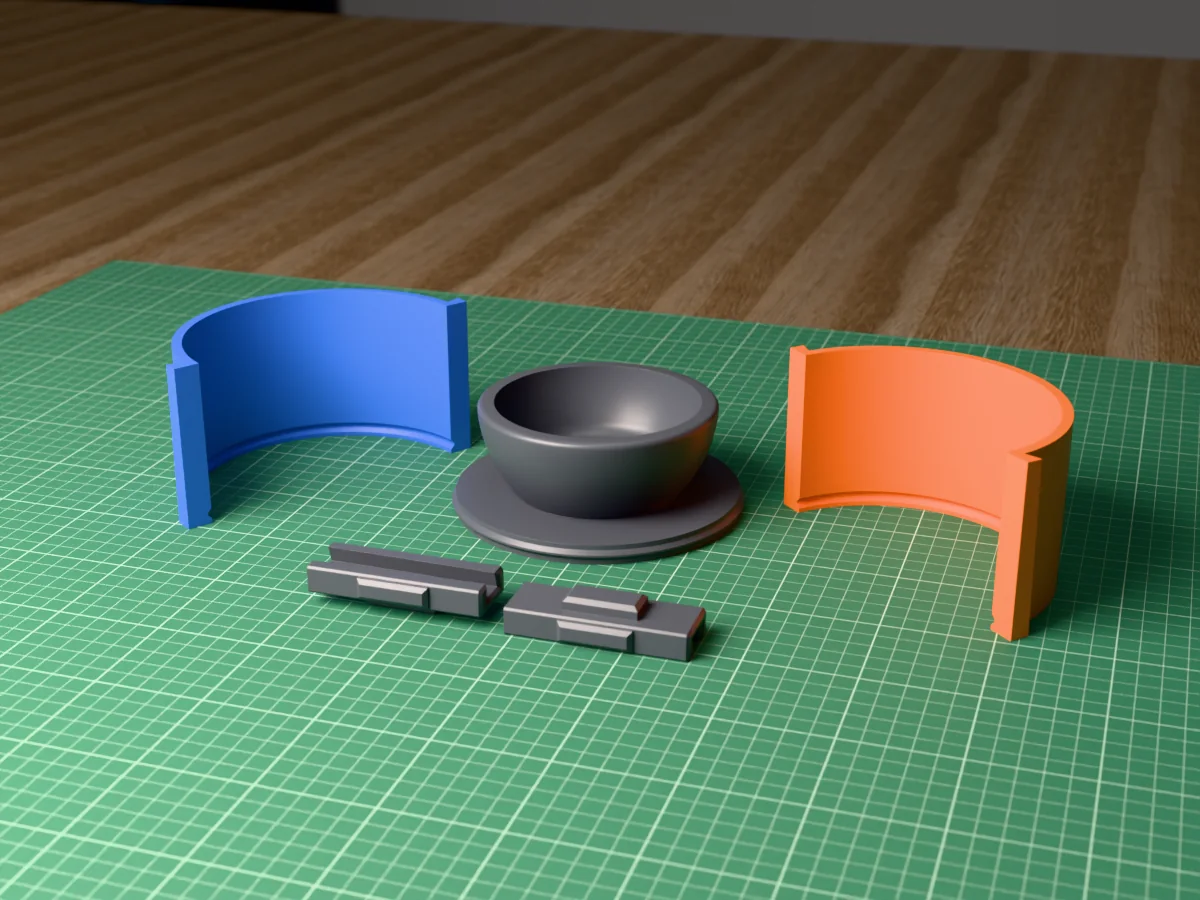
A 120 mm succulent bowl to cast in concrete, with a rounded rim and a drainage hole. A silicone mold kit from printed parts.
 ConcretePro early access
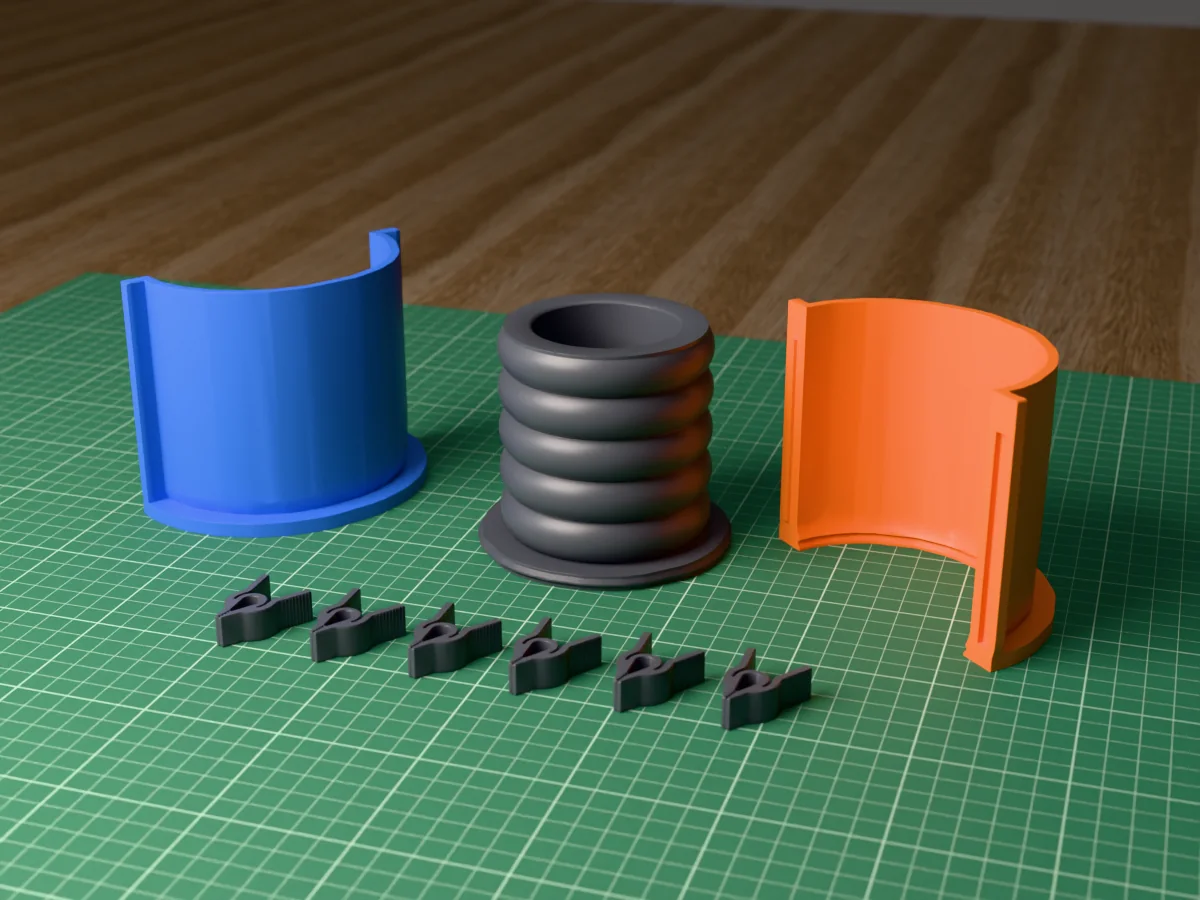
A ring-stack planter, 85 mm tall with five soft ripples, to cast in concrete. A silicone mold kit from printed parts.
 ConcretePro early access
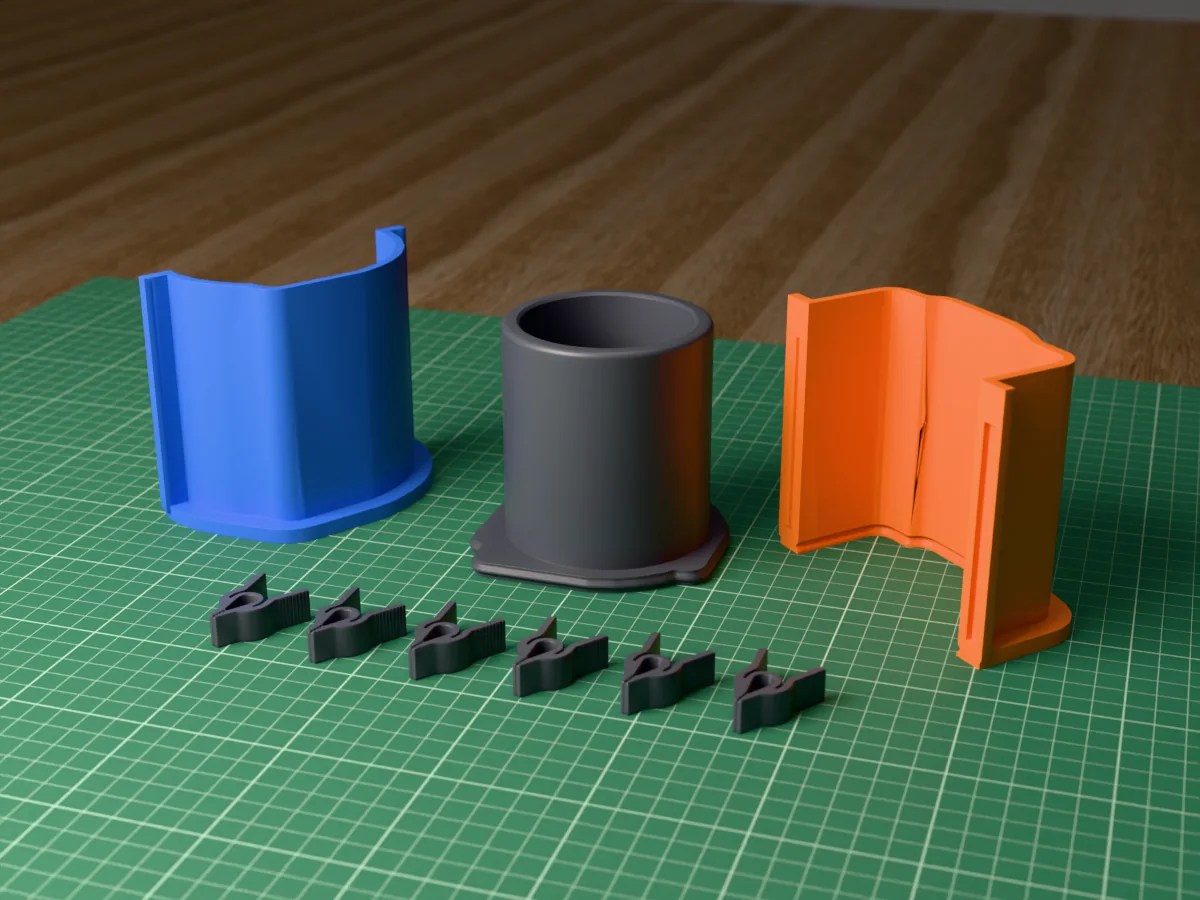
A straight concrete candle jar, 80 mm across, for the classic 8 oz candle. A silicone mold kit from printed parts.
 ConcretePro early access
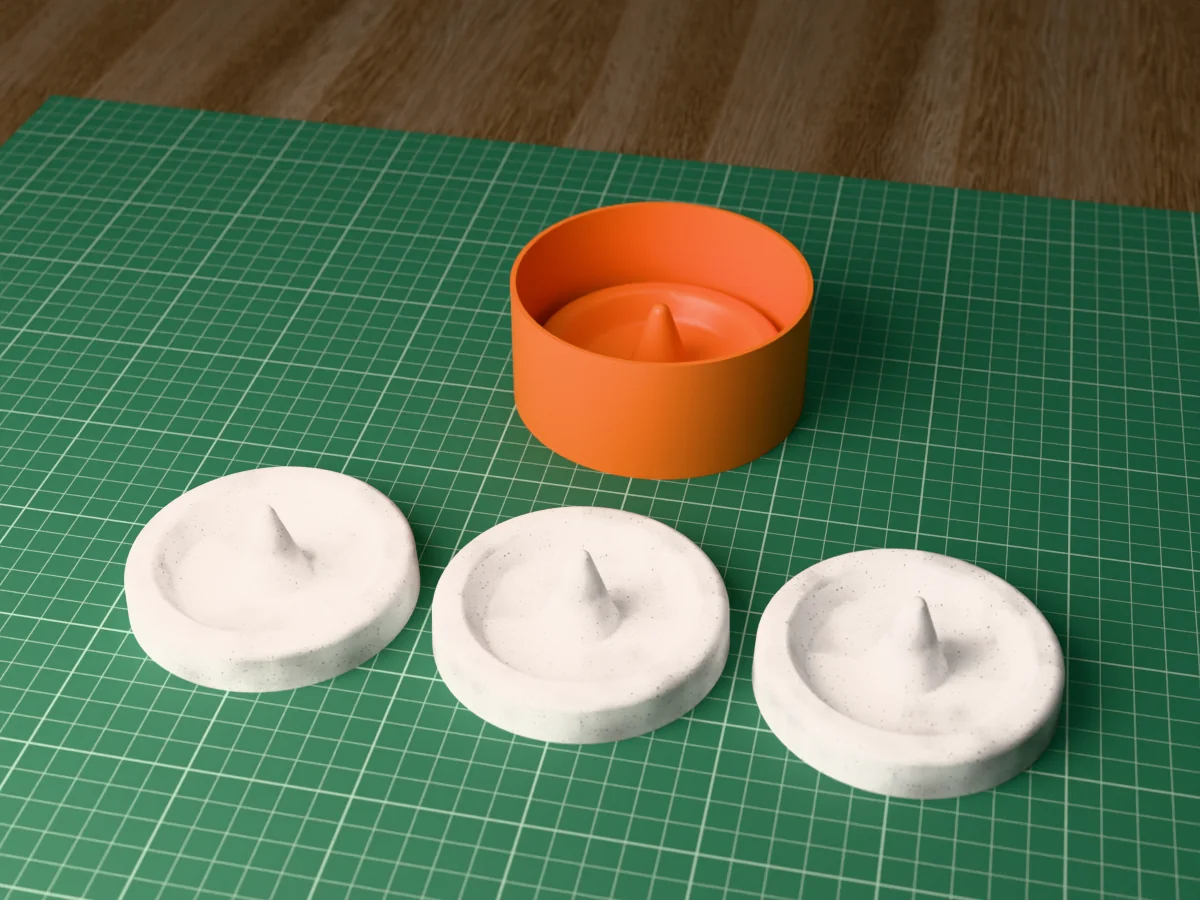
A round ring dish with a ring cone in the middle, cast in one piece in Jesmonite or concrete. From a silicone mold you make yourself.