◆ Concrete
Concrete bonsai pot mold
A rectangular bonsai pot, 128 x 92 mm, to cast in concrete, with two drainage holes. A silicone mold kit from printed parts.
◆ Concrete
A rectangular bonsai pot, 128 x 92 mm, to cast in concrete, with two drainage holes. A silicone mold kit from printed parts.
A classic rectangular bonsai pot, 128 x 92 mm at the rim and 44 mm tall, tapering to 118 x 82 mm at the foot, with rounded corners and a small chamfer round the rim. The well follows the outside with an even 8 mm wall over an 11 mm floor, about 33 mm of soil depth, and two 12 mm drainage holes, where the tie wire goes through to hold the tree in place.
Made with the box mode of our silicone mold maker, which the tool itself suggests for this low, wide pot, in its rectangular outline so the silicone hugs the pot. Print the base with the pot fused onto it, the two walls and the two clamps, and pour about 1010 ml of silicone. It fills the well and becomes the core, with two pins that form the drainage holes, so every cast comes out hollow and drained.
The rim is wider than the foot, so the cured block gets one straight slit to let each pot out. A shallow pot like this suits a young juniper, a ficus or a shohin tree, and it looks right in raw grey concrete or a dark tinted mix. The zip carries every printed part, the pot master as its own STL, the tool's own print-settings sheet and a recipe file for the generator.
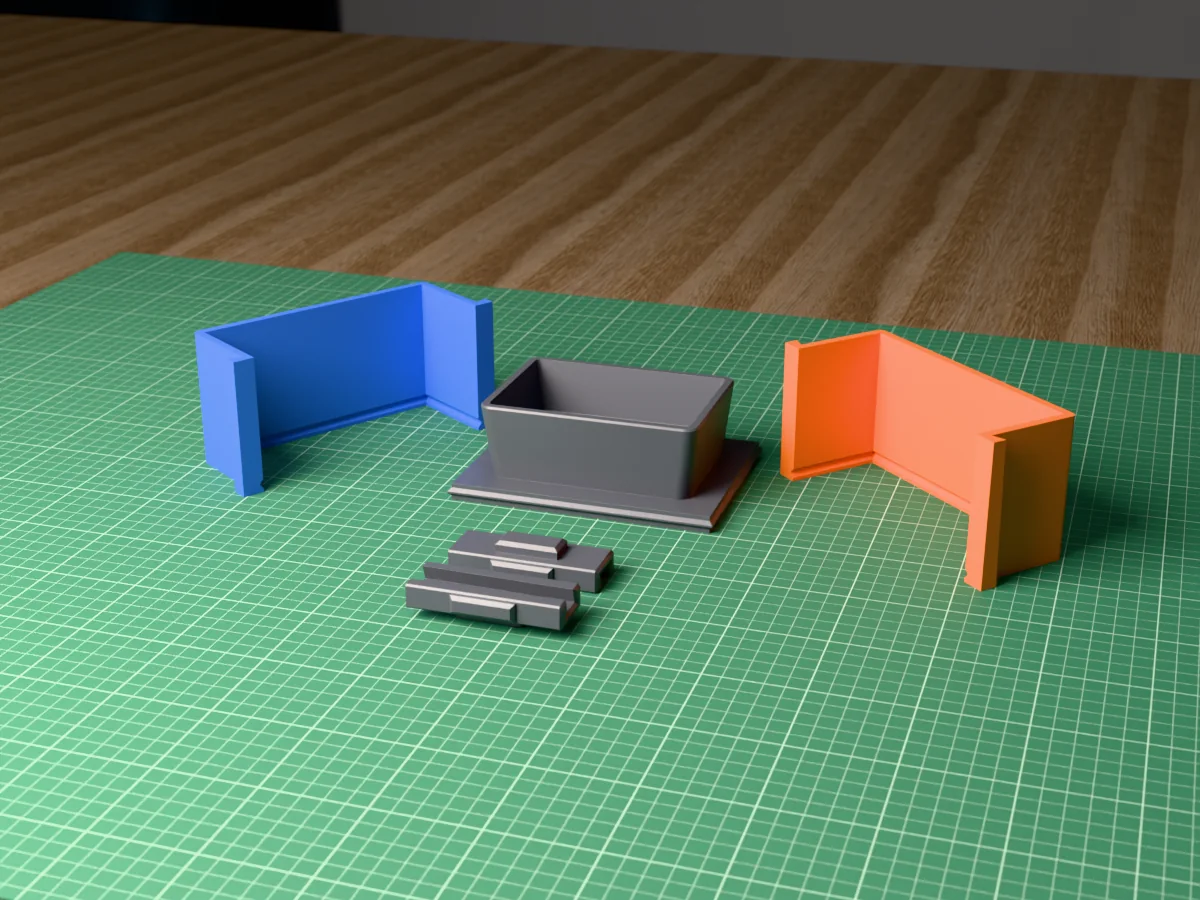
Shown as a 3D render of the printed mold parts pulled apart around the master, not a photo.
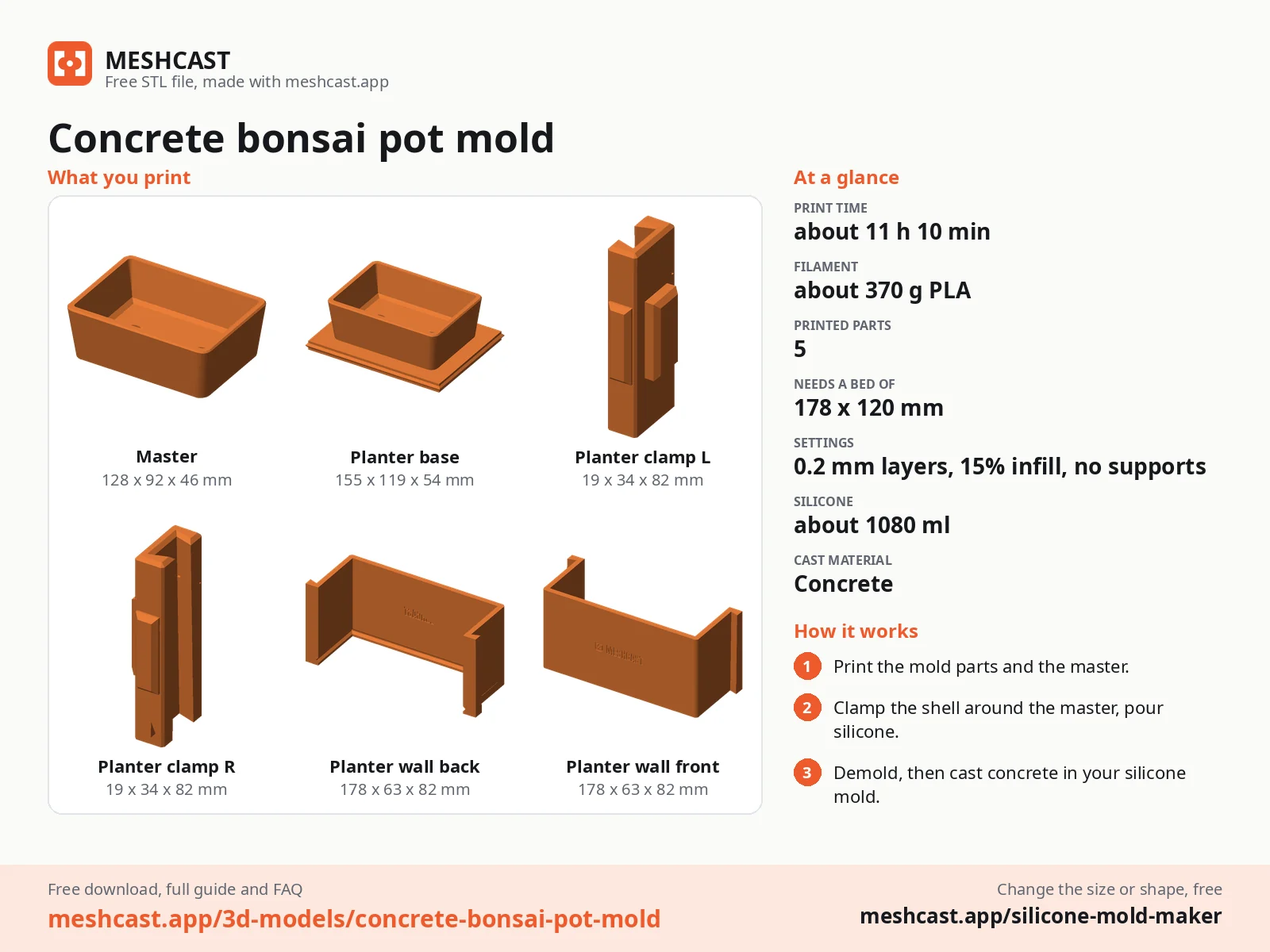
Print the base with the master fused onto it, the two walls and the two clamps.
Stand the base on the table. Set each wall down a few centimetres out from it and slide it in over the table until the ridge round the base sits in the groove at its foot, then slide the clamps down over the seams. Once they are on, the walls cannot lift, and the ridge seals the bottom.
Mix 1080 ml of silicone in one batch and pour it in a thin stream down the inside of a wall, letting it rise round the master and into its well until it covers the top.
Once it has cured, take the clamps off and slide the walls straight out. The pot is wider higher up than at its foot, so cut one straight slit down the side of the block with a sharp knife, from the open face to about 10 mm short of the top, open it like a book and lift the master out.
Turn the block over and stand it back inside the walls with the clamps on, which hold the slit shut. The opening is the foot of the pot, with the silicone core standing up in the middle and the drainage pin on its tip.
Mix a fine concrete or Jesmonite a little wetter than for a slab, pour it slowly down one side of the ring round the core, and tap the walls for a minute to raise the air. Fill level with the opening and strike it flat, wiping the tip of the drainage pin clean.
Leave it to cure for a day, take the walls off, open the slit, peel the silicone off the outside and twist the pot off the core. Sand the foot flat and seal it.
Print details
| Cast material | Concrete |
|---|---|
| Printed parts | 5 |
| Size (W x D x H) | 155 x 119 x 82 mm |
| Print bed needed | 178 x 120 mm, 82 mm tall |
| Filament | ~370 g |
| Layer height | 0.2 mm |
| Infill | 15% |
| Supports | Not needed |
| Download | ZIP: 5 printed parts (STL) + bonsai pot master (STL) + print sheet + recipe |
| Added | 2026-09-30 |
Made with the free Silicone mold maker generator. Upload your own model and get the same kind of mold built around it, in your browser.
Free download. Opens the Thingiverse listing in a new tab.
Free for personal use. Selling the pieces you cast needs a commercial licence (Pro or Founder); passing on the file itself is not permitted on any plan. Full terms.
New to casting? Read the silicone mold maker guide.
Yes, once it has cured and been rinsed. Fresh concrete is alkaline, so soak the finished pot in water for a few days, changing the water daily, or leave it outside through a few rains before planting. Many growers use cement pots for pre-bonsai and shohin trees because they are heavy, stable and breathe a little.
Put mesh over each drainage hole, then run one length of aluminium wire up through both holes from below so the two ends come up inside the pot. Set the tree on a thin layer of substrate, bring the wire ends over the root ball and twist them together until the tree cannot rock.
The well is about 110 x 75 mm and 33 mm deep, a shohin or mame size: a young juniper, a ficus, a Chinese elm, a small azalea or a trident maple cutting. A tree whose root ball is wider than about 10 cm needs a bigger pot.
 Concrete
Four snowflake coasters cast in concrete straight into a printed tray. A Christmas set, no silicone.
 Concrete
A 150 mm tabletop bird bath to cast in concrete: a wide rim to perch on and a shallow basin. A silicone mold kit from printed parts.
 Concrete
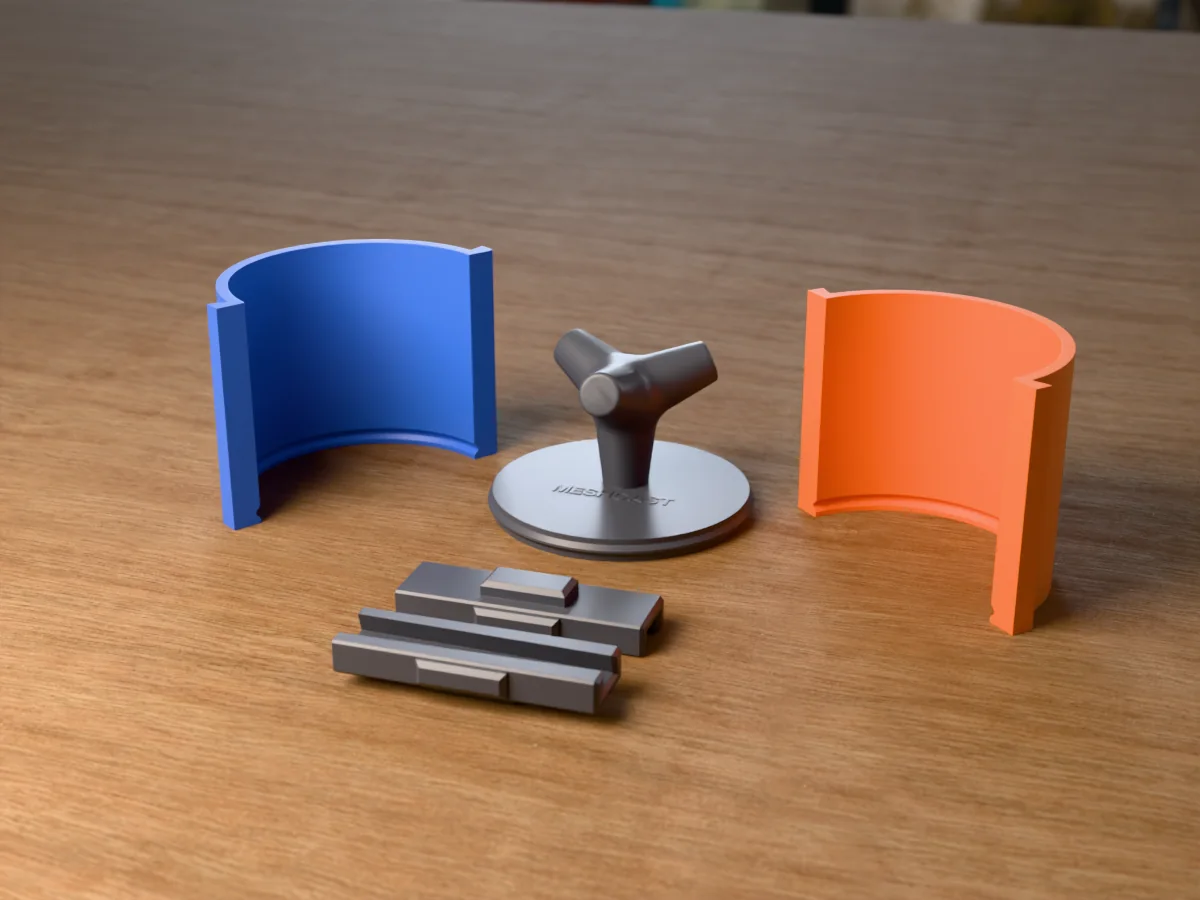
A concrete tetrapod, the four-legged breakwater block, as a 62 mm desk piece. A silicone mold kit from printed parts.
 Concrete
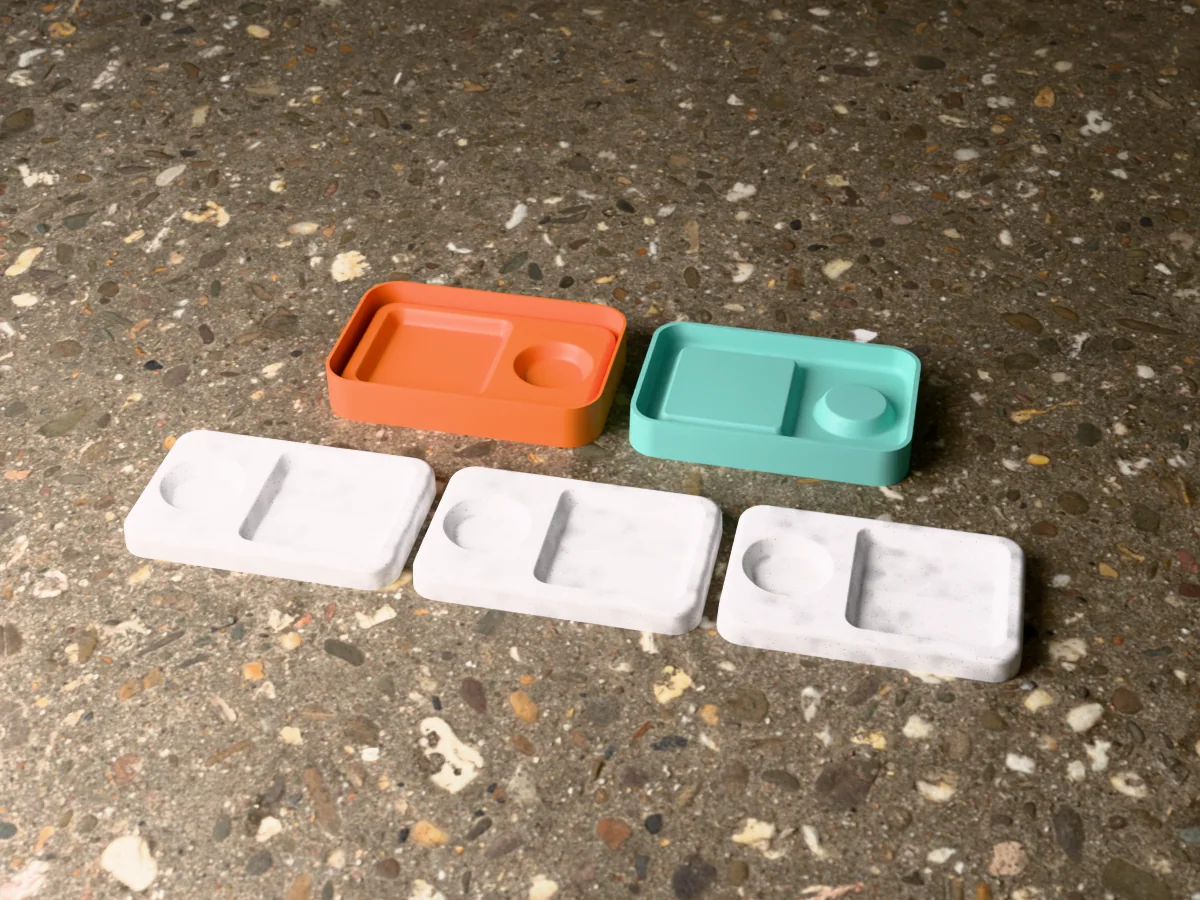
A concrete key tray with a long well for keys and a round one for coins and rings, cast from a silicone mold you make yourself.
 Concrete
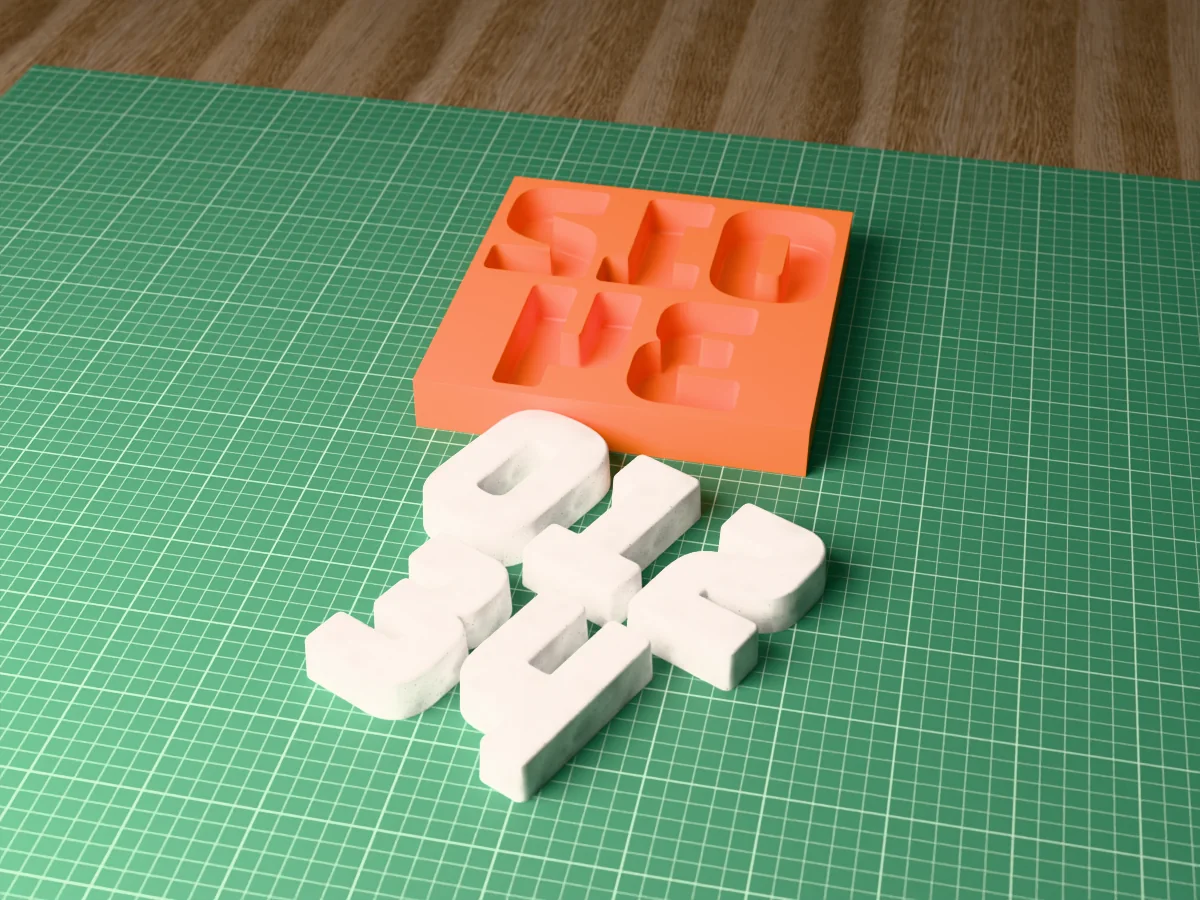
Modern house numbers 0 to 4, 95 mm tall, cast in concrete straight in one printed tray that fits a 220 mm bed.
 Concrete
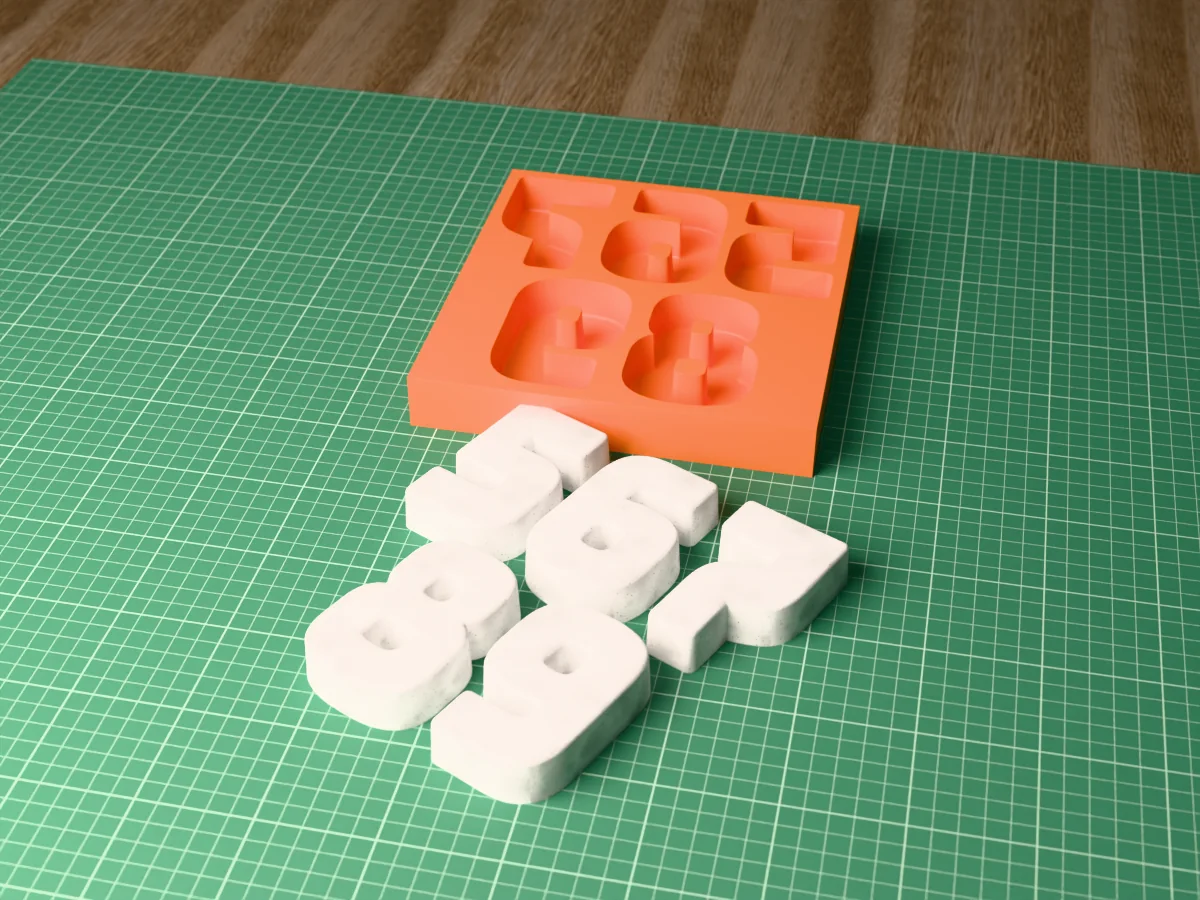
Modern house numbers 5 to 9, 95 mm tall, cast in concrete straight in one printed tray that fits a 220 mm bed.
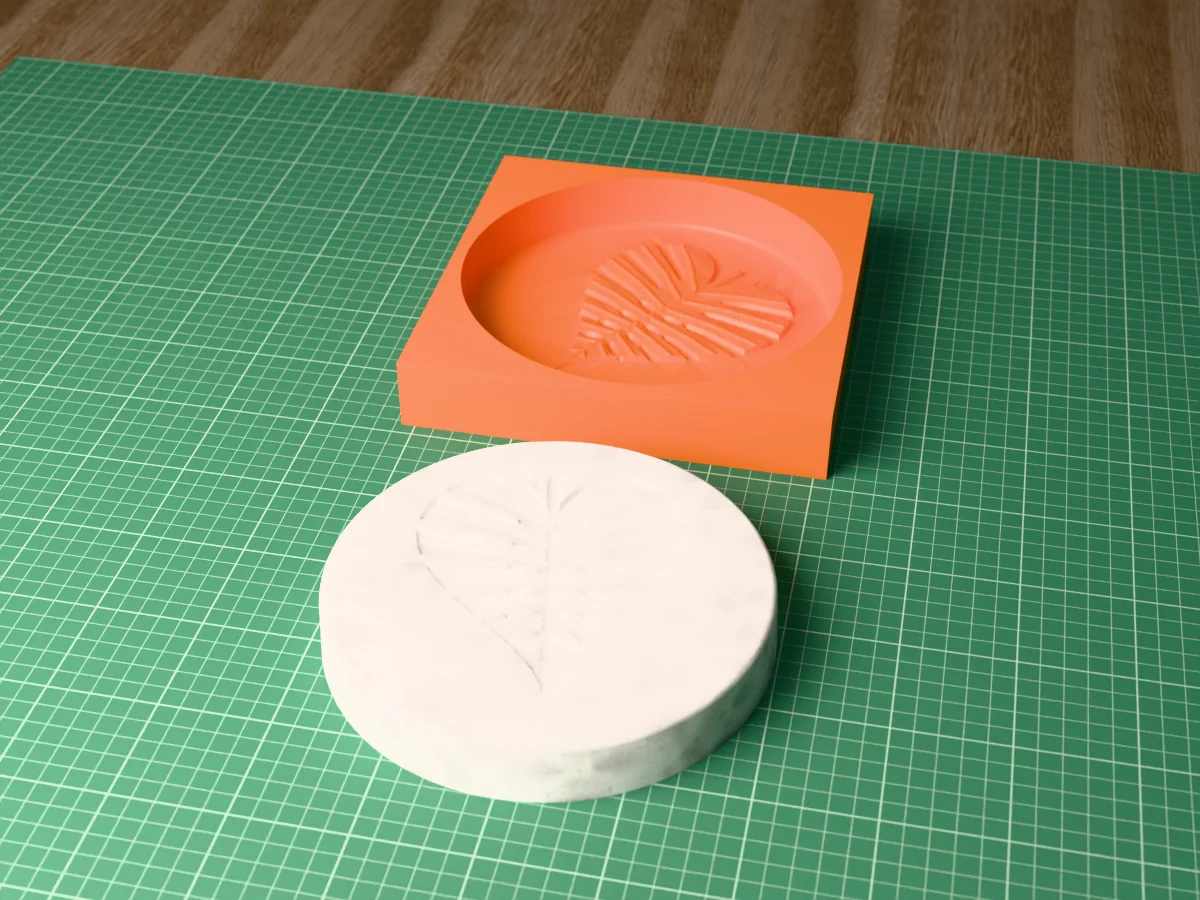 Concrete
A round stepping stone, 195 mm across, with a monstera leaf pressed into its face. Cast in concrete straight in a printed tray.
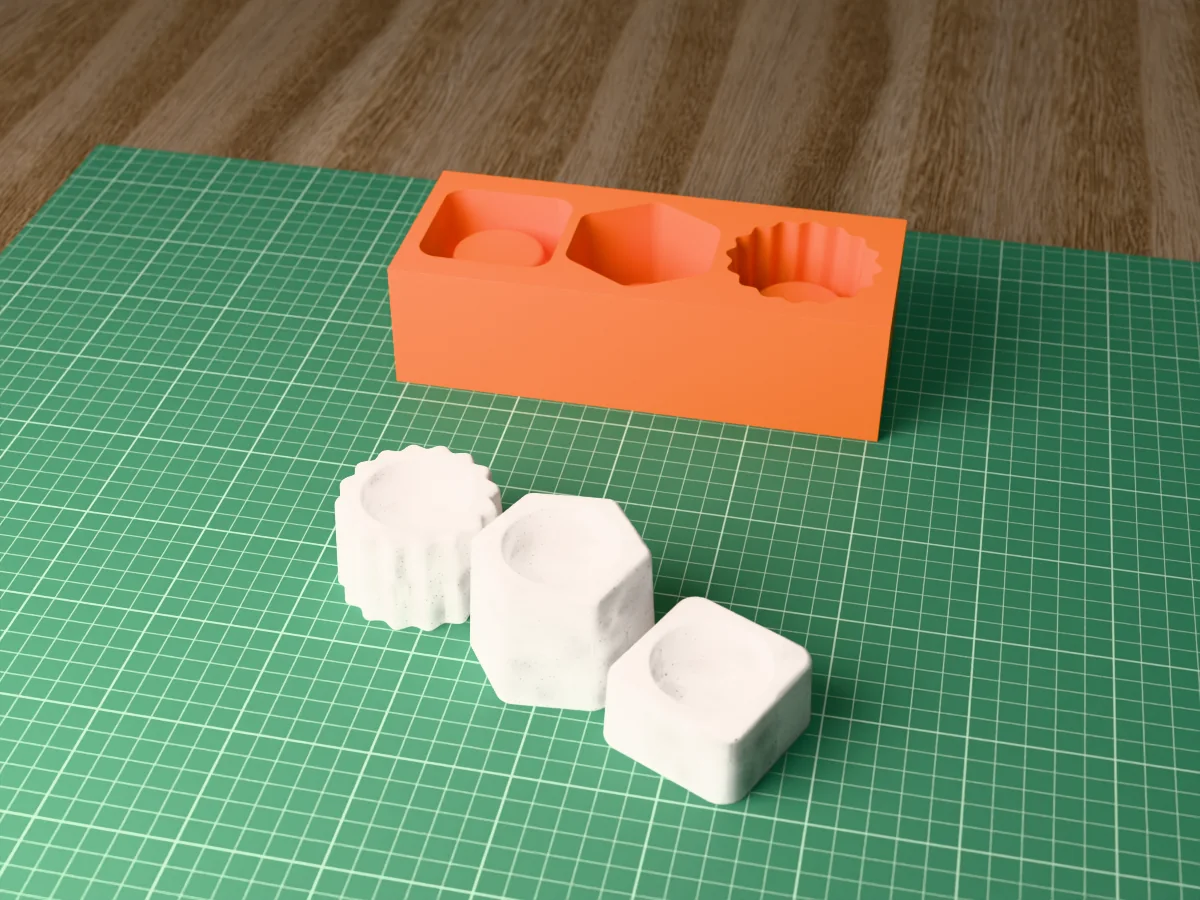 Concrete
Three concrete tealight holders in three heights, square, hexagon and scalloped, cast straight in one printed tray.