◆ Concrete
Hexagon concrete ashtray mold
A hexagon ashtray, 111 mm across the corners with three rests, to cast in concrete. A silicone mold kit from printed parts.
◆ Concrete
A hexagon ashtray, 111 mm across the corners with three rests, to cast in concrete. A silicone mold kit from printed parts.
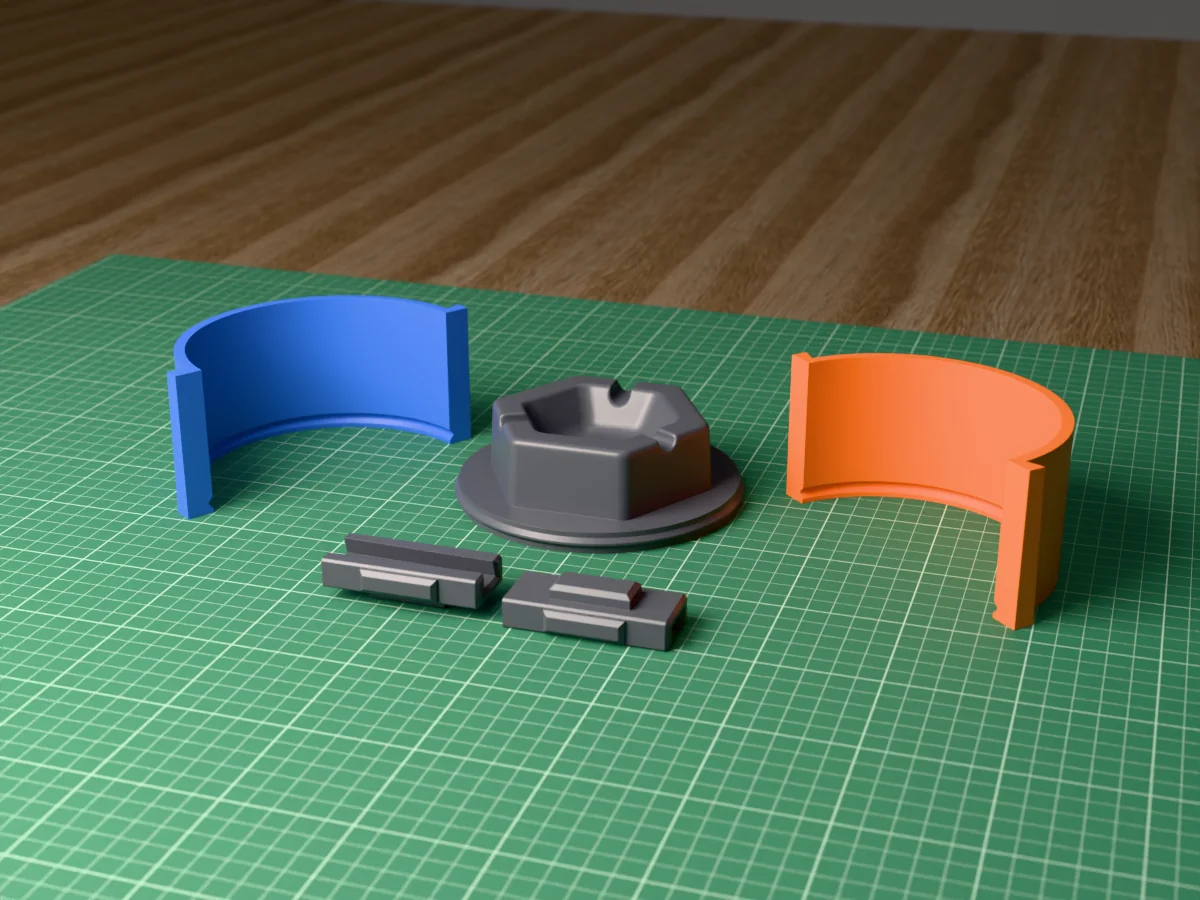
A hexagonal concrete ashtray 96 mm across the flats and 111 mm across the corners, 32 mm tall: softly rounded corners, a hexagonal bowl that follows the outline 13 mm in, 20 mm deep over a 12 mm floor, and three U-shaped cigarette rests across alternate flats, tipped toward the bowl. The geometric shape suits a modern balcony, a bar or a workshop bench.
Made with the box mode of our silicone mold maker in its round shape, which the site's mold advisor and the tool itself both suggest: the bowl would lock any rigid two-part mold. Print the base with the ashtray fused onto it, the two walls and the two clamps, and pour about 594 ml of silicone. It fills the bowl and becomes the core, and the side leans in toward the rim, so each cast slides out through its foot with no cut.
Cast it in grey concrete, charcoal-tinted cement or white Jesmonite, about 442 g in concrete, and seal it. Without cigarettes it makes a good incense ash catcher, a coin tray or a ring dish. The zip carries every printed part, the ashtray master as its own STL, the tool's own print-settings sheet and a recipe file for the generator.
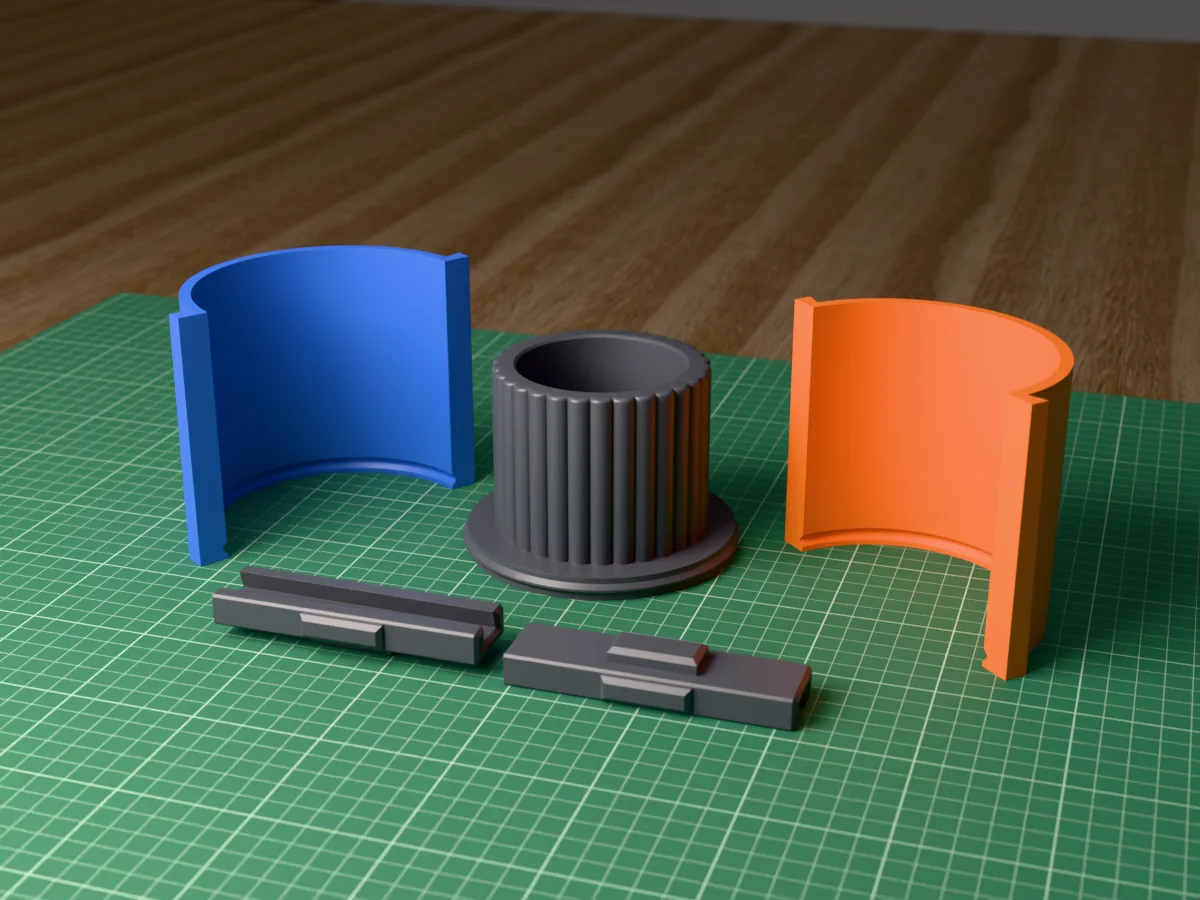
Shown as a 3D render of the printed mold parts pulled apart around the master, not a photo.
Print the base with the master fused onto it, the two walls and the two clamps.
Stand the base on the table. Set each wall down a few centimetres out from it and slide it in over the table until the ridge round the base sits in the groove at its foot, then slide the clamps down over the seams. Once they are on, the walls cannot lift, and the ridge seals the bottom.
Mix 639 ml of silicone in one batch and pour it in a thin stream down the inside of a wall, letting it rise round the master and into its well until it covers the top.
Once it has cured, take the clamps off, slide the walls straight out and pull the silicone block off the master. That block is your mold.
Turn the block over and stand it back inside the walls with the clamps on. The opening is the foot of the ashtray, with the silicone core standing up in the middle.
Mix a fine concrete or Jesmonite a little wetter than for a slab, pour it slowly down one side of the ring round the core, and tap the walls for a minute to raise the air. Fill level with the opening and strike it flat.
Leave it to cure for a day, take the walls off, peel the silicone off the outside and twist the ashtray off the core. Sand the foot flat and seal it.
Let it dry for a few days, then brush two coats of a water-based penetrating concrete sealer over the bowl and the rests, so ash and tar rinse off instead of staining.
Print details
| Cast material | Concrete |
|---|---|
| Printed parts | 5 |
| Size (W x D x H) | 136 x 136 x 70 mm |
| Print bed needed | 159 x 137 mm, 70 mm tall |
| Filament | ~300 g |
| Layer height | 0.2 mm |
| Infill | 15% |
| Supports | Not needed |
| Download | ZIP: 5 printed parts (STL) + ashtray master (STL) + print sheet + recipe |
| Added | 2026-09-26 |
Pro early access until October 26, 2026, then free with any account.
Like it or post your print on Thingiverse
Make your own silicone mold →Made with the free Silicone mold maker generator. Upload your own model and get the same kind of mold built around it, in your browser.
Free for personal use. Selling the pieces you cast needs a commercial licence (Pro or Founder); passing on the file itself is not permitted on any plan. Full terms.
New to casting? Read the silicone mold maker guide.
Use a fine mix with no gravel, brush a thin first coat into the corners and the rests, then pour the rest slowly down one wall and vibrate for a full minute (an orbital sander held against the walls works). The corners are rounded to 7 mm, which is what stops them chipping when the ashtray is knocked.
Yes. Mix a concrete pigment into the dry mix at 2 to 5% of the cement weight before you add water, or use Jesmonite pigment at the rate on the tub. Charcoal, terracotta and sage all suit the hexagon; fold a second colour in with two strokes for a marbled one.
Tip the ash out, rinse the bowl under warm water and scrub the rests with a soft brush and a drop of washing-up liquid. A sealed ashtray comes clean like this every time; an unsealed one stains, so reseal it once a year if it lives outside.
 ConcretePro early access
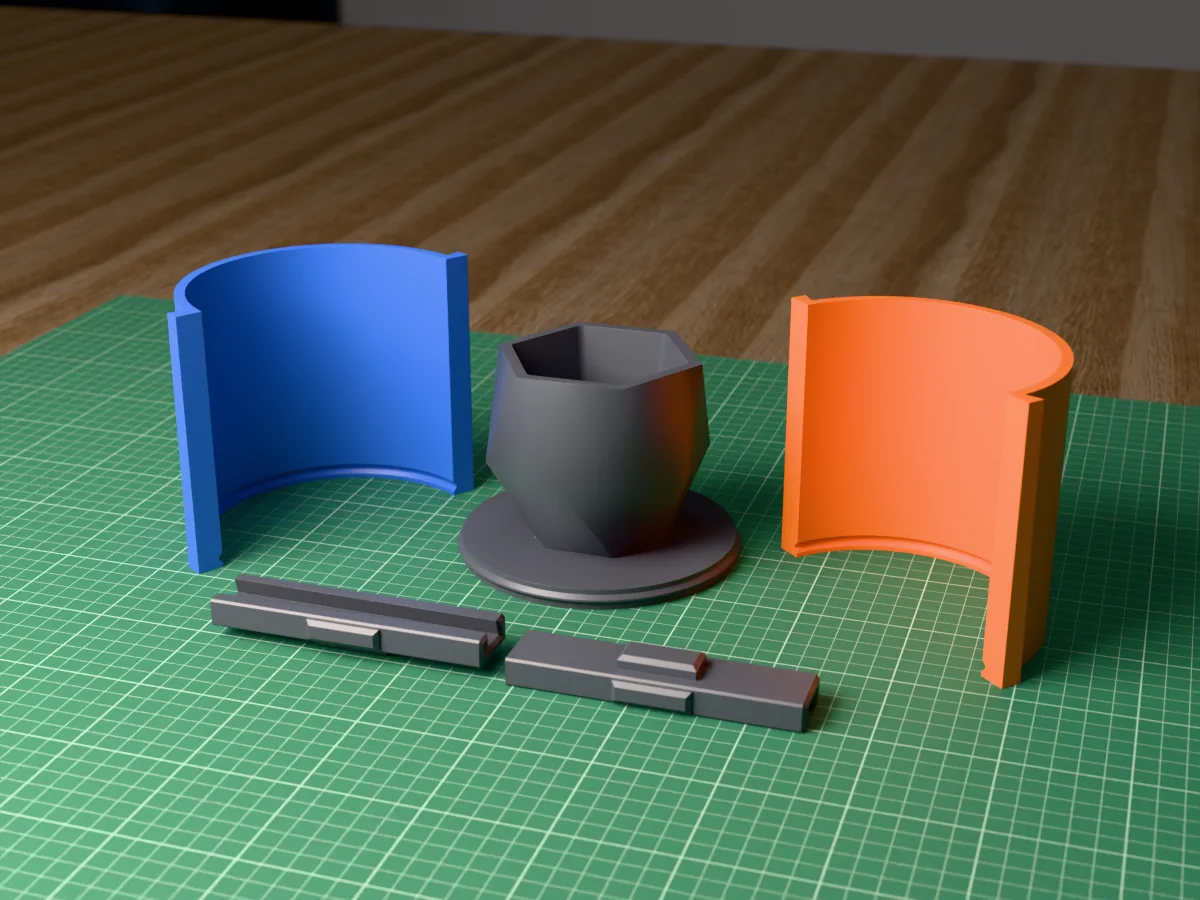
A low-poly geometric planter, 110 mm across and 90 mm tall, to cast in concrete. A silicone mold kit from printed parts.
 ConcretePro early access
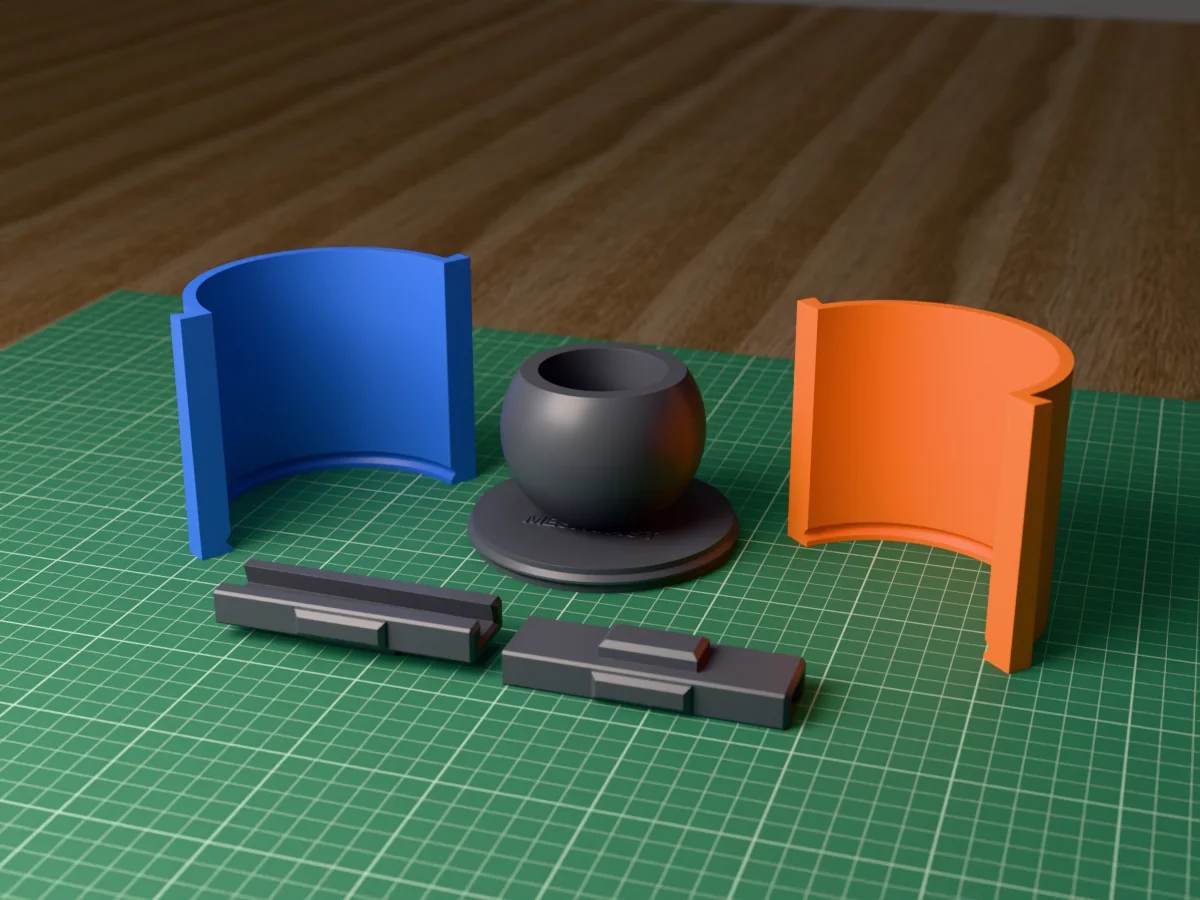
The classic 8 x 6 cm sphere planter to cast in concrete, with a drainage hole. A silicone mold kit from printed parts.
 ConcretePro early access
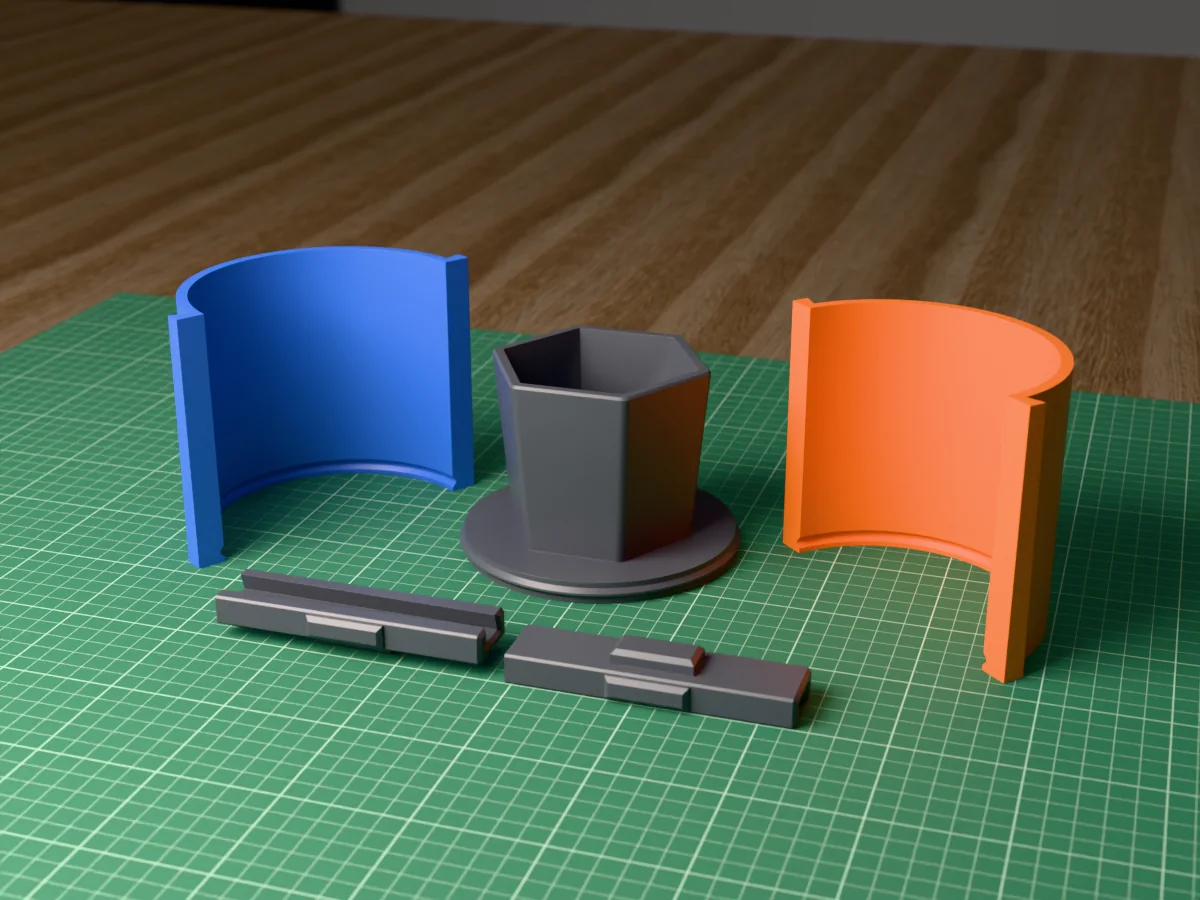
A hexagon planter, 90 mm across the flats, to cast in concrete with even 8 mm walls. A silicone mold kit from printed parts.
 ConcretePro early access
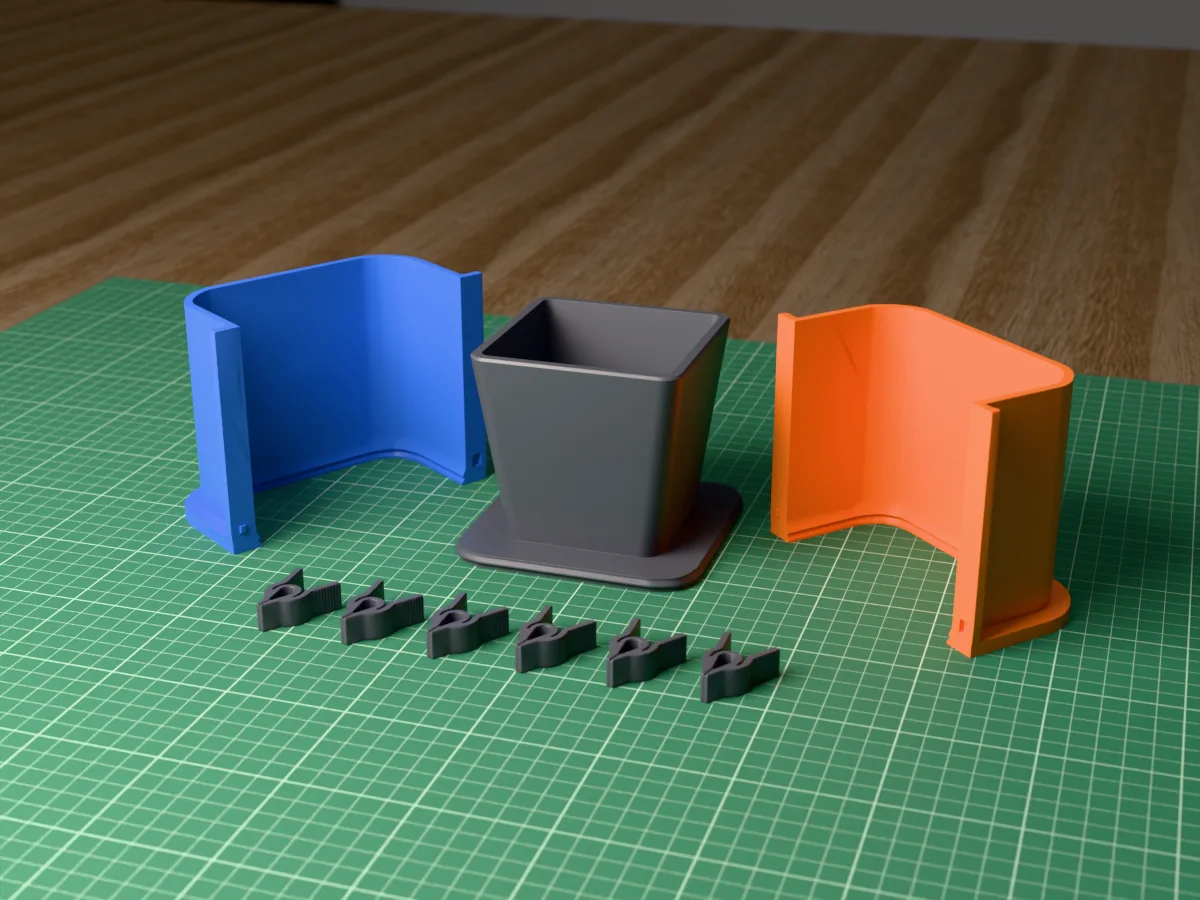
A tapered square planter, 95 mm at the rim and 88 mm tall, to cast in concrete. A silicone mold kit from printed parts.
 ConcretePro early access
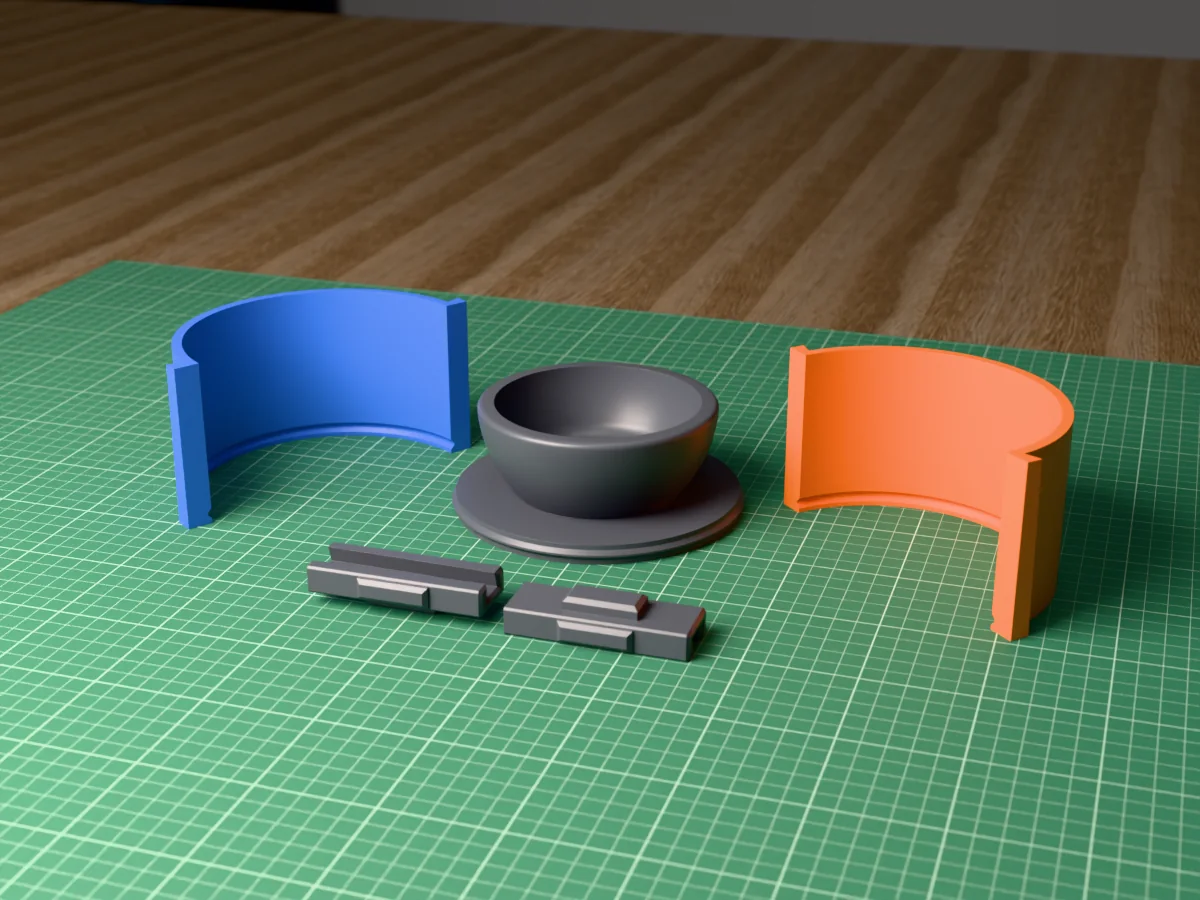
A 120 mm succulent bowl to cast in concrete, with a rounded rim and a drainage hole. A silicone mold kit from printed parts.
 ConcretePro early access
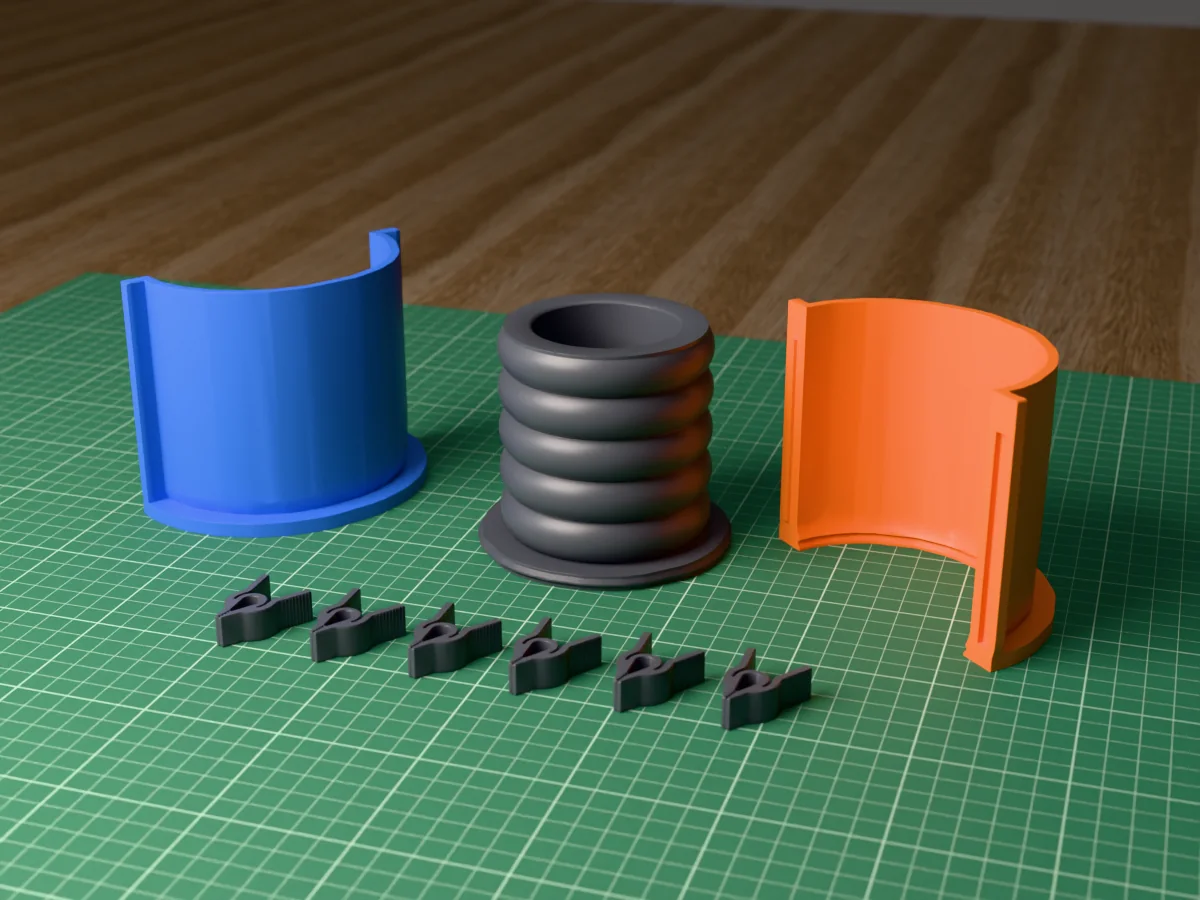
A ring-stack planter, 85 mm tall with five soft ripples, to cast in concrete. A silicone mold kit from printed parts.
 ConcretePro early access
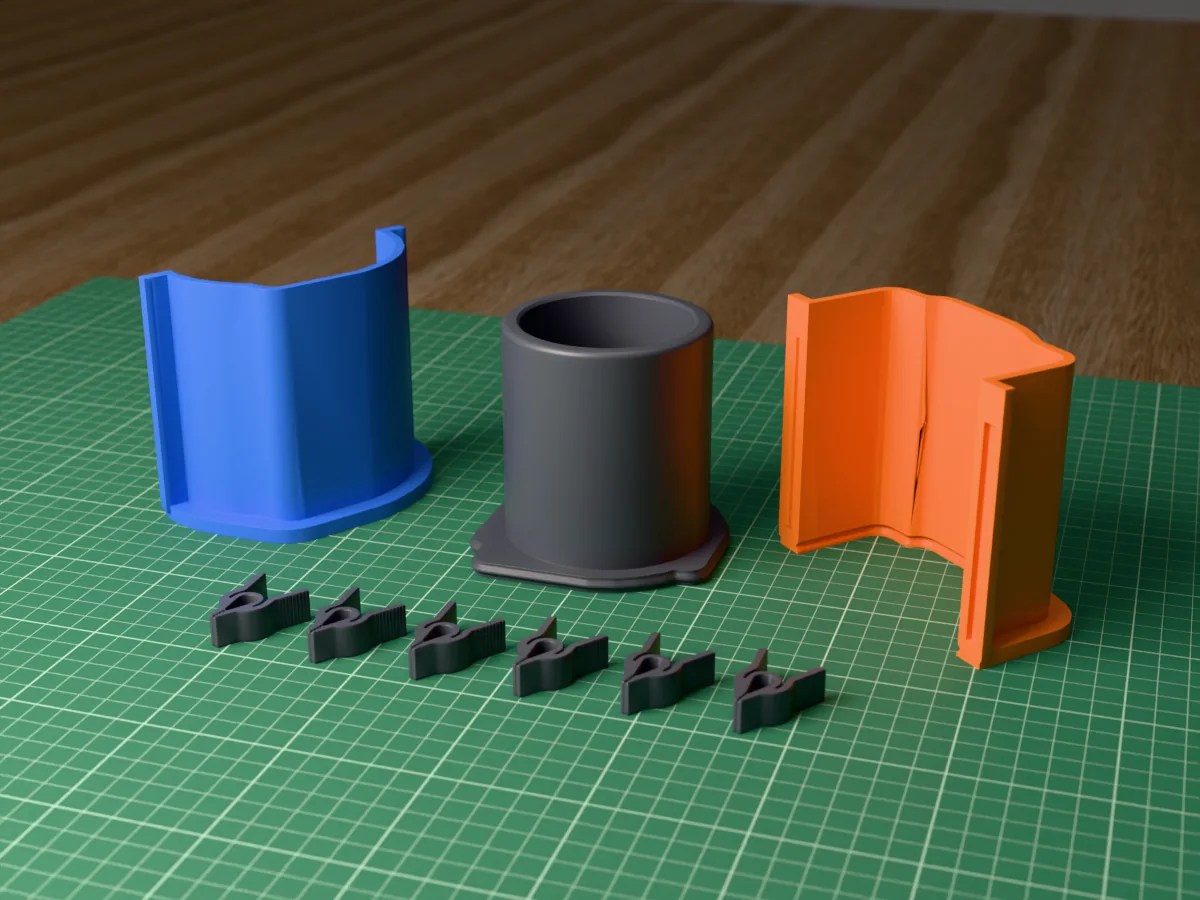
A straight concrete candle jar, 80 mm across, for the classic 8 oz candle. A silicone mold kit from printed parts.
 ConcretePro early access
A ribbed concrete candle vessel, 92 mm across with 30 rounded ribs. A silicone mold kit from printed parts.