◆ Clay
Handmade pottery stamp
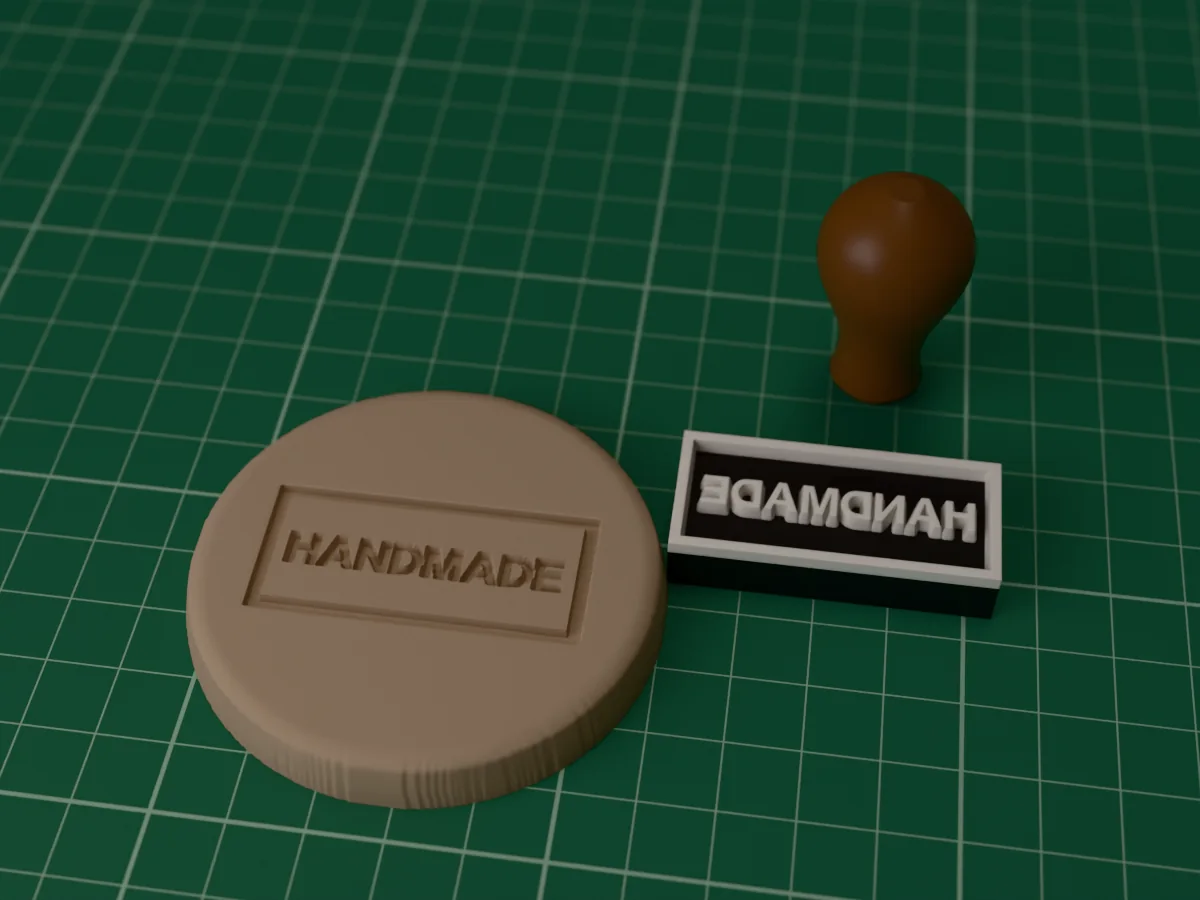
HANDMADE in bold capitals in a small bordered rectangle: the classic mark for pottery and polymer clay.
◆ Clay
HANDMADE in bold capitals in a small bordered rectangle: the classic mark for pottery and polymer clay.
HANDMADE in bold capitals inside a thin rectangular border: the simplest maker's mark there is. Stamp the foot of mugs, bowls and vases, the back of tiles, polymer clay pieces and air-dry clay ornaments.
Made with our free stamp maker, not modelled by hand: we typed HANDMADE into it, picked the rectangle shape at 44 by 20 mm with a 1.5 mm border ring and left everything else at the page's defaults. The zip holds exactly what the tool gives you: a stamp plate with a 2 mm raised face and a handle that screws into its back, as one STL, and as a 3MF with the face, plate and handle as separate coloured parts. The page mirrors the face, so the mark reads the right way round, and flares every raised wall a little toward the plate, which helps the stamp let go of a slab of clay.
Shown as a 3D render of the printed stamp and the mark it presses into a slab of clay, not a photo.
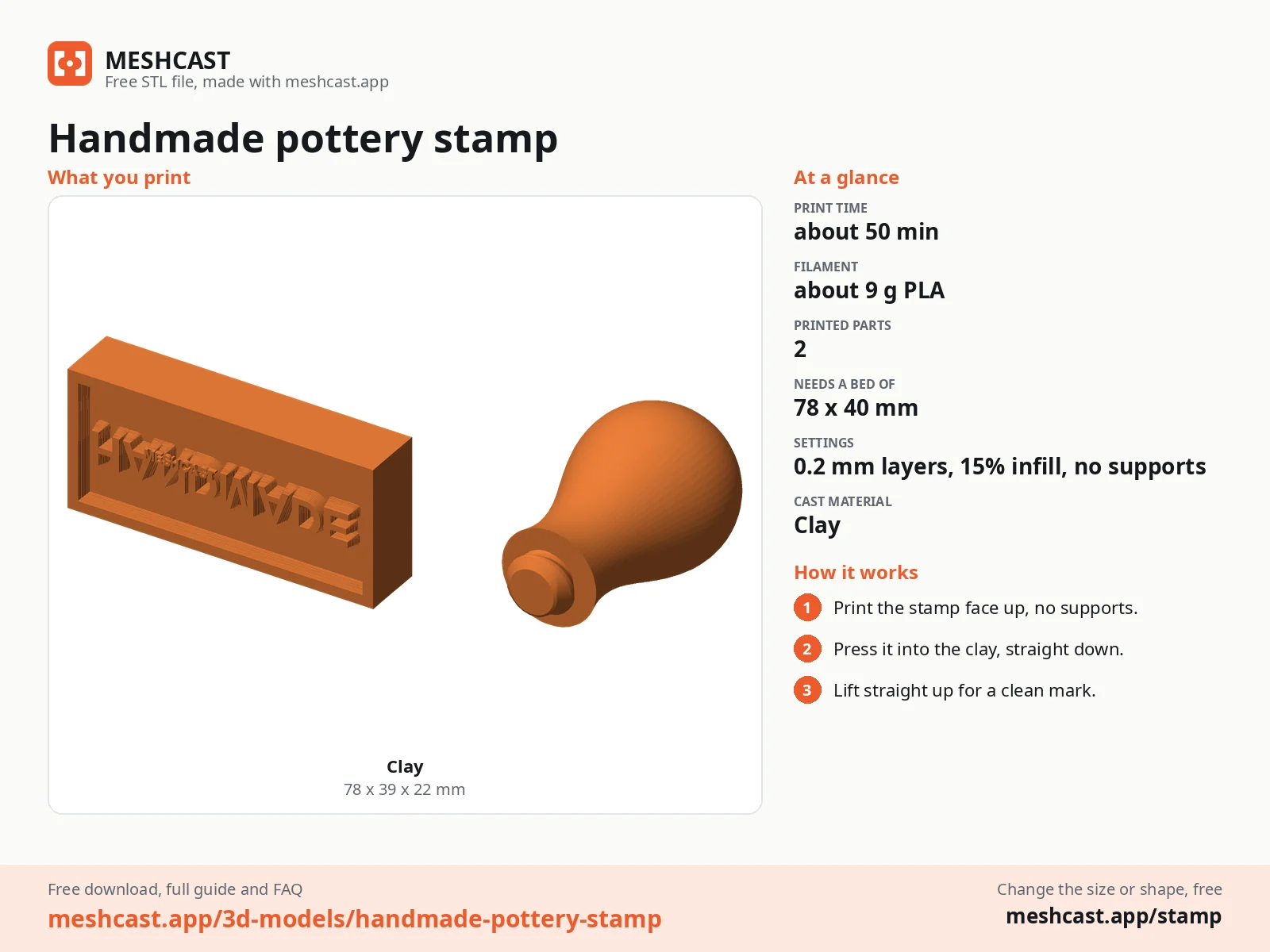
Print both parts as exported: the plate face down on the bed, the handle standing on its foot, no supports.
Screw the handle into the back of the plate until it is snug.
Dust the face with cornstarch, or dampen it for pottery clay.
Press straight down into the clay with even pressure and lift straight up, without rocking.
Brush clay out of the gaps before it dries, and store the stamp face up.
Print details
| Works with | Clay |
|---|---|
| Printed parts | 2 |
| Size (W x D x H) | 44 x 20 x 48 mm |
| Print bed needed | 78 x 39 mm, 22 mm tall |
| Filament | ~9 g |
| Layer height | 0.2 mm |
| Infill | 15% |
| Supports | Not needed |
| Download | ZIP: stamp and handle (STL + coloured 3MF) + print sheet + README |
| Added | 2026-09-26 |
Made with the free Custom stamps generator. Upload your own shape and get the same kind of tool built from it, in your browser.
Free download. Opens the Thingiverse listing in a new tab.
Free for personal use. Selling the printed piece itself needs a commercial licence (Pro or Founder); passing on the file is not permitted on any plan. Full terms.
New to this? Read the stamp guide.
The stamp never goes in the kiln, only its mark does: press it into the clay at leather hard and the lettering fires with the pot. The mark shrinks with the clay, usually by 10 to 15 percent, so it comes out a little smaller than the face.
Under a thin clear or satin glaze, yes. A thick or opaque glaze fills the letters, so most potters leave the foot unglazed or wax it before glazing, which also keeps the mark crisp.
PLA or PETG, at 0.12 to 0.16 mm layers for the crispest letters. Clay needs a rigid face, so skip TPU, which flexes and blurs the mark. A dry toothbrush gets clay out of the gaps before it hardens.
 Clay
Clay
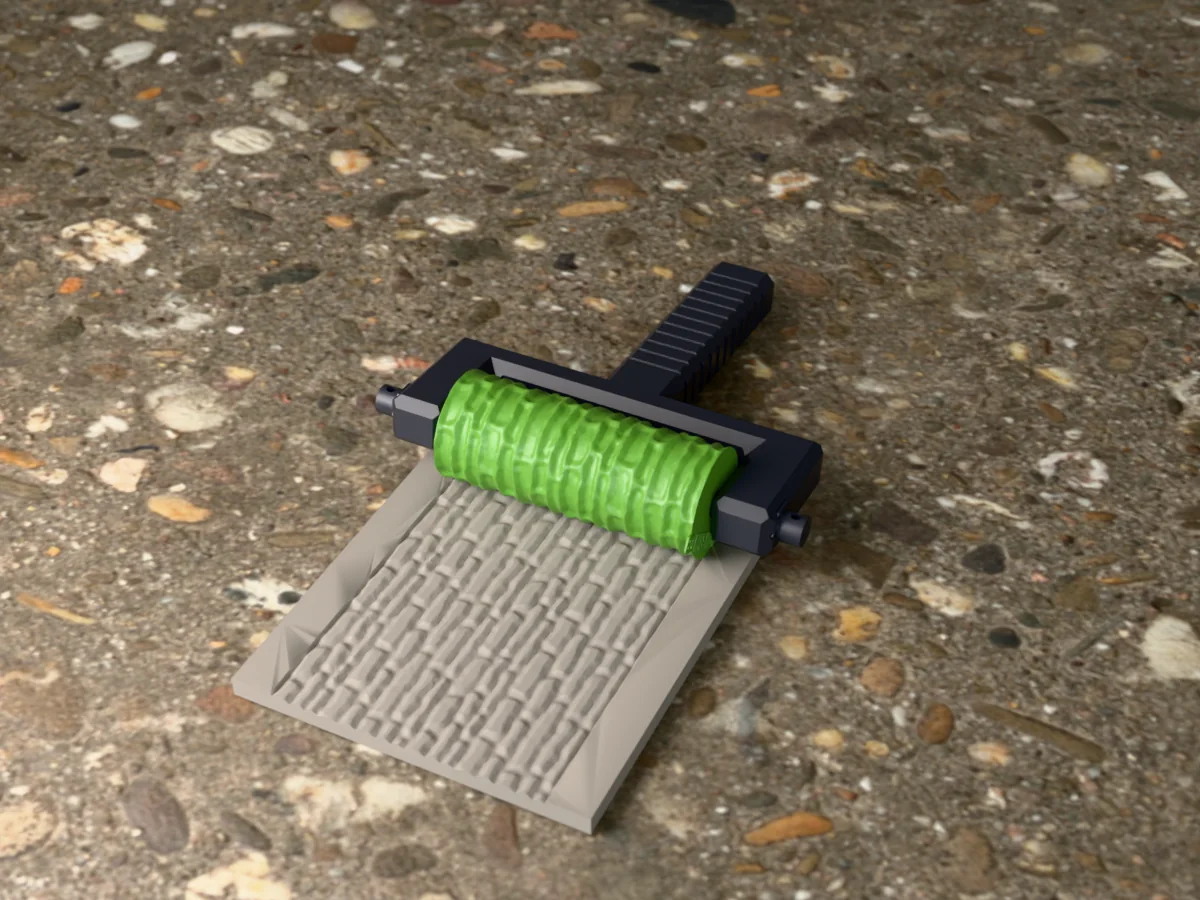
Long, thin field stones stacked without mortar, with tight dark joints. Field walls, sheep pens and farm terrain for wargaming and dioramas.
 Clay
Clay
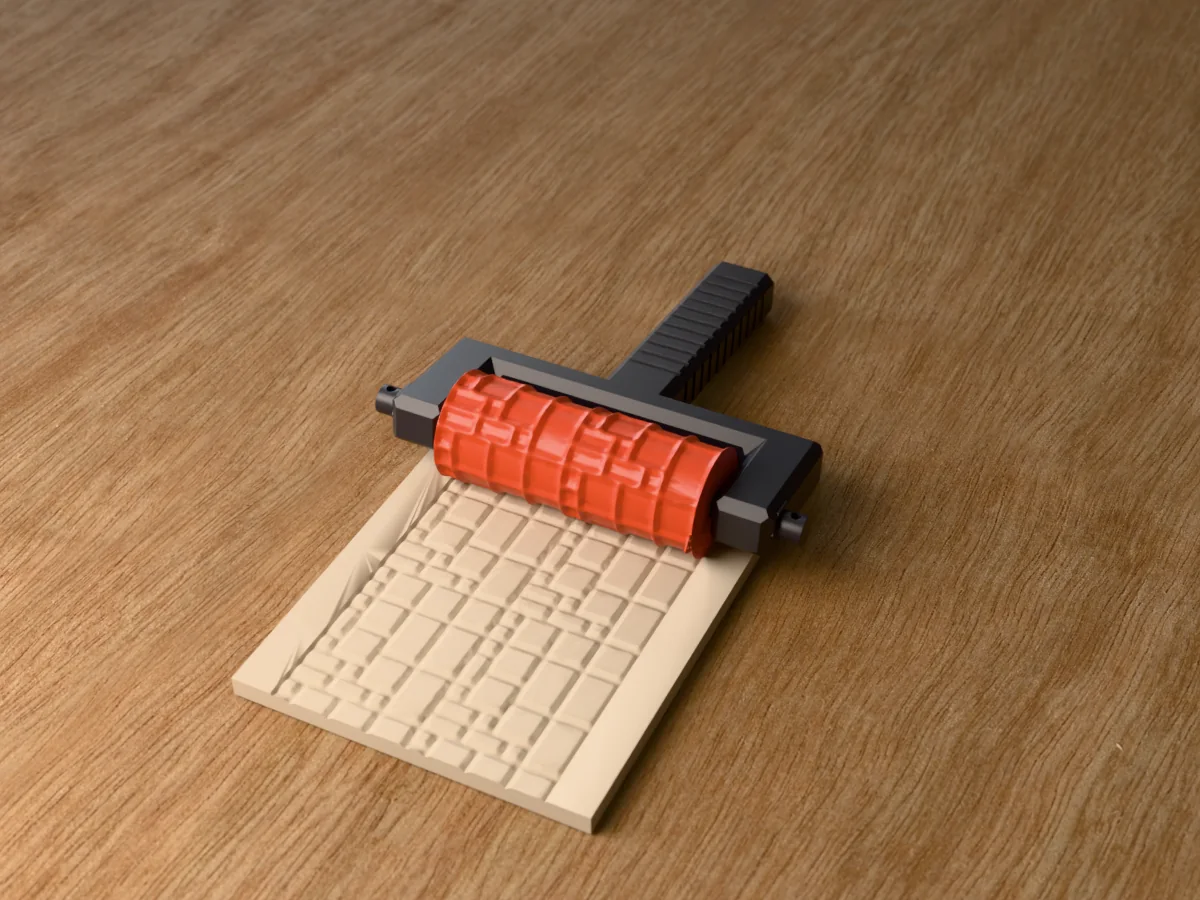
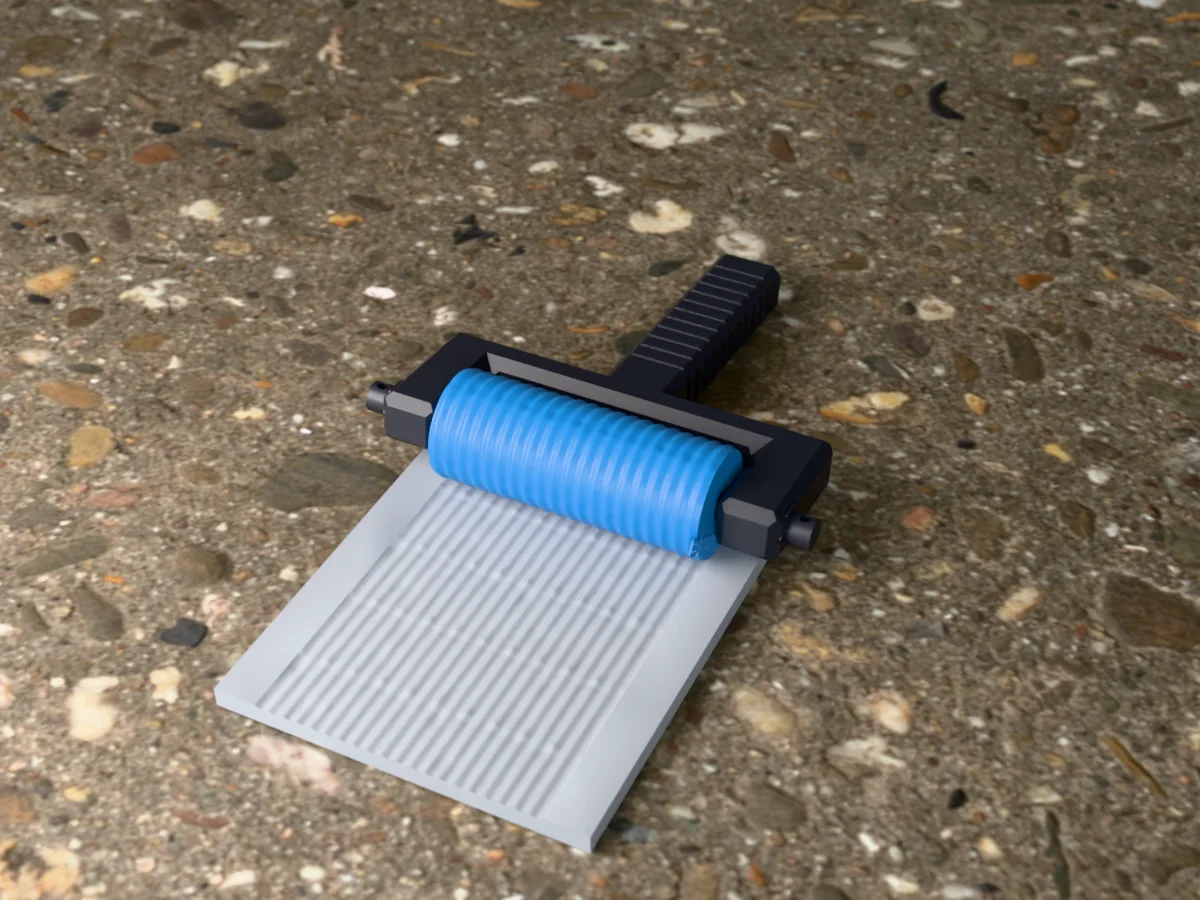
Rectangular slabs of five sizes in the Roman opus laying pattern, with narrow joints. Patios, plazas, temples and courtyards in clay.
 Clay
Clay
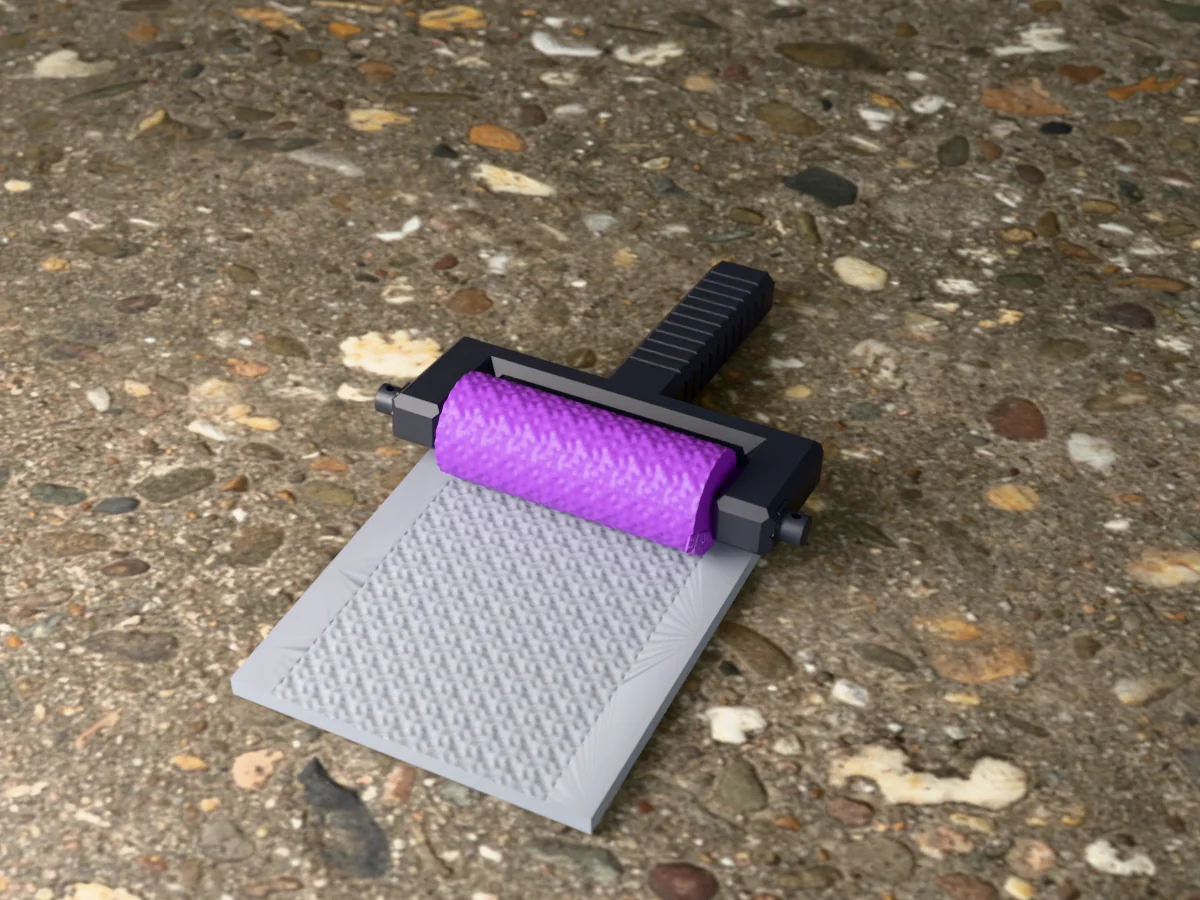
Corrugated roofing sheets with overlapping seams, nail heads and a few dents. Shacks, sheds, barns and post-apocalyptic scrap terrain.
 Clay
Clay
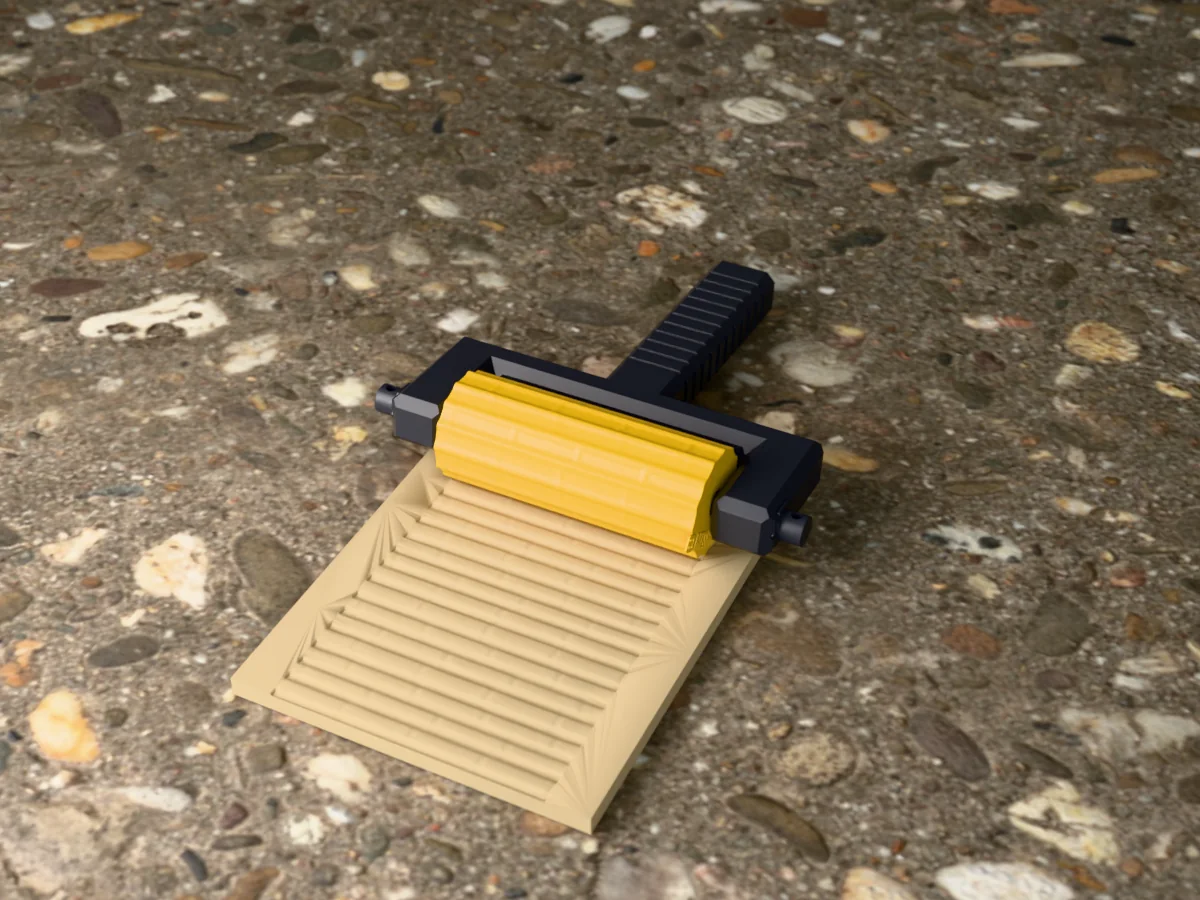
European four-in-one mail: rows of round rings, each through four neighbours. Armour for cosplay props, sculpts, bases and polymer clay.
 Clay
Clay
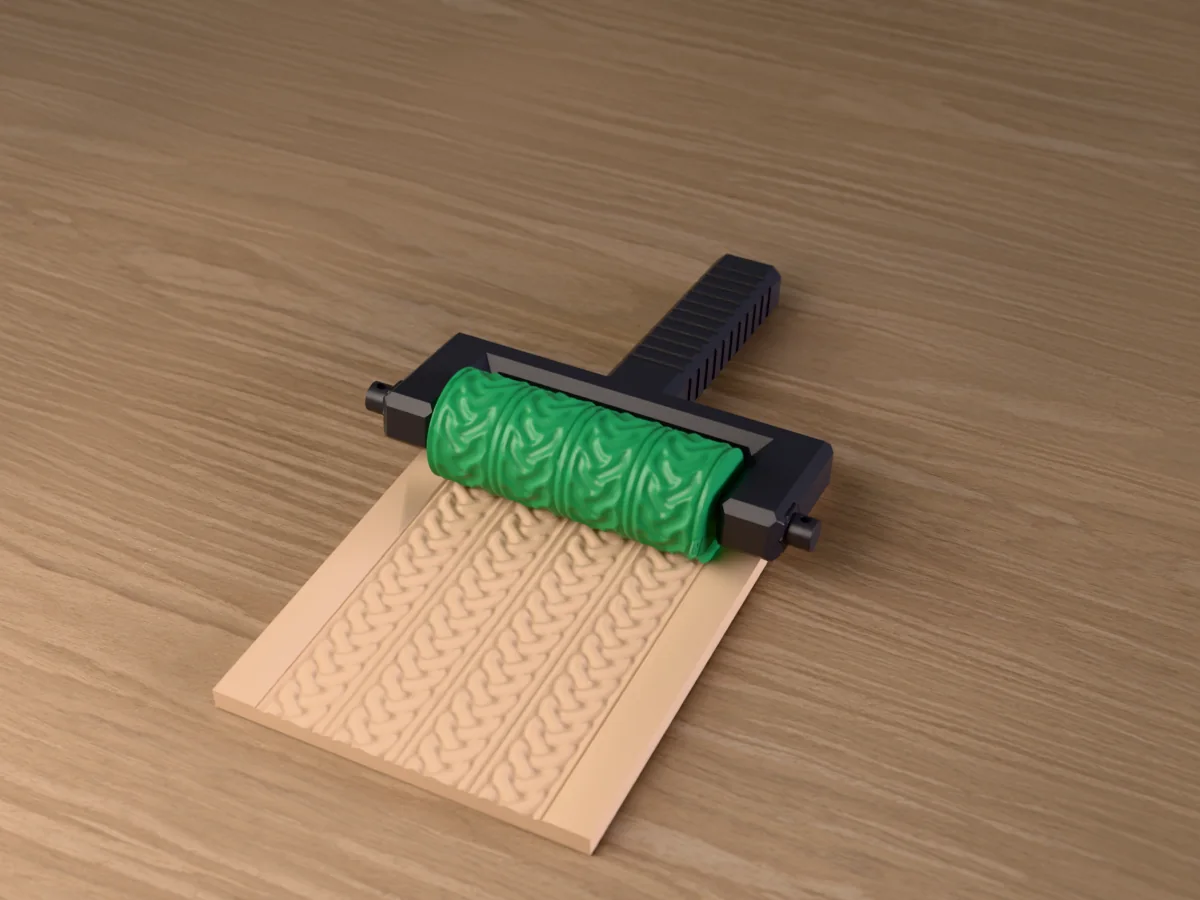
Two bands of Celtic plaitwork per repeat, three strands over and under, between raised borders. For pottery, polymer clay and fondant.
 Clay
Clay
A screen of round bamboo canes side by side, with nodes at staggered heights and fine fibres. Pottery, planters and Asian-style terrain.
 Clay
Clay
Big dressed ashlar blocks with chiselled margins and rough, rock-faced centres. Castle keeps, city walls and fortress towers for tabletop terrain.
 Clay
Clay
A broken rock face of angular blocks and flat, chipped facets. Cliffs, cave walls, rocky outcrops and mountain terrain for tabletop games.