◆ Clay
Matcha bowl slip casting mold
A two-piece plaster mold for slip casting a 116 mm matcha bowl (chawan) with a small foot.
◆ Clay
A two-piece plaster mold for slip casting a 116 mm matcha bowl (chawan) with a small foot.
A tea bowl 116 mm across and 70 mm tall once fired, rising from a small foot in one soft curve to a wide, open mouth. It holds 445 ml to the brim, a generous chawan for whisking matcha, or a cereal and noodle bowl.
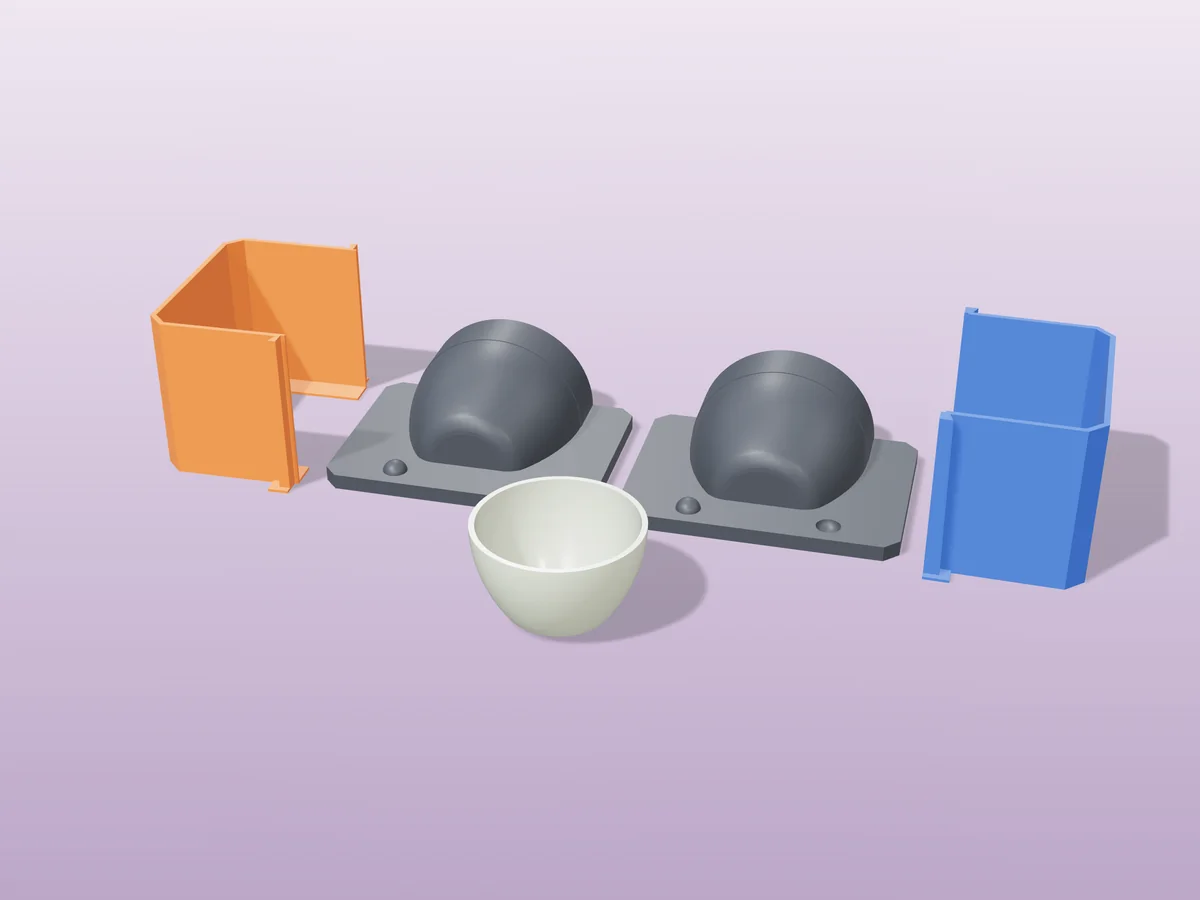
Made with our plaster mold generator: a printed housing per plaster piece, you pour the plaster, and the plaster is the mold. The bowl is turned, so it splits cleanly in two. The mold is open at the rim, poured on the axis the bowl stands on, and the mold is cut 15% oversize for a 13% shrinkage slip.
The zip carries the two bases, one shell and clamp set that fits both, the bowl as its own STL, the tool's print sheet and a recipe file for the generator. The bases are the biggest parts, so check the print sheet against your bed.
Shown as a 3D render of the printed bases and shells with the fired piece in front, not a photo.
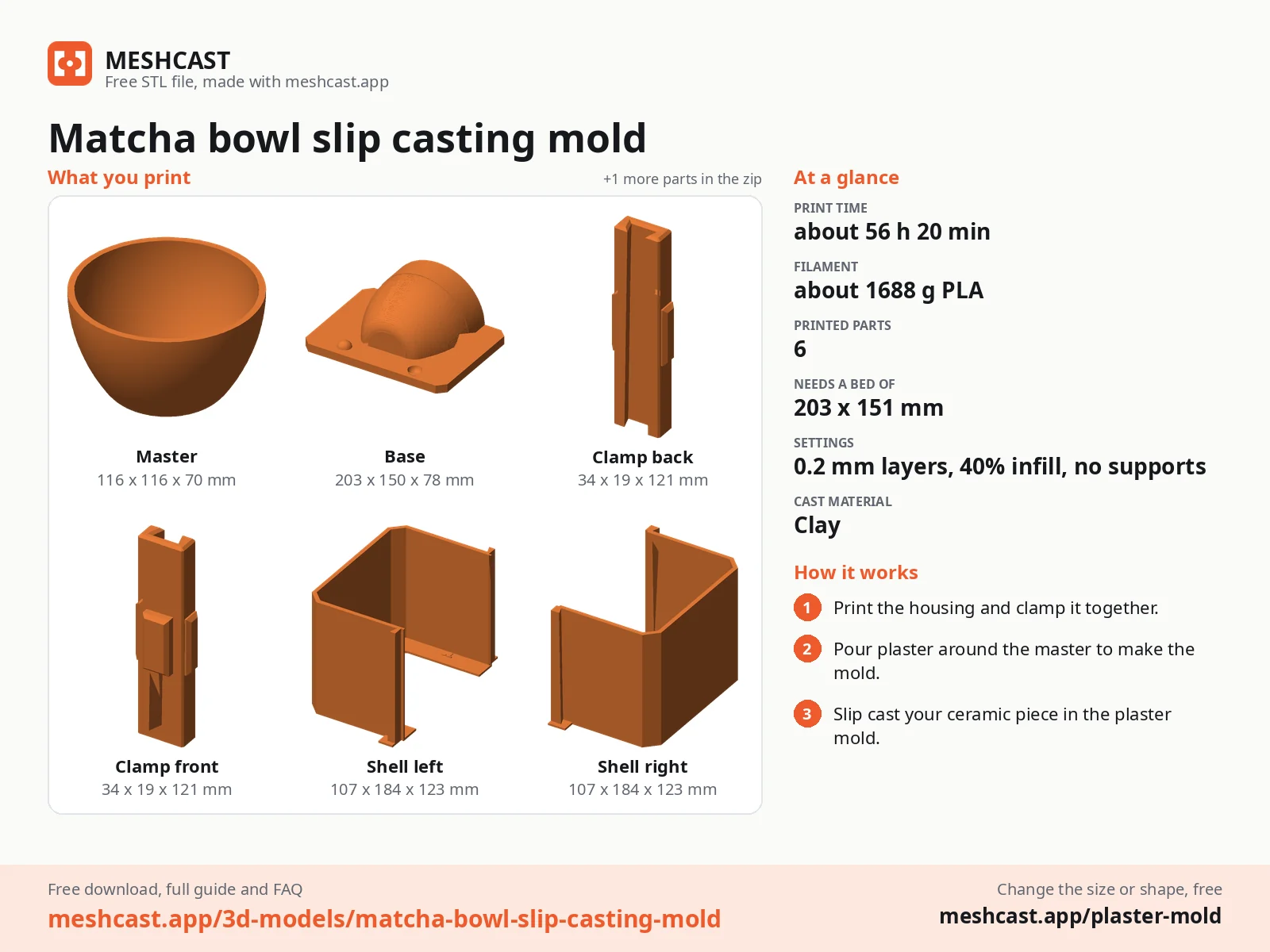
Print the 2 bases and the one set of shells and clamps, no supports. The sheet in the zip asks for 4 or more walls and 40% gyroid, because the shells get clamped.
Stand the two shells round the first base, slide the clamps over the ends, and run a thin bead of petroleum jelly along every seam. Brush mold soap over the printed master slice and the natch sockets so the plaster lets go.
Sift pottery plaster into water (about 100 g of plaster to 70 g of water), let it slake for two minutes, mix for three, then pour it up to the top of the shells and tap the housing to lift the bubbles.
After 30 to 45 minutes, when the plaster is warm and hard, unclamp, lift the shells off and ease the plaster piece off the base. Move the same shells and clamps to the next base and pour again.
Let the plaster pieces dry for about a week somewhere warm and airy, until they feel light and no longer cool to the touch. A damp mold barely takes water out of the slip.
Band the 2 pieces together with the natches seated, stand the mold mouth up and fill it to the rim with slip. Top it up as the level drops.
When the wall is 3 to 4 mm thick (usually 10 to 20 minutes, check at the rim), pour the slip back out and leave the mold upside down to drain.
Once the cast loses its shine and pulls away from the plaster, trim the rim, open the mold and lift the piece out. Dry it slowly to bone dry, then bisque and glaze fire.
Print details
| Cast material | Clay |
|---|---|
| Printed parts | 6 |
| Size (W x D x H) | 214 x 185 x 123 mm |
| Print bed needed | 203 x 151 mm, 123 mm tall |
| Filament | ~1688 g |
| Layer height | 0.2 mm |
| Infill | 40% |
| Supports | Not needed |
| Download | ZIP: 2 bases + one shell and clamp set (6 printed parts, STL) + bowl master (STL) + print sheet + recipe |
| Added | 2026-09-25 |
Made with the free Plaster slip-cast mold generator. Upload your own model and get the same kind of mold built around it, in your browser.
Free download. Opens the Thingiverse listing in a new tab.
Free for personal use. Selling the pieces you cast needs a commercial licence (Pro or Founder); passing on the file itself is not permitted on any plan. Full terms.
New to casting? Read the plaster mold guide.
Keep the wall even, 4 mm is a good target, dry it slowly with the rim covered for the first day, and fire it standing on its foot. A wide, thin bowl dried fast at the rim goes oval; one dried evenly stays round.
It does not: it pours through the mouth, with the bowl standing on its foot, which is the tool's default pour axis. The generator's docs warn that its Auto axis would lay a bowl on its side, because the bowl is wider than it is tall, so these files were made on the standing axis.
Yes. Let the bowl reach leather hard, turn it over on a padded bat and trim a foot ring into the small foot with a loop tool, the way you would a thrown bowl. The cast wall is thicker at the foot, which gives you something to trim into.
 Clay
Clay
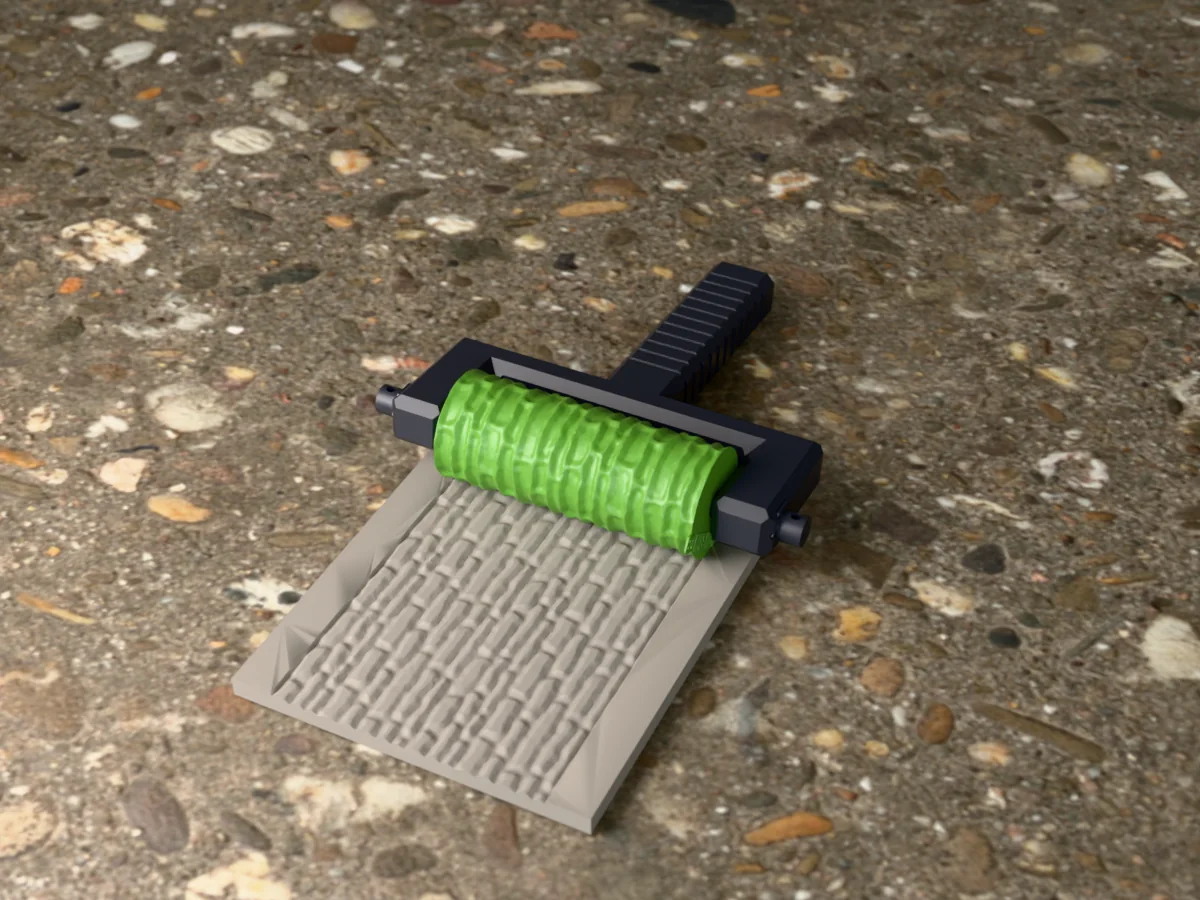
Long, thin field stones stacked without mortar, with tight dark joints. Field walls, sheep pens and farm terrain for wargaming and dioramas.
 Clay
Clay
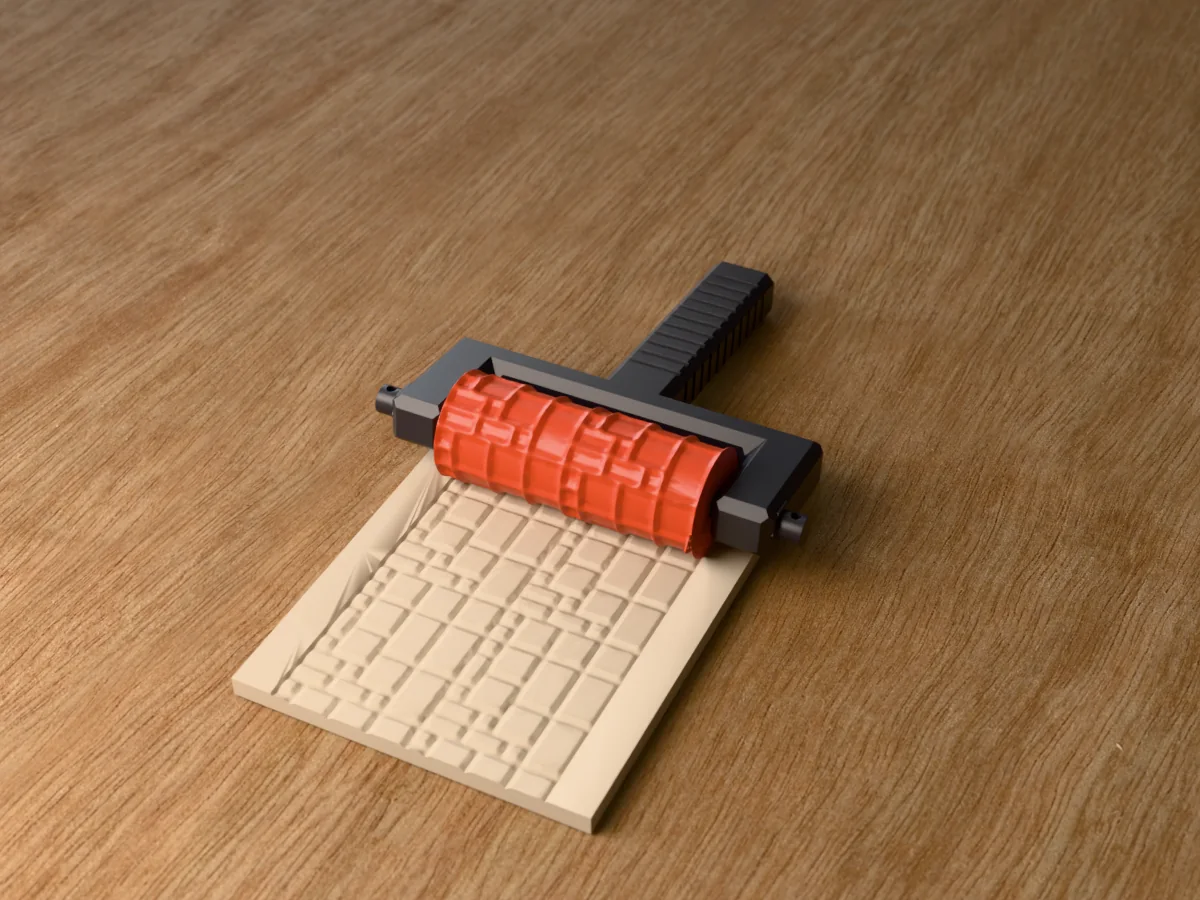
Rectangular slabs of five sizes in the Roman opus laying pattern, with narrow joints. Patios, plazas, temples and courtyards in clay.
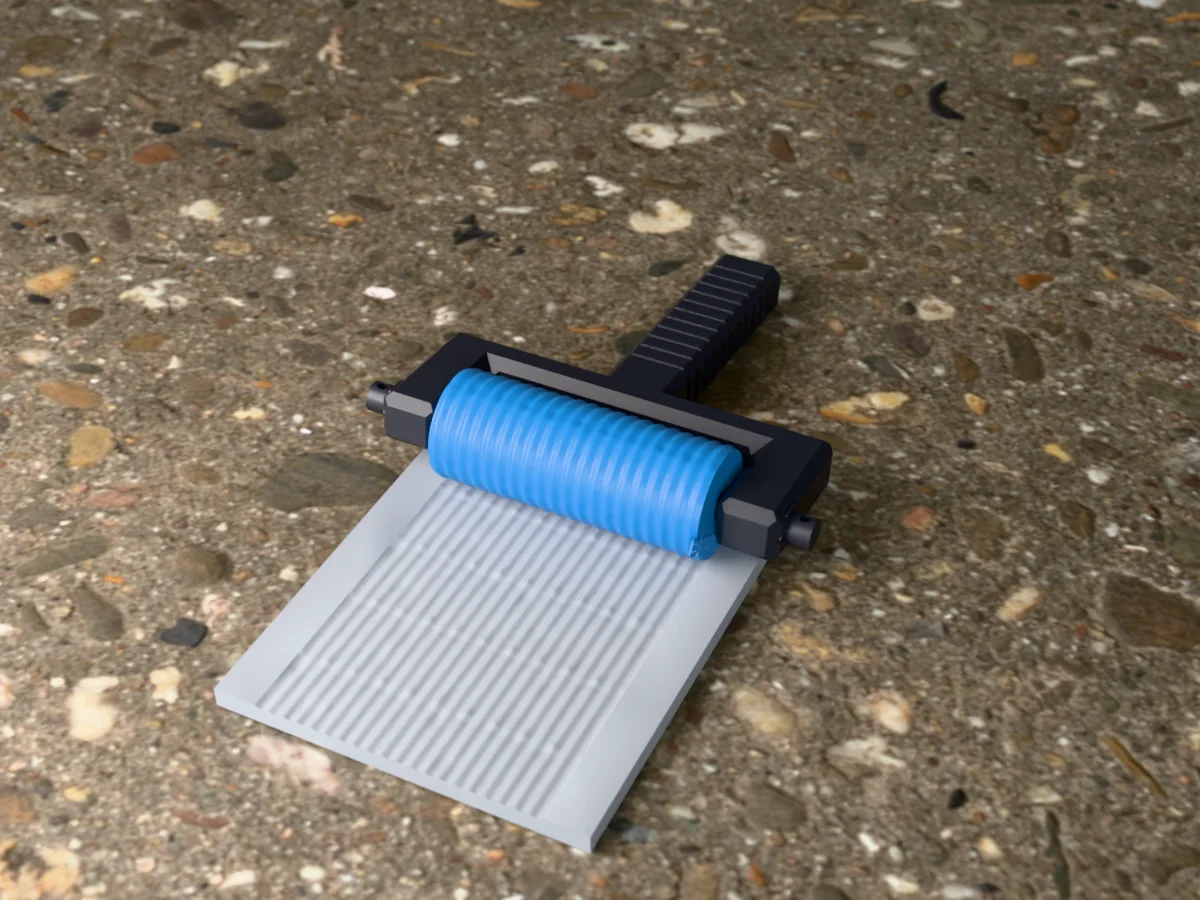 Clay
Clay
Corrugated roofing sheets with overlapping seams, nail heads and a few dents. Shacks, sheds, barns and post-apocalyptic scrap terrain.
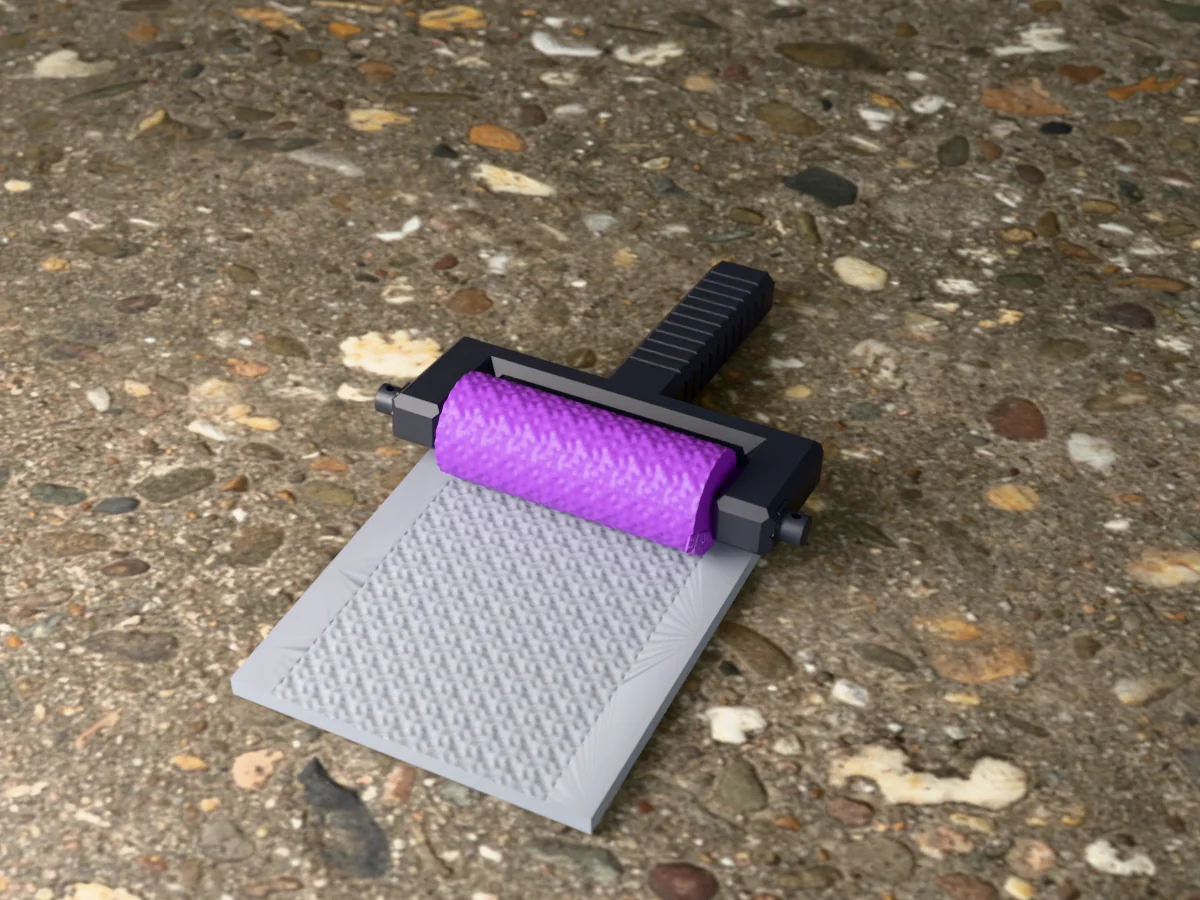 Clay
Clay
European four-in-one mail: rows of round rings, each through four neighbours. Armour for cosplay props, sculpts, bases and polymer clay.
 Clay
Clay
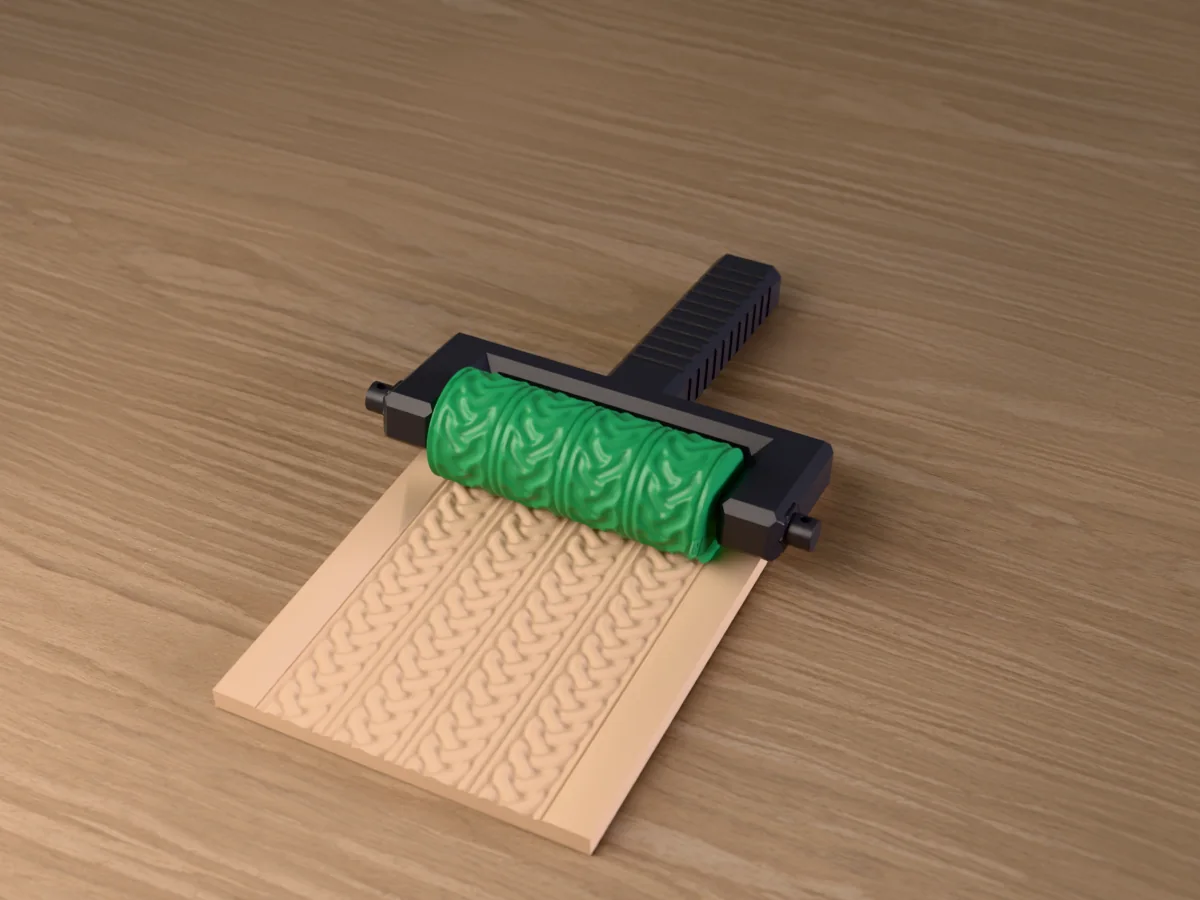
Two bands of Celtic plaitwork per repeat, three strands over and under, between raised borders. For pottery, polymer clay and fondant.
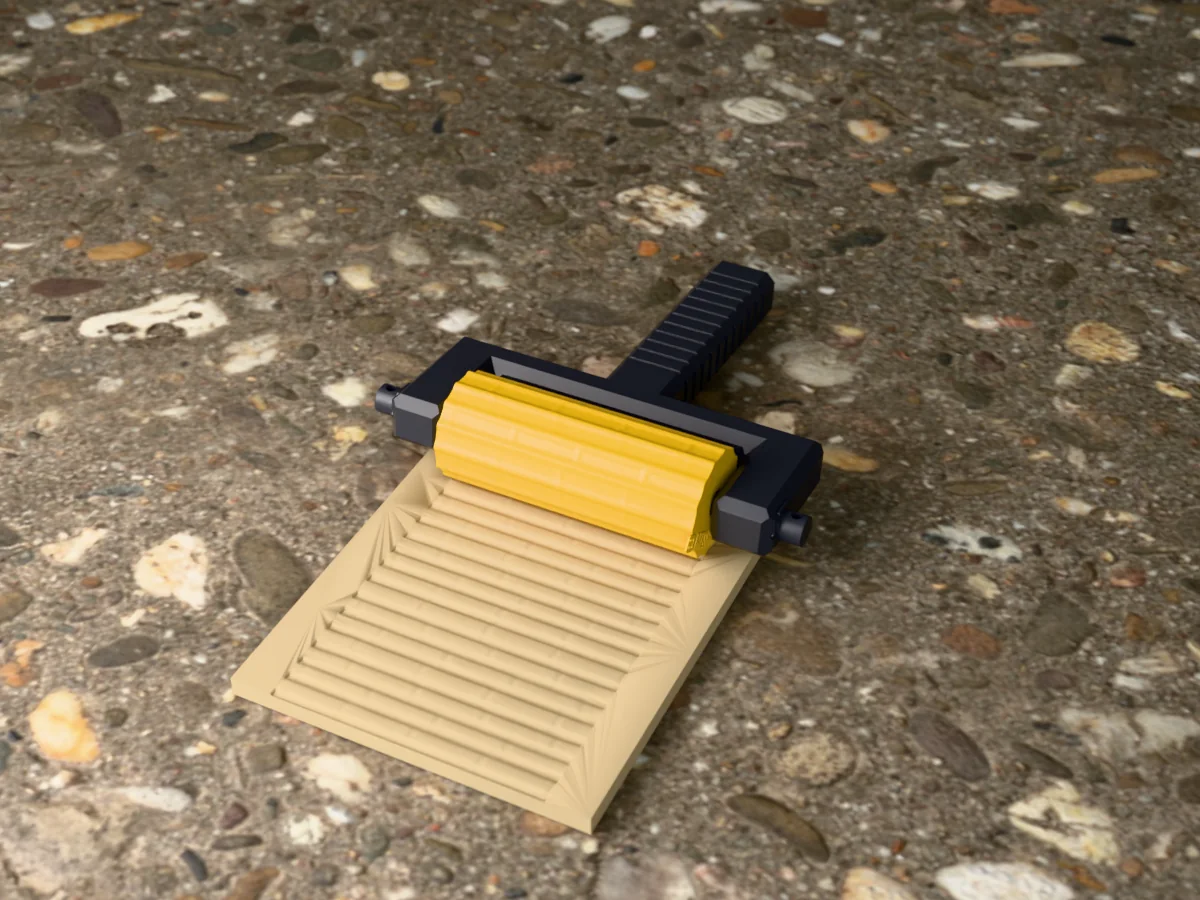 Clay
Clay
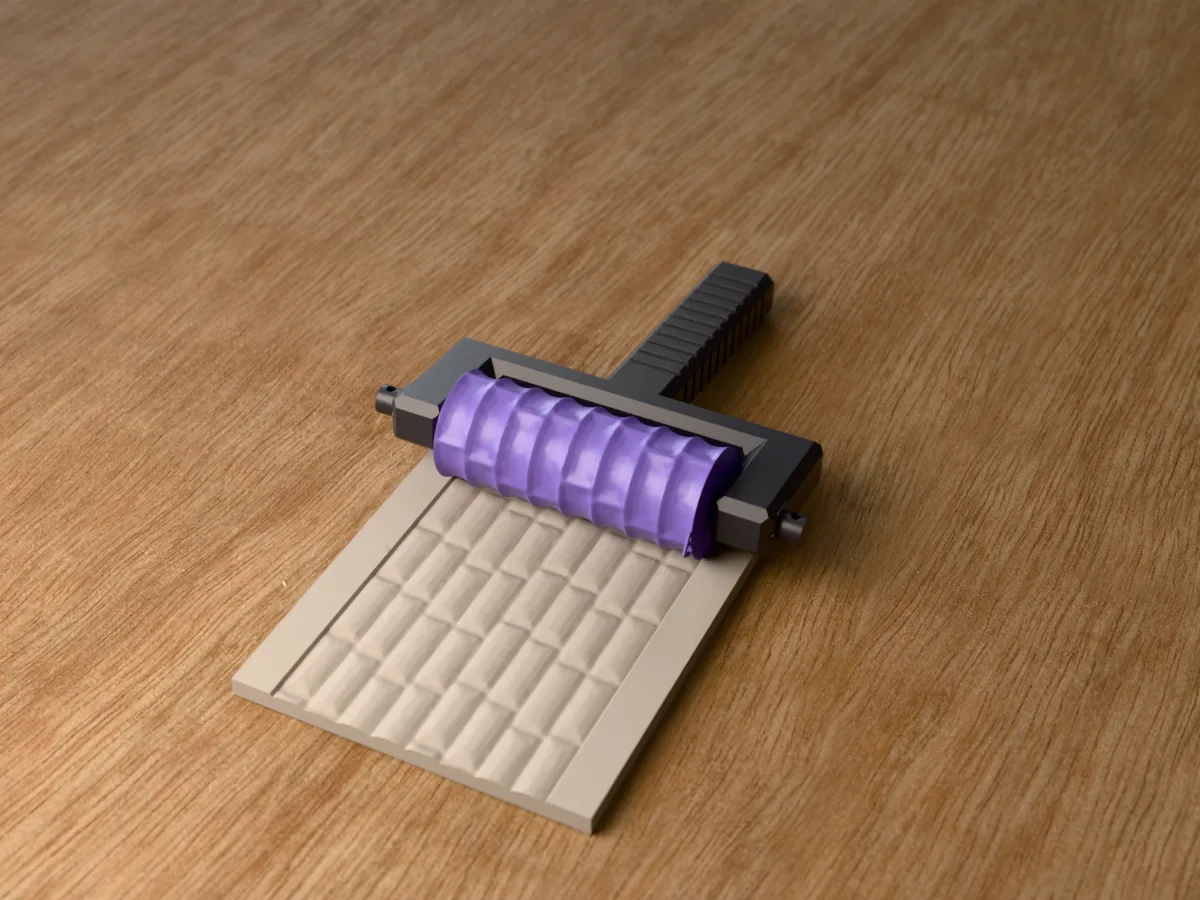
A screen of round bamboo canes side by side, with nodes at staggered heights and fine fibres. Pottery, planters and Asian-style terrain.
 Clay
Clay
Big dressed ashlar blocks with chiselled margins and rough, rock-faced centres. Castle keeps, city walls and fortress towers for tabletop terrain.
 Clay
Clay
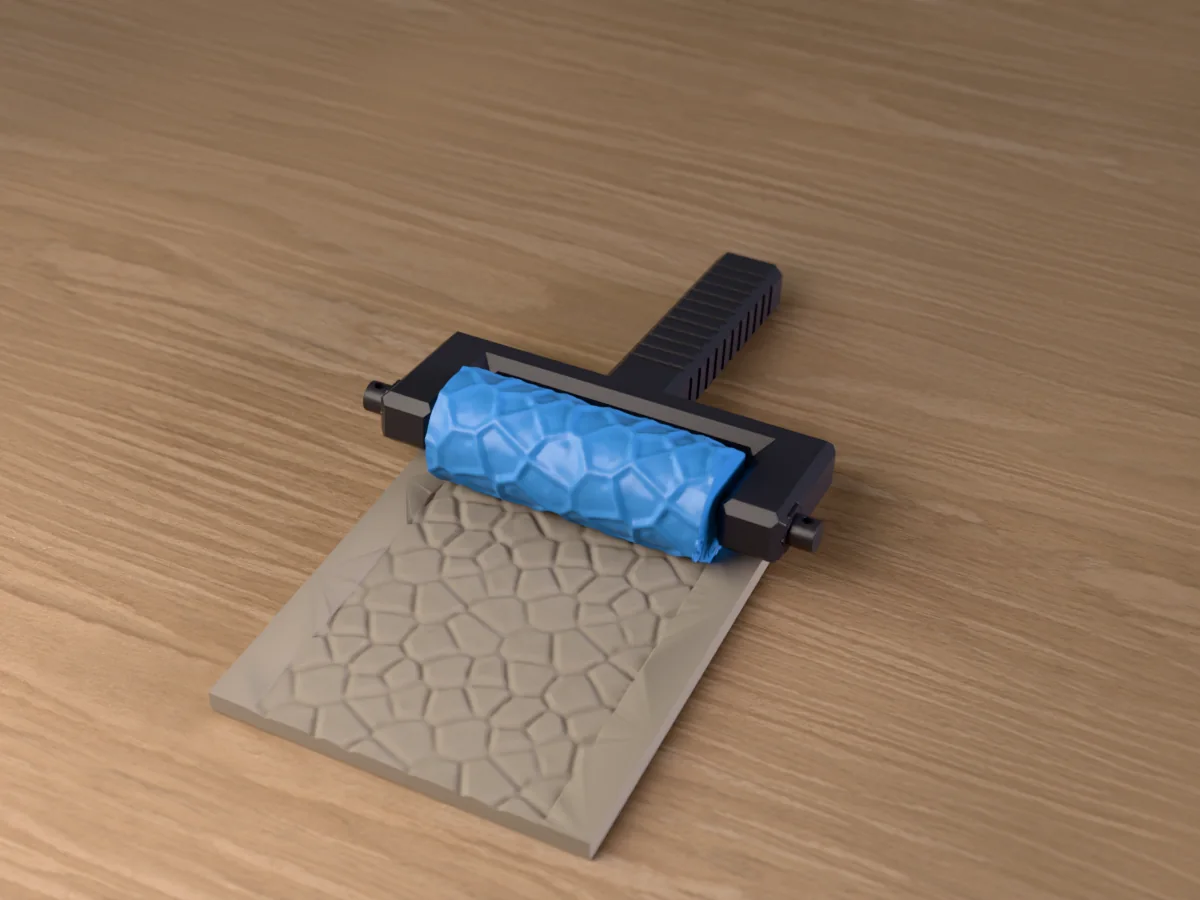
A broken rock face of angular blocks and flat, chipped facets. Cliffs, cave walls, rocky outcrops and mountain terrain for tabletop games.