◆ Clay
Texture roller for clay
One handle, swappable pattern rollers. Print more patterns any time.
Want your own version? Make it free in our texture roller tool. A free account gives you free downloads every week.
◆ Clay
One handle, swappable pattern rollers. Print more patterns any time.
Want your own version? Make it free in our texture roller tool. A free account gives you free downloads every week.
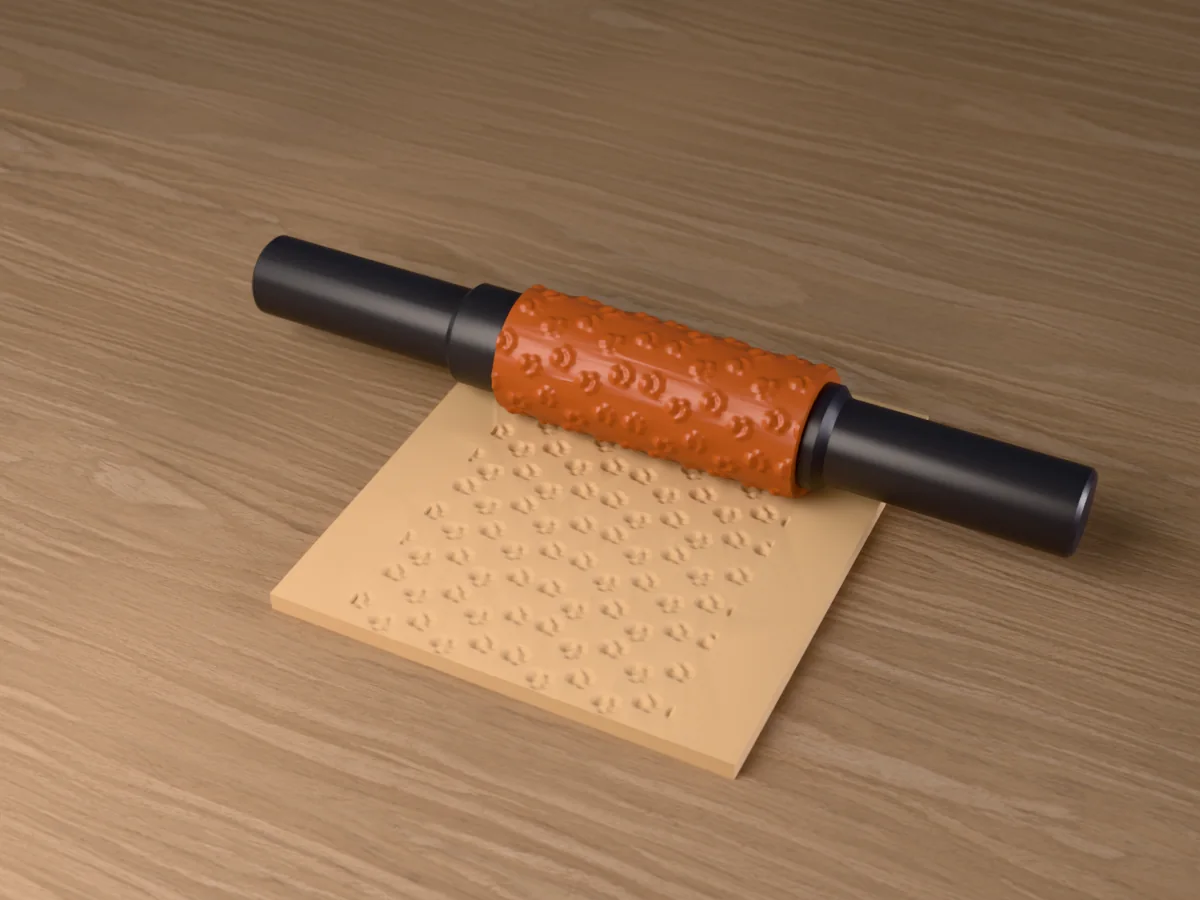
A texture roller for clay with a swappable roller sleeve. Print the handle once, then print as many pattern rollers as you want and swap them in seconds.
It works on polymer clay, air dry clay, ceramic clay, fondant and soft leather. Roll once with even pressure and the pattern presses straight in.
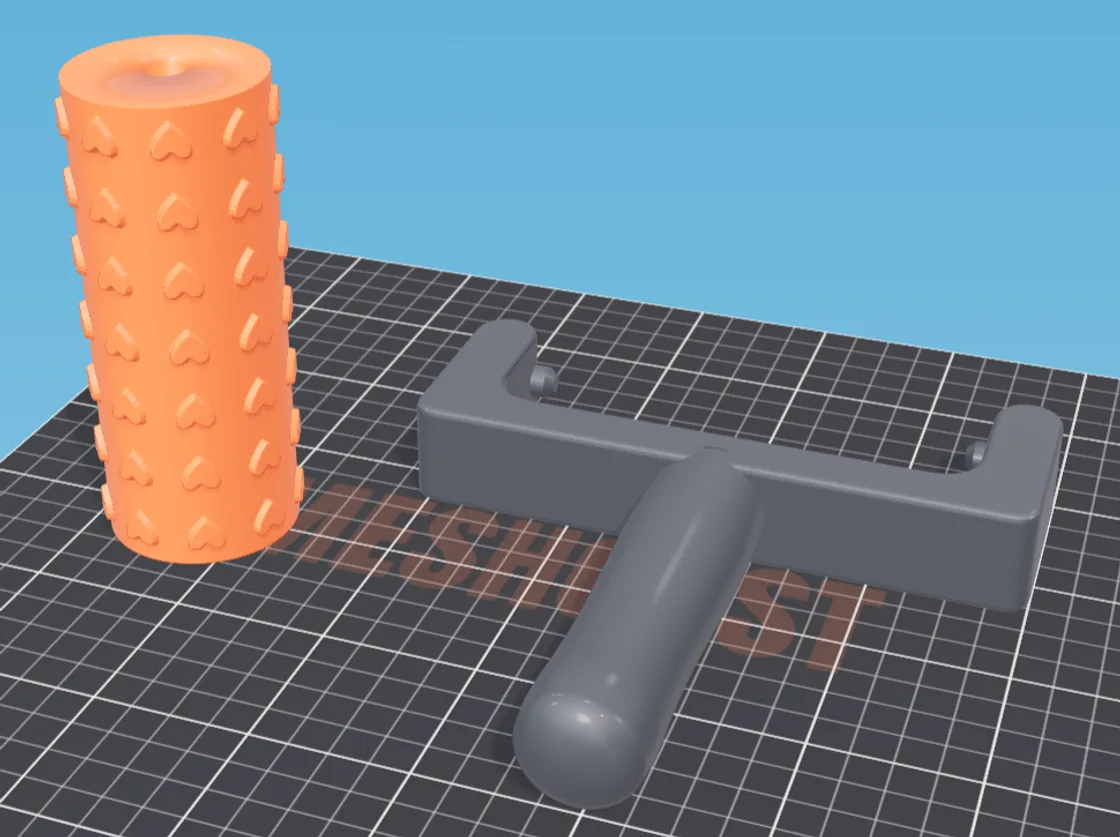
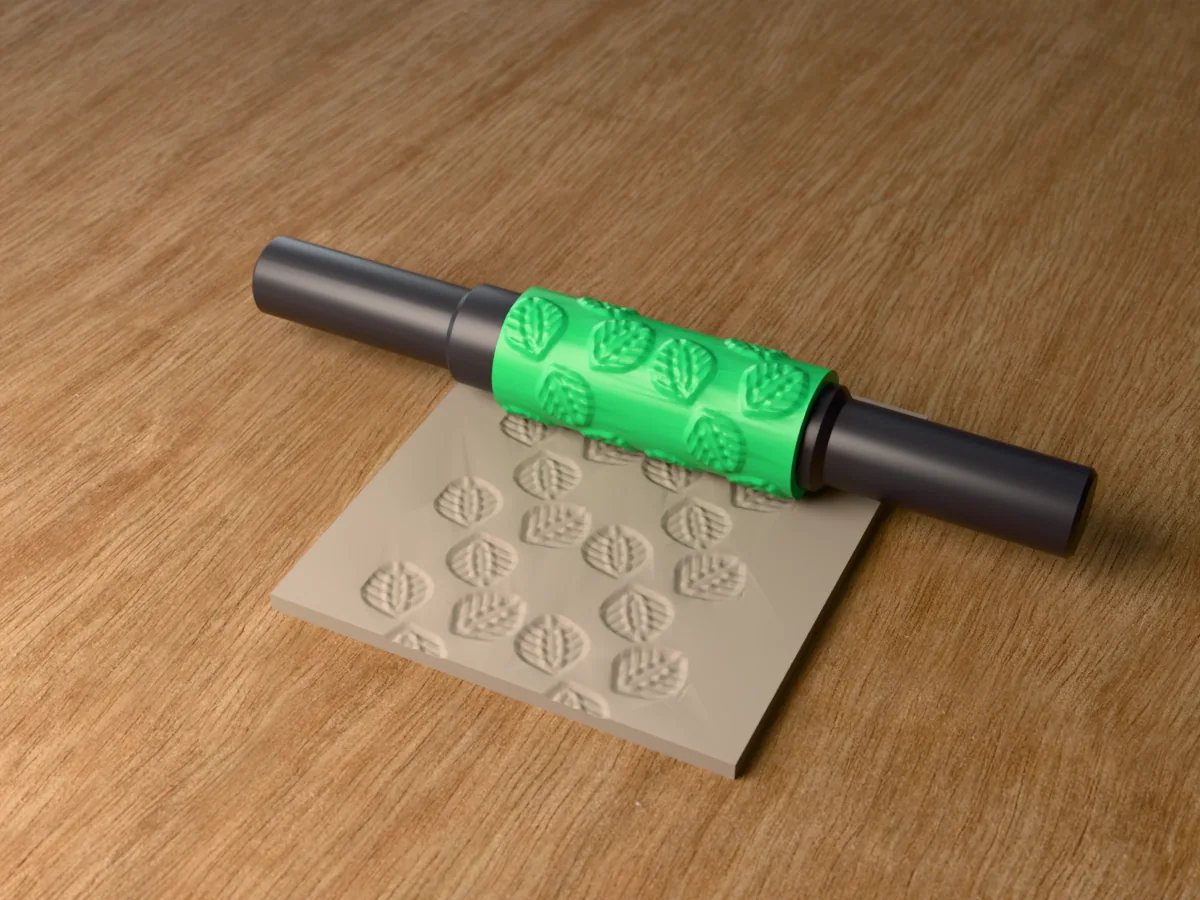
The download includes the fork handle with its T grip, the retaining pin, and a heart roller to start with: the texture roller tool's own defaults, 30 mm across and 80 mm long with the hearts raised 1.2 mm. Slide a roller into the fork, push the pin through, flatten your clay to an even thickness, then roll across in one direction with steady pressure. Do not go back and forth. Pull the pin to swap patterns.
Dust the roller with a little cornstarch if sticky clay is grabbing it. For polymer clay, a cold roller straight out of the drawer releases cleaner than a warm one.
Shown as a 3D render of the printed handle, pins and heart roller on the clay it pressed, not a photo.
Slide a pattern roller into the fork and push the retaining pin through.
Flatten your clay to an even thickness. Uneven clay gives an uneven impression, and no amount of pressure fixes it.
Roll across in one direction with steady pressure. Do not go back and forth, that double-strikes the pattern and blurs it.
Pull the pin to swap to a different roller.
Print details
| Works with | Clay |
|---|---|
| Printed parts | 4 |
| Layer height | 0.2 mm |
| Infill | 15% |
| Supports | Not needed |
| Added | 2026-07-27 |
Made with the free Texture roller generator. Upload your own shape and get the same kind of tool built from it, in your browser.
Free download. Opens the MakerWorld listing.
Free for personal use. Selling the printed piece itself needs a commercial licence (Pro or Founder); passing on the file is not permitted on any plan. Full terms.
New to this? Read the texture roller guide.
Almost always from rolling back and forth. The second pass lands a fraction off the first and smears the edges of every impression. One pass, one direction, steady pressure, then lift.
Dust the roller with a little cornstarch. For polymer clay specifically, a cold roller straight out of a drawer or the fridge releases far more cleanly than one that has been warmed by your hands.
Yes, that is the point of the swappable sleeve. Any roller with the same bore and length drops into the same fork, so you print the handle once and add patterns forever without reprinting the grip or the pin.
Print them standing up rather than lying down. A vertical roller keeps the pattern crisp all the way around, because the layer lines run across the pattern instead of along it. The handle prints flat.
It presses fondant well, but an FDM print is not a food-safe surface: the layer lines hold residue that cannot be scrubbed out. For anything you will eat, wrap the clay in cling film before rolling, or seal the roller with a food-safe coating.
 Clay
Clay
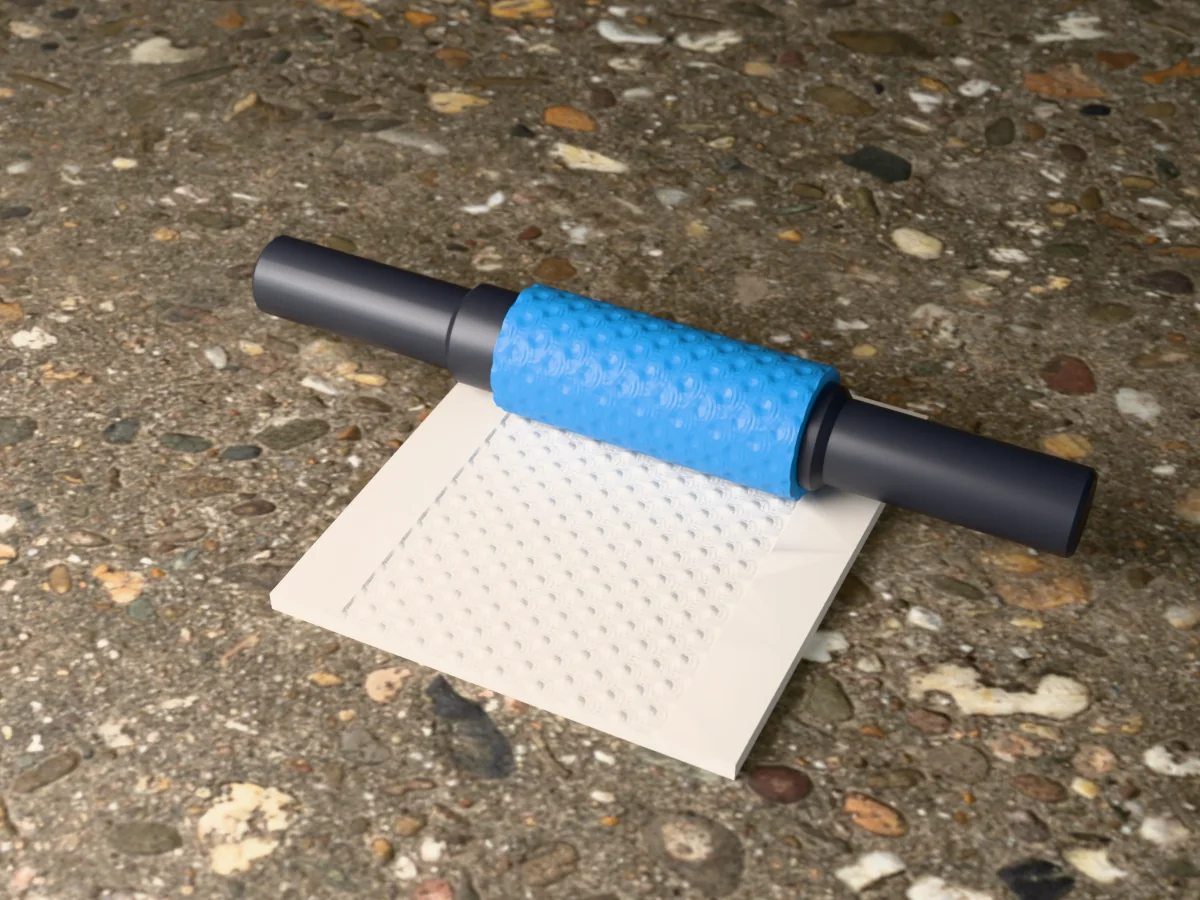
The Japanese blue sea wave, seigaiha, for pottery and clay crafts. Rows of overlapping fans of concentric arcs.
 Clay
Clay
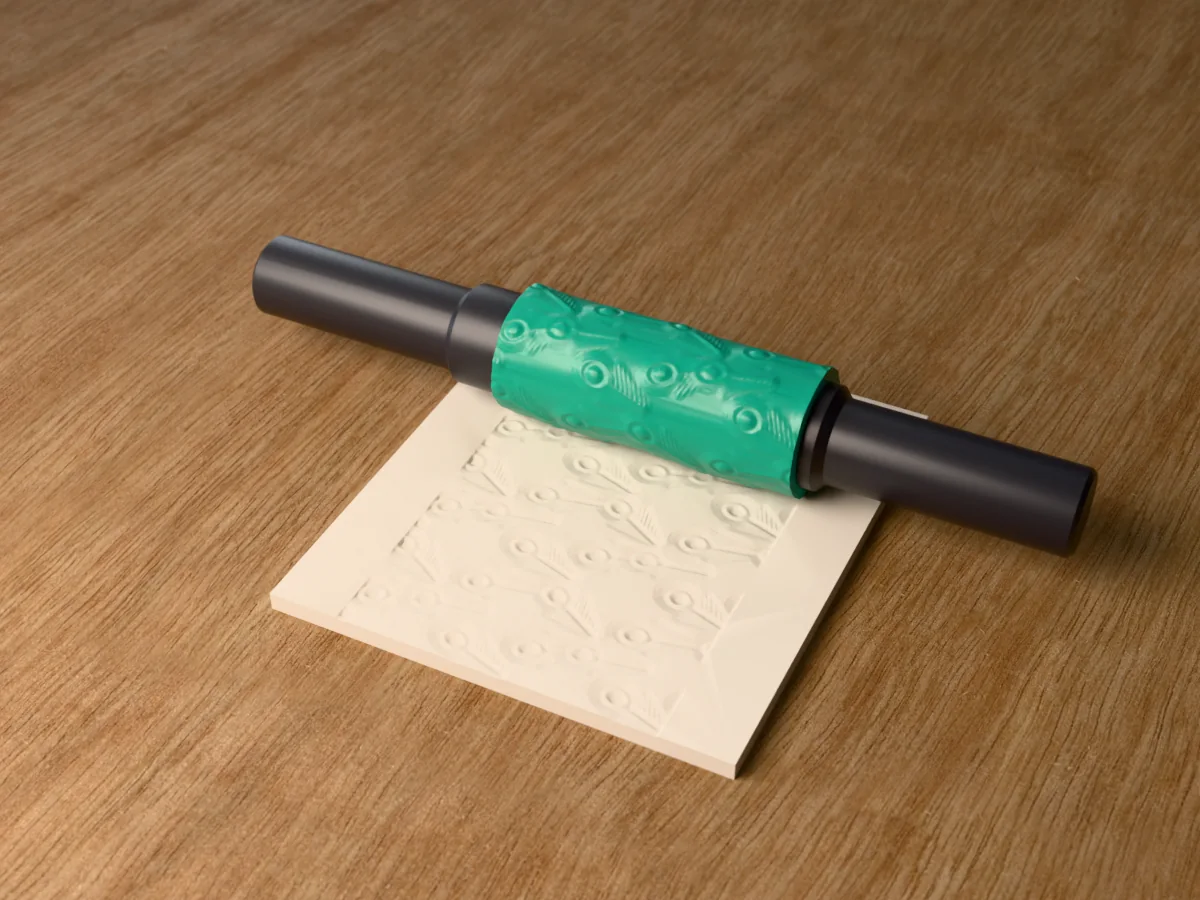
Drifting peacock eye feathers for polymer clay and pottery. An eye of rings at each tip and fine barbs along the shaft.
 Clay
Clay
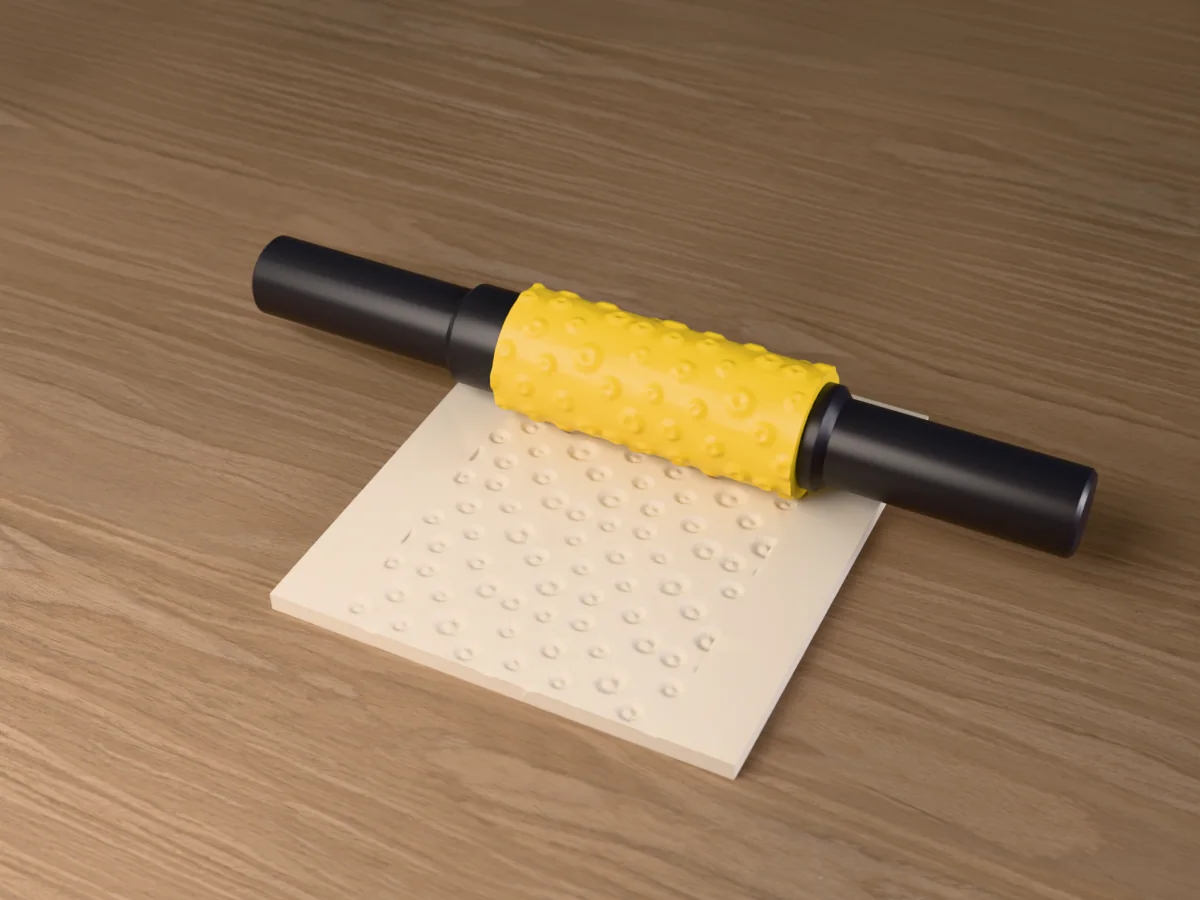
A field of little daisies for polymer clay, pottery and fondant. Long petals around a domed centre, in three sizes.
 Clay
Clay
Big split monstera leaves for planters, mugs and boho clay. Slots cut in from the edge and holes along the midrib.
 Clay
Clay
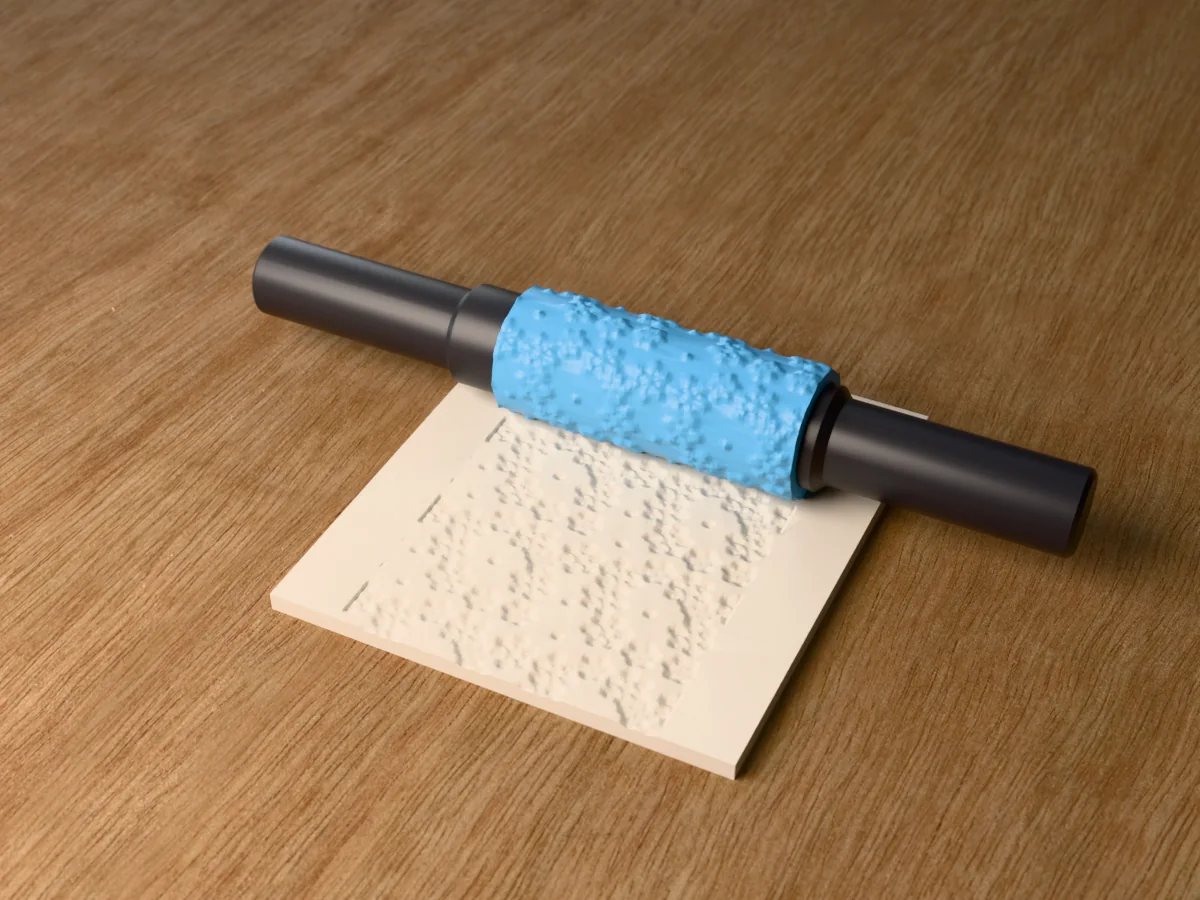
Six-armed snowflakes of three sizes for Christmas ornaments and winter pottery. Branched arms and a flurry of small flakes.
 Clay
Clay
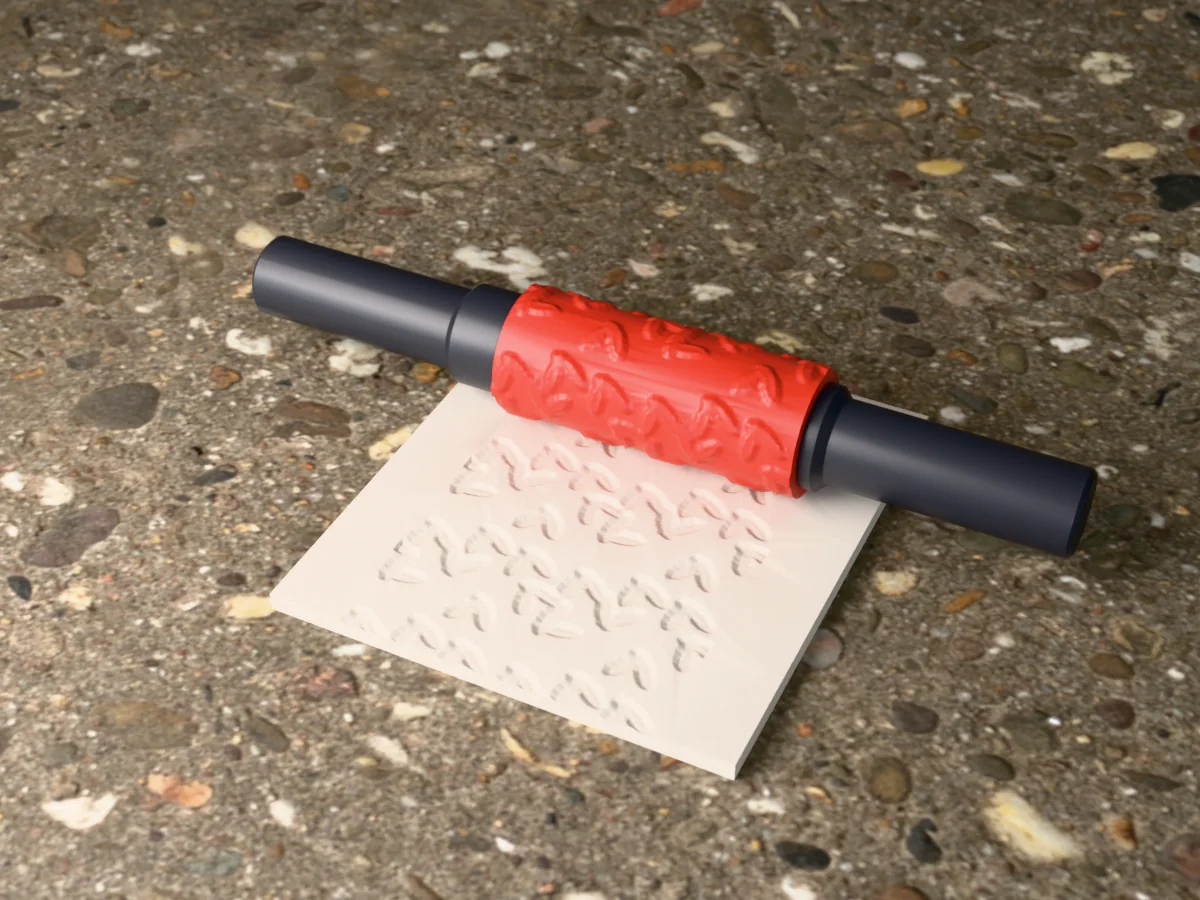
Sprigs of spiky holly with clusters of berries for Christmas clay and pottery. Pairs of leaves, three berries each.
 Clay
Clay
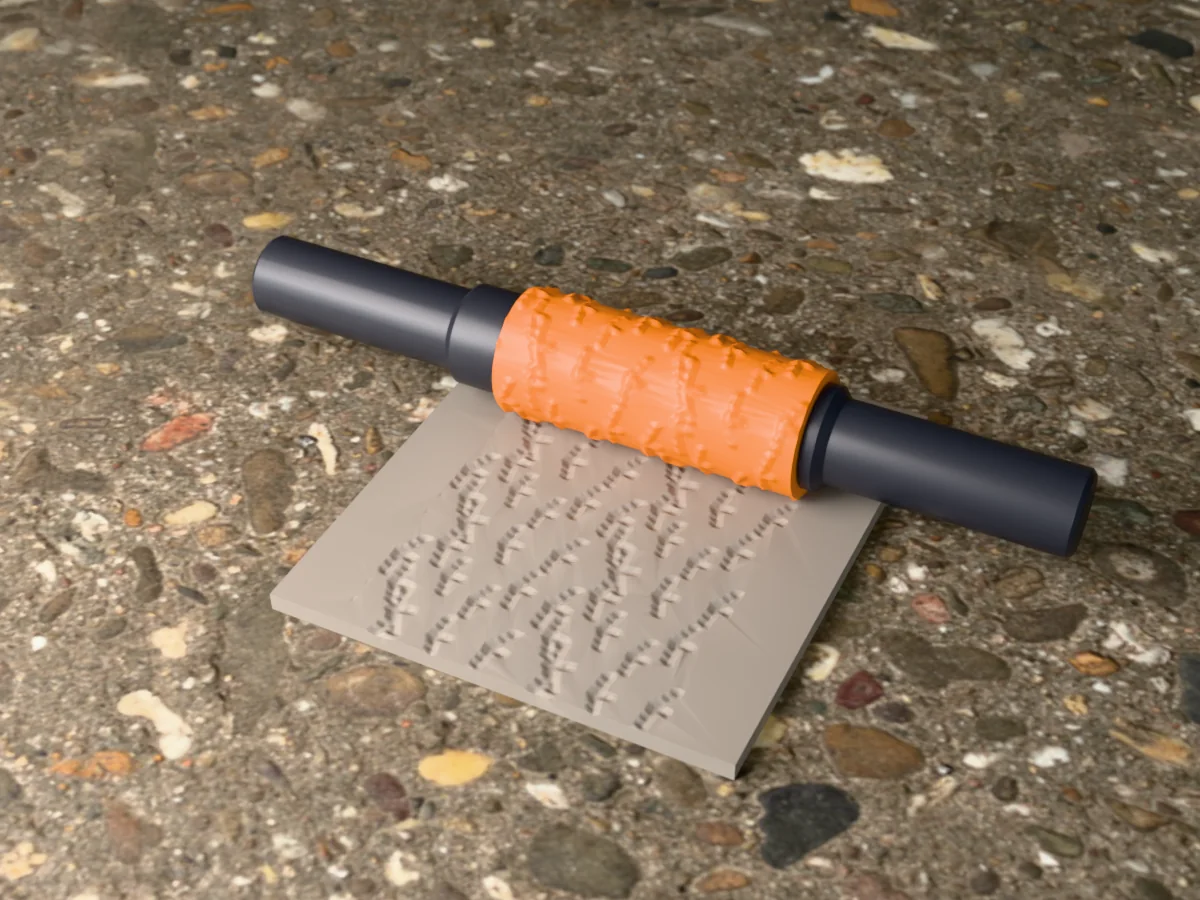
Flying bats with scalloped wings and crescent moons for Halloween clay and pottery. A spooky flock, every bat at its own tilt.
 Clay
Clay
Trails of dog paw prints for pet lovers. A pad and four toe beans per print, walking across the clay.