◆ Resin
Chess knight mold
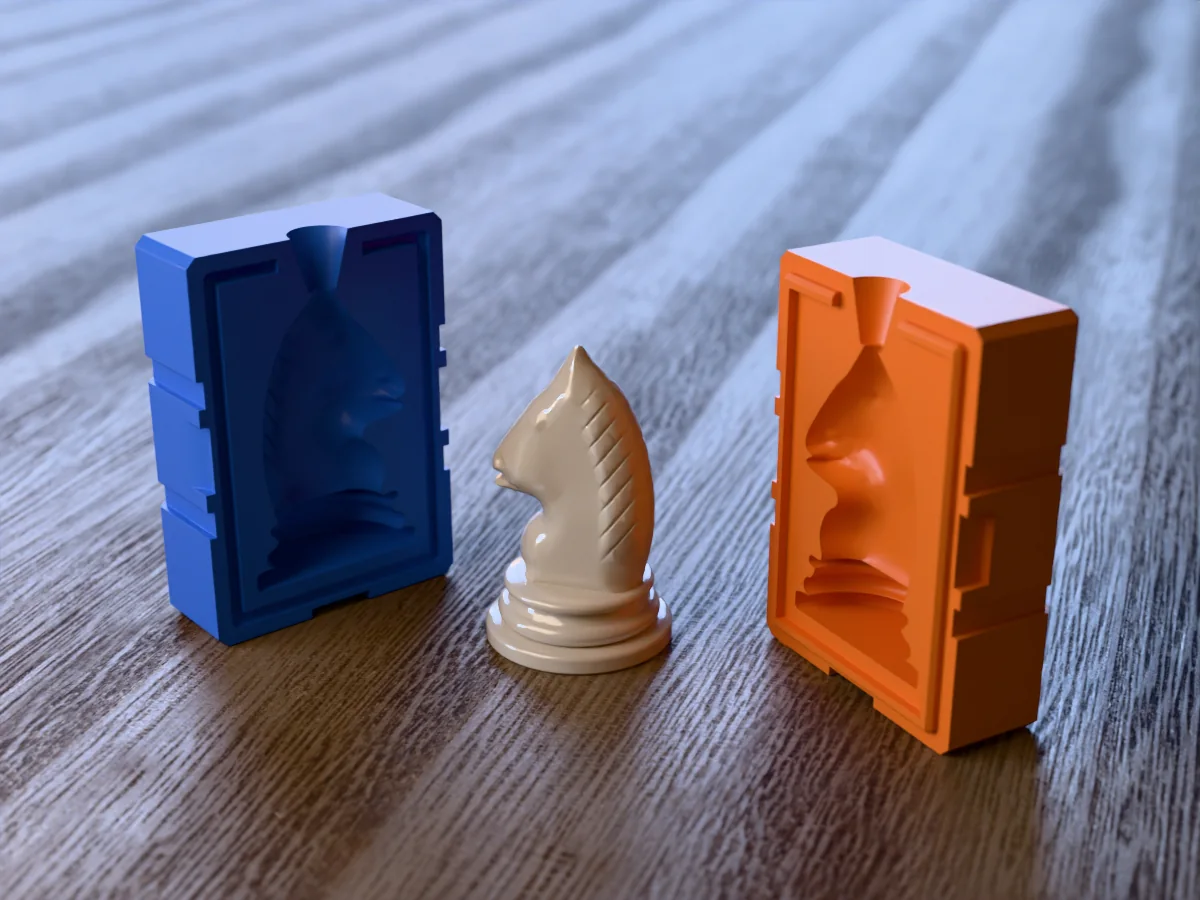
A 62 mm Staunton chess knight, its horse head drawn along the seam of a rigid two-part print. Cast it in resin, no silicone.
◆ Resin
A 62 mm Staunton chess knight, its horse head drawn along the seam of a rigid two-part print. Cast it in resin, no silicone.
A Staunton knight, 62 mm tall on a 38 mm foot: the rook's turned foot and collar under a horse's head and arched neck, with the ear pricked, the mane cut into strands, an eye, a nostril and the line of the mouth. It is drawn to stand with the rest of the chess set from this library.
The knight is the piece a rigid mold usually cannot make, because a horse's head is not turned. This one is drawn with its profile in the seam plane: each rigid half takes one side of the head, and every detail is a shallow height above that plane, so the tool's own seam check finds nothing stuck. The mold is exactly what our two-part candle mold generator builds for it, set to resin, with the pour funnel on the tip of the ear, the knight's one high point.
A chess set needs four knights, two of each colour: print the mold once and cast them in black and ivory resin. The zip carries both halves, the knight master as its own STL, the tool's own print-settings sheet and a recipe file for the generator.
Shown as a 3D render of the printed mold halves pulled apart around the knight they cast, not a photo.
Print both halves as exported. Clamp-strength settings: 4 walls, 40% gyroid infill, no supports. Sand the seam faces flat if your first layer came out rough.
Coat both cavities with mold release, working it into the mane and the mouth. Close the halves and band them along the whole seam.
Mix a low-viscosity resin and pour it slowly into the funnel on the ear, a thin stream down one side, so the air can leave up the other side and through the vent.
Tap the closed mold on the table for a minute to lift any bubble out of the muzzle, then leave it to cure fully, as long as the resin's datasheet says.
Open the halves at the pry pockets, cut the sprue off the ear, round the tip with a file and fine paper, and trim the thin line along the seam. Release again and cast the next knight.
Print details
| Cast material | Resin |
|---|---|
| Printed parts | 2 |
| Size (W x D x H) | 48 x 57 x 81 mm |
| Print bed needed | 57 x 25 mm, 81 mm tall |
| Filament | ~122 g |
| Layer height | 0.2 mm |
| Infill | 40% |
| Supports | Not needed |
| Download | ZIP: 2 printed parts (STL) + knight master (STL) + print sheet + recipe |
| Added | 2026-09-26 |
Pro early access until October 26, 2026, then free with any account.
Like it or post your print on Thingiverse
Make your own candle mold →Made with the free Rigid box mold generator. Upload your own model and get the same kind of mold built around it, in your browser.
Free for personal use. Selling the pieces you cast needs a commercial licence (Pro or Founder); passing on the file itself is not permitted on any plan. Full terms.
New to casting? Read the candle mold guide.
Because the knight is drawn with its profile exactly in the seam plane. Each half takes one side of the head, and the eye, nostril, mouth and mane are shallow relief on those sides, so each half pulls straight off. A knight turned the other way would hook into both halves at the muzzle and the ear.
Because the ear tip is the knight's highest point, and air rises to the highest point of a mold. With the funnel there, the bubbles leave through the hole you are pouring into. The hole is 6 mm and bites only 2 mm into the ear, so cutting the sprue leaves a small flat that a file rounds off.
Over the top of the head and down the face, the chest and the mane, because that is where the profile lies. Clamp evenly along the whole seam and it stays hair-thin; a sharp blade and 600 grit paper take it off, and on the mane it hides between the strands.
 ResinPro early access
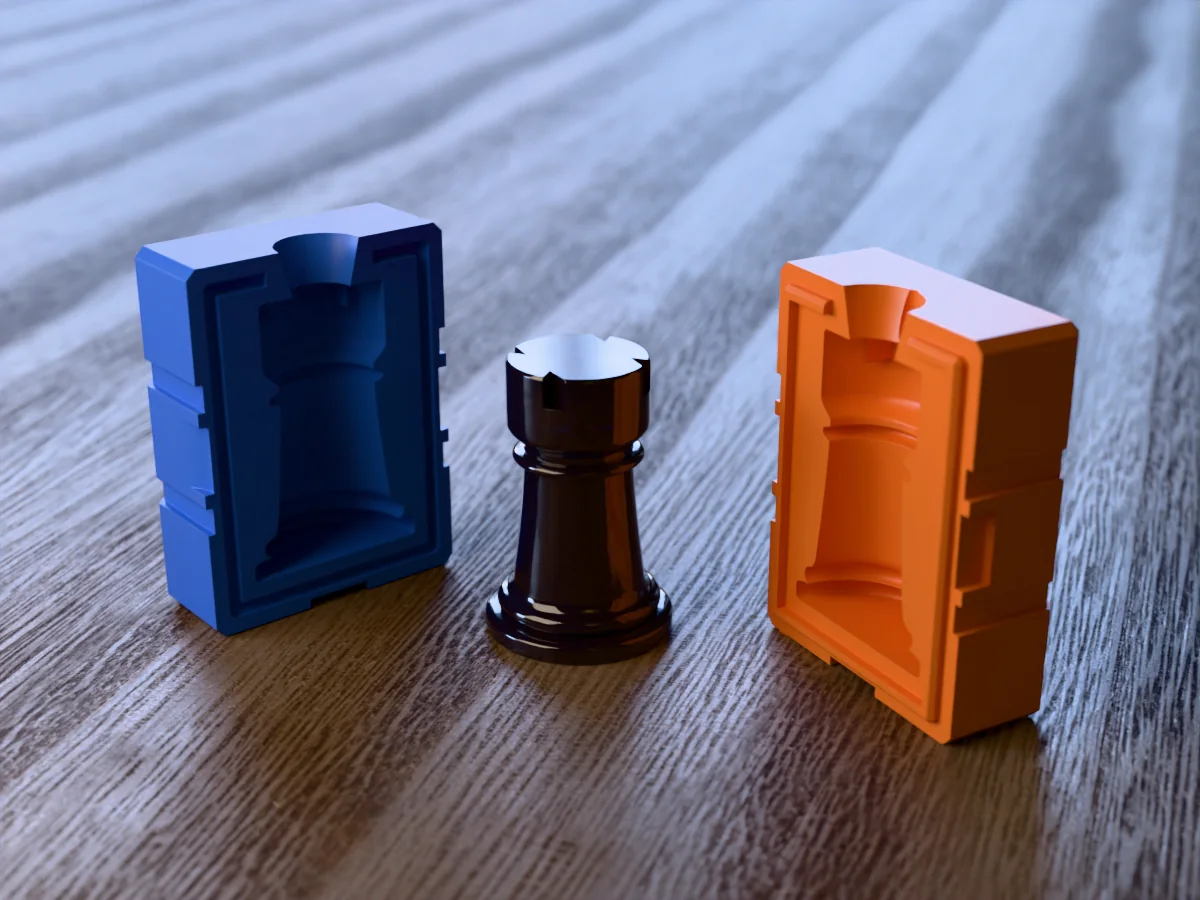
A 57 mm Staunton chess rook with four crenels, from a rigid two-part print. Cast it in resin, no silicone.
 ResinPro early access
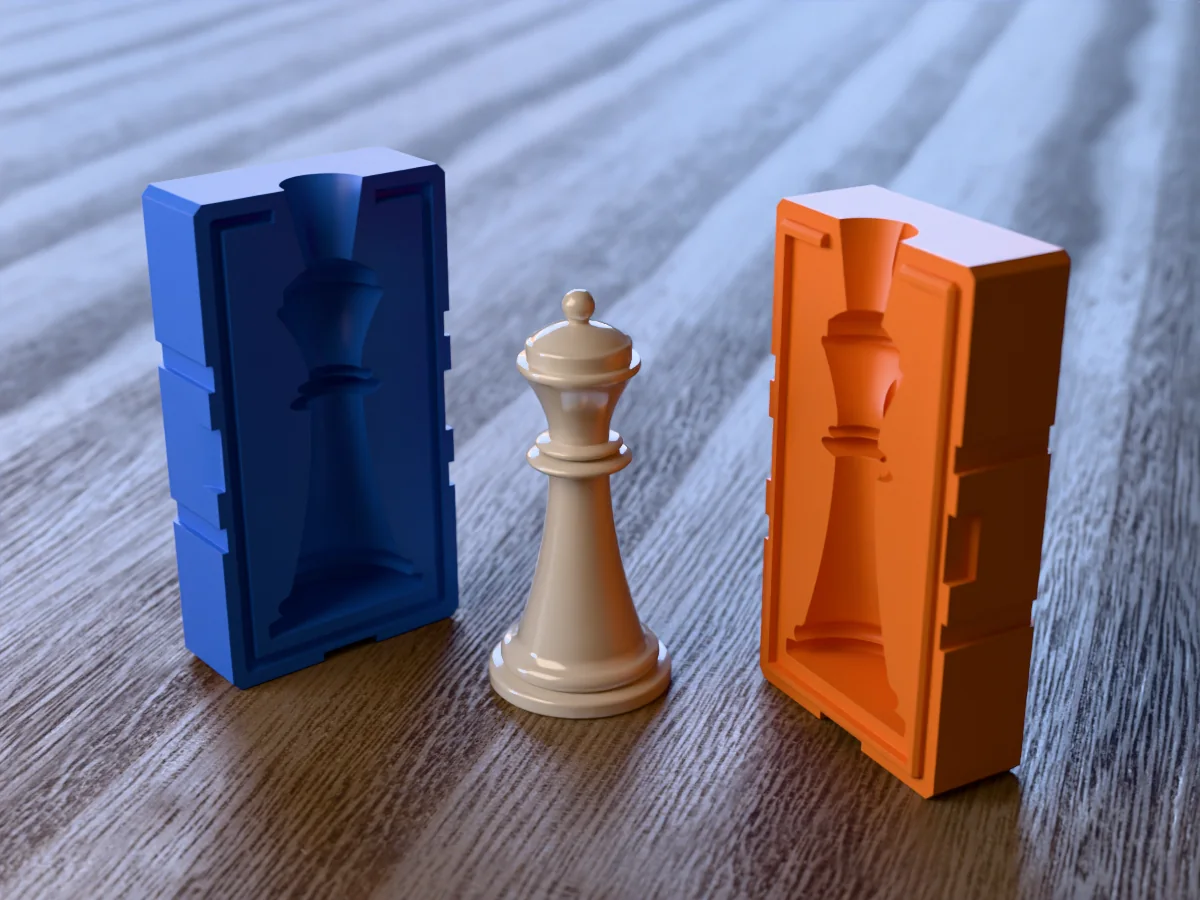
An 88 mm Staunton chess queen with a turned coronet, from a rigid two-part print. Cast it in resin, no silicone.
 ResinPro early access
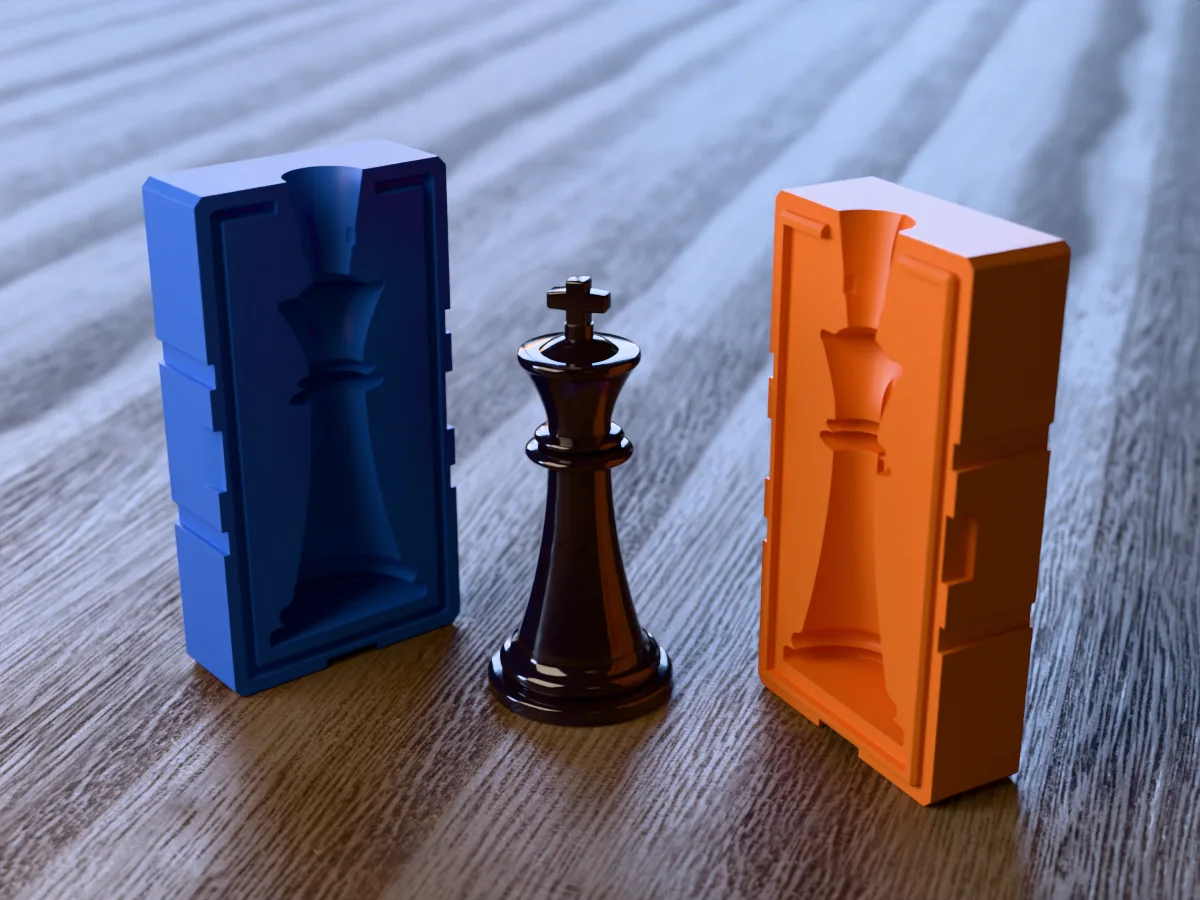
A 95 mm Staunton chess king with a cross, from a rigid two-part print. Cast it in resin, no silicone.
 ResinPro early access
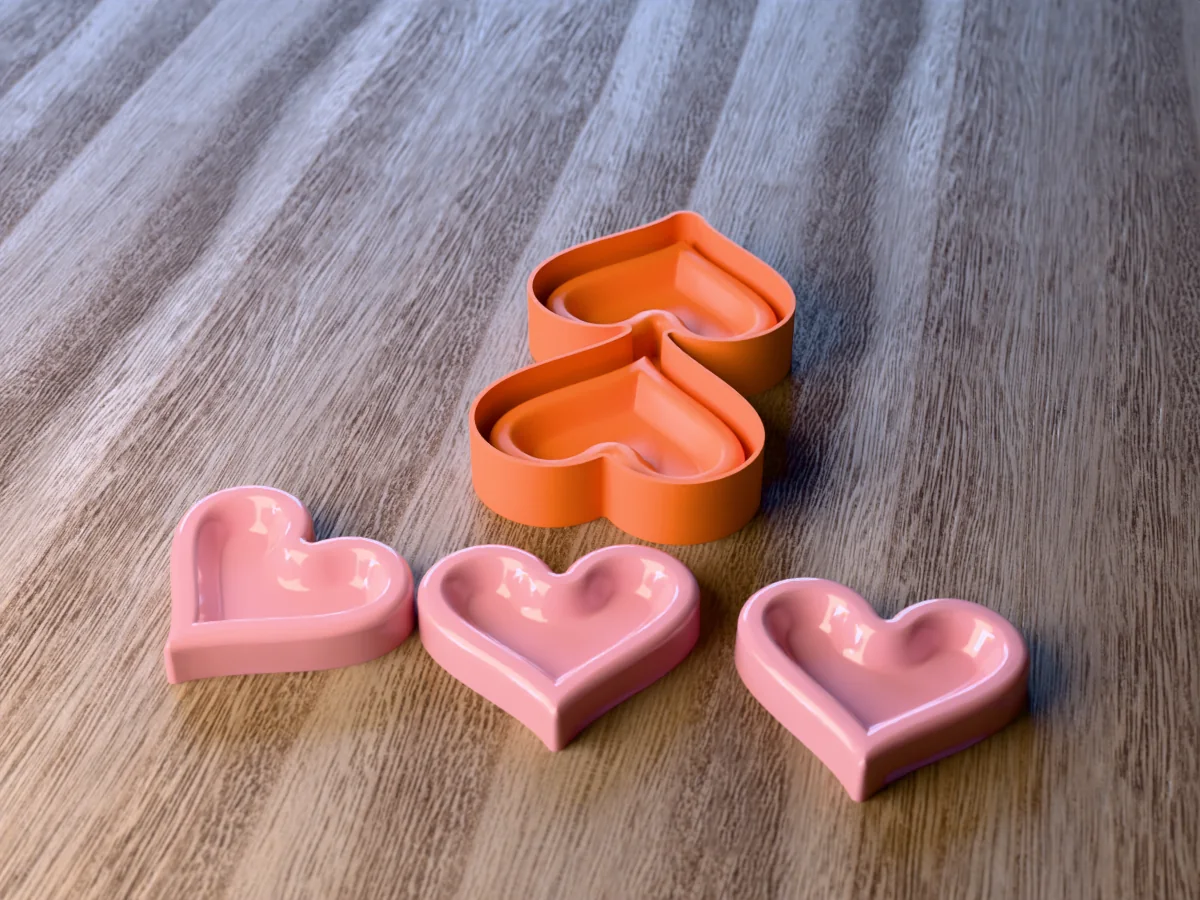
A heart ring dish for resin, Jesmonite or concrete. Two per pour, from a silicone tray you make yourself.
 ResinPro early access
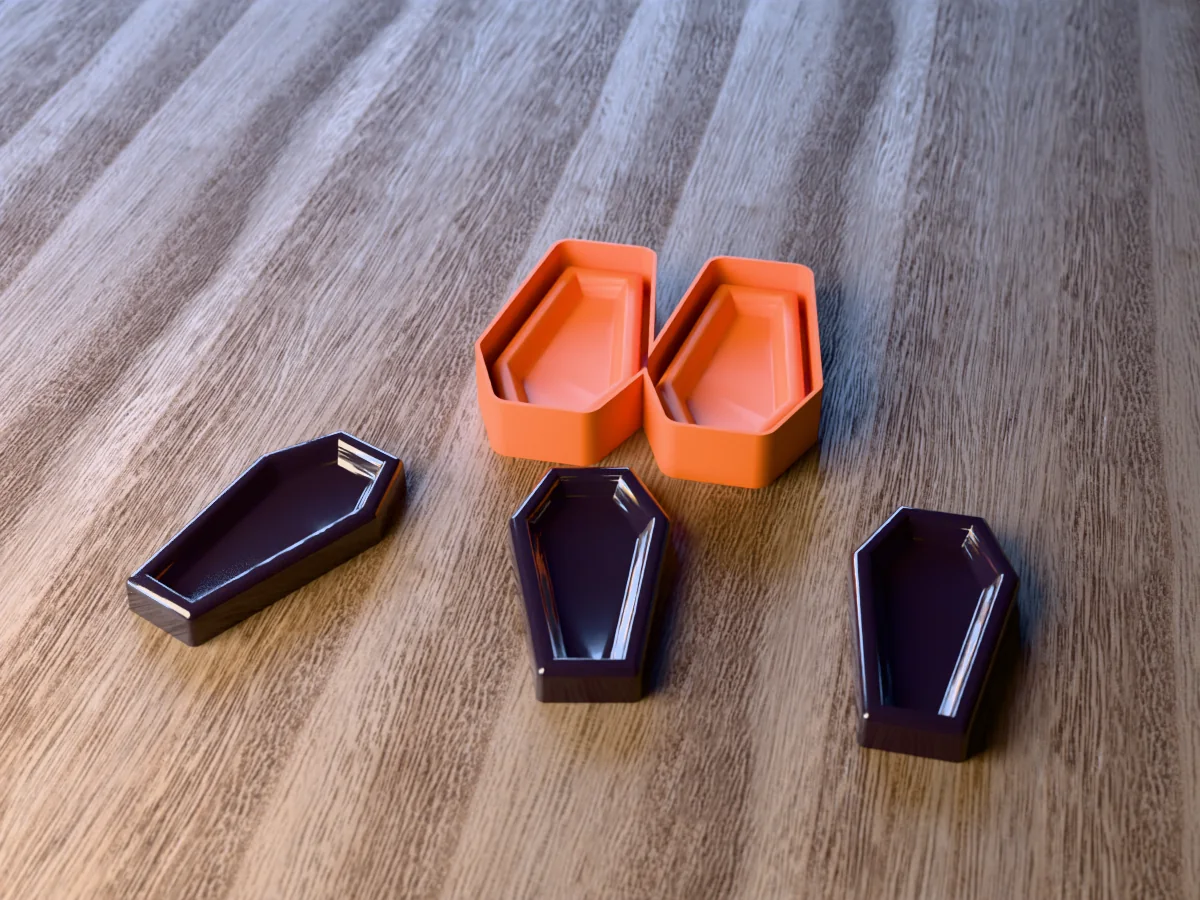
A coffin trinket dish for resin, Jesmonite or concrete. Two per pour, from a silicone tray you make yourself.
 ResinPro early access
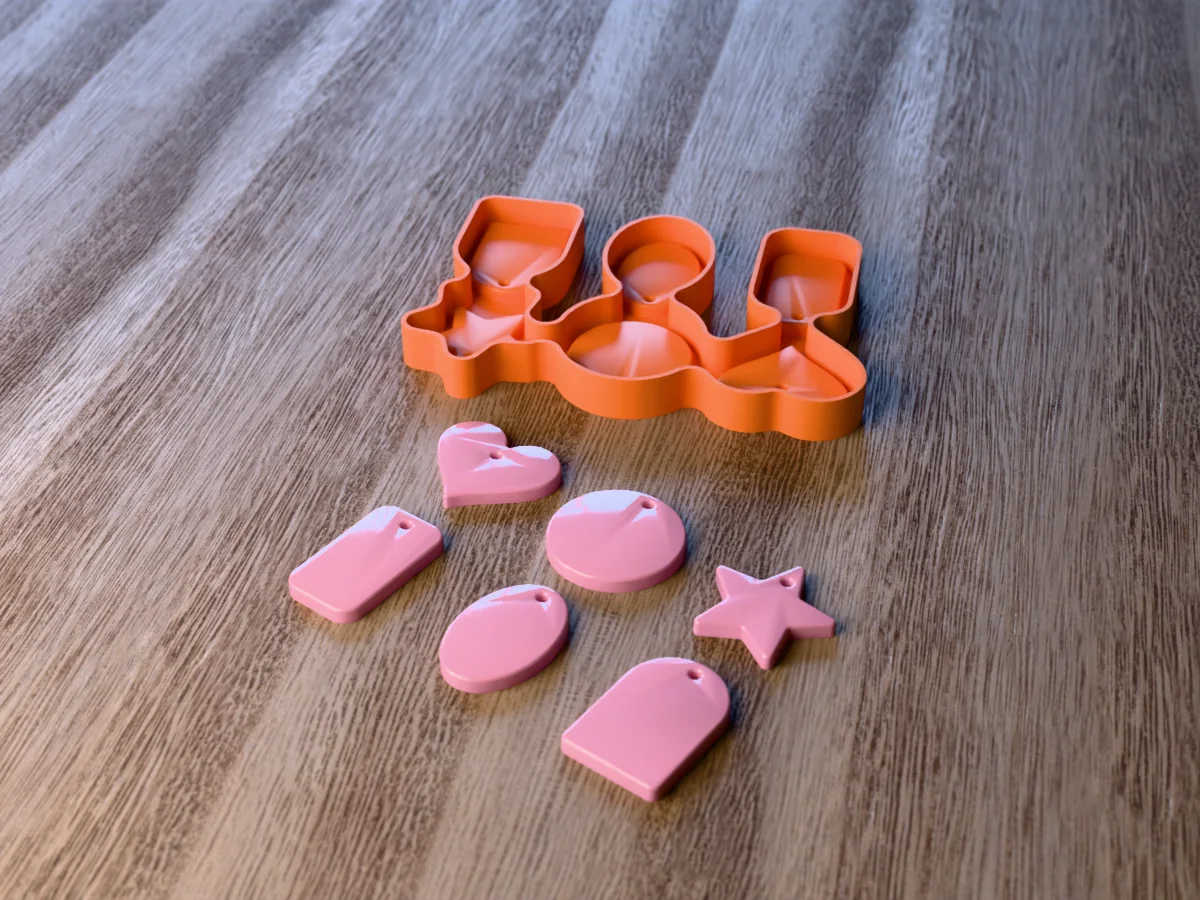
Six resin keychain blanks in one pour: heart, circle, star, dog tag, oval and arch. Each has its hole.
 ResinPro early access
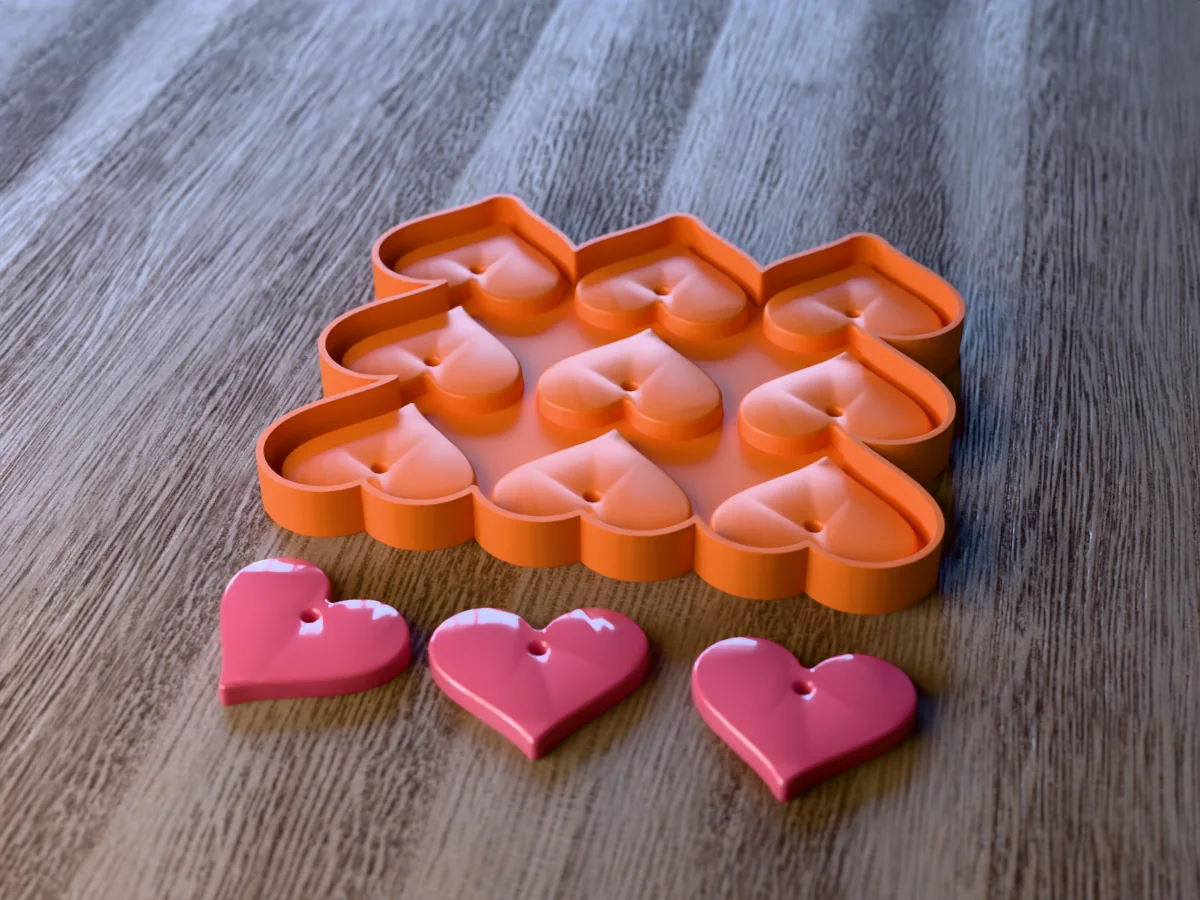
Nine heart resin keychain blanks per pour, each with a hole for the key ring. Silicone you pour yourself.
 ResinPro early access
Nine round resin keychain blanks per pour, 48 mm across with a hole for the ring. Silicone you pour yourself.