◆ Plaster
Dungeon floor tile mold
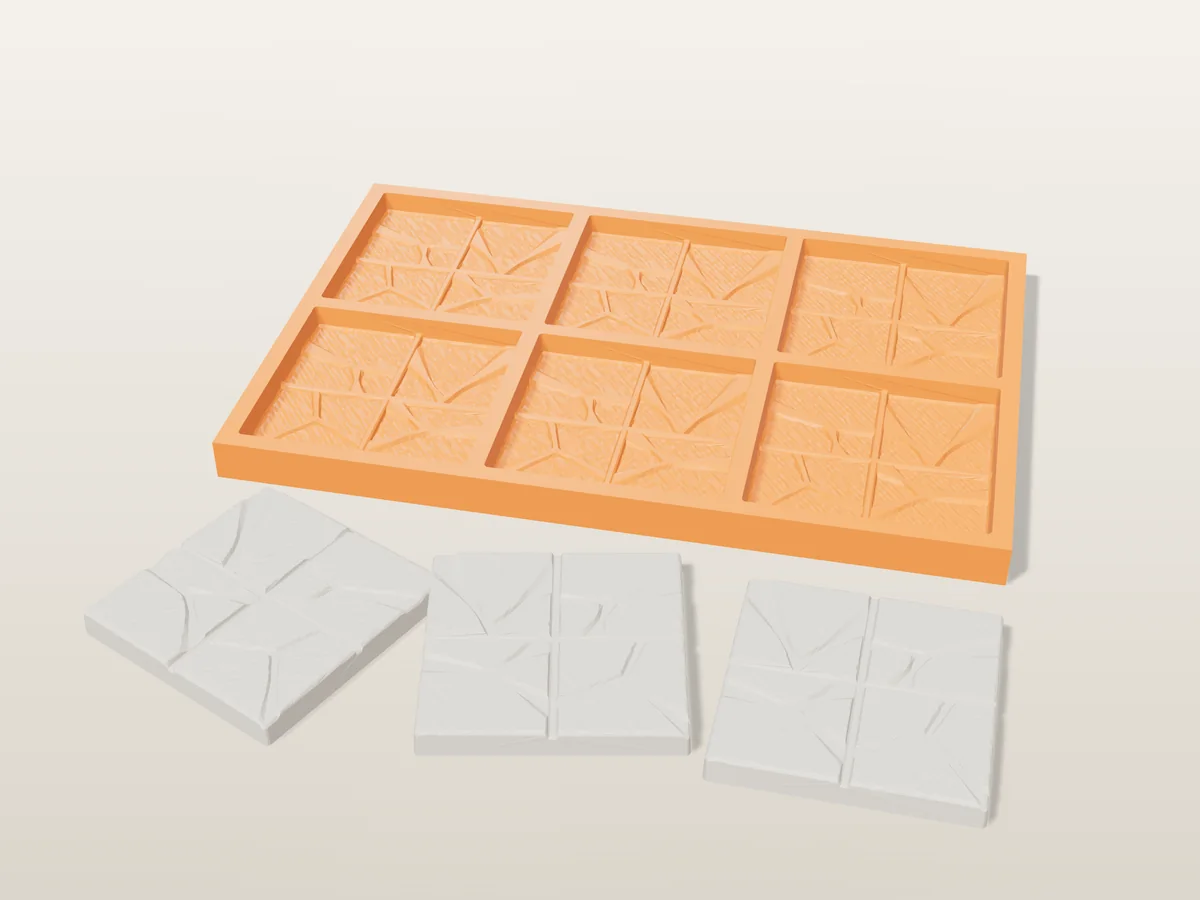
Six 2 x 2 inch flagstone floor tiles for D&D and wargaming terrain, cast in plaster in a printed tray.
◆ Plaster
Six 2 x 2 inch flagstone floor tiles for D&D and wargaming terrain, cast in plaster in a printed tray.
A printed tray for six dungeon floor tiles, each 2 x 2 inches (50.8 mm) and 6 mm thick, the same footprint and thickness as the common printed tile systems. Every tile carries four 1 inch squares of irregular flagstones, the grid joints cut a little deeper so a miniature always reads its square.
Made with our tray mold generator in its rigid tray mode: print the tray once, wipe in release, and pour casting plaster or dental stone straight in. A tray of six sets in about an hour, so an evening of pours floors a whole dungeon for the price of a bag of plaster, where printing the same tiles would take days of machine time.
Paint them like any terrain: a black or dark grey basecoat, a grey drybrush, and a wash in the joints. The zip carries the tray exactly as the tool exported it, one tile on its own as an STL, the master uploaded to the tool, and a print and pour sheet with the volume of each cavity.
Shown as a 3D render of the printed tray with three plaster tiles in front, not a photo.
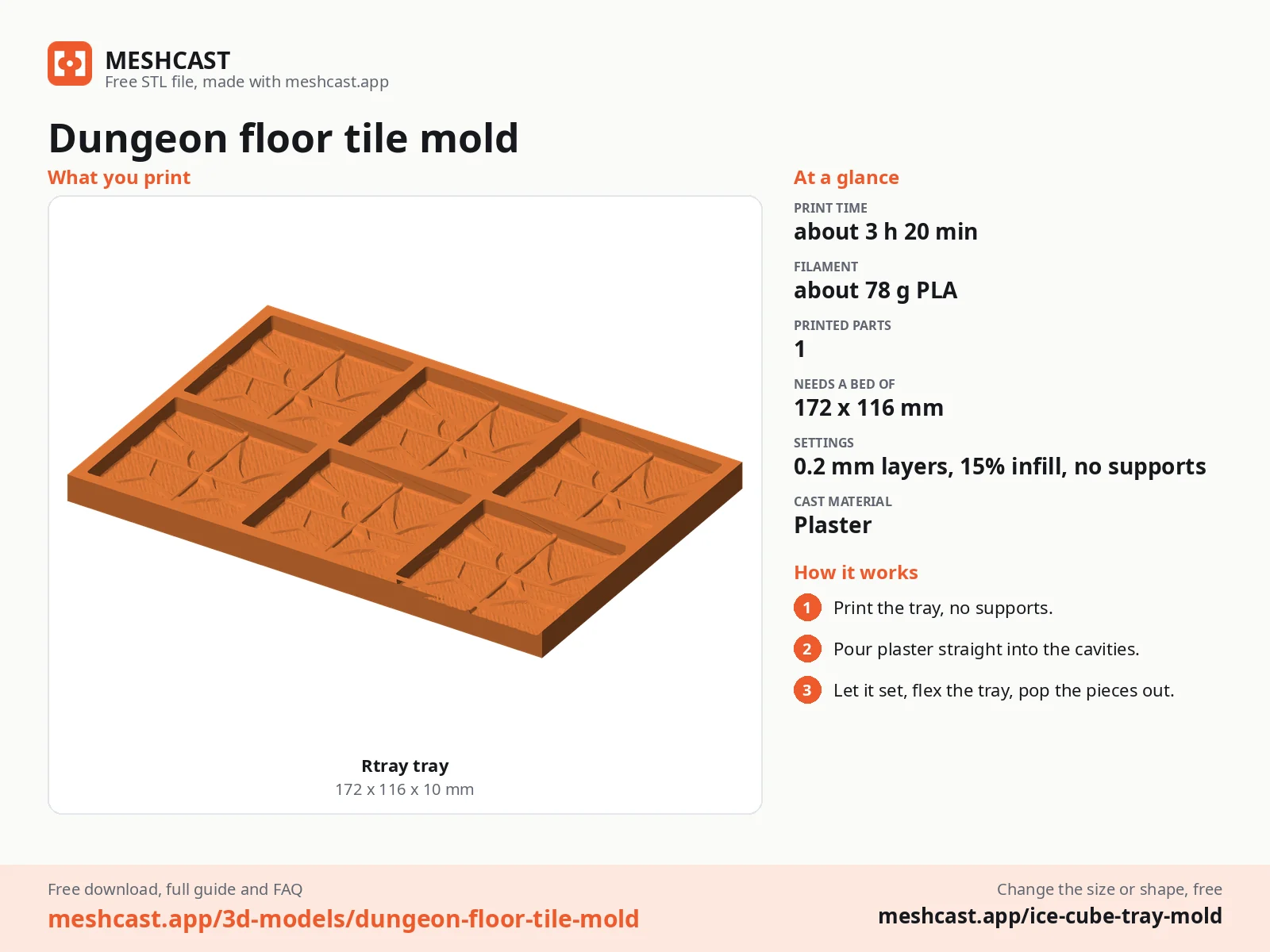
Print the tray as exported, cavities up, no supports. PLA is fine: plaster only gets warm as it sets.
Wipe a thin film of mold release, petroleum jelly or cooking spray into every cavity, including the fine detail.
Mix casting plaster to a pouring cream (add pigment now if you want colour), fill each cavity and tap the tray on the table for a minute to lift the bubbles.
Leave it for an hour until the plaster is warm and hard, then flex the tray corners and tip the pieces out. Let them dry for a day before you add oils or paint.
Print details
| Cast material | Plaster |
|---|---|
| Printed parts | 1 |
| Size (W x D x H) | 172 x 116 x 10 mm |
| Print bed needed | 172 x 116 mm, 10 mm tall |
| Filament | ~78 g |
| Layer height | 0.2 mm |
| Infill | 15% |
| Supports | Not needed |
| Download | ZIP: printed tray (STL) + one floor tile (STL) + tool master (STL) + print and pour sheet |
| Added | 2026-09-25 |
Made with the free Tray mold generator. Upload your own model and get the same kind of mold built around it, in your browser.
Free download. Opens the Thingiverse listing in a new tab.
Free for personal use. Selling the pieces you cast needs a commercial licence (Pro or Founder); passing on the file itself is not permitted on any plan. Full terms.
New to casting? Read the ice cube tray mold guide.
Yes. Each tile is 2 x 2 inches with the 1 inch squares marked by deeper joints, the grid that D&D and most skirmish games use for 25 to 32 mm miniatures. Lay them edge to edge on a table or glue them to a board.
Dental stone or a hard casting plaster such as Hydrocal or Ultracal. Plain plaster of Paris works but chips at the corners. Scrape the back flat with a ruler while the plaster is still soft, so every tile sits level.
Seal the dry tiles with a spray primer or watered PVA first, since raw plaster drinks paint. Then a dark basecoat, a lighter grey drybrush over the stones, and a black or brown wash in the joints. A few tiles with a green wash read as damp.
 Plaster
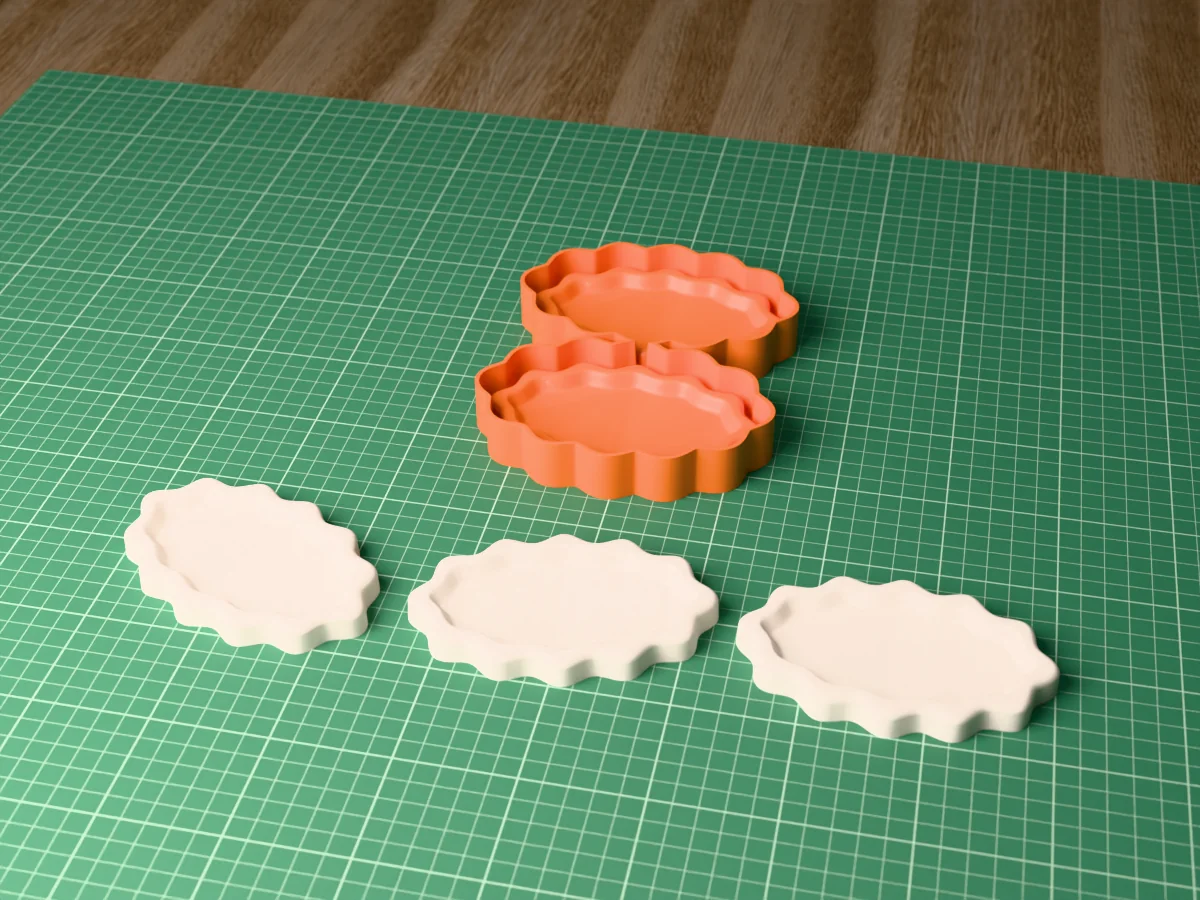
A wavy oval trinket tray for Jesmonite or plaster. Two per pour, from a silicone tray you make yourself.
 Plaster
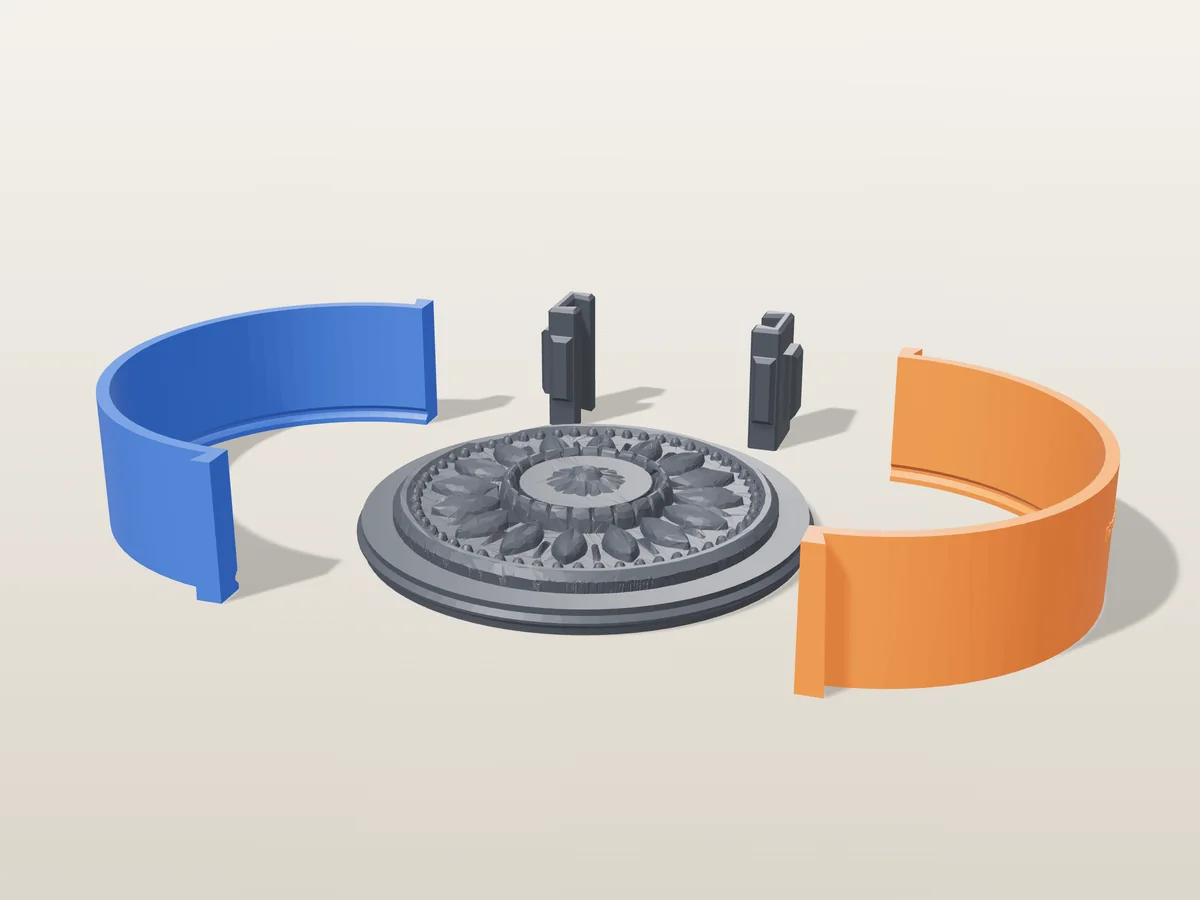
A 150 mm ceiling rosette with a beaded rim, sixteen leaves and a flower boss, to cast in plaster. Silicone box mold.
 Plaster
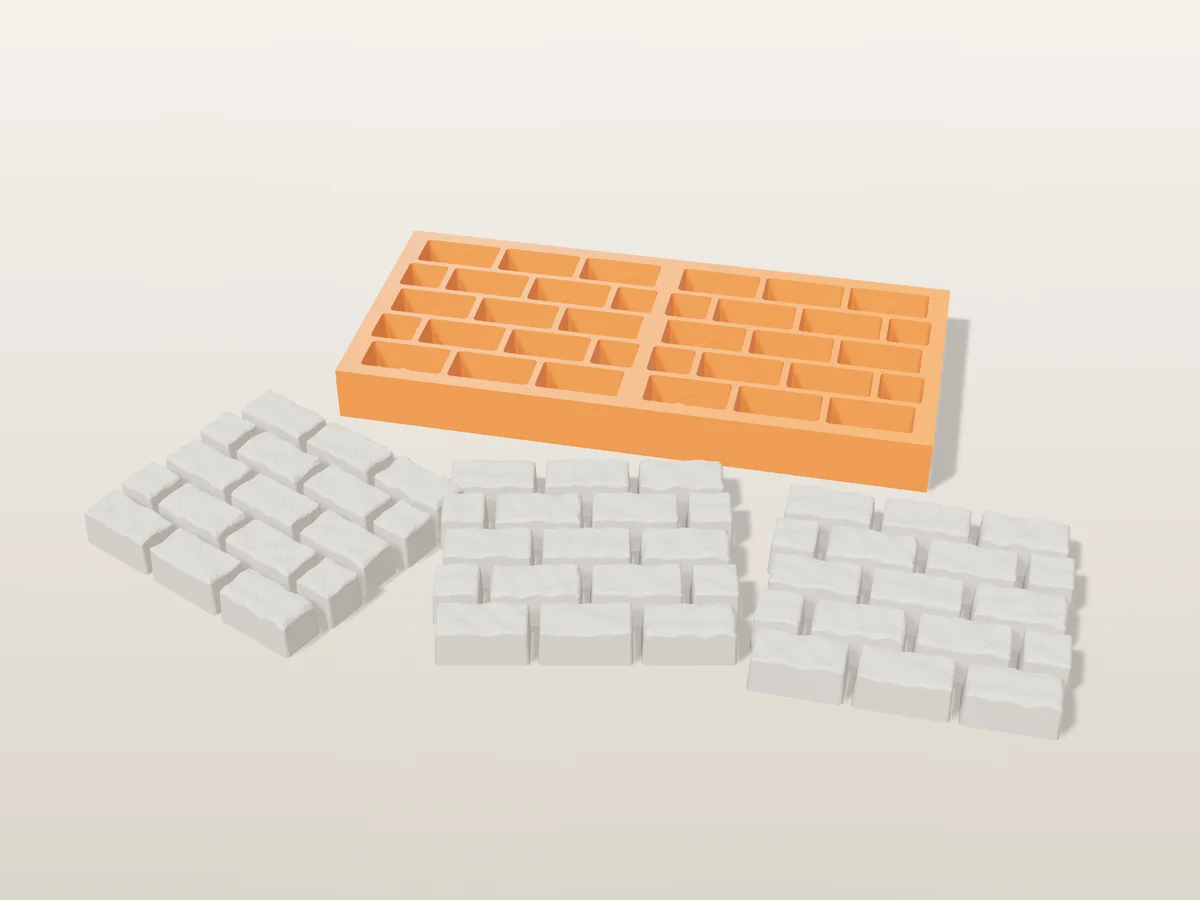
A sprue of chiselled dungeon wall bricks for tabletop terrain, cast in plaster and glued up into walls.
 Plaster
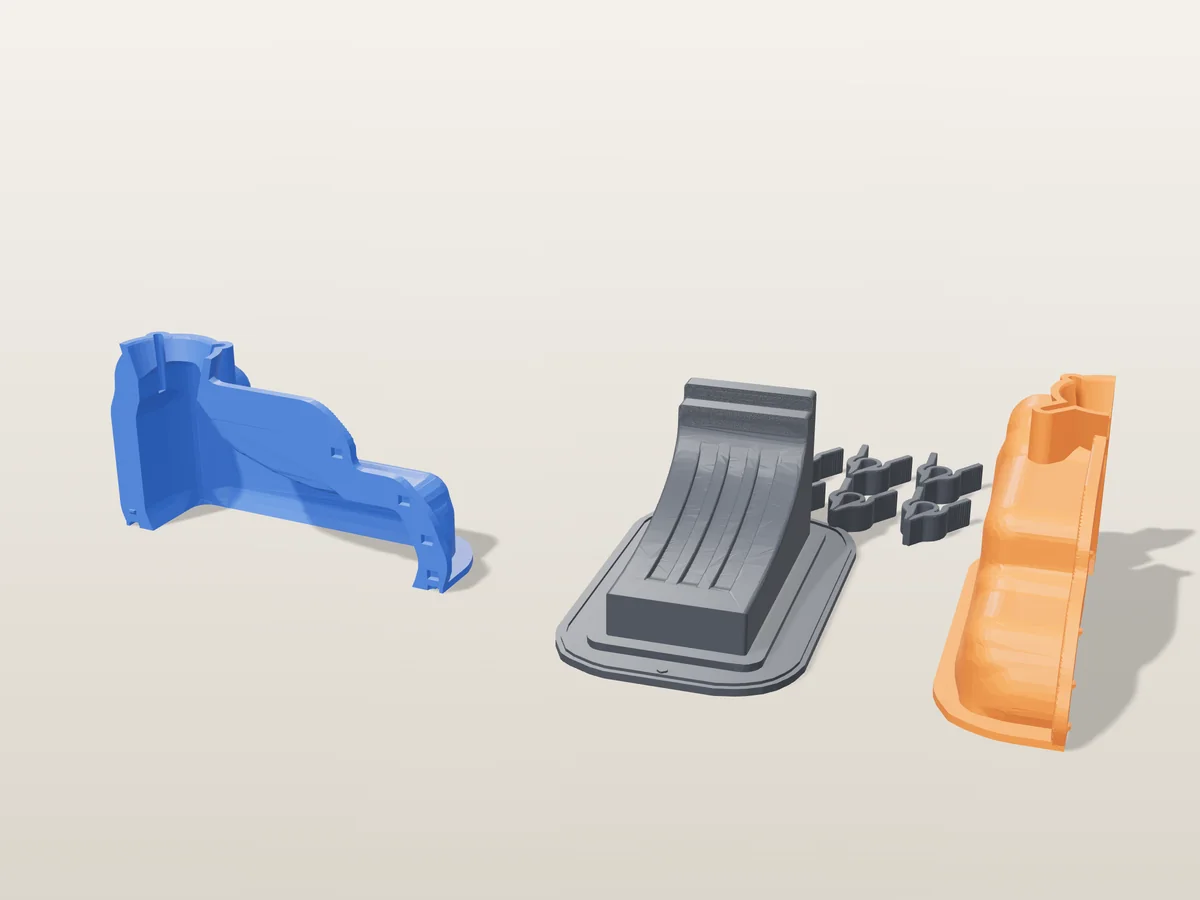
A fluted block corbel, 110 mm tall, with a stepped top and three flutes down a cove. Cast it in plaster.
 Plaster
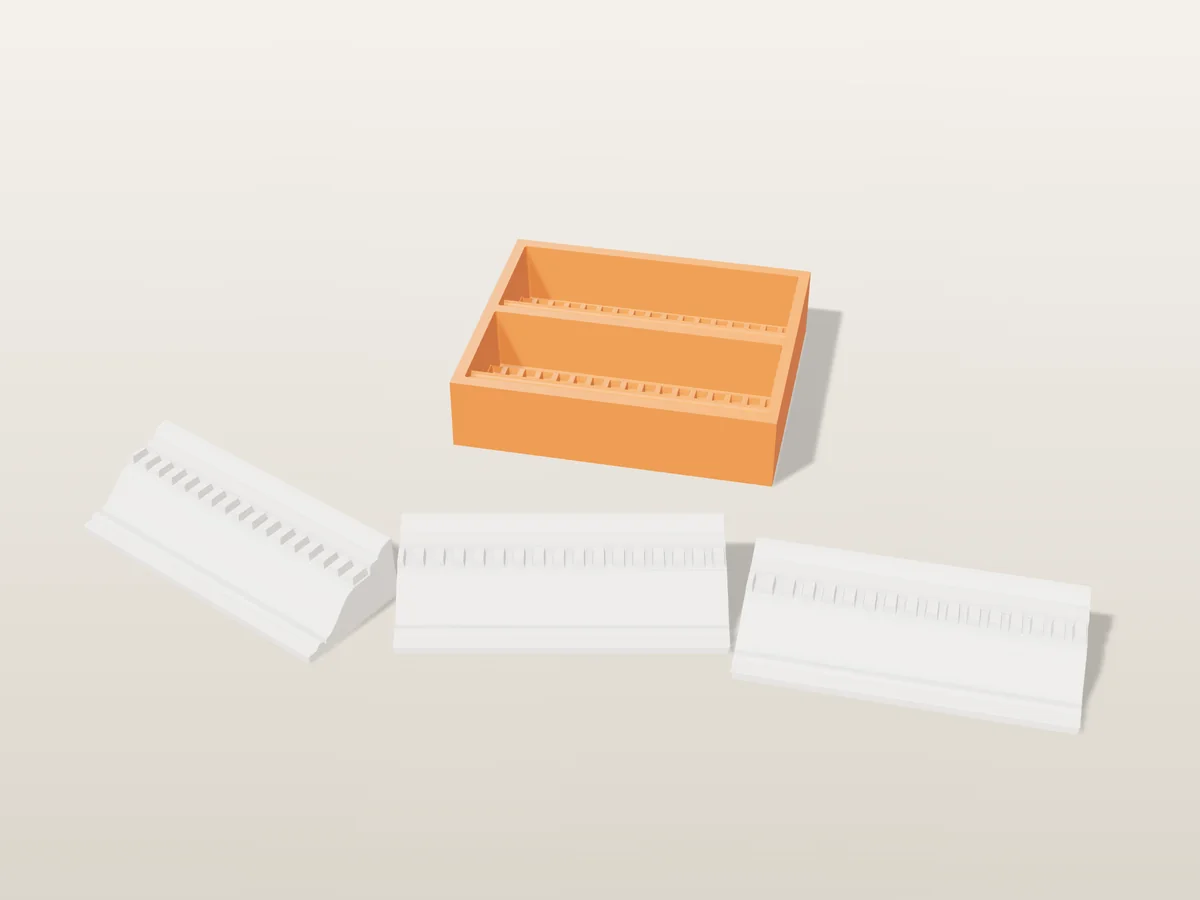
Two 180 mm lengths of cornice with dentils, cast in plaster straight in a printed tray. Butt them into a run.
 Plaster
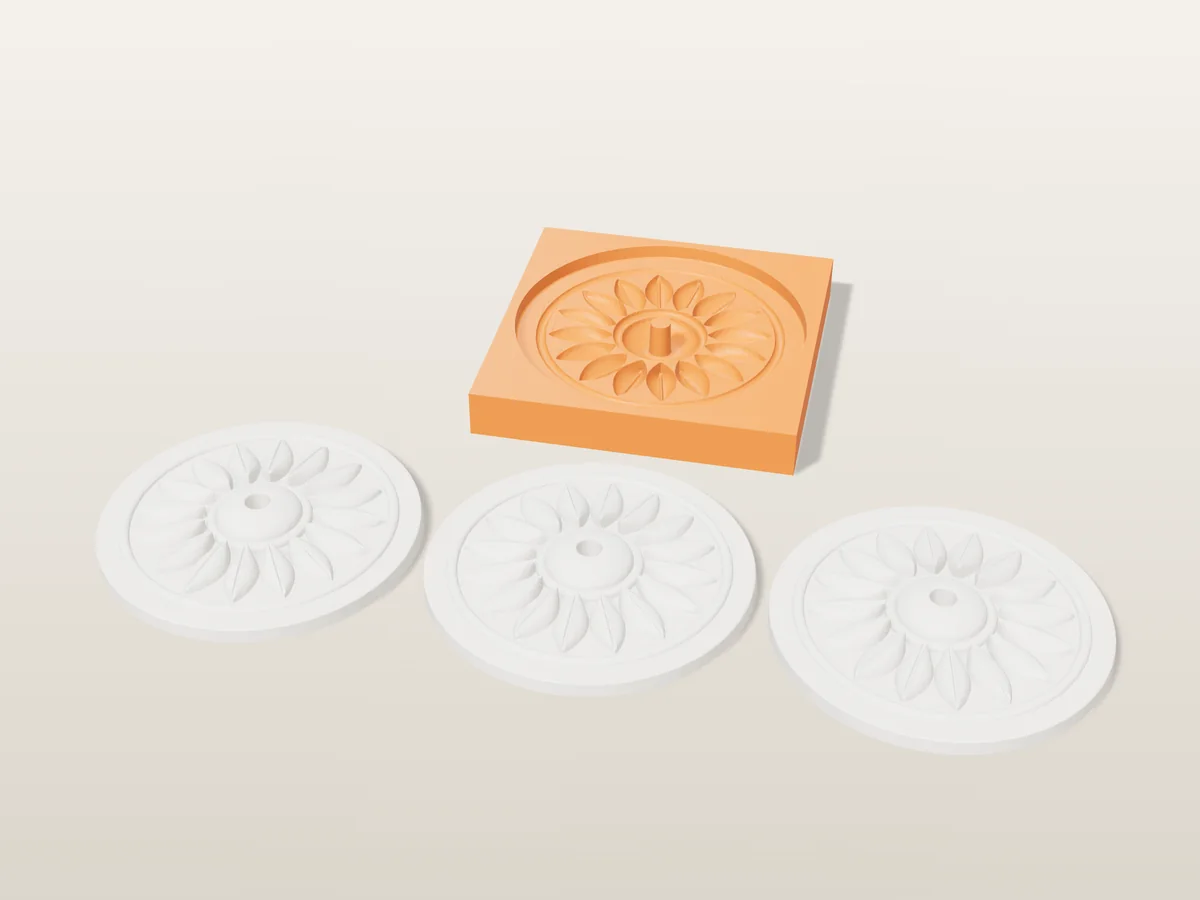
A 180 mm plaster ceiling rose with sixteen leaves and a cable hole, cast straight in a printed tray.
 Plaster
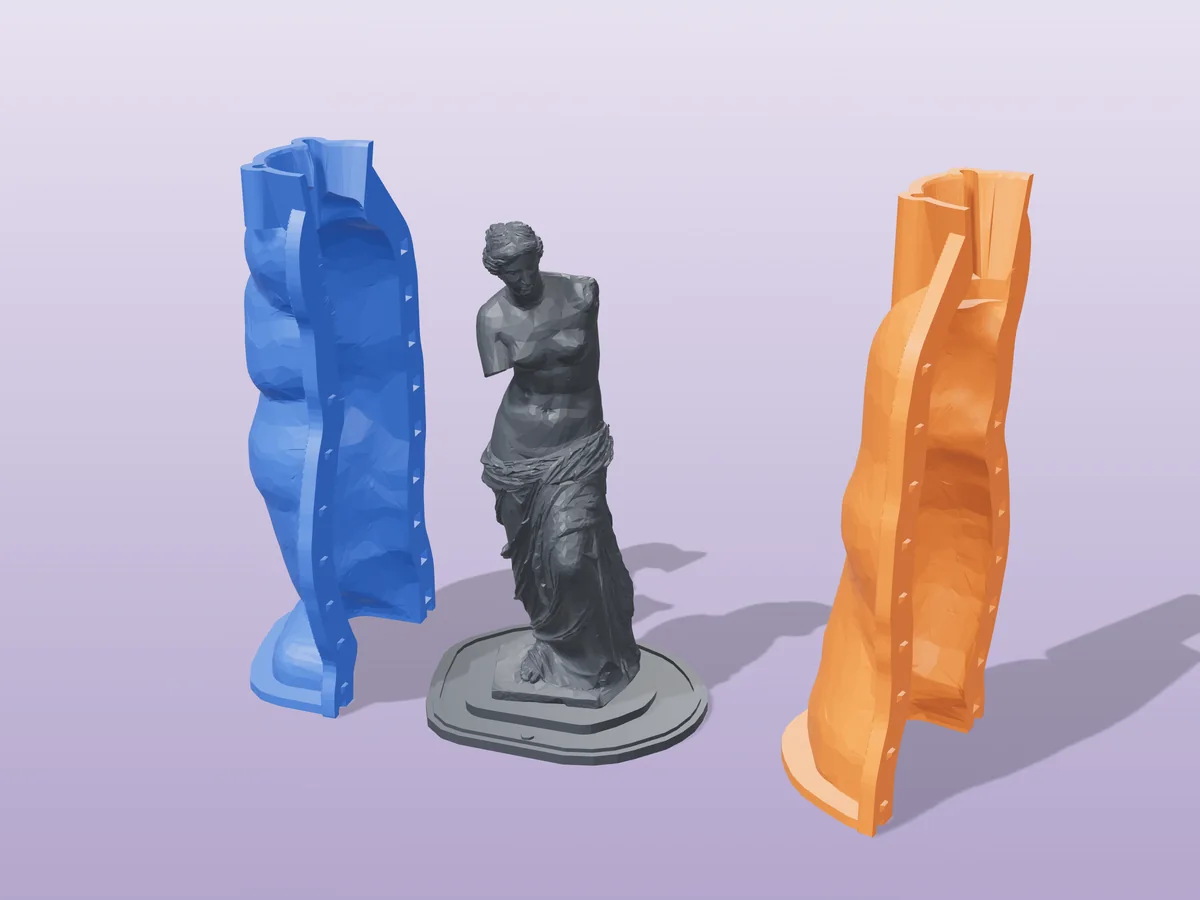
Cast your own 140 mm Venus de Milo in plaster or concrete, from a public-domain museum scan.
 Plaster
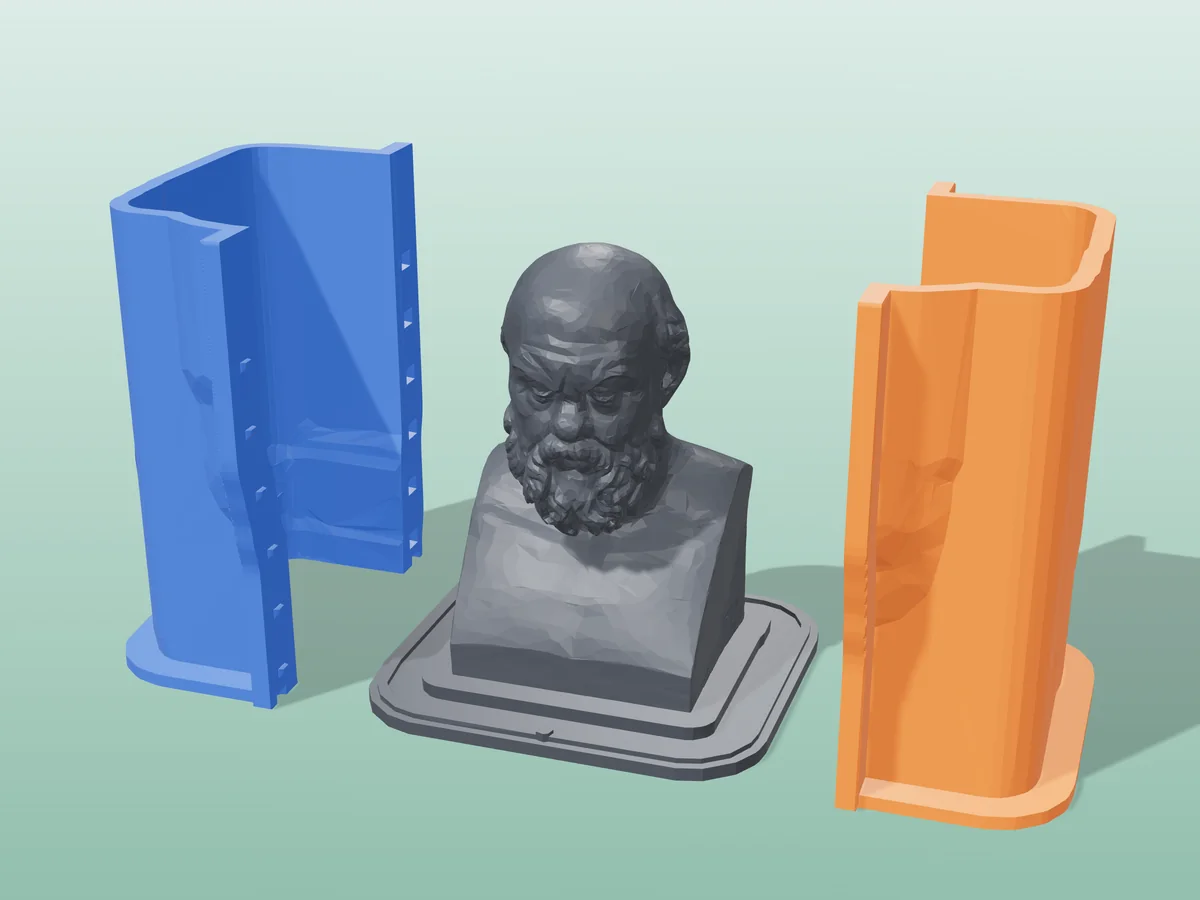
Cast a 95 mm bearded Socrates bust in plaster or concrete, from a public-domain museum scan.