◆ Plaster
Socrates bust mold
Cast a 95 mm bearded Socrates bust in plaster or concrete, from a public-domain museum scan.
◆ Plaster
Cast a 95 mm bearded Socrates bust in plaster or concrete, from a public-domain museum scan.
Socrates as a 95 mm bust: the broad brow, the snub nose and the full curly beard of the classic Roman portrait type, on a square block base. A philosopher for the bookshelf, a bookend, or a gift for anyone who argues for fun.
The master is a 3D scan of the plaster cast of a portrait of Socrates in the Royal Cast Collection of SMK, the National Gallery of Denmark, published by SMK as public domain. The mold is made with the hugging-shell mode of our silicone mold maker, the mode the site's own mold advisor recommends: the beard alone would lock a rigid mold, and silicone peels out of every curl of it.
Cast it in plaster or Jesmonite for a desk or a bookend, or in fine concrete for a heavier piece. The same silicone mold also takes resin, soap or candle wax.
Print the base with the bust fused onto it and the two shell halves, pour about 405 ml of silicone, and cast in the flexible mold that comes out. The zip carries every printed part, the bust as its own STL, the tool's own print-settings sheet and a recipe file for the generator.
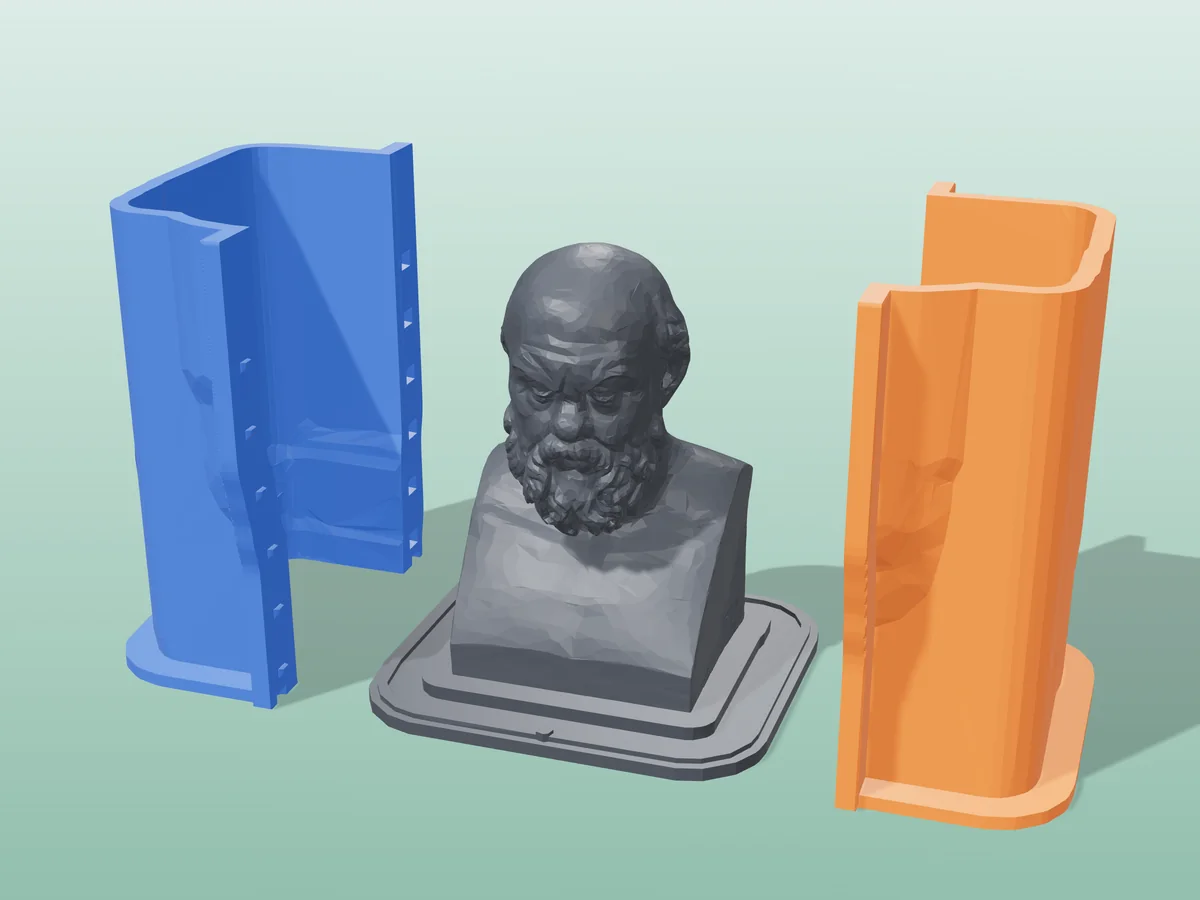
Shown as a 3D render of the printed mold parts pulled apart around the master, not a photo.
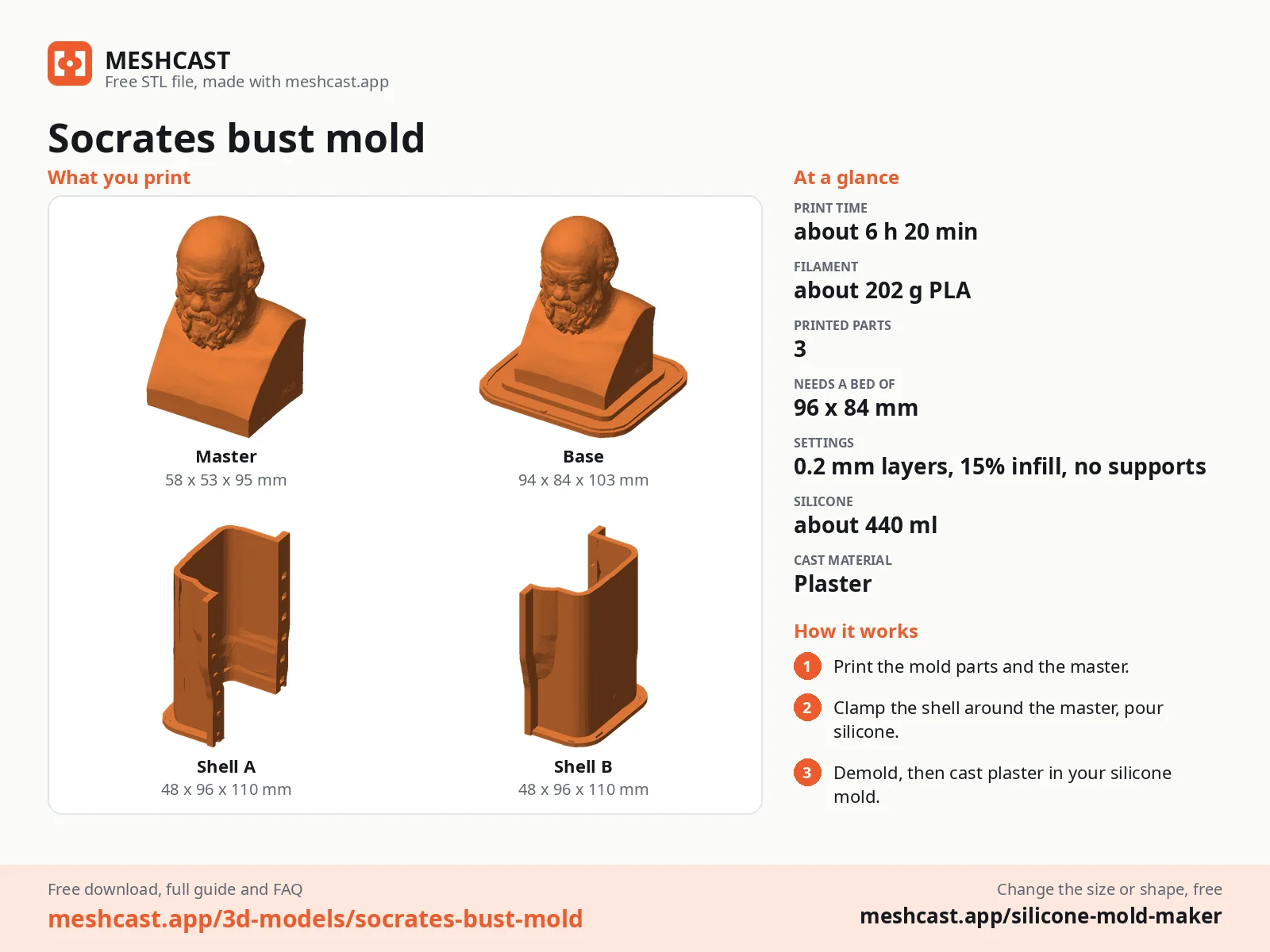
Print the base, which has the master already fused onto it, and the two shell halves. No supports.
Stand the shell halves on the base around the master and hold the seams shut with steel binder clips. The seats for them are built into the shell.
Tape the outside seams or run a bead of hot glue along them, because silicone finds every gap.
Mix 440 ml of silicone in one batch, pour it into the open top in a thin stream, and fill level with the rim.
Once it has cured, unclip the shell, lift it off and peel the silicone off the master. That silicone is your mold.
Set the silicone back in the shell to keep its shape, and cast into it through the opening the base left.
Print details
| Cast material | Plaster |
|---|---|
| Printed parts | 3 |
| Size (W x D x H) | 96 x 96 x 110 mm |
| Print bed needed | 96 x 84 mm, 110 mm tall |
| Filament | ~202 g |
| Layer height | 0.2 mm |
| Infill | 15% |
| Supports | Not needed |
| Download | ZIP: 3 printed parts (STL) + bust master (STL) + print sheet + recipe |
| Added | 2026-09-24 |
Made with the free Silicone mold maker generator. Upload your own model and get the same kind of mold built around it, in your browser.
Free download. Opens the Thingiverse listing in a new tab.
Free for personal use. Selling the pieces you cast needs a commercial licence (Pro or Founder); passing on the file itself is not permitted on any plan. Full terms.
New to casting? Read the silicone mold maker guide.
Yes. Let the plaster dry fully, brush thinned dark grey or brown acrylic into the beard and wipe the high points clean with a damp cloth. The recesses stay dark and it reads as weathered marble.
From SMK, the National Gallery of Denmark. Its Royal Cast Collection holds plaster casts of famous ancient sculptures, and SMK has scanned many of them and published the scans as public domain. This is their cast of a Roman portrait of Socrates.
Yes. The same mold takes pillar wax: thread a primed wick about 130 mm long through the top of the head before you pour. The print-settings sheet in the zip lists the amount of each material per cast.
 Plaster
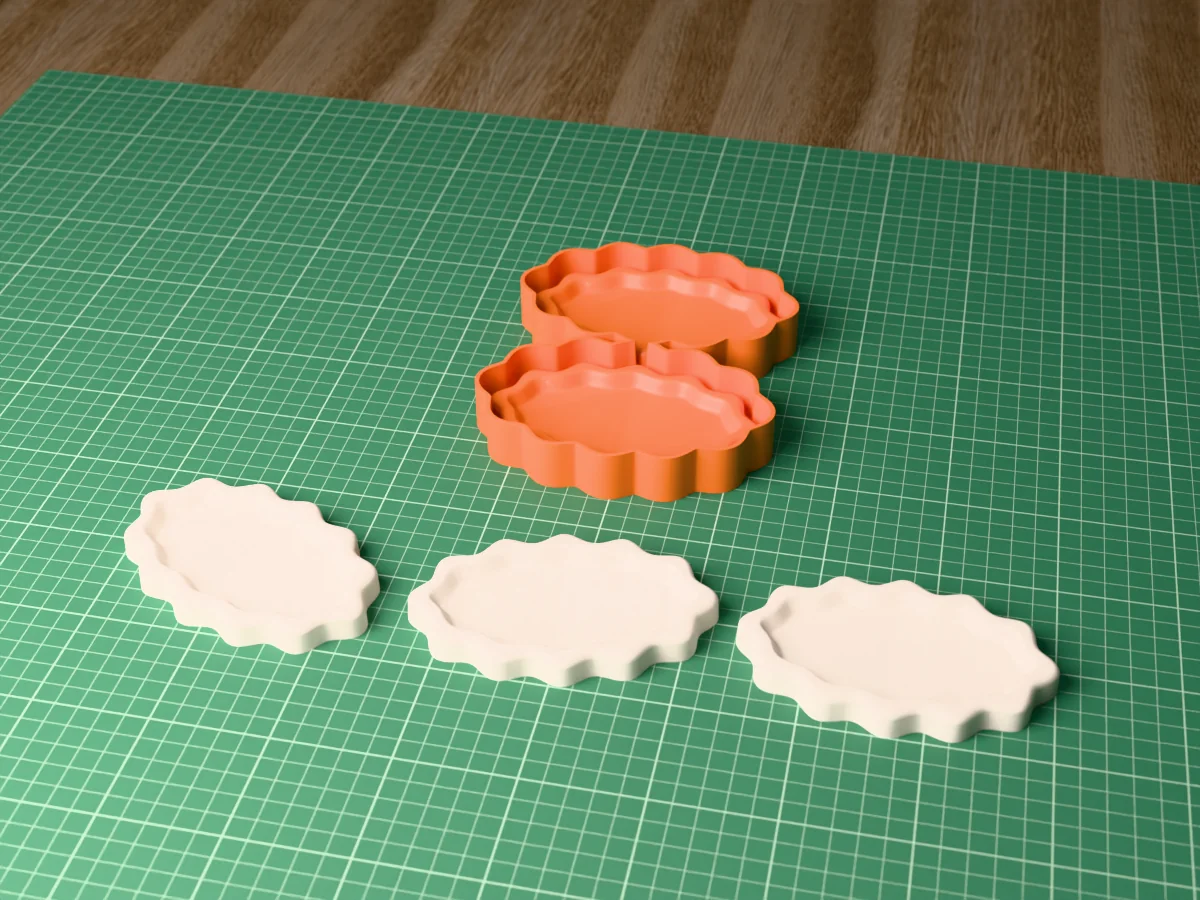
A wavy oval trinket tray for Jesmonite or plaster. Two per pour, from a silicone tray you make yourself.
 Plaster
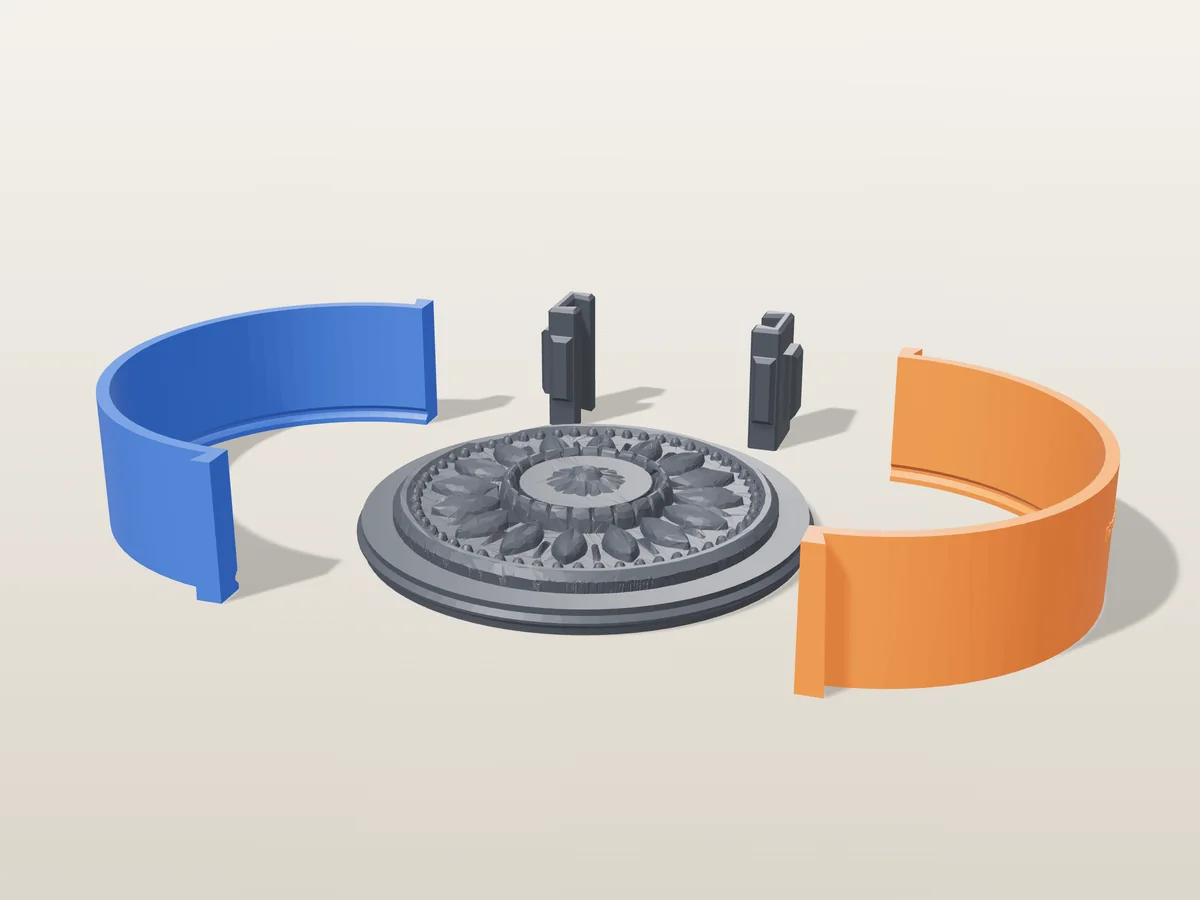
A 150 mm ceiling rosette with a beaded rim, sixteen leaves and a flower boss, to cast in plaster. Silicone box mold.
 Plaster
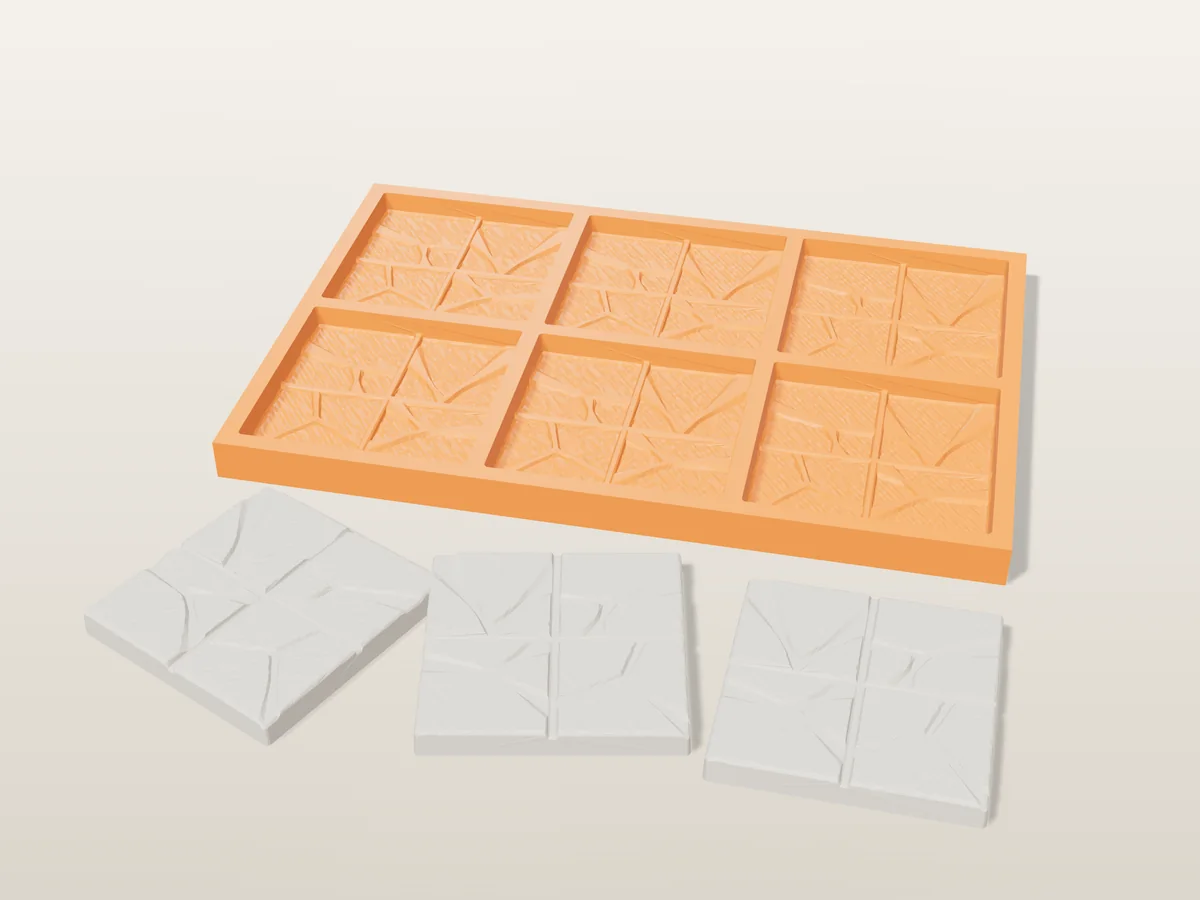
Six 2 x 2 inch flagstone floor tiles for D&D and wargaming terrain, cast in plaster in a printed tray.
 Plaster
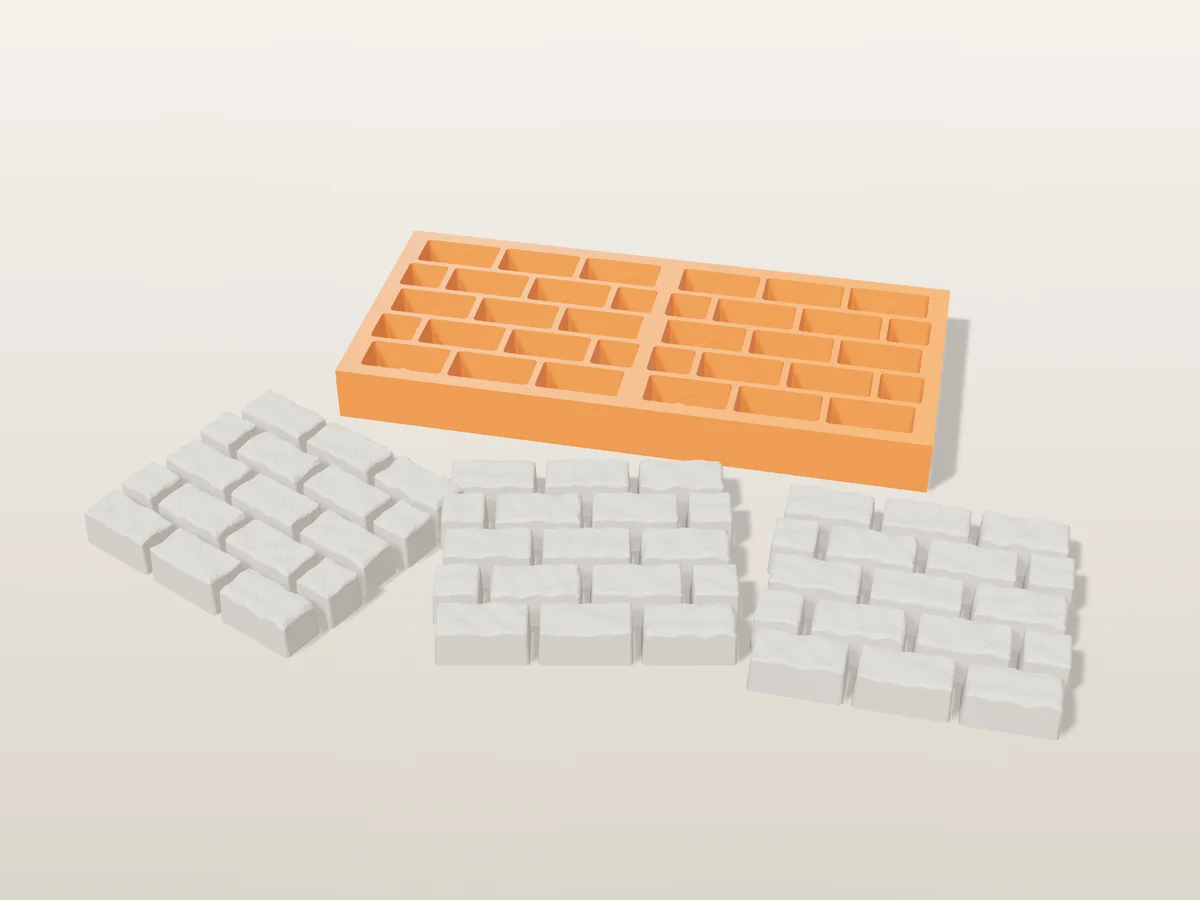
A sprue of chiselled dungeon wall bricks for tabletop terrain, cast in plaster and glued up into walls.
 Plaster
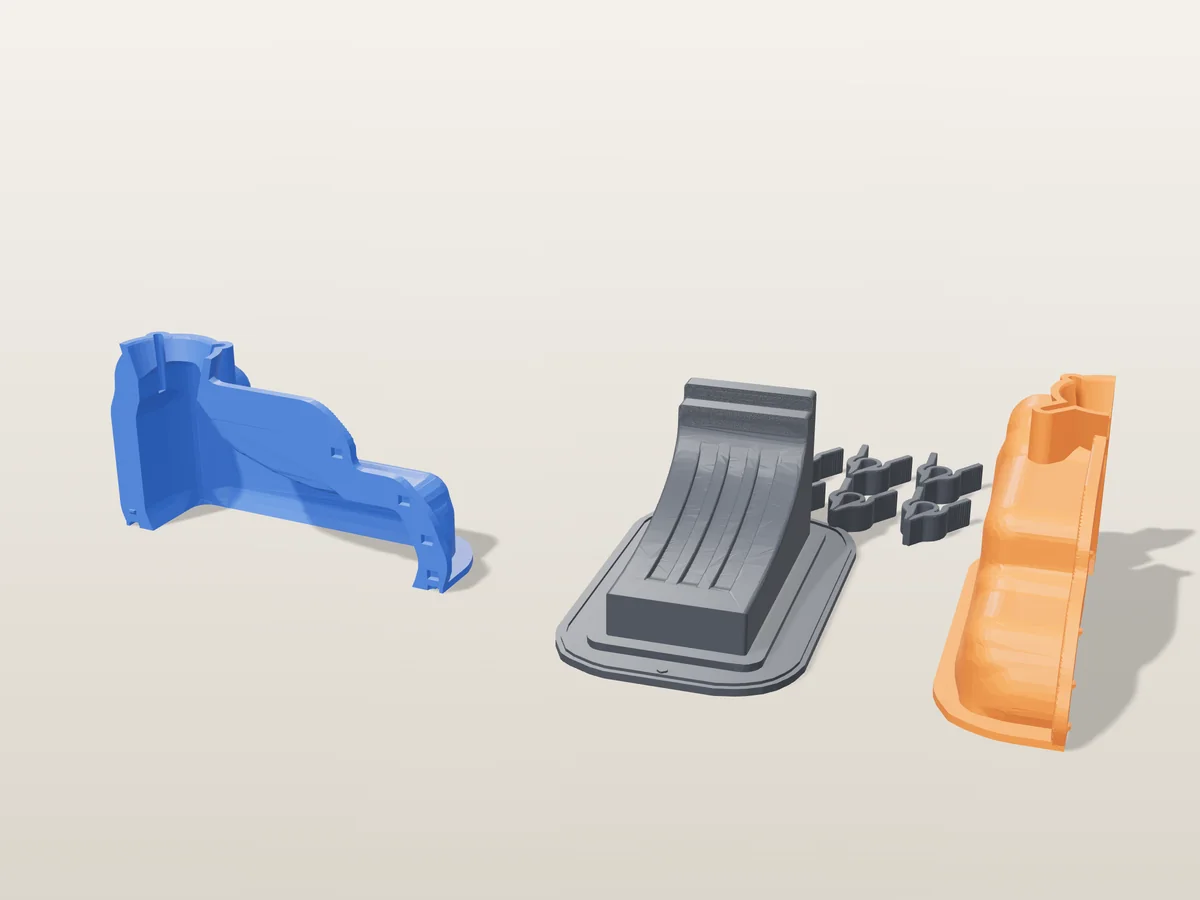
A fluted block corbel, 110 mm tall, with a stepped top and three flutes down a cove. Cast it in plaster.
 Plaster
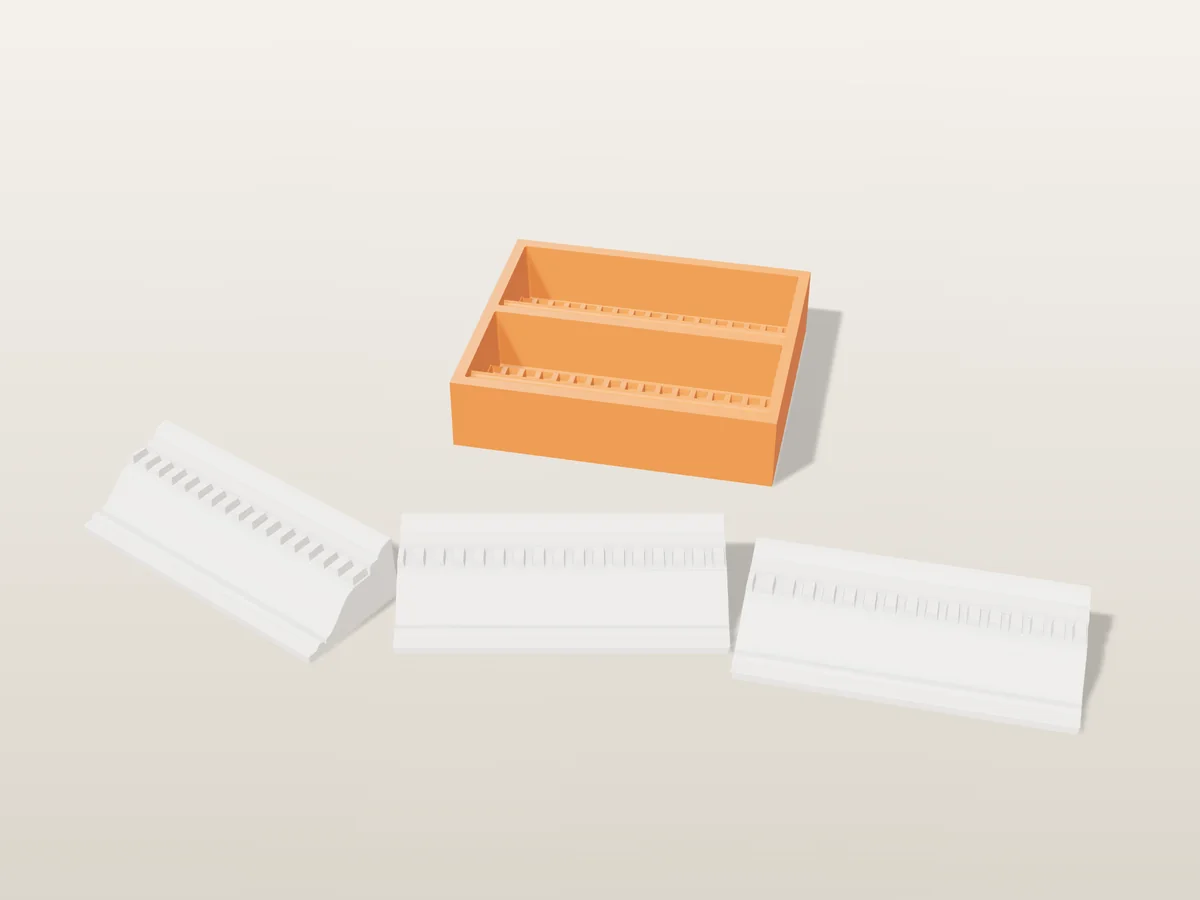
Two 180 mm lengths of cornice with dentils, cast in plaster straight in a printed tray. Butt them into a run.
 Plaster
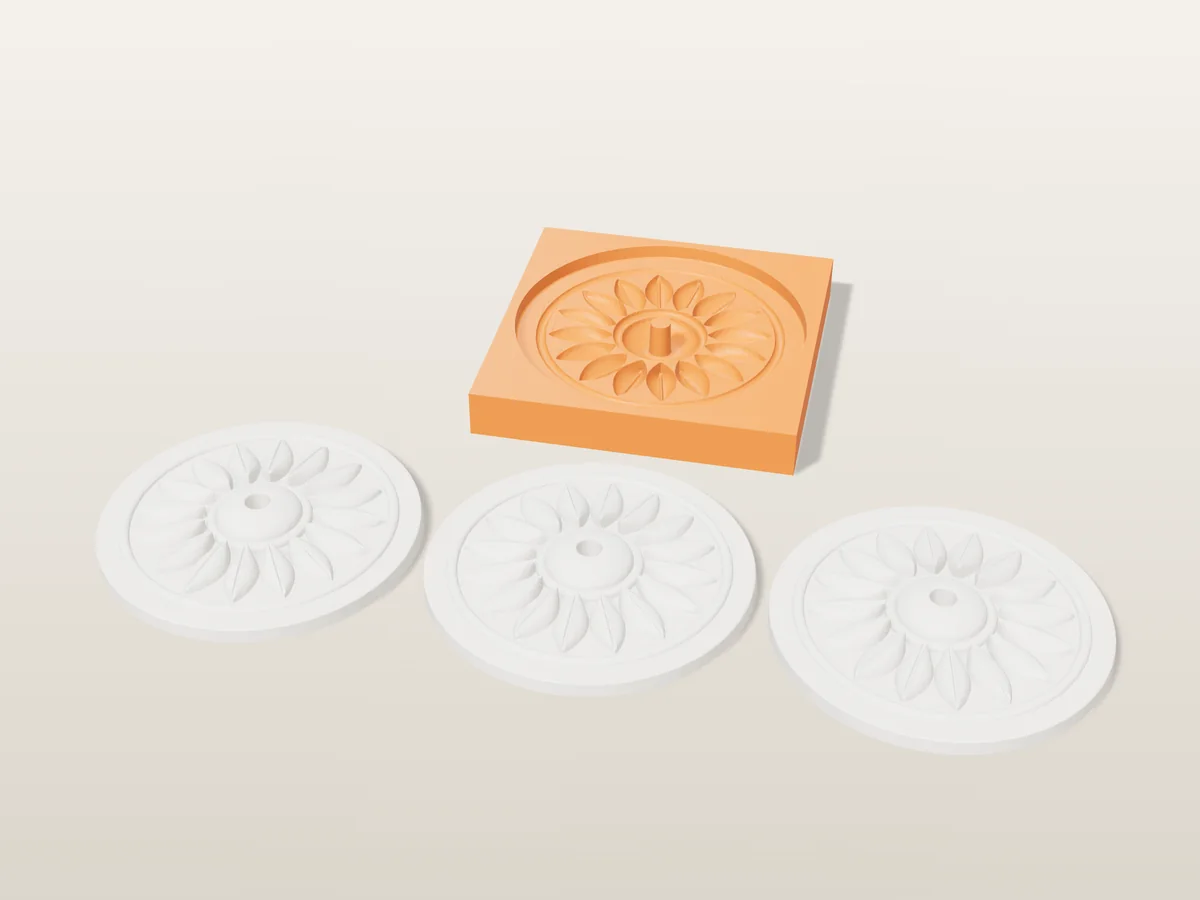
A 180 mm plaster ceiling rose with sixteen leaves and a cable hole, cast straight in a printed tray.
 Plaster
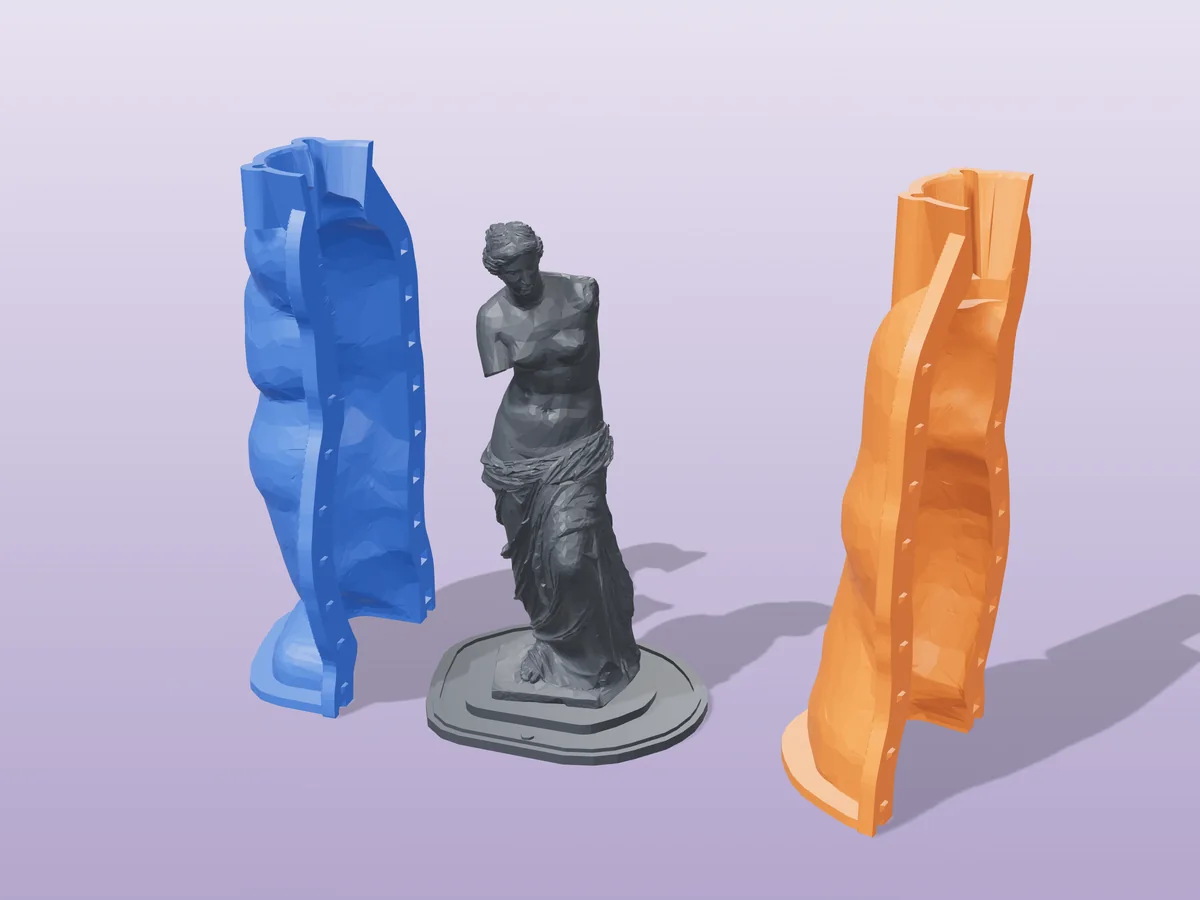
Cast your own 140 mm Venus de Milo in plaster or concrete, from a public-domain museum scan.