◆ Resin
Polyhedral dice set resin mold
Six sharp-edge dice, d4 to d20, every number engraved, cast in resin from one silicone mold you make yourself.
◆ Resin
Six sharp-edge dice, d4 to d20, every number engraved, cast in resin from one silicone mold you make yourself.
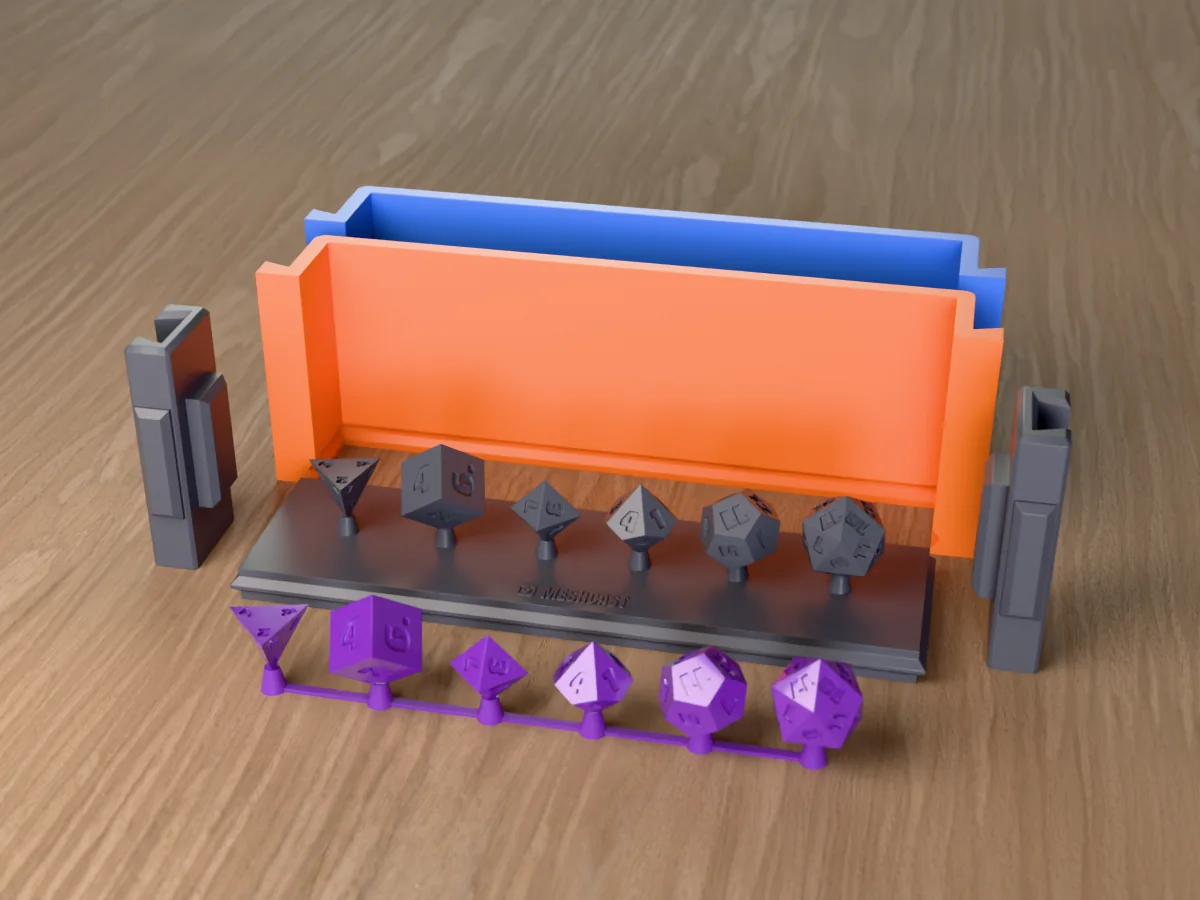
A resin dice mold for one polyhedral set: a d4 with 20 mm edges and its numbers by the corners, a 16 mm d6, a d8 and a d10 about 20 mm across, an 18 mm d12 and a 20 mm d20. Every face carries its number engraved 0.7 mm deep, opposite faces add up the way real dice do, and the 6 and 9 carry a dot. Sharp edges, the look resin dice makers sell. The whole set takes about 18 ml of resin.
Made with the box mode of our silicone mold maker, the mode the tool itself suggests for this shape. Each die hangs point down from a short tapered sprue, so in the finished mold every die is closed on all faces and fills through its top corner: the air rises out through the sprue instead of leaving a bubble on a face. A shallow channel joins the six sprue mouths, so one pour runs along it into all six. Print the base with the dice fused onto it, the two walls and the two clamps, and pour about 493 ml of silicone.
Pour clear resin with mica, alcohol ink swirls, glitter or a tiny flower inside, then ink the engraved numbers. The zip carries every printed part, the dice master as its own STL, the tool's own print-settings sheet and a recipe file for the generator.
Shown as a 3D render of the printed mold parts with a cast set of dice, not a photo.
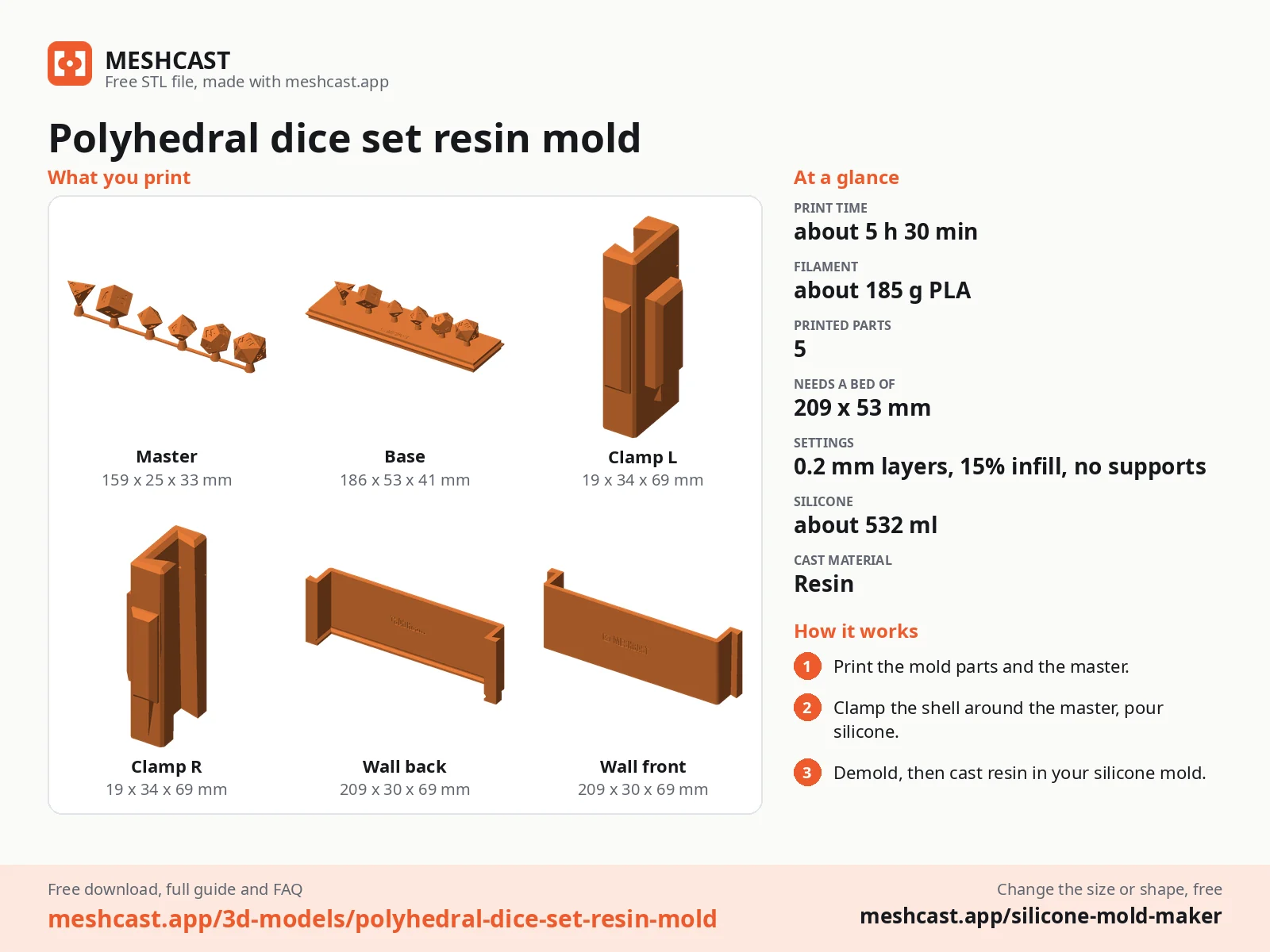
Print the base with the master fused onto it, the two walls and the two clamps.
Stand the base on the table. Set each wall down a few centimetres out from it and slide it in over the table until the ridge round the base sits in the groove at its foot, then slide the clamps down over the seams. Once they are on, the walls cannot lift, and the ridge seals the bottom.
Mix 532 ml of silicone in one batch and pour it into a corner, letting it rise around the master until it covers the top.
Once it has cured, take the clamps off and slide the walls straight out. Each die is closed in the block, so cut one straight slit down the long side with a sharp knife, from the open face down past the bottom of the dice, open it like a book and lift the dice master out.
Stand the block back inside the walls with the clamps on, which hold the slit shut. The six holes in the open face are the sprues, joined by the shallow channel.
Mix the resin slowly so it takes in little air, warm it a little to let bubbles rise, and pour a thin stream into the channel so it runs into each sprue in turn. Keep pouring until every sprue is full to the top. A pressure pot, if you have one, gives bubble-free dice.
Let it cure as long as the resin says, usually 24 to 48 hours. Take the walls off, open the slit and pop the dice out. Snip each sprue off close to its corner, sand the corner flat from 400 to 2000 grit wet, then ink the numbers and wipe the faces clean.
Print details
| Cast material | Resin |
|---|---|
| Printed parts | 5 |
| Size (W x D x H) | 186 x 53 x 69 mm |
| Print bed needed | 209 x 53 mm, 69 mm tall |
| Filament | ~185 g |
| Layer height | 0.2 mm |
| Infill | 15% |
| Supports | Not needed |
| Download | ZIP: 5 printed parts (STL) + dice set master (STL) + print sheet + recipe |
| Added | 2026-10-01 |
Made with the free Silicone mold maker generator. Upload your own model and get the same kind of mold built around it, in your browser.
Free download. Opens the Thingiverse listing in a new tab.
Free for personal use. Selling the pieces you cast needs a commercial licence (Pro or Founder); passing on the file itself is not permitted on any plan. Full terms.
New to casting? Read the silicone mold maker guide.
Fill each engraved number with acrylic paint or a paint pen, let it dry for a few minutes, then wipe the face with a slightly damp paper towel or a card held flat: the paint stays in the numbers and comes off the face. A coat of clear varnish over it keeps the ink from wearing off.
Each die fills through its top corner, the highest point of the cavity, so air in the resin rises to the sprue and out instead of collecting under a face. Mix slowly, warm the resin a little, and a pressure pot at 40 to 60 psi makes the casts perfectly clear.
They are as fair as any cast resin dice: the shapes are regular solids, and opposite faces add up the same way as on commercial dice. Inclusions such as flowers or big glitter sitting on one side can bias a die slightly, so keep heavy inclusions near the middle.
 Resin
Resin
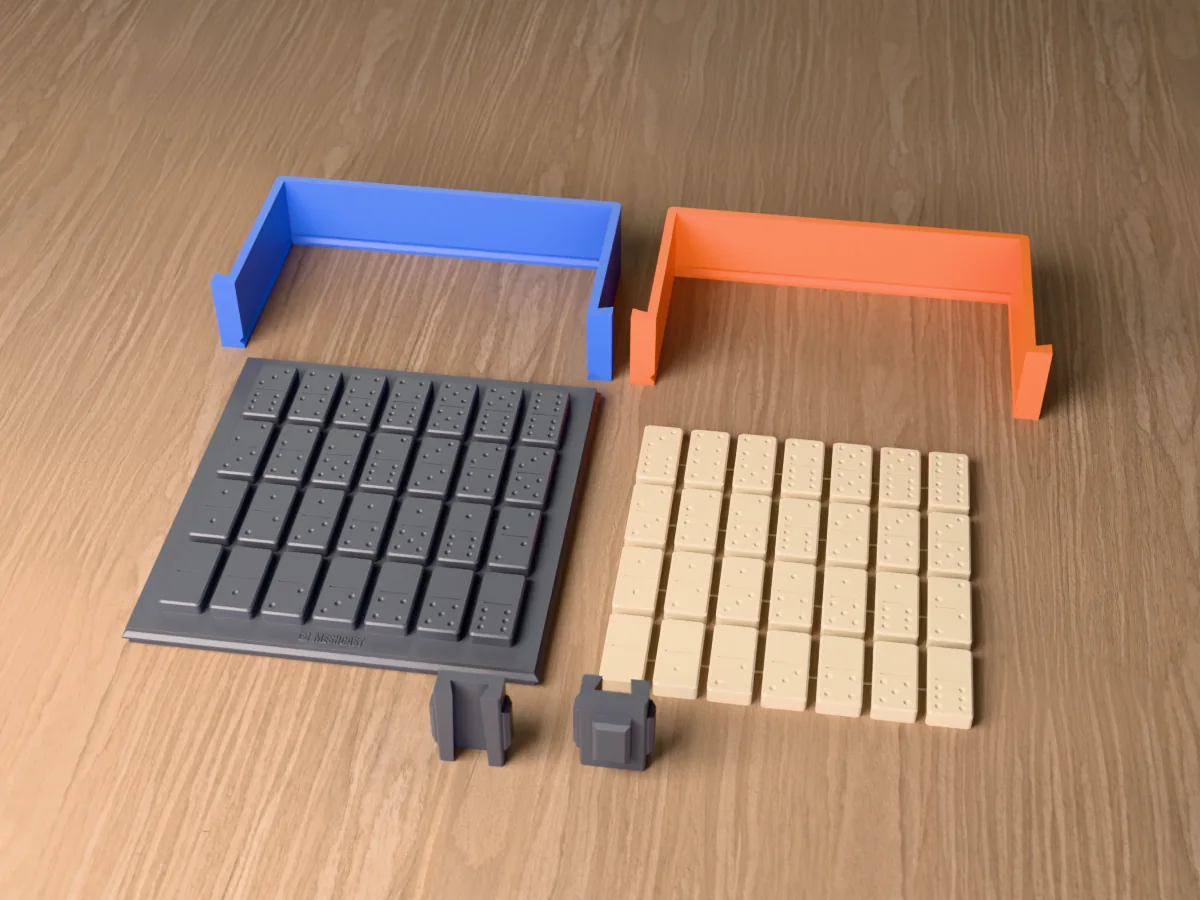
All 28 tiles of a double-six domino set in one pour: 40 x 20 mm tiles with dimpled pips, cast in resin from a silicone mold you make yourself.
 Resin
Resin
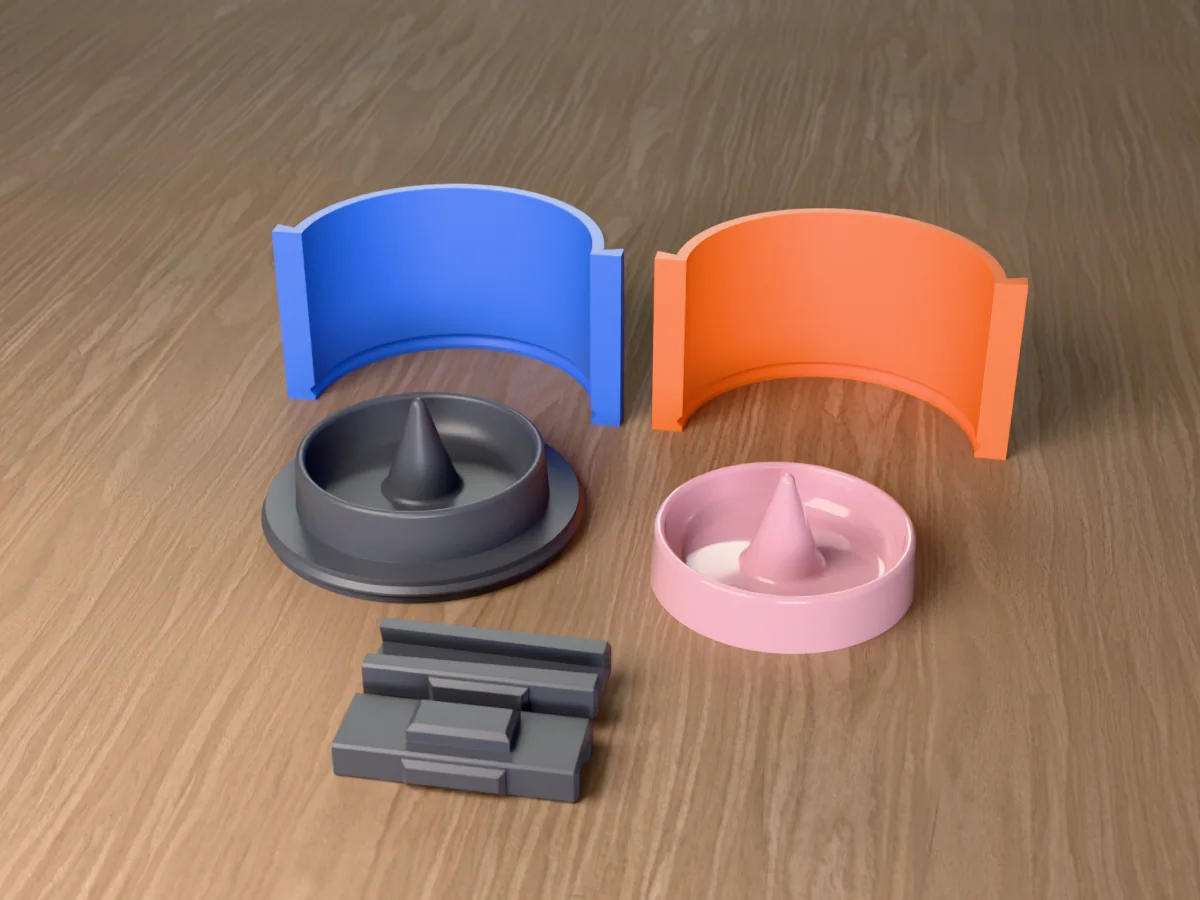
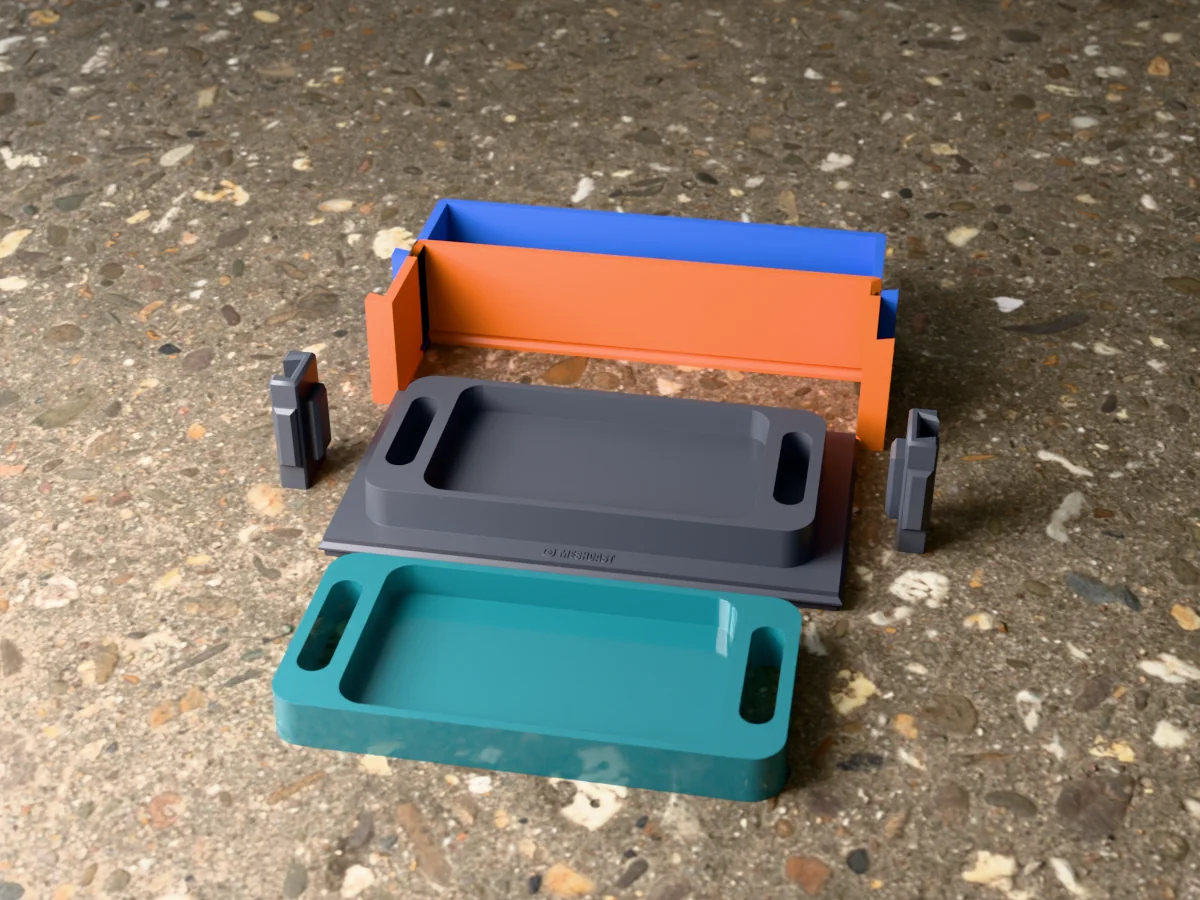
A round trinket dish with a ring cone in the middle, 100 mm across, cast in resin from a silicone mold you make yourself.
 Resin
Resin
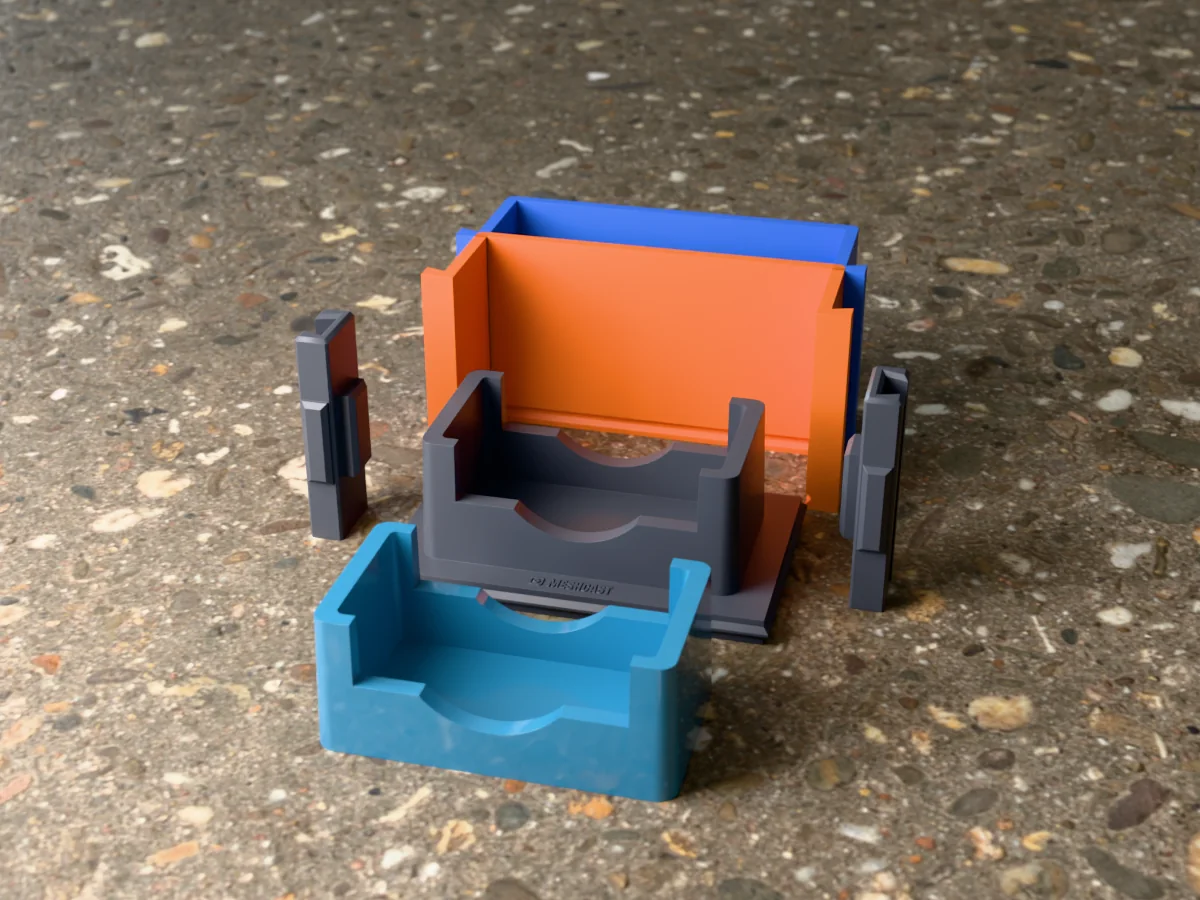
A 194 mm resin serving tray with a finger slot in each handle, cast from a silicone mold you make yourself.
 Resin
Resin
A holder for six resin coasters standing on edge, sized for our 96 mm round, square and hexagon coasters. A silicone mold you make yourself.
 Resin
Resin
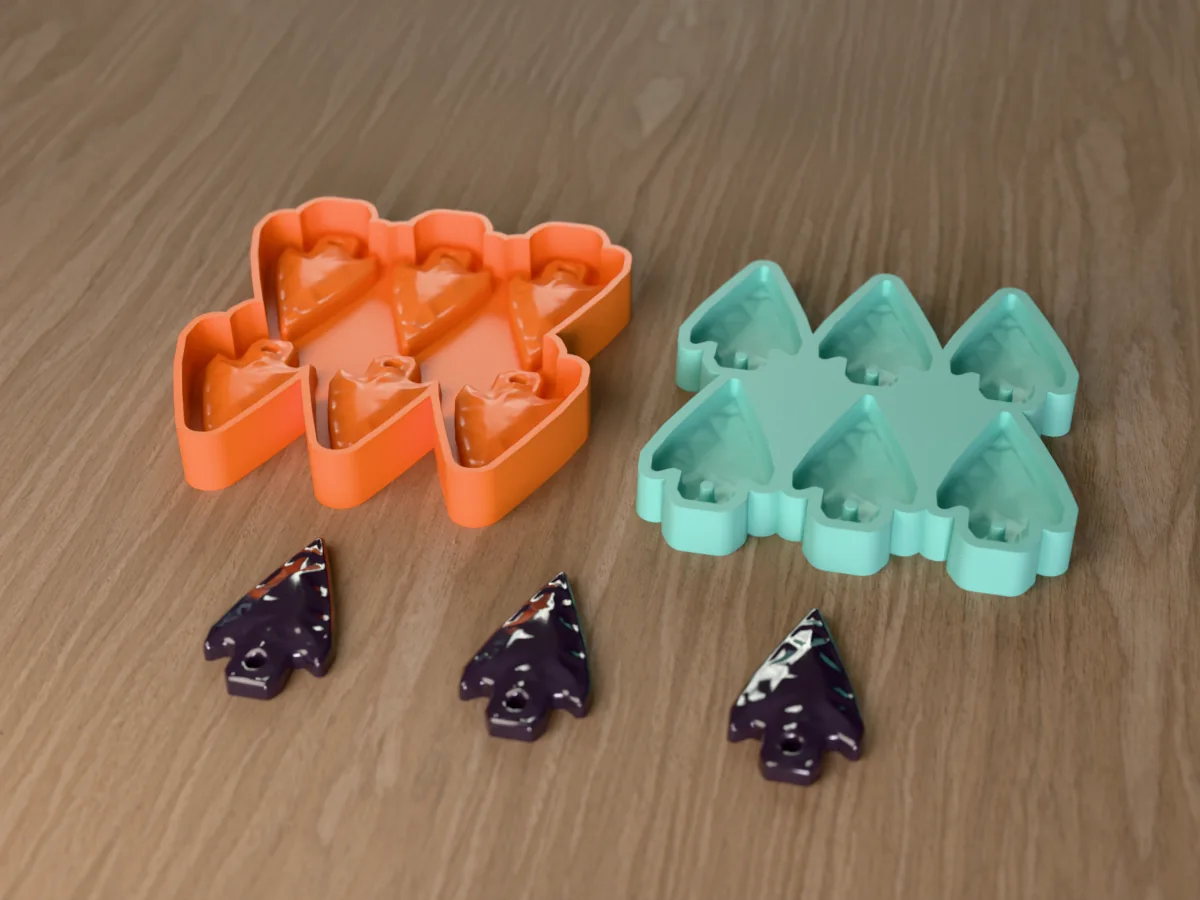
Six flint-look arrowhead pendants per pour in resin, 48 mm long with a hole for the ring. Silicone you pour yourself.
 Resin
Resin
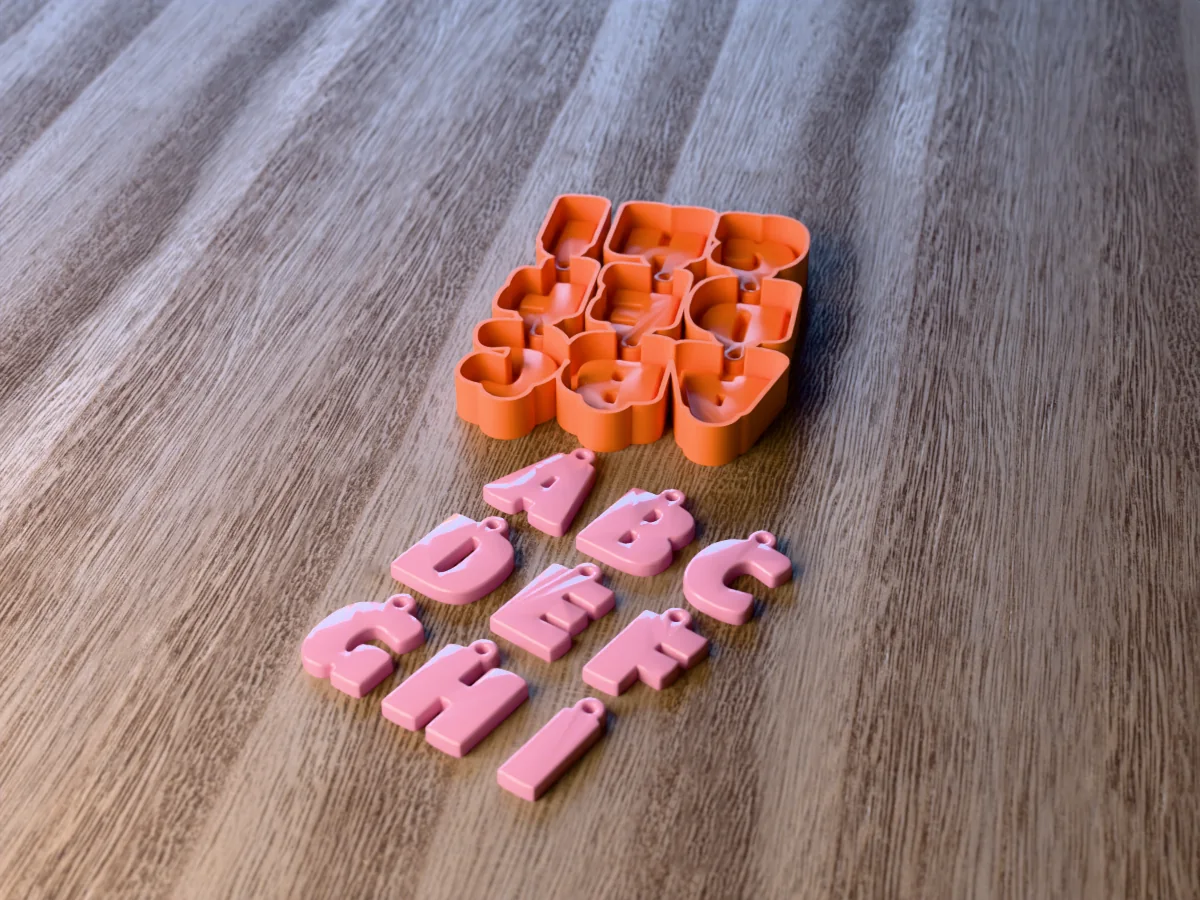
Nine bubble letter keychains, A to I, each with its own key ring hole. From a silicone mold you pour yourself.
 Resin
Resin
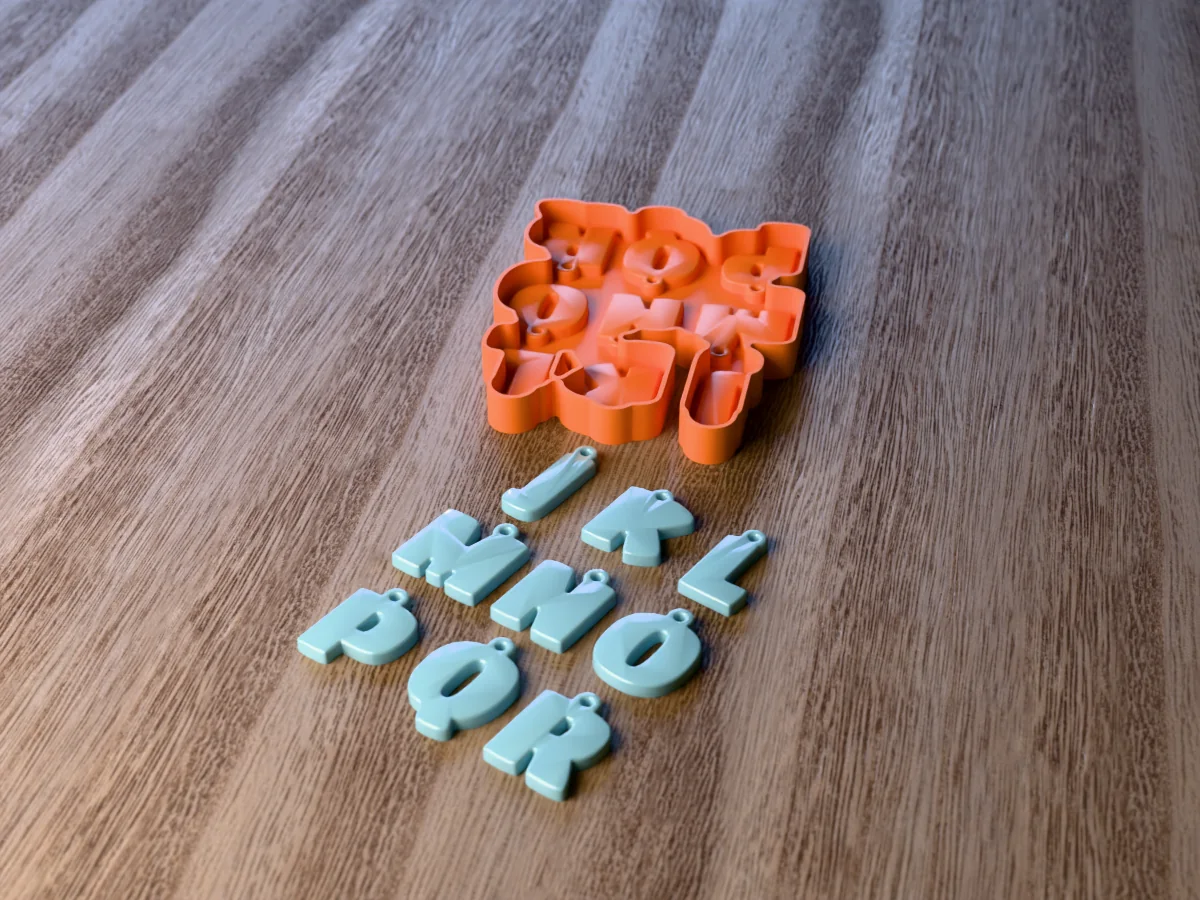
Nine bubble letter keychains, J to R, each with a key ring hole. The middle tray of a full resin alphabet.
 Resin
Resin
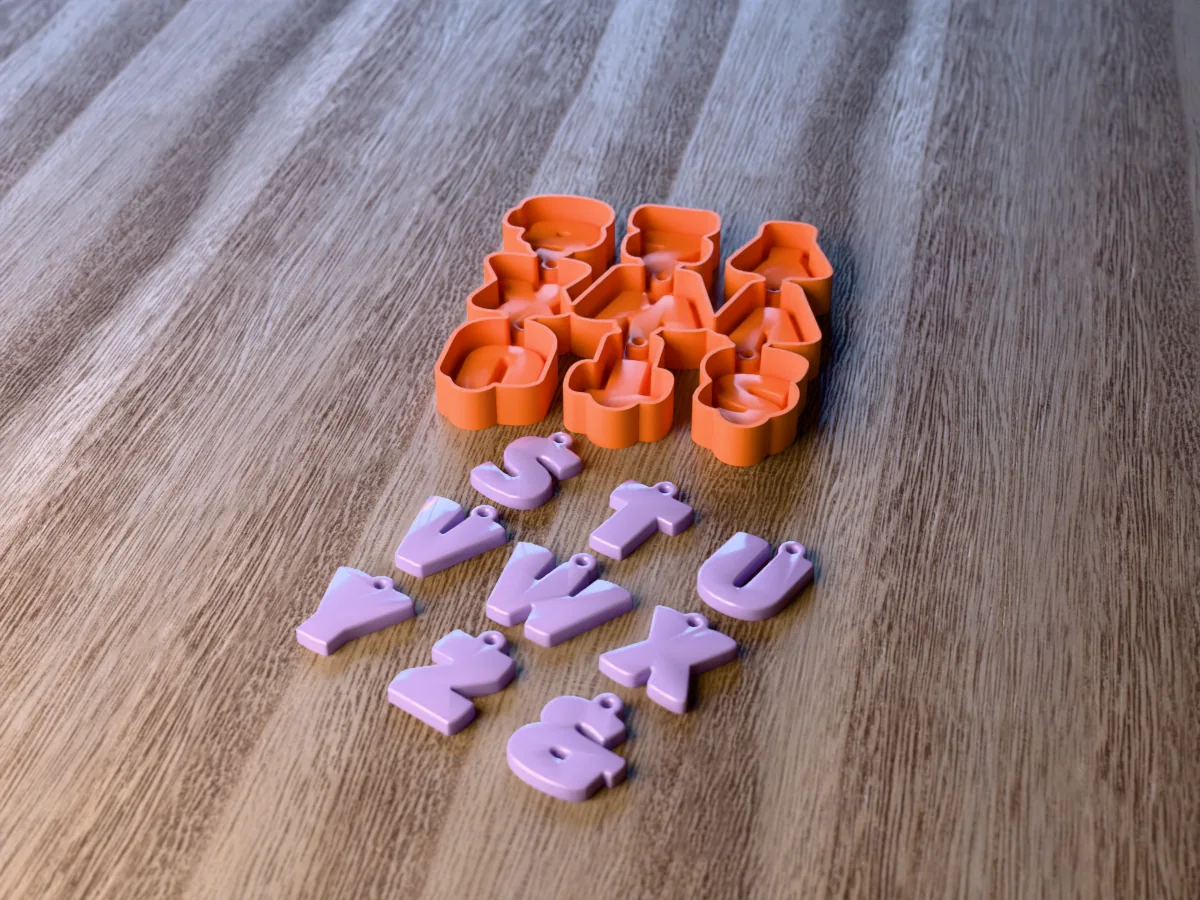
Eight bubble letter keychains, S to Z, and an ampersand, each with a key ring hole. Finishes the resin alphabet.