Dissolvable PVA molds: print, pour, peel
This guide was drafted with AI assistance.
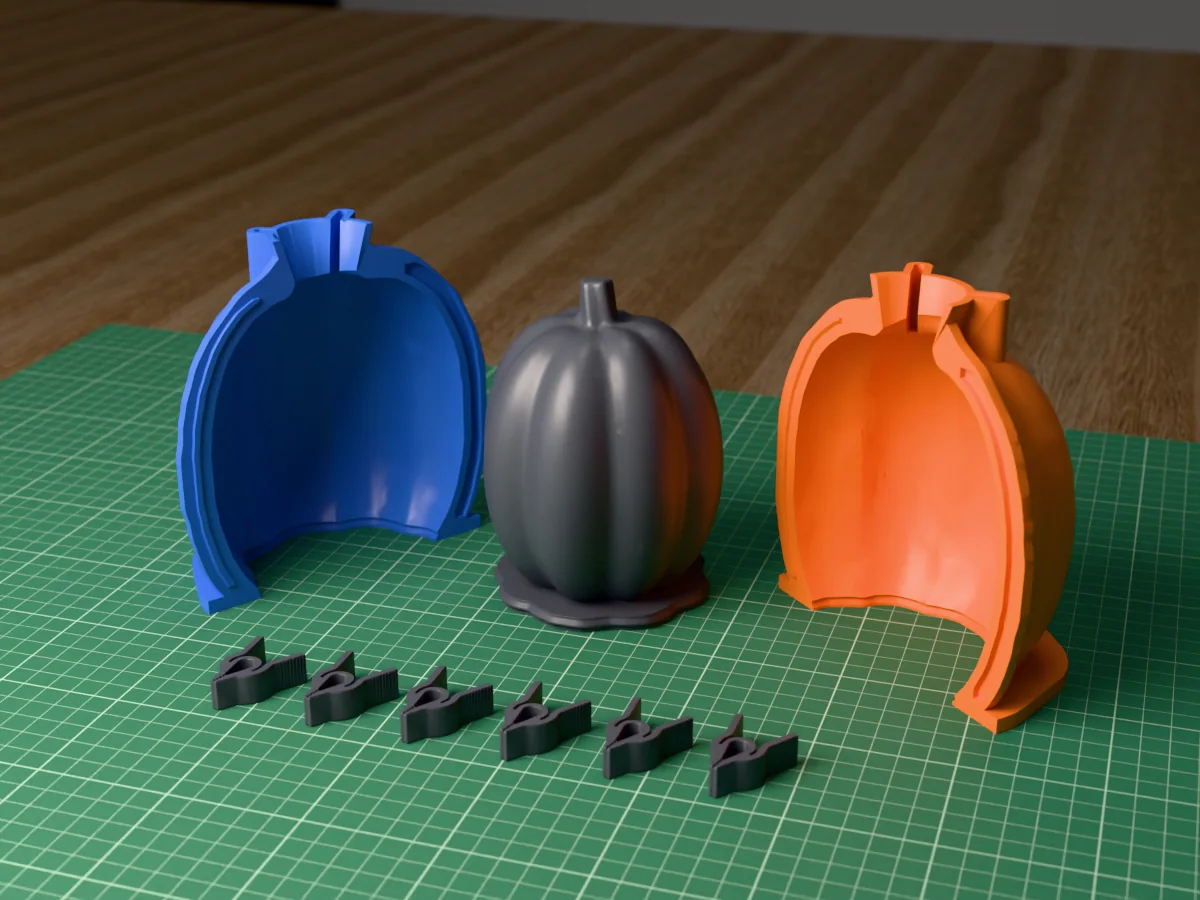
Print a thin one-piece skin around your model in water-soluble PVA, open at the bottom. Fill it with concrete, plaster or resin, let it set, then peel the softened skin off and rinse away the rest. You lose the mold every time, and in exchange you get a cast with no parting line and no undercut limit.
How it works
Every other printed mold has to come off the cast, so it has to split somewhere and it cannot grip any undercut. A dissolvable mold does not come off: it goes away. That is the whole trick, and it is why a branching Christmas tree, a bust with deep eye sockets or a lattice can be cast in one pour.
The mold is just a skin that follows the model's surface on the inside, about 1.6 mm thick, open on one face. That face becomes the flat back of the cast: it is where you pour, and it is the poured surface once it sets.
When to use it, and when not
| Dissolvable PVA skin | Two-part rigid mold | Silicone mold | |
|---|---|---|---|
| Casts per mold | One | Many | Dozens |
| Parting line | None | Yes | Yes, faint |
| Undercuts | Any | Only filled or avoided | Most, the silicone flexes |
| Time to first cast | Print, pour | Print, pour | Print, pour silicone, cure, then cast |
| Best for | One-offs, prototypes, impossible shapes | Series of simple shapes | Series of detailed shapes |
If you want twenty copies, make a silicone mold. If you want one perfect copy of something no mold could release, print a skin.
Which casting materials work
| Material | Verdict | Why |
|---|---|---|
| DIY concrete, cement | Best match | The water in the mix softens the PVA from the inside, so after a day the skin peels off like a film. |
| Plaster, Jesmonite | Good | Same effect, and they set faster. Pour in one go. |
| Epoxy, polyurethane resin | Good | No water, so the skin stays firm and is dissolved afterwards. Use a slow resin; a hot, fast cure can soften PVA. |
| Wax | Poor | Hot wax softens PVA. |
| Soap, chocolate | No | Dissolving the mold in water ruins them. |
Printing the skin
Dry the filament
PVA and BVOH pull water out of the air within hours. Damp filament strings, pops and prints a porous, weak wall, which is the one thing a thin mold cannot afford. Dry it in a filament dryer before every print and keep it sealed with desiccant.
About 1.6 mm of wall
Two walls of a 0.8 mm nozzle, or four of a 0.4. Thinner dissolves faster; thicker holds a heavy concrete pour without bulging. In the slicer the skin is all wall, so infill hardly matters.
Opening down, rim on the bed
Print it the way the tool exports it: the opening on the plate, the flat rim as the first layer. The skin then grows upward following the model, which most shapes manage without supports.
Pouring
Turn the skin over so the opening faces up and stand it in a cup or box of sand or rice. That holds it level and supports the thin wall against the weight. Pour slowly into one spot and let the material rise; tap the sides to bring bubbles up. Fill to the rim and level it off: that surface is the back of your cast.
Peeling and dissolving
Wait until the cast is firm: about a day for DIY concrete, an hour or two for plaster, the cure time on the label for resin. Then:
- Peel first. A skin softened by concrete or plaster comes off in sheets. Cut it with a craft knife where it holds on.
- Dissolve the rest in warm water, 40 to 60 °C. Moving water (a tub with a pump, or a rinse under the tap) is many times faster than a still bath.
- Let the cast dry fully before sealing or painting it. Concrete and plaster keep curing for days.
Dissolved PVA is not hazardous in household amounts, but a lot of it in a sink can leave a slimy film in the pipes. Pour the water away in small amounts with plenty of fresh water behind it.
Problems
The skin bulged or burst during the pour
Cause Too thin for the weight, damp filament, or no support around it.
Fix Raise the wall to 2 to 2.5 mm for big concrete casts, dry the filament, and bury the skin in sand up to just under the rim.
It leaks at the bottom
Cause Gaps in the first layers or the wall, almost always from wet filament or a first layer that did not stick.
Fix Keep the rim on (it gives a solid first layer) and print slower for the first few millimetres.
Layer lines show on the cast
Cause The cast copies the inside of the print, as with every printed mold.
Fix Print at 0.12 to 0.16 mm layers. You cannot sand inside a closed skin, so the print settings are the finish. A light sanding of the cast afterwards handles the rest.
The resin cast came out soft or tacky where it touched the skin
Cause Moisture from damp PVA reacting with polyurethane resin.
Fix Dry the printed skin (not just the filament) for a few hours before pouring resin, or use epoxy, which is far less moisture-sensitive.
FAQ
Can you cast concrete in a PVA mold?
Yes, and it is the best match for the method. The water in the concrete softens the PVA, so after the concrete has set (about a day for most DIY concrete) the skin peels off like a film, and whatever is left dissolves in warm water.
How thick should a dissolvable PVA mold be?
About 1.6 mm, which is two walls of a 0.8 mm nozzle or four of a 0.4 mm nozzle. Thinner dissolves faster and uses less filament; go thicker for a large or heavy concrete pour so the wall does not bulge.
How long does PVA take to dissolve?
A 2 to 4 mm thick PVA wall takes roughly 12 to 24 hours in still room-temperature water, and a few hours in warm (around 60 C), moving water. Peel off as much as you can first and dissolve only the rest. BVOH dissolves about two to three times faster than PVA.
Can you pour resin into a PVA mold?
Yes. Epoxy and polyurethane resin contain no water, so the skin stays firm and you dissolve it in a warm water bath after the resin has cured. Use a slow-curing resin: a fast, hot-curing one can soften PVA from the inside.
Can you use a PVA mold for candles or soap?
Not well. Hot wax softens PVA, and dissolving the mold in water ruins soap and chocolate. Use a reusable two-part or silicone mold for those.
Contoured molds
All free designs →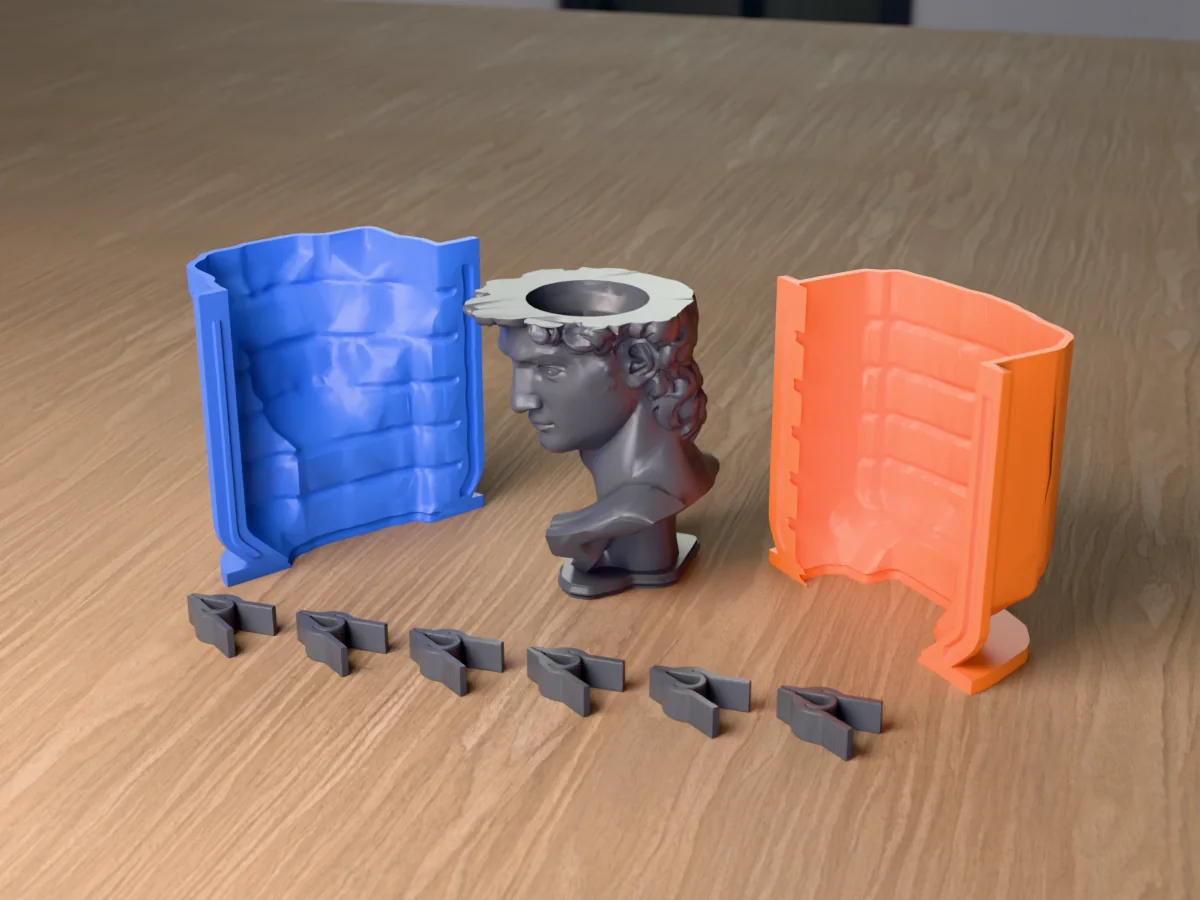
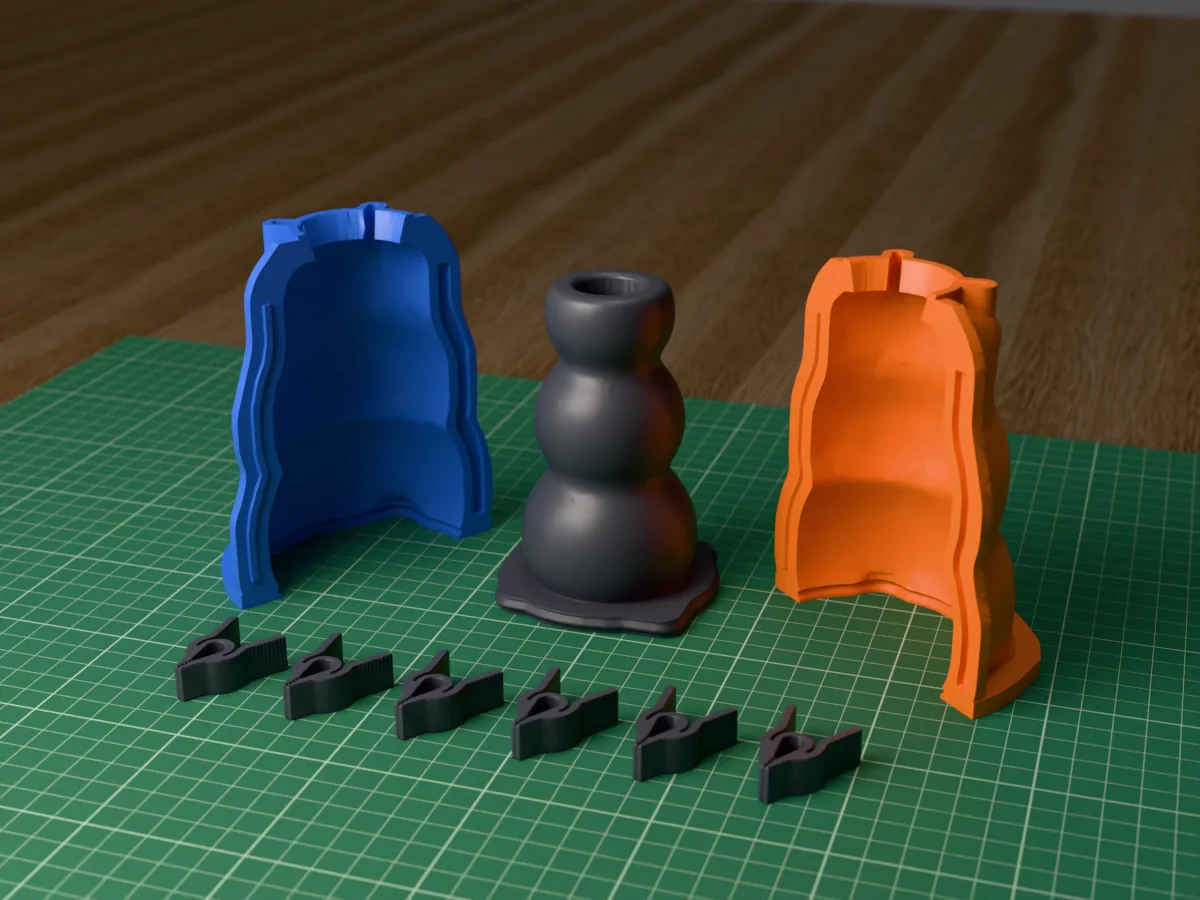
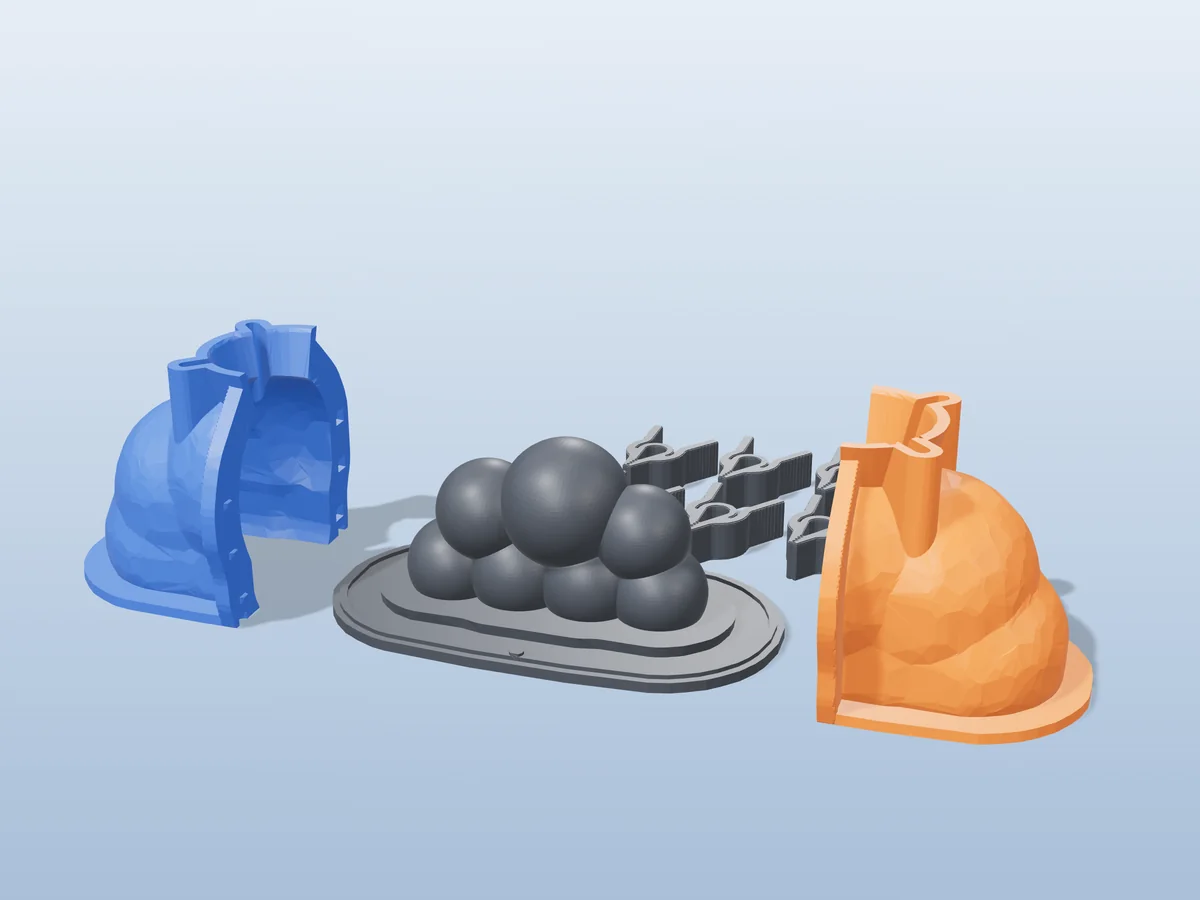
Made by meshcast.app. Cast something in PVA? Send a photo, I'd love to see it.