◆ Resin
Chess bishop mold
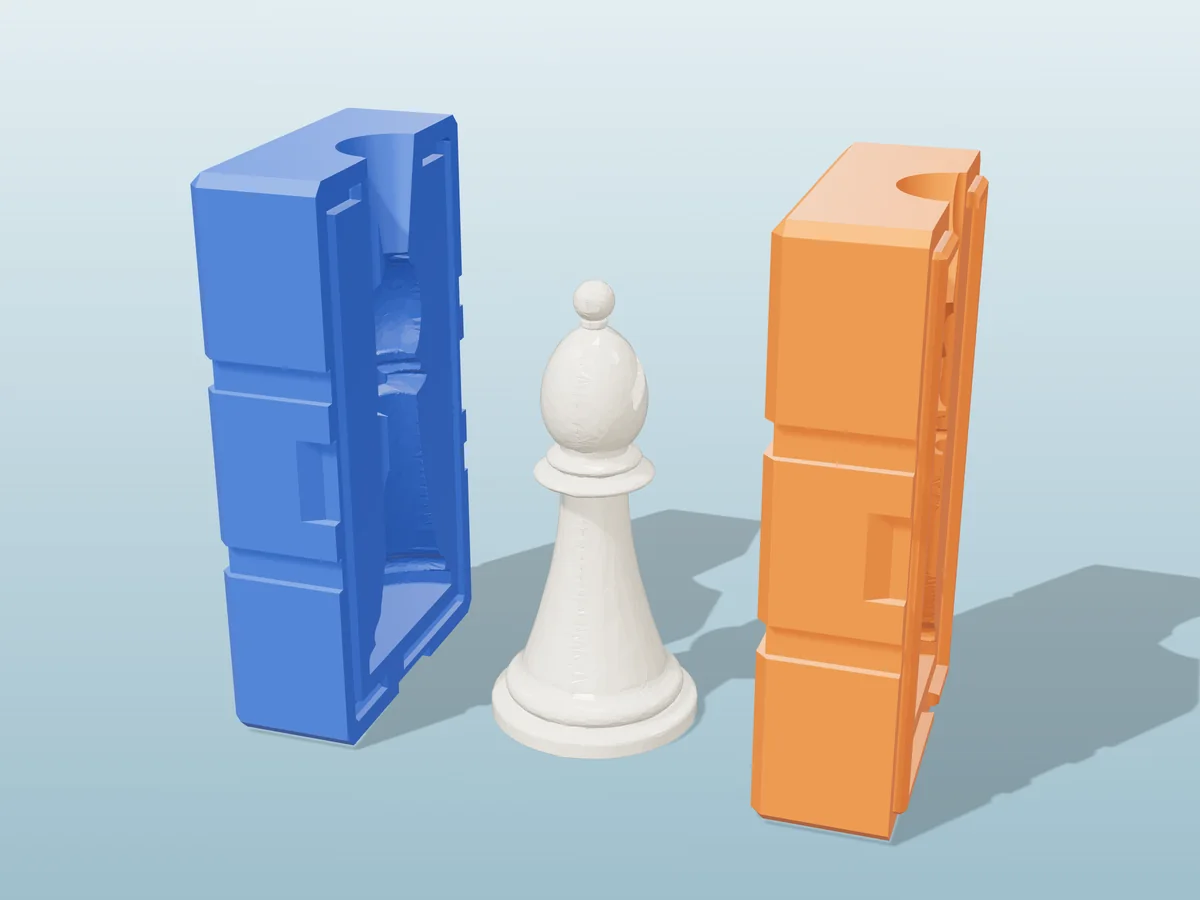
A 78 mm Staunton chess bishop to go with the pawn, from a rigid two-part print. Cast it in resin, no silicone.
◆ Resin
A 78 mm Staunton chess bishop to go with the pawn, from a rigid two-part print. Cast it in resin, no silicone.
A classic Staunton bishop, 78 mm tall on a 36 mm foot: foot, bead, waisted body, a double collar and the mitre with its diagonal slit, topped with a small ball. It is sized to stand with the pawn from the same library.
The mold is exactly what our two-part candle mold generator builds for this shape, set to resin: two rigid halves with rubber-band grooves, pry pockets and a pour funnel on the finial. The body is turned round one axis, and the slit in the mitre is cut from the front so it opens straight out of the front half, which is why the tool's own seam check finds nothing stuck.
A chess set needs four bishops, two of each colour: print the mold once and cast them in black and ivory resin, or in plaster and paint them. The zip carries both halves, the bishop master as its own STL, the tool's own print-settings sheet and a recipe file for the generator.
Shown as a 3D render of the printed mold halves pulled apart around the bishop they cast, not a photo.
Print both halves as exported. Clamp-strength settings: 4 walls, 40% gyroid infill, no supports. Sand the seam faces flat if your first layer came out rough.
Coat both cavities with mold release, working it into the slit in the mitre. Close the halves and band them along the whole seam.
Mix the resin and pour it slowly down one side of the funnel so the air can leave through the other side.
Leave it to cure fully, as long as the resin's datasheet says, then open the halves at the pry pockets.
Cut the sprue off the top of the ball, sand it round and trim the thin line along the seam. Release again and cast the next bishop.
Print details
| Cast material | Resin |
|---|---|
| Printed parts | 2 |
| Size (W x D x H) | 46 x 56 x 97 mm |
| Print bed needed | 56 x 24 mm, 97 mm tall |
| Filament | ~147 g |
| Layer height | 0.2 mm |
| Infill | 40% |
| Supports | Not needed |
| Download | ZIP: 2 printed parts (STL) + bishop master (STL) + print sheet + recipe |
| Added | 2026-09-25 |
Pro early access until October 25, 2026, then free with any account.
Make your own candle mold →Made with the free Rigid box mold generator. Upload your own model and get the same kind of mold built around it, in your browser.
Free for personal use. Selling the pieces you cast needs a commercial licence (Pro or Founder); passing on the file itself is not permitted on any plan. Full terms.
New to casting? Read the candle mold guide.
Yes, if the resin is thin enough. Pour a low-viscosity casting resin slowly and tap the closed mold for a minute, so any bubble caught in the slit rises out through the body to the funnel. A thick resin can leave the slit rounded at its bottom.
Yes. Both are Staunton pieces drawn to the same set: a 50 mm pawn on a 30 mm foot and a 78 mm bishop on a 36 mm foot, the usual proportions for a set whose king stands about 95 mm. Cast them in the same resin and they sit together.
Resin pieces are already heavier than plastic ones. For a tournament feel, drop a few steel shot or a large washer into the foot end halfway through the pour, then top up; felt on the bottom covers it and protects the board.
 Pro early access
Resin
Pro early access
Resin
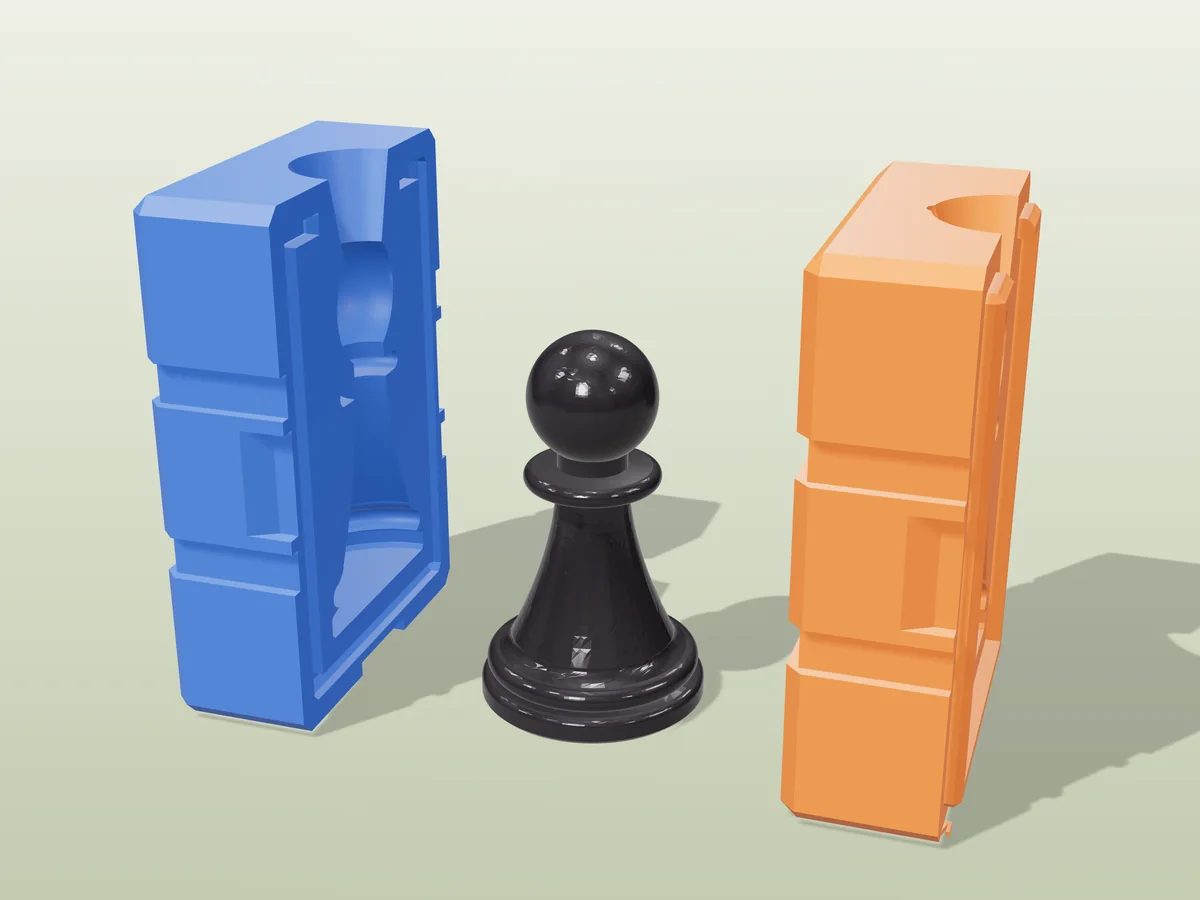
A 50 mm Staunton chess pawn from a rigid two-part print. Cast all sixteen in resin, no silicone.
 Print only
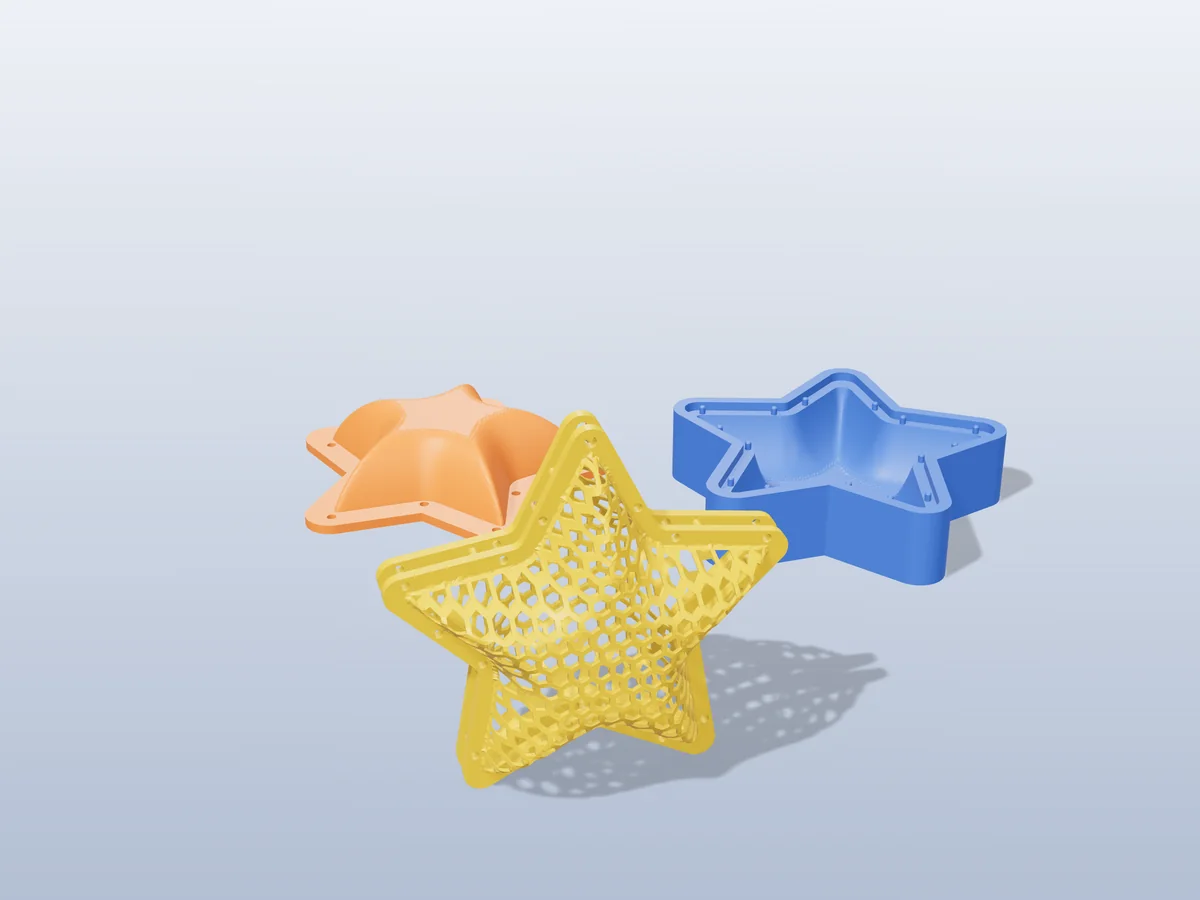
A puffy honeycomb star for the tree: two halves that pin together, with a hanging hole in the top point.
 Print only
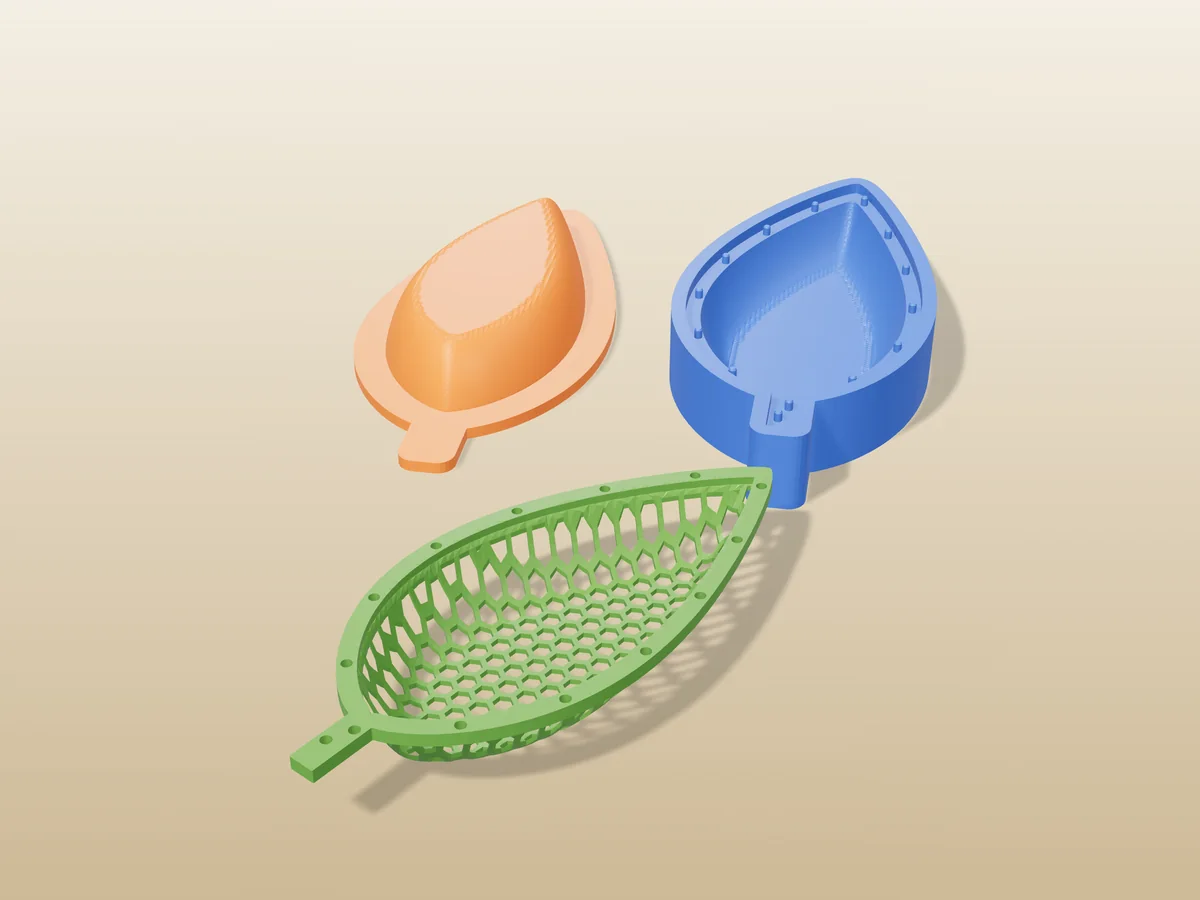
A 130 mm honeycomb leaf dish for keys and trinkets. Print it flat, warm it, press it into shape.
 Print only
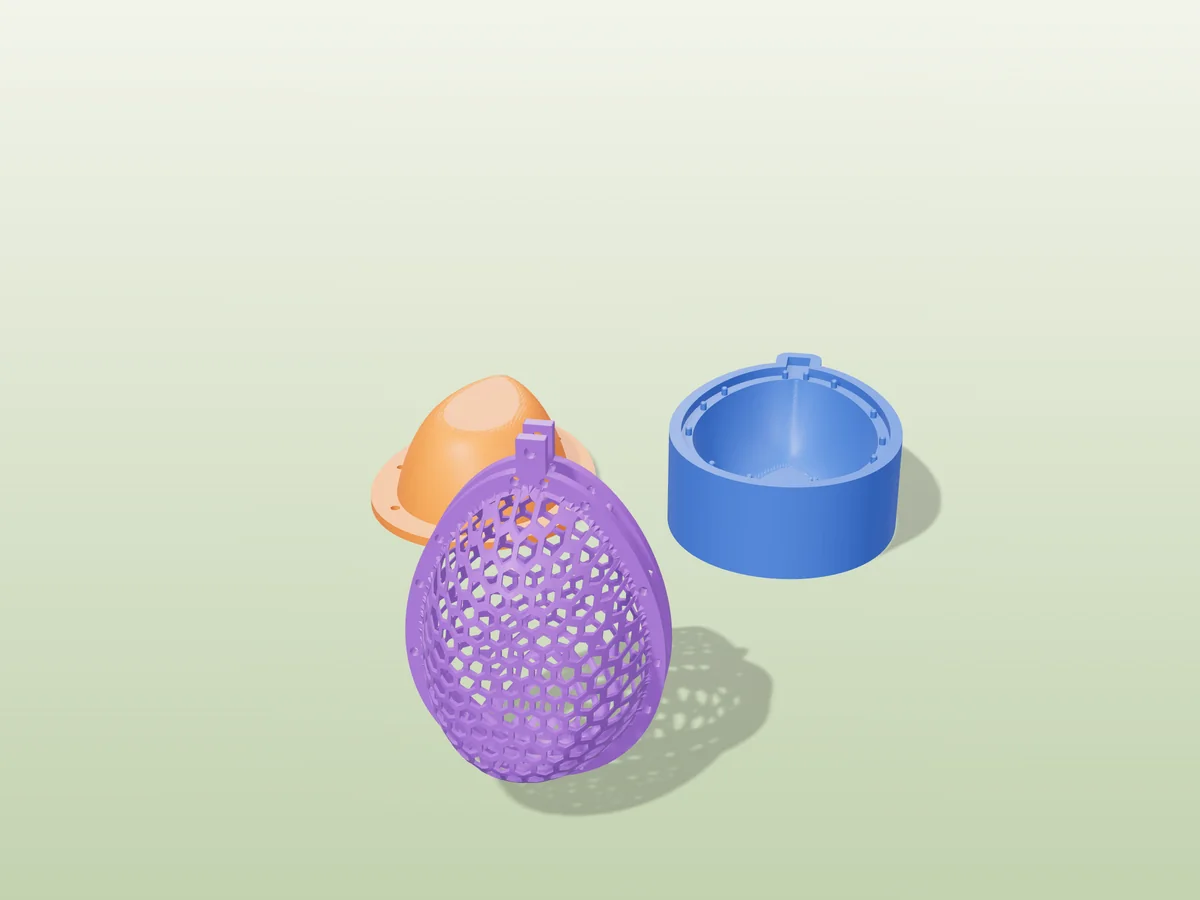
A hollow honeycomb Easter egg in two halves, with a tab and a hanging hole for the Easter tree.
 Pro early access
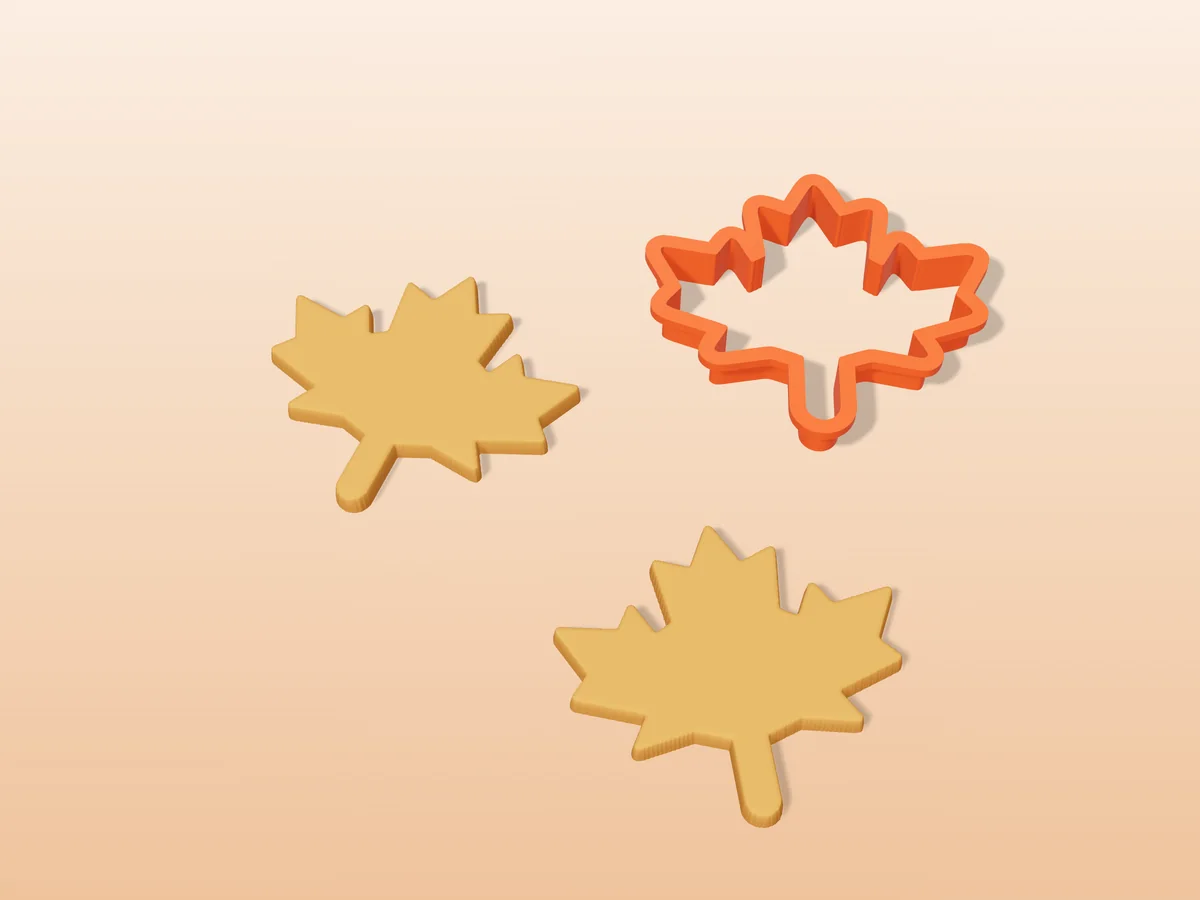
A five-lobed autumn maple leaf with a short, sturdy stem. Thanksgiving, fall parties and Canada Day.
 Pro early access
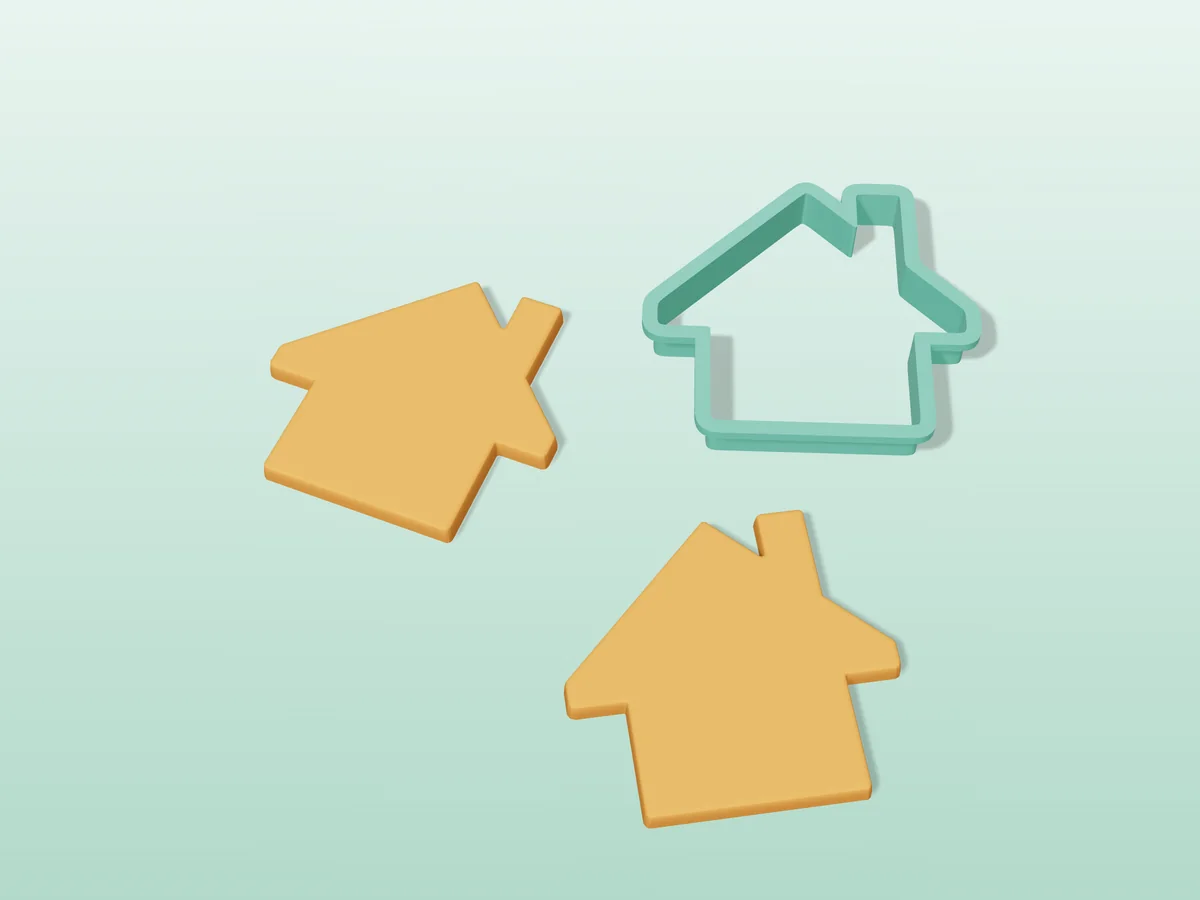
A gingerbread house front with an overhanging roof and a chimney. The whole Christmas village, one cookie at a time.
 Pro early access
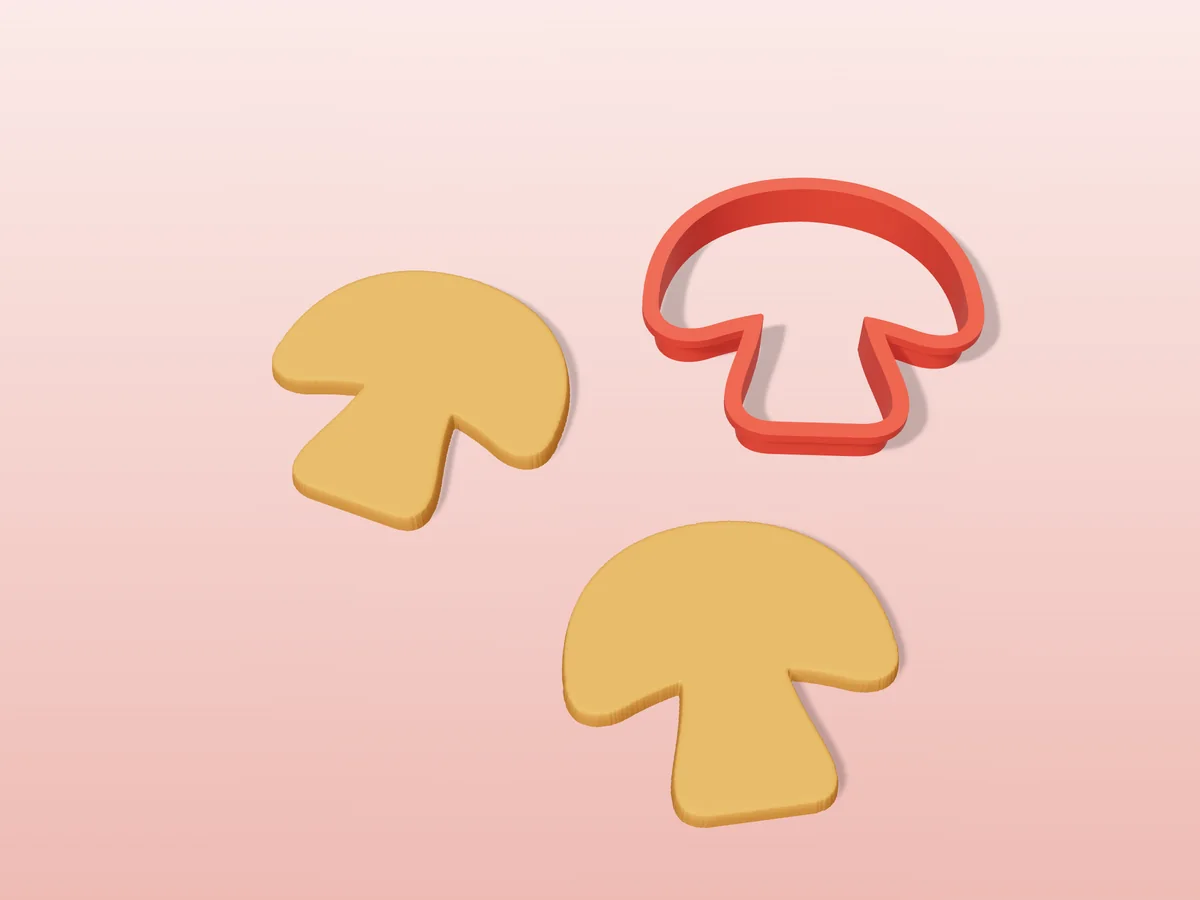
A cute toadstool with a big domed cap and a stout stem. Made for red caps and white spots.
 Pro early access
Ink pad
Pro early access
Ink pad
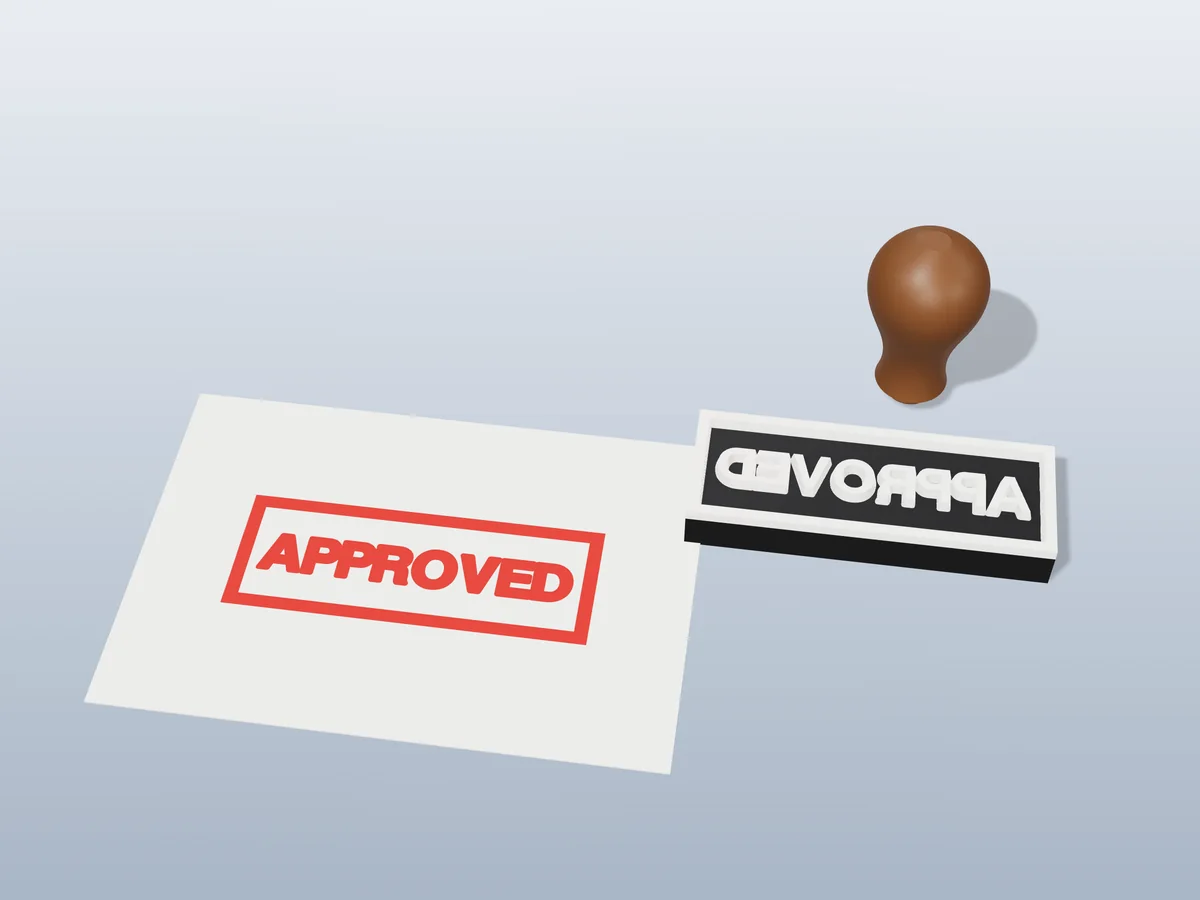
The classic office APPROVED stamp in a bold border, with a screw-on handle. For paperwork, homework and inside jokes.