◆ Soap
Classic rectangle soap bar tray mold
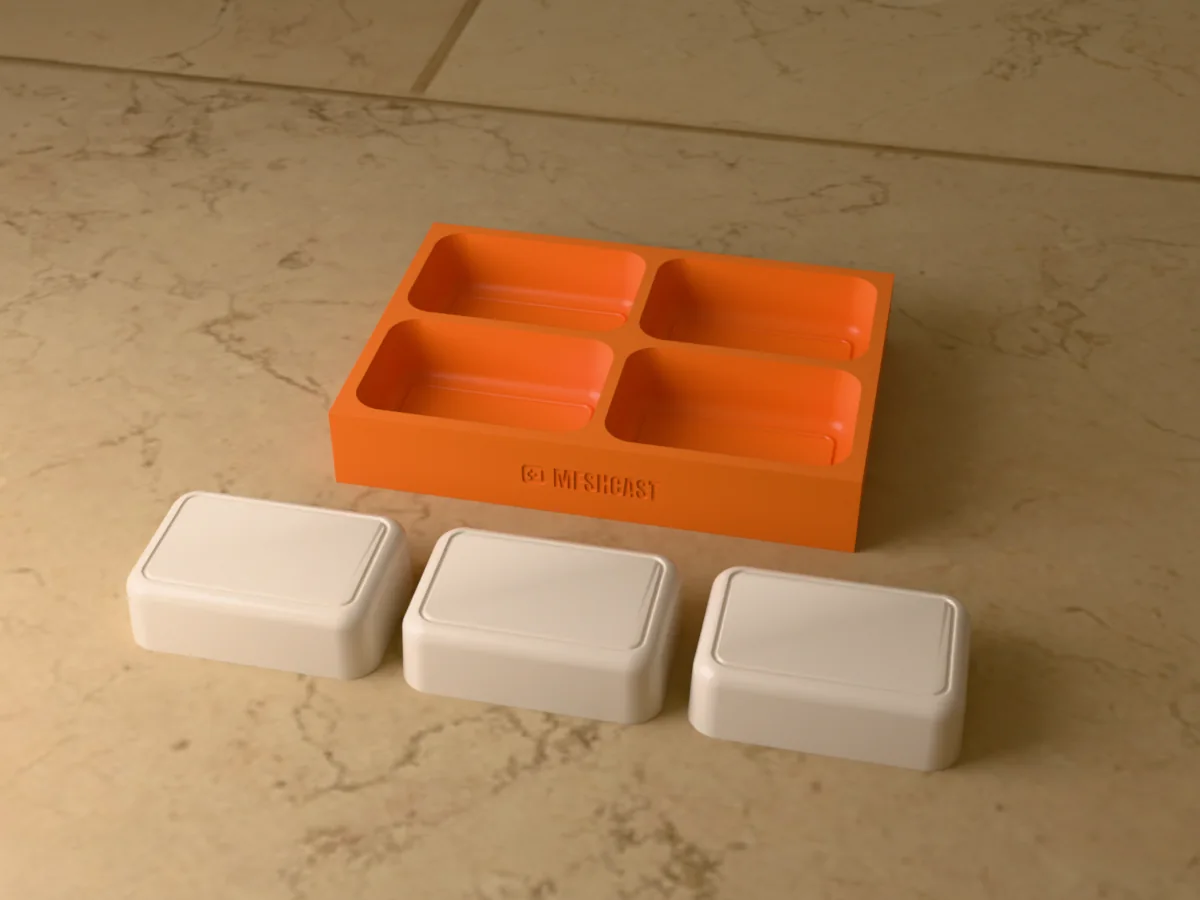
Four classic rectangular soap bars with a thin engraved frame, poured into a printed tray.
◆ Soap
Four classic rectangular soap bars with a thin engraved frame, poured into a printed tray.
A printed tray for four classic rectangular soap bars, each 84 x 56 mm and 26 mm tall, the size of a bar cut from a soap maker's loaf. The edges are rounded to 6 mm so the bar sits well in the hand, and a thin frame is engraved 6 mm in from the edge of the face, which gives a plain bar a finished, handmade look.
Made with our tray mold generator in its rigid tray mode: print the tray and pour melt-and-pour soap straight in, no silicone needed. The sides are drafted, so a chilled bar drops out of the rigid tray whole.
A plain bar is the one every soap range needs: it takes any colour, swirl or embed, and a stamp or label on the back. The zip carries the tray exactly as the tool exported it, one bar on its own as an STL, the master uploaded to the tool, and a print and pour sheet with the volume of each cavity.
Shown as a 3D render of the printed tray with three soap bars, not a photo.
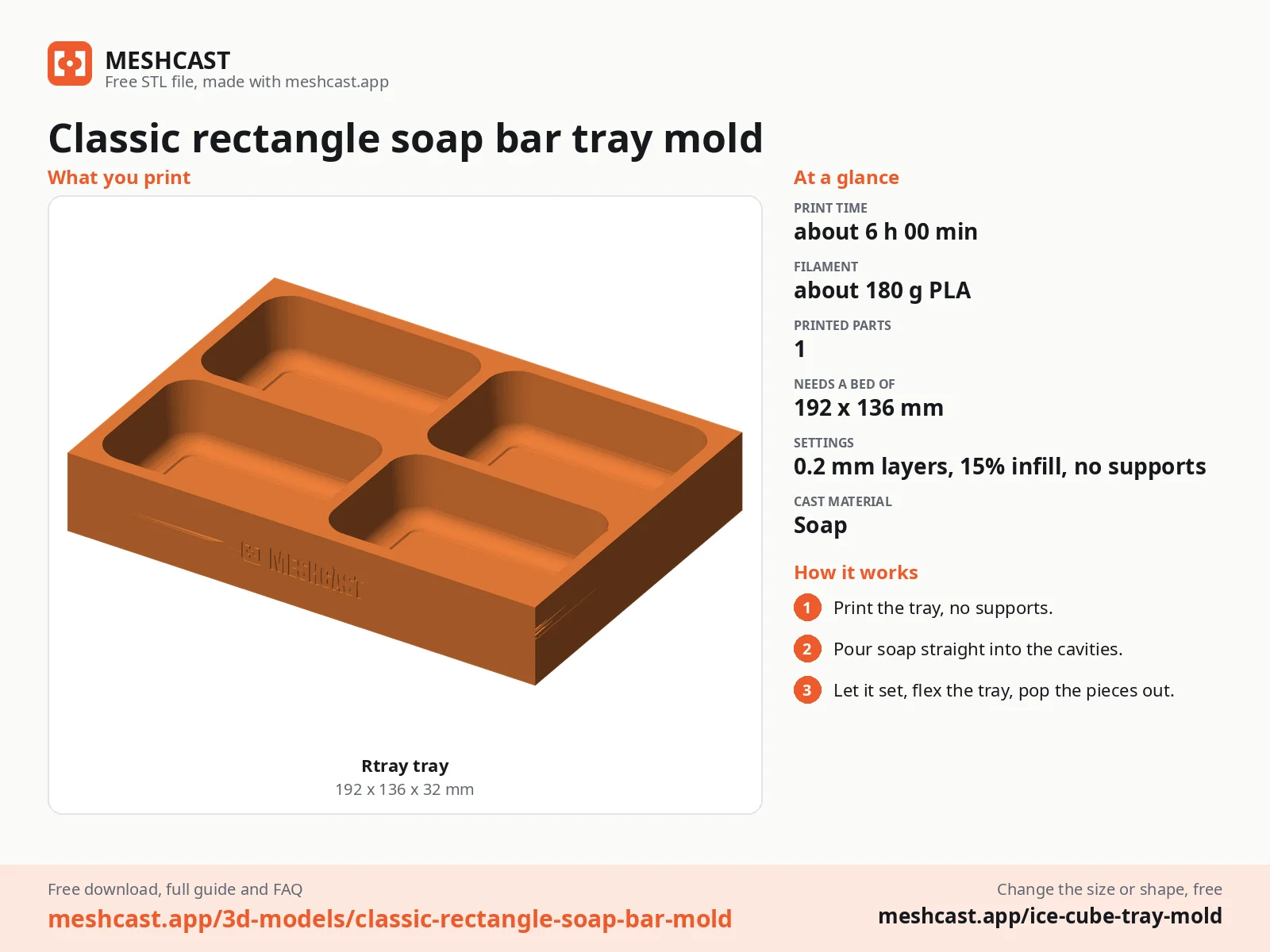
Print the tray as exported, cavities up, no supports. PETG is best: melt-and-pour soap goes in at about 60 C, which is where PLA starts to soften.
Melt the soap base, stir in colour and fragrance, and pour each cavity to the brim. Spray the surface with rubbing alcohol to pop the bubbles.
Let the soap harden for an hour or two, then give the tray 15 minutes in the freezer so the bars shrink away from the walls.
Turn the tray over and press on the back of each cavity to pop the soaps out. Wrap them once they are at room temperature, or they sweat.
Print details
| Cast material | Soap |
|---|---|
| Printed parts | 1 |
| Size (W x D x H) | 192 x 136 x 32 mm |
| Print bed needed | 192 x 136 mm, 33 mm tall |
| Filament | ~180 g |
| Layer height | 0.2 mm |
| Infill | 15% |
| Supports | Not needed |
| Download | ZIP: printed tray (STL) + one soap (STL) + tool master (STL) + print and pour sheet |
| Added | 2026-09-30 |
Made with the free Tray mold generator. Upload your own model and get the same kind of mold built around it, in your browser.
Free download. Opens the Thingiverse listing in a new tab.
Free for personal use. Selling the pieces you cast needs a commercial licence (Pro or Founder); passing on the file itself is not permitted on any plan. Full terms.
New to casting? Read the ice cube tray mold guide.
Each bar holds about 122 ml, so a melt-and-pour bar comes out at roughly 125 g, a standard size to sell. A 1 kg block of base fills the tray twice with a little to spare.
You can, but lye soap stays in the mold for a day or two and is caustic until it has cured, so keep the tray for soap only and demold with gloves. Melt-and-pour is easier: it sets in an hour and drops out after 15 minutes in the freezer.
Spray the empty cavity with rubbing alcohol, pour at the low end of your base's temperature range, and spray the top again straight after pouring. The face of the bar is the bottom of the cavity, so the alcohol in the cavity is what keeps the engraved frame crisp.
 Soap
Soap
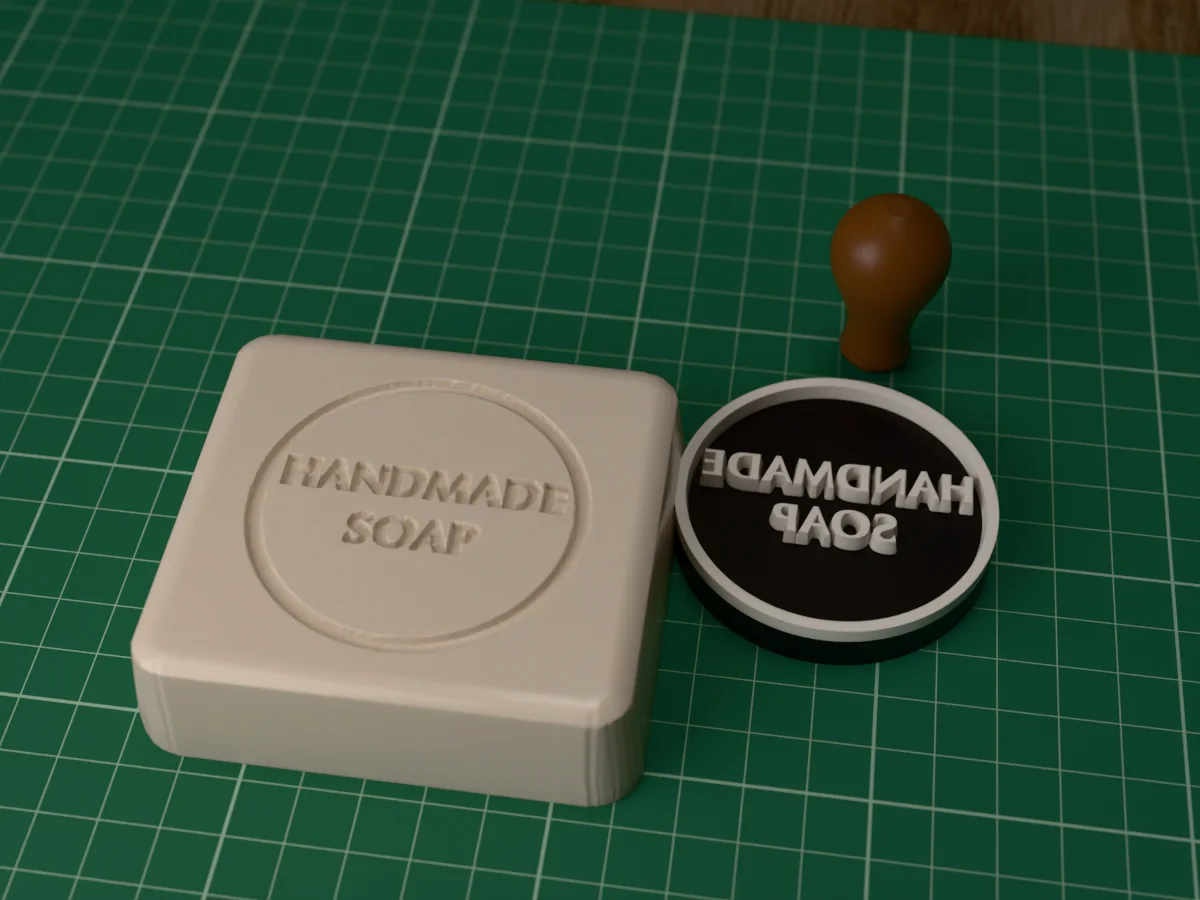
HANDMADE SOAP in a bold serif inside a ring: a deep 56 mm stamp that presses a clean mark into soap bars.
 Soap
Soap
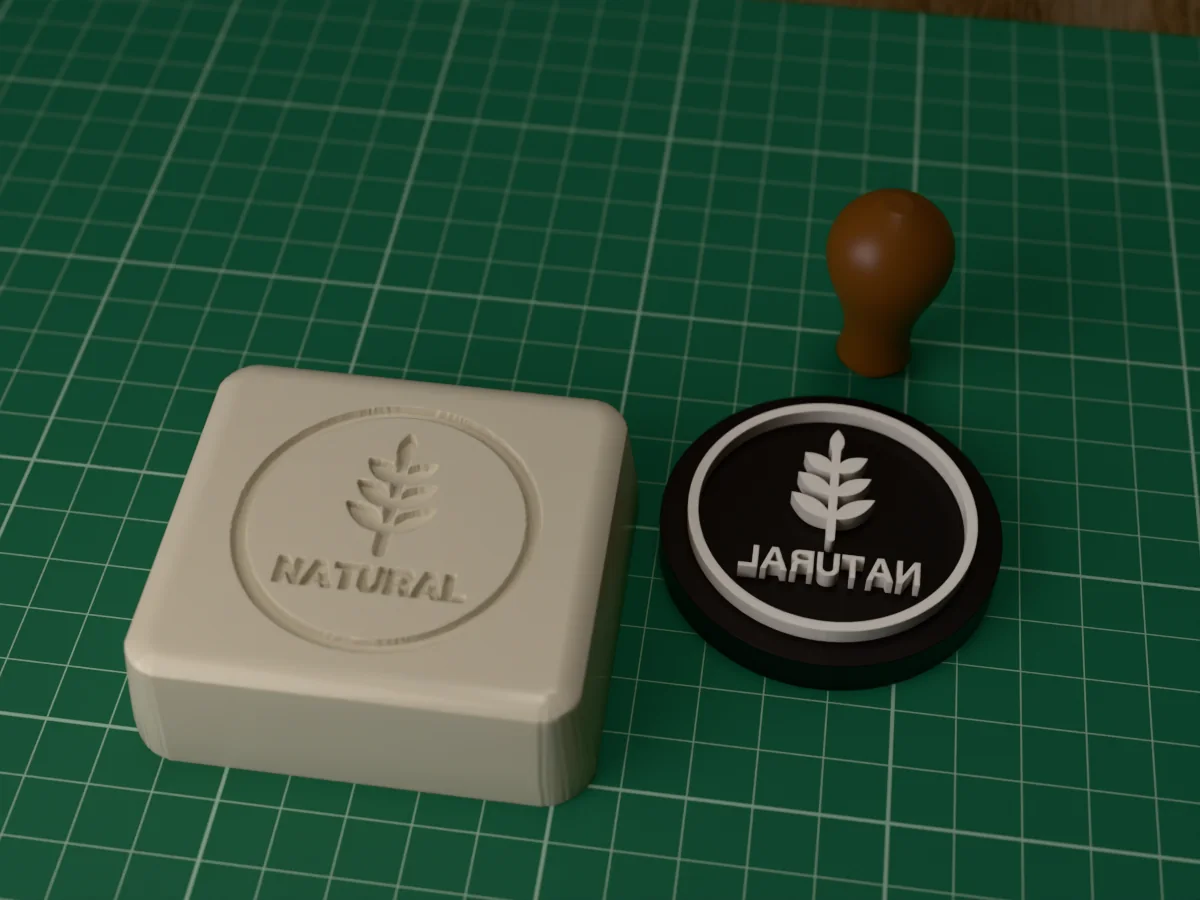
NATURAL under a leafy sprig, in a ring: a deep 56 mm stamp for natural and herbal soap bars.
 Soap
Soap
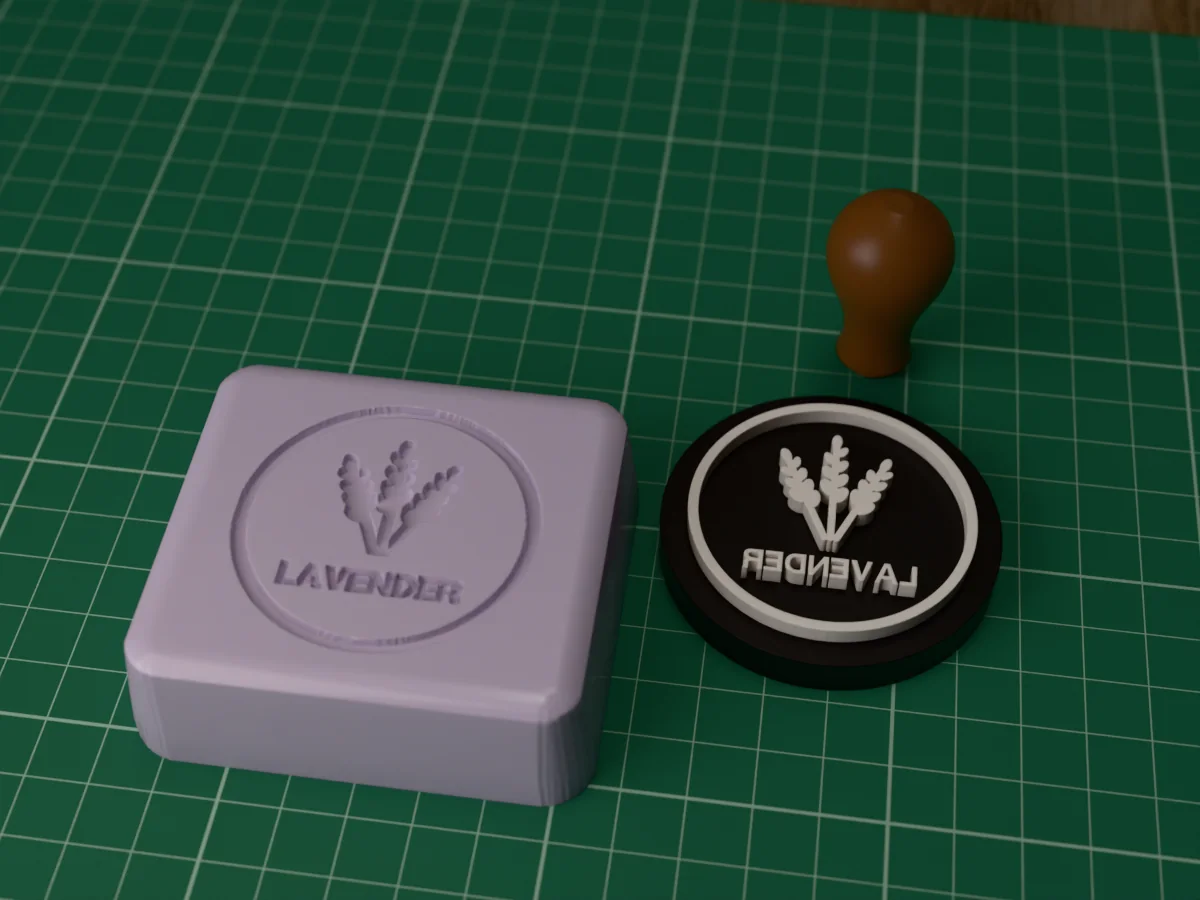
Three lavender sprigs over LAVENDER, in a ring: a deep 56 mm stamp for lavender soap and bath bars.
 Soap
Soap
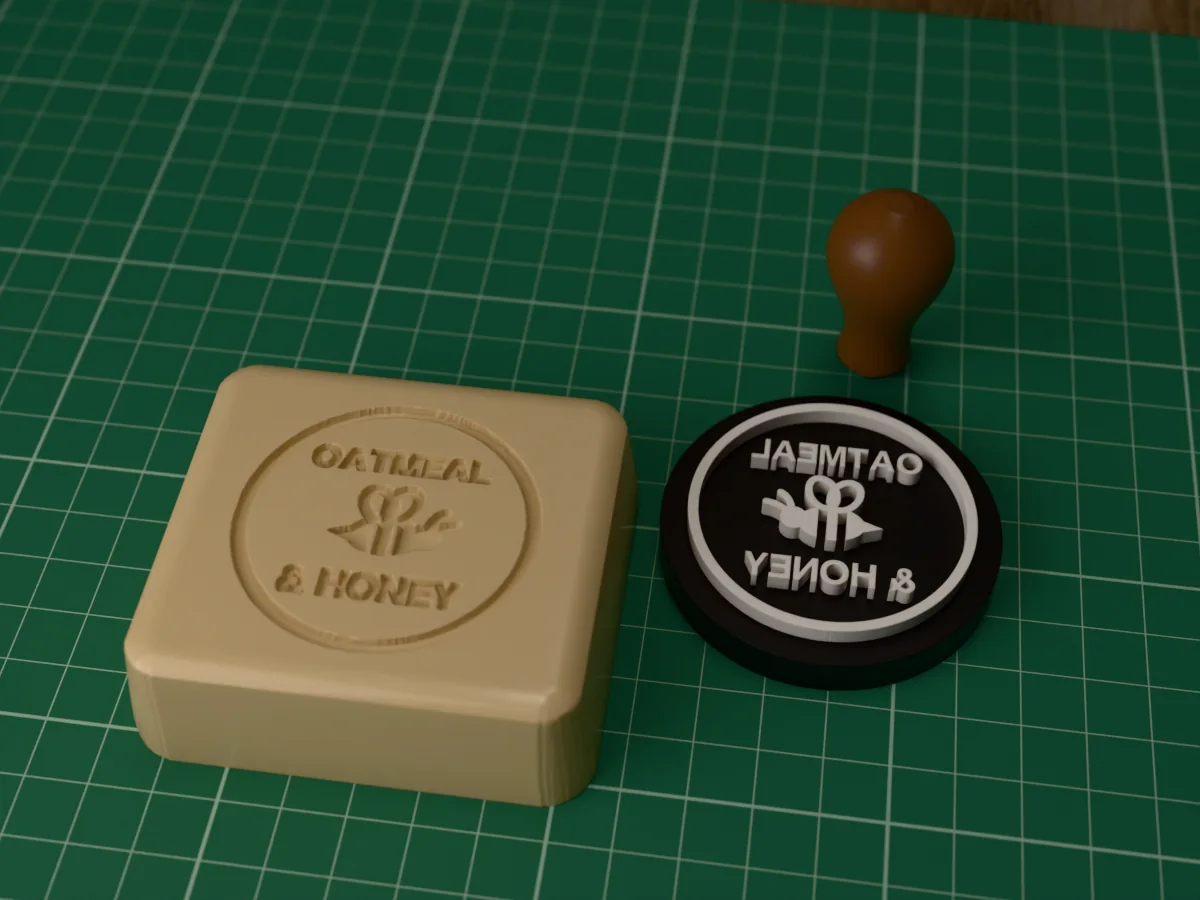
OATMEAL and & HONEY around a little bee, in a ring: a deep 56 mm stamp for oat and honey soap bars.
 Soap
Soap
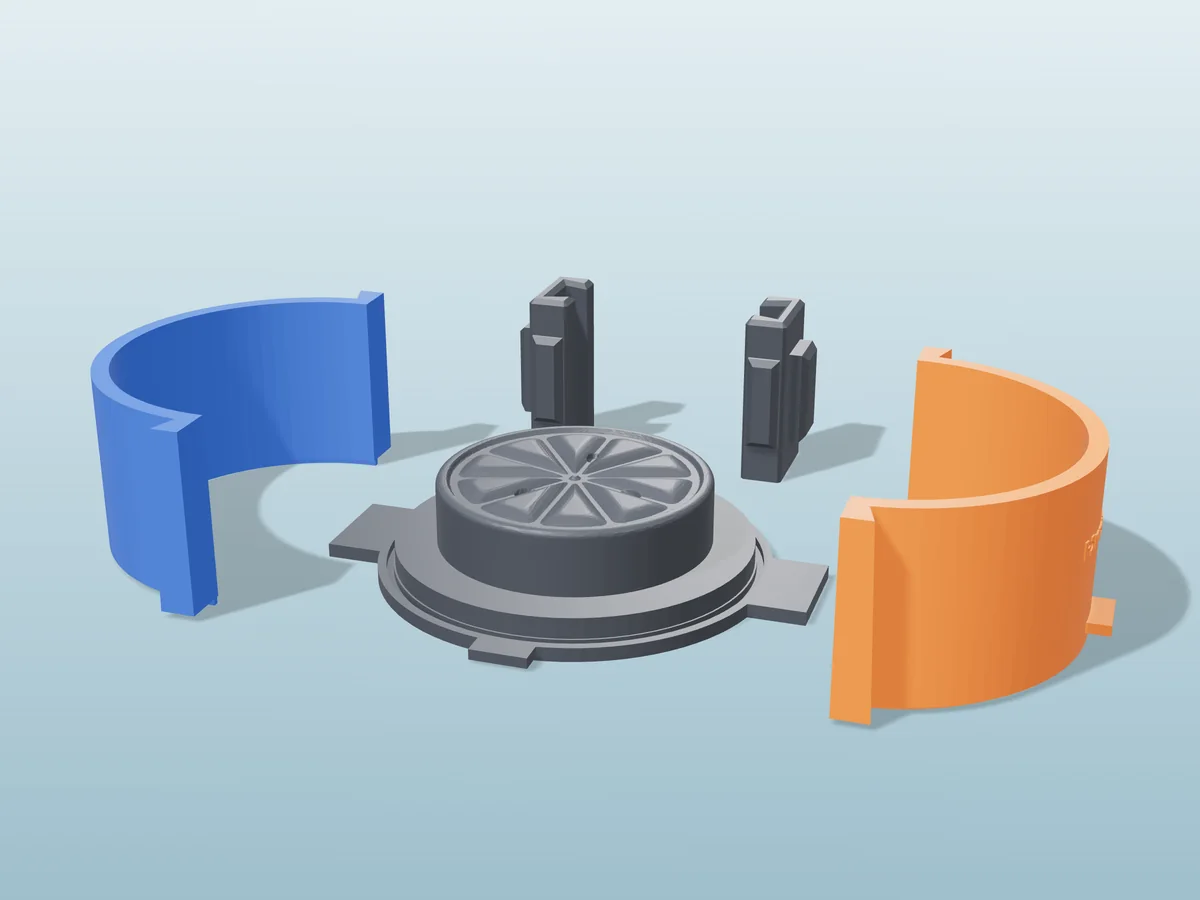
A 78 mm lemon slice soap bar with the rind, segments and pips on its face, as a silicone mold from printed parts.
 Soap
Soap
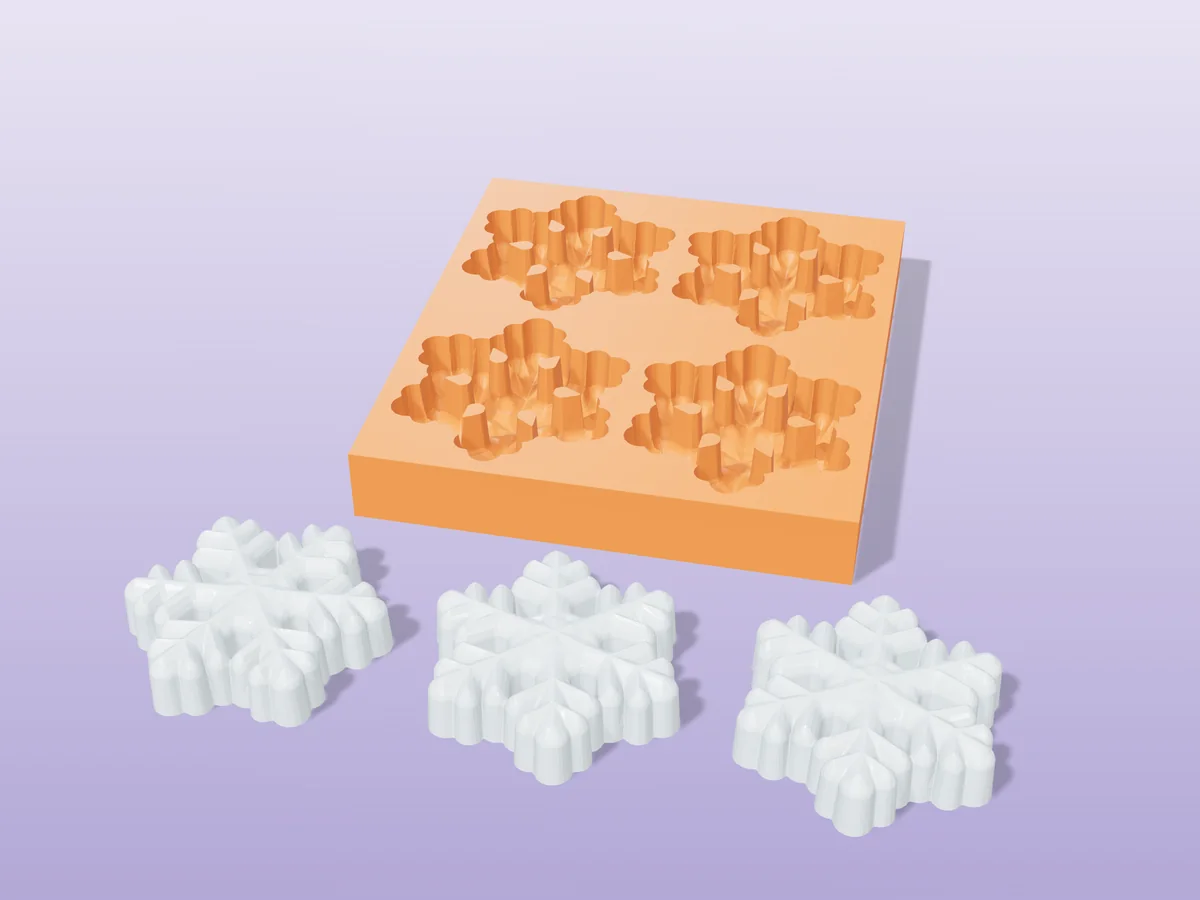
Four snowflake soaps with ridged arms and a raised centre, poured straight into a printed tray.
 Soap
Soap
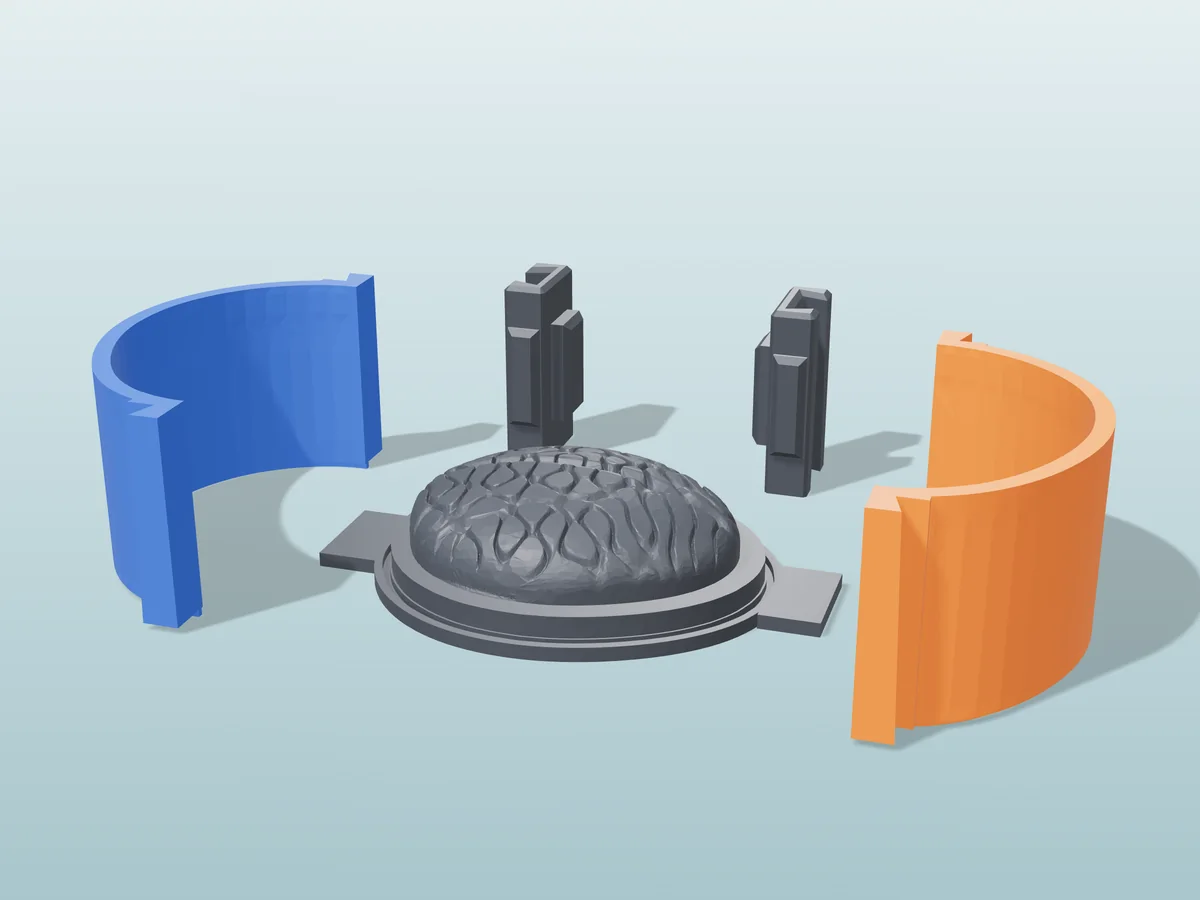
A brain-shaped soap bar for a proper brainwash: 90 mm, folds and all, as a silicone mold from printed parts.
 Soap
Soap
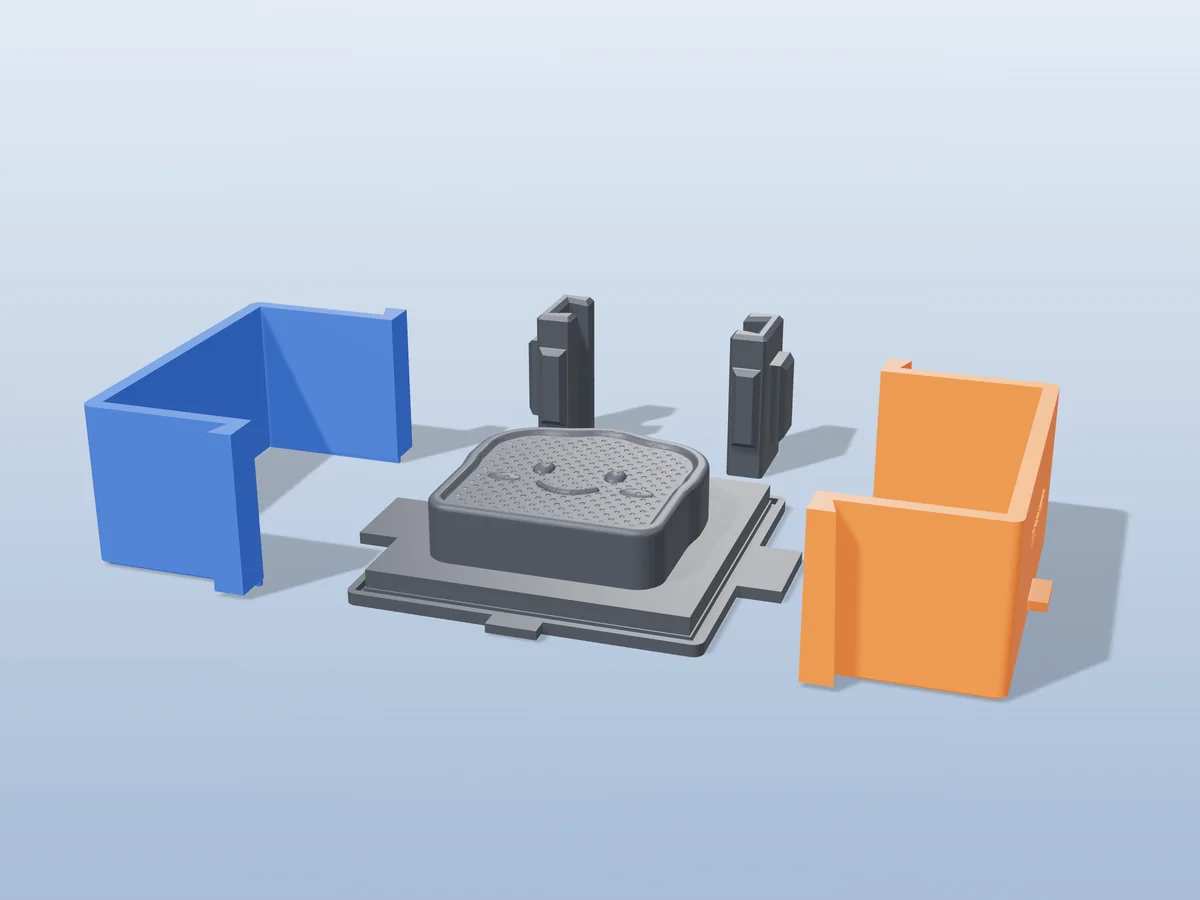
A slice of toast that smiles back: an 80 mm soap bar with crust, eyes and rosy cheeks, from a silicone mold you print.