◆ Concrete
Concrete desk organizer mold, pen, phone and card holder
A concrete desk organizer with a pen cup, a phone slot and a business card slot in one block. A silicone mold kit from printed parts.
◆ Concrete
A concrete desk organizer with a pen cup, a phone slot and a business card slot in one block. A silicone mold kit from printed parts.
The Etsy classic, a concrete desk organizer 176 x 80 mm and 55 mm tall with three recesses in its top: a pen cup 42 mm across and 43 mm deep, a phone slot 88 mm long with its back wall leaning 15 degrees so a phone in a case stands at a comfortable angle, and a business card slot in front of it that holds a stack of cards leaning back. In concrete it weighs about 1430 g, so pulling a pen out never drags it across the desk.
Made with the hugging-shell mode of our silicone mold maker. The tool suggests a silicone box, but its rectangular box would take 1.03 litres of silicone; the shell follows the block about 10 mm out and takes about 638 ml. Each recess is widest at its mouth, so the silicone plugs that form them pull straight out of the cast.
Leave it raw grey, tint it charcoal or terrazzo, and seal it so pen ink wipes off. The zip carries every printed part, the organizer master as its own STL, the tool's own print-settings sheet and a recipe file for the generator.
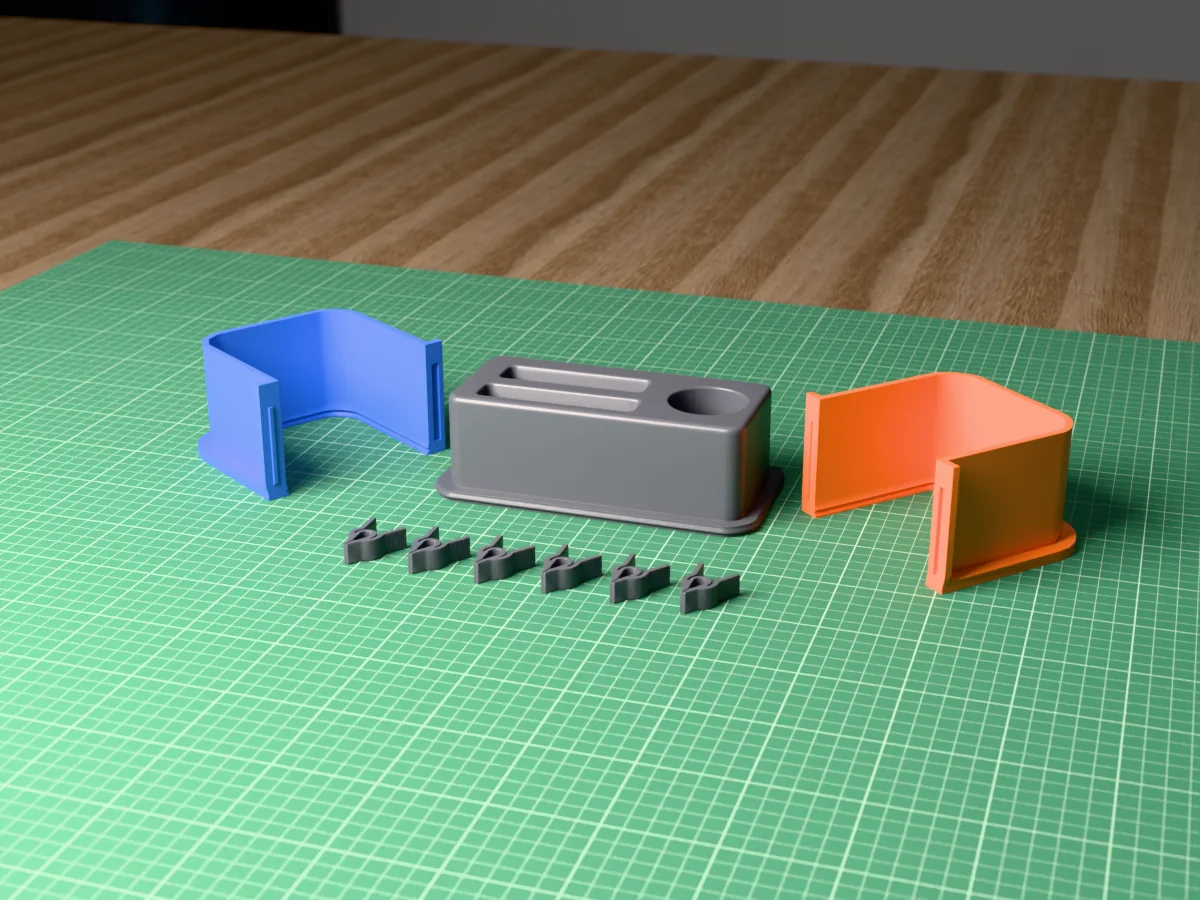
Shown as a 3D render of the printed mold parts pulled apart around the master, not a photo.
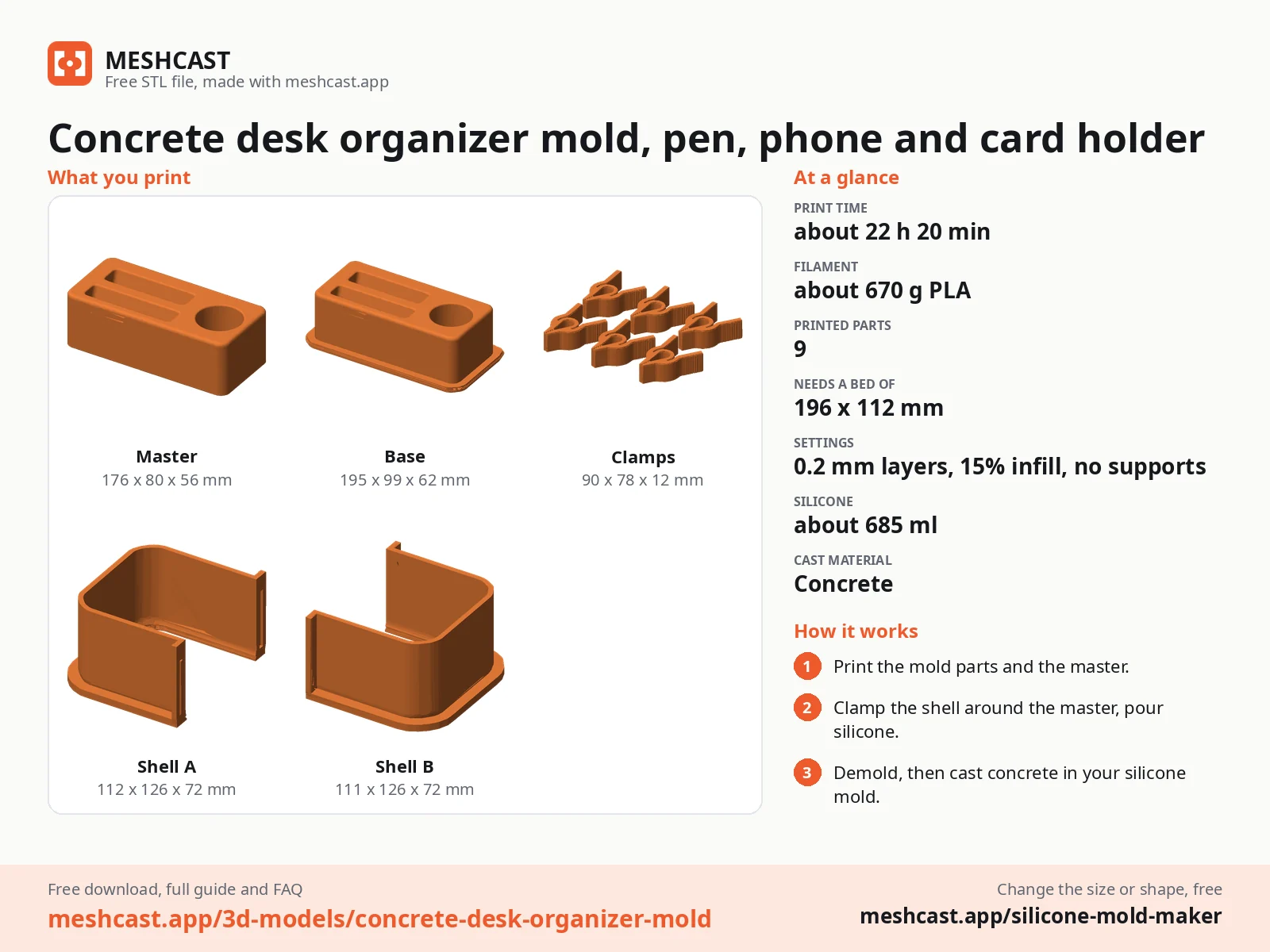
Print the base, which has the organizer master already fused onto it, the two shell halves and the six clamps (all six are in clamps.stl). No supports.
Stand the base plate on the table, set each shell half down a few centimetres out from it and slide it in until the ridge round the plate sits in the groove at its foot. Push the six clamps over the seams: the shells cannot lift after that, and the ridge seals the bottom.
Tape the outside seams or run a bead of hot glue along them, because silicone finds every gap.
Mix 685 ml of silicone in one batch and pour it into the open top of the shell in a thin stream until it is level with the rim. It fills each recess as it rises and becomes a plug.
Once it has cured, take the clamps off, slide each shell half straight out and peel the silicone off the master. That skin is your mold, with the plugs standing inside it.
Put the skin back in the shell halves with the clamps on and stand it upside down on the flat top of the silicone. The open face is now on top: it is the bottom of the organizer.
Mix a fine concrete or Jesmonite to a thick pour, brush a thin first coat into the detail, fill slowly down one side, vibrate the shell for a full minute to raise the air, and strike the organizer flat.
Demold after a day: take the shell off, peel the skin back from the sides, then lift the organizer straight up off the three plugs. Let it cure for a week, sand the flat face on paper laid on a board, add felt pads and seal it.
Print details
| Cast material | Concrete |
|---|---|
| Printed parts | 9 |
| Size (W x D x H) | 222 x 126 x 72 mm |
| Print bed needed | 196 x 112 mm, 72 mm tall |
| Filament | ~670 g |
| Layer height | 0.2 mm |
| Infill | 15% |
| Supports | Not needed |
| Download | ZIP: 9 printed parts in 4 STL files + desk organizer master (STL) + print sheet + recipe |
| Added | 2026-09-27 |
Made with the free Silicone mold maker generator. Upload your own model and get the same kind of mold built around it, in your browser.
Free download. Opens the Thingiverse listing in a new tab.
Free for personal use. Selling the pieces you cast needs a commercial licence (Pro or Founder); passing on the file itself is not permitted on any plan. Full terms.
New to casting? Read the silicone mold maker guide.
Any phone up to about 80 mm wide in a case, in portrait: the slot is 88 mm long, 13 mm wide at the floor and 30 mm deep, and the back wall leans 15 degrees, so a phone in a thick case drops in and leans back against it. A small tablet in landscape fits too if it is under 13 mm thick.
About 40 standard cards. The card slot is 94 mm long, room for a US 89 mm or an EU 85 mm card lying landscape, 14 mm wide at the floor and 20 mm deep, leaning back 15 degrees so the front card faces you. It also holds sticky notes or a small notepad.
Sand the base flat on 120 grit paper laid on a board once it has cured for a few days, then stick felt pads or a cork sheet under it. Seal the whole organizer with a water-based concrete sealer too, so it does not leave grey dust and ink or coffee wipe off.
 Concrete
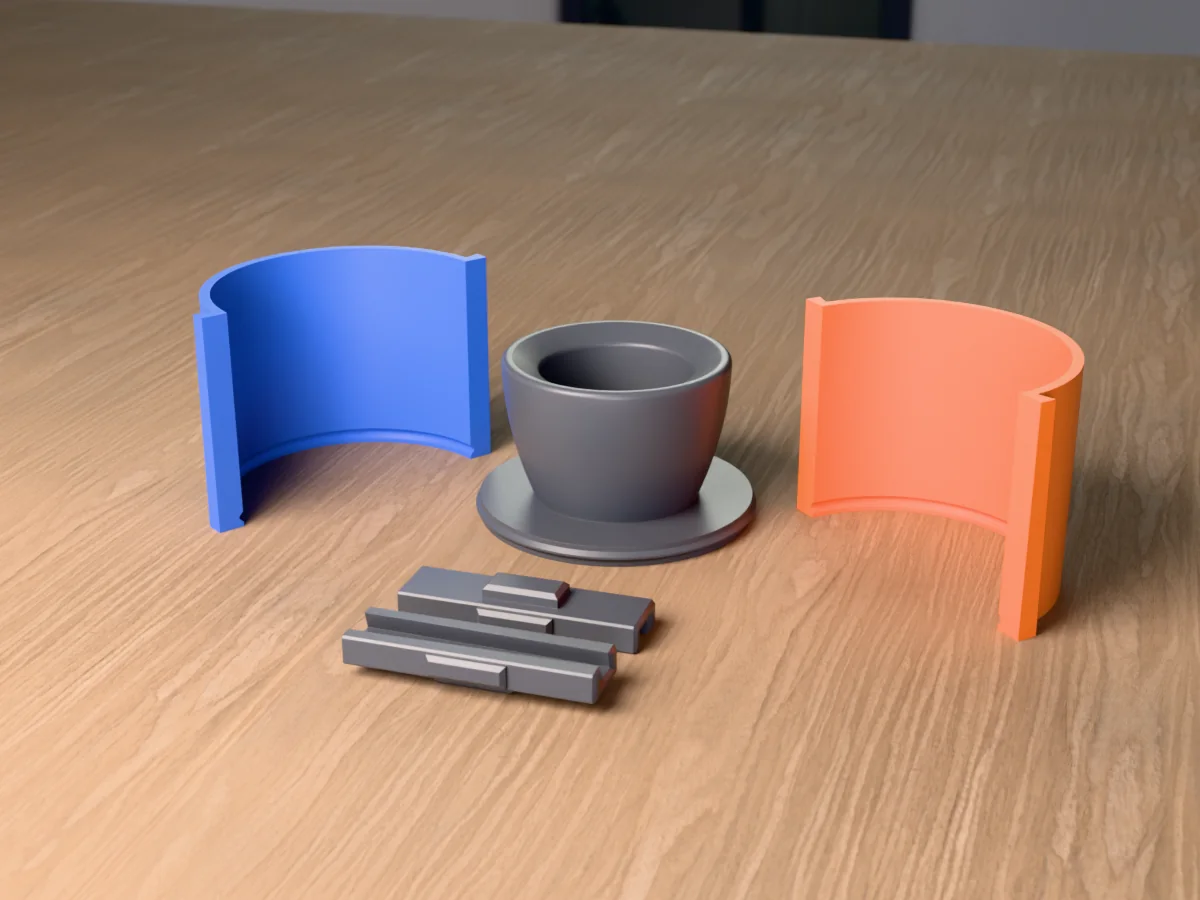
A round concrete tabletop fire bowl, 110 mm across, with a pocket for a standard gel fuel can. A silicone mold kit from printed parts.
 Concrete
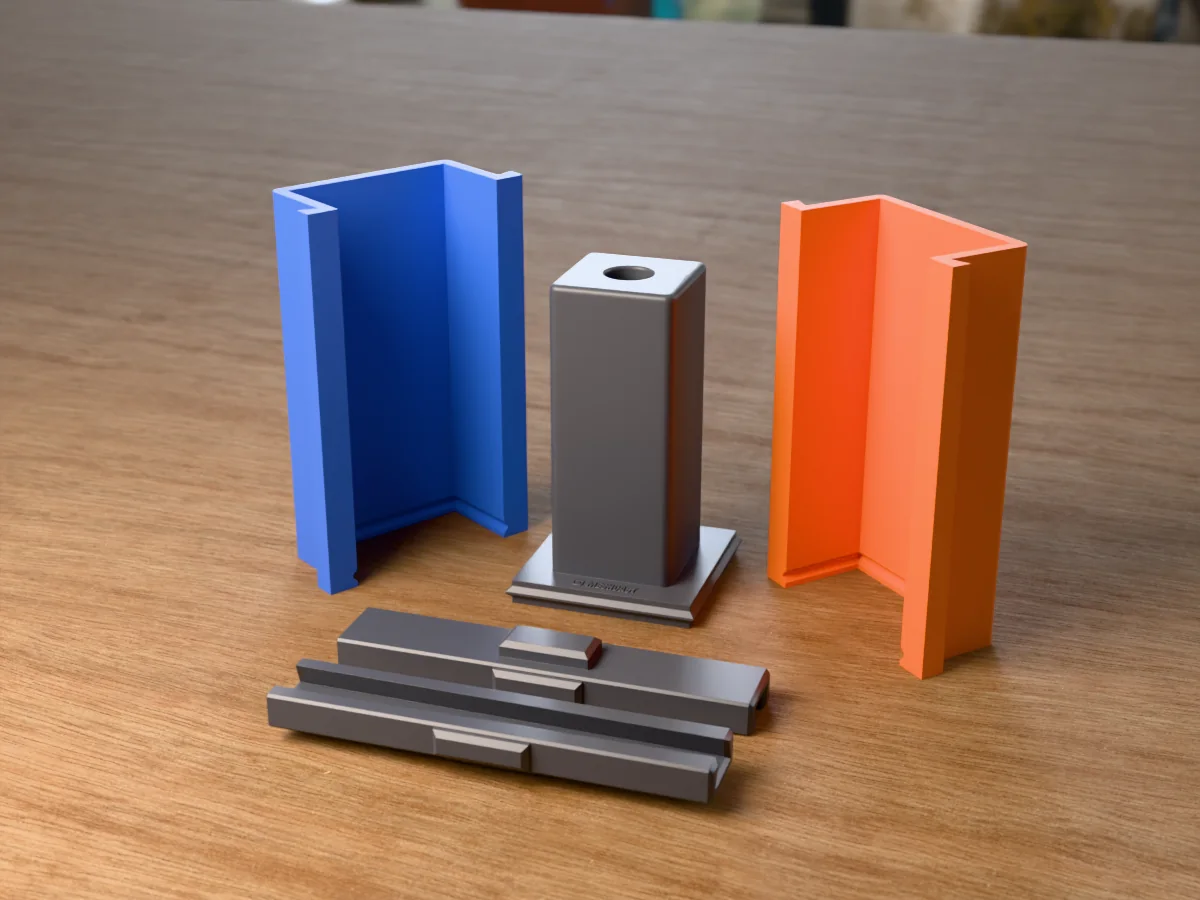
A square concrete bud vase with a glass test tube inside, 50 x 50 x 120 mm. A silicone mold kit from printed parts.
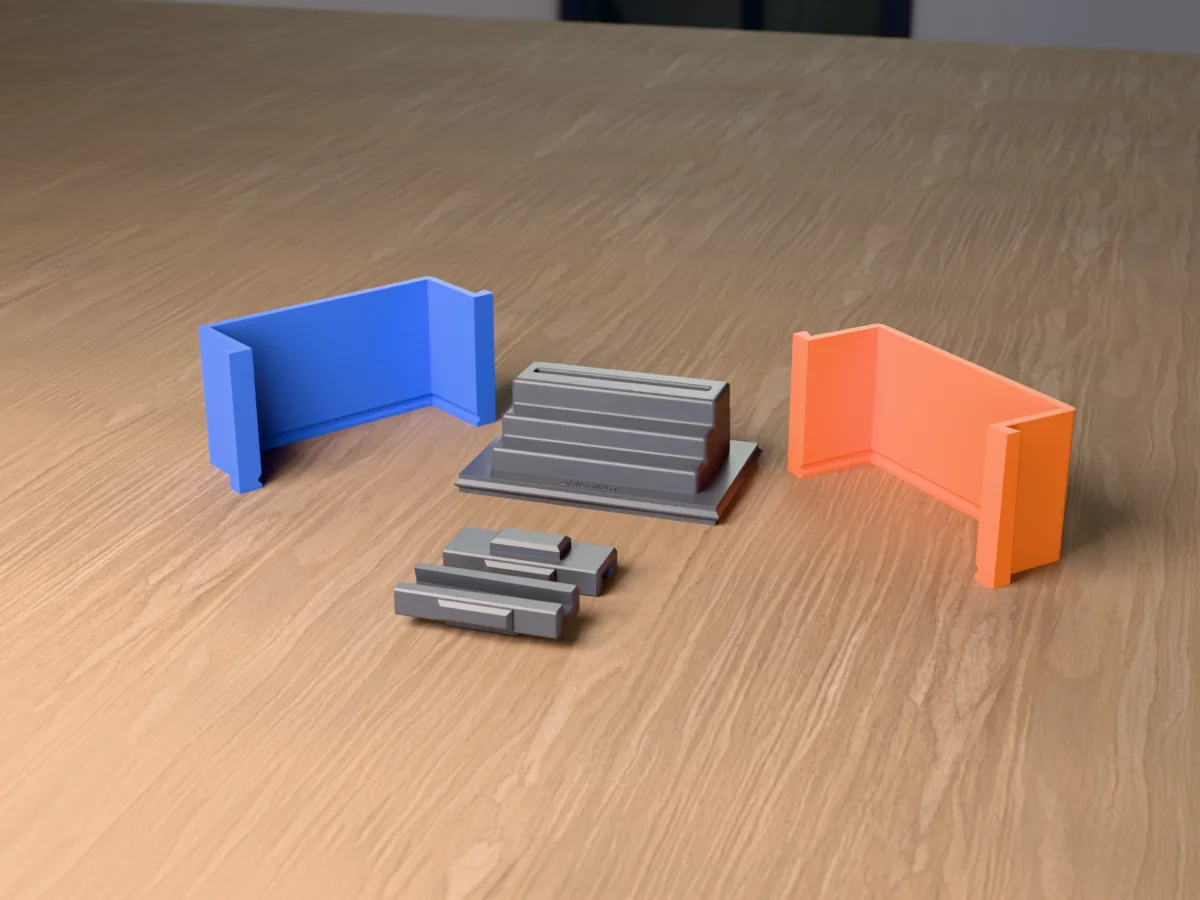 Concrete
A concrete card holder shaped like a little staircase, with a slot for a business card, postcard or photo on the top step.
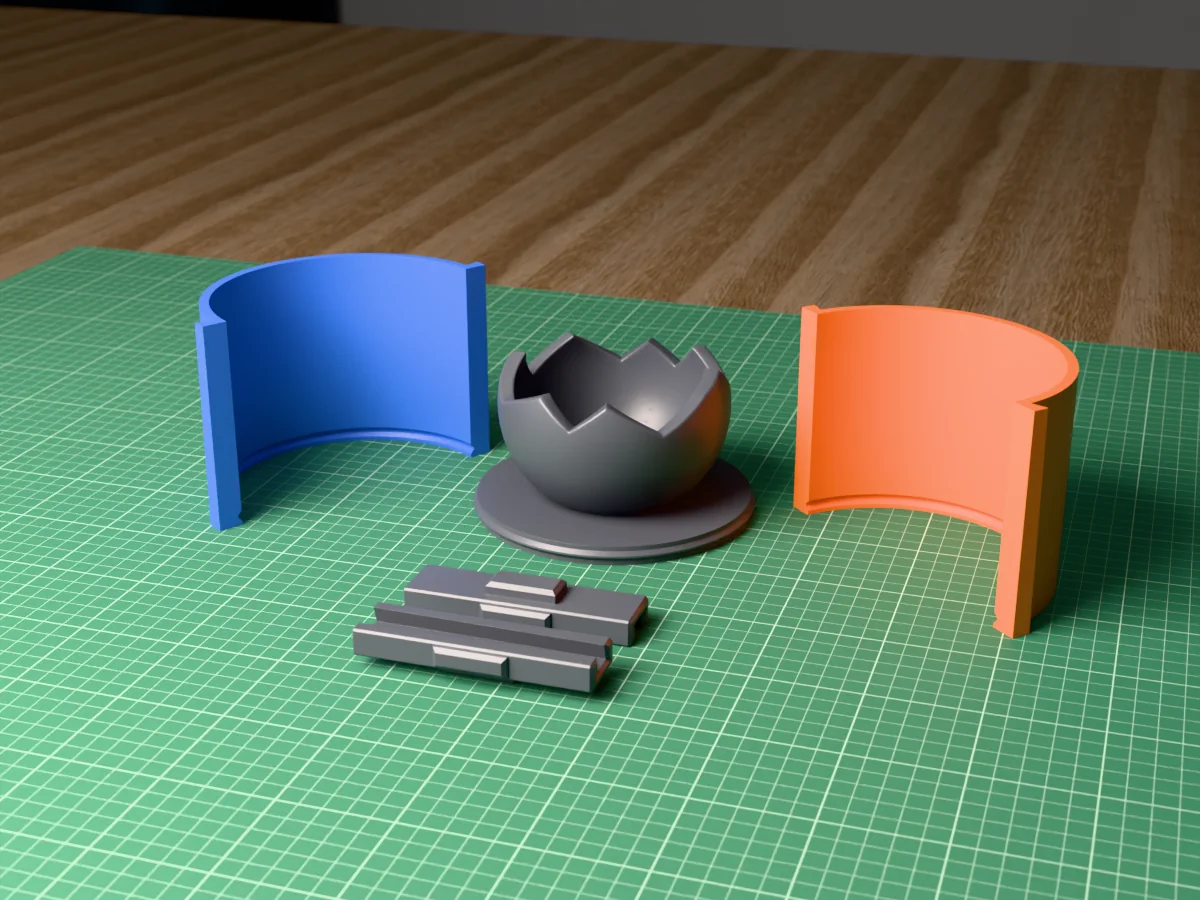 Concrete
A broken-open concrete sphere, 120 mm across, as a three-wick candle vessel. A silicone mold kit from printed parts.
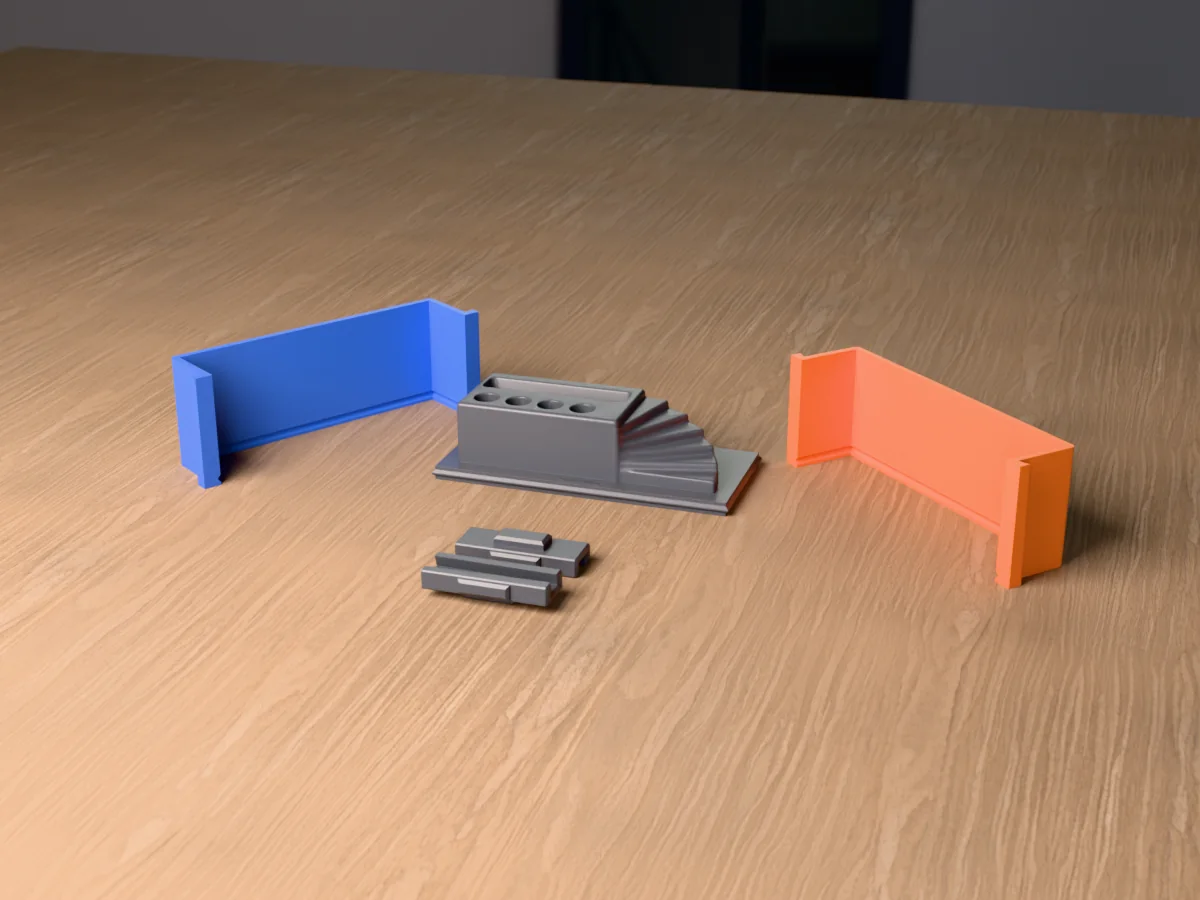 Concrete
An architectural concrete desk organizer: pen holes, a phone slot and a spiral staircase winding down its end.
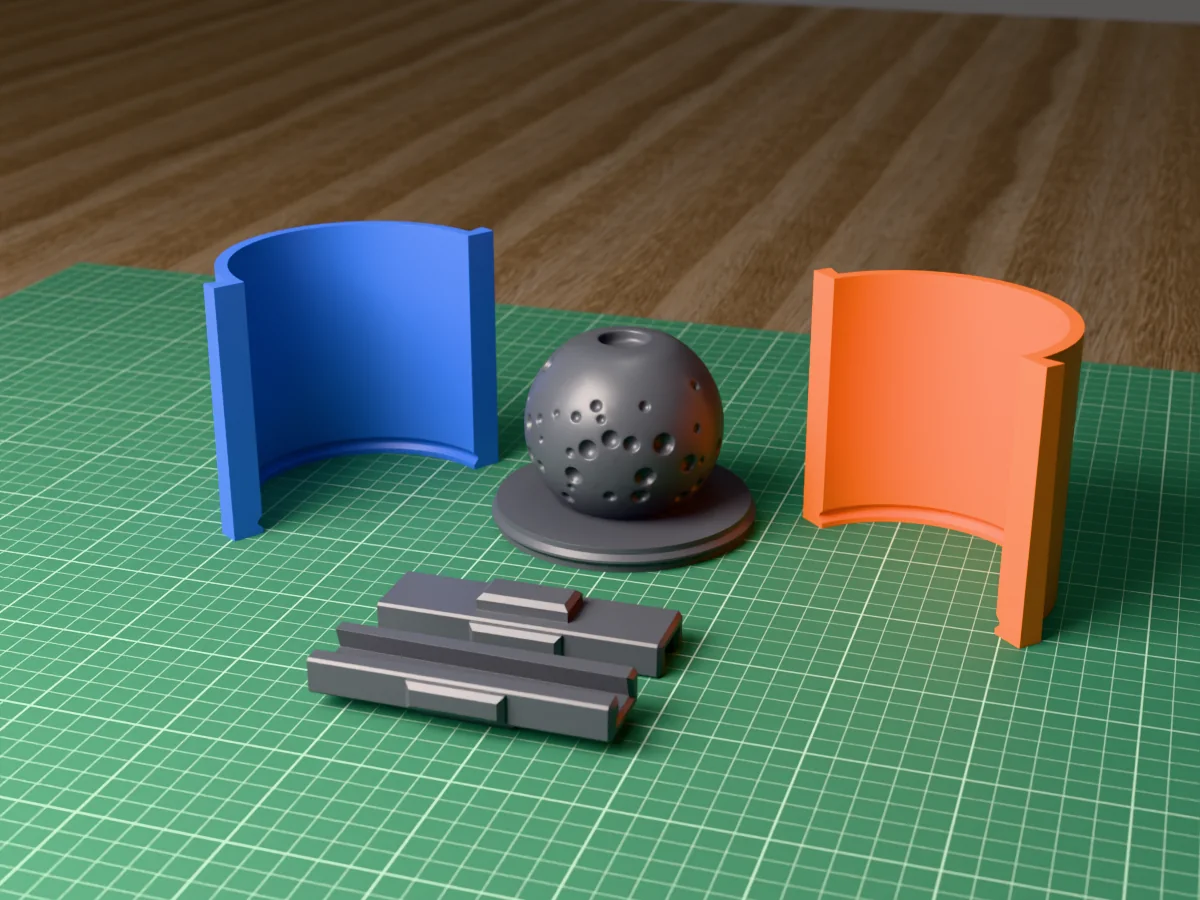 Concrete
An 80 mm lava stone look incense sphere in concrete, pitted all over, with a well on top for a cone. A silicone mold kit from printed parts.
 Concrete
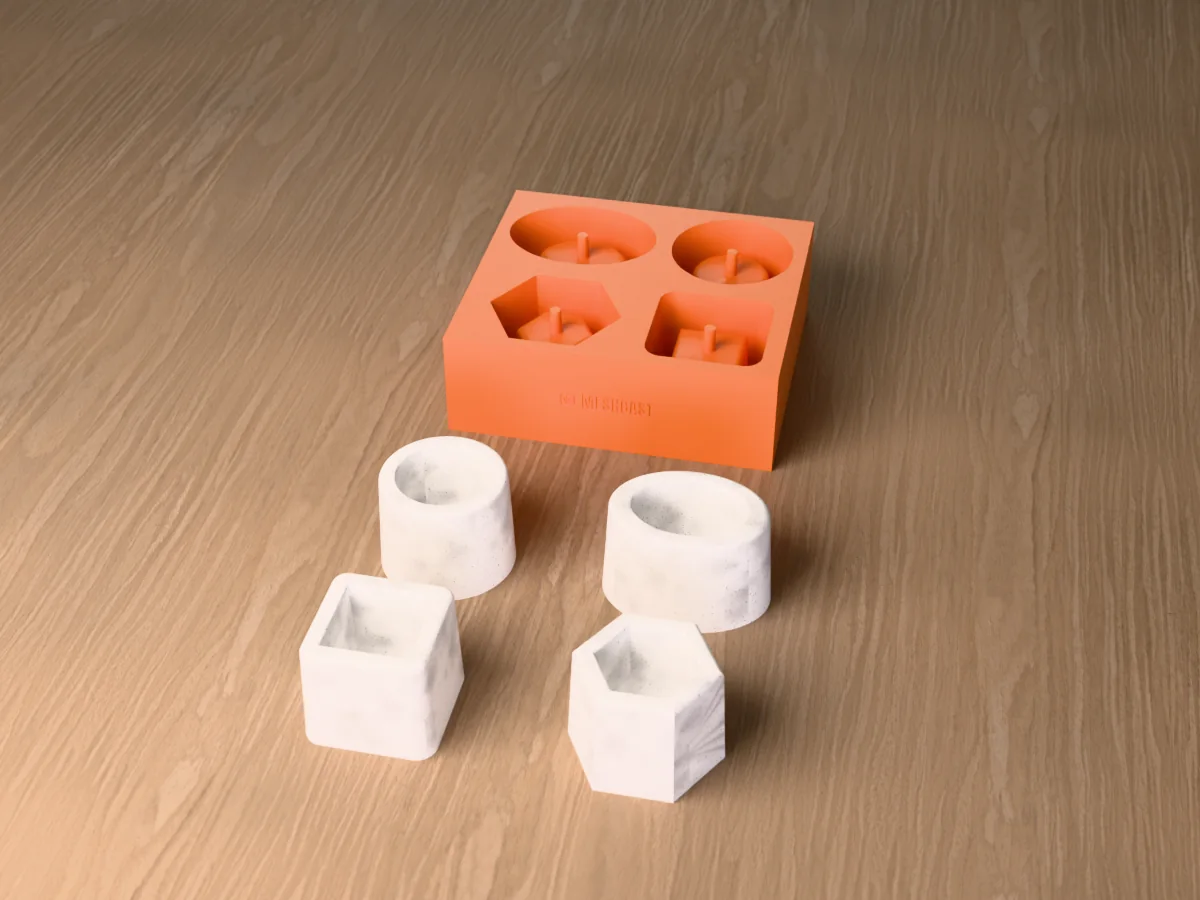
Four mini concrete succulent pots, oval, round, hexagon and square, each with a drainage hole, cast straight in one printed tray.
 Concrete
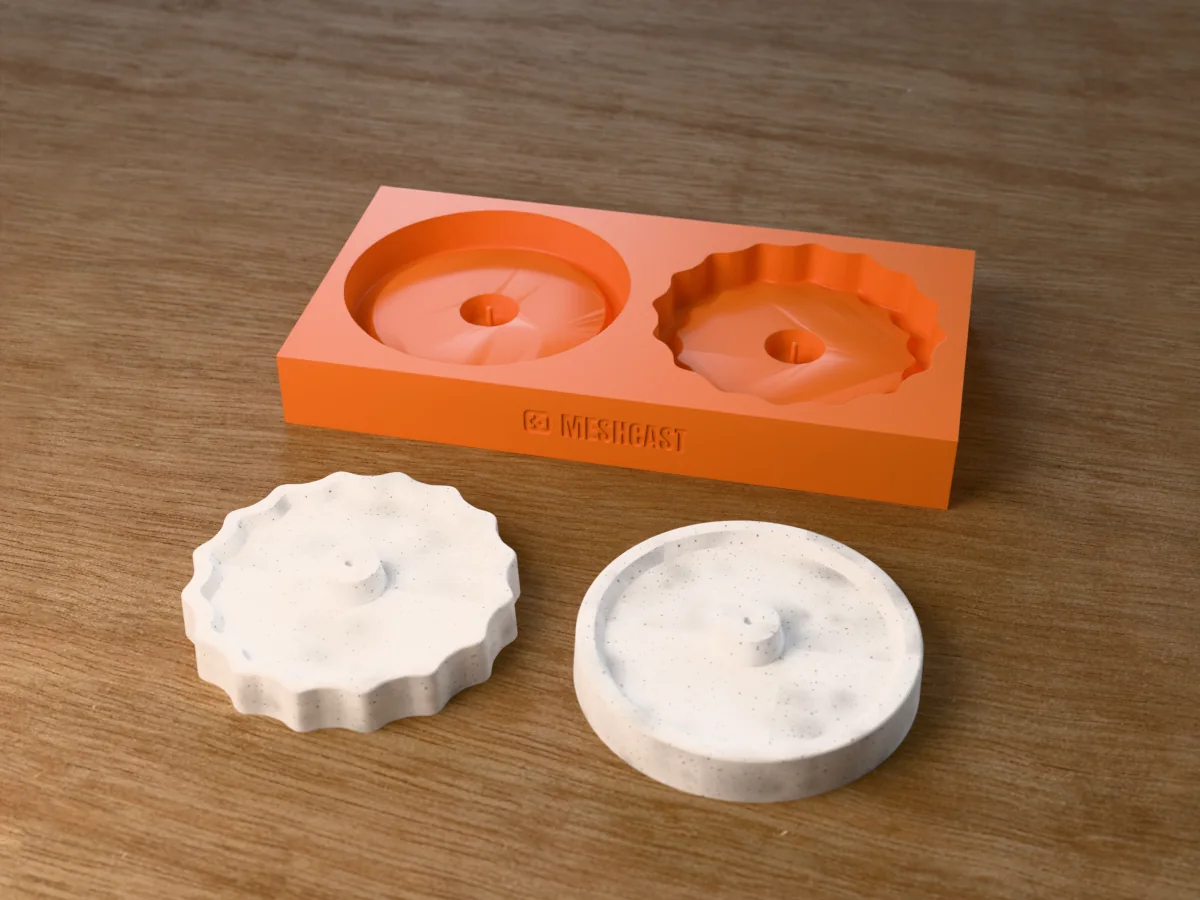
Two 90 mm concrete incense holder discs, one plain and one with a gear edge, each with a raised stick holder, cast in one printed tray.