◆ Concrete
Concrete soap dish tray mold
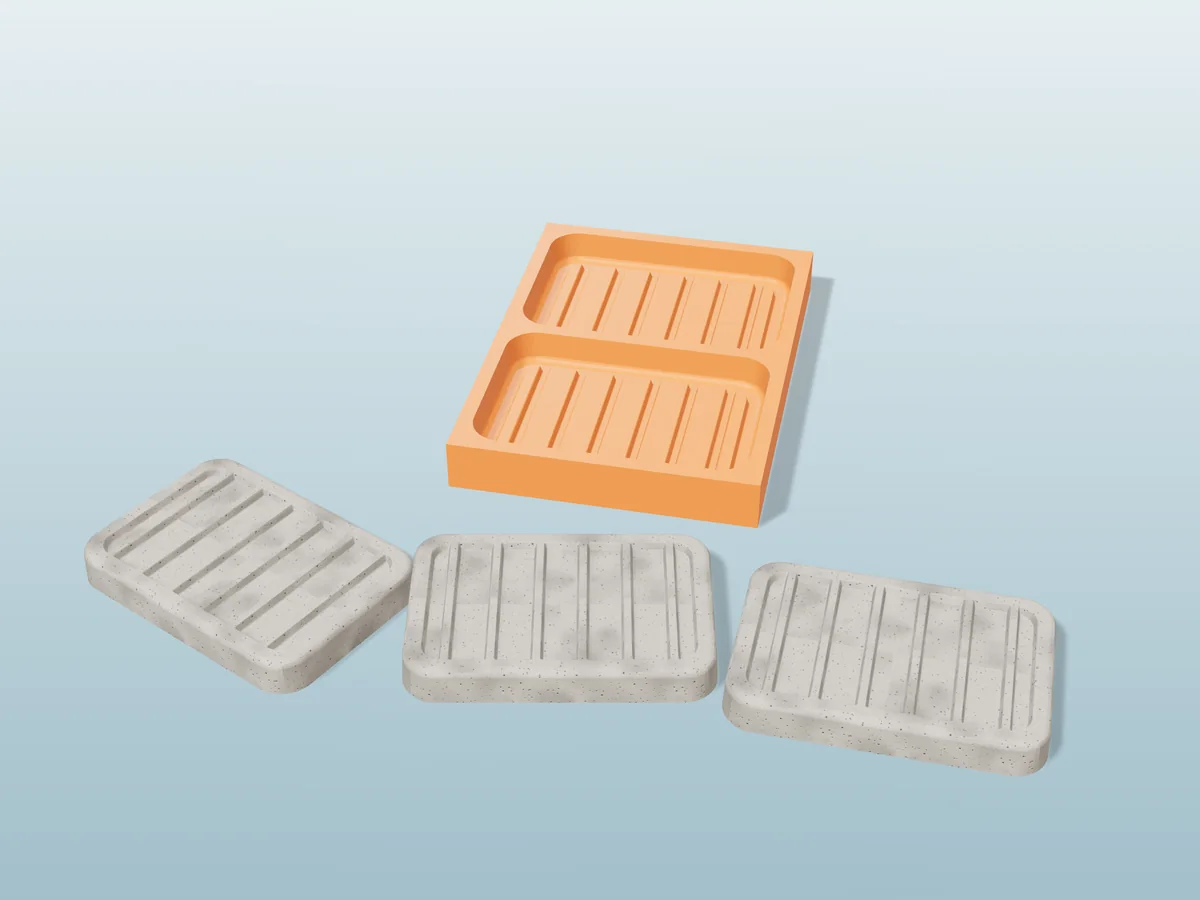
Two concrete soap dishes with a rim and drain ridges, cast straight in a printed tray.
◆ Concrete
Two concrete soap dishes with a rim and drain ridges, cast straight in a printed tray.
A printed tray for two soap dishes, each 110 x 75 mm and 14 mm thick, with a raised rim and six ridges across the top that hold the bar up out of the water so it dries between uses.
Made with our tray mold generator in its rigid tray mode: print the tray, wipe in release and pour a fine concrete or Jesmonite straight in. The dish is cast upside down, so the ridges form against the tray floor, and the back comes out flat for the bathroom shelf.
The zip carries the tray exactly as the tool exported it, one dish on its own as an STL, the master uploaded to the tool, and a print and pour sheet with the volume of each cavity.
Shown as a 3D render of the printed tray with three concrete dishes in front, not a photo.
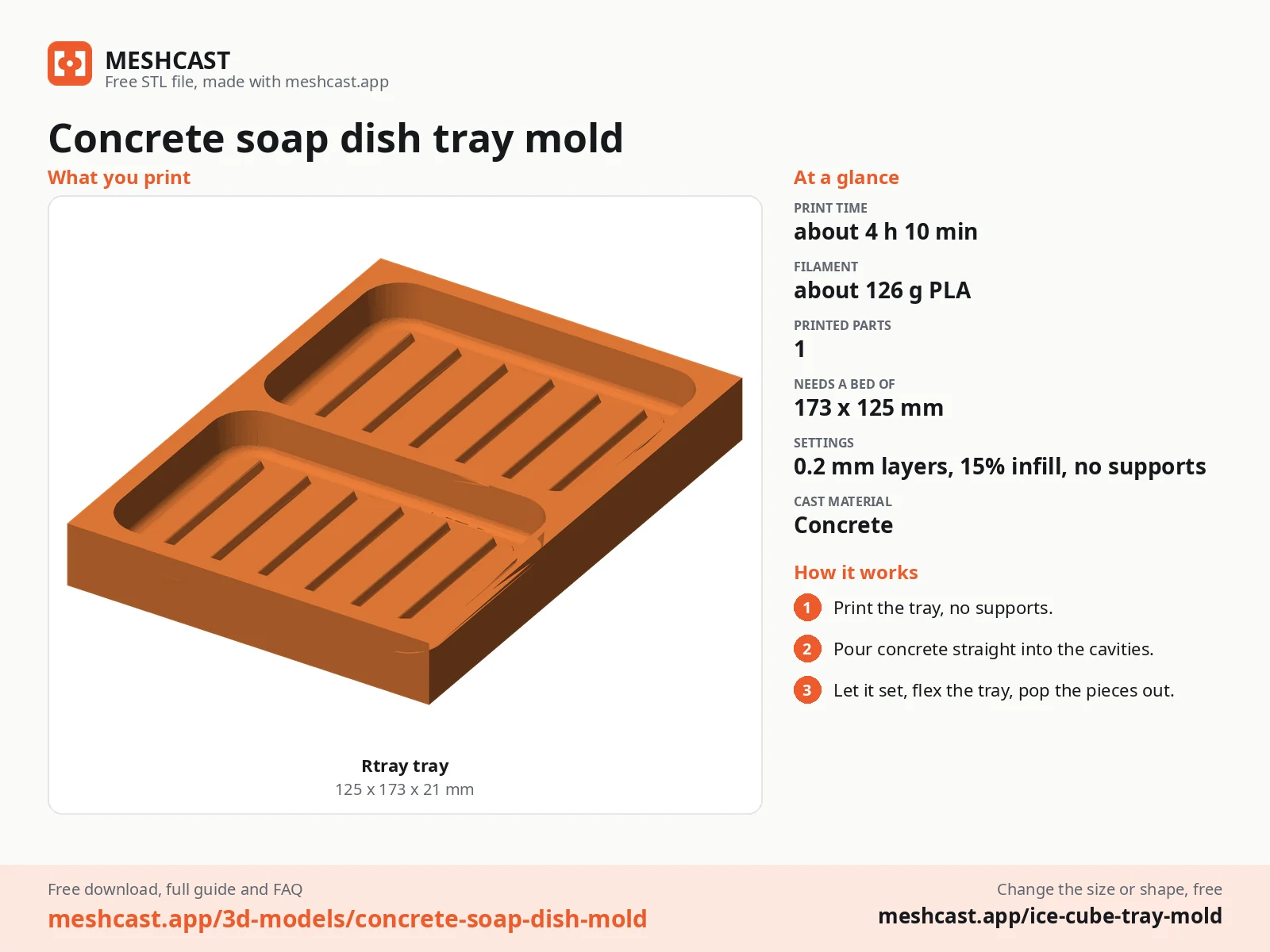
Print the tray as exported, cavities up, no supports. PLA is fine.
Wipe a thin film of mold release or cooking oil into every cavity, including the grooves.
Mix a fine concrete or Jesmonite to a thick pour, fill each cavity, and vibrate it out: tap the tray on the table or hold a sander against the side for a minute until no more bubbles rise.
Cover the tray and let it cure for 24 hours, then flex the tray and tip the pieces out. Sand the back flat, and seal them once they have dried for a few days.
Print details
| Cast material | Concrete |
|---|---|
| Printed parts | 1 |
| Size (W x D x H) | 125 x 173 x 21 mm |
| Print bed needed | 173 x 125 mm, 22 mm tall |
| Filament | ~126 g |
| Layer height | 0.2 mm |
| Infill | 15% |
| Supports | Not needed |
| Download | ZIP: printed tray (STL) + one soap dish (STL) + tool master (STL) + print and pour sheet |
| Added | 2026-09-24 |
Made with the free Tray mold generator. Upload your own model and get the same kind of mold built around it, in your browser.
Free download. Opens the Thingiverse listing in a new tab.
Free for personal use. Selling the pieces you cast needs a commercial licence (Pro or Founder); passing on the file itself is not permitted on any plan. Full terms.
New to casting? Read the ice cube tray mold guide.
Yes. Raw concrete soaks up water and soap and grows a dark ring. Let the dish dry for a week, then brush on two coats of a water-based concrete sealer or a food-safe wax. Jesmonite needs a sealer too if it lives by the sink.
Use a fine mix with no gravel, pour it a little wetter than for a slab, and vibrate the tray well: the ridges are the deepest part of the cavity, and that is where air collects. Holding an orbital sander against the side of the tray works well.
Demold after 24 hours, then let it cure for about a week before sealing and using it. Keep it damp, under a plastic bag, for the first few days: concrete that dries too fast is weaker and dusts.
 Concrete
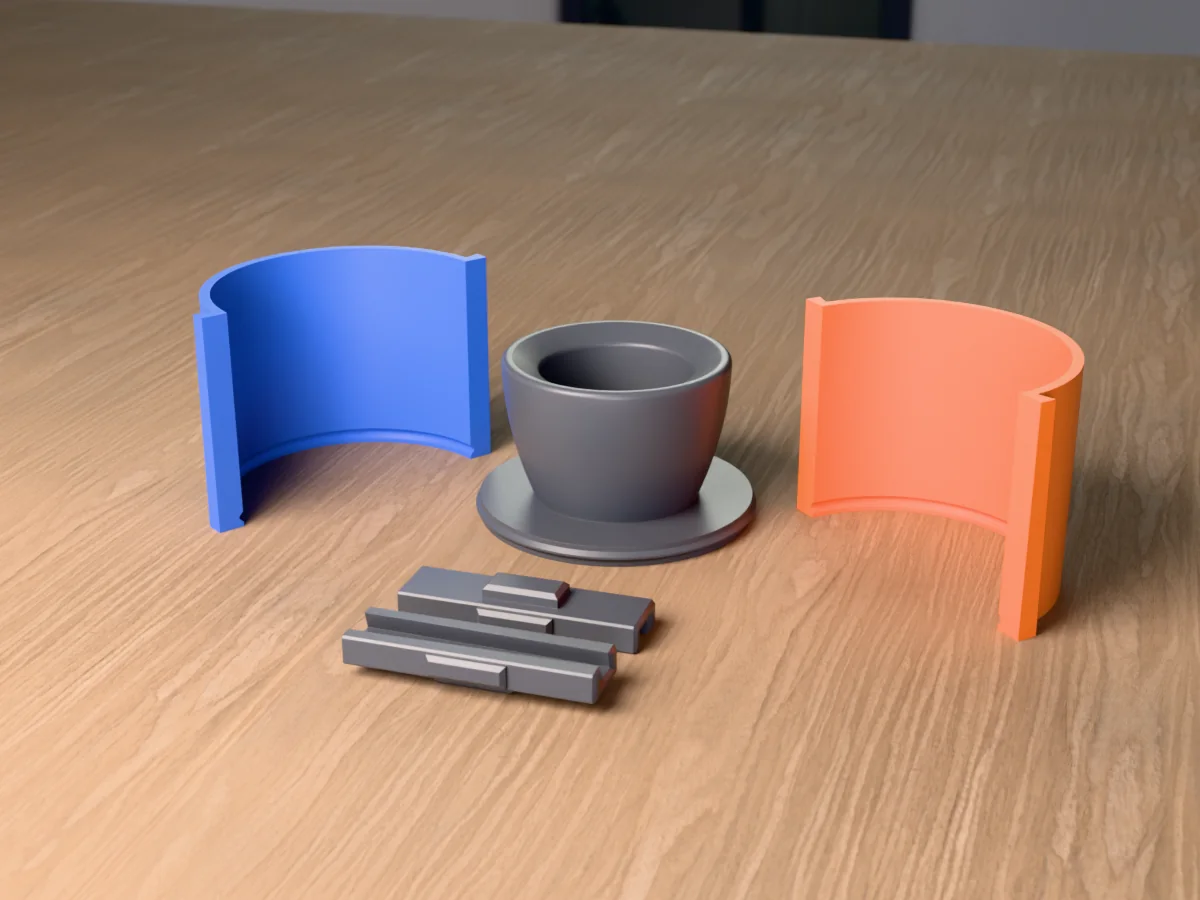
A round concrete tabletop fire bowl, 110 mm across, with a pocket for a standard gel fuel can. A silicone mold kit from printed parts.
 Concrete
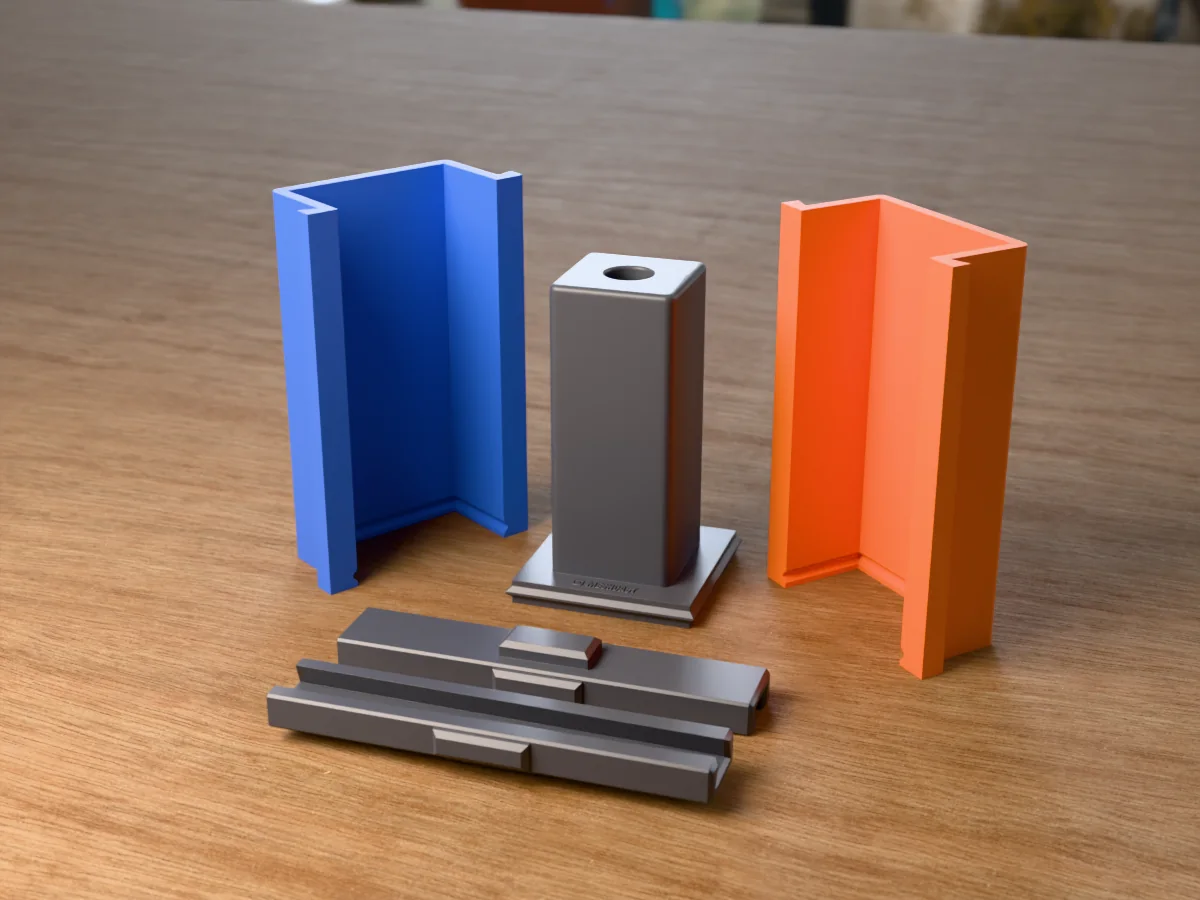
A square concrete bud vase with a glass test tube inside, 50 x 50 x 120 mm. A silicone mold kit from printed parts.
 Concrete
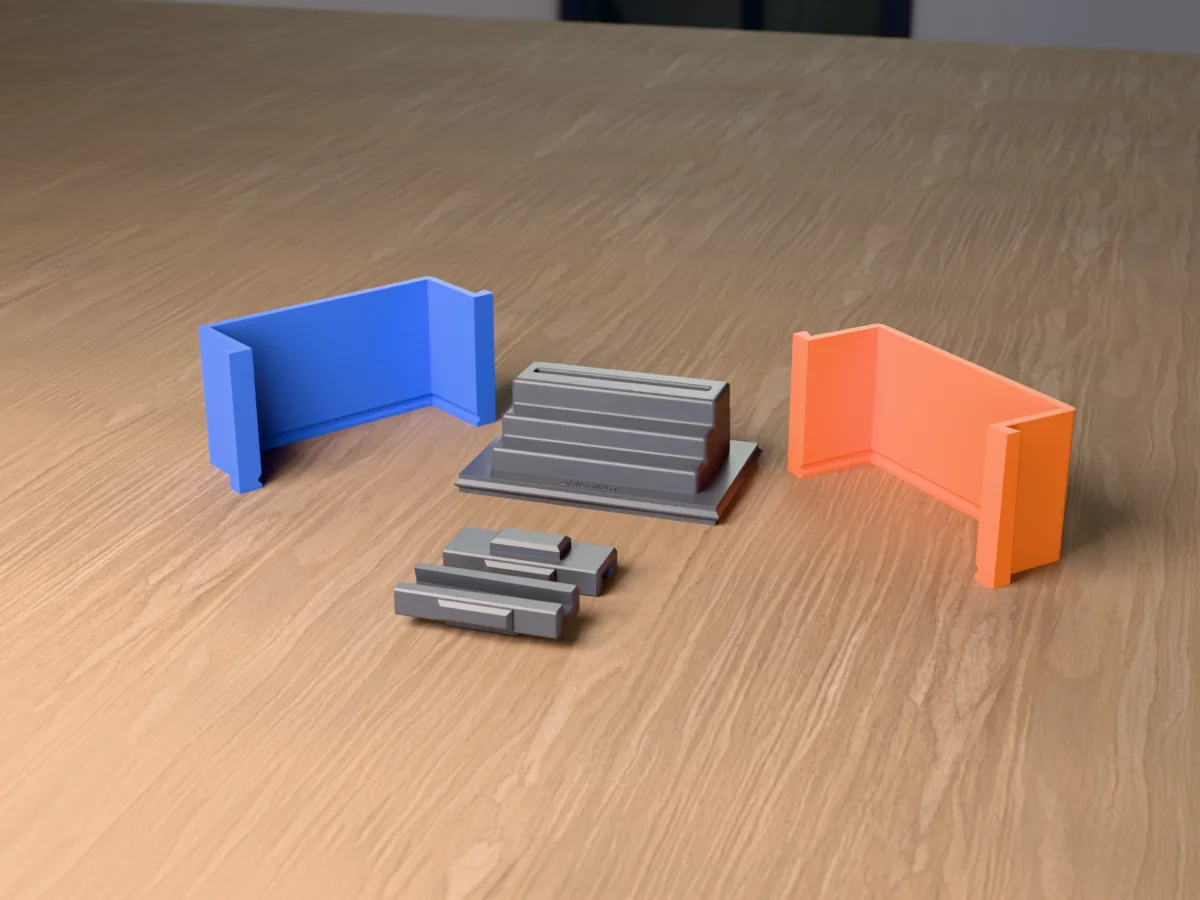
A concrete card holder shaped like a little staircase, with a slot for a business card, postcard or photo on the top step.
 Concrete
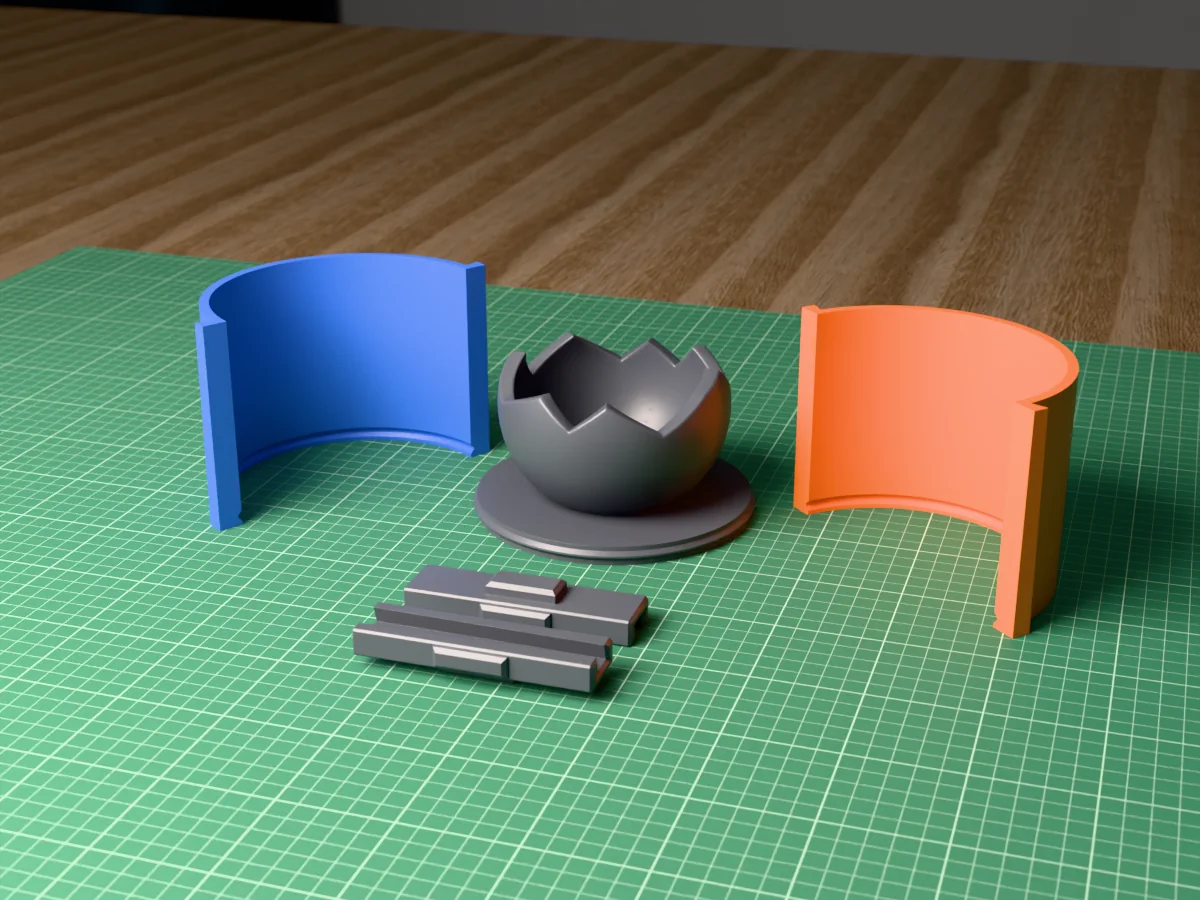
A broken-open concrete sphere, 120 mm across, as a three-wick candle vessel. A silicone mold kit from printed parts.
 Concrete
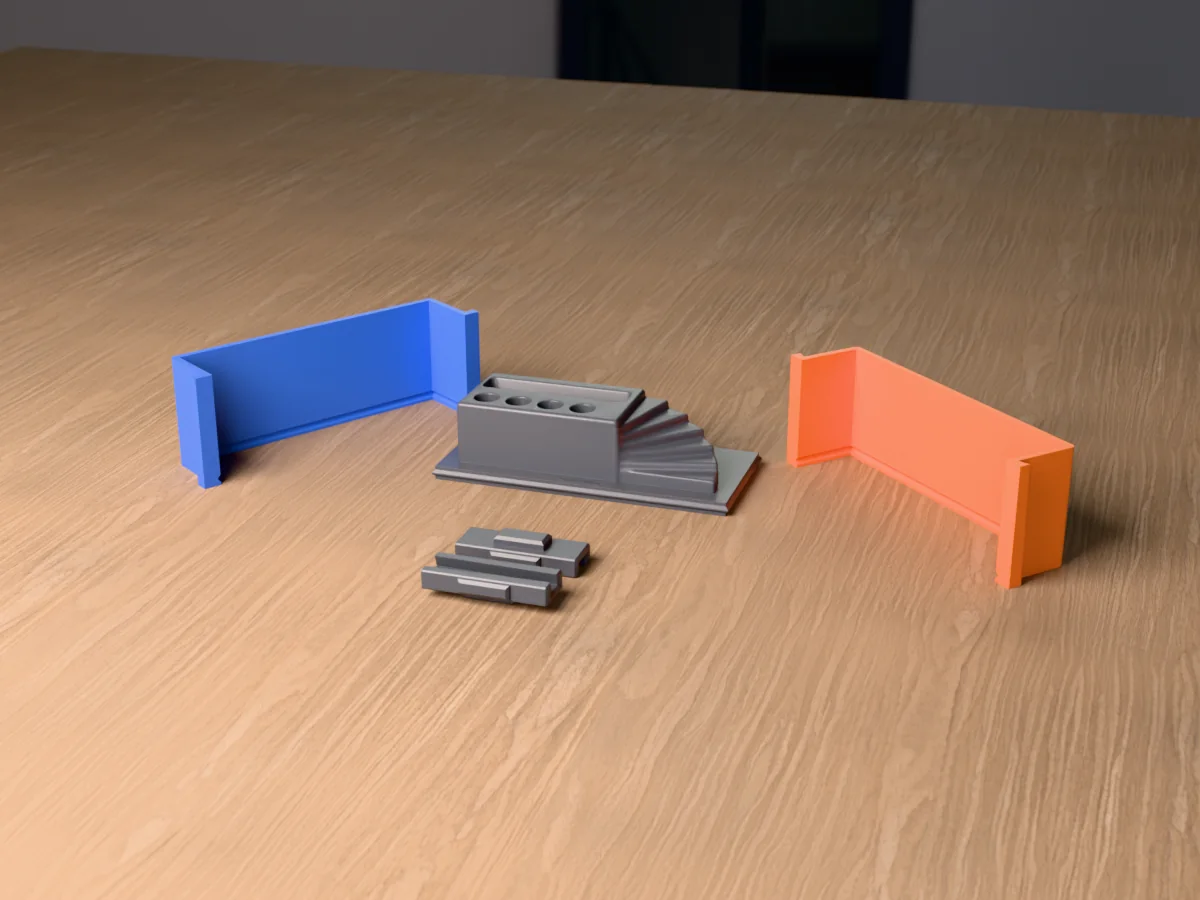
An architectural concrete desk organizer: pen holes, a phone slot and a spiral staircase winding down its end.
 Concrete
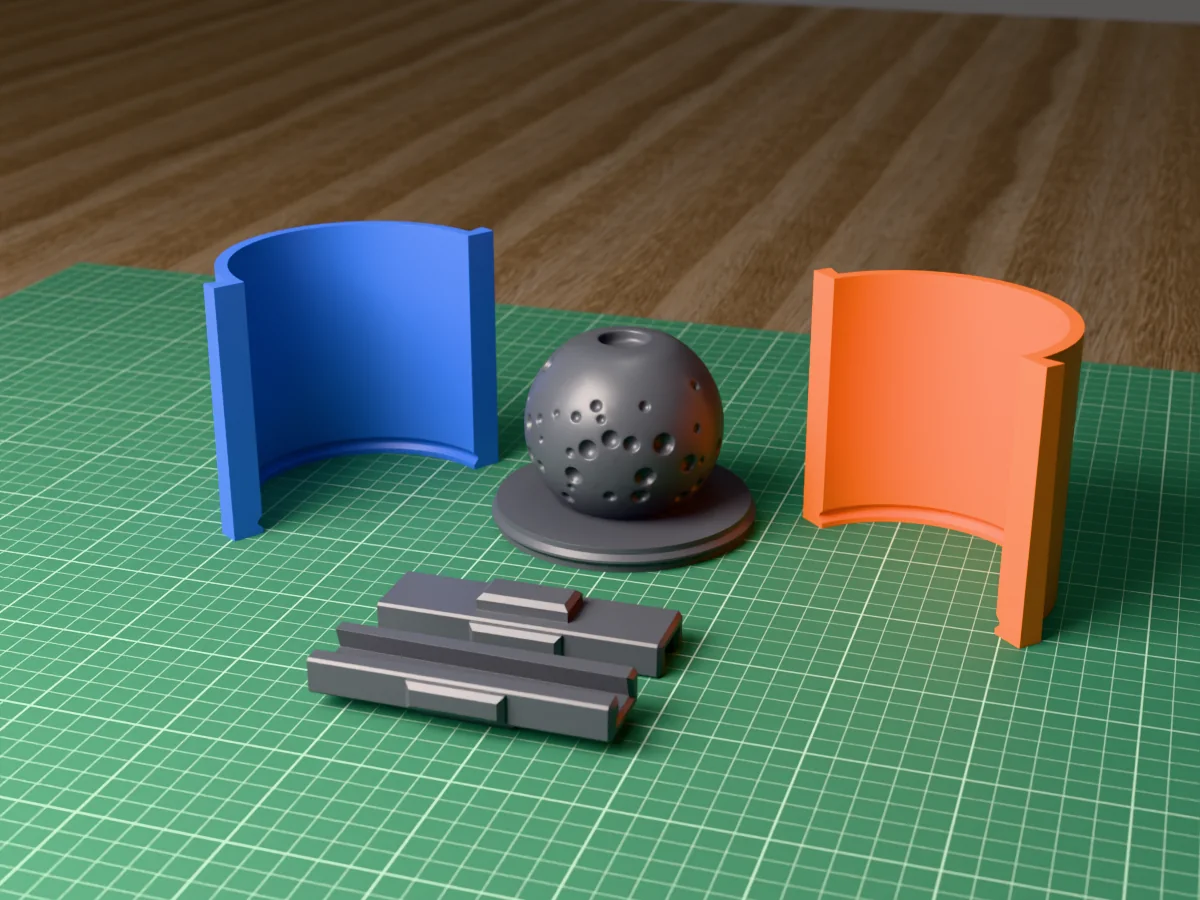
An 80 mm lava stone look incense sphere in concrete, pitted all over, with a well on top for a cone. A silicone mold kit from printed parts.
 Concrete
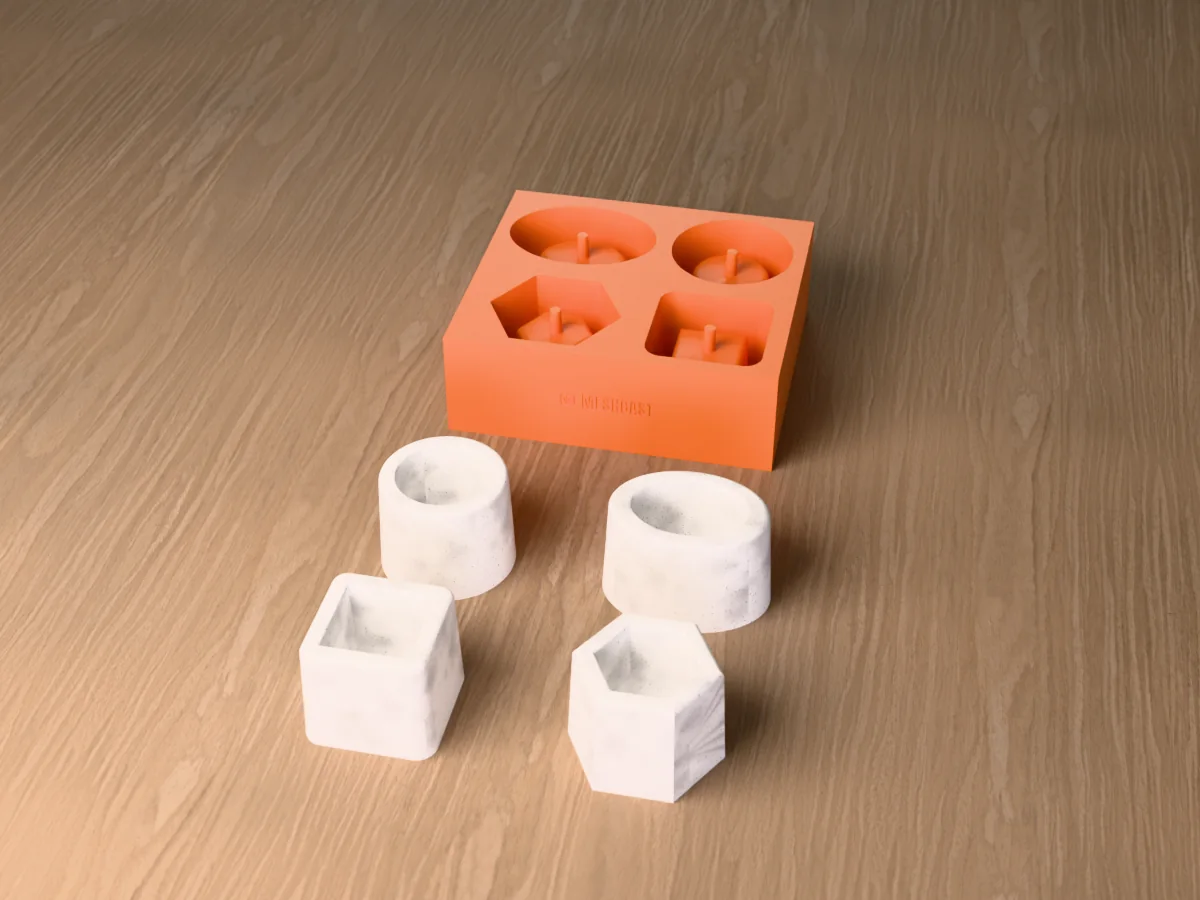
Four mini concrete succulent pots, oval, round, hexagon and square, each with a drainage hole, cast straight in one printed tray.
 Concrete
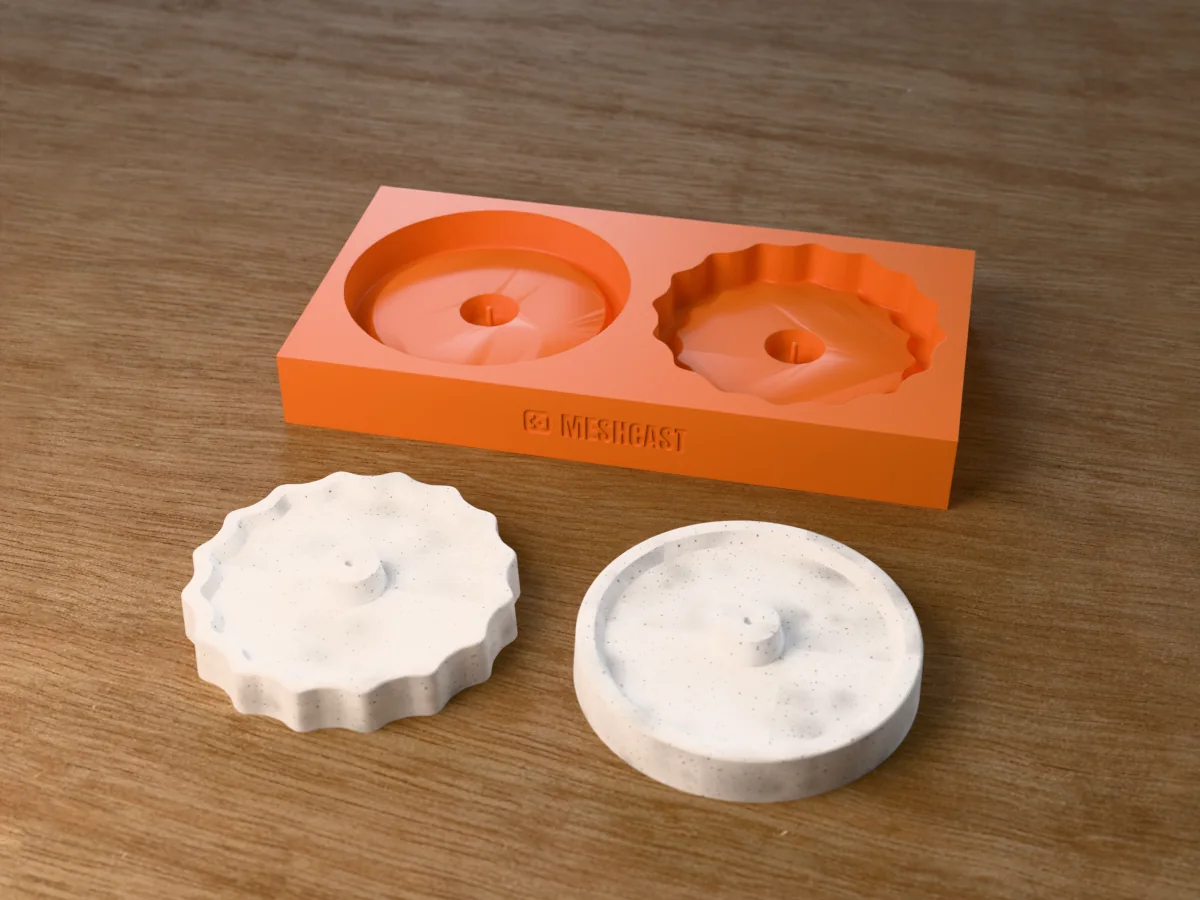
Two 90 mm concrete incense holder discs, one plain and one with a gear edge, each with a raised stick holder, cast in one printed tray.