◆ Concrete
Hexagon concrete coaster mold
A 100 mm hexagon coaster with three nested grooves, as an open-face silicone mold.
◆ Concrete
A 100 mm hexagon coaster with three nested grooves, as an open-face silicone mold.
A hexagon coaster 100 mm across the flats and 10 mm thick, with three nested hexagon grooves on the face, a chamfered edge and a slight draft so every cast lifts out.
Made with the box mode of our silicone mold maker, which the site's own mold advisor ranks first for a flat shape like this. Print the base with the coaster fused onto it face up, the walls and clamps, pour about 504 ml of silicone, and the block you get is an open-face coaster mold: fill it with concrete, Jesmonite, plaster or resin and strike it flat.
The zip carries every printed part, the coaster master as its own STL, the tool's own print-settings sheet and a recipe file for the generator.
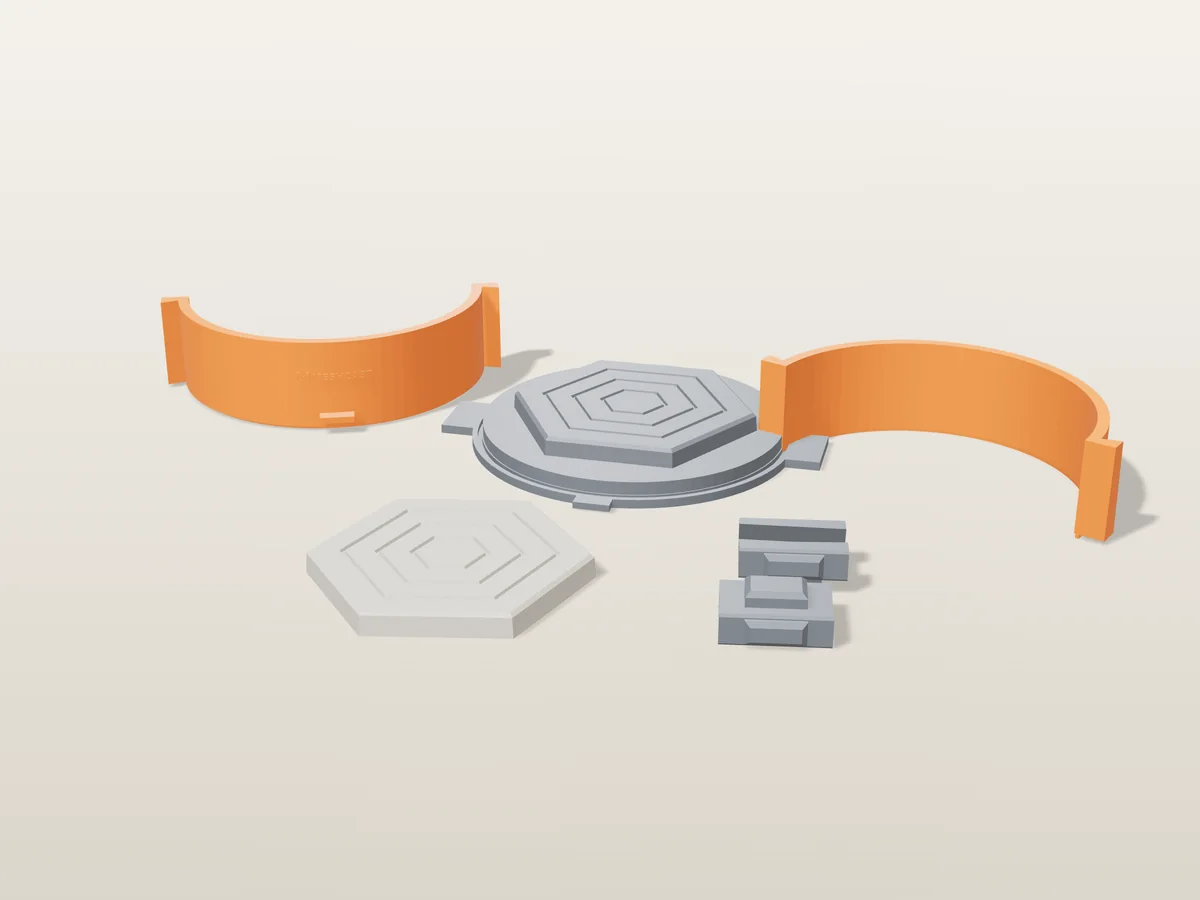
Shown as a 3D render of the printed mold parts pulled apart around the master, not a photo.
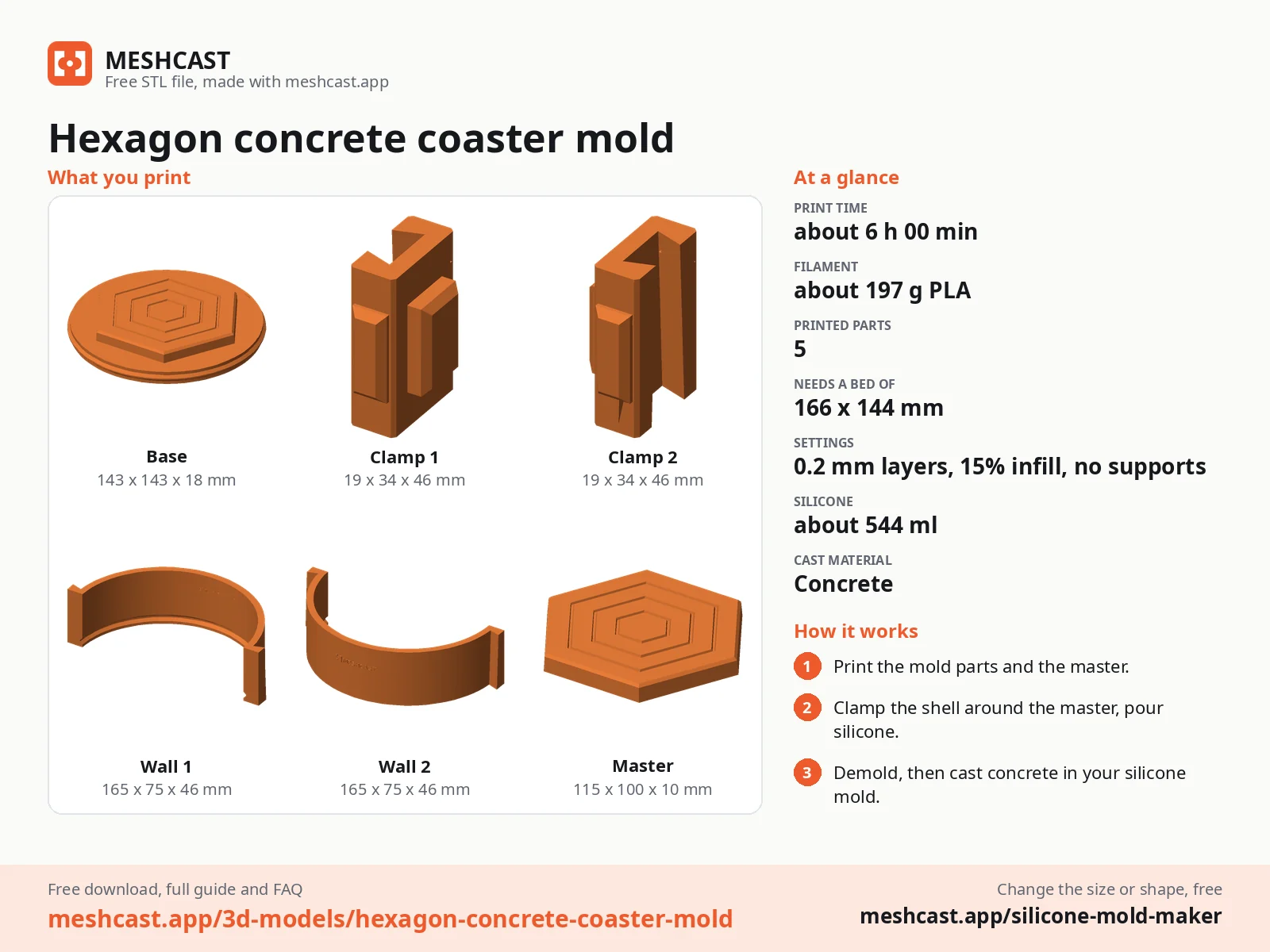
Print the base with the master fused onto it, the two walls and the two clamps.
Stand the base on the table. Set each wall down a few centimetres out from it and slide it in over the table until the ridge round the base sits in the groove at its foot, then slide the clamps down over the seams. Once they are on, the walls cannot lift, and the ridge seals the bottom.
Mix 544 ml of silicone in one batch and pour it into a corner, letting it rise around the master until it covers the top.
Once it has cured, take the clamps off, slide the walls straight out and pull the silicone block off the master. That block is your mold.
Turn the block over: the opening is the back of the coaster. Fill it, tap the sides to raise the air, strike the back flat and demold once it has set.
Print details
| Cast material | Concrete |
|---|---|
| Printed parts | 5 |
| Size (W x D x H) | 143 x 143 x 46 mm |
| Print bed needed | 166 x 144 mm, 46 mm tall |
| Filament | ~197 g |
| Layer height | 0.2 mm |
| Infill | 15% |
| Supports | Not needed |
| Download | ZIP: 5 printed parts (STL) + coaster master (STL) + print sheet + recipe |
| Added | 2026-09-24 |
Made with the free Silicone mold maker generator. Upload your own model and get the same kind of mold built around it, in your browser.
Free download. Opens the Thingiverse listing in a new tab.
Free for personal use. Selling the pieces you cast needs a commercial licence (Pro or Founder); passing on the file itself is not permitted on any plan. Full terms.
New to casting? Read the silicone mold maker guide.
All three work. Jesmonite and fine casting plaster give the crispest grooves; concrete wants a fine mix without large aggregate so it fills the 1.2 mm grooves. Silicone needs no release agent for any of them.
About 504 ml, so mix 544 ml in one batch. The exact figures are in the tool's print-settings sheet inside the zip.
Jesmonite in about an hour, plaster in two, concrete after a day. Concrete keeps gaining strength for weeks, so let a fresh concrete coaster cure for a few days before it goes under a hot mug.
 Concrete
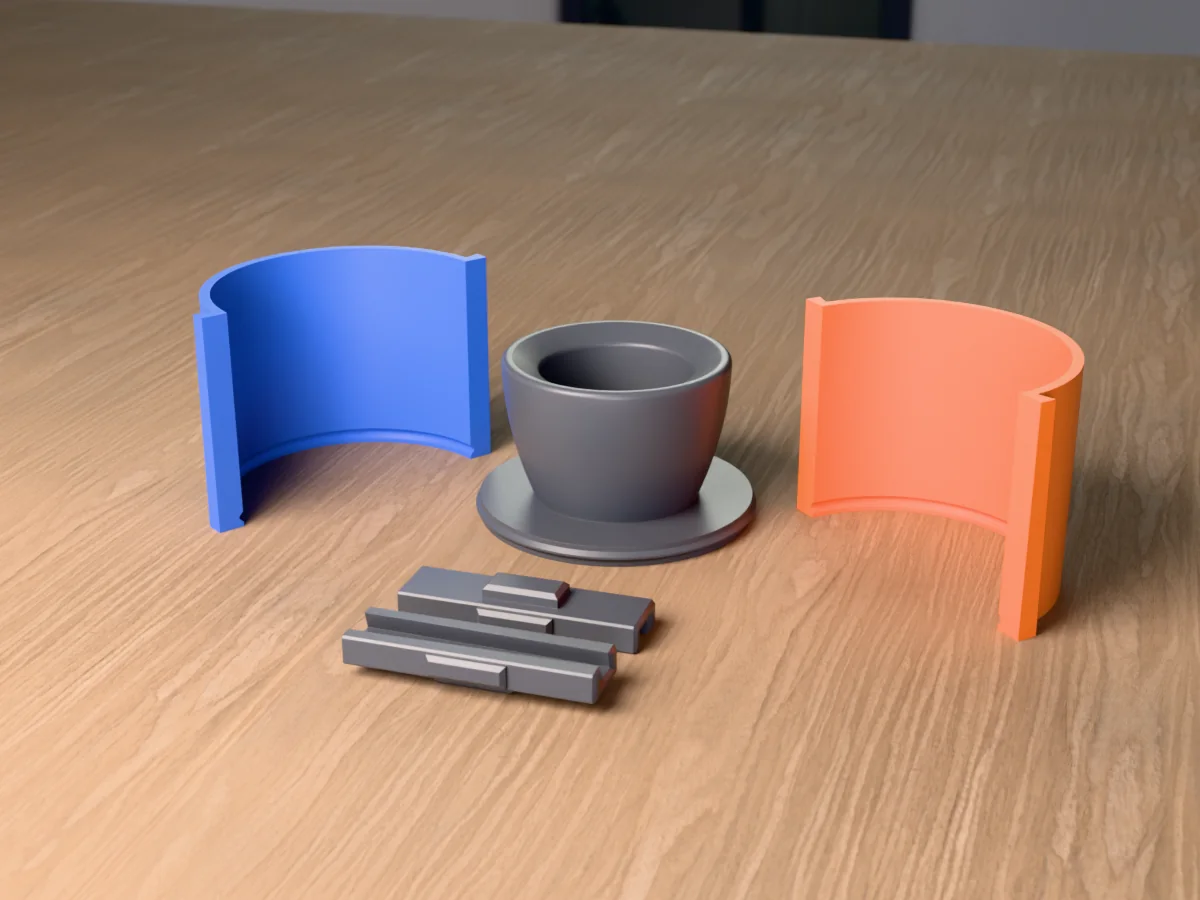
A round concrete tabletop fire bowl, 110 mm across, with a pocket for a standard gel fuel can. A silicone mold kit from printed parts.
 Concrete
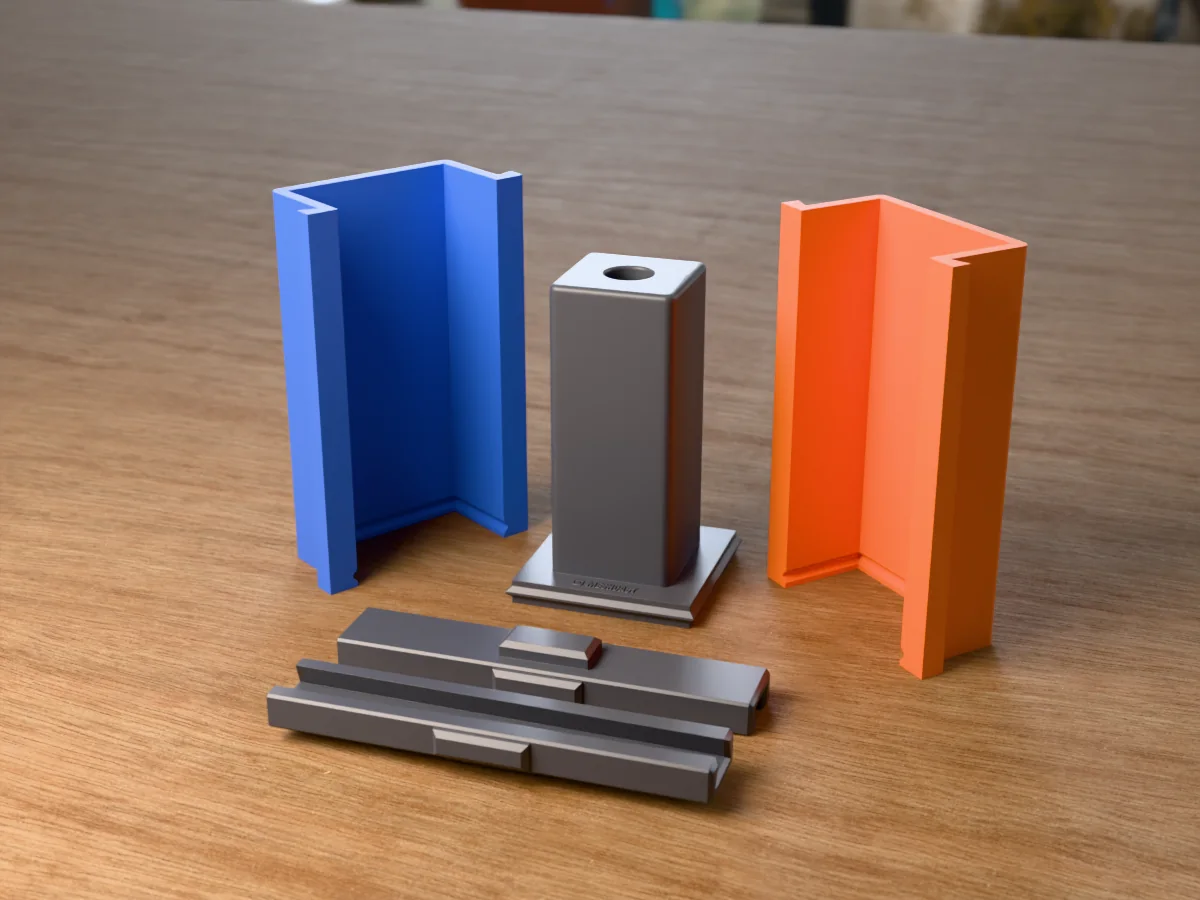
A square concrete bud vase with a glass test tube inside, 50 x 50 x 120 mm. A silicone mold kit from printed parts.
 Concrete
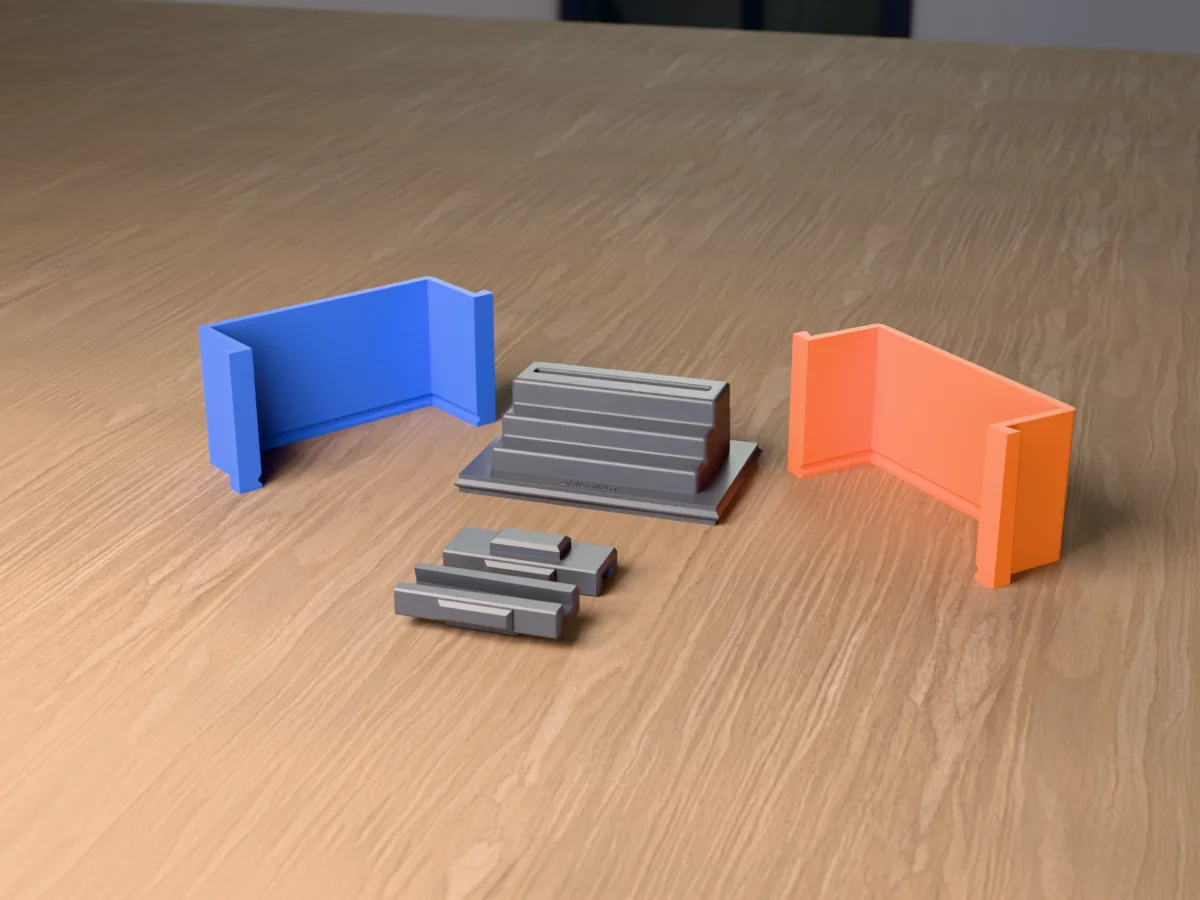
A concrete card holder shaped like a little staircase, with a slot for a business card, postcard or photo on the top step.
 Concrete
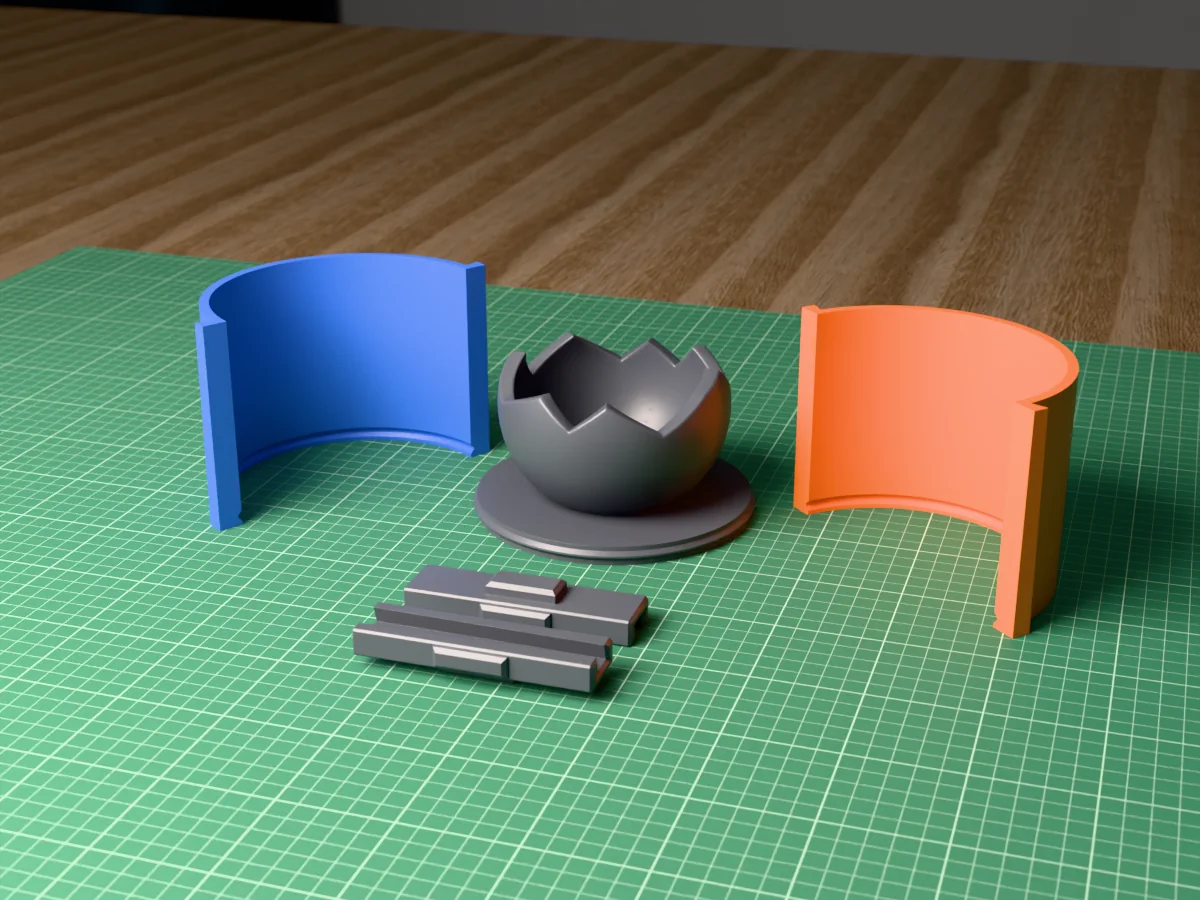
A broken-open concrete sphere, 120 mm across, as a three-wick candle vessel. A silicone mold kit from printed parts.
 Concrete
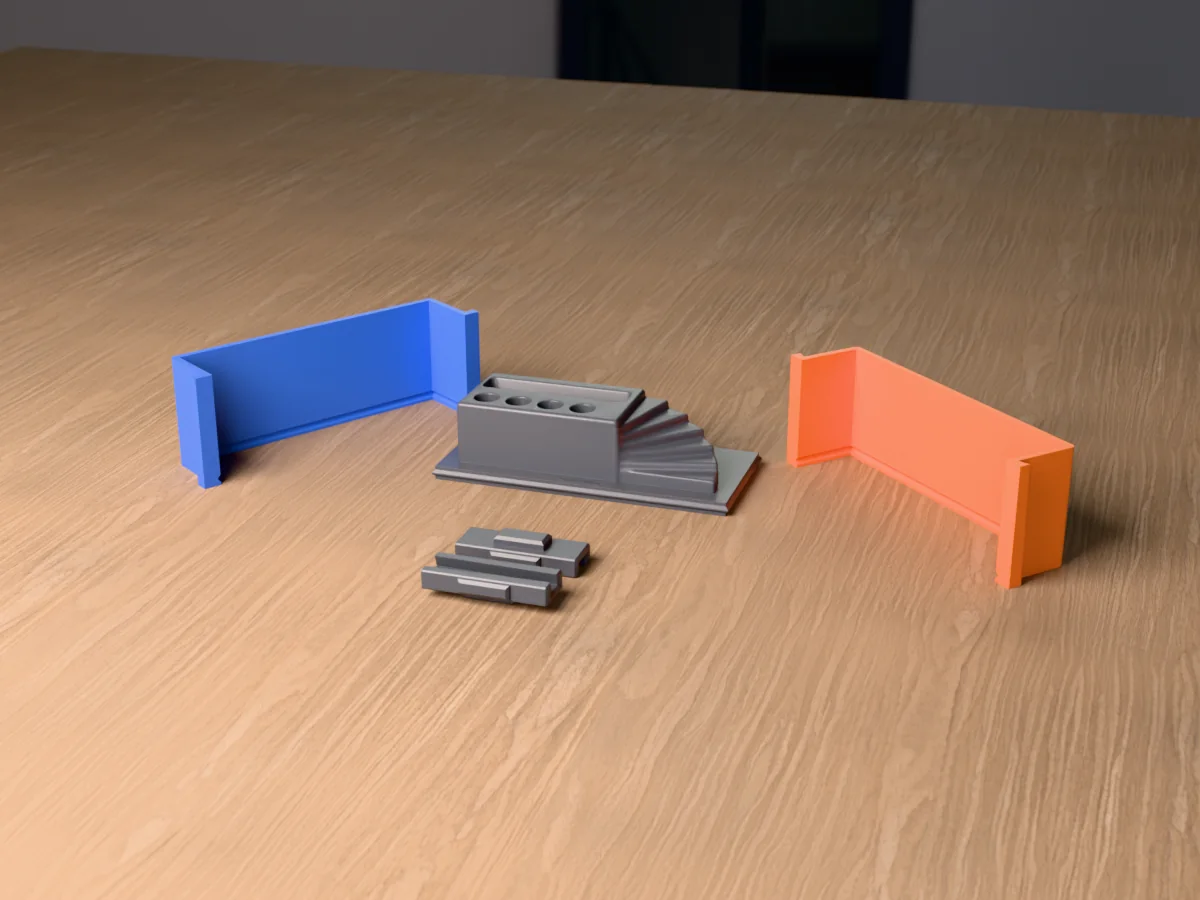
An architectural concrete desk organizer: pen holes, a phone slot and a spiral staircase winding down its end.
 Concrete
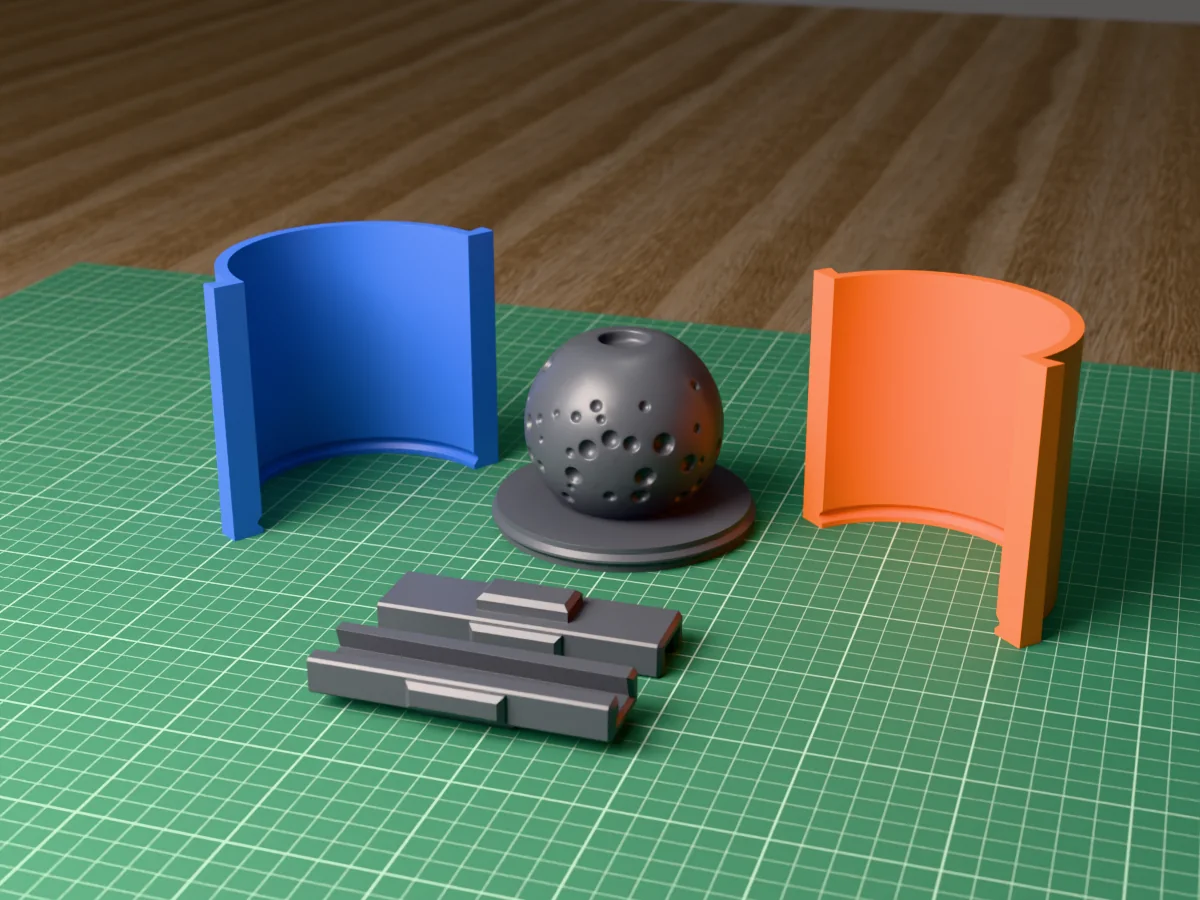
An 80 mm lava stone look incense sphere in concrete, pitted all over, with a well on top for a cone. A silicone mold kit from printed parts.
 Concrete
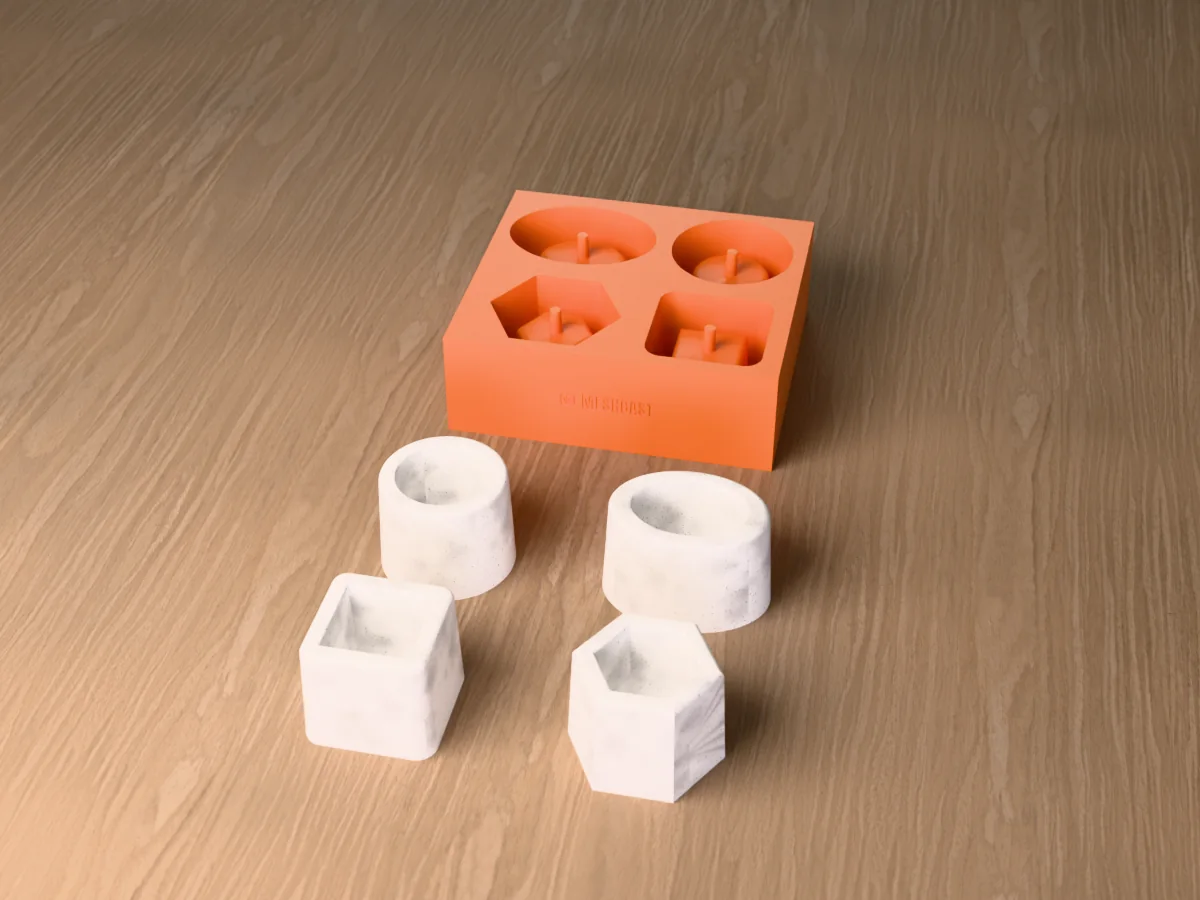
Four mini concrete succulent pots, oval, round, hexagon and square, each with a drainage hole, cast straight in one printed tray.
 Concrete
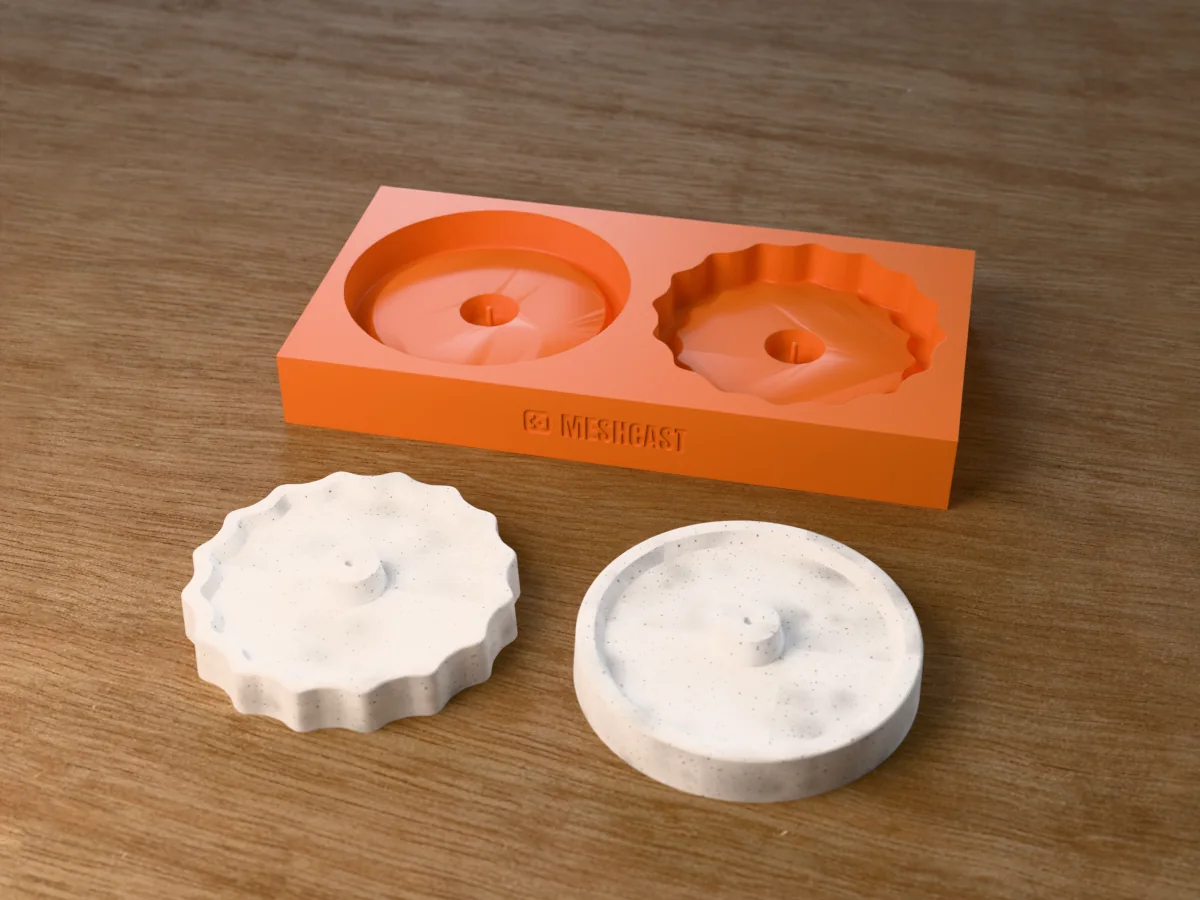
Two 90 mm concrete incense holder discs, one plain and one with a gear edge, each with a raised stick holder, cast in one printed tray.