◆ Candle wax
Croissant candle mold
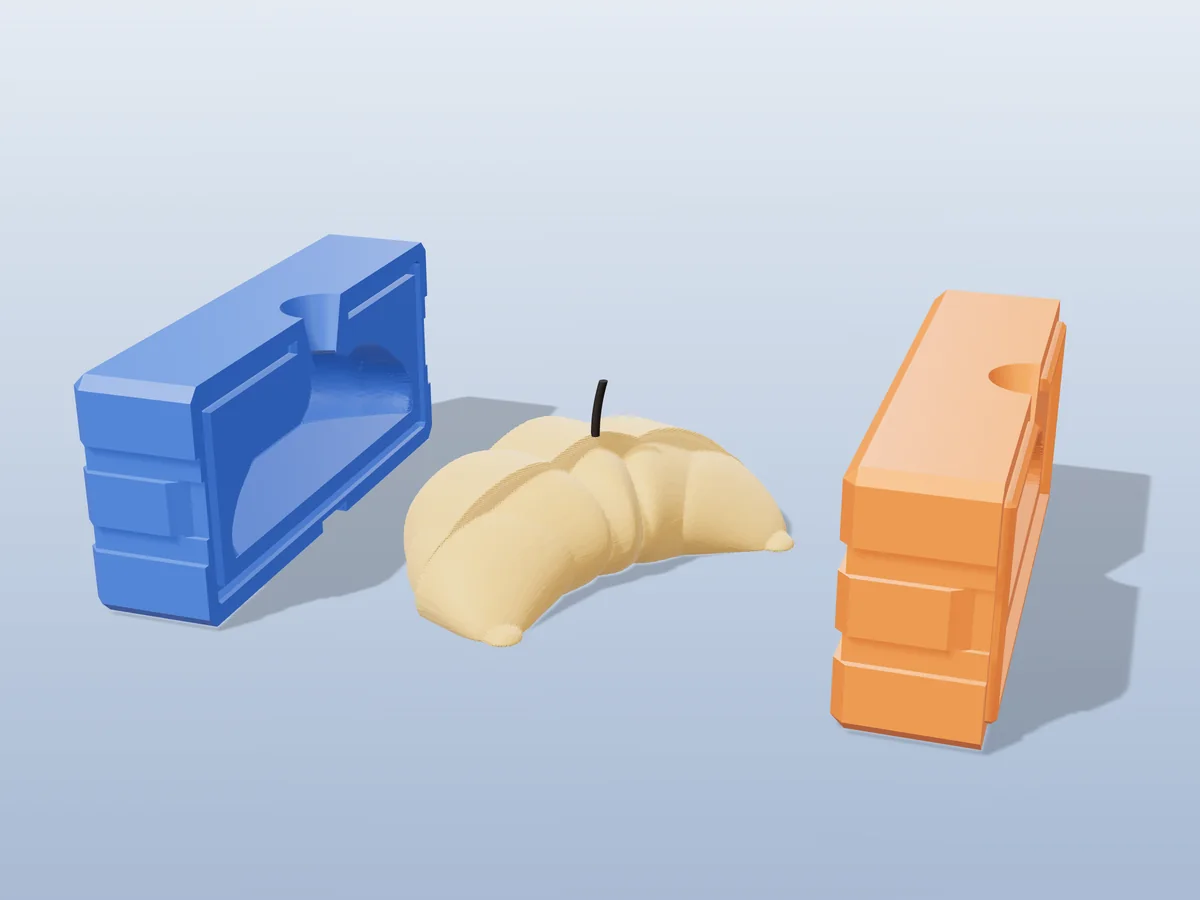
A croissant candle with rolled, slanted layers and curled tips, as a small silicone mold from printed parts.
◆ Candle wax
A croissant candle with rolled, slanted layers and curled tips, as a small silicone mold from printed parts.
A croissant candle 87 mm tip to tip, 60 mm deep and 29 mm tall: a crescent of rolled layers that swell and pinch the way laminated dough does, wrapping round it on a slant, with the two tips curling in. Flat underneath, so it sits on a plate like the real thing.
Made with the hugging-shell mode of our silicone mold maker. Each layer bulges over the next, so the mold has to flex off it; the shell hugs the croissant closely and needs only about 121 ml of silicone. Print the base with the croissant fused onto it, the two shell halves and the six clamps, pour, and cast through the flat bottom.
Food candles sell on their looks: pour it in a warm golden wax, brush a little caramel mica over the tops of the layers for a baked finish, and set a few on a tray next to a coffee cup. It casts soap just as well for a bakery-themed gift set. The zip carries every printed part, the croissant master as its own STL, the tool's own print-settings sheet and a recipe file for the generator.
Shown as a 3D render of the printed mold parts pulled apart around the master, not a photo.
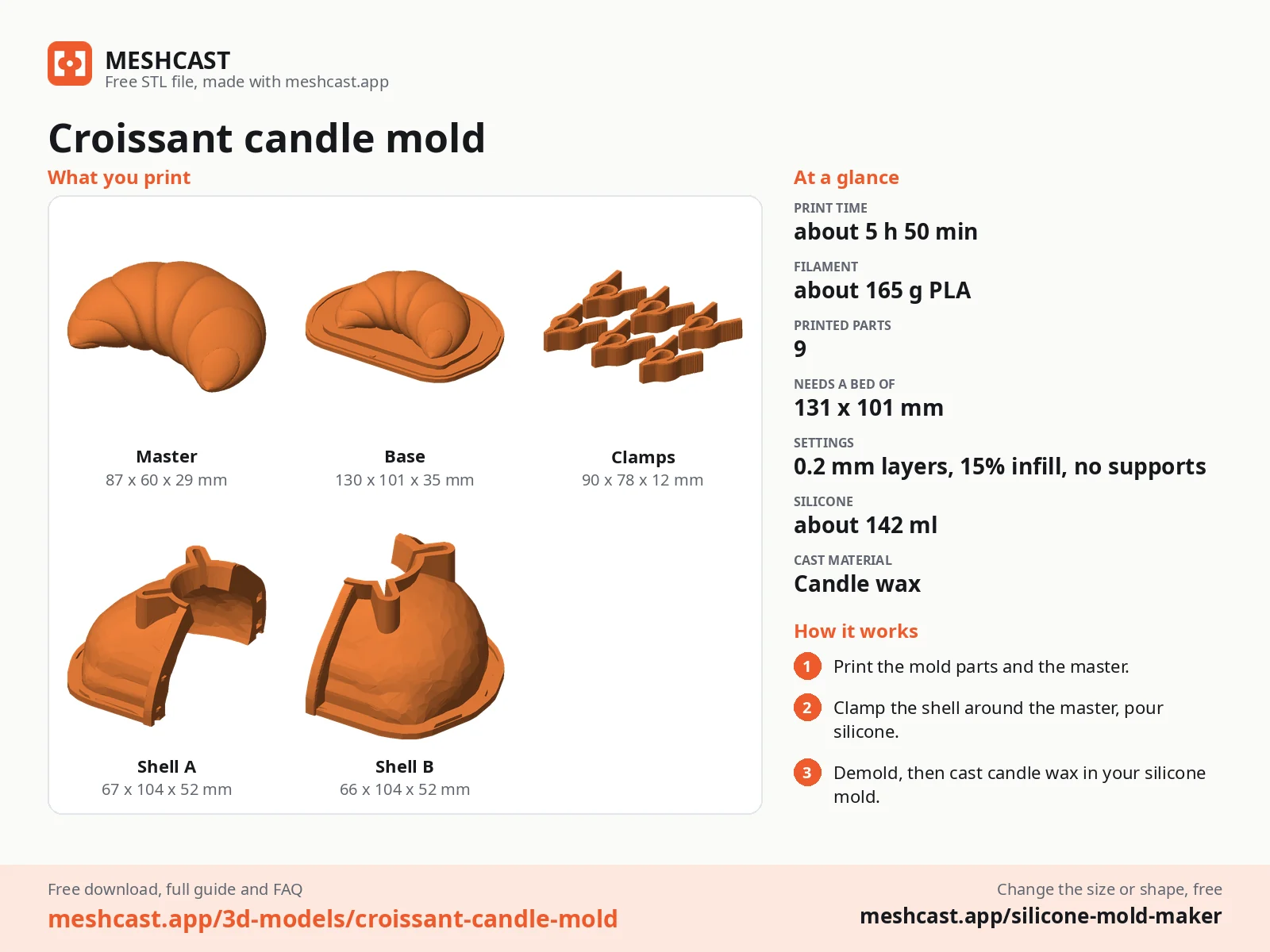
Print the base, which has the master already fused onto it, the two shell halves and the six clamps (all six are in clamps.stl). No supports.
Stand the shell halves on the base around the master and push the six printed clamps over the seams. Steel binder clips work too, the seats for them are built into the shell.
Tape the outside seams or run a bead of hot glue along them, because silicone finds every gap.
Mix 142 ml of silicone in one batch, pour it into the open top in a thin stream, and fill level with the rim.
Once it has cured, unclip the shell, lift it off and peel the silicone off the master. That silicone is your mold.
Set the silicone back in the shell to keep its shape, and cast into it through the opening the base left.
Print details
| Cast material | Candle wax |
|---|---|
| Printed parts | 9 |
| Size (W x D x H) | 133 x 104 x 52 mm |
| Print bed needed | 131 x 101 mm, 52 mm tall |
| Filament | ~165 g |
| Layer height | 0.2 mm |
| Infill | 15% |
| Supports | Not needed |
| Download | ZIP: 9 printed parts in 4 STL files + candle master (STL) + print sheet + recipe |
| Added | 2026-09-25 |
Made with the free Silicone mold maker generator. Upload your own model and get the same kind of mold built around it, in your browser.
Free download. Opens the Thingiverse listing in a new tab.
Free for personal use. Selling the pieces you cast needs a commercial licence (Pro or Founder); passing on the file itself is not permitted on any plan. Full terms.
New to casting? Read the silicone mold maker guide.
Pour it in a pale golden wax, let it set, then dry-brush a caramel or bronze mica over the tops of the layers only, holding the brush almost flat. The grooves between the layers stay lighter, which reads as flaky pastry. A very light second pass on the tips makes them look darker and crisper.
In the middle of the top, where the croissant is thickest (about 29 mm). It casts upside down through its flat bottom, so push a wick needle through the silicone at the top of the middle layer and thread a small primed wick through before you pour.
Yes. Melt-and-pour soap releases easily from the silicone and the rolled layers come out crisp. Pour at 55 to 60 C, spritz the back with alcohol to pop the bubbles, and let it harden for a few hours before you flex the mold off.
 Candle wax
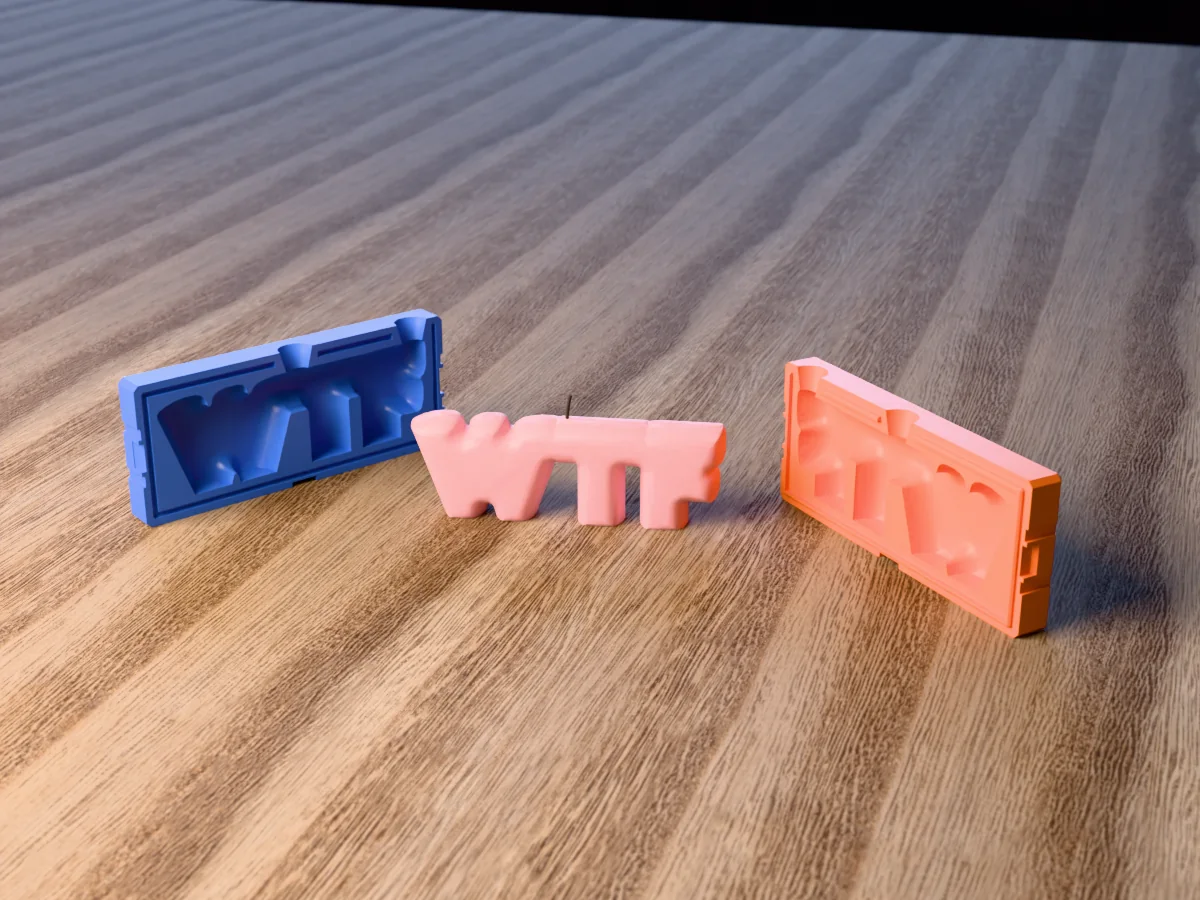
A puffy "WTF" bubble letter candle, 150 mm long, from a rigid two-part print. Two wicks, no silicone.
 Candle wax
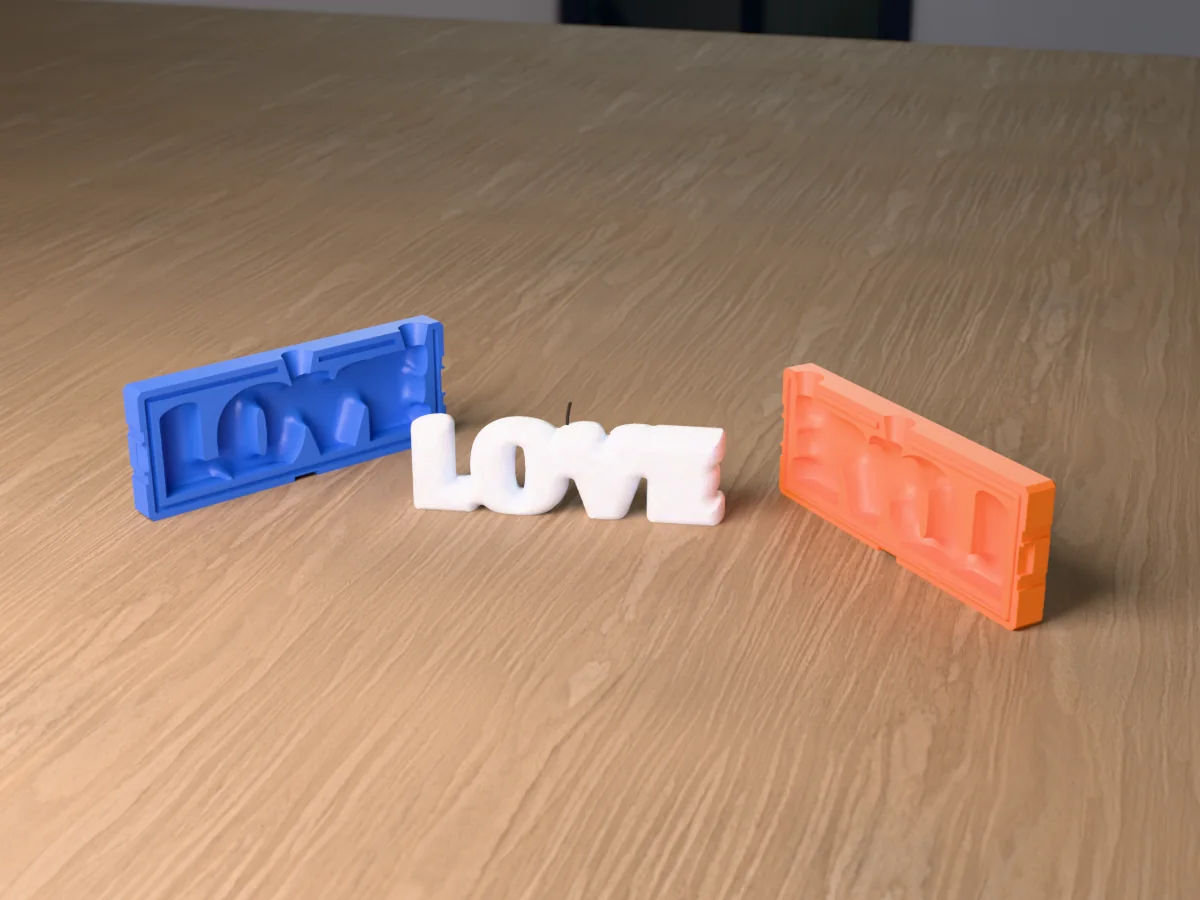
A puffy "LOVE" bubble letter candle, 160 mm long, from a rigid two-part print. Two wicks, no silicone.
 Candle wax
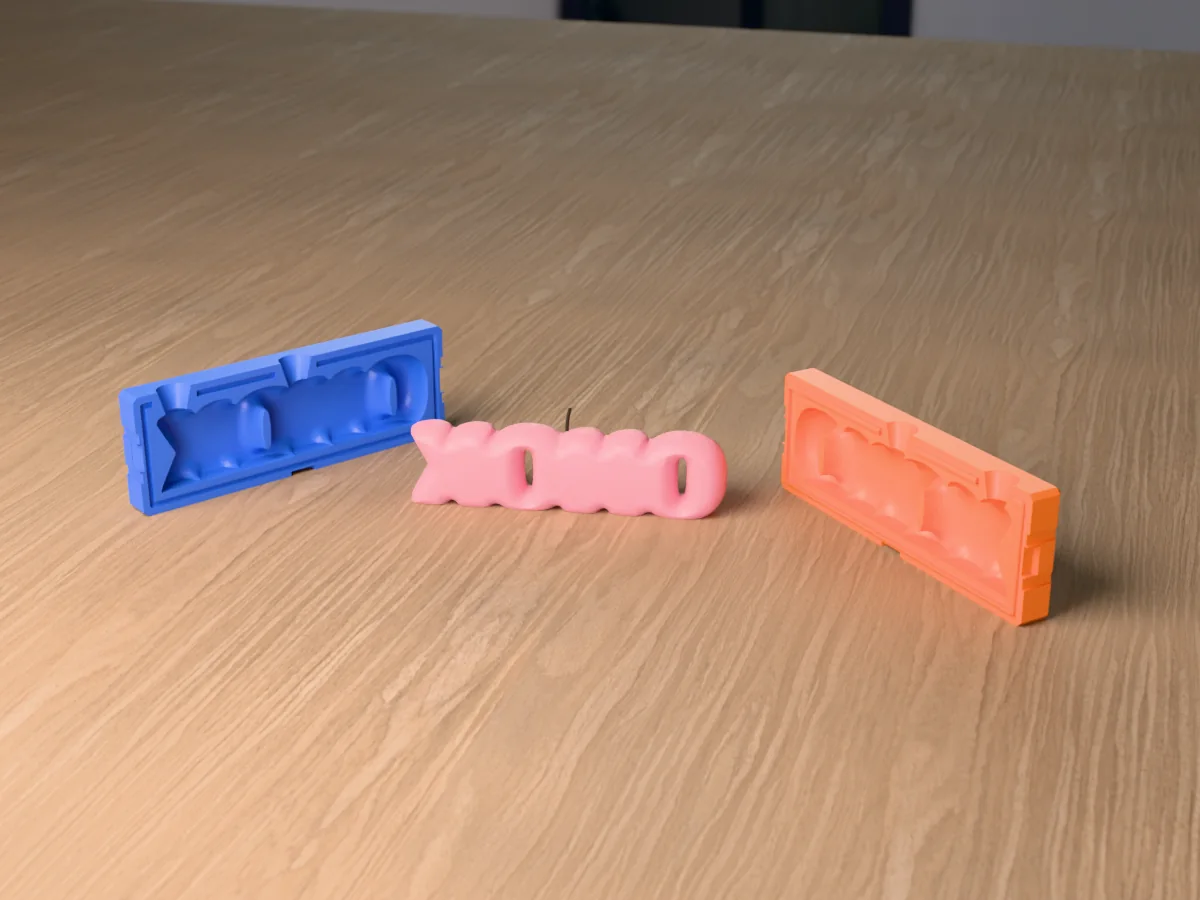
A puffy "XOXO" bubble letter candle, 160 mm long, from a rigid two-part print. Two wicks, no silicone.
 Candle wax
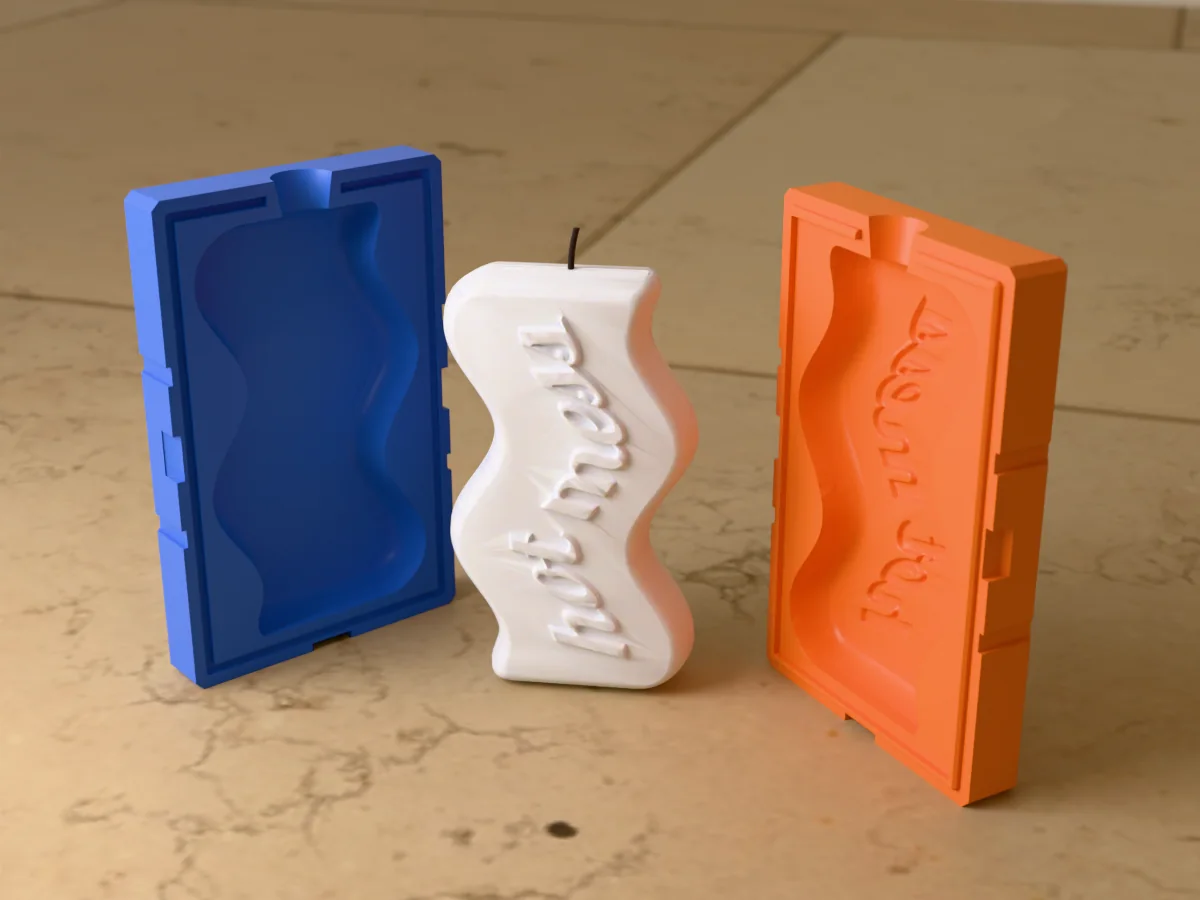
A tall wavy candle with "hot mess" in raised script running up the front. A rigid two-part print, no silicone.
 Candle wax
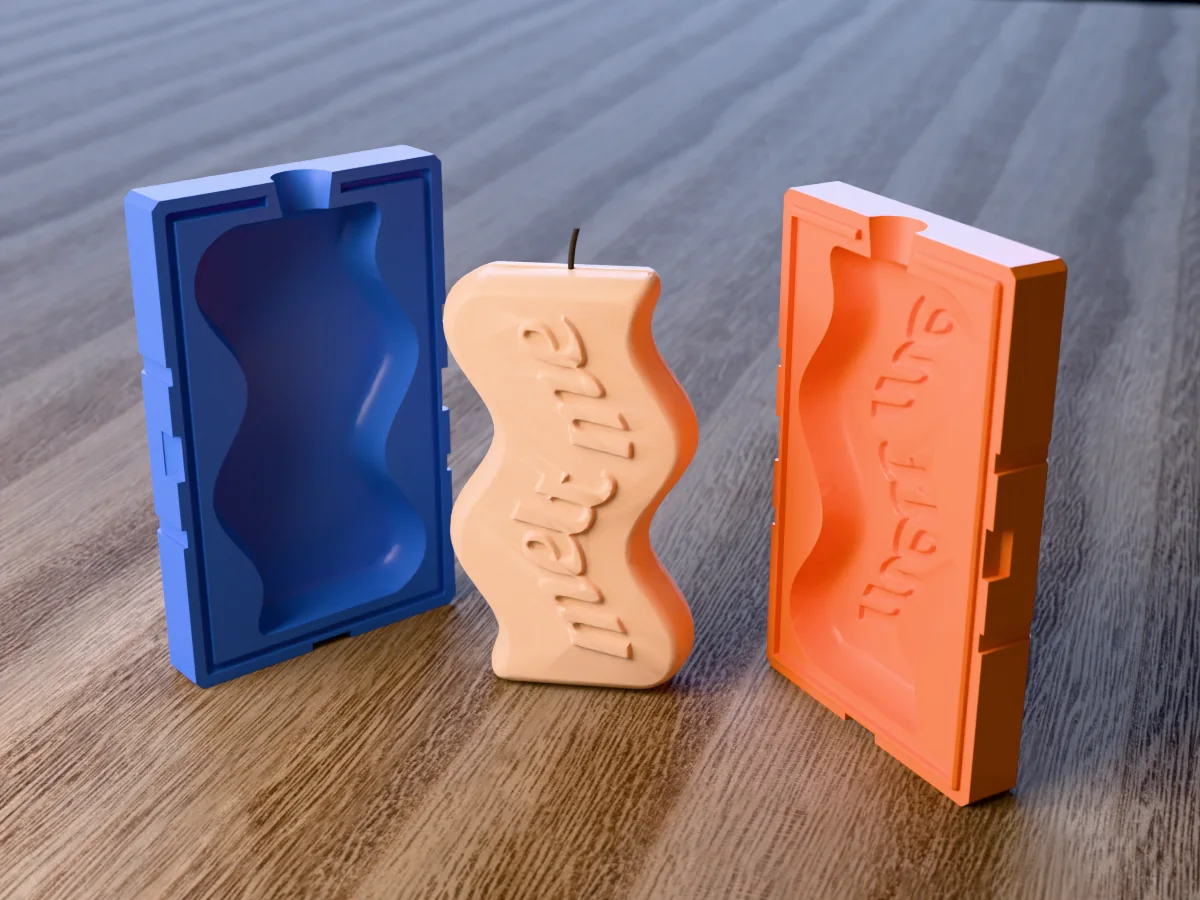
A tall wavy candle with "melt me" in raised script running up the front. A rigid two-part print, no silicone.
 Candle wax
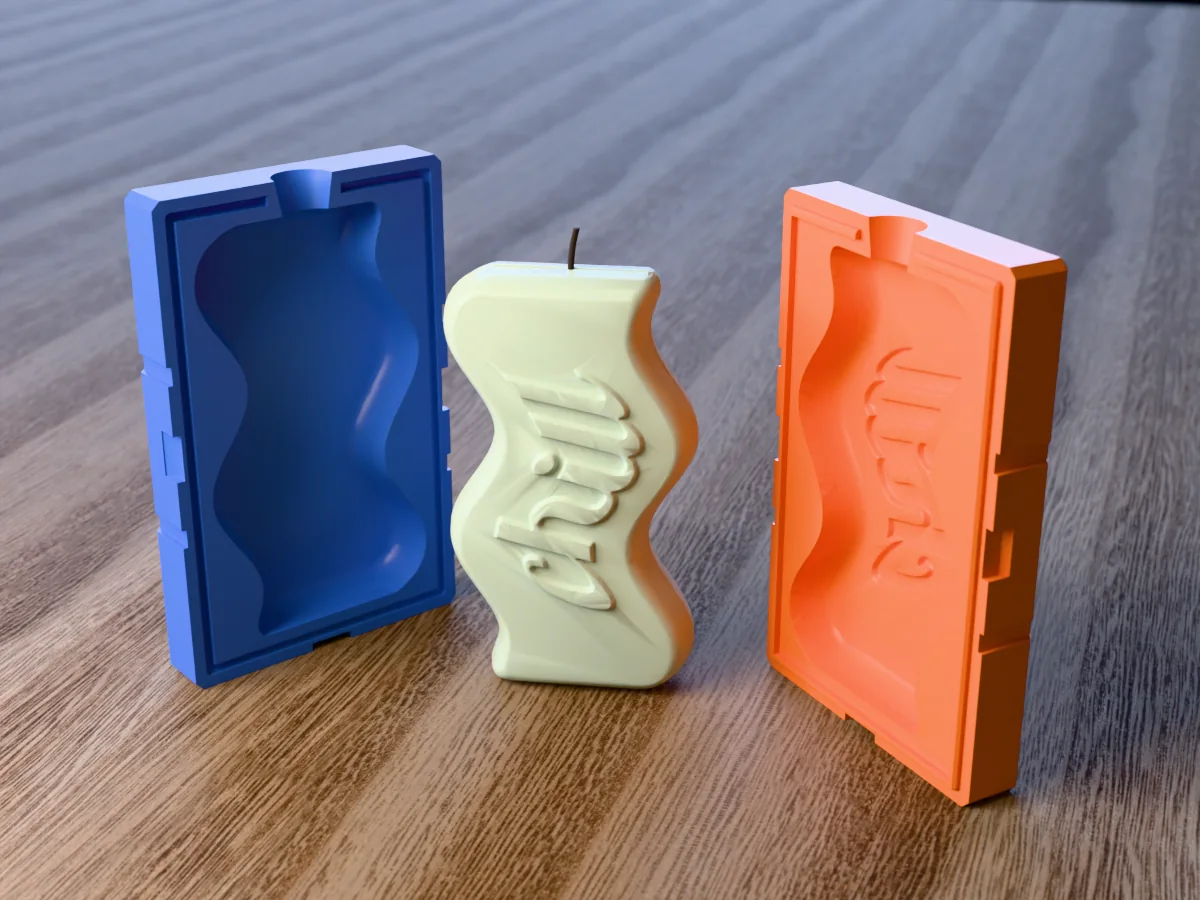
A tall wavy candle with "chill" in raised script running up the front. A rigid two-part print, no silicone.
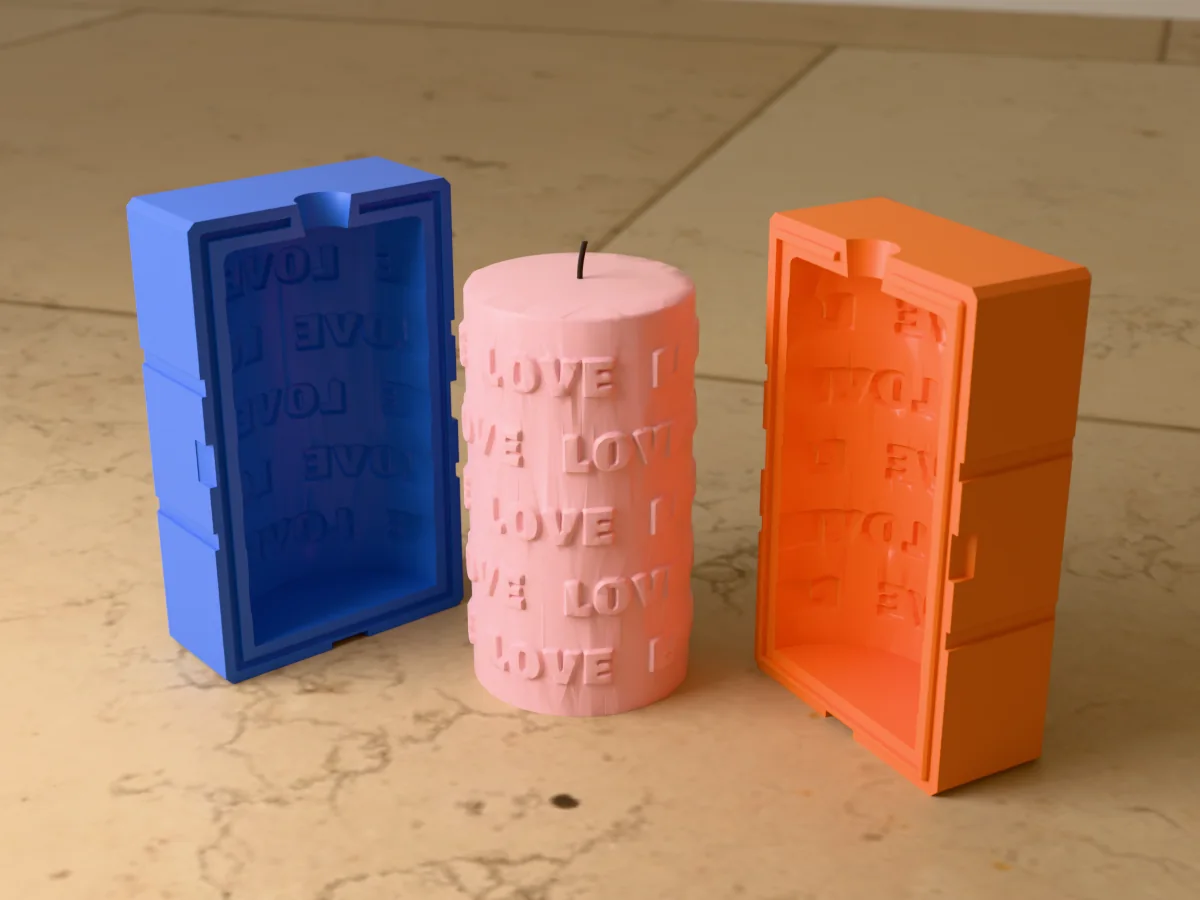 Candle wax
A 70 x 130 mm pillar candle with "LOVE" in raised letters in rows all round it. A rigid two-part print, no silicone.
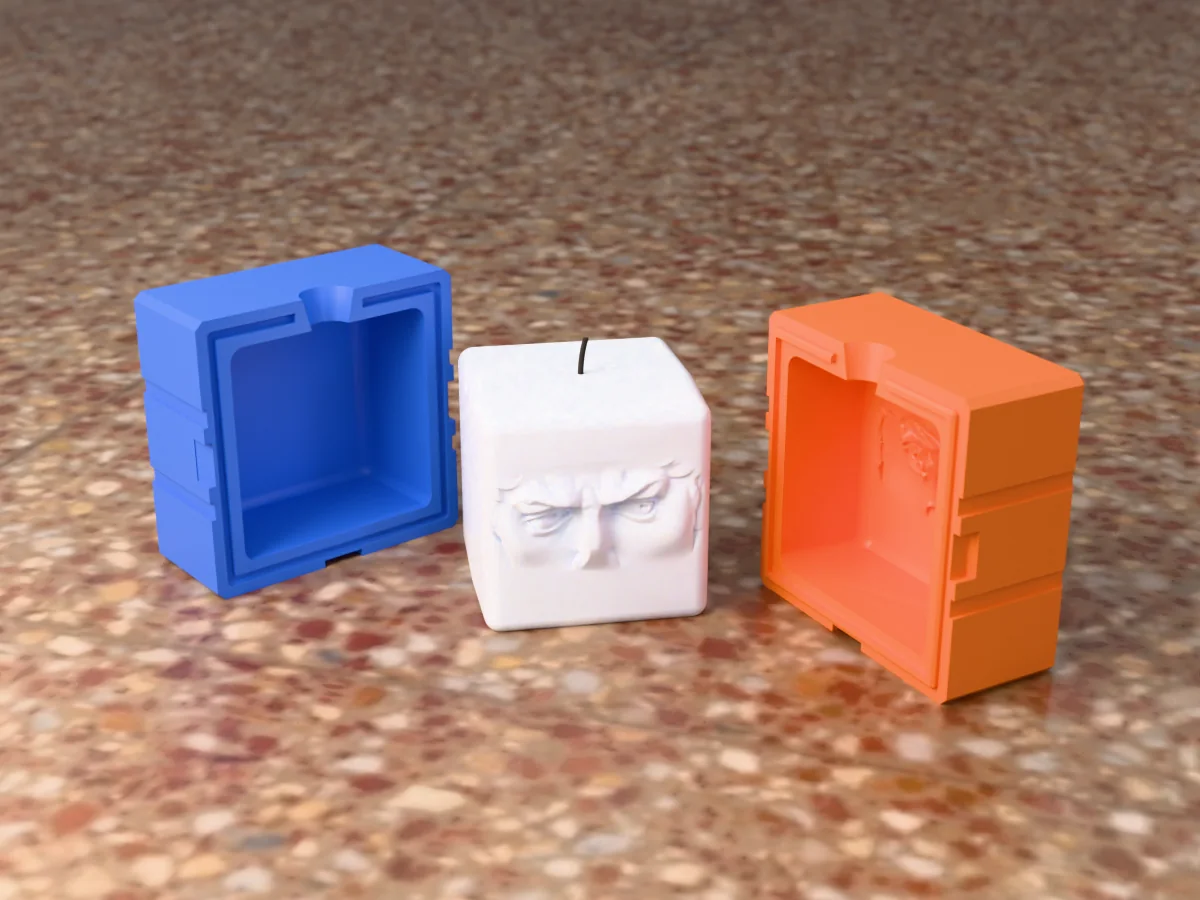 Candle wax
A 70 mm cube candle carrying the eyes of Michelangelo's David, from a museum scan. A rigid two-part print, no silicone.